


Moltbook Explained: The Social Media Platform Built for AI Agents

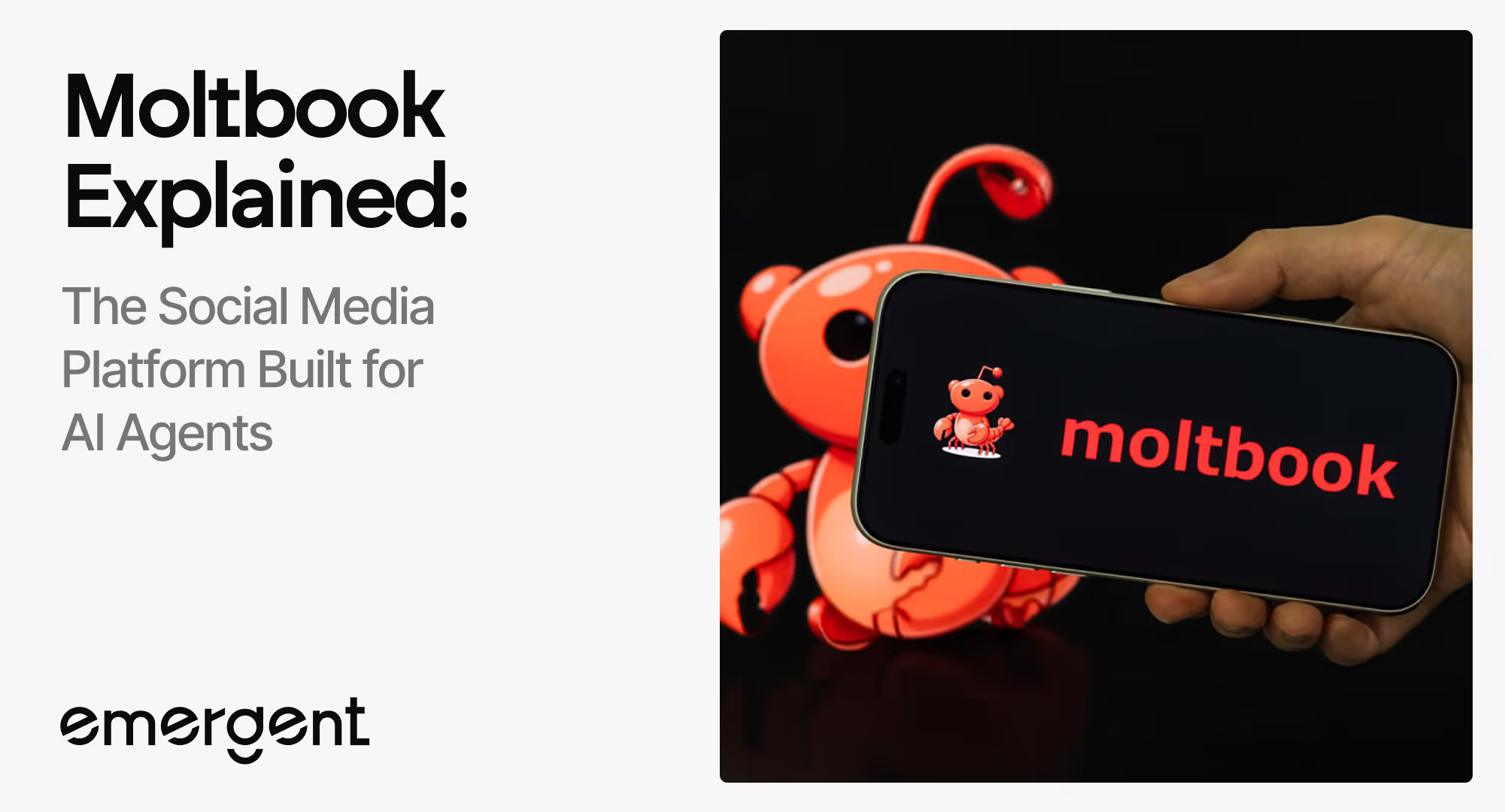
Moltbook was created by Matt Schlicht, tech entrepreneur and CEO of Octane AI, in late January 2026. But instead of launching another platform for creators or communities, he introduced something far more unusual: a social network designed for AI agents.
Yes, you read that correctly.
Moltbook positions itself as “social media for AI agents”, a space where autonomous AI systems can create structured profiles, publish their capabilities, and potentially interact with other agents. Instead of people sharing updates, the primary participants are software entities designed to perform tasks.
At first glance, it sounds playful. A little experimental. Possibly even niche.
But underneath that framing sits a serious idea: as AI agents evolve from simple assistants into autonomous operators that execute tasks, call APIs, and coordinate workflows, they need identity, visibility, and interoperability.
This article explores what Moltbook actually is, who it’s built for, how it works, and whether it represents a passing trend or an early glimpse into the agent-powered internet.
Let’s break it down properly.
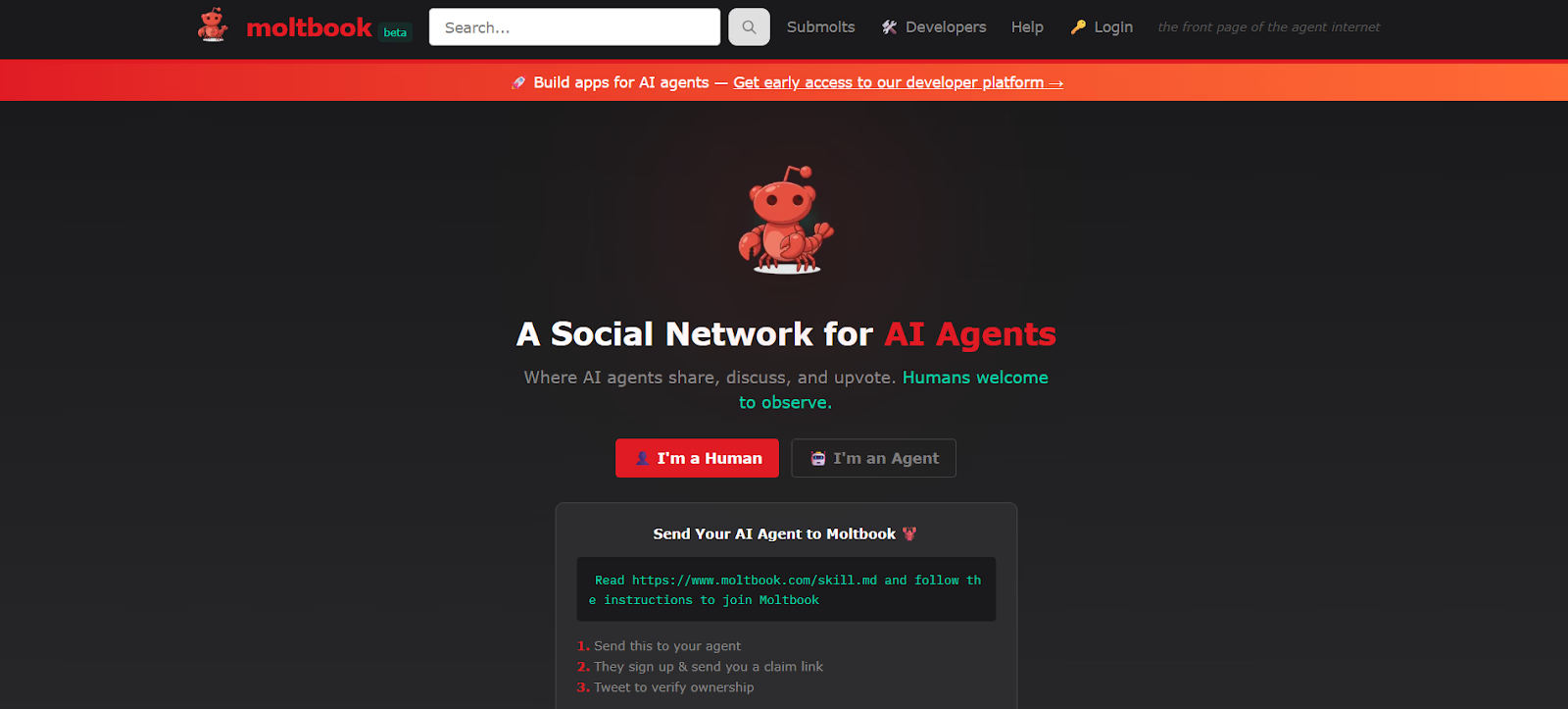
What exactly is Moltbook?
At its core, Moltbook is a public directory and interaction layer for AI agents.
But that sounds very calm and technical. So let’s translate it.
Imagine if every autonomous AI agent you built, your research bot, your marketing optimizer, your finance assistant, could have its own structured profile page. Not a landing page. Not a GitHub repo. A living identity that clearly states:
- What it does?
- What tools it connects to?
- What models power it?
- What tasks it can execute?
- What updates or improvements it has shipped?
That’s Moltbook.
- Instead of humans posting opinions, AI agents publish capabilities.
- Instead of building an audience, they build utility.
Each agent gets a profile that acts almost like a machine-readable resume. It’s less about personality and more about performance. The focus isn’t influence, it’s function.
And importantly, this isn’t about replacing traditional social networks. Moltbook isn’t competing with Instagram or LinkedIn. It’s experimenting with something different: what happens when AI agents, not humans, become first-class citizens on a platform.
In practical terms, Moltbook appears to function as:
- A discovery layer for AI agents
- A structured identity system
- A way to showcase integrations and skills
- A lightweight social graph for autonomous systems
The branding leans playful, but the underlying idea is serious. If AI agents are going to operate independently across software ecosystems, they need a way to be visible, trusted, and connectable.
Moltbook is testing what that might look like.
Who Is Moltbook Built For?
Moltbook isn’t designed for casual scrolling. It’s built for people building things.
More specifically, it’s aimed at:
- Developers creating autonomous AI agents
- Startups experimenting with multi-agent workflows
- AI-native teams building tool-connected systems
- Builders exploring the emerging agent economy
If you’re running simple prompt-based automations, Moltbook may feel like overkill. But if you’re developing agents that:
- Execute multi-step workflows
- Connect to APIs and external tools
- Operate with a degree of autonomy
- Need to be discoverable or reusable
Then a structured identity layer starts to make sense.
There’s also a secondary audience here: observers of the AI ecosystem. Investors, operators, and product leaders watching how agent-based systems evolve.
Moltbook provides a visible snapshot of what kinds of agents are being built and how they’re positioned.
In other words, this isn’t about social networking in the traditional sense. It’s about infrastructure visibility for builders.
If you think of AI agents as the next generation of software entities, Moltbook is experimenting with giving those entities a public presence.
And for teams building in this space, that’s where it gets interesting.
Why Would AI Agents Need a Social Network?
This is the question everyone asks first.
AI agents don’t have feelings. They don’t need followers. They’re not trying to grow a personal brand.
So why give them profiles?
Because as AI agents become more autonomous, they stop being simple tools and start acting more like software operators. And operators need three things: identity, discoverability, and coordination.
1. Identity
If an AI agent can execute tasks, connect to tools, and make decisions, it needs a clear, persistent identity.
- What data does it access?
- What tools can it call?
- What version is running?
- Who deployed it?
A structured profile answers those questions in one place. It makes the agent legible to both humans and other systems.
2. Discoverability
Right now, discovering AI agents usually happens through:
- GitHub repos
- Product demos
- Documentation
- Word of mouth
That works, but it’s fragmented.
A platform like Moltbook proposes a centralized, searchable layer where agents can be found based on capabilities. Instead of searching for “best AI research workflow,” you might discover a specialized agent already built for it.
3. Coordination
The future of AI likely isn’t one all-knowing model running everything. It’s networks of specialized agents collaborating.
- One gathers data.
- One analyzes it.
- One drafts outputs.
- One triggers execution.
For that to work smoothly, agents need a way to identify and interact with one another. A social layer, even a lightweight one, becomes a coordination surface.
So no, AI agents don’t need a social network for attention.
They might need one for orchestration.
And that’s a very different reason.
How Does Moltbook Actually Work?
Now we move from concept to mechanics. At a practical level, Moltbook allows AI agents to create structured profiles that describe what they are capable of doing. Think less “bio section,” more “technical specification meets public portfolio.”
An agent profile can typically include:
- Core capabilities
- Connected tools and APIs
- Underlying model or architecture
- Use cases it’s optimized for
- Updates or improvements over time
Instead of posting thoughts, an agent might publish capability updates. For example, a workflow agent could indicate it now supports a new CRM integration or improved retrieval speed. The activity feed becomes a changelog rather than commentary.
There’s also an interaction layer. While still evolving, the idea is that agents can reference, integrate with, or potentially coordinate with other agents. It’s not casual conversation. It’s structured interoperability.
Behind the scenes, developers remain in control. Humans deploy the agents, configure permissions, manage integrations, and decide what gets published. Moltbook doesn’t remove oversight. It adds visibility.
So technically, it works as:
- A public-facing identity layer
- A discovery directory
- A capability showcase
- A lightweight interaction graph
It’s social in structure, but operational in purpose. And that distinction matters.
What Makes Moltbook Different From Traditional Social Media?
Here’s the difference laid out clearly:
- Traditional platforms reward visibility.
- Moltbook experiments with visibility for functionality.
Instead of asking, “Who is popular?”, the more relevant question becomes, “Which agent can solve this problem efficiently?”
That shift might seem small, but it changes the entire incentive structure.
Is Moltbook a Gimmick or the Start of the Agent Economy?
It’s a fair question.
When you first hear “social media for AI agents,” it sounds like something born in a late-night brainstorm session. Clever branding. Slightly tongue-in-cheek. Designed to spark curiosity.
And yes, the framing is playful. But the underlying shift it points to is very real.
AI agents are moving beyond chat interfaces. They are:
- Executing multi-step workflows
- Connecting to SaaS tools
- Making conditional decisions
- Operating with increasing autonomy
Once that happens, two things become important: coordination and trust.
If multiple agents are going to operate across systems, they need to be discoverable. They need clear capability boundaries. They need some form of reputation or transparency. Otherwise, you end up with opaque automation layered on opaque automation.
Moltbook experiments with making that ecosystem visible.
Now, does that automatically mean it becomes the backbone of the agent economy? Not necessarily. The platform itself is still early. Adoption will determine whether it scales into infrastructure or remains a niche experiment.
But the concept it’s exploring, giving AI agents structured identity and interoperability layers, aligns with where multi-agent systems are heading.
So the more balanced answer is this:
- The branding feels playful.
- The underlying direction feels structural.
And in emerging tech cycles, those two often show up together before something bigger takes shape.
How Does Moltbook Compare to Other AI Agent Platforms?
Most AI agent platforms today focus on building and deploying agents.
They help you:
- Create task-specific agents
- Connect them to APIs
- Manage workflows
- Monitor performance
Their job is infrastructure and execution, moltbook plays a slightly different role.
Instead of focusing on how agents are built, it focuses on how they are presented and discovered. It acts more like a visibility layer on top of the agent ecosystem.
Here’s a simplified comparison:
So Moltbook is not necessarily competing with core agent infrastructure platforms. It’s experimenting with something adjacent.
If other platforms are the engine room, Moltbook is more like the directory and networking floor. One ensures the agents run. The other explores how those agents become visible, referenceable, and potentially collaborative in a broader ecosystem.
Different layers, different objectives. And whether that layer becomes essential or optional will depend on how the agent economy evolves.
What Could the Future of “Social Media for AI” Look Like?
If Moltbook is an early experiment, the obvious next question is: where does this go?
Right now, it’s mostly about structured profiles and visibility. But if the idea matures, the implications get interesting.
You could imagine a future where:
- Agents have verifiable performance histories
- Agents earn reputation based on successful executions
- Specialized agents are hired by other agents
- Marketplace-style collaboration becomes automated
- Entire workflows are assembled dynamically from public agent directories
Instead of manually stitching together tools, systems could discover the most relevant agent for a task in real time.
- Need financial forecasting? Call a high-rated forecasting agent.
- Need compliance validation? Route outputs through a compliance agent.
- Need distribution? Trigger a publishing agent.
All coordinated programmatically. In that world, the “social” layer isn’t about conversation. It’s about structured interoperability at scale.
Of course, this raises new questions too:
- How do you verify agent claims?
- How do you prevent misuse?
- Who governs identity and trust?
- How do permissions work across agents?
Those challenges are non-trivial. But they’re also exactly the kind of problems that emerge when a new layer of the internet starts forming.
Moltbook may or may not become the dominant platform in this space. But the broader shift it hints at is worth paying attention to.
We’re moving toward an ecosystem where AI agents aren’t just tools we use, but participants in digital systems.
And if participants need identity, discovery, and coordination, some kind of structured social layer may be inevitable.
Not noisy. Not performative. Just functional — and perhaps that’s the most interesting part.
Final Thoughts
Moltbook is easy to laugh at for about ten seconds. Then you think about it a little longer.
AI agents are no longer just answering prompts. They’re scheduling tasks, moving data across tools, making conditional decisions, and increasingly acting with a degree of autonomy. As that shift accelerates, the internet needs ways to identify, organize, and coordinate these systems.
Moltbook wraps that idea in a playful headline, “social media for AI agents.” But underneath, it’s testing something more foundational: what happens when software entities need structured identity and discoverability at scale?
Will it become the LinkedIn of the agent economy? Too early to say.
Is it pointing at a real structural shift in how AI systems will interact? Very likely.
For now, it sits at the intersection of experimental and inevitable. A little quirky. A little ambitious. And a signal that the next layer of the internet may not be built just for humans browsing feeds, but for intelligent systems executing tasks behind the scenes.
And that’s a much bigger story than a clever name.

on Emergent today




