
Introduction
Two AI tools are making a real difference for creators and entrepreneurs right now, and both are designed to work the moment you open them.
The first is Claude Cowork, Anthropic's desktop tool that connects directly to your computer and handles everyday tasks like organizing footage and drafting emails. The second is Emergent, an AI-powered full-stack vibe coding tool that turns a simple text prompt into a fully functional mobile app or website, no coding experience required.
Both are generating buzz, but for very different reasons. Here are the most practical Claude Cowork use cases worth your time, plus a look at how Emergent takes things further by letting you vibe-code entire apps from scratch.
Part 1: Claude Cowork Use Cases: Your Local AI Assistant
Claude Cowork's defining feature is local computer access. You grant it permission to specific folders on your machine, and it works within your file system like a hands-free assistant. It's not flashy, but the time savings add up fast.
Use Case 1: Organizing Folders Automatically
The Problem Statement
If you're a vlogger, videographer, or content creator, you know the pain of dumping days' worth of mixed footage from multiple cameras and an iPhone into a single folder. Sorting all of that into dated, labeled folders means 30 minutes (or more) of tedious drag-and-drop. It's boring, repetitive work that eats into time you could spend editing or creating. And the longer you put it off, the worse the backlog gets.
How Claude Cowork Solves It?
Claude handles it in minutes. It reads timestamps, creates folders by date, and even applies common sense. If a clip was recorded at 12:40 a.m. (technically the next calendar day), Claude suggests grouping it with the previous day's footage since that's almost certainly when the shoot actually happened. When it finishes, you get a clean summary of every move it made.
Use Case 2: Sorting Video Files by Content, Not Just Date
The Problem Statement
Date-based sorting breaks down when you shoot multiple types of content on the same day. Say you filmed four different Instagram Reels in one afternoon: tennis footage, a clothing try-on, a grocery shopping trip, and an organization project. Every clip shares the same date stamp, so your standard sorting tools are useless. You're stuck scrubbing through each file manually to figure out what belongs where.
How Claude Cowork Solves It?
Here's a lesser-known trick: Claude Cowork can sort video files based on their thumbnail content, not just metadata. Tell Claude to organize the videos into specific content folders (tennis, getting organized, getting clothes tailored, grocery shopping), and it analyzes the thumbnails and categorizes them accurately. A clip filmed in a parking garage showing the front of a Whole Foods store? Claude puts it in the grocery shopping folder. It picks up on visual context the same way you would.
Use Case 3: Drafting Gmail Responses Automatically
The Problem Statement
Email is a time sink that never empties. For creators and entrepreneurs, responding to brand deals, collaborator messages, and business inquiries can eat up an hour or more every morning. Gmail's built-in Gemini drafts are supposed to help, but they produce stiff, formal responses ("Dear so-and-so, sincerely...") that feel completely wrong when you're emailing a colleague or collaborator. You end up rewriting the draft anyway, which defeats the purpose.
How Claude Cowork Solves It?
Connect your Gmail under Settings, then Connectors, and Claude will read through your inbox and draft responses to the emails it identifies as most important. The key advantage over Gemini is tone. Claude's drafts, once you've configured your global instructions, sound like something you'd actually write. You can schedule this as a recurring task. As long as your computer is open, Claude runs through your inbox every morning and has drafts ready before you sit down.
Use Case 4: Global Instructions: Teaching Claude Your Voice
The Problem Statement
Every AI tool starts generic. Without personalization, Claude (or any AI) produces cookie-cutter responses that don't match your communication style. A thank-you email to a brand reads like a corporate form letter. Content ideas feel like they were written for a generic audience. You waste time re-prompting and editing every single output to make it sound like you, and those micro-corrections add up to a massive productivity drain over weeks and months.
How Claude Cowork Solves It?
Global instructions are what make everything else work better. They're persistent training rules that Claude follows across every interaction. Access them through Cowork's settings. Define rules like: never use em dashes, avoid overly formal phrasing, skip filler words, prioritize hooks for content ideas, and tailor examples to your specific world (real estate, the creator economy, whatever fits).
A practical tip: if you've been using ChatGPT, ask it "What am I always telling you to stop doing?" Copy that list into Claude's global instructions. It's a fast way to transfer months of prompt corrections.
The difference is dramatic. Without global instructions, a thank-you email to a brand reads like a corporate form letter. With them dialed in, the same prompt produces something casual, warm, and unmistakably your voice, complete with placeholder brackets where you'd naturally add personal details.
You can also add safety rules: don't send two-factor authentication codes to anyone, don't send money, don't delete files without asking. A small precaution, but a smart one when you're giving AI access to your computer.
Part 2: Emergent Use Cases: AI-Powered Full-Stack Vibe Coding
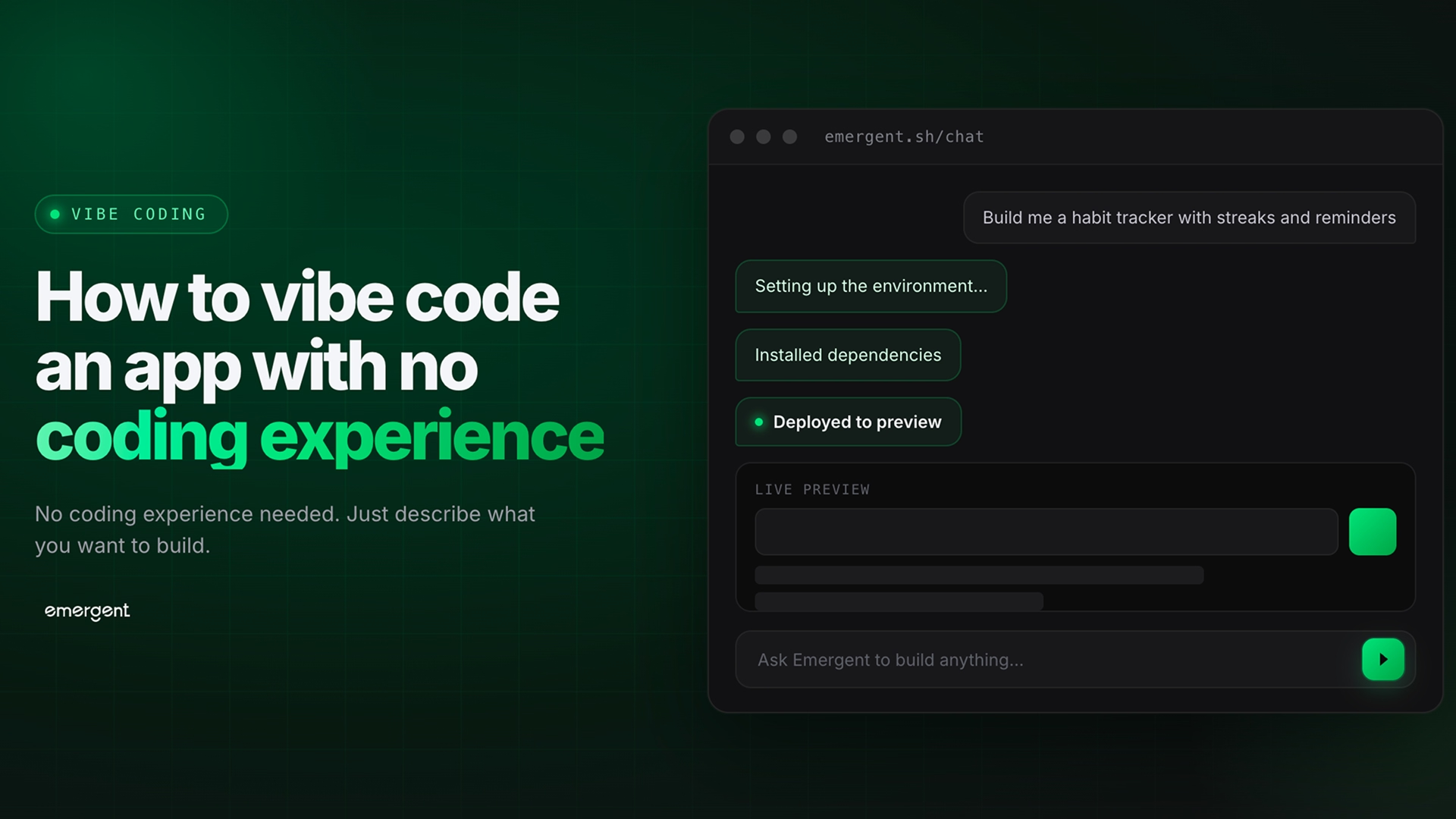
While Claude Cowork handles day-to-day file and email tasks, Emergent operates on a completely different level. It's an AI-powered full-stack vibe coding tool, meaning you describe an app idea in plain language and Emergent writes the entire codebase for you: frontend, backend, permissions, data scraping, the works.
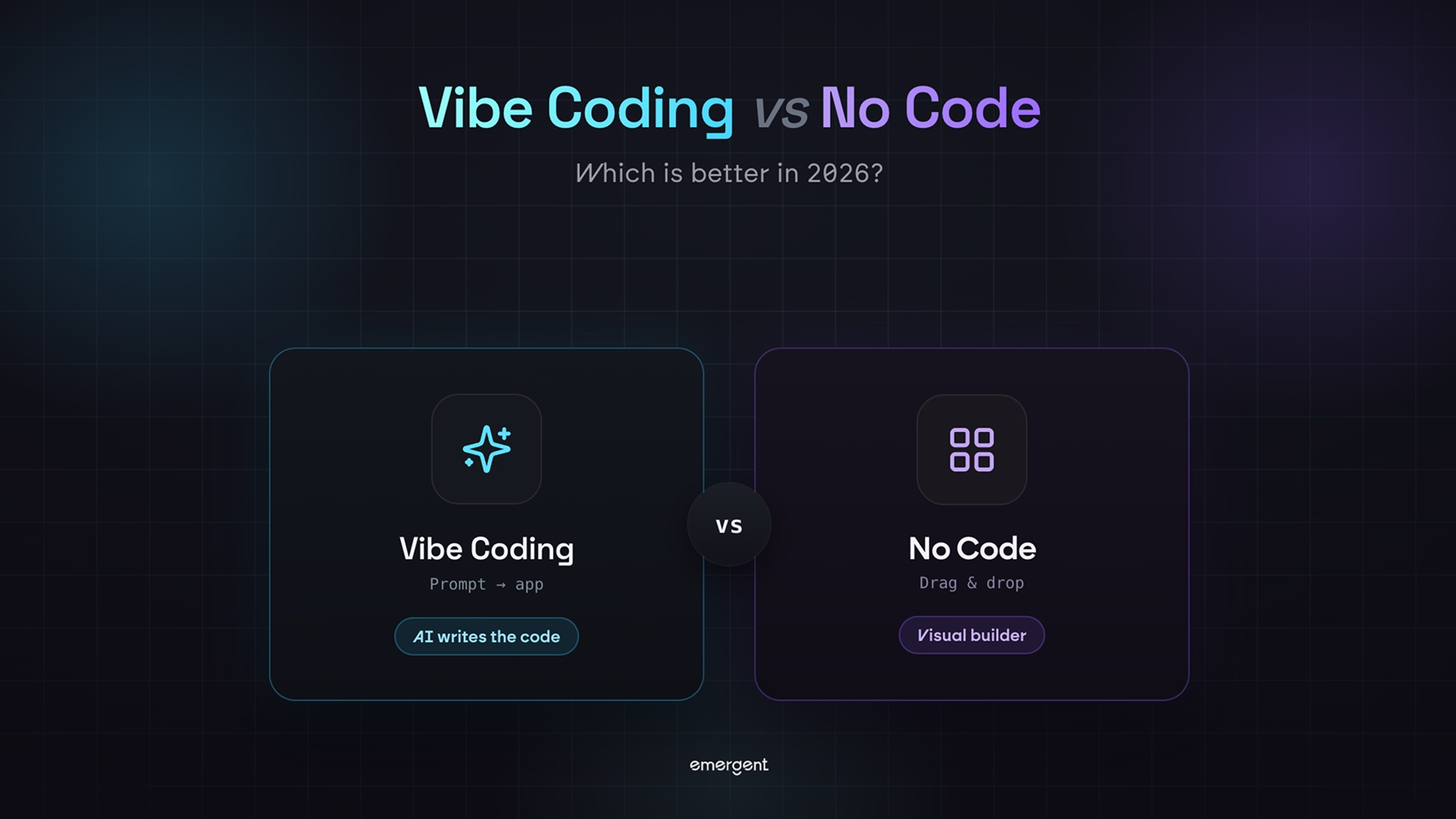
If you've heard the term "vibe coding," this is the most accessible version of it. Traditional vibe coding still expects you to sit inside a code editor, nudging an AI copilot line by line. Emergent removes that entirely. You don't configure agents manually, drag interface blocks around, or manage API keys. Emergent uses Claude and other models under the hood through what it calls a universal key, but all that complexity is invisible. You describe what you want in a prompt, and Emergent's AI agents handle the architecture, write the full-stack code, and deploy a working product.
Real Example 1: A Burst-Mode Self-Timer Camera App
The Problem Statement
If you create content solo, whether it's thumbnails, real estate photography, or fitness videos, you know the struggle of taking photos of yourself. Your phone's built-in timer gives you one shot per countdown. You end up sprinting back and forth, posing, checking the result, and repeating. You need a burst-mode self-timer that takes the first photo on a countdown and then keeps shooting at regular intervals. That kind of custom camera app doesn't exist in the App Store the way you need it, and hiring a developer to build one would cost hundreds or thousands of dollars.
How Emergent Solves It?
Emergent vibe-coded a working version in roughly ten minutes. The app grants camera access, lets you pick between 5-second and 10-second timers, and captures a series of photos you can scroll through afterward. No design instructions were given for this first version, so it looked basic, but functionally it worked exactly as described. When design inspiration was provided for a second app, Emergent produced a polished interface to match.
For anyone who films or photographs solo, this kind of custom tool used to require hiring a developer or learning to code. Now it requires a paragraph of text and ten minutes of patience.
Real Example 2: A Tennis Court Booking Aggregator
The Problem Statement
Booking public tennis courts in Los Angeles is needlessly frustrating. The city's official website is clunky. You have to click into each court individually, scroll through availability, and mentally piece together which times are open across multiple locations. There's no single view that shows everything at once. It's a 15-minute chore every time you want to play, and for anyone who books courts regularly, that friction adds up fast.
How Emergent Solves It?
A single prompt was all it took. Emergent handled the full stack: scraping the available court time data from the city's site, building a clean frontend that displays everything on one page, and styling it based on a Pinterest screenshot provided as design inspiration. The result was a polished, functional web app built in about ten minutes.
Emergent even suggested potential improvements on its own, like adding email notifications for when a court booking opens up. That's the vibe coding experience at its best: you describe the problem, and the tool handles everything from data layer to UI.
Why Emergent Is the Most Accessible Vibe Coding Tool Right Now
Other vibe coding options still assume some technical comfort. You might need to work inside a terminal, review pull requests, or at least understand what a framework is. Emergent strips all of that away. If you can type a prompt into ChatGPT, you can vibe-code a working app with Emergent. Your first app is free, and you only pay if you keep building.
People are already using it for serious projects. One medical clinic that was quoted $50,000 to build a custom patient portal built their own version with Emergent instead. That's the promise of full-stack vibe coding: ideas that used to require a development budget now just require a clear description of what you want.
How Claude Cowork and Emergent Work Together?
The real power isn't choosing one tool over the other. It's using both for what they're best at.
Claude Cowork excels at recurring, local tasks: organizing your files every time you import footage, drafting your emails every morning, and maintaining your personal AI voice across interactions. It's your daily workflow assistant.
Emergent excels at creation: turning an idea into a full-stack application through vibe coding, no developer needed. It's your on-demand development team.
Together, they represent a shift from AI as a chatbot you ask questions to, toward AI as a set of tools that do real work on your behalf.
The Honest Verdict
Claude Cowork is a genuine time-saver, but it's not the revolution that some YouTube thumbnails suggest. Setting up ten agents that talk to each other sounds impressive, but most people can't explain what those agents actually accomplish. The best Claude Cowork use cases are the simple, practical ones: folder organization, email drafting, and voice customization through global instructions.
Emergent, on the other hand, feels closer to that original "wow" moment when ChatGPT first launched. Full-stack vibe coding, where you describe an app and have it built in ten minutes, is a fundamentally different capability than what existed a year ago.
If you're looking to get started, begin with Claude Cowork for your daily workflow. Set up global instructions early. Connect your Gmail. Then, when you have an idea for a tool, website, or app, vibe-code it with Emergent and see what happens. That combination is where things start to get genuinely interesting.
Most AI app builders stop at prototypes. Emergent creates production-ready apps you can actually launch.
- Production-ready apps
- Web & mobile apps
- Deploy in minutes