Alternatives and Competitors
•
6 Best Claude Alternatives in 2026
Explore the best Claude Alternatives & competitors in 2026. Compare frontier AI models, capabilities, and use cases to choose the right model for your workloads.
Written By :

Divit Bhat
Frontier language models have evolved from experimental tools into core infrastructure components that shape how AI systems are designed, deployed, and scaled. As capabilities diversify across reasoning depth, multimodal processing, latency optimization, and ecosystem integration, builders rarely rely on a single model by default. Instead, selecting the right model has become a strategic engineering decision that directly affects product architecture, performance envelopes, and operational cost structures.
Claude Opus 4.6 represents a high capability reasoning oriented model suited for complex cognitive workloads, but many teams evaluate alternatives to better align with specific deployment needs or workload characteristics. Whether the goal is multimodal breadth, cost efficiency, ecosystem alignment, or infrastructure flexibility, understanding how competing frontier models differ is essential for informed selection. This guide explores viable alternatives, comparison factors, and decision frameworks to support that evaluation.
What Is Claude Opus 4.6?
Claude Opus 4.6 sits within the frontier tier of reasoning focused language models, designed to handle multi step logic, technical workflows, and long context comprehension with a strong emphasis on consistency. It is typically positioned for workloads where depth of understanding and structured execution reliability are more important than response speed or multimodal coverage. This makes it suitable for applications such as agent orchestration, document synthesis, code reasoning, and decision support systems.
Models in this category often act as cognitive engines embedded inside larger software architectures rather than standalone conversational interfaces. Their role extends to interpreting requirements, generating logic flows, and maintaining contextual coherence across extended interactions. Understanding this positioning provides context for evaluating alternatives, as competing models frequently optimize for different capability balances, such as broader modality support or deployment flexibility.
Why Developers Look for Claude Opus 4.6 Alternatives?
Latency Constraints in Production Pipelines
High capability reasoning models typically prioritize depth over response speed, which can introduce performance friction in real time or user facing environments. Applications requiring low latency interaction, rapid agent iteration, or high throughput processing may encounter scalability challenges when responsiveness becomes a bottleneck. Developers often explore alternatives that better align with interactive workload demands.
Cost Scaling Considerations
As application usage grows, operational cost profiles become a major architectural factor influencing model selection. Models tuned for high depth reasoning may incur higher usage expenses when applied to large volume workflows or continuous automation pipelines. Teams frequently investigate alternatives that provide acceptable capability tradeoffs while optimizing cost efficiency across production scale deployments.
Multimodal Capability Requirements
Some AI systems require integrated processing across text, image, audio, or video inputs to support user experiences or analytics workflows. Reasoning focused models may not emphasize multimodal breadth to the same degree as ecosystem driven alternatives. Builders seeking unified modality handling often compare options that support richer cross media interaction within a single model environment.
Ecosystem Integration Preferences
Model selection is often influenced by surrounding tooling ecosystems, platform integrations, and developer environment alignment. Teams operating within specific cloud or tooling stacks may prioritize compatibility and streamlined deployment pipelines over raw reasoning capability. Alternatives offering deeper ecosystem connectivity can reduce integration overhead and operational complexity.
Deployment Flexibility Requirements
Infrastructure control requirements vary widely across organizations, particularly when governance, customization, or on premises considerations are involved. Some teams prefer models that allow broader deployment flexibility or configuration control. Exploring alternatives enables alignment with internal policies, compliance requirements, or infrastructure strategy without constraining application development.
What to Look for in a Claude Opus 4.6 Alternative?
Capability Alignment With Workload Needs
Effective model selection begins with mapping capability strengths to application requirements rather than defaulting to perceived ranking. Builders should evaluate whether reasoning depth, modality breadth, or interaction responsiveness is the primary driver for their systems. Selecting models based on workload fit improves performance efficiency and architectural coherence.
Balanced Cost to Performance Characteristics
Understanding how operational cost scales alongside capability output is critical for sustainable deployment. Teams should assess pricing structures relative to expected usage patterns and workload intensity. Choosing alternatives that deliver optimal value across scale conditions ensures long term viability beyond initial experimentation phases.
Tool Interaction and Orchestration Readiness
Modern AI systems rarely operate in isolation, relying instead on coordinated interactions with APIs, services, and data pipelines. Evaluating how well alternative models operate within orchestrated environments can significantly impact integration complexity. Models demonstrating structured execution discipline often perform better within automated workflows.
Ecosystem Compatibility and Integration Depth
Alignment with existing infrastructure, cloud services, or developer tooling influences operational efficiency and maintenance overhead. Alternatives that integrate naturally within established environments reduce friction during deployment and iteration. Ecosystem fit frequently becomes as influential as raw model capability during selection processes.
Scalability and Deployment Control Options
Future growth considerations require assessing whether models can scale alongside evolving product demands without architectural restructuring. Builders should consider availability of configuration control, hosting flexibility, and operational governance options. These characteristics support adaptability as application complexity expands.
Best Claude Opus 4.6 Alternatives and Competitors in 2026
As frontier models continue to diversify across reasoning depth, multimodal processing, ecosystem integration, and deployment flexibility, selecting an alternative involves balancing capability strengths against workload priorities. The following models represent viable options for builders seeking different optimization profiles across performance, scalability, and architectural fit.
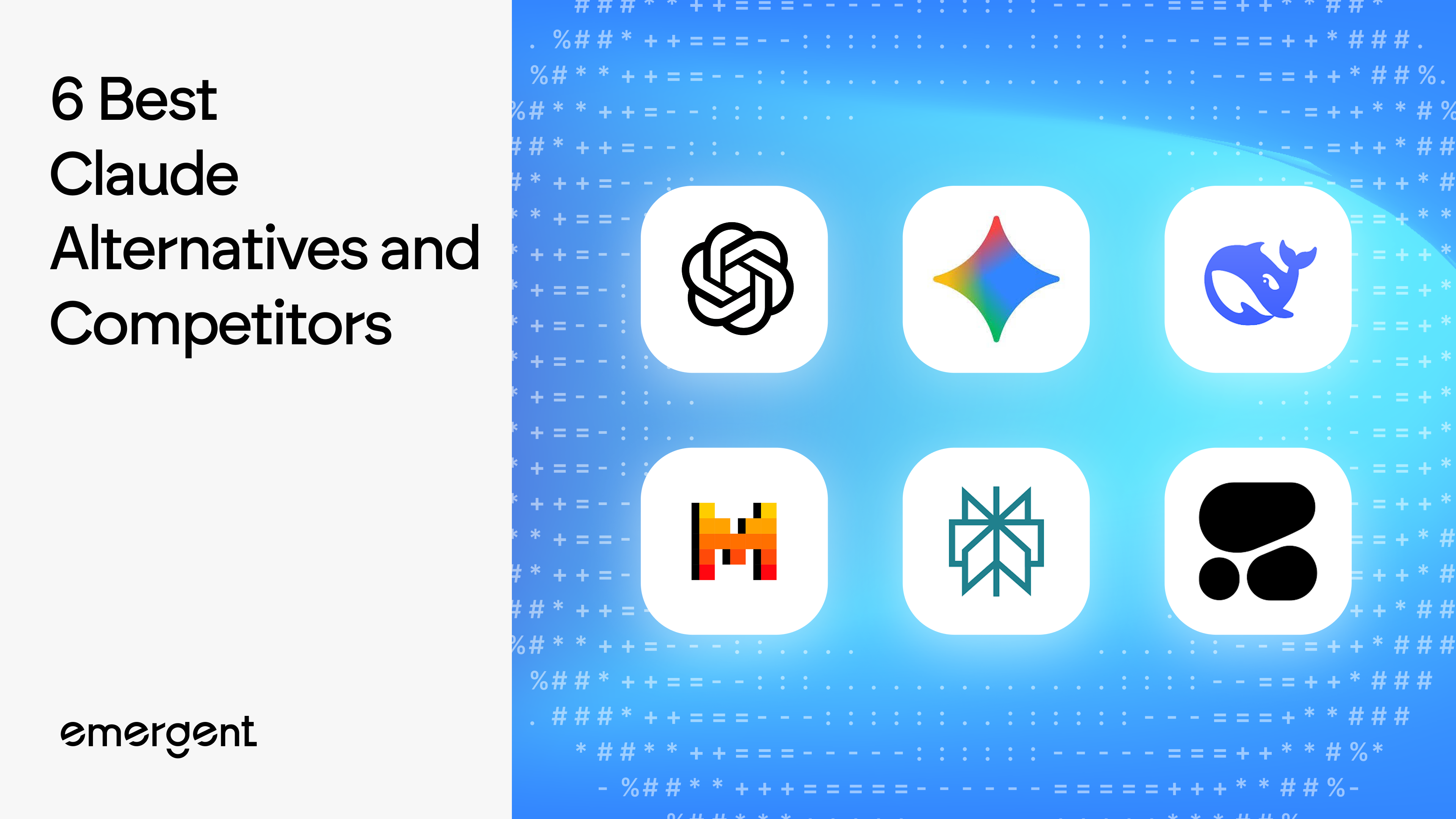
Here’s the list of 6 best Claude Opus 4.6 alternatives and competitors to overcome the above challenges.
GPT Frontier Model — ChatGPT 5.2
Gemini Frontier Model — Gemini 3 Ultra
DeepSeek Latest Model — DeepSeek V3
Mistral High Capability Model — Mistral Large 3
Cohere Enterprise Model — Command A
Perplexity Latest Model — Perplexity Deep Research
Frontier Models Comparison Overview
This overview compares leading alternatives across characteristics commonly evaluated by technical teams when selecting a model for production workflows, agent systems, or application integration.
Parameter | GPT Frontier | Gemini Frontier | DeepSeek Latest | Mistral High Cap | Cohere Enterprise | Perplexity Latest |
Model Positioning | Balanced general frontier capability | Multimodal ecosystem centric | Reasoning and efficiency focused | Flexible deployment oriented | Enterprise workflow optimized | Retrieval and reasoning hybrid |
Primary Optimization | Versatility across workloads | Multimodal integration | Performance to cost ratio | Infrastructure flexibility | Reliability and governance | Knowledge grounded responses |
Multi Step Reasoning Depth | Strong | Moderate to strong | Strong | Moderate | Moderate | Moderate |
Coding Capability | Strong generation and debugging | Moderate | Strong | Strong | Moderate | Moderate |
Long Context Handling | High | High | High | Moderate to high | Moderate | Moderate |
Multimodal Native Strength | Strong expanding | Very strong | Limited to moderate | Limited | Limited | Moderate |
Tool Interaction Discipline | Strong | Moderate | Moderate | Moderate | Strong | Moderate |
API Maturity | Very mature | Mature | Rapidly evolving | Mature | Mature | Emerging |
Latency Profile | Balanced | Balanced | Efficient | Efficient | Balanced | Efficient |
Cost Efficiency | Moderate | Moderate | High | Moderate to high | Moderate | Moderate |
Enterprise Suitability | High | High | Growing | Moderate | Very high | Moderate |
Deployment Flexibility | Managed environment | Ecosystem dependent | Flexible options | High flexibility | Managed enterprise | Platform coupled |
Ecosystem Integration | Broad tooling ecosystem | Deep platform integration | Growing ecosystem | Open integration friendly | Enterprise integrations | Search centric ecosystem |
Agent Workflow Fit | Strong | Moderate | Strong | Moderate | Strong | Moderate |
Retrieval Augmentation | Supported | Supported | Supported | Supported | Strong | Core strength |
Documentation Depth | Extensive | Extensive | Improving | Extensive | Extensive | Moderate |
Update Velocity | High | High | Very high | High | Moderate | High |
Ideal Workload Type | General applications | Multimodal apps | Cost efficient reasoning | Flexible deployments | Enterprise pipelines | Knowledge search tools |
GPT Frontier Model — ChatGPT 5.2
ChatGPT 5.2 represents a frontier class general capability model designed to deliver balanced performance across reasoning, coding, multimodal interaction, and developer ecosystem maturity. Rather than specializing heavily in a single optimization dimension, it focuses on consistency across varied application surfaces, making it a dependable baseline model for teams building user facing products that evolve over time. This breadth allows developers to deploy across diverse interaction types without architectural fragmentation or model switching.
As an alternative to reasoning centric systems, ChatGPT 5.2 is frequently chosen when versatility and ecosystem accessibility outweigh deep specialization. It integrates effectively within development pipelines that prioritize rapid feature expansion, interactive user experiences, and multimodal workflows. Its adoption across industries reflects the practical value of stable tooling, strong community knowledge, and cross domain capability coverage for production scale applications.
What ChatGPT 5.2 can build for you?
Multimodal assistants combining text and visual interpretation
Developer copilots embedded into engineering workflows
Customer interaction automation platforms
Knowledge summarization and synthesis tools
Cross domain productivity agents
Use Cases
Multimodal Customer Support Platforms
Organizations can deploy assistants capable of interpreting screenshots, images, or interface visuals alongside user queries to resolve issues faster. This reduces escalation rates and improves self service resolution experiences. Integration into support portals enhances operational efficiency.
Engineering Documentation Interpretation Tools
Development teams can build systems that analyze internal technical documentation and assist engineers in understanding implementation requirements. This accelerates onboarding and reduces knowledge bottlenecks. It also improves cross team collaboration through contextual assistance.
Interactive Educational Tutoring Systems
Learning platforms can implement adaptive tutoring assistants that adjust explanations based on student responses and maintain conversational continuity. This creates more personalized educational engagement. It supports scalable digital learning without sacrificing responsiveness.
Key Strengths
Balanced Cross Capability Performance
ChatGPT 5.2 performs reliably across reasoning, coding, conversation, and multimodal interaction rather than optimizing narrowly for one category. This makes it effective for applications requiring adaptability as product scope evolves. Developers benefit from maintaining continuity across multiple system components.
Integrated Multimodal Processing
Native handling of both textual and visual inputs enables richer application interfaces and analytical workflows. Builders can design experiences that interpret images alongside contextual prompts without requiring separate model orchestration. This simplifies product architecture and enhances interaction depth.
Mature Ecosystem and Tooling
Extensive documentation, stable API infrastructure, and widespread developer familiarity reduce integration friction. Teams benefit from faster onboarding and more predictable deployment outcomes. Community generated resources further accelerate experimentation and troubleshooting.
Reliable Software Development Assistance
Strong coding comprehension and generation capabilities support structured logic creation, debugging workflows, and documentation interpretation. This positions the model well within development productivity environments. It enhances engineering efficiency without requiring specialized configuration.
Conversational Context Stability
Dialogue continuity and instruction tracking allow sustained interaction sessions without major degradation in relevance. This improves performance in user facing assistant applications and workflow driven conversational interfaces. It supports experiences requiring contextual awareness over extended exchanges.
Iterative Capability Evolution
Frequent improvements and platform investment ensure the model remains aligned with evolving development expectations. Builders benefit from continuous performance gains without migration complexity. This stability contributes to long term infrastructure confidence.
Where ChatGPT 5.2 Excels (and Where It Doesn’t)?
Excels | Doesn’t |
Handling diverse application workloads simultaneously | Optimizing specifically for deep reasoning pipelines |
Supporting multimodal interaction driven products | Offering extensive deployment customization control |
Providing stable developer ecosystem resources | Delivering lowest cost performance ratio scenarios |
Assisting with software development productivity | Specializing in retrieval centric workflows |
Maintaining conversational continuity in assistants | Serving as niche domain reasoning specialist |
Gemini Frontier Model — Gemini 3 Ultra
Gemini 3 Ultra represents Google’s highest capability tier within the Gemini model family, designed for complex multimodal reasoning, ecosystem integration, and large context processing across structured workflows. Unlike models optimized for generalized versatility, Gemini 3 Ultra emphasizes deep interaction across modalities and tight alignment with Google’s infrastructure stack. This positioning makes it particularly relevant for teams building applications embedded within productivity ecosystems or data rich enterprise environments.
As an alternative to reasoning centric models, Gemini 3 Ultra appeals to builders prioritizing multimodal depth, platform connectivity, and context scale. Its ability to synthesize information across varied input types and maintain awareness across large interaction windows enables system designs that rely on continuous contextual interpretation. This makes it suitable for workflows centered around cross media understanding, collaboration augmentation, and knowledge intensive environments.
What Gemini 3 Ultra can build for you?
Cross modality enterprise assistants
Media aware analytical tools
Workspace embedded productivity agents
Context heavy research systems
Data interpretation interfaces
Use Cases
Multimedia Content Moderation Pipelines
Platforms handling large volumes of mixed media content can build systems that analyze images, text, and contextual metadata simultaneously to detect violations or categorize submissions. This reduces moderation backlog and improves review accuracy. The unified modality handling eliminates the need for separate processing models.
Enterprise Workspace Insight Assistants
Organizations operating within productivity suites can deploy assistants that interpret documents, emails, and collaborative artifacts to surface insights or summarize project status. This improves information visibility across teams. Integration with workflow environments enhances day to day decision support.
Visual Data Interpretation for Operations Teams
Operational dashboards containing charts, diagrams, or visual indicators can leverage Gemini to interpret graphical information and provide contextual explanations. This assists teams in understanding trends without manual analysis. It improves response speed in monitoring scenarios.
Key Strengths
Deep Multimodal Reasoning Integration
Gemini 3 Ultra processes text, visual signals, and contextual inputs within unified reasoning flows. Builders benefit from designing interaction surfaces that combine multiple input types without complex orchestration layers. This enables richer application experiences and analytical capabilities.
Large Context Window Awareness
High context retention supports applications requiring synthesis across extensive document sets or interaction histories. Developers can design systems that maintain continuity across longer sessions without context fragmentation. This improves reliability in knowledge intensive environments.
Ecosystem Native Connectivity
Tight alignment with platform infrastructure enables smoother integration within supported tooling environments. Teams leveraging compatible stacks experience reduced deployment complexity. This compatibility improves operational efficiency for ecosystem aligned deployments.
Structured Information Interpretation
Gemini demonstrates strong capability in interpreting structured and semi structured data sources alongside natural language inputs. This enables analytical workflows that combine narrative and tabular information. It enhances utility within data centric applications.
Continuous Capability Expansion
Active development cadence ensures ongoing enhancement of modality handling and reasoning depth. Builders benefit from incremental improvements without system migration overhead. This provides long term scalability confidence.
Visual Context Awareness
The model’s sensitivity to visual relationships and layout interpretation supports applications interacting with diagrams, UI captures, or graphical documentation. This expands usability beyond text centric reasoning. It opens new design opportunities for interface aware tooling.
Where Gemini 3 Ultra Excels (and Where It Doesn’t)?
Excels | Doesn’t |
Multimodal reasoning across varied input types | Delivering maximum deployment flexibility |
Integration within ecosystem aligned environments | Operating independently of platform stack |
Large context synthesis workflows | Minimizing cost in lightweight workloads |
Visual interpretation applications | Specializing in ultra deep code reasoning |
Data rich enterprise interaction systems | Acting as minimal latency edge solution |
DeepSeek Latest Model — DeepSeek V3
DeepSeek V3 represents a frontier model engineered with a strong focus on reasoning efficiency, technical problem solving, and performance to cost optimization. Unlike models prioritizing multimodal breadth or ecosystem alignment, DeepSeek emphasizes computational efficiency and analytical capability within structured reasoning environments. This orientation has made it particularly relevant among builders seeking strong logical output while maintaining tighter control over operational cost envelopes.
As an alternative to models tuned for conversational versatility or platform integration, DeepSeek V3 often attracts teams designing computation heavy pipelines, algorithmic reasoning systems, or technically intensive workflows. Its strengths lie in domains where mathematical interpretation, logical consistency, and structured evaluation take precedence over multimodal interaction. This positioning allows developers to deploy capable reasoning engines within architectures sensitive to scaling efficiency and processing discipline.
What DeepSeek V3 can build for you?
Analytical reasoning engines
Technical evaluation pipelines
Algorithm design assistants
Logic validation tools
Structured data interpretation systems
Use Cases
Quantitative Research Automation
Financial or scientific research teams can deploy systems that interpret mathematical models, evaluate hypotheses, and assist in numerical experimentation. This accelerates exploratory analysis while maintaining reasoning discipline. It reduces manual evaluation cycles in data driven investigations.
Algorithm Prototyping Assistants
Engineering teams can build tools that assist in designing and refining algorithmic approaches for optimization or simulation challenges. These systems help explore alternative strategies before implementation. This improves innovation velocity in technical problem solving environments.
Formal Logic Validation Systems
Organizations working with rule based systems or governance frameworks can create assistants that verify logical consistency across structured policy or specification documents. This supports compliance and decision validation processes. It minimizes overlooked contradictions in complex rule sets.
Key Strengths
Strong Mathematical Reasoning Orientation
DeepSeek V3 demonstrates effectiveness in numerical interpretation and formal reasoning tasks. Builders can rely on consistent structured evaluation when working with analytical domains. This supports workloads where logical precision is critical.
Performance to Cost Efficiency Balance
Optimization toward computational efficiency enables viable deployment across high volume reasoning workflows. Teams managing scaling cost constraints benefit from maintaining capability without excessive resource overhead. This balance supports sustainable production usage.
Technical Problem Solving Depth
Capability in addressing structured engineering and algorithmic challenges makes it suitable for technically intensive application domains. It handles layered technical prompts with discipline. This improves outcomes in complex evaluation scenarios.
Structured Output Consistency
The model tends to maintain formatting and logical sequencing across structured responses. Builders implementing downstream automation benefit from predictable output organization. This enhances integration reliability within pipelines.
Focused Reasoning Architecture
By prioritizing analytical depth over broad interaction coverage, DeepSeek V3 delivers specialization in targeted workloads. This allows teams to deploy capability aligned precisely with technical objectives. It avoids unnecessary overhead tied to generalized interaction features.
Rapid Iterative Advancement
Active development progress contributes to ongoing refinement of reasoning effectiveness and efficiency metrics. Builders adopting evolving capability sets benefit from continuous improvements. This strengthens long term relevance for analytical deployments.
Where DeepSeek V3 Excels (and Where It Doesn’t)?
Excels | Doesn’t |
Mathematical and analytical reasoning tasks | Delivering rich multimodal interaction |
Cost conscious scaling scenarios | Supporting visual interpretation workflows |
Algorithmic problem solving pipelines | Integrating deeply into ecosystem stacks |
Structured output dependent systems | Powering conversational assistants |
Logical evaluation applications | Providing broad general interaction versatility |
Mistral High Capability Model — Mistral Large 3
Mistral Large 3 represents the latest high capability model from Mistral designed to deliver strong reasoning, multilingual processing, and coding performance while maintaining deployment flexibility across diverse infrastructure environments. Compared to ecosystem locked or modality specialized models, it balances technical depth with integration adaptability, allowing builders to deploy sophisticated AI systems without constraining architecture to vendor specific platforms. This makes it particularly relevant for teams seeking both capability advancement and operational independence.
As an alternative to reasoning centric or ecosystem bound models, Mistral Large 3 appeals to organizations prioritizing scalability across multilingual contexts, engineering centric workflows, and infrastructure sovereignty. Its strengths align with environments where system configurability, language diversity, and technical task execution are primary requirements. This positioning enables developers to support globally distributed products and technically intensive pipelines while maintaining control over deployment topology.
What Mistral Large 3 can build for you?
Multilingual AI interfaces
Global support automation systems
Technical documentation interpreters
Cross region deployment services
Engineering workflow assistants
Use Cases
Global Customer Interaction Platforms
Companies serving multilingual user bases can build assistants capable of interacting fluently across languages without separate model orchestration. This improves accessibility and user experience consistency. It enables scalable international expansion of digital services.
Technical Specification Translation Systems
Engineering organizations can deploy tools that translate complex technical documentation across languages while preserving domain context. This accelerates collaboration between globally distributed teams. It reduces misunderstanding in implementation workflows.
Cross Market Product Localization Pipelines
Product teams launching in new regions can automate localization of onboarding flows, product messaging, and knowledge bases. This shortens go to market timelines. It supports consistent user engagement across markets.
Key Strengths
Advanced Multilingual Capability
Mistral Large 3 demonstrates strong performance across numerous languages, enabling builders to create globally accessible applications. This reduces reliance on segmented model stacks. It improves scalability of international user experiences.
Robust Coding and Technical Reasoning
The model handles structured engineering prompts and system level logic tasks effectively. This supports development tools and technical evaluation systems. It enhances productivity in engineering driven environments.
Deployment Adaptability
Support for varied infrastructure strategies allows integration into cloud, hybrid, or controlled hosting scenarios. Builders retain architectural flexibility. This improves long term operational planning.
Balanced Capability Coverage
Mistral Large 3 balances reasoning, language processing, and coding strength without specializing narrowly. This versatility enables use across multiple product surfaces. It simplifies model selection decisions.
Integration Friendly Architecture
Compatibility across engineering ecosystems reduces friction when embedding into pipelines. Teams can introduce AI functionality without extensive restructuring. This supports incremental adoption.
Scalability Across Regional Contexts
Language breadth and deployment flexibility enable expansion into geographically distributed environments. Organizations can scale services without model replacement. This supports sustained growth strategies.
Where Mistral Large 3 Excels (and Where It Doesn’t)?
Excels | Doesn’t |
Multilingual interaction systems | Delivering deepest multimodal visual reasoning |
Supporting globally distributed users | Matching ecosystem integrated tooling depth |
Technical documentation handling | Optimizing purely for analytical math workloads |
Flexible deployment scenarios | Providing highest conversational fluency tuning |
Engineering centric workflows | Leading retrieval grounded knowledge tasks |
Cohere Enterprise Model — Command A
Command A represents Cohere’s most advanced enterprise oriented language model, built to support structured business workflows, retrieval augmented systems, and tool driven automation environments. Unlike models centered on multimodal breadth, multilingual reach, or deployment configurability, Command A prioritizes knowledge grounding, pipeline stability, and enterprise scale orchestration. This orientation positions it strongly within organizations designing AI systems around internal data utilization rather than public interaction surfaces.
As an alternative to reasoning centric models, Command A appeals to teams focused on embedding AI into operational infrastructure, particularly where document retrieval, tool execution, and workflow integration are dominant requirements. Its design aligns with environments that value structured output reliability and scalable enterprise deployment readiness. This makes it particularly effective in scenarios where AI must augment internal processes rather than act as a standalone conversational interface.
What Command A can build for you?
Enterprise knowledge assistants
Retrieval augmented automation tools
Internal process copilots
Document grounded agents
Tool driven workflow systems
Use Cases
Legal Document Review Assistants
Law firms or compliance teams can deploy systems that retrieve relevant clauses, compare contractual language, and highlight deviations across document sets. This accelerates review cycles and improves consistency in oversight. It reduces manual scanning effort across large legal repositories.
Healthcare Knowledge Navigation Systems
Healthcare organizations can build assistants that surface protocol guidance, interpret procedural documentation, and assist staff in locating relevant internal knowledge. This improves information accessibility in time sensitive environments. It enhances operational support without replacing domain expertise.
Procurement Intelligence Platforms
Enterprises can deploy systems that analyze vendor documentation, compare proposals, and surface negotiation insights across procurement cycles. This aids decision making during sourcing processes. It streamlines evaluation across complex supplier datasets.
Key Strengths
Retrieval Augmented Workflow Alignment
Command A integrates effectively within architectures leveraging external knowledge grounding. This supports systems where contextual accuracy depends on referencing internal datasets. It enhances reliability in information dependent workflows.
Enterprise Scale Stability
The model is designed to operate consistently across structured business environments and high volume internal usage scenarios. This reliability supports mission critical deployments. It enables organizations to embed AI deeper within operational pipelines.
Tool Execution Integration
Command A performs effectively when interacting with structured tool chains or automated task pipelines. Builders can construct systems that coordinate execution across services. This capability strengthens orchestration driven application designs.
Long Context Knowledge Processing
Extended context handling allows interpretation of large documentation bodies or knowledge repositories. This enables synthesis across complex organizational data sources. It supports analytical and decision support use cases.
Structured Output Reliability
The model demonstrates disciplined formatting and predictable response organization across structured tasks. This benefits automation dependent integrations. It reduces downstream parsing complexity.
Business Workflow Specialization
Command A aligns closely with enterprise process augmentation rather than general interaction scenarios. This specialization improves performance in operational settings. It enhances value within internal productivity ecosystems.
Where Command A Excels (and Where It Doesn’t)?
Excels | Doesn’t |
Retrieval grounded enterprise systems | Multimodal interaction heavy applications |
Internal workflow augmentation | Consumer facing conversational assistants |
Tool orchestrated automation pipelines | Visual data interpretation workflows |
Long document knowledge processing | Multilingual specialization scenarios |
Business process intelligence support | Deployment independence customization |
Perplexity Research Model — Sonar Deep Research
Sonar Deep Research represents Perplexity’s highest depth research oriented capability layer, designed for exhaustive information discovery, multi source synthesis, and structured analytical reporting. Unlike models optimized for conversational versatility, multimodal interaction, or enterprise pipeline integration, this system focuses on exploring external knowledge landscapes and producing grounded insights supported by broad retrieval coverage. Its architecture combines reasoning processes with extensive search orchestration, making it particularly suited for knowledge intensive investigative workflows.
As an alternative to reasoning centric standalone models, Sonar Deep Research appeals to teams requiring dynamic external knowledge incorporation rather than internal dataset grounding or platform integration. It excels in environments where the objective is discovery, comparison, or intelligence generation across rapidly evolving information domains. This positioning makes it especially valuable for strategic research, market analysis, and exploratory synthesis tasks where coverage breadth matters as much as reasoning depth.
What Sonar Deep Research can build for you?
Research automation tools
Market intelligence assistants
Trend analysis systems
Competitive landscape explorers
Knowledge discovery platforms
Use Cases
Startup Landscape Intelligence Systems
Venture teams can deploy assistants that continuously analyze funding activity, product launches, and competitive signals across industries. This supports investment screening and strategic awareness. It enables faster opportunity identification in emerging markets.
Academic Literature Mapping Tools
Research groups can create systems that aggregate publications, cluster emerging themes, and summarize developments across fields. This accelerates knowledge discovery for scholars. It reduces time spent manually tracking domain evolution.
Strategic Policy Impact Exploration
Government or advisory organizations can analyze potential outcomes of regulatory proposals by synthesizing global precedent data and expert commentary. This aids scenario planning. It enhances evidence based decision support.
Key Strengths
Extensive Source Exploration Capability
Sonar Deep Research performs wide scope discovery across diverse information repositories. Builders can leverage this to generate comprehensive contextual understanding for investigative tasks. This expands analytical coverage beyond isolated datasets.
Multi Source Synthesis Reasoning
The system integrates findings from varied origins into coherent structured insights. This enables applications producing consolidated research outputs. It improves clarity when navigating complex information landscapes.
Dynamic Knowledge Currency
Access to evolving external information allows systems to remain relevant in fast changing domains. Builders benefit from continuously updated perspectives. This supports decision making based on current signals.
Structured Analytical Output Generation
Responses are often organized in report oriented formats that assist downstream interpretation or presentation. This supports workflows requiring digestible summaries. It enhances usability for professional research contexts.
Exploratory Query Expansion
The model adapts queries to investigate adjacent or implied dimensions of a topic. This deepens discovery depth. It uncovers insights that may be overlooked through manual exploration.
Investigation Oriented Design
Its architecture prioritizes knowledge exploration rather than conversational interaction or operational orchestration. This specialization benefits intelligence generation scenarios. It strengthens capability in discovery driven workflows.
Where Sonar Deep Research Excels (and Where It Doesn’t)?
Excels | Doesn’t |
Broad external knowledge discovery | Running internal enterprise pipelines |
Multi source insight synthesis | Performing deep software coding workflows |
Strategic intelligence exploration | Supporting multimodal interaction design |
Research oriented report generation | Deploying within controlled infrastructure |
Rapid domain landscape mapping | Acting as generalized conversational engine |
Which One Should You Choose?
Choose this if you need a versatile, general capability model that performs consistently across coding, multimodal interaction, and conversational applications. It works well as a baseline choice when product scope may evolve and you want broad ecosystem support and stability.
Best suited for workflows centered on multimodal reasoning, large context interpretation, or integration within productivity and collaboration ecosystems. It’s particularly effective when applications rely on interpreting visual data alongside text or synthesizing information across extensive context windows.
Ideal for analytical, mathematical, or structured reasoning workloads where cost efficiency and technical problem solving depth are primary concerns. Teams building evaluation pipelines or algorithm focused tools benefit most from its reasoning specialization.
A strong fit for globally deployed or multilingual systems that require infrastructure flexibility and language diversity. Choose this when supporting cross region users, localization pipelines, or engineering workflows that prioritize deployment control.
Most effective for enterprise environments integrating AI with internal knowledge repositories, tools, or structured workflows. Organizations embedding retrieval grounded intelligence into business processes will find this model aligned with operational augmentation needs.
Best for discovery driven workflows involving market research, academic mapping, or strategic intelligence synthesis. It excels when the goal is exploring external knowledge landscapes rather than executing application logic or automation tasks.
Conclusion
Selecting an alternative to Claude Opus 4.6 ultimately depends on the architectural priorities driving your AI systems rather than absolute capability rankings. Frontier models now specialize across domains such as multimodal reasoning, analytical depth, enterprise orchestration, deployment flexibility, and research synthesis, making contextual alignment far more valuable than defaulting to a single perceived leader.
By evaluating alternatives through workload fit, infrastructure constraints, and product goals, builders can assemble model stacks that maximize efficiency and capability simultaneously. As the frontier ecosystem continues to diversify, thoughtful model selection will remain a defining factor in designing scalable, resilient, and differentiated AI driven applications.
FAQs
1. What is the best alternative to Claude Opus 4.6?
There isn’t a universal best option. The optimal choice depends on whether your workload prioritizes multimodal processing, reasoning depth, enterprise integration, or research discovery.