If you've been trying to build an app without hiring a developer, you've probably considered comparing Lovable vs Bolt vs Emergent. All three are AI app builders where you describe what you want in plain language, and the tool writes the code for you.
To compare them, I used the same build across all three and made a simple habit tracker with a user login and a database.
Lovable vs Bolt vs Emergent: At a Glance
All three generate a working app from a text prompt. They differ after the first build, when you need changes, bug fixes, and an app that real users can use.
| Tool | Best For | Starting Price | Key Strength |
|---|---|---|---|
| Lovable | Non-technical founders building a polished MVP | Free, then $25/mo | Cleanest UI by default, deepest review record |
| Bolt | Fast prototyping if you're comfortable with code | Free, then $25/mo | Fastest first draft, only rewrites changed code |
| Emergent | Founders building full-stack apps with users, workflows, and payments | Free, then $20/mo | An agent that asks questions and runs the whole flow |
Choose Lovable if you want a good-looking MVP fast and can get a developer to check the backend and SEO before launch.
Choose Bolt if you're comfortable with code and want the fastest first version you'll finish steering yourself.
Choose Emergent if you want the agent to handle more of the full-stack build, including user flows and payment-style app logic, and you are willing to manage higher credit use, slower fixes, and support risk.
Meet the Contenders
The low-code market isn’t niche anymore. A Forrester survey found that 87% of enterprise developers now use low-code development platforms for some part of their development work. Lovable, Bolt, and Emergent take three different approaches to that building experience.
Before comparing them, it helps to define what each tool does and who it is built for.
Lovable: The Polished MVP Builder
Lovable builds a full-stack web app from the description you type. You type what you want. Lovable generates the frontend, connects to a database, and sets up user login without asking you to write code.
The planning step is the useful part. Lovable shows you a plan first, so you can see the structure it will create before it starts writing code. The plan saves a lot of back-and-forth, especially if you're non-technical and can't easily spot when a build is going in the wrong direction.
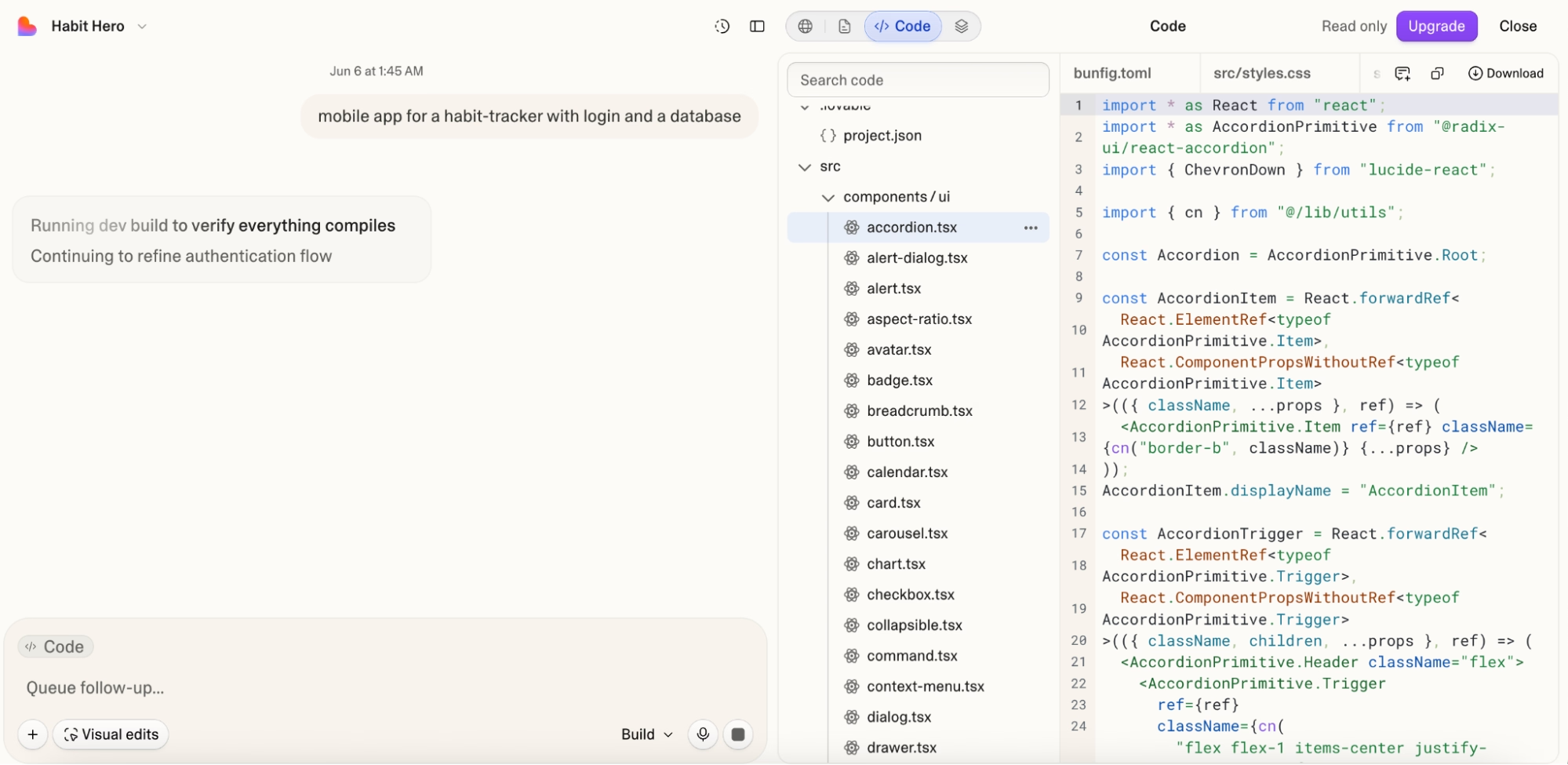
It also has the most mature Supabase integration of the three. Supabase is the service these tools use to handle your database and login system. A tool's Supabase setup is one of the clearest signals of how far it can take you past a basic prototype.
Clean output, a planning step, and a solid database setup are why non-technical founders and indie hackers tend to reach for Lovable first. It also has the deepest review history of the three, which matters when you're trying to figure out whether a tool is worth your time and money.
Not sure Lovable is the right fit for what you're building? Our best Lovable alternatives breakdown covers the closest options worth trying.
Bolt: The Fast Browser IDE
Bolt is a browser-based build environment made by StackBlitz. Like Lovable, it generates full-stack apps from a text prompt. Bolt is built around speed, and it gets there by changing less code at a time.
Most AI builders regenerate large chunks of code every time you make a change. Bolt doesn't. It rewrites only the specific code that changed, which means edits are faster and cheaper on tokens.
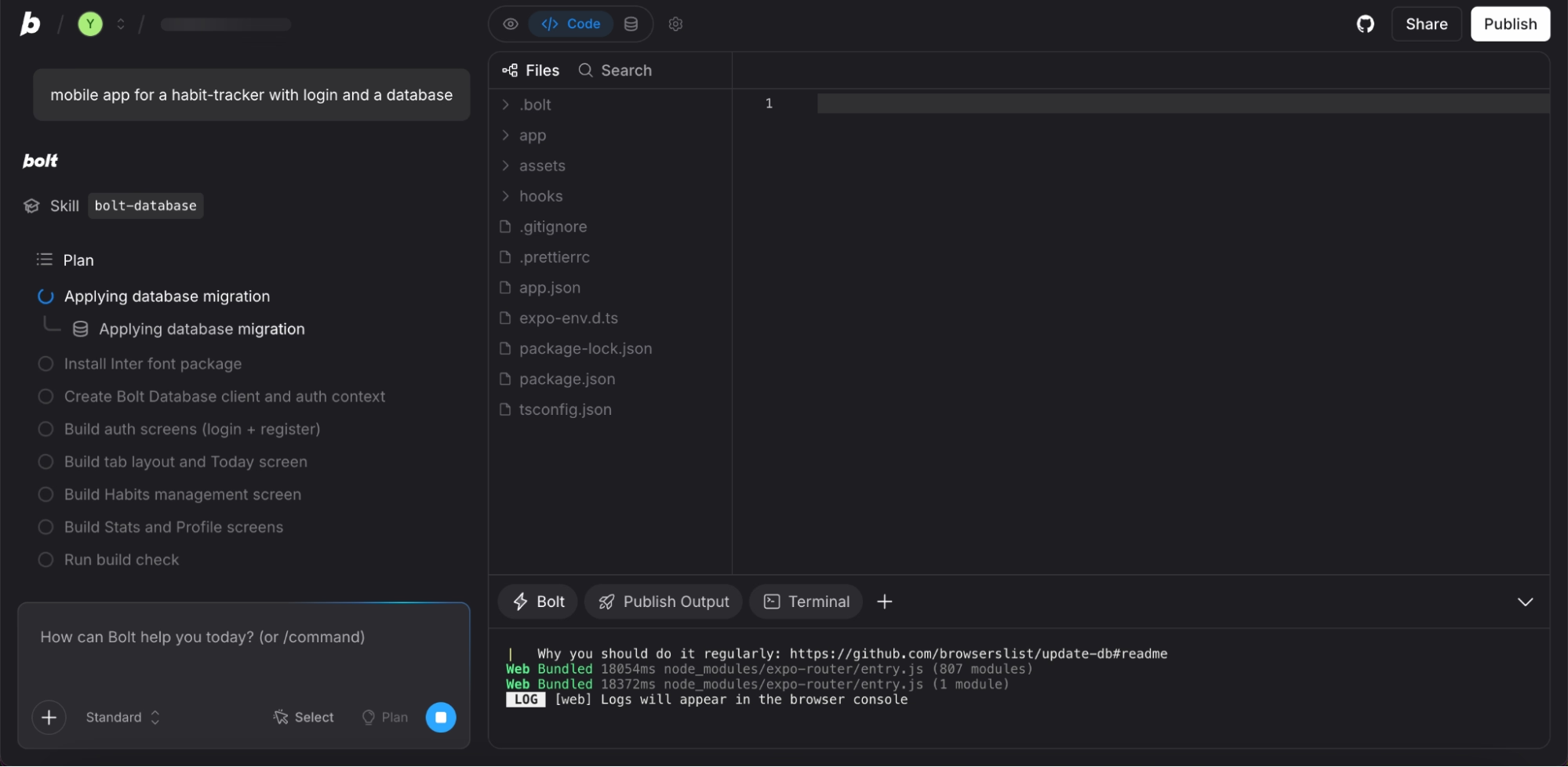
You can also edit code directly in the browser and lock specific files so the AI won't touch them. That control appeals to developers who want AI assistance without losing control. It also means Bolt assumes a higher level of technical comfort than the other two. If you're not comfortable reading code at all, Bolt can feel less forgiving when something breaks.
Not sure Bolt.new is the right fit for your comfort level? Our Best Bolt.new alternatives breakdown covers what else is worth trying.
Emergent: The Full-Stack App Builder
Emergent uses an agent-led build flow. Emergent uses an agent flow instead of a prompt-by-prompt build process. It asks you clarifying questions about what you're building, then specialized agents handle everything from interface design to testing and deployment.
Emergent automatically puts the result on managed hosting, with built-in login and a database included. You don't have to connect a separate service or configure anything.
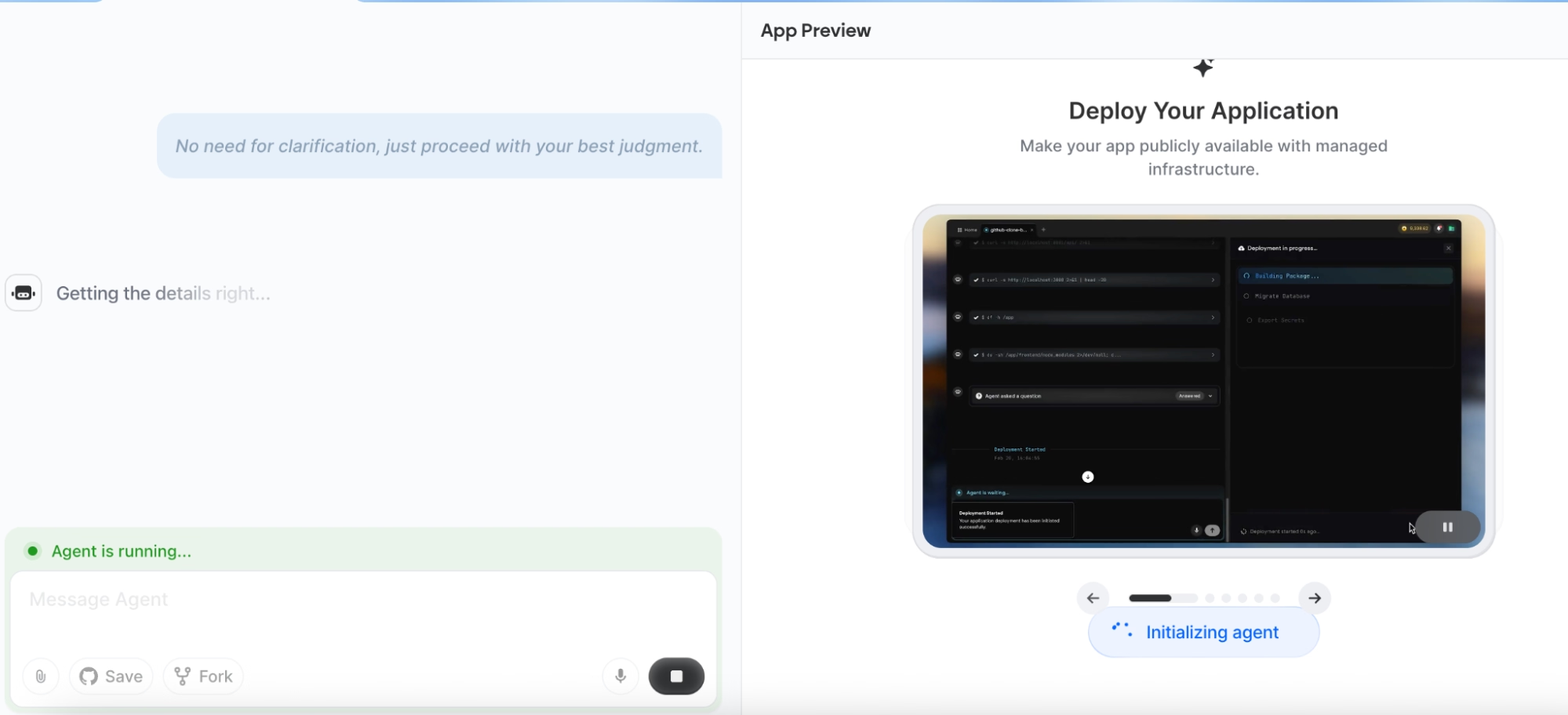
You describe the app once, and Emergent figures out the rest. You explain the job, they go away and build it, and you review what comes back. The guided flow draws founders who don't want to manage technical decisions.
Lovable vs Bolt vs Emergent: Feature Breakdown
Most AI app builder comparisons stop at the first demo. They show you a pretty screenshot, tell you the tool is fast, and move on. The first demo is the easy part. Every tool here can generate something that looks good in under a minute.
The real test starts after that first demo.
Consider asking:
- Can it handle changes without breaking?
- Does the login actually work when a real user tries it?
- What happens when you hit a bug at prompt 15?
- How do you fix that bug without burning through your monthly credits?
UI and Design Quality
When you're building an app without a designer, you need output that doesn't look machine-generated. That's harder than it sounds.
Lovable produces the cleanest interface by default. Builders reach for Lovable when the app has to look presentable on the first try. Most of that polish sits on the surface. A clean-looking frontend can still hide a backend that breaks the moment a real user signs up.
Bolt also produces sharp output, sometimes with better interactive details like hover states. Its weak spot is consistency. As the app grows and you keep making changes, the design tends to drift. What looked polished at prompt one can start looking patchy by prompt 10.
Emergent gets the job done visually. Its focus is on shipping a complete, working app rather than delivering the most beautiful one.
Winner: Lovable. If the app needs to look good from the first build, Lovable gets you there with the least back-and-forth.
Speed of First Draft
Speed matters most at the start, when you're trying to see whether your idea is worth pursuing at all. Getting something on screen in 30 seconds versus 60 seconds might not sound like much, but the difference compounds when you're making dozens of changes.
Bolt is the fastest. Building a habit tracker, Bolt had a working version on screen in about 30 seconds. Lovable took closer to 60. Bolt's speed comes from a technical choice: it rewrites only the changed code, rather than regenerating large sections each time. Tokens burn fast, and the more you push Bolt with follow-up changes, the more likely something breaks.
Lovable is slower on the first pass because it writes a plan before it writes code. You wait a beat longer, but the structure is cleaner. Bigger edits still rewrite larger sections of code, which costs more time and more credits.
Emergent is the slowest of the three. Before it writes anything, it asks you clarifying questions about what you're building. Then it runs a full agent flow to plan and execute the build. The agent flow takes longer, but the reasoning shows up later, when the app is more stable under repeated changes.
Winner: Bolt. Nothing here gets a working version on screen faster.
Backend, Database, and Login
Backend setup is where most non-technical builders hit a wall, and it matters most for our habit-tracker test. A habit-tracker needs somewhere to store data and a way to tell users apart. That means a database and a login system. Both of these things are harder to get right than they look.
Lovable has the most mature integration with Supabase. That’s why beginners gravitate toward Lovable for full-stack work. Lovable still has a serious limitation. Builders who've taken Lovable apps to real users keep reporting login emails that don't send correctly, database access rules that are too loose, and missing checks on payment webhooks.
Emergent handles the most setup out of the box. It ships managed hosting, built-in login, and a database without you having to connect or configure anything. You don't need to know what Supabase is to get a working backend. Its weak spot is database drift between preview and deployment after a few change cycles.
Bolt gives you more flexibility in how you set up the backend, but less guidance on how to do it. A V2 update changed how Bolt handles its database and made things harder for a lot of users who had been relying on Supabase. The friction from that change shows up across community threads.
Winner: Emergent. It handles the most backend work for you without requiring any configuration.
Iteration Stability and Debugging
Iteration stability separates a demo from a product. Iteration stability means when you go back to fix something, does the fix work? Or does it break two other things, cost you credits, and leave you worse off than before?
Emergent holds up best across repeated prompts. The multi-agent system runs a dedicated testing agent in parallel, which catches regressions before they compound. That's the structural reason it stays coherent on builds the other two start breaking. The one frustrating quirk is that the agent sometimes stops mid-build, which forces a restart and costs more credits.
Lovable is steady early, then starts straining as the app grows. User reports repeat the same pattern: The app runs fine for a small number of users, then starts breaking when real traffic arrives. Debugging is also where Lovable's credits drain the fastest, especially if the AI keeps attempting the same fix multiple times without solving the root problem.
Bolt is the weakest on iteration. The more changes you make, the more likely something breaks. Each fix attempt burns tokens whether or not it works, which means a single stubborn bug can eat through a significant chunk of your monthly allowance before you've solved anything.
Winner: Emergent. When the build eventually gets messy, Emergent holds together better than the other two.
What Real Users Say
I reviewed public Reddit discussions from the past 12 months, plus G2 and Trustpilot pages for all three tools. Lovable has the only large G2 sample. Bolt and Emergent have tiny G2 samples, so their Reddit and Trustpilot feedback carries more weight.
Lovable
Pros: The speed and output quality win people over. One power user running a real SaaS wrote: "Live customers, real bookings, real revenue." G2 reviewers consistently point to ease of use, fast prototyping, and how far a non-technical founder can go without writing code. Its 4.6/5 score across 280+ G2 reviews is the strongest platform signal in this comparison.
Cons: Fixing loops is the most common frustration. One builder described Lovable attempting the same fix "five or six times" without resolving it, with credits charged each attempt. Post-launch, the backend tends to expose what the frontend hid: Another user noted "auth breaking, a payment webhook that silently failed" after real users arrived.
If you want a closer look at how it performs beyond the MVP stage, our full Lovable review covers the trade-offs in more detail.
Bolt
Pros: Speed is the one thing Bolt wins consistently. In a direct head-to-head test across four builders, one user called it the "fastest first draft." For technical users who want to get something on screen fast and steer it themselves, that speed advantage is real.
Cons: Token burn and iteration instability dominate the feedback. One builder reported hitting a reset after a single prompt consumed "5 million tokens." On auth specifically, one user described "simple authentication is broken" after 2M tokens spent. One post flagged, "Works in preview, broken in production," as one of the most common failure patterns.
Emergent
Pros: The guided agent flow is what draws people in. A developer testing it for the first time wrote: "The agent started running and it's showing exactly what it's doing in the backend." In a direct cross-tool comparison, it was called "most reliable end-to-end," slower to build, but the steadiest under repeated prompts.
Cons: Credits and support are the two consistent complaints. One user described costs climbing fast even on small tasks: "Credits burn way too fast." A Trustpilot reviewer put the support gap plainly: "Customer service is non-existent." Trustpilot sits at 2.8/5 across 420+ reviews.
Which Tool Should You Choose?
The choice comes down to design, speed, backend, and stability. The right pick depends on where you are in your build, how much risk you can absorb, and whether you need the technically strongest tool.
Choose Lovable if you:
- Want a good-looking MVP, landing page, or dashboard with the least back-and-forth.
- Are non-technical but can get a developer to review the backend and SEO before you go live.
- Want a tool with a long review history, since Lovable has the most public feedback of the three.
Choose Bolt if you:
- Want the fastest path to a working first version.
- Are comfortable reading and editing code when something goes wrong.
- Are prototyping to test an idea quickly, not yet shipping to paying users.
Choose Emergent if you:
- Want a full-stack app builder that can handle design, backend, database, hosting, and deployment in one flow.
- Are building an app with users, dashboards, workflows, or payment-style logic.
- Value a more complete build path over the fastest first draft.
My Final Verdict
Lovable is the most balanced pick for most non-technical founders. It gives you good output from the first prompt, a planning step that catches mistakes early, and the deepest review record of the three. The backend still needs a developer to check login, database rules, and SEO before real users arrive. Treat that as a known step rather than a surprise.
Bolt wins on speed. Nothing here comes close to getting a first version on screen fast. Bolt expects technical confidence in return. When something breaks, tokens burn fast, and non-coders tend to get stuck.
Emergent is built for founders who need more than a fast prototype. It is the strongest fit here for full-stack apps with users, dashboards, backend logic, hosting, deployment, and payment-style flows. That makes it more useful when the goal is a working app, not just a polished first screen.
The trade-off is that Emergent is slower than Bolt and less instantly polished than Lovable. Fixes can also take longer once the app gets complex, so it works best when you value a more complete build path over the fastest first draft.
Ready to Try Emergent?
Don't start with the easy stuff. Start with the part of your app you're most unsure about. That might be the login flow, the database structure, or the thing you'd have to pay a developer to figure out. Watch how the agent handles it step by step before you commit to anything.
The free plan gives you 10 credits and asks for no card. Those 10 credits are enough to see whether the guided build flow is how you want to work, and whether Emergent gets the hard part right before you spend a dollar.
Most AI app builders stop at prototypes. Emergent creates production-ready apps you can actually launch.
- Production-ready apps
- Web & mobile apps
- Deploy in minutes