



I built the same freelance-client tracker on Replit, Base44, and Emergent to see which held up past the first demo. Emergent went furthest, Replit gave the most control, and Base44 was quickest to a clickable demo.
Replit vs Base44 vs Emergent: At a Glance
All three are AI app builders that run on credits. You spend them every time the AI builds or fixes something, and when they run out, you pay for more. Most of the friction below traces back to how fast those credits vanish.
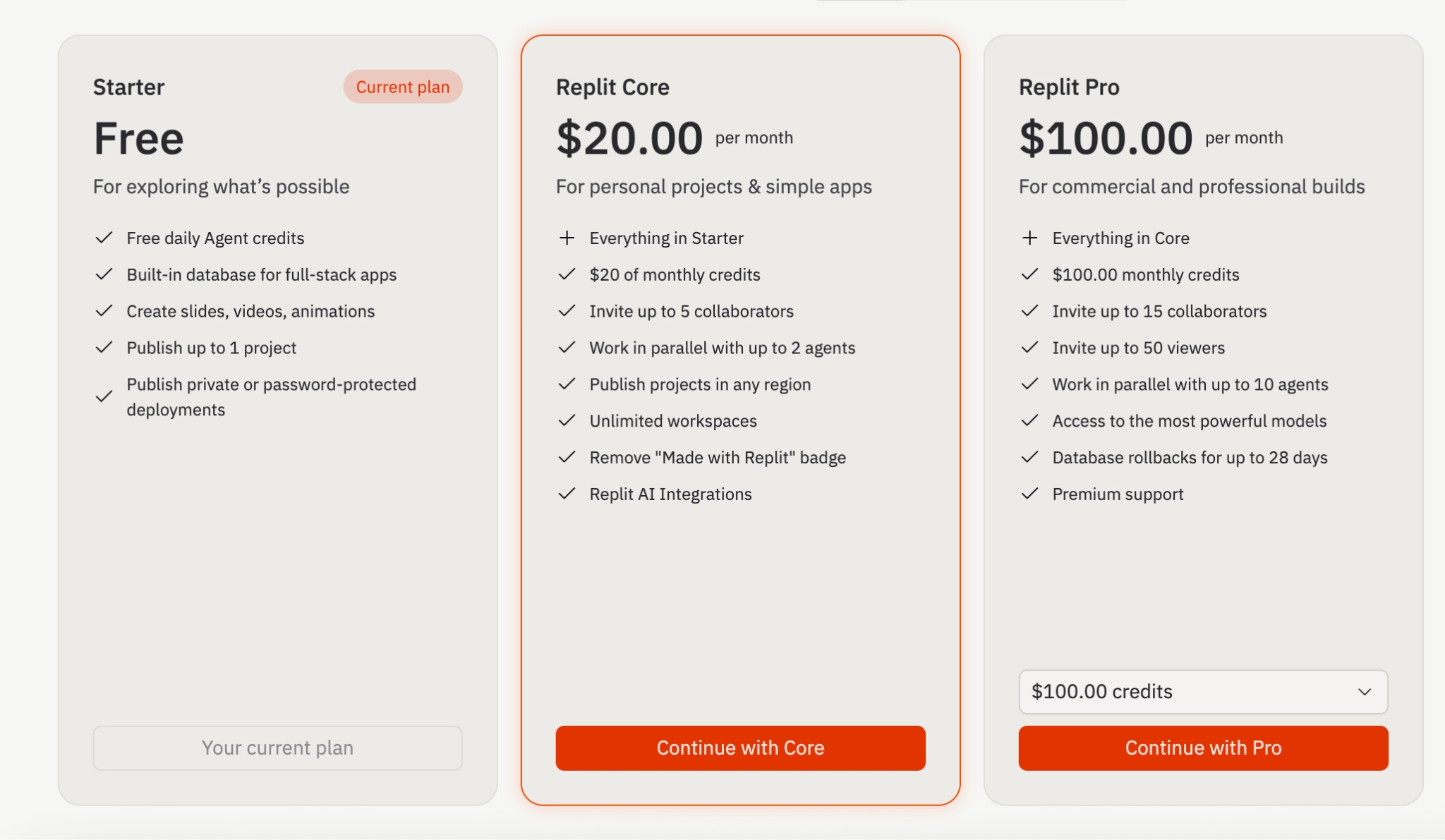
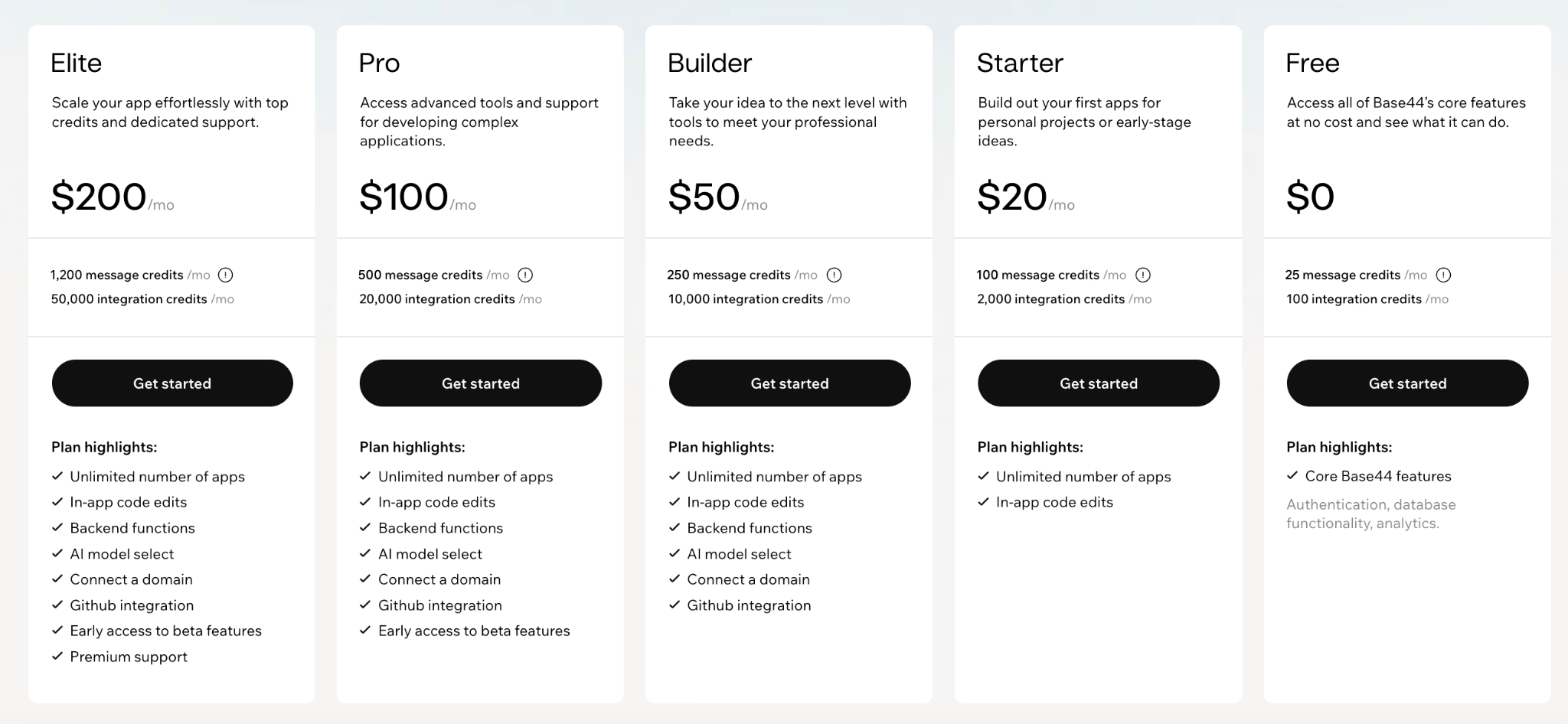
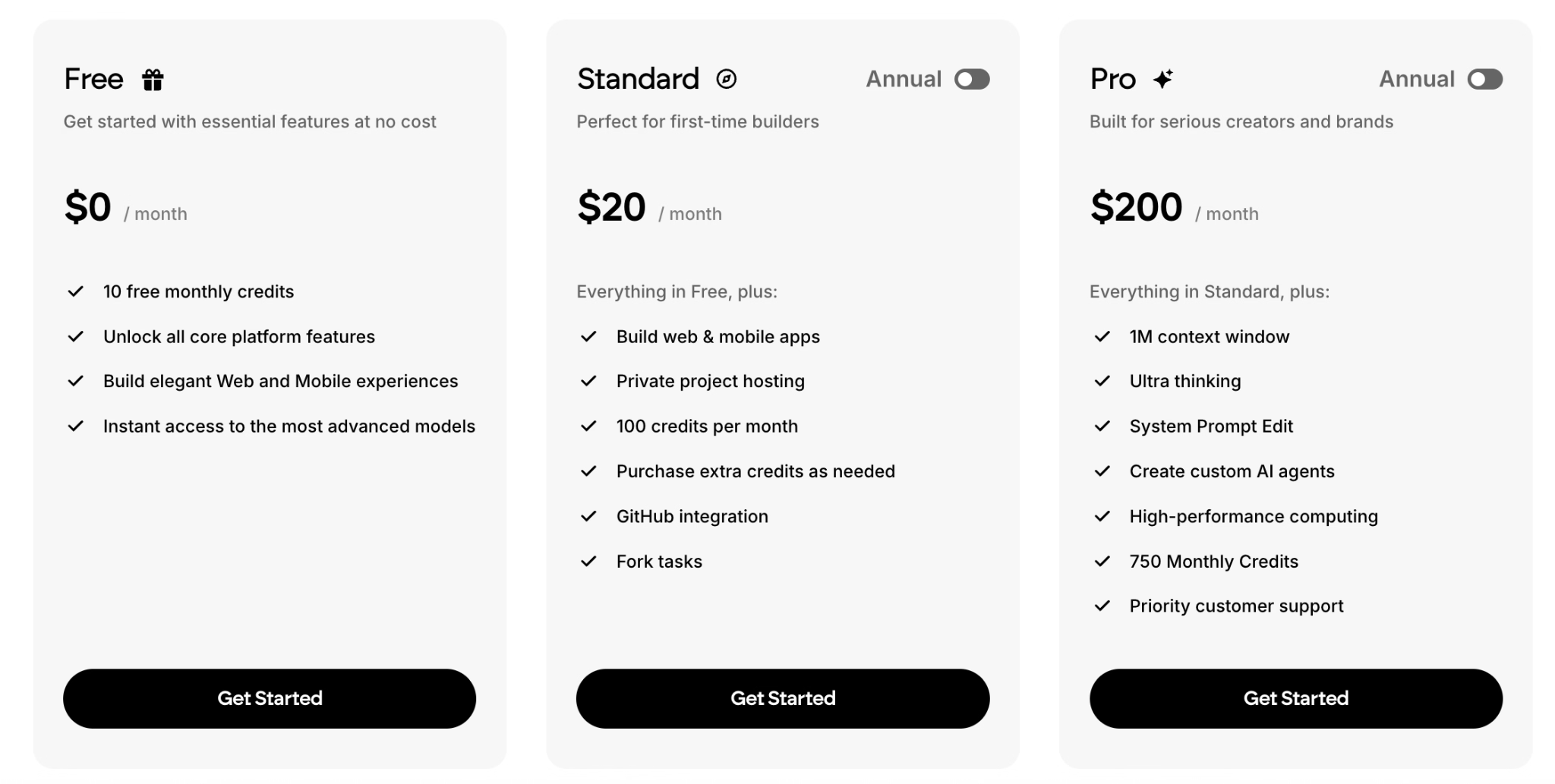
Those starting prices need context because "free" only goes so far. Replit's paid Core plan includes $20 in monthly credits, Base44's Starter gives you 100 prompts (it calls them message credits), and Emergent's Standard plan gives you 100 credits, too.
The free tiers can run dry quickly on anything beyond a tiny test. Across all three, planning your app before you start prompting is what keeps the costs sane.
Meet the Contenders
Replit: Features and Highlights
Of the three, Replit felt the most like a real workshop. The AI builds the app for you, but it also leaves the actual code out in the open, so you can look at it and change it yourself. That access to the code made me trust Replit more than the others.
You start by describing the app you want, and Replit's AI (it calls this the "agent") builds it, sets up a place to store your data, and shows you a working preview you can click around in.
The part that sets Replit apart is the code itself. Most no-code tools hide it from you. Replit lets you open it, edit it, and download it to use elsewhere. So when the AI gets stuck, you, or a developer you bring in, can go fix the code by hand instead of begging the AI to try again.

That code access is why Replit suits people who can code a little or who plan to hand the project to someone who can. When I built my freelance-client tracker, the little app for logging clients and what they owe, it was up and running by mid-afternoon. I could see exactly what the AI had written under the hood.
Here were my takeaways:
- Strengths: You own code you can take anywhere. Launching is one click, and Replit handles the technical side of putting your app online. On the paid Pro plan, if a change wrecks your data, you can roll it back to how it looked up to 28 days ago. And its user rating is the highest of the three, 4.5 out of 5 across 350+ reviews on G2.
- Limitations: Cost. Replit charges more when a task is harder, so a fiddly fix eats more credits than a simple one. My tiny two-line text change ran about $30, and plenty of reviewers report the same kind of surprise bill when the AI wrestles with its own mistakes.
Base44: Features and Highlights
Base44 impressed me fast and frustrated me just as fast. The first version came out quickly and cleanly. The trouble began when I pushed further, because the AI kept forgetting what it had already built.
The pitch is simple. You describe the app in plain English, and Base44 hands you a working version with the screens, the data storage, and a login system already connected. There is nothing to set up yourself. Wix owns Base44, and the tool runs as a closed box. That setup keeps things easy, but you can't take the underlying code and leave.

That makes it a good fit for non-coders who need something clickable in a hurry, like a simple internal tool or a demo to show investors. My client tracker was live within an hour. Then I asked it to add custom filtering, a way to sort the client list, and it broke a part that was already working fine.
The takeaways:
- Strengths: It's the easiest starting point of the three. Logins, user permissions, and hosting are all handled for you. The app looks presentable straight away, and Base44 gets you to a first version faster than the other two.
- Limitations: Base44 starts to strain once the app gets more complex. As the app grows, the AI loses the thread and spends your credits fixing problems it created. You can't export the behind-the-scenes code. The design looks rough once you want something custom, and slow support is the most common complaint in reviews.
Emergent: Features and Highlights
Emergent attempts the most ambitious build of the three. Where the others build a piece at a time, Emergent tries to construct the entire app in one go. Given a clear, detailed description, it got further on its own than I expected.
You hand Emergent a written plan of what the app should do. Its AI builds the part users see, the logic running behind it, and the connections to outside services like payments.
Emergent builds with less back-and-forth than the others. It also has an unusually large memory, so it can hold a long, detailed brief without forgetting the early details by the time it reaches the end. And like Replit, it lets you export the code if you'd rather host the app yourself.

That makes Emergent best for bigger, full-featured projects where you can spell out clearly what you want. On my client tracker, it set up the behind-the-scenes logic on its own, the part that the other two left me to connect by hand.
Strengths and weaknesses include:
- Strengths: From a single brief, Emergent gets furthest into full app-building. It can produce iPhone and Android apps, build more than websites, and submit them to the app stores. Its large memory keeps long instructions from slipping.
- Limitations: It rewards a clear plan and punishes a vague one. A loose prompt drains credits fast, especially if the AI gets stuck partway through. And like most tools, this new support can lag when something breaks. The way to keep costs down is to map the build-out before you start.
Replit vs Base44 vs Emergent: Feature by Feature
I tested all three platforms by building the same small app for tracking freelance clients. It had to add a client, log what they owe, and search the list. The comparison below focuses on the things that matter.
How Fast You Get a First Version
First-version speed is the part everyone notices first. You type an idea, then see how quickly something real appears.
Replit had my client tracker running the same afternoon. It only slowed down later, once I was fixing problems the AI had introduced, and an awkward fix could burn through credits faster than the original build did.
Base44 gave me the best first impression by a wide margin. I typed what I wanted, and it came back looking like something I'd spent a lot of time on, even though I'd barely lifted a finger.
Emergent takes a bit longer at the start because it plans the whole app before it builds. On a bigger project, that upfront planning stops the pieces from clashing later.
Winner: Base44 and Replit are quicker for a simple first version. Emergent pulls ahead on complex builds, where the parts need to fit together.
How Easy It Is to Actually Use
Speed means nothing if you can't find your way around. How much technical know-how does each one expect from you?
Replit feels like a real workshop. It is great if you code and awkward if you don't. Its screens assume you already know developer basics, like what a terminal is.
Base44 is the gentlest by a mile. I described the app in everyday words and had screens in minutes, with nothing technical to figure out.
Emergent lands in the middle. The chat is friendly, but it does its best work when you hand it a clear, detailed plan rather than a one-line idea.
Winner: Base44 wins for anyone who never wants to see a line of code.
Where Your Data Lives (the Database and Backend)
Every app needs a place to store information. In my case, that was the client list, plus some behind-the-scenes logic to make it work. That hidden machinery is the "backend," and it's where apps quietly fall apart.
Replit gives you a database you can open and edit yourself, and on the paid plan, you can rewind it up to 28 days if an AI change corrupts something. The undo button matters more than it sounds.
Base44 sets up the storage for you automatically, which is convenient, but the logic underneath gets shaky once your app needs to do more than hold simple records.
Emergent builds more of that hidden machinery on its own. The trade-off is that you're trusting the AI to get it right, rather than steering it yourself.
Winner: Replit wins on control and the ability to recover. Emergent wins on how much it builds for you from a single description.
Letting People Log In (Auth)
If your app has users, it needs logins and passwords. Developers call this "auth," short for authentication, and it's fiddly to build from scratch.
Replit adds a login system with a single prompt, then lets you fine-tune it in the code if you need something specific.
Base44 includes logins, user roles, and permission rules right out of the box, with zero setup. For a non-coder, that's the simplest way to get an app that people can sign into.
Emergent builds the login automatically, as part of the same run that creates everything else.
Winner: Base44 wins for handing you working logins without any setup.
Getting the App Online (Deployment)
Building an app on your screen is one thing. "Deploying" means putting it on the internet so other people can actually use it.
Replit publishes with one click and handles hosting, security certificates, and custom web addresses. It can even submit apps to Apple's App Store.
Base44 puts your app live the second you save it, which is easy, but every app sits on shared hosting, so one outage can knock them all offline together.
Emergent publishes full web apps and lets you export the code if you'd rather host it somewhere of your own.
Winner: Replit wins for the most control over where and how your app goes live.
Mobile Apps
A lot of people want a real phone app. A website that opens on a phone is different.
Replit can build and publish mobile apps, but the web is clearly its home turf.
Base44 is web-only in practice, and users often mention its apps looking clumsy on a phone screen.
Emergent builds genuine iPhone and Android apps and handles app store submissions.
Winner: Emergent wins because it builds true iPhone and Android apps.
Pricing and Credits
Every tool runs on credits you spend as the AI works. The sticker price is only half the story; the actual cost depends on how many credits your project eats.
Replit's Core plan is $20 a month and includes $20 in credits, but harder tasks cost more, which is how my two-line text edit ballooned to about $30.
Base44's Starter plan is $20 a month with 100 prompts included. There's no fixed price per prompt, so a run of debugging can drain them unpredictably.
Emergent's Standard plan is also $20 a month with 100 credits, where small changes cost 1 to 2 credits and big ones 3 to 5. A well-planned build stretches much further than a vague one.
Winner: The entry prices are nearly identical. None of the three stays cheap once you're deep in debugging.
Support and Reliability
When something breaks, can you trust the tool to stay up and the team to help? Support and uptime decide this category.
Replit has the strongest reputation, with a 4.5 out of 5 rating across 350+ reviews on G2, though even heavy users hit rough patches.
Base44 draws the most support complaints, including a February 2026 outage that took every published app offline at once.
Emergent ships updates quickly, but its support is still catching up with how fast it's grown.
Winner: Replit has the strongest track record, but all three get reliability complaints.
What Real Users Are Saying
All three tools run on credits, so the pricing model shows up often in user reviews. Many complaints are not about whether these tools can create a first draft. They are about what happens when the AI starts debugging, changing code, using credits, and touching production data.
That concern lines up with broader AI trust issues. Stack Overflow’s 2025 Developer Survey found that 84% of respondents use or plan to use AI tools, while 46% actively distrust the accuracy of AI tool output.
Replit
Replit gets strong praise for speed, especially from users who want to start building without setting up a local development environment. The frustration usually starts once the AI runs into harder tasks, and the credit burn becomes less predictable.
Here’s how customers break it down:
- Pros: Users like how quickly Replit gets them from idea to working app. One Reddit user signed up and found the AI "quite impressive." For people who can read code, Replit can also be useful because they can step in when the AI goes off track.
- Cons: The biggest complaint is cost. That same user did the math after a few days and estimated that a basic web app could cost "somewhere between $500-$700" a month. Another user gave the AI exact instructions and screenshots, but small edits still ended up "costing way more credits than before."
- Best fit: Replit works best for builders who can read code, review changes, and stop the AI before a bad fix gets expensive. If you cannot step in technically, debugging can become costly guesswork.
Base44
Base44 makes a strong first impression because it is built for people who do not code. Users like how fast it turns an idea into something clickable. The trade-off becomes clearer once the app needs to handle more complexity.
Here’s what users are saying:
- Pros: Base44 is quick to impress. In a review written after a full month of use, even a fan drew a clear line between "it built me a quick demo" and "I'd trust it with real users." That captures the main upside: Base44 is useful when you need to validate an idea fast.
- Cons: Reliability and support drive the loudest complaints. One thread reported live apps suddenly breaking for people who were already using them. Another user said they kept getting charged for days while a problem went unfixed and support stayed quiet.
- Best fit: Base44 is best for fast demos, concept testing, and early validation. It is less convincing for production apps that need stable workflows, sensitive data handling, or dependable support.
Emergent
Emergent earns the strongest praise when users want to build something larger than a quick prototype. It aims to create the screens, behind-the-scenes logic, and database from a single prompt, with testing built into the process.
Users have pointed out the following:
- Pros: When Emergent works well, users are genuinely impressed. One developer who builds apps for a living went in with low expectations and came away won over: "I honestly did not expect Emergent to surprise me. But it did." Another developer had a fully working site, design and database included, in about five minutes.
- Cons: The main downside is still credit use. One user said credits "burn way too fast" when a build stalls and the AI loops on the same problem. Like the other tools, Emergent rewards clear planning before the first prompt. Vague instructions can still turn into wasted credits.
- Best fit: Emergent is the strongest option for bigger, more ambitious projects, especially when you can clearly describe what you want before the build starts. It is a better fit for users who want to move beyond a demo without managing the technical setup themselves.
How to Make Your Choice
Use this split to decide:
- Pick Replit if you can read a little code or expect to hand the project to a developer later. You'll be able to step in and fix things the AI gets wrong instead of being stuck re-prompting it.
- Pick Base44 if you don't code and just need a working demo fast, like an internal tool or something to show investors. Treat it as a prototype before you trust it as a finished product.
- Pick Emergent if you want the AI to handle a bigger, complete build on its own, and you can write a clear, detailed description of what you need before you start.
My Final Verdict
After building the same client tracker three times, I landed here.
If you want the AI to build a complete app from a plain description, Emergent is the one I'd open first. That includes the part people see and the machinery behind it. It goes deeper than the simpler tools and sets up that hidden machinery and a real phone app in the same flow. Its quick growth makes sense because it takes on big jobs and pulls them off more often than I expected.
That doesn't make the other two bad options. They just win at different things.
Replit is the pick if there's any chance you'll hand the project to a developer down the line. The code is real, and you can take it with you. Its user reviews are the strongest of the three, and being able to drop into the actual code when the AI gets stuck is worth a lot. Keep an eye on the cost, because small fixes can quietly add up.
Base44 is the move when you don't code, and you need something clickable today. It's the fastest way to turn an idea into a demo you can show someone, as long as you treat it as a rough first version before you trust it as the finished thing.
One lesson held across all three: The first build is cheap and easy. The expensive part is what comes after, the back-and-forth of fixing what the AI breaks. Plan the app before you start, change one thing at a time, and save a copy of your work as you go. Do that, and any of the three earns its keep.
Build Your First App on Emergent
Don't waste your first credits on the easy stuff. Spend them on the part on which your whole idea rests. That might be the search, the filtering, or whatever is hardest to get right. Then see if Emergent handles it cleanly. The free tier gives you 10 credits and asks for no card, which is enough to test the feature you're most worried about before you pay a cent.
Emergent turns your idea into a full-stack web or mobile app, no coding required.
 No coding required
- Web & mobile apps
- Deploys instantly
Frequently Asked Questions
Your Questions, Answered
It depends on what you need. Replit is the better choice if you want code you can edit and a clear path to a finished, public app. Base44 is the better choice if you don't code and just want a working app fast, without touching anything technical.
Yes, Base44 is built for non-coders. You describe an app in plain English and get working screens, a place to store data, and a login system, all with no setup. The catch is that Base44 starts to strain once your app grows complex or needs customers.
It depends on your goal. Emergent does more for you, building a complete app, phone version included, from a single description. Replit gives you more hands-on control over the code and has a longer track record in reviews. Choose Emergent if you want to hand off the work, Replit if you want to steer it yourself.
A database is where your app stores its information. Emergent is best if you want the AI to design and connect that storage for you. Replit is best if you'd rather control it yourself in real code. Base44 handles simple, list-style data fine, but struggles as the logic gets more involved.
Choose Emergent for a big, full app you want mostly built for you. Choose Replit for a project likely headed to a developer later. Choose Base44 for a quick, no-code demo.

on emergent today



