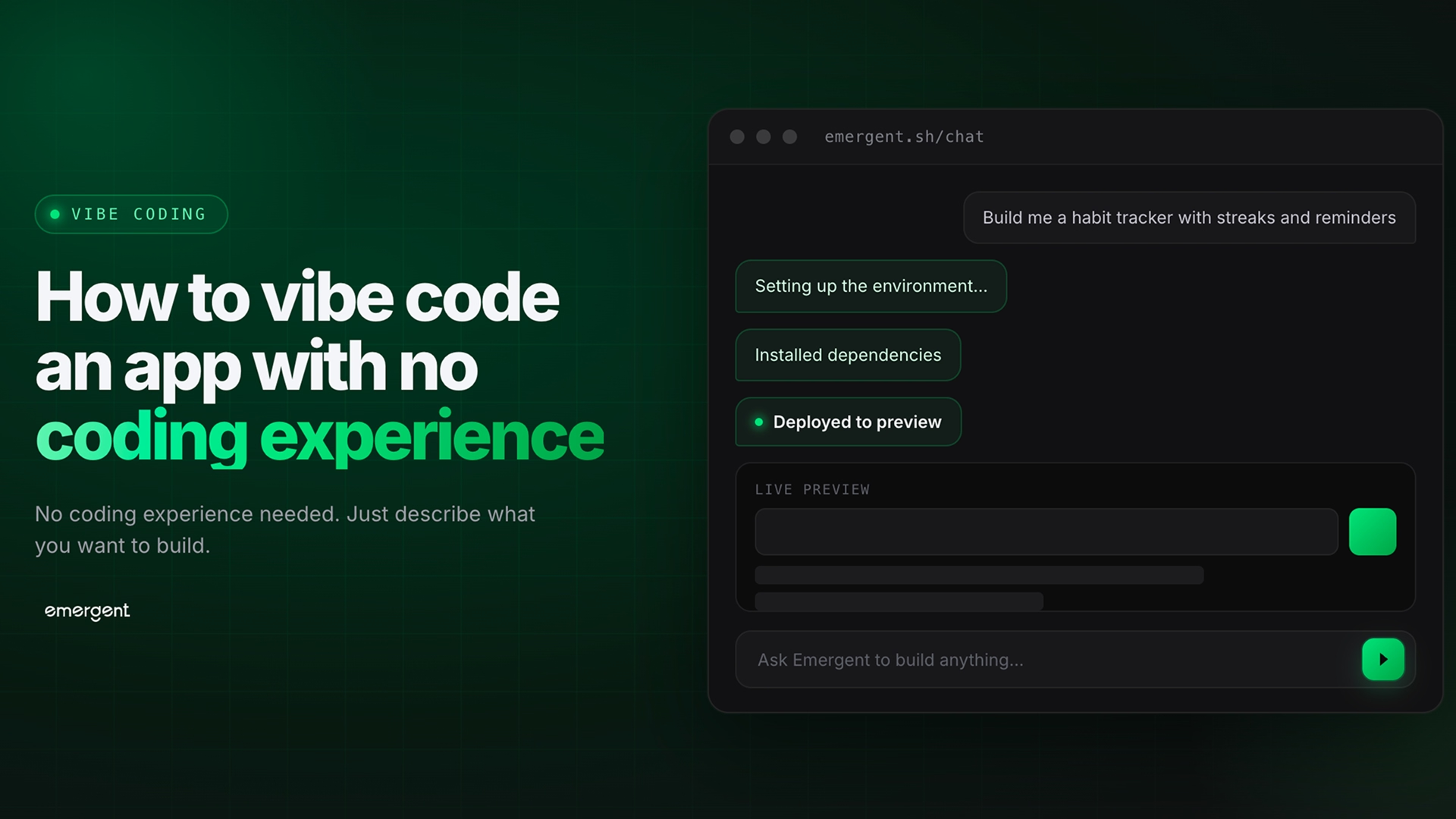

AI landing page builders have become a critical growth tool for startups, marketers, SaaS teams, and ecommerce businesses in 2026. Instead of manually designing pages, writing copy, testing layouts, and optimizing conversions, teams can now use AI to generate high-performing landing pages from simple inputs like campaign goals, audience type, or product description. This shift has significantly reduced time-to-launch while improving conversion performance.
As paid acquisition costs rise and attention spans shrink, landing pages can no longer be static or generic. AI landing page builders help teams rapidly experiment, personalize experiences, and continuously optimize pages based on behavior, intent, and performance data. This guide breaks down how these tools work, what features actually matter, and which platforms stand out for serious, conversion-focused use cases.
Read More About: What are the limitations of vibe coding
What is an AI landing page builder?
An AI landing page builder is a platform that uses artificial intelligence to design, write, structure, and optimize landing pages automatically based on user inputs. Instead of starting from blank templates, users describe their campaign objective, target audience, or product, and the system generates layouts, copy, visuals, and call-to-actions aligned with conversion best practices.
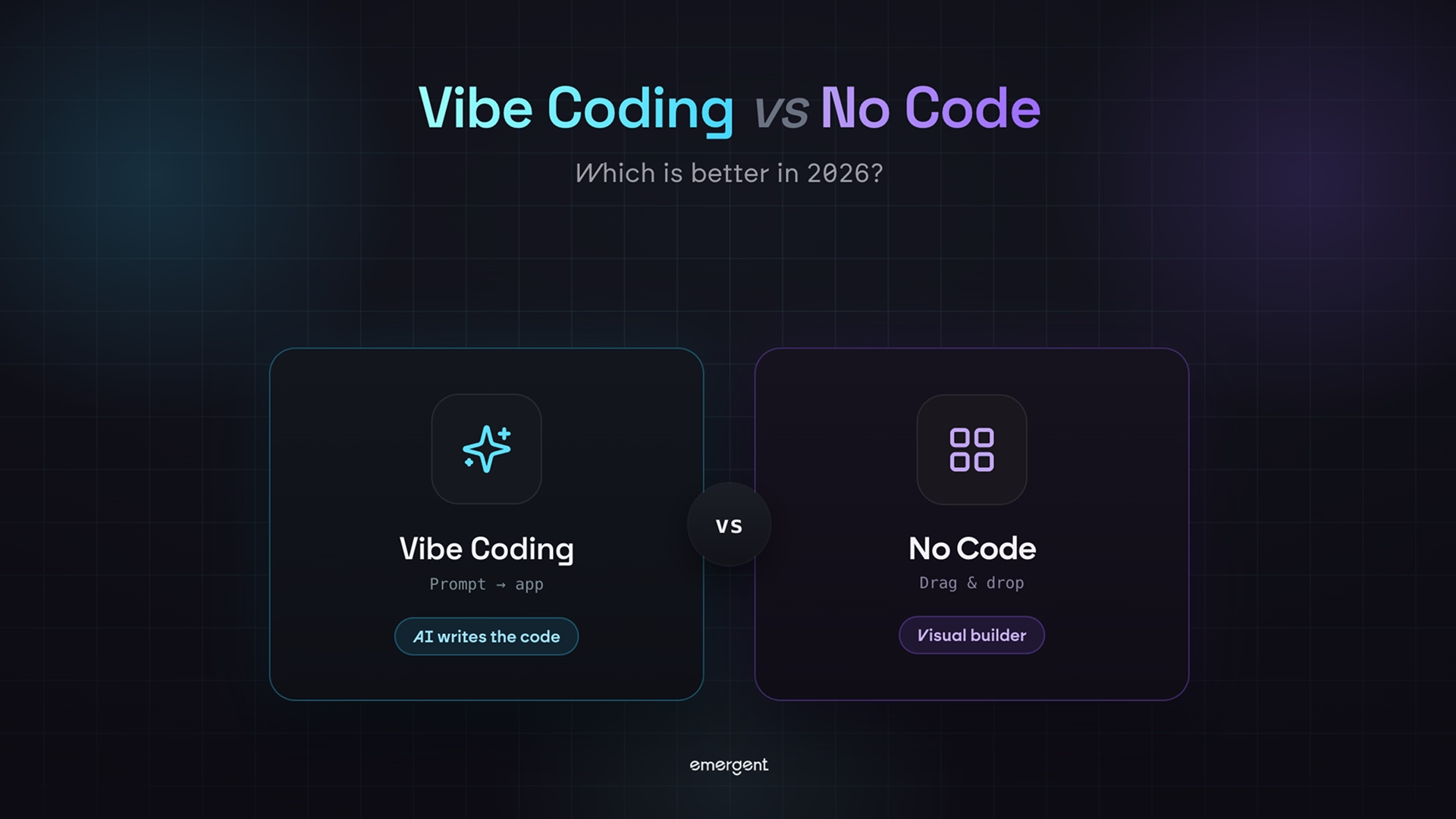
Unlike traditional landing page builders that rely heavily on manual drag-and-drop and static templates, AI-powered builders continuously adapt. They can rewrite copy, adjust layouts, personalize sections, and suggest improvements based on performance signals, making them especially valuable for high-velocity marketing teams running multiple campaigns.
Here are the 5 Best AI e-commerce website builders you should look out for in 2026:
What are the key features of an AI landing page builder?
1. AI-driven layout and structure generation
A strong AI landing page builder automatically creates page structures based on the campaign goal, whether it is lead capture, product signup, webinar registration, or ecommerce conversion. It intelligently places hero sections, social proof, forms, and CTAs in an order proven to drive engagement and reduce drop-offs.
2. Automated copywriting optimized for conversions
These platforms generate headlines, subheadlines, body copy, and call-to-actions tailored to the target audience and intent stage. Instead of generic text, the AI adapts tone, urgency, and messaging based on industry, funnel position, and campaign objective to maximize conversions.
3. Built-in personalization and dynamic content
Advanced AI landing page builders allow dynamic content changes based on traffic source, user behavior, location, or intent. This enables highly personalized landing experiences without creating multiple versions manually, which is crucial for paid ads and segmented campaigns.
4. Conversion-focused design intelligence
AI systems apply UX and CRO principles automatically, including spacing, contrast, button placement, visual hierarchy, and form optimization. This removes guesswork from design decisions and ensures pages are built with performance, not aesthetics alone, in mind.
5. Continuous optimization and A/B testing suggestions
Instead of relying on manual experimentation, AI landing page builders analyze engagement and conversion data to suggest or automatically apply improvements. This includes testing headlines, layouts, CTAs, and even page flow to improve results over time.
6. Seamless integrations with marketing and analytics tools
Top platforms integrate with CRMs, email tools, ad platforms, analytics suites, and automation systems. This allows landing pages to fit naturally into existing growth stacks, ensuring leads and data flow smoothly across tools without manual intervention.
What are the benefits of using an AI landing page builder?
1. Dramatically reduces time to launch campaigns
AI landing page builders eliminate the need for manual design, copywriting, and layout decisions. Teams can go from idea to live page in minutes instead of days, which is especially valuable for fast-moving marketing experiments and time-sensitive campaigns.
2. Improves conversion rates without CRO expertise
By embedding conversion best practices directly into page generation, AI tools help non-experts create high-performing pages. This allows startups and small teams to achieve results comparable to pages built by dedicated CRO specialists.
3. Enables rapid experimentation at scale
AI makes it easy to create, test, and iterate multiple landing page variations simultaneously. This supports performance marketing teams running dozens of campaigns who need speed, consistency, and continuous optimization without operational overhead.
4. Reduces dependency on designers and copywriters
Instead of coordinating across multiple roles, teams can rely on AI to handle first drafts and optimizations. This lowers costs, reduces bottlenecks, and allows specialists to focus on strategy rather than repetitive execution work.
5. Delivers more personalized user experiences
AI-powered personalization ensures visitors see messaging and layouts aligned with their intent, traffic source, or profile. This increases relevance, engagement, and trust, leading to higher conversion rates across paid and organic traffic.
6. Keeps landing pages continuously optimized post-launch
Unlike static pages that degrade over time, AI landing pages improve as they collect data. Ongoing optimization ensures campaigns stay competitive even as user behavior, traffic sources, and market conditions evolve.
5 Best AI Landing Page builders in 2026
1. Emergent
Emergent stands out in 2026 as the most advanced AI landing page builder because it goes far beyond page creation and operates as a full-stack, AI-native application and conversion system. Instead of treating landing pages as isolated marketing assets, Emergent allows teams to build intelligent, conversion-driven landing experiences that connect directly to backend logic, analytics, user workflows, and follow-up actions. This makes it especially powerful for SaaS, product-led growth teams, and performance marketers who need landing pages that do more than just capture leads.
What differentiates Emergent is that landing pages are generated as real software components, not static templates. Pages can adapt dynamically, trigger backend workflows, integrate deeply with tools, and evolve over time through AI-driven refinement. This makes Emergent suitable not just for marketers, but also for founders and product teams building scalable acquisition funnels.

Key Features of Emergent
1. Prompt-based landing page generation with conversion intent awareness
Emergent allows users to describe campaign goals, audience type, offer, and desired outcome in natural language. The system interprets this intent and generates a complete landing page structure with sections, copy, CTAs, and visual hierarchy optimized for that specific conversion goal, whether it is signups, demos, downloads, or purchases.
2. Full-stack landing pages with backend logic and workflows
Unlike traditional builders that only output front-end pages, Emergent creates landing pages connected to real backend logic. Forms can trigger workflows, update databases, call APIs, send emails, or activate follow-up agents automatically, making landing pages operational rather than static.
3. AI-driven copywriting with contextual refinement
Emergent generates headlines, subheadlines, body copy, and CTAs that align with funnel stage and audience intent. As performance data accumulates, the system can refine messaging, adjust tone, and optimize language to improve engagement and conversion rates over time.
4. Dynamic personalization across traffic sources and user context
Landing pages built with Emergent can dynamically adapt content based on referral source, user behavior, location, or campaign metadata. This enables highly personalized landing experiences without maintaining multiple page variants manually.
5. Built-in analytics awareness and optimization loop
Emergent monitors engagement signals such as scroll depth, click behavior, and conversion events. The platform’s AI agents use this data to suggest or apply layout, copy, and CTA optimizations, ensuring pages improve continuously post-launch.
6. Secure deployment with production-grade hosting
Each landing page runs inside a secure, isolated cloud environment with automatic SSL, routing, and scalability. This ensures fast load times, reliability, and compliance without requiring manual hosting or DevOps setup.
Unique Features of Emergent
1. Landing pages generated as real, exportable code
Emergent produces production-grade code for landing pages that teams fully own. Pages can be exported, self-hosted, extended by developers, or embedded into larger applications, avoiding vendor lock-in common with traditional builders.
2. Multi-agent system for design, copy, testing, and optimization
Emergent uses specialized AI agents for layout design, copy generation, quality checks, deployment, and optimization. These agents collaborate to produce more reliable and conversion-focused landing pages than single-model tools.
3. Ability to evolve landing pages into full products or apps
Unlike typical landing page tools, Emergent allows teams to expand a landing page into a full application, dashboard, or SaaS product without rebuilding from scratch. This is especially valuable for startups validating ideas before scaling.
4. Model Context Protocol support for richer page intelligence
Emergent can ingest brand guidelines, product docs, design references, and campaign briefs directly into the generation process. This ensures landing pages stay consistent with brand voice and product positioning across campaigns.
5. Integrated experimentation without manual A/B setup
Instead of manually configuring split tests, Emergent can test variations autonomously and converge toward higher-performing versions. This reduces experimentation overhead while maintaining data-driven decision making.
6. Enterprise-grade security and isolation for marketing assets
Each project runs in an isolated environment with encrypted storage and access controls. This is particularly important for teams handling sensitive lead data, regulated industries, or enterprise campaigns.
Advantages of Emergent
- Builds landing pages that are fully connected to backend workflows and business logic
- Generates real, production-ready code with full ownership and export flexibility
- Eliminates the need for separate tools for design, copywriting, hosting, and optimization
- Enables deep personalization and dynamic content without complexity
- Scales from simple landing pages to full applications seamlessly
- Continuously improves pages through AI-driven optimization loops
Limitations of Emergent
- Requires thoughtful prompting to fully leverage advanced capabilities
- May feel overpowered for teams needing only very simple static pages
- Credit usage needs monitoring for large-scale experimentation
Pricing and Plans of Emergent
2. Landingi
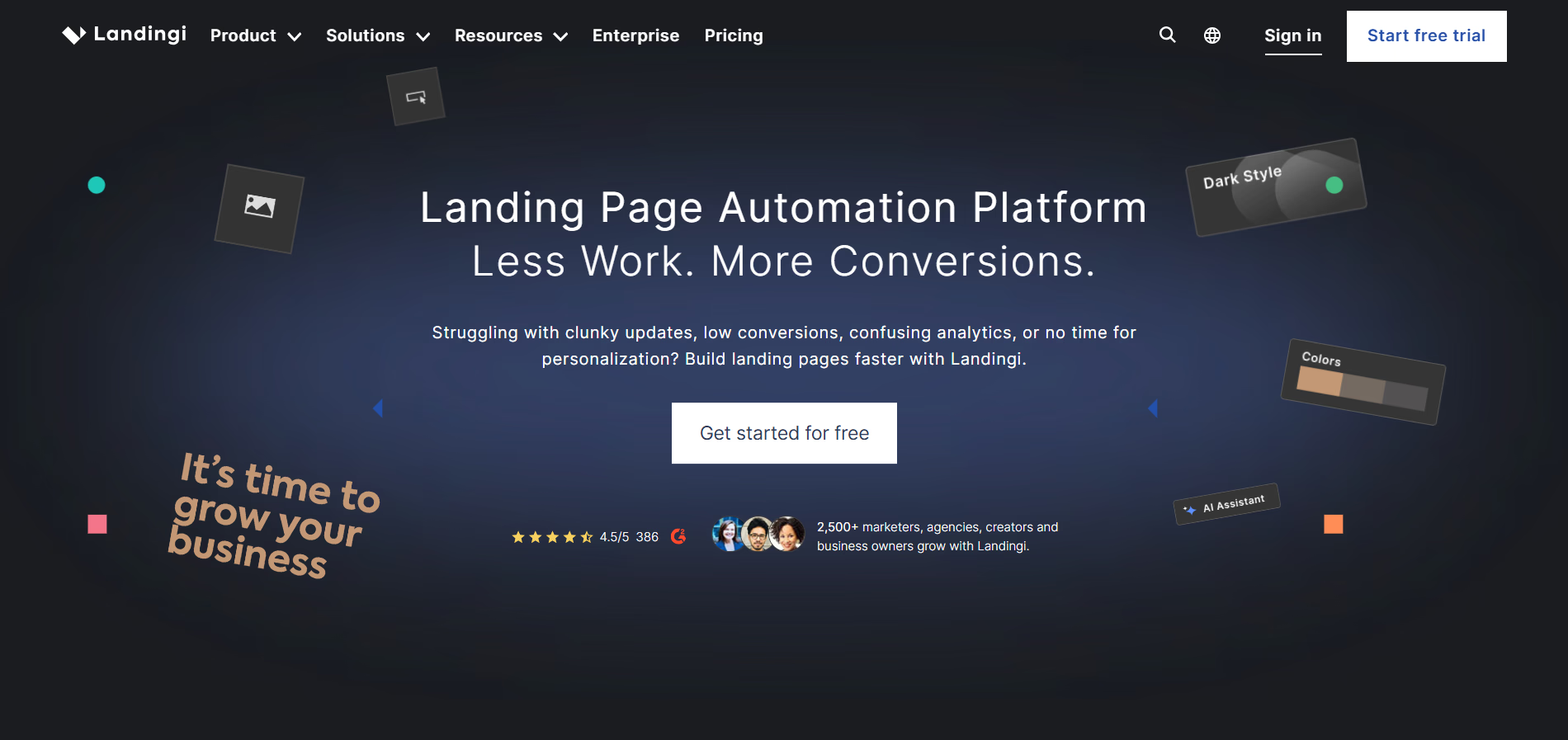
Landingi is a dedicated AI-powered landing page builder focused on helping marketing teams, agencies, and performance-driven businesses create high-converting landing pages quickly without relying on developers. In 2026, Landingi’s strength lies in its campaign-first approach, where landing pages are treated as conversion assets tightly connected to ads, traffic sources, and analytics rather than standalone web pages.
Unlike full-stack platforms, Landingi is purpose-built for marketers who want speed, clarity, and control over conversion elements such as forms, CTAs, and layouts. Its AI features are designed to assist with copy, layout suggestions, and optimization, making it ideal for teams running frequent campaigns, lead generation funnels, and paid traffic experiments.
Key Features of Landingi
1. AI-assisted landing page creation optimized for campaign goals
Landingi helps users generate landing pages by suggesting layouts, sections, and copy based on campaign type such as lead generation, webinar signups, or product launches. This allows marketers to move from idea to live page quickly while maintaining conversion best practices.
2. Drag-and-drop editor with granular layout control
The visual editor provides precise control over every page element, including spacing, typography, buttons, and forms. This is useful for marketers who want pixel-level customization without touching code or relying on predefined templates alone.
3. Built-in conversion tools and lead capture components
Landingi includes native form builders, popups, countdown timers, and CTA elements designed specifically to increase conversions. These tools can be customized and reused across campaigns, ensuring consistency in lead capture workflows.
4. Native A/B testing for landing page optimization
Users can easily create multiple versions of a landing page and test headlines, layouts, or CTAs against each other. Landingi tracks performance metrics and helps teams identify which variations drive better conversion rates.
5. Integration with marketing and analytics tools
Landingi connects with CRMs, email marketing platforms, ad tools, and analytics systems. This allows leads captured on landing pages to flow directly into existing marketing stacks without manual data handling.
6. Hosting, security, and performance optimization included
All landing pages are hosted on Landingi’s infrastructure with SSL, fast load times, and reliability baked in. This removes the need for external hosting or performance tuning for most marketing use cases.
Unique Features of Landingi
1. Campaign-centric workflow designed specifically for marketers
Landingi structures projects around campaigns rather than websites, which aligns better with how marketing teams work. This makes it easier to manage multiple landing pages across different ads, offers, and audiences.
2. Extensive template library built from real conversion data
Templates are designed based on proven conversion patterns across industries. This gives users a strong starting point that already incorporates best practices for layout, messaging hierarchy, and CTA placement.
3. Smart sections and reusable page components
Users can save and reuse sections such as testimonials, pricing blocks, or signup forms across multiple pages. This speeds up page creation while maintaining consistent branding and structure.
4. Collaboration features for agencies and marketing teams
Landingi supports multi-user access, role permissions, and shared workspaces. This is especially useful for agencies managing landing pages for multiple clients or internal teams working across campaigns.
5. Conversion-focused analytics dashboard
The platform provides clear insights into visits, conversions, and performance trends. While not deeply technical, this analytics layer is tailored for marketers who want actionable insights without complex dashboards.
6. GDPR and compliance-ready lead handling
Landingi includes consent checkboxes, data handling controls, and compliance-friendly form configurations. This is important for teams operating in regulated regions or running large-scale lead campaigns.
Advantages of Landingi
- Very easy to use for non-technical marketers and agencies
- Strong focus on lead generation and conversion optimization
- Built-in A/B testing simplifies experimentation
- Large library of proven landing page templates
- Smooth integrations with common marketing tools
- Reliable hosting and performance without setup overhead
Limitations of Landingi
- Limited backend logic and workflow automation compared to full-stack builders
- Pages are primarily front-end assets, not connected to complex application logic
- Custom functionality beyond forms and integrations is restricted
- Less suitable for product-led or app-style landing experiences
- Not designed for extending landing pages into full applications
- Advanced personalization requires external tools or workarounds
Pricing and Plans of Landingi
3. Unbounce
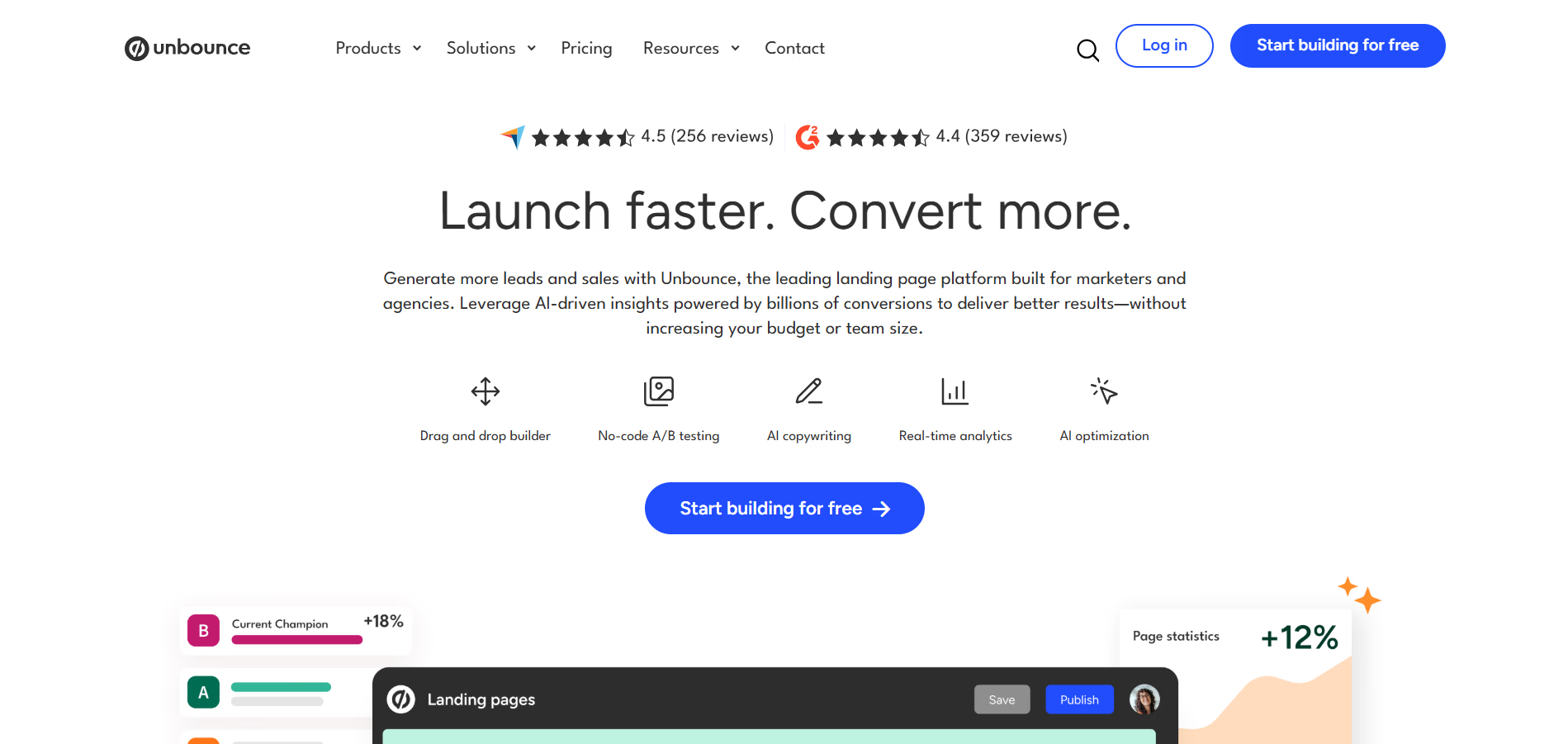
Unbounce is one of the most established AI-powered landing page builders in 2026, known for its strong focus on conversion rate optimization and data-driven experimentation. It is designed primarily for performance marketers and growth teams that run paid campaigns at scale and need landing pages that can be tested, refined, and optimized continuously based on real user behavior.
Unlike simpler builders, Unbounce positions landing pages as performance assets rather than static marketing pages. Its AI capabilities are centered around optimizing copy, layouts, and traffic distribution to maximize conversions, making it especially valuable for teams spending heavily on ads and looking to improve ROI without engineering involvement.
Key Features of Unbounce
1. AI-powered copy generation and optimization
Unbounce includes AI tools that generate and refine headlines, CTAs, and page copy based on conversion intent. These suggestions are informed by historical performance patterns, helping marketers improve messaging without relying solely on intuition or manual testing.
2. Smart Traffic for automatic variant optimization
The Smart Traffic feature automatically routes visitors to the landing page variant most likely to convert based on attributes such as location, device type, and referral source. This allows teams to benefit from optimization without running traditional A/B tests for long periods.
3. Advanced drag-and-drop builder with conversion controls
Unbounce’s editor allows precise control over layout, spacing, and visual hierarchy while enforcing conversion-focused design principles. Marketers can fine-tune pages to match ad messaging closely, which is critical for paid traffic performance.
4. Native A/B testing with detailed performance insights
Users can create multiple page variants and compare performance across traffic segments. Unbounce provides clear metrics on conversion rates, visits, and engagement, enabling data-backed decisions on page changes.
5. Dynamic text replacement for ad-message alignment
Unbounce can dynamically adjust landing page text based on the keyword or ad that brought the visitor. This improves message match between ads and landing pages, often leading to higher Quality Scores and better conversion rates.
6. Built-in integrations with ad and marketing platforms
The platform integrates smoothly with Google Ads, Facebook Ads, CRMs, analytics tools, and email platforms. This ensures captured leads flow directly into downstream marketing and sales workflows.
Unique Features of Unbounce
1. Smart Traffic optimization without manual experimentation
Unbounce’s AI learns from visitor behavior and automatically optimizes traffic distribution. This is particularly valuable for teams that want optimization benefits without managing complex testing setups.
2. Strong alignment with paid advertising workflows
The platform is built specifically to support ad-driven campaigns, with features like dynamic text replacement and conversion tracking tightly integrated into ad platforms.
3. Conversion intelligence driven by large-scale data patterns
Unbounce leverages insights from millions of landing pages to inform design and copy suggestions. This gives users access to optimization intelligence that would otherwise require extensive experimentation.
4. Flexible deployment across custom domains and campaigns
Users can deploy landing pages across multiple domains, subdomains, or campaign URLs. This flexibility is important for agencies and teams managing multiple brands or clients.
5. Collaboration tools for marketing teams and agencies
Unbounce supports multi-user access, permissions, and client workflows. This makes it easier for teams to collaborate on campaigns while maintaining control and accountability.
6. Reliable hosting and performance optimization
Pages are hosted on Unbounce’s infrastructure with fast load times and built-in reliability. This reduces the risk of performance issues impacting paid campaign results.
Advantages of Unbounce
- Excellent for conversion-focused and paid traffic campaigns
- AI-driven traffic optimization reduces manual testing effort
- Strong copy optimization and message matching features
- Mature platform with proven conversion tooling
- Deep integrations with advertising and analytics platforms
- Scales well for agencies and high-volume marketers
Limitations of Unbounce
- Pricing can be high for startups or small teams
- Limited backend logic beyond lead capture and integrations
- Not suitable for building application-like landing experiences
- Custom workflows require external tools
- Less flexibility for non-marketing use cases
- Overkill for simple, low-traffic landing pages
Pricing and Plans of Unbounce
4. Instapage
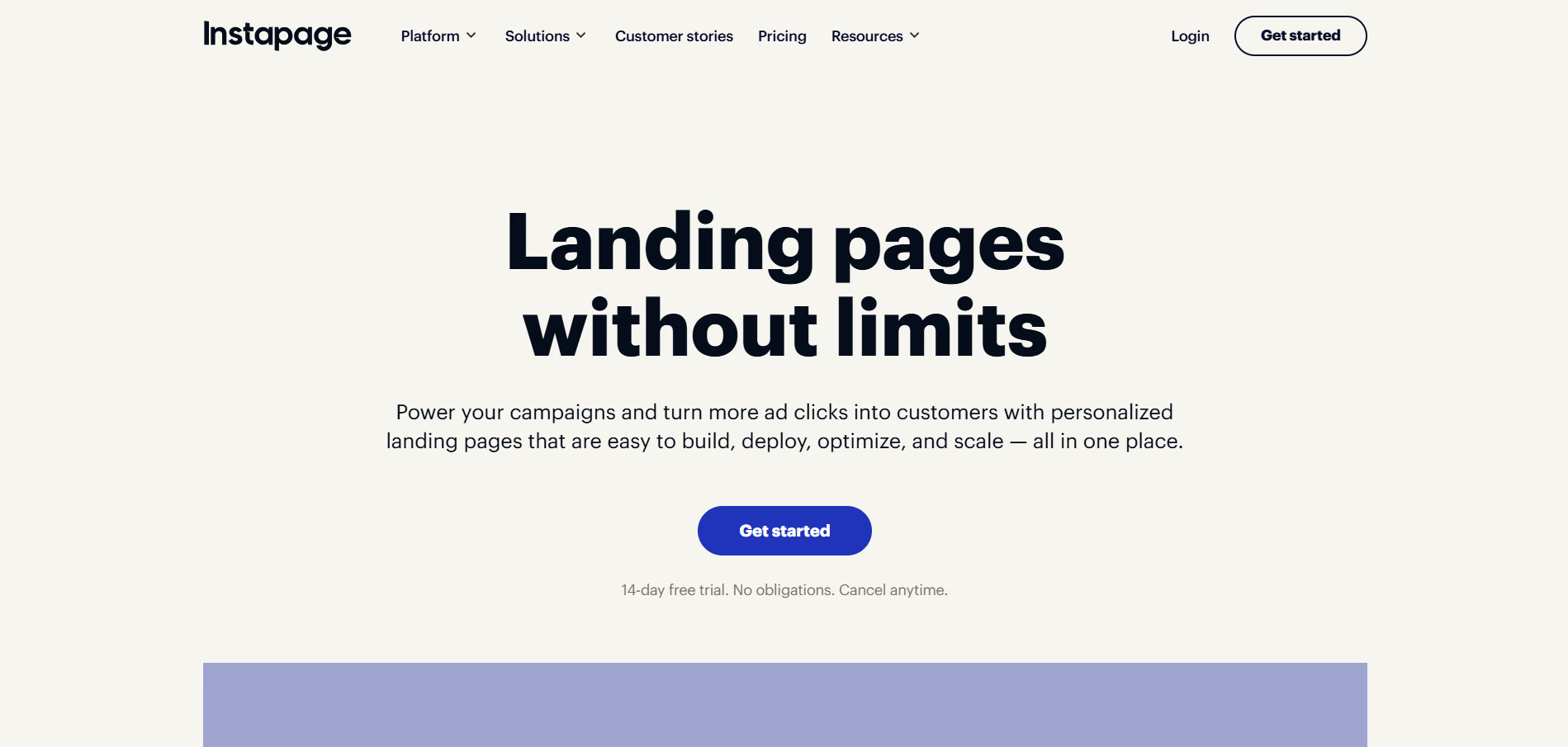
Instapage is a premium AI-powered landing page builder designed for large marketing teams, enterprises, and performance-focused organizations that run high-budget campaigns across multiple channels. In 2026, Instapage positions landing pages as part of a broader conversion infrastructure rather than standalone pages, emphasizing collaboration, experimentation, and post-click optimization at scale.
Unlike lighter tools, Instapage is built for teams that care deeply about message alignment, speed of iteration, and measurable lift in conversion rates. Its AI capabilities focus on improving post-click experiences, personalizing content, and enabling continuous optimization across many campaigns simultaneously.
Key Features of Instapage
1. AI-assisted post-click landing page creation
Instapage uses AI to help generate landing page structures and copy that align closely with ad intent and campaign goals. This ensures that the experience after the click feels consistent with the promise made in ads, which is critical for improving conversion rates.
2. Advanced drag-and-drop editor with design freedom
The editor allows complete freedom in layout design without grid restrictions. Teams can position elements precisely, customize sections deeply, and create highly tailored landing pages that match brand and campaign requirements.
3. Post-click personalization and dynamic content
Instapage enables dynamic replacement of text, visuals, and sections based on audience attributes, traffic source, or campaign metadata. This allows teams to serve different experiences to different user segments from a single page.
4. Built-in experimentation and analytics framework
Users can create A/B and multivariate tests directly within the platform. Instapage tracks detailed engagement and conversion metrics, helping teams understand exactly which elements influence performance.
5. Collaboration and workflow management for large teams
Instapage includes real-time collaboration, commenting, version history, and approval workflows. This is particularly valuable for enterprise teams where multiple stakeholders review and iterate on landing pages.
6. Enterprise-grade hosting, speed, and reliability
Landing pages are hosted on a global infrastructure optimized for fast load times and high availability. This ensures performance consistency even during high-traffic campaigns.
Unique Features of Instapage
1. Post-click optimization focus rather than generic page building
Instapage is specifically designed around optimizing what happens after a user clicks an ad. This makes it uniquely suited for paid acquisition teams compared to general landing page builders.
2. Ad-to-page message alignment tooling
The platform helps maintain strict alignment between ad creatives and landing page content. This reduces bounce rates and improves conversion efficiency across paid channels.
3. Reusable Instablocks for scalable page creation
Teams can save and reuse sections such as headers, testimonials, or pricing blocks across many pages. This accelerates production while keeping design and messaging consistent.
4. Advanced personalization at scale
Instapage supports large-scale personalization across hundreds of campaigns without duplicating pages. This is especially useful for enterprises running segmented or geo-targeted campaigns.
5. Strong governance and access control
Role-based permissions, audit trails, and approval workflows ensure compliance and control in large organizations managing sensitive campaigns.
6. Deep integration with analytics and ad platforms
Instapage integrates with major ad networks, analytics tools, and CRMs, enabling closed-loop performance tracking from click to conversion.
Advantages of Instapage
- Built specifically for enterprise-scale performance marketing
- Strong personalization and post-click optimization capabilities
- Excellent collaboration and approval workflows
- Reliable performance under high traffic volumes
- Advanced experimentation and analytics tooling
- Ideal for teams managing many campaigns simultaneously
Limitations of Instapage
- Expensive for startups or small teams
- Overpowered for simple landing page needs
- Limited backend workflow automation
- Requires significant traffic to fully benefit from optimization features
- Less suitable for non-ad-driven use cases
- Custom logic requires external systems
Pricing and Plans of Instapage
5. Leadpages
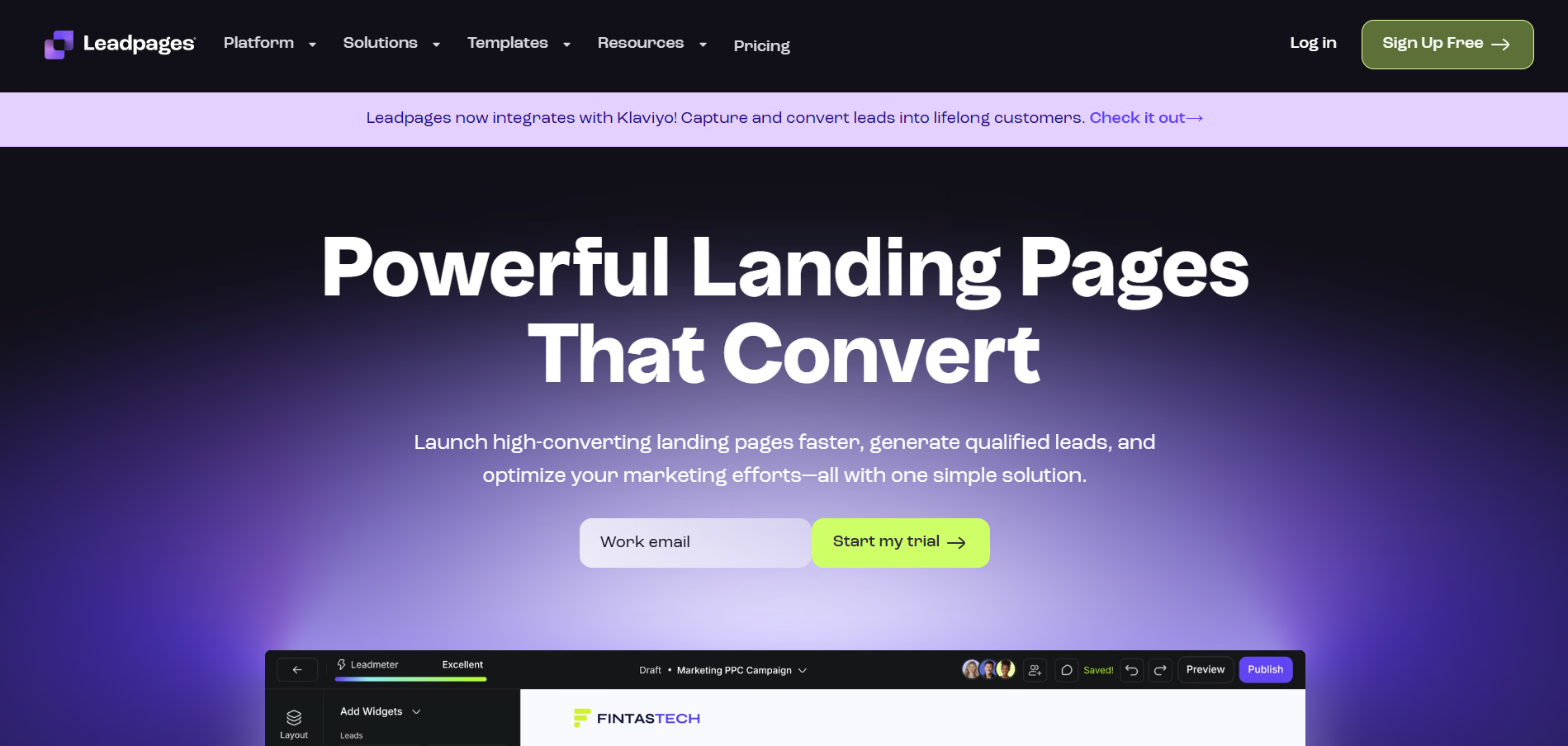
Leadpages is an AI-assisted landing page builder built for small businesses, creators, coaches, and growing teams that want to launch conversion-focused landing pages quickly without technical complexity. In 2026, Leadpages continues to focus on simplicity, speed, and affordability, making it a popular choice for users who prioritize ease of use and fast deployment over deep customization or enterprise-level experimentation.
Unlike platforms aimed at large performance teams, Leadpages is designed to help users get results with minimal setup. Its AI features focus on guiding users toward proven layouts, generating copy suggestions, and simplifying lead capture, making it well suited for entrepreneurs and marketers who want reliable outcomes without a steep learning curve.
Key Features of Leadpages
1. AI-assisted landing page creation with guided templates
Leadpages helps users create landing pages by recommending layouts, sections, and copy based on the goal of the page, such as lead capture, webinar registration, or product promotion. This guided approach reduces decision fatigue and helps beginners follow conversion best practices from the start.
2. Drag-and-drop builder optimized for speed and simplicity
The visual editor is intentionally streamlined, allowing users to assemble pages quickly without worrying about complex design controls. This makes it easy to launch pages fast, especially for users without prior design or technical experience.
3. Built-in lead capture forms and conversion elements
Leadpages includes native forms, alert bars, popups, and CTA widgets that can be added to pages or existing websites. These components are designed to increase signups and conversions without requiring external tools.
4. Mobile-responsive templates by default
All landing pages created with Leadpages are automatically optimized for mobile devices. This ensures consistent performance across desktop and mobile traffic without additional configuration.
5. Basic A/B testing for headline and layout optimization
Users can test variations of headlines, layouts, or CTAs to understand what resonates best with their audience. While not as advanced as enterprise tools, this feature provides essential optimization capabilities for small teams.
6. Integrations with email marketing and CRM platforms
Leadpages connects with popular email tools, CRMs, and analytics platforms. This allows captured leads to flow directly into follow-up sequences and sales pipelines with minimal setup.
Unique Features of Leadpages
1. Conversion-focused simplicity for non-technical users
Leadpages is intentionally opinionated, limiting complexity to help users focus on what matters most, capturing leads. This makes it especially effective for solo founders and small teams.
2. Large library of proven, high-conversion templates
Templates are built based on common use cases and historical conversion data. Users can rely on these templates as safe starting points without extensive experimentation.
3. Built-in alert bars and popups beyond landing pages
Leadpages allows users to deploy conversion elements across existing websites, not just standalone landing pages. This expands its usefulness beyond single-page campaigns.
4. Quick setup and low learning curve
Most users can launch their first landing page within minutes. This fast time-to-value is one of Leadpages’ strongest differentiators compared to more complex platforms.
5. Affordable pricing for small businesses and creators
Leadpages is priced to be accessible for individuals and small teams, making it a practical choice for early-stage businesses or personal brands.
6. Stable hosting and performance without configuration
All pages are hosted with SSL and performance optimizations included, ensuring reliability without requiring users to manage hosting or infrastructure.
Advantages of Leadpages
- Extremely easy to use with minimal onboarding
- Fast page creation for simple campaigns
- Affordable pricing compared to enterprise tools
- Strong focus on lead capture and conversions
- Useful popups and alert bars for existing sites
- Good integrations with email marketing platforms
Limitations of Leadpages
- Limited design flexibility compared to advanced builders
- Basic experimentation and optimization capabilities
- Not suitable for complex personalization needs
- No backend logic or workflow automation
- Less control for high-budget paid traffic campaigns
- Not designed for app-like or dynamic landing experiences
Pricing and Plans of Leadpages
How to choose the best AI landing page builder?
Choosing the right AI landing page builder in 2026 depends on how critical landing pages are to your growth strategy, the level of personalization you need, and how tightly pages must connect with the rest of your systems. Here are the most important decision factors to evaluate.
1. Define whether you need static marketing pages or dynamic, logic-driven experiences
Some tools are designed only for static lead capture pages, while others allow landing pages to trigger workflows, personalize content, and connect to backend systems. If landing pages are part of a larger funnel or product journey, this distinction matters greatly.
2. Evaluate the depth of AI assistance beyond templates
Many platforms use AI only to suggest copy or layouts. More advanced builders use AI to understand intent, optimize structure, personalize content, and continuously improve performance. The more competitive your campaigns are, the more this depth matters.
3. Consider how much experimentation and optimization you require
If you rely heavily on paid traffic, look for strong A/B testing, traffic routing, and performance analytics. For smaller campaigns, simpler testing tools may be sufficient, but high-scale teams need automated optimization to improve ROI.
4. Check integration and workflow compatibility with your stack
Landing pages rarely live in isolation. Ensure the builder integrates smoothly with your CRM, email tools, analytics, ad platforms, and automation systems so leads and events flow without manual effort.
5. Assess scalability and future use cases
Some builders are ideal for quick campaigns but become limiting as needs grow. If you expect to evolve landing pages into product onboarding, SaaS funnels, or full applications, choose a platform that will not force a rebuild later.
6. Balance ease of use with long-term control and ownership
Beginner-friendly tools are great for speed, but they may limit customization and ownership. More advanced platforms offer full control, exportable assets, and flexibility, which is crucial for teams building long-term growth infrastructure.
Why is Emergent the best AI landing page builder?
Emergent stands out as the best AI landing page builder in 2026 because it treats landing pages as intelligent, evolving software assets rather than static marketing pages. While most platforms focus on templates, copy, and surface-level optimization, Emergent goes deeper by combining AI-driven page creation with real backend logic, automation, and long-term scalability. This makes it uniquely suited for teams that want landing pages to actively drive growth, not just collect leads.
1. Emergent builds landing pages as real, full-stack software, not isolated pages
Most AI landing page builders stop at the front end. Emergent generates landing pages as real application components connected to databases, APIs, workflows, and logic. This allows pages to trigger actions, personalize experiences, and evolve into full products without rebuilding, which no traditional landing page tool supports at this depth.
2. Emergent’s AI understands conversion intent, not just layout or copy
Instead of only generating sections and headlines, Emergent interprets the underlying goal of the page, such as signups, demos, onboarding, or revenue. It structures the page, copy flow, CTAs, and interactions based on that intent, resulting in landing pages that feel purpose-built rather than template-driven.
3. Continuous optimization through AI agents, not manual testing alone
Emergent uses specialized AI agents to monitor behavior, analyze engagement, and refine landing pages over time. This goes beyond basic A/B testing by enabling ongoing improvement in layout, messaging, and flow without requiring constant human intervention or repeated experiments.
4. Deep personalization without duplicating pages or managing variants
Emergent allows landing pages to adapt dynamically based on user context, traffic source, behavior, or campaign metadata. This personalization happens within a single page logic layer, eliminating the need to maintain multiple versions and reducing operational complexity.
5. Seamless transition from landing page to full product or funnel
With Emergent, a landing page can naturally grow into a full onboarding flow, dashboard, SaaS product, or internal tool. Teams do not need to migrate or rebuild when an idea validates, which saves significant time and technical effort compared to traditional landing page builders.
6. Full ownership, exportability, and enterprise-grade control
Emergent outputs real, production-grade code that teams fully own. Pages can be exported, self-hosted, audited, and extended by developers at any time. Combined with isolated environments, audit logs, and security controls, this makes Emergent suitable for both startups and enterprise-grade campaigns.
Conclusion
AI landing page builders in 2026 have become essential growth tools rather than simple design utilities. Platforms like Landingi, Unbounce, Instapage, and Leadpages excel at fast campaign execution, conversion optimization, and marketer-friendly workflows. They are well suited for teams focused on paid traffic, lead generation, and rapid experimentation.
However, Emergent stands apart by redefining what a landing page can be. By combining AI-driven page creation with full-stack logic, automation, and long-term scalability, Emergent enables teams to build landing pages that evolve into products, funnels, and growth systems. For teams thinking beyond short-term campaigns and toward durable growth infrastructure, Emergent is the strongest choice in 2026.
Emergent designs, writes, and publishes your whole site from one prompt. No templates, no drag-and-drop.
- Full site from one prompt
- Custom design, real pages
- Publish in minutes