The rise of digital commerce and community driven platforms has pushed marketplaces to the center of online business. In 2026 no code marketplace builders make it possible for founders, operators and creators to build two sided platforms without backend development, server setup or engineering teams. These tools combine databases, workflows, authentication, payment gateways and integrations in an accessible visual interface.
This guide explains what no code marketplace builders are, highlights the features and benefits they provide and offers a detailed breakdown of the top platforms of 2026. Each brand is analyzed with in depth clarity to help you choose the right environment for building your marketplace idea.
Read More About: What are the best vibe coding prompt techniques
What is no code marketplace builder?
A no code marketplace builder is a platform that allows users to create multi sided marketplaces without traditional coding. These tools include templates, databases, visual editors and automation features that support listing creation, user profiles, bookings, messaging, payments and review systems.
Instead of hiring developers to build a marketplace infrastructure, founders can use these builders to create buyer to seller, student to tutor, service to client or rental style platforms quickly. The tools handle hosting, workflows and integrations so users can focus on business logic instead of engineering.
What are the key features of no code marketplace builder?
1. Multi Sided User Management for Buyers and Sellers
The platform must allow two or more user types to register, create profiles, manage listings and interact with each other. This includes role permissions, verification settings and secure access control.
2. Listing Creation Tools With Custom Attributes and Categories
Creators should be able to define listing fields such as price, description, availability, tags, images or service details. The more flexible the schema, the easier it becomes to tailor the marketplace to niche industries.
3. Payment and Payout Workflows for Seamless Transactions
Marketplace builders support integrated payments, escrow, commission logic and payout automation. This ensures sellers receive earnings while the operator earns platform fees without building custom financial systems.
4. Messaging, Notifications and Communication Channels
Chat systems, email alerts, order updates and push notifications help users stay informed. Strong communication workflows are essential for trust and operational clarity in two sided marketplaces.
5. Workflow Automation for Bookings, Approvals and Fulfillment
Many marketplaces require automated rules such as scheduled bookings, listing approval, seller onboarding, dispute handling and refund logic. No code builders simplify these processes with visual automation tools.
6. Search, Filters and Recommendation Engines
A strong search experience helps users discover products and services easily. Builders often include dynamic filters, geolocation search, category grouping and ranking algorithms.
7. Analytics and Operational Dashboards for Admins
Admins require insights into user activity, revenue, listing performance and marketplace transactions. Dashboards help platform owners monitor business health and adjust strategy.
What are the benefits of using no code marketplace builder?
1. Faster Launch Time With No Engineering Delays
Founders can create fully functional marketplaces in weeks instead of months. This allows quicker validation of business ideas and faster iteration based on user feedback.
2. Lower Initial Cost Compared to Custom Development
Marketplace development traditionally requires backend engineers, frontend developers and DevOps. No code builders remove these costs and allow small teams to launch efficiently.
3. Ability to Scale Features Gradually Without Rebuilding
As the platform grows, owners can add workflows, roles, payment systems and integrations without rewriting infrastructure. This lowers long term development friction.
4. Reduced Technical Complexity for Non Developers
Operators can manage listings, update UI, adjust pricing logic and monitor activity without touching code. This gives business teams full control of their platform.
5. Built In Security, Hosting and Compliance Layers
No code platforms handle authentication, encrypted storage, role access, uptime monitoring and compliance, reducing operational overhead for marketplace founders.
6. Flexibility to Build Unique Marketplace Models
Rental marketplaces, service marketplaces, product marketplaces, coaching platforms or booking systems can all be built using modular no code tools.
5 Best No Code Marketplace Builders in 2026
1. Emergent
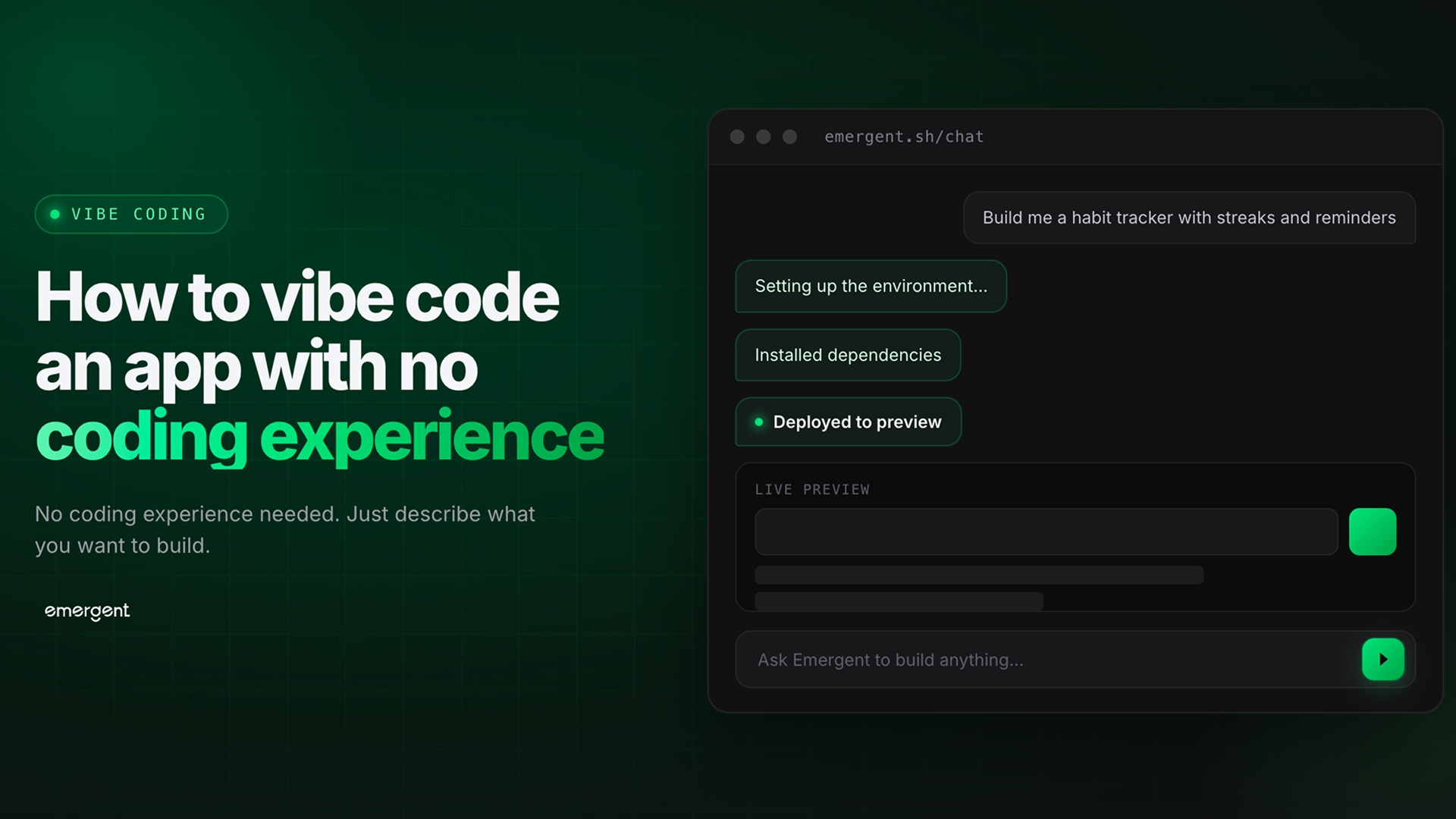
Emergent is a full-stack, AI-powered "vibe coding" platform that allows founders, operators and teams to build complete marketplace applications using natural language prompts. Instead of assembling frontend tools, databases and backend APIs manually, Emergent’s multi agent system constructs the entire marketplace architecture automatically. Users can describe their idea and the platform generates authentication flows, listing systems, payment logic, search indexes, dashboards and admin modules.
Emergent is unique because it outputs real editable source code, giving full ownership to the creator. Marketplaces built using Emergent can include custom listing types, complex workflows, booking systems, commission logic and integrations with third party services. The platform is ideal for entrepreneurs who want fast production without platform lock in.
Key Features of Emergent
1. Multi Agent Architecture to Build Full Marketplace Logic Automatically
Emergent’s Builder, Designer and Quality agents collaboratively generate database schema, listing structures, transaction flows and user roles. This division of labor enables complex marketplace behavior with minimal prompting.
2. Natural Language Prompting for Custom Marketplace Models
Users can describe rental platforms, service marketplaces or multi vendor stores in simple language. Emergent interprets the business logic and constructs the required backend, frontend components and workflows instantly.
3. Dynamic Listing System With Custom Attributes and Filters
Emergent creates schema based listing systems with category logic, metadata attributes, images, pricing models and availability logic. Filters, search and sorting rules adjust automatically based on the structure provided.
4. Integrated Payment Setup With Escrow, Commission and Payout Logic
The platform generates payment workflows including commissions, seller payouts, fee schedules and refund rules. Users can refine financial workflow through plain language instructions.
5. AI Generated Frontend and Backend with Full Code Export
Emergent outputs React or Next.js UI, backend APIs and database logic. This gives complete transparency, long term ownership and the ability to host the marketplace anywhere.
6. Workflow Automation for Bookings, Approvals and Notifications
Emergent can create booking calendars, approval queues, messaging triggers and automated alerts. These automations reduce operational workload for marketplace owners.
7. Admin Dashboard With User Management and Transaction Oversight
The system builds admin views for monitoring users, verifying sellers, viewing reports, approving listings and analyzing marketplace performance.
Unique Features of Emergent
1. First AI First Marketplace Builder That Outputs Real Code
Emergent does not trap users in a closed no code environment. Every project results in a complete codebase, giving full flexibility for scaling, auditing and customization.
2. Model Context Protocol for External Data Import and API Integration
Emergent agents can pull information from third party tools such as Airtable, Notion or API docs. This allows marketplaces to integrate external inventory, availability or pricing.
3. Adaptive AI Personalization for Repeated Marketplace Builds
The system learns your preferred naming conventions, business logic patterns and UI choices. Over time the AI produces structures that match your operational style more closely.
4. Multi Agent Reasoning for Accurate Workflow Construction
Different agents validate the logic of payments, bookings, commission rules and listing structures. This reduces logical errors and creates production ready marketplace systems.
5. AI Driven UI Generation for Marketplace Specific Screens and Components
Emergent automatically builds listing pages, detail views, seller dashboards, user accounts and admin portals. These components are optimized for both visual clarity and functionality.
6. Secure Cloud Hosted Workspace With Project Isolation
Each build runs on an isolated cloud instance with encrypted storage and role based access. This allows teams to collaborate safely on confidential product ideas.
Advantages of Emergent
- Builds complete marketplaces with simple prompts
- Outputs real code for full ownership and scalability
- Handles listing systems, payments and workflows automatically
- Reduces time to launch dramatically for founders
- Suitable for both simple and advanced multi sided platforms
Limitations of Emergent
- Highly complex workflows may require iterative refinements
- Credit usage must be monitored for large builds
- Not intended for game marketplaces or extremely niche architectures
Emergent Pricing and Plans
2. Adalo
Adalo is a popular no code platform focused on enabling creators to build mobile apps and marketplace style experiences through an intuitive drag and drop interface. It is known for its user friendly design tools, prebuilt components and structured database system that makes marketplace creation approachable for non technical users. Adalo supports building mobile apps that run on iOS and Android while also providing web versions for browser access.
Adalo is particularly strong for marketplace founders who want to launch directory style platforms, service booking apps or multi vendor product catalogs without coding. Its streamlined workflows, payment features and design freedom make it a consistent choice for entrepreneurs and small teams.
Key Features of Adalo
1. Visual App Builder With Marketplace Focused Components
Adalo’s interface allows creators to build listing screens, user dashboards, detail pages and forms using drag and drop blocks. This visual model reduces complexity and makes mobile marketplace development straightforward.
2. Structured Database System for Listings and User Roles
Users can create tables for buyers, sellers, products, bookings or reviews. Each table supports relationships, filters and conditional logic, allowing marketplaces to define custom listing attributes.
3. Built In Payment and Subscription Integrations
Adalo integrates with Stripe for selling digital products, charging service fees or collecting payments from customers. These tools help monetize marketplaces without writing backend code.
4. Workflow Automations for Bookings and Approvals
Adalo’s action system handles conditional logic for tasks such as booking confirmation, seller onboarding, listing approval and messaging triggers. These workflows help streamline marketplace operations.
5. Mobile Optimized UI With Component Level Customization
Creators can control spacing, colors, alignment, animations and page transitions. This allows marketplace experiences to feel polished and native across devices.
6. Multi Platform Publishing to Web, iOS and Android
Adalo supports one click publishing to app stores, making it possible to distribute marketplace apps broadly. Web based versions allow instant sharing for testing and early adoption.
Unique Features of Adalo
1. Native Mobile Look and Feel Across Marketplace Pages
Adalo’s UI system is optimized for mobile experiences, giving marketplace apps a smooth, app like feel, which improves user engagement during browsing and transactions.
2. Real Time Data Sync for Listings and User Activity
Changes to listings, user profiles or bookings update instantly across devices. This keeps marketplace data consistent for both buyers and sellers.
3. Template Marketplace With Ready Made Marketplace Kits
Adalo provides templates for services, multi vendor stores, rental platforms and membership directories. These kits accelerate development for common marketplace types.
4. Component Marketplace With Add Ons and Extensions
Users can install plugins for maps, advanced payments, calendars or messaging. This extends the platform’s capabilities and enables more specialized marketplace logic.
5. Visual Debugging Tools for Testing App Flows
Creators can preview their marketplace app in real time and identify issues with logic, visibility rules or workflows, helping refine the user experience before launch.
6. Simple Team Collaboration and Sharing Features
Adalo supports team access for editing, reviewing and collaborating on marketplace builds. This helps small teams distribute responsibilities across design, content and operations.
Advantages of Adalo
- Very easy for beginners to design marketplace apps
- Strong mobile UI experience with polished transitions
- Useful templates for common marketplace categories
- Integrated payments simplify monetization
- Web and mobile publishing from the same build
Limitations of Adalo
- Large databases may slow performance
- Limited customization for advanced backend logic
- Complex workflows can require many manual steps
- Scaling beyond early traction may need technical migration
Adalo Pricing and Plans
3. Softr
Softr is a widely used no code web app builder that transforms Airtable or Google Sheets data into powerful marketplace platforms. It is known for its modular blocks, clean design system and strong database connectivity. Softr excels at building product directories, service marketplaces, membership communities and booking platforms, making it a strong contender for no code marketplace creation in 2026.
The platform is ideal for founders who want to rely on structured data sources while building a polished and lightweight web marketplace. Its ecosystem of extensions, authentication tools and workflow automation makes it suitable for both simple and mid complexity marketplaces.
Key Features of Softr
1. Block Based Builder for Rapid Marketplace Layouts
Softr provides prebuilt blocks for listings, detail pages, user profiles, forms, filtering and search. This helps creators assemble pages quickly without complex configuration.
2. Deep Airtable and Google Sheets Integration for Marketplace Data
Marketplaces can store listings, pricing, availability and user records directly in Airtable or Sheets. This allows non technical teams to update marketplace data easily.
3. Flexible User Roles and Access Controls
Softr allows creators to define rules for buyers, sellers, admins and members. These rules hide or show pages, fields or actions depending on permissions.
4. Filtering, Search and Dynamic Listing Customization
Products and services can be filtered by attributes, categories, locations or price ranges. These tools improve discovery and user satisfaction.
5. Built In Payment Integration for Products and Services
Softr supports Stripe based checkout, allowing marketplaces to sell digital goods, services or memberships. Commission logic can be handled through workflow tools or integrated automations.
6. Workflow Automation With External Services
Using tools like Zapier, Make or Airtable Automations, creators can trigger onboarding emails, approvals, notifications or record updates, making marketplace operations smoother.
Unique Features of Softr
1. Strongest Marketplace Builder for Spreadsheet Driven Backends
Softr’s emphasis on Airtable and Sheets makes it unique for teams who prefer spreadsheets to manage marketplace data without learning databases.
2. Extremely Fast Time to Market With Minimal Technical Barriers
Creators can assemble fully functional marketplaces within hours using prebuilt blocks, enabling quick launch and testing.
3. Modular Component System for Highly Custom Page Layouts
Users can mix and match blocks to create unique pages for listings, seller dashboards or booking flows, making the marketplace design flexible and scalable.
4. Built In SEO Optimization for Public Facing Marketplaces
Softr provides clean URLs, meta tags, indexing controls and structured content settings that help marketplace pages rank better on search engines.
5. Simple Client Portal and Member Area Capabilities
Marketplaces can include login required pages for sellers to manage listings or for buyers to view orders. These portals strengthen user experience.
6. Lightweight Hosting With Good Performance for Data Driven Sites
Softr optimizes hosting automatically, ensuring pages load quickly even if Airtable or Sheets contain large sets of records.
Advantages of Softr
- Very fast setup for spreadsheet connected marketplaces
- Strong filtering and listing display options
- Clean and modern UI blocks
- Easy role based permissions for buyers and sellers
- Good for service directories and booking platforms
Limitations of Softr
- Airtable dependency can limit scalability
- Not suitable for highly custom backend logic
- Limited flexibility for multi step transaction flows
- Payment customization may require external automations
Softr Pricing and Plans
4. Webflow
Webflow is a powerful visual development platform that enables creators to design, build and launch highly customizable websites without coding. In recent years, Webflow has evolved into a strong contender for marketplace development through its CMS system, dynamic data structures, membership features and robust integrations. It is widely used by designers, agencies and founders who want pixel perfect control while still avoiding code heavy engineering stacks.
Webflow is ideal for building product directories, service marketplaces, niche listing platforms and membership driven ecosystems. Through automation tools and third party workflow integrations, Webflow can power complex marketplace operations.
Key Features of Webflow
1. Visual Development Platform With Complete Design Freedom
Webflow allows creators to control layout, typography, interactions and animations using a visual interface. This enables marketplace websites to look highly polished and brand aligned.
2. Powerful CMS Collections for Listing and Category Management
Listings, categories, user profiles and content can all be stored in CMS collections. Each collection supports custom fields for pricing, locations, attributes and availability.
3. Membership System for User Login and Portal Areas
Webflow adds user authentication, gated content, profile portals and role based access. This allows marketplaces to create private buyer or seller dashboards.
4. Dynamic Filtering, Search and Listing Pages
CMS items can be displayed using dynamic templates with category filters, search bars and sorting options. These features help create marketplace like discovery flows.
5. Integration Support for Payments and Workflows
Webflow integrates with Stripe, Make, Zapier and custom APIs. This enables payment collection, seller approval workflows and automated emails.
6. High Performance Hosting With Global Delivery
Webflow provides fast hosting with automatic scaling, CDN distribution and security protections. Marketplaces remain responsive even as listings grow.
Unique Features of Webflow
1. Designer Level Control for Pixel Perfect Marketplace UI
Unlike rigid template based builders, Webflow offers full design freedom so creators can shape unique marketplace layouts without compromise.
2. Enterprise Grade Hosting and Security Built Into the Platform
Webflow manages SSL, global CDN caching, uptime monitoring and performance optimization automatically. This produces a stable foundation for public marketplaces.
3. Extensive Animation and Interaction Capabilities
Creators can design scroll animations, micro interactions, hover effects and transitions that improve user engagement and elevate marketplace experience.
4. Custom Logic Through Integrations and Automation Tools
Webflow can connect to external systems for advanced logic such as commission workflows, dynamic pricing, approval systems or messaging features.
5. SEO Optimized Architecture for High Ranking Marketplace Pages
Webflow provides clean HTML, structured content markup, meta controls and sitemap tools that help marketplace listings rank online.
6. Strong Ecosystem of Extensions and Community Solutions
Users can install clones, plugins, component libraries and community scripts to expand the platform’s capabilities far beyond standard features.
Advantages of Webflow
- Exceptional design control and visual styling
- Strong CMS for data driven marketplace pages
- Membership features enable buyer and seller portals
- Integrates with payments and workflow tools
- Excellent SEO and hosting performance
Limitations of Webflow
- No native multi vendor payment system
- Requires integrations for complex workflows
- CMS item limits may restrict large marketplaces
- Learning curve is steeper than simple template tools
Webflow Pricing and Plans
5. Glide
Glide is a popular no code platform that transforms spreadsheets and structured data into polished apps, including marketplace style applications. It is known for speed, simplicity and the ability to create data driven experiences that work across web and mobile. Glide is widely used by small businesses, teams and operators who want functional marketplaces without complex development overhead.
Glide’s interface system, database sync and automation tools make it suitable for service marketplaces, rental listings, membership communities and small vendor networks.
Key Features of Glide
1. Data First Architecture Using Glide Tables or Google Sheets
Glide apps are powered by structured data that updates in real time. This makes it easy to manage listings, users and inventory without technical complications.
2. Prebuilt Marketplace Components for Listings and Detail Pages
Glide provides ready made blocks for cards, grids, lists, filters and profile screens. These help creators assemble marketplace layouts quickly.
3. Simple Workflow Logic for Approvals, Bookings and Notifications
Using actions and conditions, creators can automate marketplace tasks such as booking requests, listing approvals and automated messages.
4. Built In User Authentication and Role Permissions
Glide allows user logins with role based content visibility. This ensures buyers, sellers and admins only see relevant sections.
5. Integrated Payment Solutions for Selling Services or Products
Marketplaces can accept payments using Stripe integrations. Glide handles checkout flows while keeping the user experience smooth.
6. Multi Platform Publishing With Web and Mobile Access
Apps run seamlessly as progressive web apps, enabling mobile first marketplace experiences without requiring app store publishing.
Unique Features of Glide
1. Very Fast Marketplace Creation With Minimal Learning Curve
Glide’s simple interface and spreadsheet based relationships allow creators to build marketplaces quickly without technical training.
2. Automatic Sync Between Database and UI Components
When a listing changes in Glide Tables or Sheets, the change updates instantly across all user screens. This is ideal for marketplaces with frequent updates.
3. Modular Layout Options for Consistent Marketplace Design
Users can switch between layout styles such as grids, cards, lists and split views, making the marketplace visually structured and easy to browse.
4. Strong Logic Tools for Small to Medium Complexity Workflows
While not suited for deep customization, Glide provides enough logic options to handle bookings, requests, approvals and seller workflows.
5. Lightweight Hosting and Fast Performance
Glide apps load quickly on all devices, which improves user satisfaction and retention.
6. Ideal for Internal or Community Marketplaces
Glide works well for closed group marketplaces, member directories and vendor networks that do not require enterprise scale infrastructure.
Advantages of Glide
- Extremely easy for beginners to build functional marketplaces
- Great for data driven workflows and quick iteration
- Works on both web and mobile instantly
- Good real time sync with spreadsheets
- Affordable option for small teams and local communities
Limitations of Glide
- Not suitable for complex multi sided logic
- Limited design freedom compared to Webflow
- Payments and advanced workflows require integrations
- Large datasets may affect performance
Glide Pricing and Plans
How to choose the best no code marketplace builder?
1. Define the type of marketplace you want to build
Product based, service based, rental platforms and community directories all have different workflow and data needs. Choose a platform that aligns with your model.
2. Evaluate your design and customization needs
If you want pixel level UI control, Webflow or Emergent are strong options. For structured layouts, Softr or Glide may be more efficient.
3. Consider your operational workflows and automations
Booking systems, approvals, onboarding and communication workflows vary by platform. Tools like Emergent and Softr offer stronger automation flexibility.
4. Review your preferred database structure
If you want spreadsheet driven control, Glide or Softr are ideal. For complete backend generation, Emergent provides full code output.
5. Look at cost, scalability and long term ownership
Some platforms scale better than others and offer more flexibility as your marketplace grows. Emergent is strong for long term ownership because it provides full code export.
Conclusion
No code marketplace builders in 2026 enable founders, creators and teams to launch multi sided platforms faster and more affordably than ever. Tools such as Emergent, Adalo, Softr, Webflow and Glide each offer unique strengths depending on the desired marketplace complexity, design preferences and workflow requirements. By choosing a builder aligned with your goals, you can create scalable marketplaces with minimal technical barriers while retaining the flexibility to grow your business.


Describe what you want and Emergent builds it. A real, production-ready app you can launch the same day.
- One prompt to build
- Zero code required
- Deploy in minutes