Building Android applications has never been more accessible than it is in 2026. No code Android app builders allow founders, designers, students and enterprise teams to create feature rich mobile apps entirely through visual tools or natural language prompting. These platforms remove the challenges of Java, Kotlin, Android Studio, device fragmentation and backend setup, allowing developers to build and publish apps faster and with far fewer technical constraints.
This guide explores the five best no code Android app builders of 2026. Each platform is reviewed in deep detail, following the same analysis structure and quality standard used for Emergent level comparisons.
Read More About: What are the best vibe coding prompt techniques
What are no code Android app builders?
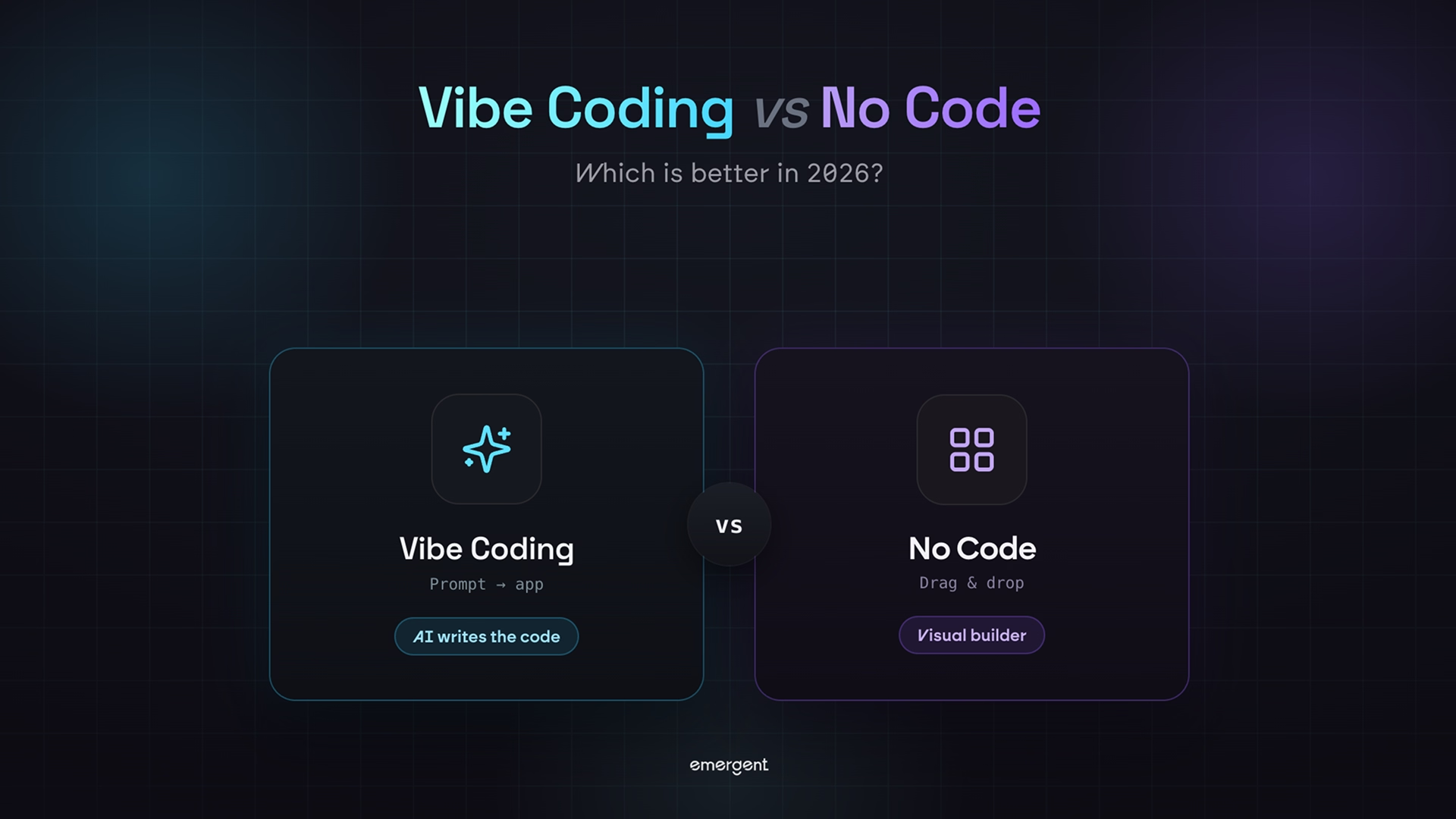
A no code Android app builder is a tool that enables users to create Android applications without writing traditional code. It provides drag and drop UI components, visual logic builders, device capability integrations, data management tools and automated deployment pipelines. Users can design, test and launch Android apps directly through guided interfaces.
These tools eliminate the need for Android Studio configurations, SDK installations, emulators or manual signing processes. Instead, they generate Android APKs or App Bundles automatically, making mobile app development accessible to both beginners and professionals.
What are the key features of no code Android app builder?
1. Visual UI Builder Tailored for Android Screens
A no code Android builder includes mobile friendly components such as lists, cards, navigation drawers, bottom tabs, floating action buttons and form fields. The system handles responsive layouts across a wide variety of Android screen sizes, reducing UI fragmentation issues that developers typically face.
2. Visual Logic or Block Based Workflow System
Instead of writing Kotlin or Java, users can define app behavior through modular logic blocks or flowchart style automation. This enables complex interactions such as API calls, conditional branching, user permissions and data processing without touching code syntax.
3. Access to Native Android Capabilities
These platforms allow apps to use device features such as GPS, camera, push notifications, Bluetooth, accelerometer, offline caching and file storage. This helps users create real mobile apps with functional parity to traditionally coded applications.
4. Backend, Database and Authentication Tools
Most Android builders include built in databases, user authentication, data validation and external API connectors. Users can store data, manage profiles, integrate business systems or run workflows without designing backend infrastructure manually.
5. Automatic APK and App Bundle Generation
The platform handles signing, provisioning and packaging behind the scenes. It generates Android APKs and AABs that can be uploaded to the Google Play Console, allowing users to publish apps without using Android Studio.
6. Real Time Testing and On Device Preview
Modern builders offer instant preview tools or companion apps that update the interface and logic in real time as you modify your project. This shortens development cycles and greatly improves user experience testing.
7. Template Systems and Reusable Components
Many platforms include libraries of prebuilt screens and logic blocks for e-commerce, delivery apps, social apps, dashboards and internal tools. This helps creators launch complete apps far more quickly.
What are the benefits of using no code Android app builder?
1. Rapid Development and Faster Go To Market Speed
By removing traditional coding requirements, users can build MVPs and production apps significantly faster. Visual tools, templates and automation reduce development cycles from months to days, enabling quicker market validation.
2. Reduced Costs for Early Stage Teams and Solo Founders
Hiring Android developers, maintaining backend infrastructure and managing dev tooling can be expensive. No code Android builders eliminate these technical costs and allow non technical founders to ship apps independently.
3. Empowerment for Beginners and Non Developers
Students, designers, educators and entrepreneurs can build functional mobile apps without programming knowledge. The learning curve is much lower, allowing more people to participate in app creation and innovation.
4. Native Level Capability Without Complex Engineering
Access to native device features means users can build rich, interactive apps such as navigation tools, camera apps, fitness trackers or utilities without writing a single line of Kotlin or Java.
5. Better Iteration Cycles and Faster UX Testing
Because changes update instantly with visual previews, teams can refine user flows, interface layouts and interactions rapidly. This leads to better user experience and fewer development bottlenecks.
6. Scalability and Long Term Extensibility
Many platforms allow API integrations, custom modules or export options. This gives teams the flexibility to evolve simple prototypes into more complex applications over time.
5 Best No Code Android App Builders
1. Emergent
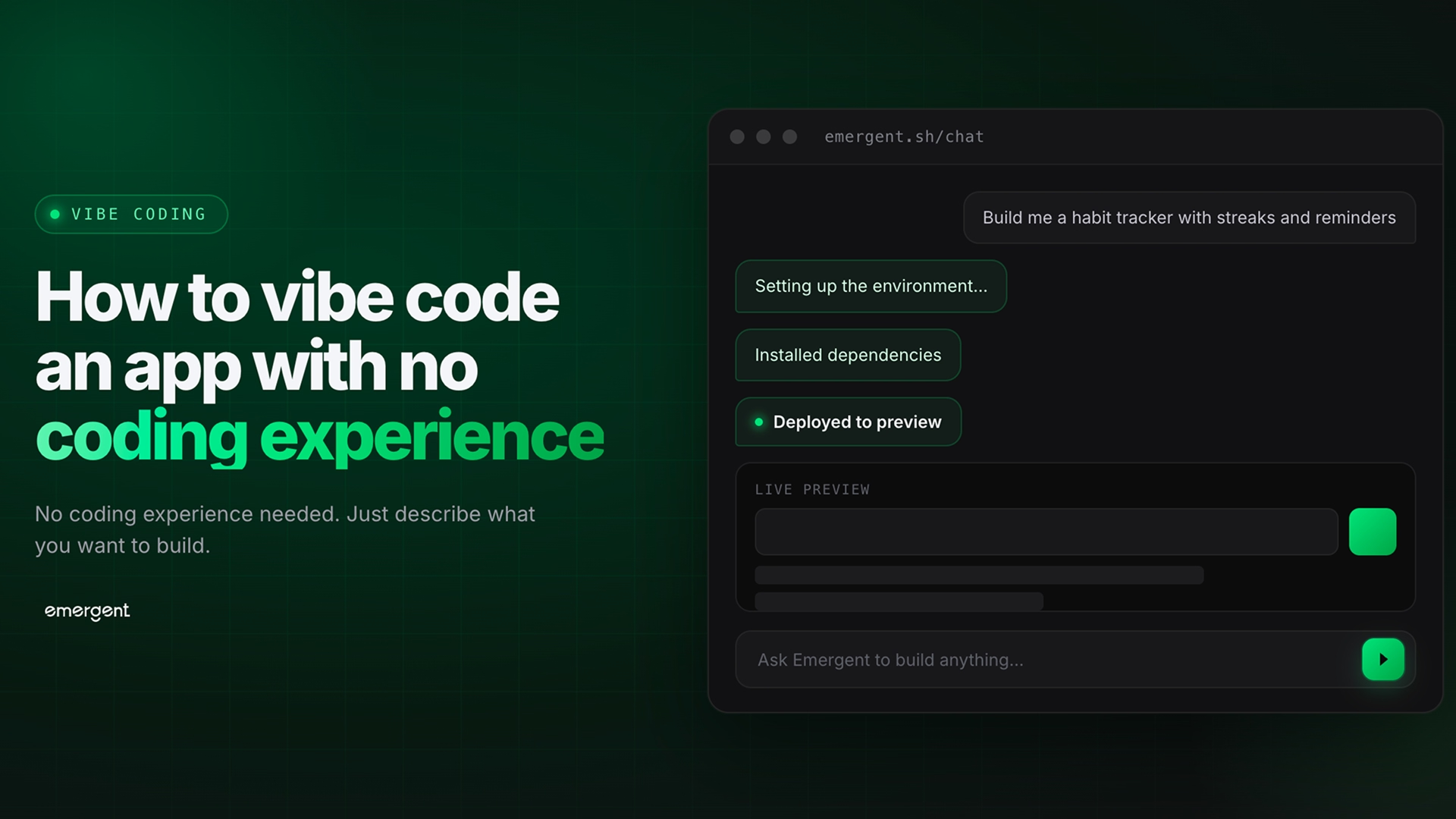
Emergent is a full-stack, AI-powered "vibe coding" platform that allows teams to build Android, iOS, web and mobile applications using natural language prompts. It automates UI creation, backend development, database modeling, deployment and monitoring through a multi agent architecture. Users can build complete applications inside a browser without installing SDKs, configuring Android Studio or managing servers.
Under the hood, Emergent uses coordinated AI agents that divide tasks such as UI generation, logic creation, code quality enforcement, environment provisioning and deployment. This delivers an end to end automated pipeline while still giving users full code ownership and transparency.
Key Features of Emergent
1. Multi Agent Development Orchestration Across Entire App Lifecycle
Emergent uses specialized agents including Builder, Designer, Quality, Deploy and Ops Agents that work together to interpret prompts and convert them into structured, production ready applications. Each agent manages its own domain, ensuring stable sequencing and modular task execution.
2. Natural Language to Production Code Generation for Android Apps
Users describe the Android app they want, and Emergent generates UI screens, logic flows, APIs, authentication layers and database structures. It supports complex workflows and produces real code that users can export or host anywhere, providing long term extendability.
3. Cloud Hosted Full Stack Workspace With Isolated Environments
Every project runs in a secure container that includes frontend, backend and infrastructure tools without requiring local setup. Teams avoid dependency conflicts, Android Studio issues or device configuration problems because the entire system runs in the browser.
4. Exportable Standards Based Code for External Hosting and Development
Emergent outputs high quality React Native or web code and backend services using Python or Node. Developers can download the entire codebase, modify it manually or migrate to custom infrastructure when scaling.
5. Integrated Automated Testing, Debugging and Monitoring Pipeline
AI quality agents validate logic, check performance, fix errors and prevent regressions. Monitoring tools track crashes, performance metrics and execution logs, offering full visibility into runtime behavior.
6. Instant Deployment With Automatic Domain, SSL and Hosting Setup
The Deploy Agent handles routing, certificates, cloud instances and deployment tasks automatically. Updates deploy within seconds and eliminate the need for manual DevOps or complex infrastructure management.
Unique Features of Emergent
1. Enterprise Grade Security With Complete Project Isolation
Each application is placed inside its own secure environment with encrypted data storage, permission controls and SOC aligned auditing. This makes Emergent suitable for regulated industries and professional development teams.
2. Custom Assignment of AI Models for Specialized Tasks
Users can select which LLMs handle UI generation, backend logic, optimization or QA. This gives teams control over performance and cost while improving output accuracy for different types of applications.
3. Adaptive Learning System That Improves With Usage
Emergent learns preferred naming conventions, design patterns, data structures and workflow habits. Over time, the system becomes faster and more aligned with user expectations, reducing prompt complexity.
4. Model Context Protocol for Integrating External Tools
Emergent connects with Figma, GitHub, Notion, API documentation and internal systems. This allows the platform to incorporate external context into builds automatically.
5. Support for Multimedia, Generative AI and Advanced Component Creation
Emergent can produce interactive components, audio and image features, animations and generative AI modules suitable for next generation Android applications.
Advantages of Emergent
- Automates entire development lifecycle from UI to deployment
- Generates real, exportable codebases for long term use
- Eliminates DevOps and Android SDK setup
- Learns user workflow patterns to speed up future builds
- Suitable for both simple and enterprise level applications
- Strong security and compliance capabilities
Limitations of Emergent
- Very advanced custom apps may still require human refinement
- Browser based environment prevents offline development
- Resource intensive apps require credit management
- Plugin marketplace is newer compared to older no code ecosystems
Emergent Pricing and Plans
2. Adalo
Adalo is a beginner friendly no code platform designed for building mobile first applications with an intuitive drag and drop interface. It is widely used by creators, founders, educators and small business owners who want to build simple Android apps without technical complexity. Adalo handles UI creation, database setup, app logic, and publishing workflows inside a unified environment that removes the need for Android Studio or programming experience.
The platform focuses heavily on ease of use, offering prebuilt templates, structured mobile layouts and a component marketplace. While not intended for highly complex or enterprise systems, Adalo excels at enabling rapid development of consumer apps, delivery apps, basic marketplaces, internal utilities and membership tools.
Key Features of Adalo
1. Mobile First Drag and Drop Interface With Prebuilt Components
Adalo provides a visual builder with mobile optimized components such as lists, cards, buttons, forms and navigation bars. Every component is designed to work naturally on Android screens, reducing the work required to create polished and touch friendly interfaces.
2. Visual Data Modeling With Automatic Relationship Handling
Users can create data tables, set relationships and map sections of the UI to dynamic content stored in Adalo’s internal database. The system automatically manages data connections and CRUD operations, allowing creators to build profile systems, product listings or membership directories without backend coding.
3. Simple Logic and Action Based Workflow System
Adalo uses a click based logic builder for defining app behavior. Users can create actions for navigation, updating records, triggering notifications or processing inputs. This system is easy to learn and helps beginners implement functional workflows without engineering knowledge.
4. Native Android App Packaging and Publishing Support
Adalo automatically generates Android APKs and App Bundles ready for Google Play submission. The platform handles certificates, app signing and configuration steps, reducing the technical burden associated with publishing real mobile applications.
5. Component Marketplace for Expanded Functionality
Adalo offers a marketplace with prebuilt modules such as calendars, chat systems, maps, payment tools and animations. These components allow creators to extend their apps quickly without building features from scratch.
6. API Integration for Connecting External Services
Users can connect third party APIs and bring external data into the application through configurable API endpoints. This supports use cases such as live data feeds, payment verification or CRM integration.
Unique Features of Adalo
1. Extremely Beginner Friendly Workflow and Clear Learning Curve
Adalo simplifies mobile app creation so beginners can build functional apps with very little learning time. The interface is designed to be intuitive and non technical, making it ideal for people who have never built software before.
2. Large Library of Ready to Use Templates
Users can start with templates for fitness apps, directories, subscription apps, social apps and delivery tools. These templates provide ready made structures that significantly accelerate development.
3. Strong Focus on Visual Mobile Layouts and Touch Interaction
Every component is built with mobile ergonomics in mind, such as tap targets, gesture alignment, and scroll behavior. This gives Adalo apps a smooth and native like feel without requiring custom UI coding.
Advantages of Adalo
- Perfect for beginners who want to build Android apps quickly
- Great for consumer apps, directories and lightweight business tools
- Drag and drop simplicity with visual data handling
- Native Android publishing without complex configurations
- Good template ecosystem for rapid prototyping
Limitations of Adalo
- Not suitable for very complex workflows or large data sets
- Limited access to deep native Android features
- Performance may struggle in apps with many lists or heavy content
- Less flexible than advanced no code or low code platforms
Adalo Pricing and Plans
3. Glide
Glide is a powerful no code platform that turns spreadsheets, databases and structured data into functional Android apps. It is widely used by operations teams, businesses, schools and internal teams to build tools such as inventory apps, dashboards, CRM systems, employee tools and field data collection apps without coding. Glide focuses on speed, simplicity and data driven workflows, making it a preferred tool for creators who rely heavily on spreadsheets.
The platform emphasizes a model where users design data first and interface second. This makes Glide ideal for internal operations and business processes rather than complex consumer apps.
Key Features of Glide
1. Spreadsheet Driven App Creation With Automatic Data Binding
Glide reads data from Google Sheets, Excel files or Glide Tables and instantly generates functional interfaces. The system maps fields to components automatically, eliminating the need for manual backend development or schema setup.
2. Prebuilt Components for Business and Operational Use Cases
Glide offers components like tables, cards, charts, lists, filters, signatures, maps and barcode scanners. These are specifically optimized for real business workflows such as inspections, deliveries, employee tools and CRM dashboards.
3. Role Based Data Access and User Permissions
Glide includes robust permission settings that allow administrators to control which users see which data rows or pages. This is essential for business apps that contain sensitive or role dependent information.
4. Built In Actions and Workflow Automation Tools
Users can create workflows for adding records, sending emails, generating PDFs, updating fields or integrating with external services. These workflows can be triggered by user interaction or automated through conditions, enabling powerful business logic without code.
5. Mobile Ready Layouts for Android Devices
Glide apps run smoothly on Android and are designed to behave like native tools, even though they technically run as progressive web apps. The interfaces are optimized for fast loading and field use, making Glide popular for on site workflows.
6. Integrations With Tools Like Zapier, Make and Webhooks
Glide integrates easily with automation platforms that allow users to sync data across systems, trigger events or create dynamic content pipelines. This greatly expands the power of Glide apps without backend engineering.
Unique Features of Glide
1. Perfect Fit for Internal Tools and Operational Apps
Glide is designed for business teams that need to build internal utilities quickly. It provides tools and layouts specifically shaped for workplace use rather than public facing consumer apps.
2. Built In PDF Generation and Document Workflows
Users can create reports, invoices or tickets directly inside Glide using automated PDF generation. This makes it a great choice for logistics, services, scheduling or compliance workflows.
3. Data First Development Workflow That Reduces Complexity
By making spreadsheets the backend, Glide eliminates backend coding entirely. Changes in the spreadsheet instantly update in the app, creating a synchronized environment.
Advantages of Glide
- Ideal for business apps, dashboards and internal operations
- Extremely fast build speed and low learning curve
- Strong role based access and user permissions
- Excellent integration options for workflow automation
- Optimized for Android devices used in field operations
Limitations of Glide
- Not suitable for advanced consumer apps or complex UI needs
- Limited native device functionality compared to mobile first builders
- Performance depends heavily on data structuring
- No direct native Android build generation
Glide Pricing and Plans
4. FlutterFlow
FlutterFlow is a powerful visual app builder that uses Google’s Flutter framework to generate highly performant Android and iOS applications. It is popular among semi technical users, designers and developers who want speed without sacrificing customization or scalability. FlutterFlow bridges the gap between no code and full code by offering a visual builder while still producing clean Flutter code that can be exported and extended manually.
This platform excels at building beautiful interfaces, complex workflows, animations and multi platform apps. Because it outputs real Flutter code, FlutterFlow is suitable both for prototyping and long term production development.
Key Features of FlutterFlow
1. Visual UI Builder That Generates Real Flutter Code
FlutterFlow’s interface allows users to design screens visually while the system produces high quality Flutter code underneath. This ensures pixel perfect design and smooth performance across Android devices, matching the capabilities of traditionally coded Flutter apps.
2. Advanced Logic Builder With Conditional Flows and State Management
The platform supports complex workflows, API calls, multi screen navigation, authentication, conditional visibility, custom functions and local state management. Users can implement advanced interactions without needing to master Dart syntax.
3. Integration With Firebase and External APIs
FlutterFlow has native support for Firebase Authentication, Firestore, Storage and Functions. Users can also connect external APIs using visual configuration, enabling both real time apps and data driven workflows.
4. Custom Code Injection for Maximum Flexibility
Unlike many no code tools, FlutterFlow allows users to add Dart code, custom widgets and external libraries. This hybrid approach makes it suitable for teams who want no code speed but still need engineering depth for advanced use cases.
5. Animation Tools and Micro Interaction Builder
FlutterFlow includes tools for building animations, transitions, gesture based UI and custom interaction patterns. This allows creators to produce highly polished mobile interfaces that resemble professionally coded apps.
6. Native Android APK and App Bundle Generation
FlutterFlow compiles apps directly into APKs and AABs using real Flutter builds. This allows seamless publishing to Google Play while providing performance identical to apps built in code.
Unique Features of FlutterFlow
1. Hybrid No Code and Pro Code Environment
FlutterFlow is one of the few platforms where designers and developers can collaborate effectively. Designers can build the UI visually while developers extend functionality through exported code or custom functions.
2. Full Flutter Code Export With Developer Ready Structure
The exported project is clean, readable and structured like a professional Flutter repository. This allows teams to transition from no code to code without rebuilding the app.
3. Rich Support for Animations and Advanced User Experiences
FlutterFlow is designed for creators who want visually rich interfaces. The built in animation and gesture tools allow apps to feel polished and modern without design constraints.
Advantages of FlutterFlow
- Produces real Flutter code suitable for long term development
- Ideal for visually rich Android applications
- Strong support for Firebase and real time apps
- Allows custom coding and component extension
- Great for both MVPs and production scale projects
Limitations of FlutterFlow
- Requires some technical understanding for complex projects
- Learning curve is steeper than beginner oriented platforms
- Advanced logic may require custom coding
- Collaboration features are improving but not enterprise level
FlutterFlow Pricing and Plans
5. Thunkable
Thunkable is a popular no code platform that enables users to build true native Android and iOS applications using block based logic instead of writing code. It is widely adopted by students, educators, early stage founders and creators who want to build real mobile apps that access device capabilities without using Android Studio or Java. Thunkable offers a clean interface, a drag and drop UI builder, and a powerful logic system that allows users to construct real app behavior visually.
Thunkable is especially known for its native component support, allowing apps to use the camera, maps, sensors, file storage, Bluetooth and notifications with minimal effort. It generates production ready Android builds and provides an easy path to Google Play deployment.
Key Features of Thunkable
1. Block Based Logic System Designed for Beginners and Intermediate Makers
Thunkable uses visual blocks that represent conditions, variables, events and actions. Users can snap these blocks together to create logic flows that control app behavior. This system removes syntax errors and reduces complexity while still supporting multi step workflows and interactive logic patterns.
2. Drag and Drop UI Builder With Native Component Library
The platform includes a wide range of mobile ready components such as buttons, lists, forms, modals, maps, video players, navigation bars and animations. Every component is optimized for mobile ergonomics, ensuring the final Android app feels natural and user friendly across devices.
3. Access to Native Android Device Capabilities
Thunkable supports deep integrations with hardware features including the camera, GPS, accelerometer, audio tools, vibration, files, local storage and push notifications. This enables creators to build mobile apps that behave similarly to those written in Kotlin or Java.
4. API and Database Integrations for Data Driven Apps
Users can connect REST APIs or integrate with databases like Airtable and Firebase. This makes it possible to build more advanced apps such as social tools, business utilities, inventory systems or IoT dashboards without backend engineering.
5. Real Time Preview Through the Thunkable Live App
Thunkable offers a companion mobile app that updates instantly as users modify the project. This real time preview significantly shortens the testing cycle and allows creators to validate UI and logic changes immediately on physical devices.
6. Native Android Build Generation for Google Play Publishing
Thunkable compiles projects into production ready Android APKs and App Bundles. It handles signing, configuration files and build pipelines automatically, eliminating the need for Android Studio or manual build setups.
Unique Features of Thunkable
1. One of the Few Platforms That Generates True Native Mobile Apps
Most no code platforms rely on web views or progressive web apps. Thunkable builds genuine native mobile apps that deliver faster performance, better animations and deeper device integration. This makes it ideal for interactive consumer apps and hardware based utilities.
2. Strong Adoption in Education and Learning Environments
Thunkable is widely used in schools, coding bootcamps and youth programs because its block based logic system introduces computational thinking without overwhelming beginners. This widespread educational adoption strengthens its ecosystem of tutorials and community examples.
3. Dedicated Tools for Hardware and Sensor Based Applications
The platform offers specialized components for accelerometer readings, device orientation, speech to text, barcode scanning and offline storage. This makes it an excellent choice for utility apps, fitness apps, IoT integrations and field data collection tools.
Advantages of Thunkable
- Great for beginners due to its intuitive block system
- Produces real native Android apps instead of web wrappers
- Supports hardware features and sensors typically requiring code
- Real time preview accelerates testing and iteration
- Strong educational and community ecosystem
- Ideal for small utilities, prototypes and consumer apps
Limitations of Thunkable
- Large or complex applications may require advanced structuring
- Block logic can become crowded in bigger projects
- Limited customization compared to hybrid code platforms
- Not ideal for enterprise applications requiring deep backend control
Thunkable Pricing and Plans
How to choose the best no code Android app builder?
1. Identify the complexity of the app you want to build
Simple apps like checklists or directories may work well on Adalo or Glide, while more complex logic, animations or integrations may require FlutterFlow or Emergent. Choosing a tool that matches your feature depth ensures smooth development.
2. Consider whether you need native device features or simple interactions
Apps that rely on sensors, camera features, offline storage or GPS may require platforms like Thunkable or FlutterFlow. Lightweight apps focused on data display or dashboards may be better suited for Glide or Softr.
3. Examine long term scalability and code ownership needs
If you plan to evolve the app into a large system, choose a platform that offers code export or hybrid flexibility. Emergent and FlutterFlow are ideal for long term maintainability and customization through exported code.
4. Evaluate the learning curve and user experience
Beginners may prefer the simplicity of Adalo or Glide, while teams with some technical familiarity may take advantage of the advanced logic and design capabilities in FlutterFlow or Emergent.
5. Review pricing, usage limits and deployment flexibility
Some platforms charge based on resources, build limits or user seats. Choose a builder whose pricing model aligns with your expected user base and update frequency.
6. Choose a platform aligned with your distribution goals
If your goal is to publish to Google Play, ensure the builder provides direct APK or App Bundle generation. Tools like Thunkable, FlutterFlow and Emergent excel in this area.
Conclusion
The no code Android ecosystem in 2026 offers tools for every type of creator, from complete beginners to enterprise teams. Whether you need simple mobile utilities, internal business tools or highly customized Android apps, the platforms covered in this guide provide flexible and scalable approaches. Selecting the right builder depends on your technical comfort level, long term goals, budget and the complexity of features your application requires.
No code Android development unlocks opportunities for anyone to bring their ideas to life without deep engineering knowledge. With the right platform, even non developers can build polished, production ready Android apps.


Describe what you want and Emergent builds it. A real, production-ready app you can launch the same day.
- One prompt to build
- Zero code required
- Deploy in minutes