TL;DR
- Emergent: Best for agents who'd rather build and own a custom site than rent someone else's platform.
- Real Geeks: Best for agents and teams who want lead generation and advertising built into the website itself.
- AgentFire: Best for agents who want to own a hyper-local, "the neighborhood expert" brand.
- Placester: Best for agents who want a real estate-specific site live fast without a big upfront commitment.
- Sierra Interactive: Best for teams and brokerages that want a published price and a platform to grow into.
- Luxury Presence: Best for agents in the luxury segment who want a fully designed, done-for-you site.
Most agents and realtors start with whatever website their brokerage hands them. It's free, but it does nothing to help buyers find you, capture leads, or build a brand you own outright.
What you need instead is a website built specifically for real estate, one that pulls in live listings, captures leads, and is yours to keep. I looked at real estate website builders that regularly turn.
Reviewing those six took a day. I also spent that time building a custom site from scratch on one of them, just to see what that approach could do.
You'll come away knowing which platform fits your stage of business, and where each one falls short.
Why Your Website Matters More Than a Brokerage Page
A brokerage template usually can't rank for your name in search. It's one of hundreds of nearly identical pages the brokerage runs, and Google has no reason to treat yours as the definitive source on you.
It also isn't yours. Move firms, and the page, the leads it generated, and the SEO history built up around it typically stay behind. You start over at zero.
A lead from your own site doesn't have that problem, and it isn't shared. Zillow puts the average cost per lead connection at $223 in major metros and $139 elsewhere, and that same contact is typically sold to several competing agents in the same zip code, not just you.
Losing your page hurts more given what these pages usually lack in the first place. Most brokerage pages don't include live IDX or MLS search, lead capture forms tied to a CRM, or the kind of local content that drives buyer and seller inquiries.
Also read our best AI tools for real estate agents guide for what else is worth trying to build your lead generation and client management stack.
How I Tested These Real Estate Website Builders
Placester is the only one of the five real estate-specific platforms with a self-serve trial, so it's the one I tried. It didn't finish.
I researched the other four from each vendor's pricing pages, feature pages, and public materials instead of a personal build.
Emergent was the one platform where a hands-on build was possible, because it isn't a real estate-specific tool with an account to request access to.
The whole process, researching the four sales-gated platforms, the failed Placester attempt, and the Emergent build, took a single day.
A few other names came up along the way and didn't make the final six.
Agent Image builds real estate-specific sites too, and its custom-build approach overlaps with what AgentFire and Luxury Presence already cover here, so narrowing the list to six meant leaving it out.
kvCORE was in the mix too. It's a real estate CRM and lead-generation platform first, with a website builder bundled in as one piece of a much larger system built for teams and brokerages.
Real Estate Webmasters got a look as well. It builds real estate websites and CRM systems for large brokerages and franchises, often 300 or more agents, well outside the solo-agent and small-team audience this list is written for.
Need a CRM to go alongside your site? Try our AI CRM builder.
How the 6 Real Estate Website Builders Compare at a Glance
Pricing and fit vary more across these six platforms than the marketing pages let on, so it's worth seeing the numbers side by side before you commit to a sales call or a signup.
Here's how the six platforms compare:
| Platform | Best for | Price |
|---|---|---|
| Real Geeks | Lead generation and advertising | $599/month, or $399/month on a 12-month term (+$500 setup fee) |
| AgentFire | Hyper-local branding | $165 monthly (plus a design package setup fee) |
| Placester | Fast, affordable setup | $59 monthly ($566 billed annually), plus $25/month per MLS for IDX |
| Sierra Interactive | Teams and brokerages | From $359.95/month for 1 user to $724.95/month for 5 (+$500 setup fee on monthly billing) |
| Luxury Presence | Luxury listings | Custom quote |
| Emergent | Building and owning a custom site | Free tier, then $20 monthly credit-based ($17/month billed annually) |
Pricing correct as of August 2026. Verify with vendor before signing up.
The 6 Best Real Estate Website Builders
The best real estate website builders in 2026 are Real Geeks, AgentFire, Placester, Sierra Interactive, Luxury Presence, and Emergent, each suited to a different agent, budget, and stage of business.
Below is a closer look at what each platform does well, where it falls short, and who it's built for.
1. Emergent
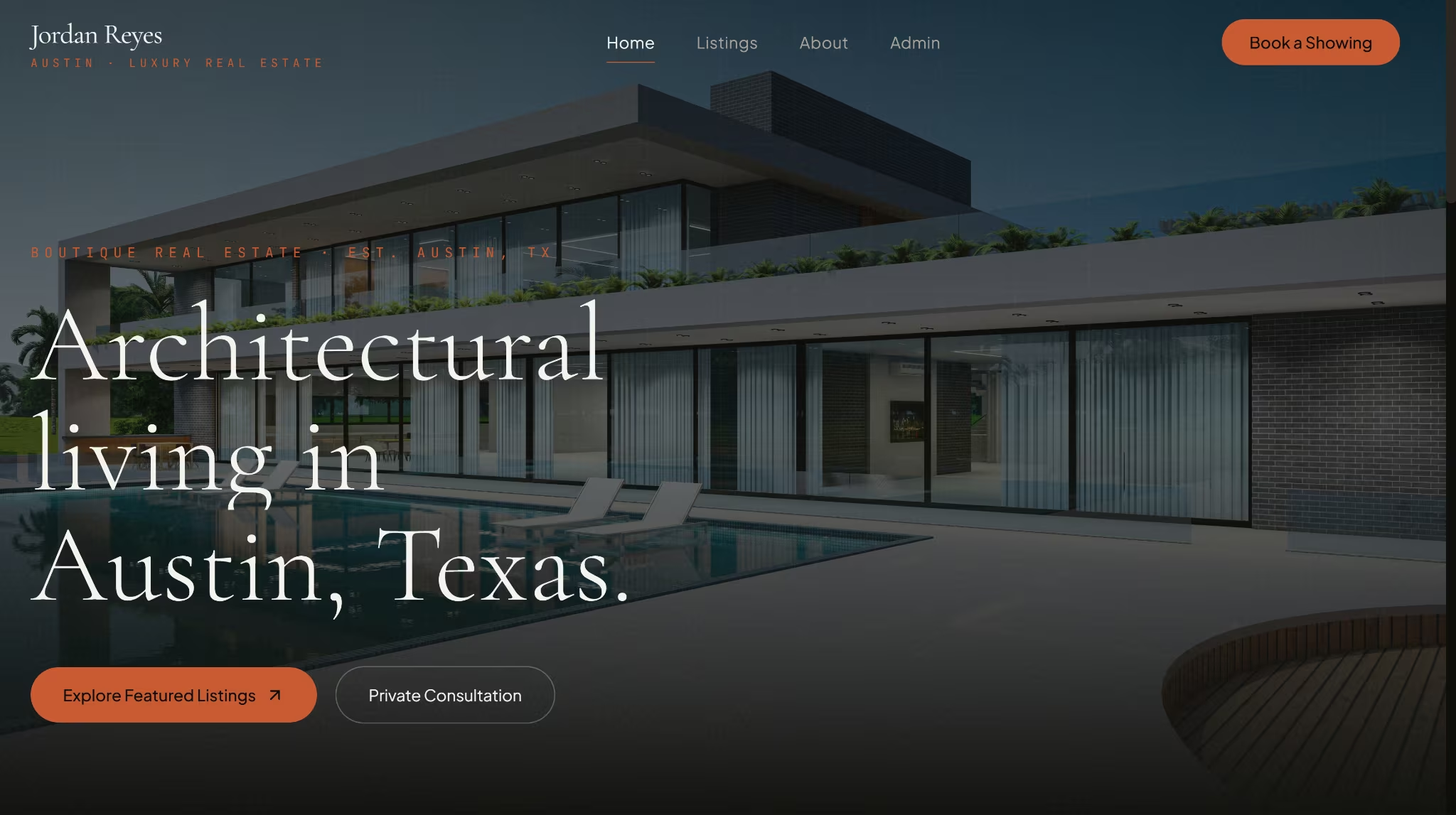
Emergent takes a different approach from everything else on this list. Instead of renting a real estate-specific platform, you describe the site you want and Emergent's AI website builder builds it, including listing pages, lead capture forms, and a booking flow.
Here’s the prompt I used:
"Build a real estate agent website for a solo agent named Jordan Reyes in Austin, Texas. Include a homepage, an About page, and a Listings page with placeholder property cards. Add an inquiry form on each listing that asks how soon the buyer wants to move (ready now, 1 to 3 months, just browsing) and their budget range. If someone says they're ready now, send me an email alert and let them book a showing on Calendly, but only after they pay a refundable $25 deposit through Stripe to hold the slot. Everyone else should get added to a Google Sheet so I can follow up later."
Twelve minutes after I hit send, I had a live site. It came with a homepage, an About page, and a Listings page carrying six fictional properties, complete with prices and neighborhood tags I never specified.
Before building, Emergent paused to ask setup questions instead of guessing blind. It wanted to know which email service should handle the alert, whether to send leads to a live Google Sheet or keep them inside Emergent with a ready-made admin view. And whether to run the Stripe deposit in test mode.
I kept the leads inside Emergent rather than wire up the Google connection mid-test, so they live in Emergent's own admin dashboard instead of the spreadsheet I originally asked for.
The inquiry form itself matched the prompt exactly, with three timeline options, four budget bands, and the contact fields underneath.
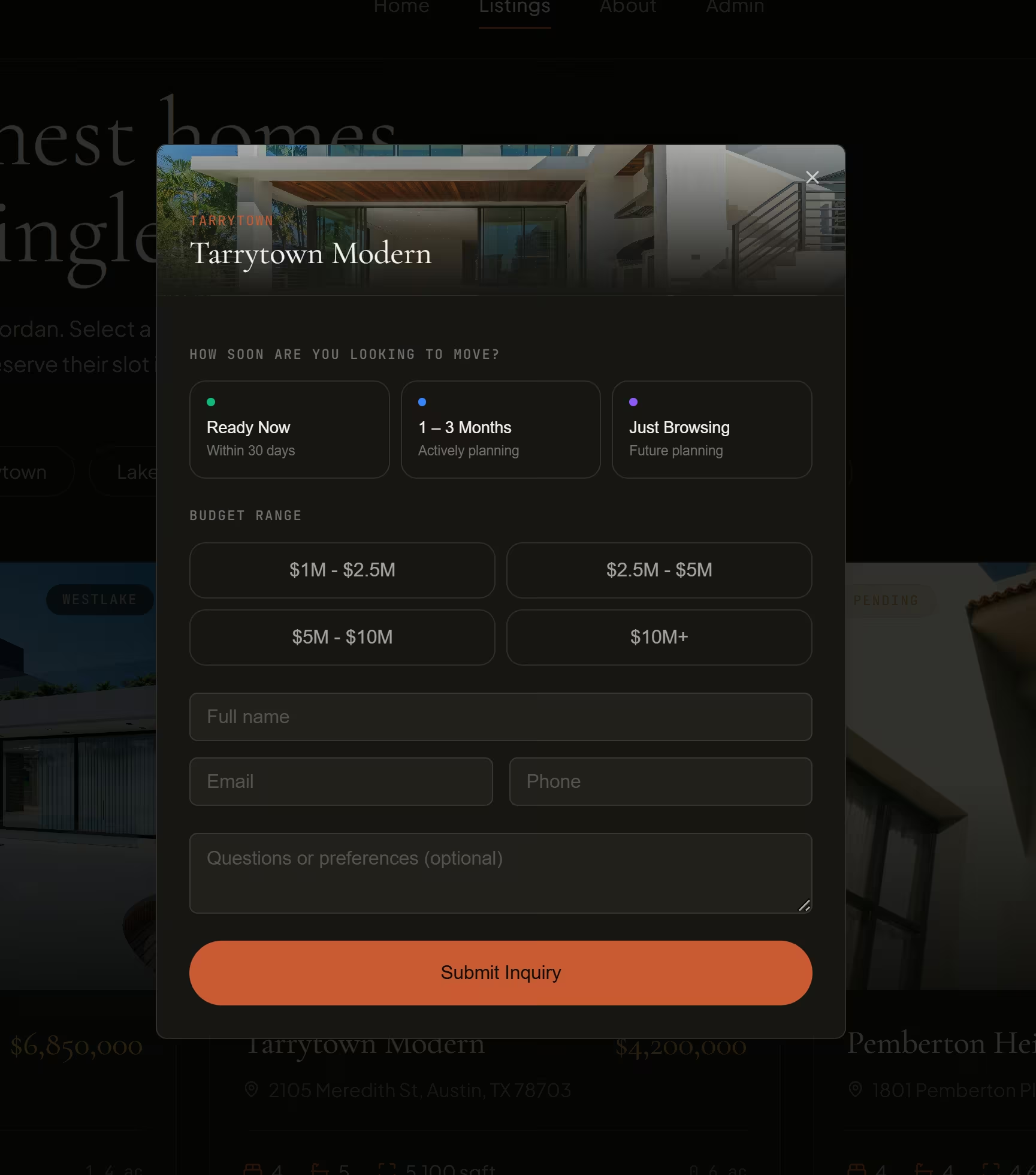
Then I tested both branches myself. Submitting an inquiry as ready now fired an email alert to me within seconds and blocked the Calendly booking behind a $25 test-mode Stripe deposit, only unlocking the scheduler once that deposit cleared.
None of the other five platforms advertise a deposit gate like that on their public feature pages.
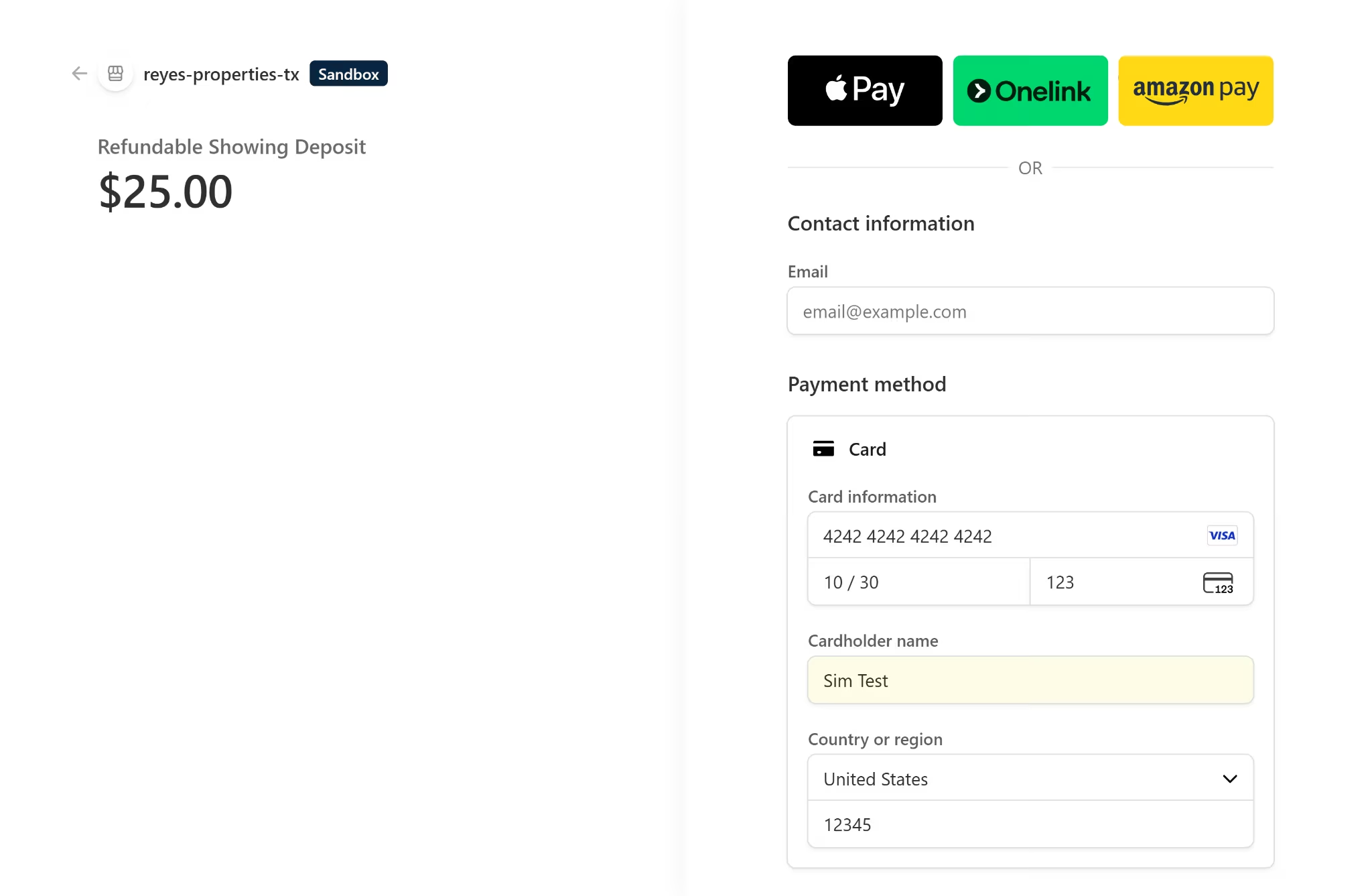
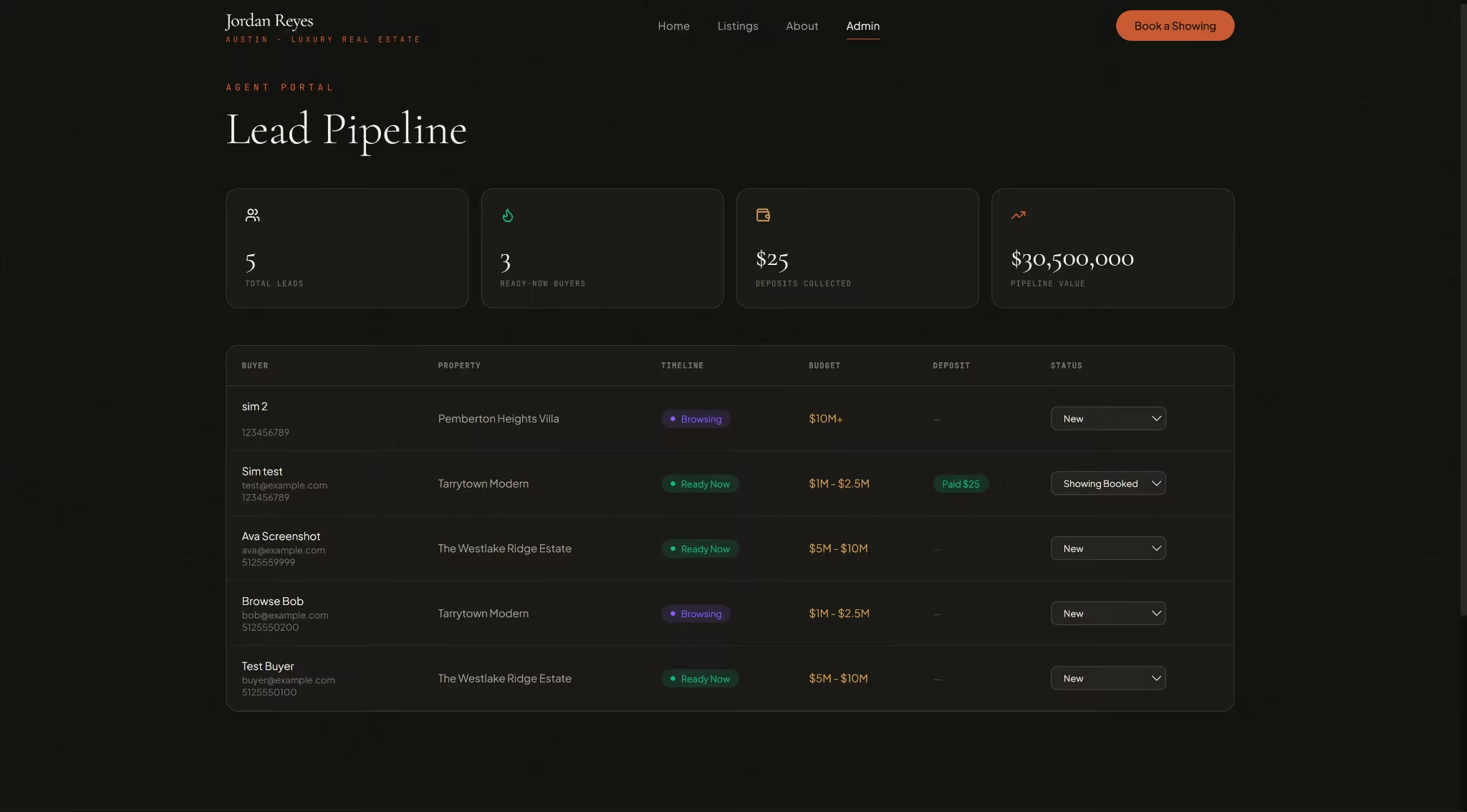
Submitting as just browsing skipped the deposit entirely and landed straight in the admin pipeline instead, tagged next to every other lead, no charge and no alert.
Both paths worked exactly as I described, on the first attempt.
The admin dashboard confirmed it. Ready-now leads showed paid deposits and booked showings, while everyone else sat untouched.
Emergent also filled in things I never asked for, like a full bio for Jordan claiming twelve years in the business, $350M in career sales, and a specialization in three Austin neighborhoods.
None of that is dangerous, but it needs review before going live.
Emergent doesn't ship a native IDX or MLS connector the way the other five platforms on this list do, but that gap is straightforward to close yourself.
IDX providers like IDX Broker sell live MLS search as a widget or iframe built to drop into any custom-built site, so you can wire in listing data without waiting on a real estate-specific vendor to build it in for you.
Emergent also connects to Stripe, HubSpot, or Salesforce CRM, Calendly, and Google Sheets natively, covering most of what a real estate site needs outside the MLS feed itself.
Key Features
- AI website builder: Describe the site in plain language and get listing pages, lead forms, and a booking flow if you want one
- Emmy: A free, always-on chat assistant that helps scope a prompt and troubleshoot without re-explaining your project from scratch
- Emergent MCP: Build and update your site from the AI assistant you already use, like Claude or ChatGPT, in one conversation with a live URL
- Mobile app builder: Also builds a native iOS and Android app with React Native and Expo, so buyers can browse listings from your own branded app
- GitHub integration (Standard tier and up): Syncs your site's code to your own GitHub account, so it goes with you if you ever hire a developer or leave Emergent
Pros
- No sales call required. Sign up and start building immediately
- Full ownership of the site's code, with no real estate-specific platform lock-in or template constraints
- Native CRM, payment, and scheduling integrations without a real estate markup
- The lead-routing and deposit-gated booking flow worked exactly as prompted on the first attempt, with no follow-up prompt needed to fix anything
Cons
- Wiring in an IDX feed through a provider like IDX Broker is on you, since there's no native IDX or MLS integration
- Not purpose-built for real estate the way the other five platforms are, so there's more setup work upfront
- Fills in unrequested details with confident, invented specifics, like a full agent bio, that need review before publishing
What Users Say
G2 rates Emergent 4.3 out of 5 across 6 reviews. This is a small sample too, worth reading with the same caution as Sierra's rating above.
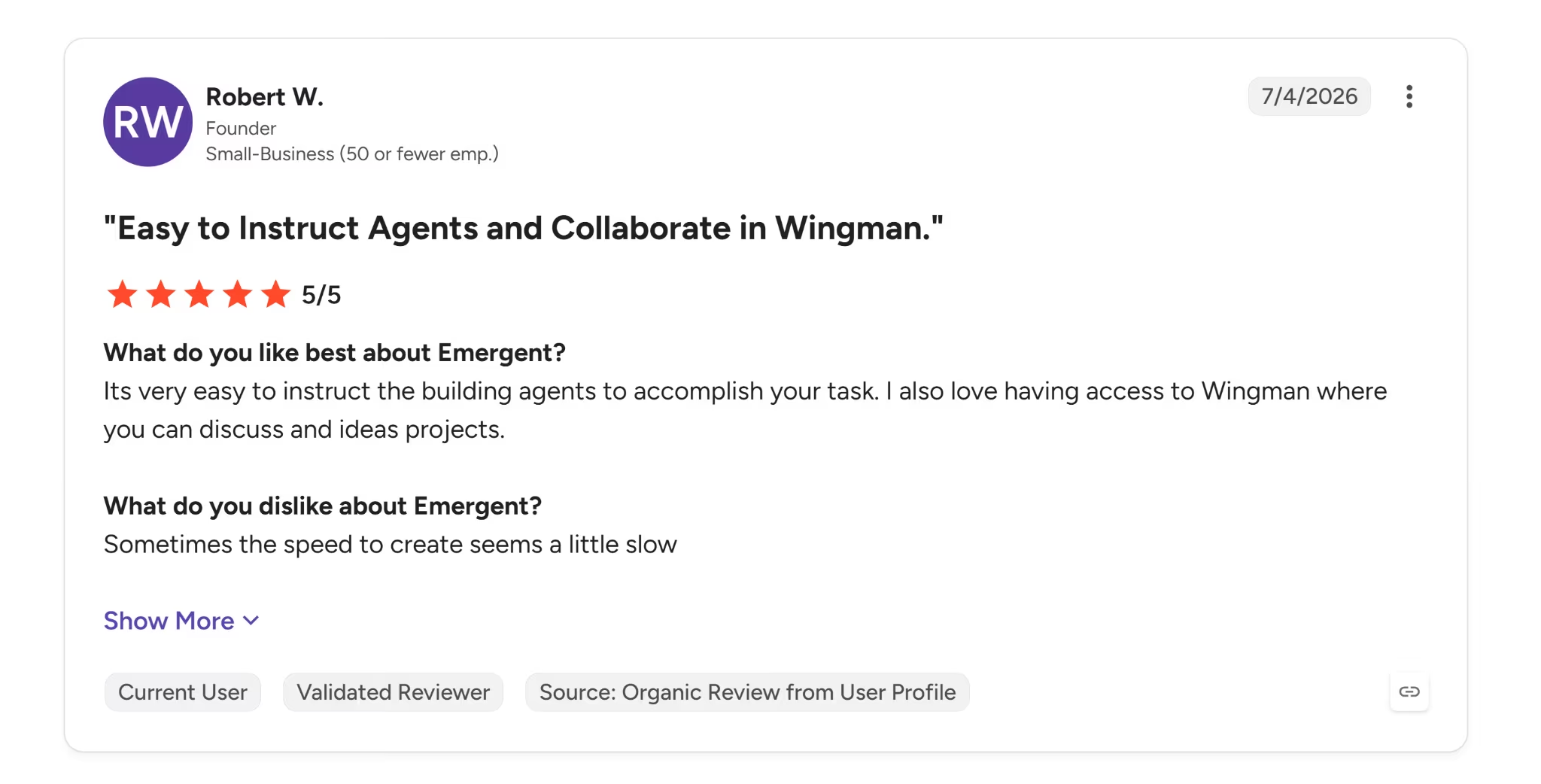
Robert W. said it's "very easy to instruct the building agents to accomplish your task," and pointed to Wingman as a highlight for talking through project ideas.
His one gripe was that the speed to create sometimes seems a little slow.
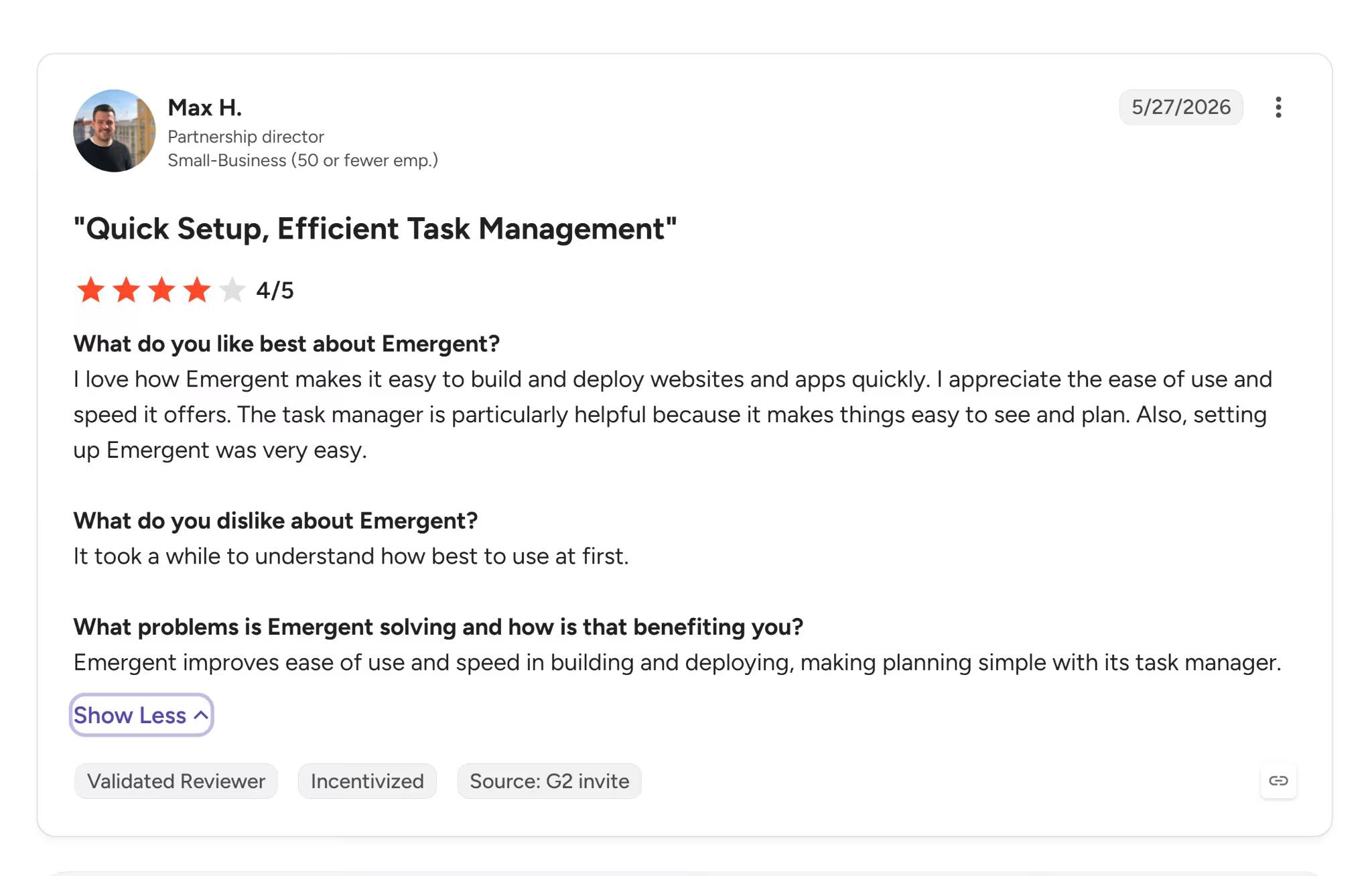
Max H. had a similar experience getting started, calling the setup very easy and the task manager particularly helpful for planning a build. The learning curve was the tradeoff. "It took a while to understand how best to use at first."
Best For
- Agents who'd rather own a custom site outright than rent a real estate-specific platform
- Anyone who wants to skip the sales call and start building the same day
Pricing
Emergent runs on a credit system, not flat feature tiers, so what matters is the credit allowance per plan, not a list of gated features.
Free ($0) includes 10 monthly credits and the core platform, enough to test the build-your-own approach before spending anything.
Standard ($20 monthly, $17 billed annually) steps up to 100 monthly credits and adds the GitHub integration.
Pro ($200 monthly, $167 billed annually) increases the allowance to 750 monthly credits.
Business and Enterprise move to custom pricing for larger teams.
Credit allotments and rates can change, so confirm current numbers before you commit.
Bottom Line
Emergent is worth it if owning your site outright matters more to you than a plug-and-play IDX feed on day one. Agents who need live MLS search working immediately should look at any of the other five platforms on this list instead.
Also read our best AI website builders guide for what else is worth trying when a plug-and-play IDX feed is the priority.
2. Real Geeks
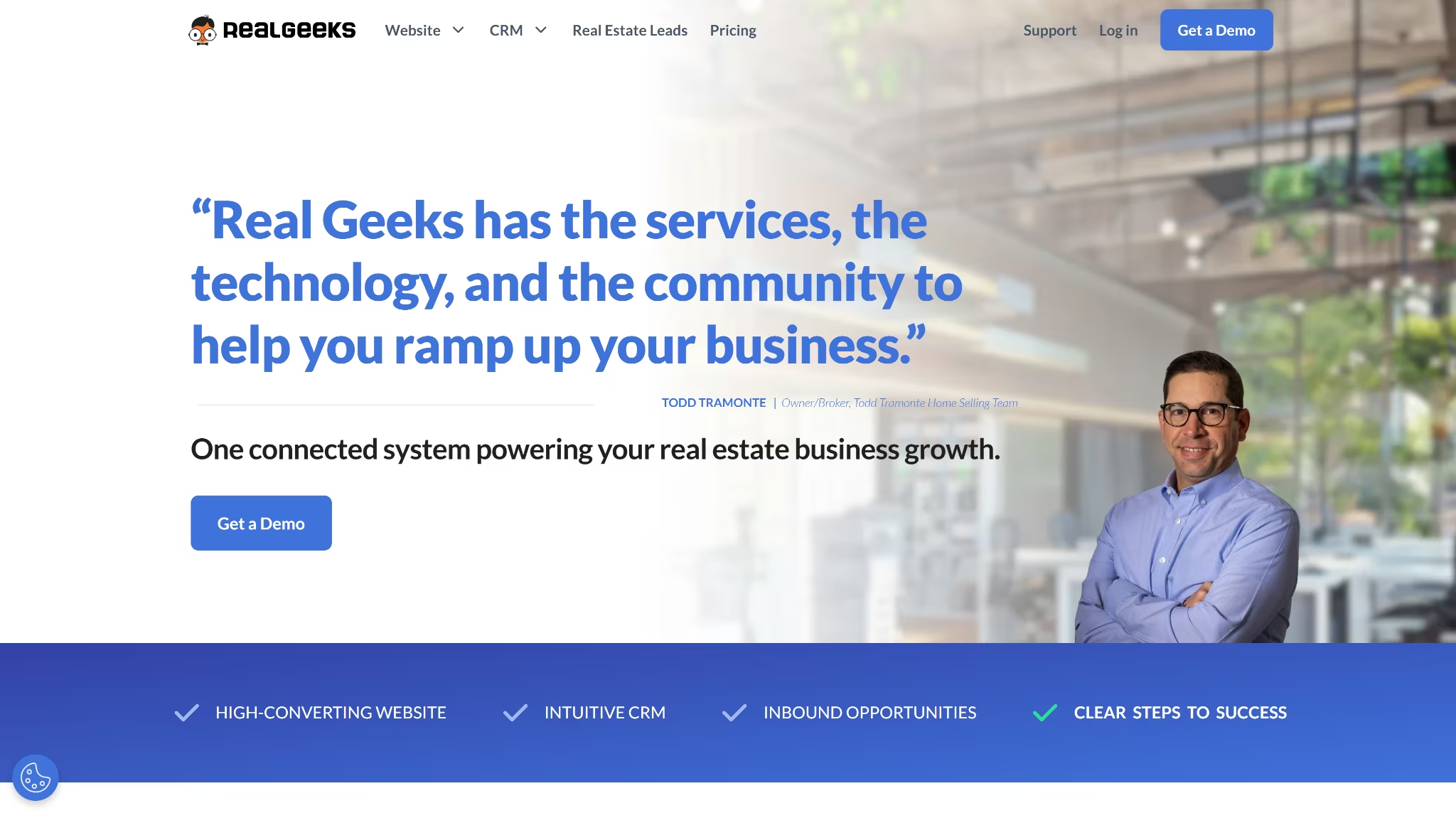
Real Geeks started as an internal lead-generation tool built by real estate marketers for their own business, and it still shows. It's built for agents who want a new lead pulled into a follow-up sequence within minutes, not for agents chasing a polished homepage.
The website, CRM, and paid advertising all live under one login, so a lead never has to leave the system to get followed up with. Agents who've lost a hot lead sitting in a forgotten inbox will recognize the appeal immediately.
Lead generation is where Real Geeks earns its keep. The optional Social and Search Lead Packages run paid Facebook, Instagram, Google, and Bing campaigns for you, each with a stated lead-volume range.
A Lead Guarantee credits you back if the campaign underdelivers, subject to the program's invalid-lead and site-modification rules. Most ad-package upsells don't make that commitment at all. What you're trading for that is design freedom. Real Geeks only offers five pre-built template layouts to start from.
Key Features
- IDX website with real-time MLS listings: Keeps buyers browsing your own inventory instead of clicking through to Zillow
- Real Geeks Dialer: Call, text, and email leads without leaving the CRM
- Geek AI Text (add-on): Engages new leads automatically the moment they hit your site, day or night, free with any lead package
- Automated email drip system: Keeps cold leads warm with scheduled follow-up you don't have to remember to send
Pros
- Lead generation, CRM, and website management run in a single connected system
- Lead Guarantee program backs paid campaigns with a stated volume commitment
- AI texting (Geek AI) is included at no extra cost with any lead package
- Onboarding includes a 1:1 advisor and 24/7 on-demand training
Cons
- Seeing the actual product still means booking a demo, even with pricing fully public
- Template selection is narrower than design-focused competitors
- Additional users, MLS boards, and lead packages add up quickly on top of the base monthly platform fee
What Users Say
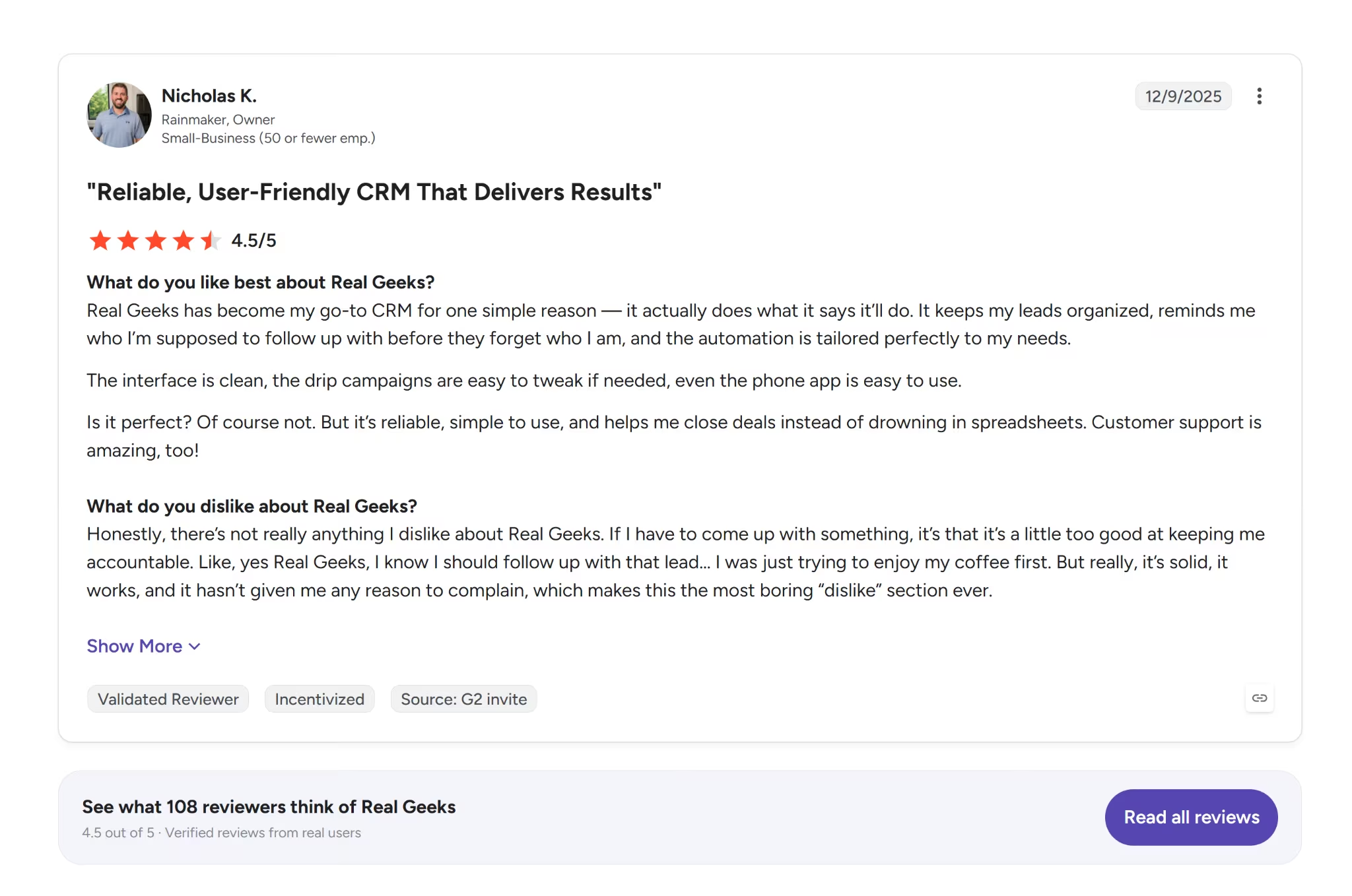
G2 rates Real Geeks 4.5 out of 5 across 109 reviews. G2 reviewers tend to agree on why they keep using it. It handles the repetitive parts of the job without you having to think about it.
Nicholas K.'s review credits the platform for keeping his leads organized and reminding him who to follow up with.
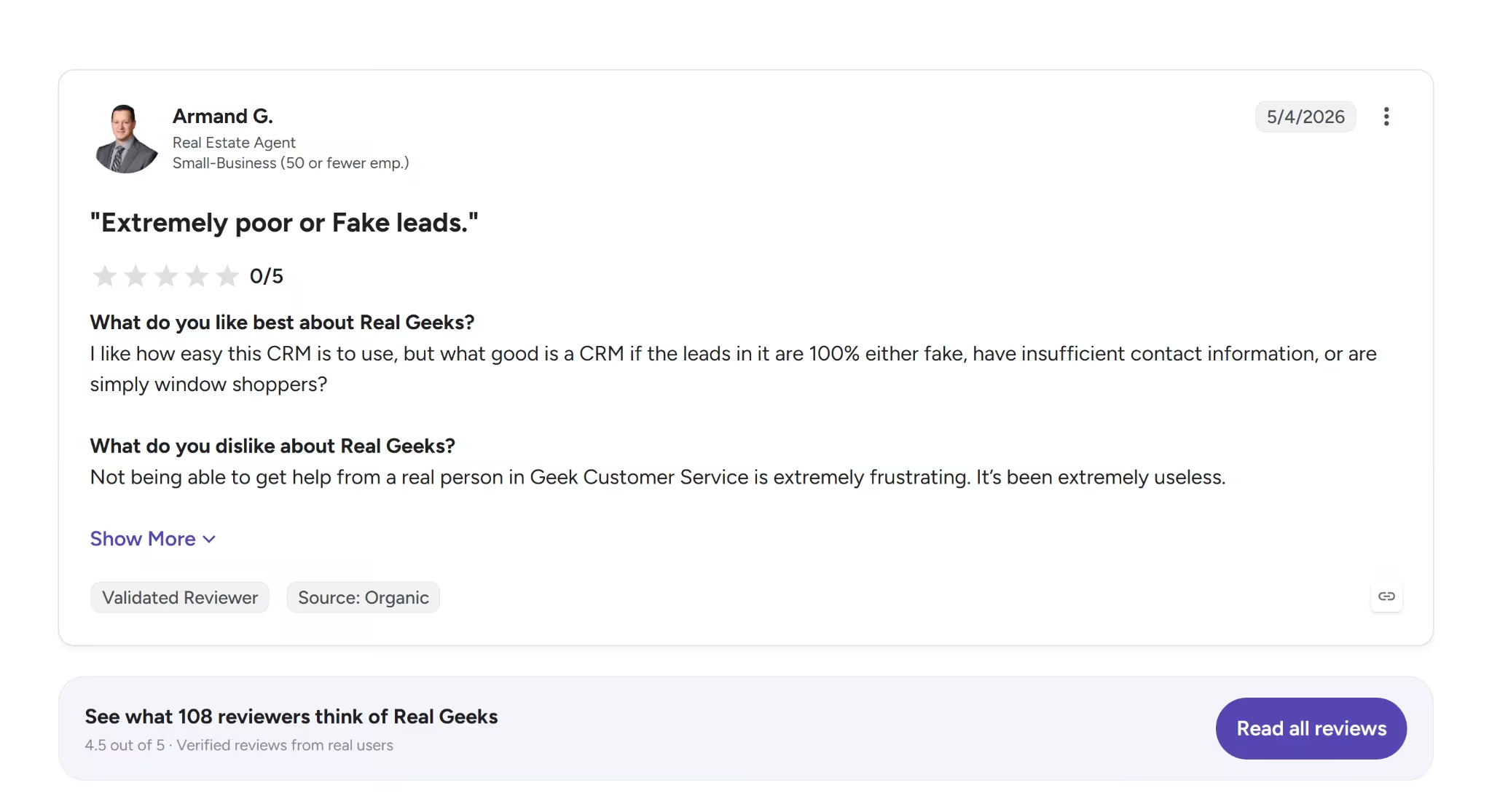
The complaints point somewhere else entirely, toward lead quality. Armand G.'s zero-star review doesn't mince words, calling out leads that are "100% either fake" or just window shoppers with no verifiable contact information.
Best For
- Agents and teams who want paid lead generation managed inside the same platform as their website
- Solo agents comfortable trading design flexibility for a system built around follow-up speed
Pricing
The Real Geeks Platform is the required base, and its price depends on how long you commit. It runs $599/month on a 6-month term or $399/month on a 12-month term.
Every term includes 2 users, 60+ tools, and no hidden usage fees, plus a one-time $500 setup fee.
Three optional lead packages sit on top of the base platform, each priced on the same sliding scale, with lower rates the longer you commit.
Lead packages:
- Social Lead Packages ($250–$599 monthly): Facebook and Instagram listing ads targeting an estimated 20–40 buyer leads a month
- Search Lead Packages ($500–$799 monthly): Google and Bing property search ads at a similar lead volume
- Seller Lead Packages ($500–$799 monthly): Google property valuation ads aimed at sellers
Add-ons run separately. Geek AI Text costs $41–$49/month depending on commitment term (included free with any lead package).
Additional MLS board feeds are $10/month each, and extra users beyond the first two run $25/month for users 3–10, dropping to $10 for 11–40, $5 for 41–100, and $1 for 101+.
Bottom Line
I'd point Real Geeks at agents and teams who care more about lead volume than site polish, especially if you're already running paid ads. Look elsewhere on this list if design flexibility matters more to you than lead automation.
3. AgentFire
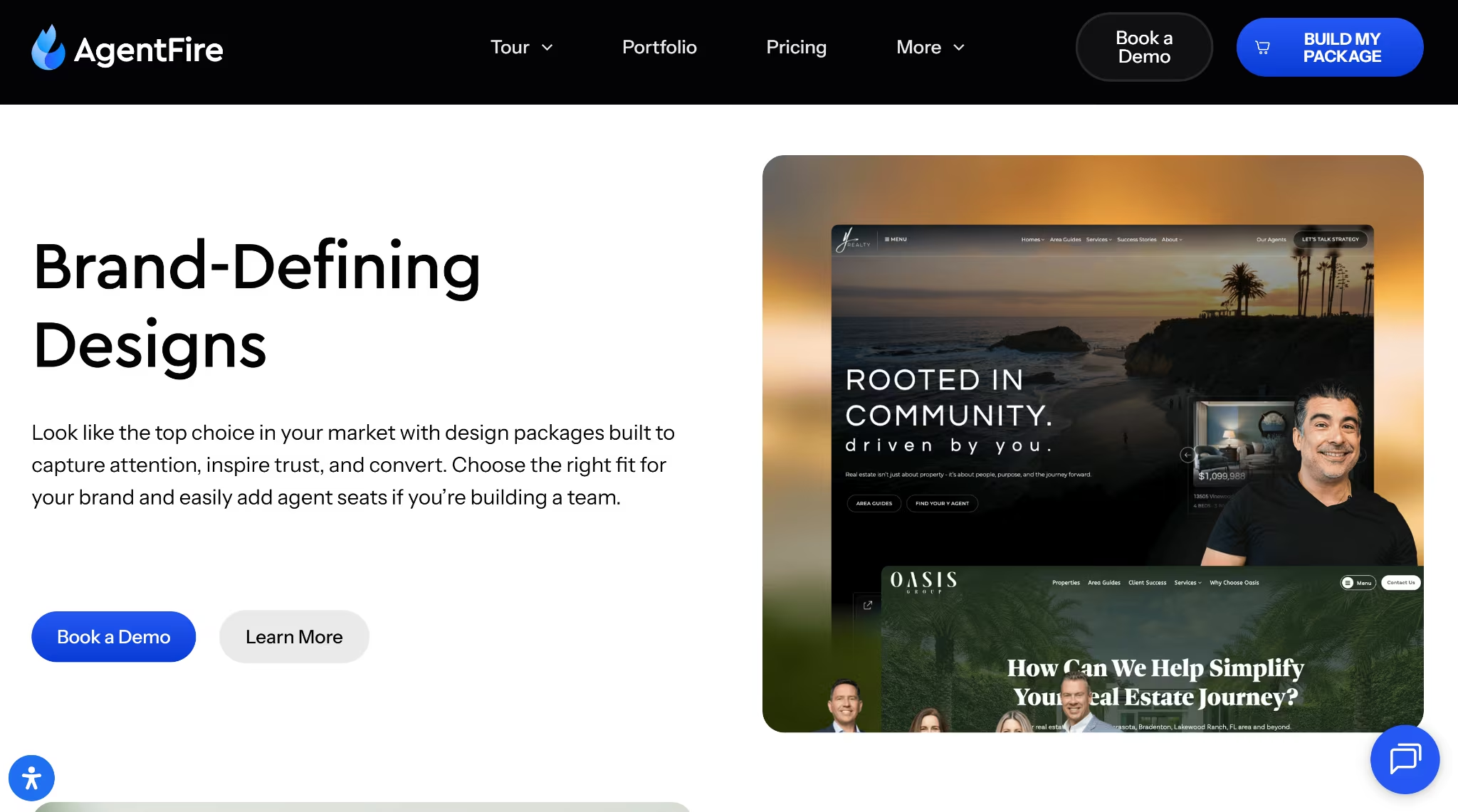
AgentFire builds its whole pitch around hyper-local positioning. It's the right fit if you're trying to own one specific neighborhood rather than a whole metro area.
Its Area Guides and demographic data tools help you look like the go-to local expert instead of another name on a directory page.
Getting a site built runs through a four-step package builder instead of a single price tag, so budgeting takes more upfront work. It splits into a one-time design package, then an ongoing monthly plan on top of it.
IDX comes built into every AgentFire website at no separate charge, one less line item to negotiate than platforms that gate it behind an upgrade. Just confirm your specific MLS is covered before you commit.
Agents who'd rather bring their own IDX provider can integrate options like Ruuster or RealScout instead. Add-ons stack on top of both the design package and the monthly plan, covering things like Local SEO Setup, interactive area maps, and multi-agent team setups.
None of those are required to launch, but they're worth budgeting for if you plan to grow past the base package.
There's no self-serve signup anywhere in this flow. Building a package and picking a monthly plan gets you a quote, not a live account, so treat the pricing page itself as your best way to scope cost before you get on a call with sales.
Key Features
- Area Guides: Automatically generated neighborhood content that positions you as the local expert
- Built-in IDX: Live MLS search included in every design package, though your MLS's own pass-through fees still apply
- ClickMaps: Interactive, clickable area maps for your local guides and IDX pages
- Content ownership: You keep the unique content you add, though the site's design and AgentFire's proprietary tools don't transfer if you leave
Pros
- IDX comes built into every base package, with no separate platform fee (MLS pass-through fees still apply)
- Area Guides and local demographic tools are a clear differentiator for hyper-local branding
- You own the unique content you add to the site
- No long-term contract required
Cons
- Every path to the product runs through a package quote, so there's no live account to test
- Design packages and monthly plans are priced separately, so the monthly cost breaks into two line items, not one
- Add-ons (Local SEO Setup, ClickMaps, Team Link, and more) increase your cost
- Site design and AgentFire's proprietary tools stay with AgentFire if you leave
What Users Say
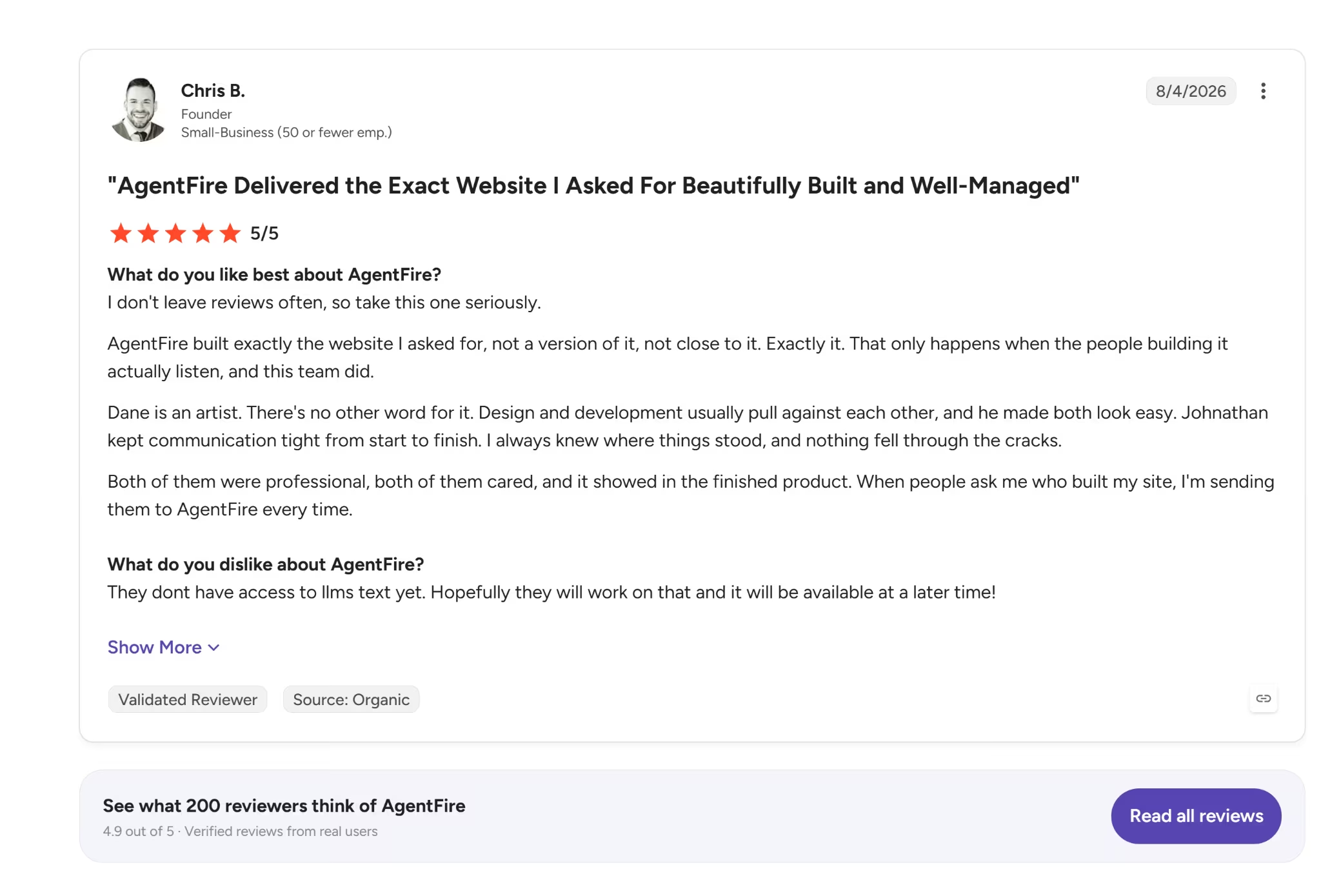
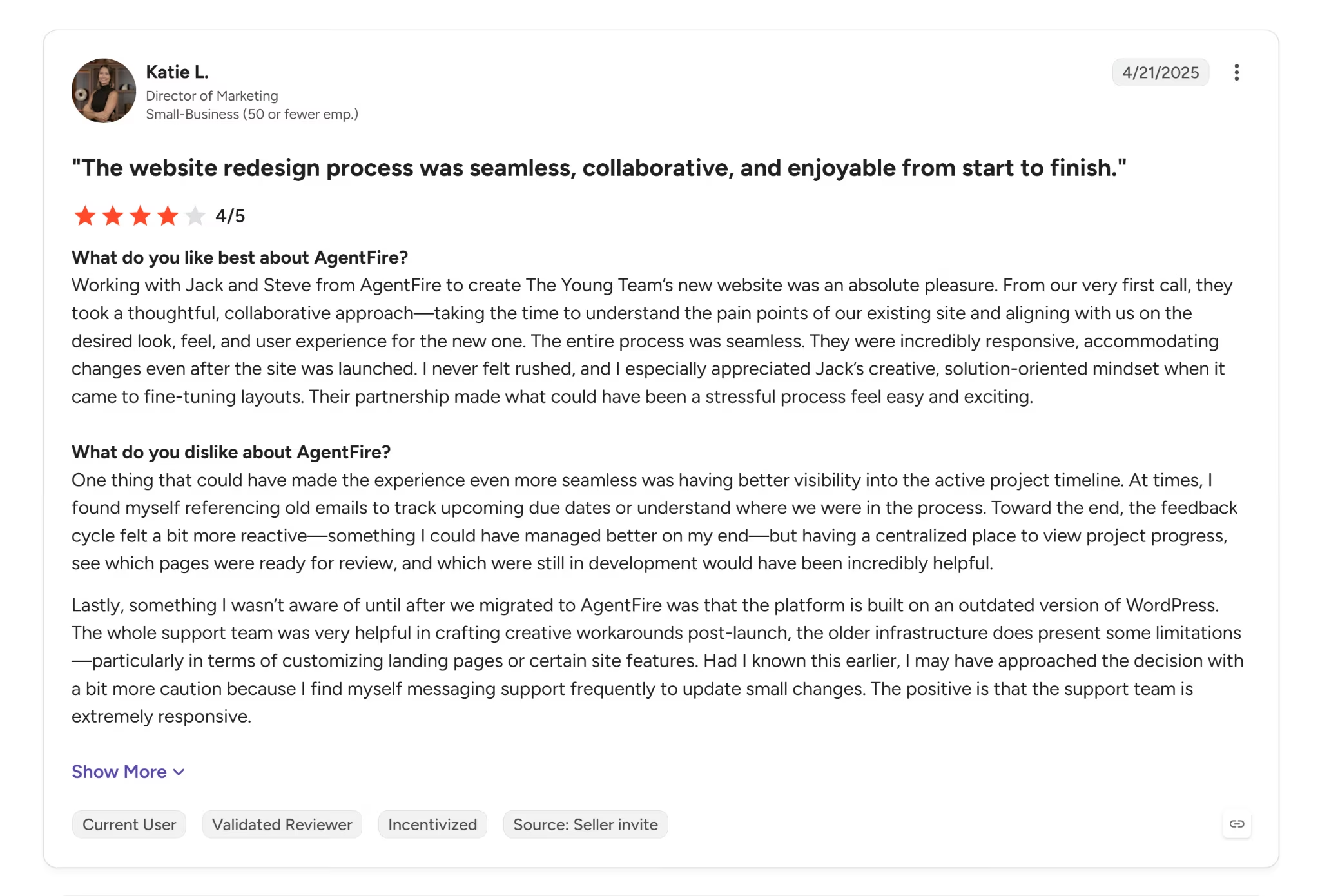
G2 rates AgentFire 4.9 out of 5 across 205 reviews, one of the highest ratings in this list. Reviewers who've gone through a build tend to praise the people behind it as much as the finished site.
Chris B. said AgentFire built exactly the website he asked for, crediting the designer and account manager by name for staying responsive and communicative through the whole process.
The more measured reviews flag a technical tradeoff. Katie L., who rated her experience 4 out of 5, pointed out that the platform is built on an outdated version of WordPress, which meant messaging support frequently just to make small changes after launch.
Best For
- Agents building a brand around neighborhood expertise in one or two specific markets
- Agents comfortable configuring a package and getting a quote rather than testing a live product first
Pricing
A design package is the one-time setup cost, and it scales with how custom you want the site.
Ignite ($800) is the starting tier, built for a fast launch with a premium look. It includes a choice of four pre-built themes, white-glove setup, and your branding applied.
Custom ($2,750) steps up to a fully tailored build, with a fully custom homepage, 10 pre-configured pages plus 3 custom pages, and a dedicated senior designer.
Firebrand ($6,500) is the top tier, built for an agency-level experience, with a custom homepage, 10 fully custom interior pages, executive-led creative direction, and three strategy sessions.
On top of the design package, a monthly plan covers hosting, IDX, and ongoing tools. Pro ($165 monthly) covers 10+ industry tools and full access to AgentFire's support team.
Plus ($215 monthly) is Pro with a bundle called AgentFire Plus folded in, adding three assisted support hours, monthly blog articles, and AI drip campaigns. Bought separately on top of Pro, that same bundle costs $50 monthly.
Add-ons stack on top of both.
The AgentFire Plus bundle can be added on its own for $50 monthly, without moving to the Plus tier. A one-time Local SEO Setup ($250) covers Google Business Profile optimization, Search Console, and on-page SEO.
ClickMaps interactive maps (a one-time cost from $400) add clickable local-area maps to your listings and guides. A multi-agent Team Link setup ($10 per user monthly for 1–49 users, dropping to $7 and $5 at higher counts) puts your whole team under one shared site instead of separate individual ones.
Bottom Line
AgentFire earns its spot for agents building a hyper-local brand who don't mind configuring a quote instead of testing a live account first. Skip it if you want to see the actual product before you commit to a package.
4. Placester
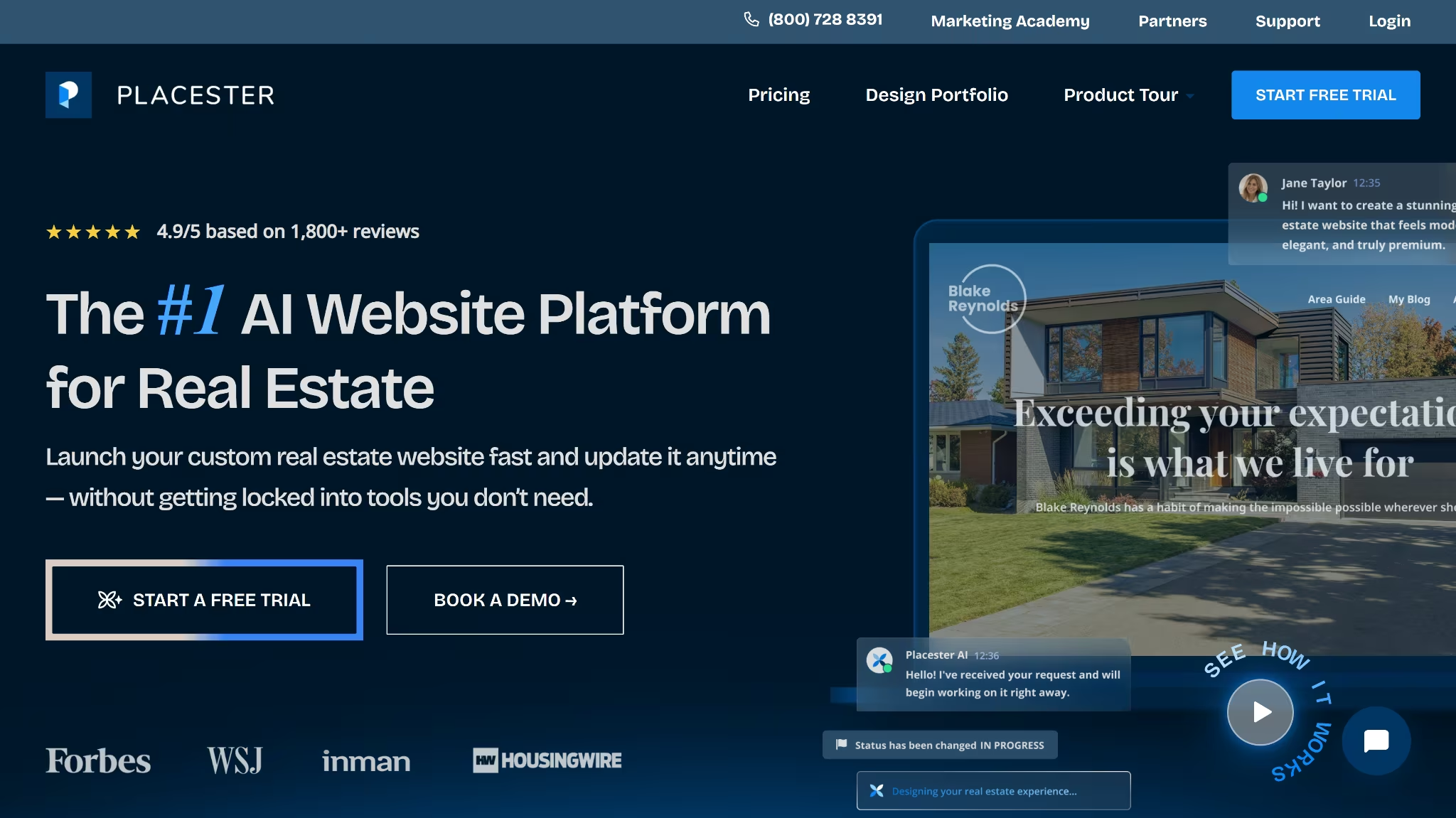
Placester leans hardest into speed. Its AI website builder claims a working first draft in minutes rather than days, and the platform is built for agents who want to go live fast without a design team.
The build didn't go that way when I tried it myself. I answered the setup questions, picked Agent as the persona and Texas as the market, and then watched the builder sit there generating for more than 30 minutes without ever producing a draft.
I squeezed in a full episode of The Office while I waited, and Placester still hadn't shown me a draft by the time it ended. It just looped.
I don't know if that was a one-off glitch or something more systemic, and I'm not going to pretend I do, but it's the honest result of my one attempt.
Every plan tier includes real estate-specific features like lead capture without an upgrade, though IDX itself is a separate $25/month add-on per MLS connection on every tier. Placester also offers a 14-day free trial with no credit card required, the lowest-friction signup on this page, assuming the builder finishes for you.
Key Features
- AI website builder: Generates a working first draft of your site in minutes instead of days
- IDX and MLS search: Available on every plan tier as a $25/month add-on per MLS connection
- Codeless editor: Update pages and content yourself without a developer
- Mobile app: Bundled with live chat on Agent Premier and above, for managing leads from your phone
Pros
- 14-day free trial with no credit card, the lowest-friction signup in this list
- Lead capture and a basic CRM are included at every plan tier, including the cheapest one, though IDX costs an additional $25/month per MLS connection
Cons
- The AI website builder looped for more than 30 minutes during testing and never produced a finished draft, despite Placester's own marketing promising minutes, not days
- Smaller template library than general-purpose builders
- CRM and email tools are described by the vendor as basic relative to dedicated marketing platforms
- Live chat and the mobile app only come included on Agent Premier; below that live chat is a $25/month add-on
What Users Say
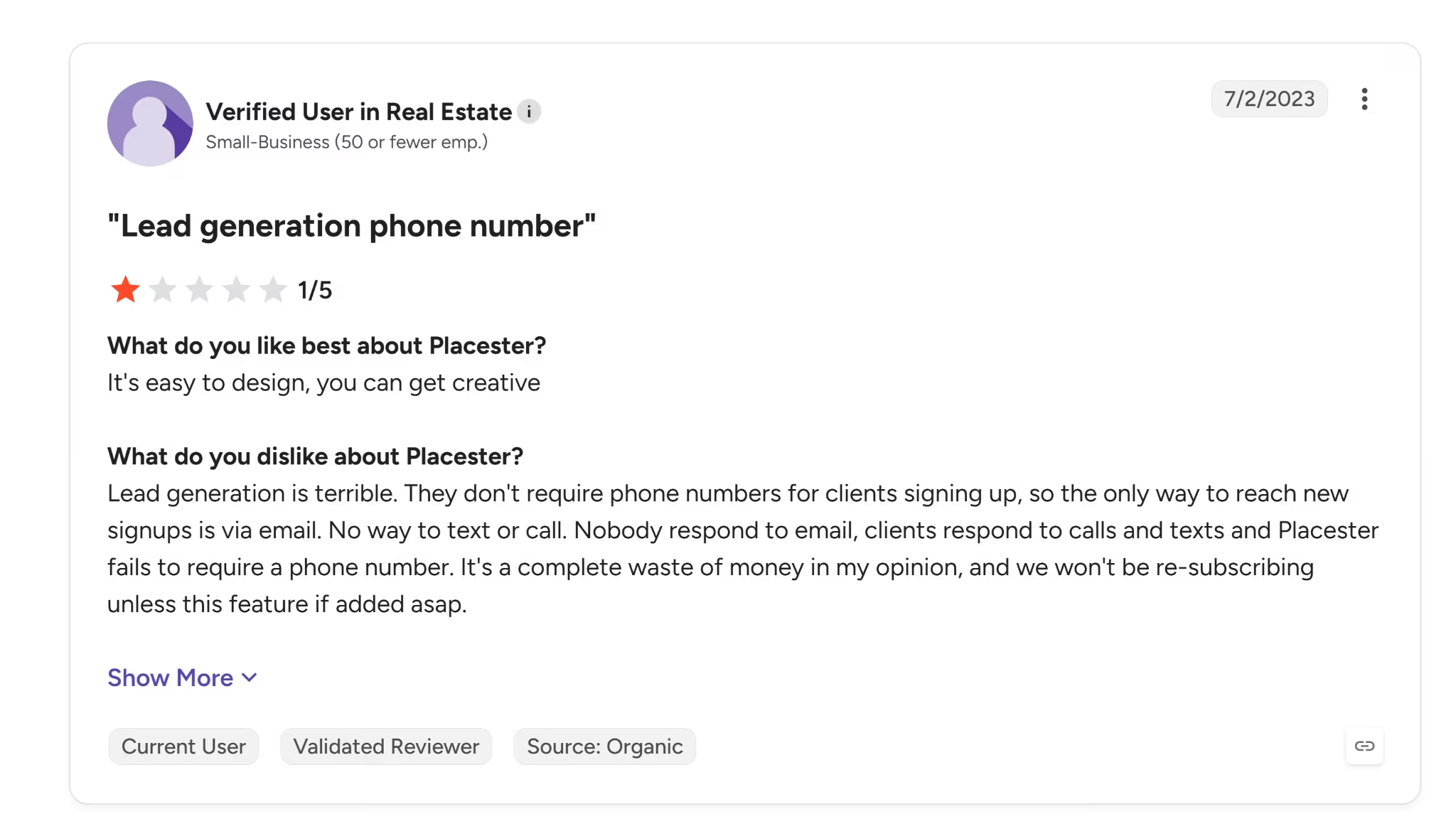
G2 rates Placester 3.5 out of 5 across 84 reviews, the lowest score of the six tools compared. Even Placester's harsher reviews tend to concede the design side works.
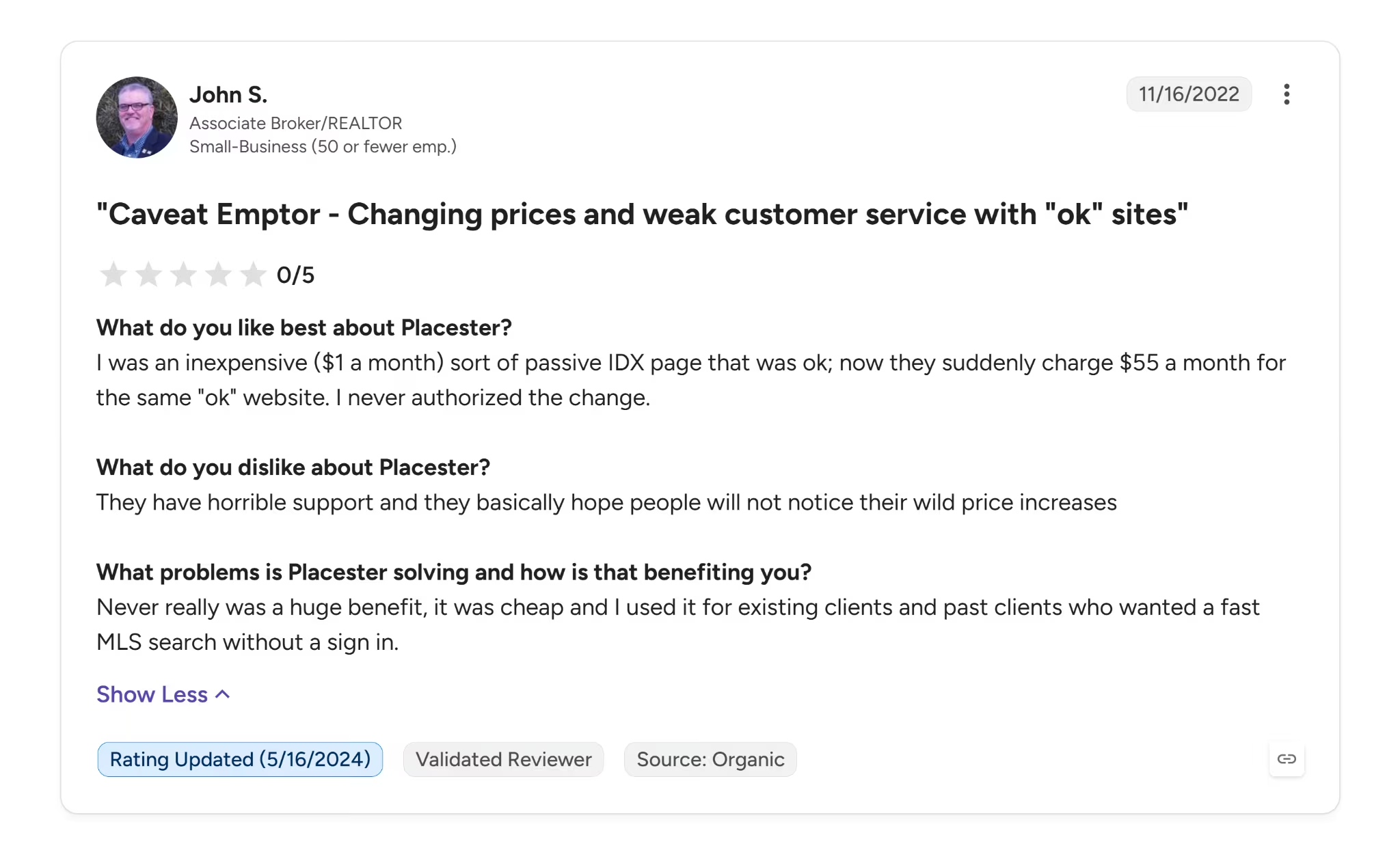
One reviewer who otherwise gave the platform a single star still said it's easy to design and lets you get creative. The bigger problem in that same review is that Placester doesn't require a phone number at signup, so new leads only reach you by email, and hardly anyone responds to email.
Pricing stability is the other recurring complaint. John S. described being moved from a $1-a-month legacy plan to $55 a month without authorization. He called the support just as bad, and said the company seemed to hope customers wouldn't notice the price hikes at all.
Best For
- New or solo agents who want a real estate-specific site live fast on a modest budget
- Anyone who wants to test the actual builder before committing to a paid plan
Pricing
Placester's Agent plans scale with access, and every tier saves 20% paid annually.
Agent Essential ($59 monthly ($566 billed annually)) is the entry tier, with an AI website builder, a 25-page site, and a simple CRM.
The one MLS integration it allows for still costs an added $25/month in IDX support fees.
Agent Plus ($79 monthly ($758 billed annually)) builds on Essential with unlimited MLS integrations and an open houses module.
Agent Premier ($129 monthly ($1,238 billed annually)) adds a 125-page site, live chat with a mobile app, and Zapier access.
Teams and brokerages step up to a separate track. Team ($199 monthly ($1,910 billed annually)) adds agent manager software and agent-facing discounts on top of Agent Premier.
Broker Standard ($399 monthly ($3,830 billed annually)) scales to a full brokerage with 25 agent websites, CRM included, automatic lead routing, and automatic MLS inheritance across the team.
Broker Plus ($599 monthly ($5,750 billed annually)) scales further to 100 agent websites, with free file-sharing space and a website duplicator tool. Enterprise (custom quote) is built for the largest brokerages, with 250 agent websites and a personal account manager.
Every agent plan includes a 14-day trial, and no card is required to start.
Bottom Line
Placester is still the easiest platform on this list to sign up for without a sales call, and that's worth something on its own. Just go in expecting the trial to test your patience as much as the builder, since my own attempt never got past the loading screen.
5. Sierra Interactive
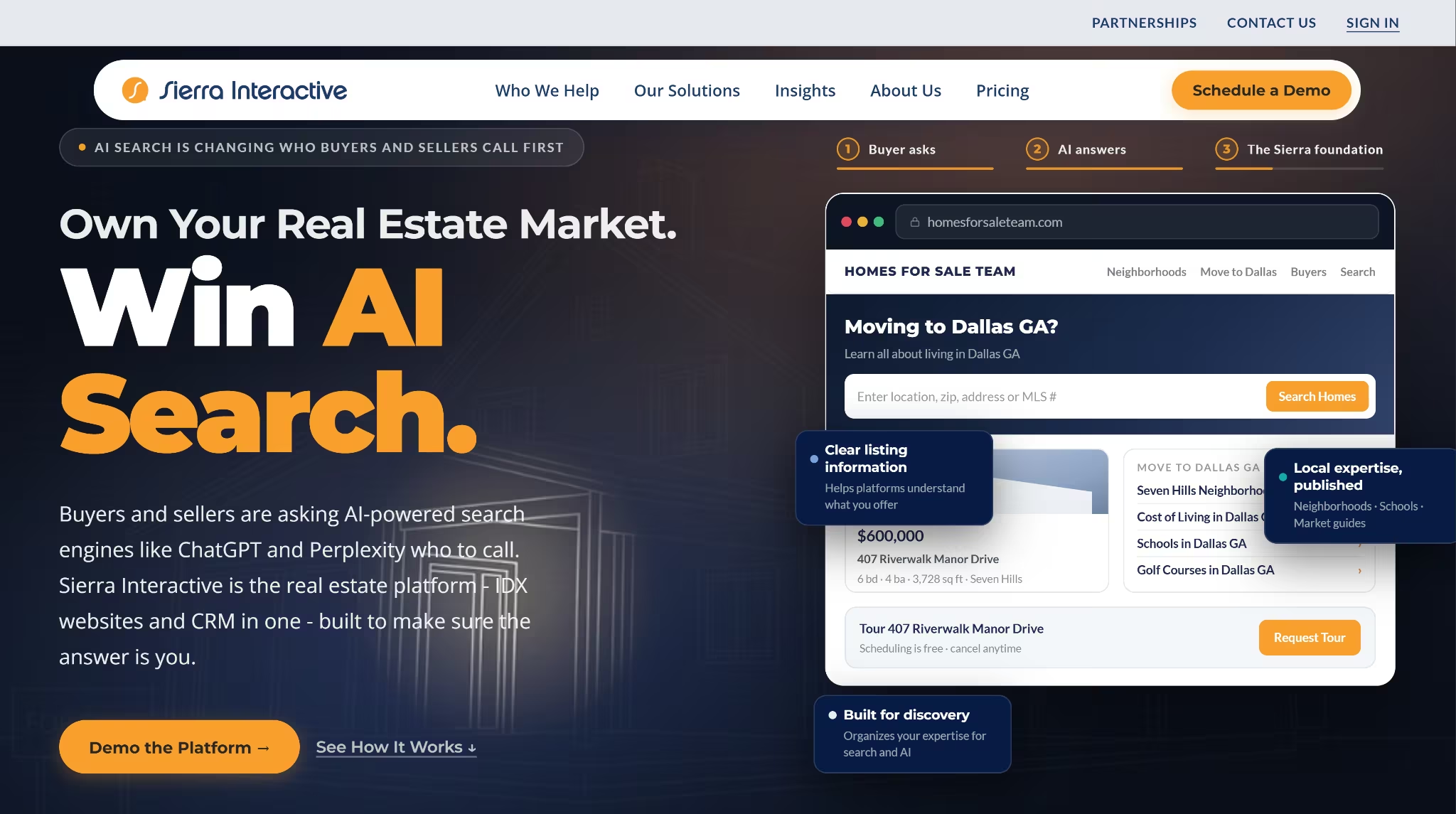
Before you even get to features, Sierra Interactive publishes a clean three-tier price list with its add-on rates alongside it, which makes scoping a team cost faster here than anywhere else on this list.
Sierra combines an SEO-focused IDX website with an integrated CRM built around intelligent lead routing and automated follow-up.
It's positioned for teams that want to scale past a solo setup without switching platforms later, so it's less of a fit if you're a lone agent who just wants a site live this week.
Access to the platform still requires a personalized demo request rather than a self-serve signup, so you won't see the builder until after that conversation.
But the published pricing gets you most of the way to a decision before you have to sit through it.
Key Features
- SEO-focused IDX website: Built to rank in organic search, not just capture direct leads
- Intelligent lead routing: Automatically sends new leads to the right agent based on your team's rules
- Lead Engage AI texting: Automated text follow-up available on Essential and Growth plans
- Published pricing: A clean three-tier price list with add-on rates listed alongside it
Pros
- Pricing is published on the vendor's own site, with add-on costs listed alongside the base rate
- Essential and Growth tiers add lead-routing and automation depth as teams scale
- Annual billing waives the $500 setup fee
- Combines IDX website, CRM, and marketing tools in one connected platform
Cons
- You can't try the builder without booking a demo first
- Entry-level Starter plan includes only one user, which caps its use for anything beyond a solo agent
- Add-ons like AI texting and premium designs stack on top of the base monthly rate quickly
What Users Say
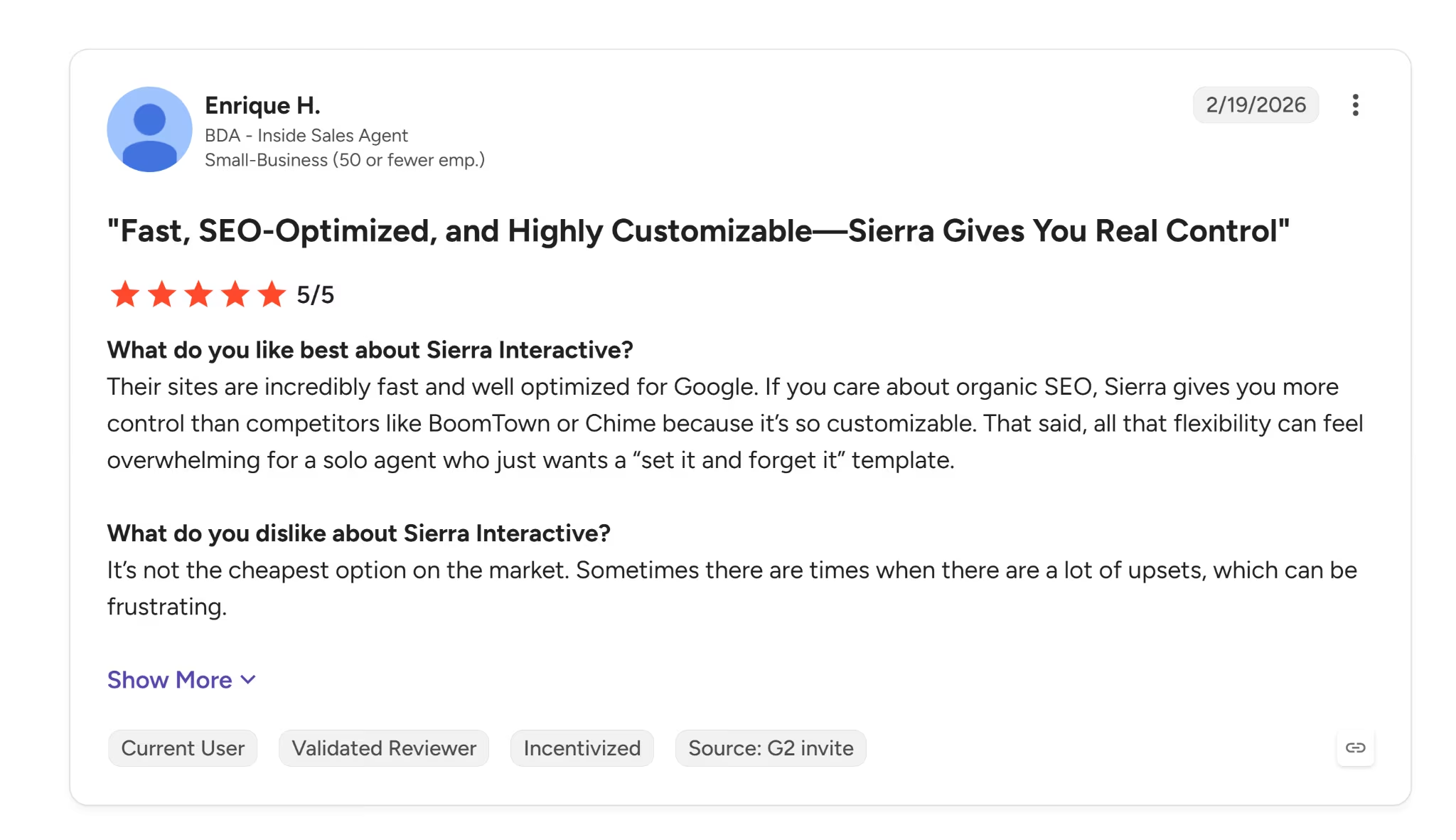
G2 rates Sierra Interactive 4.7 out of 5 across just 3 reviews, a notably small sample, so weight it accordingly. Enrique H.'s review captures the tradeoff well.
He praised Sierra's sites as incredibly fast and well optimized for Google, crediting the platform's customization edge over competitors like BoomTown or Chime.
But he was just as direct about the cost, noting that Sierra isn't the cheapest option on the market and that all that flexibility can feel like overkill for a solo agent who just wants a template that works out of the box.
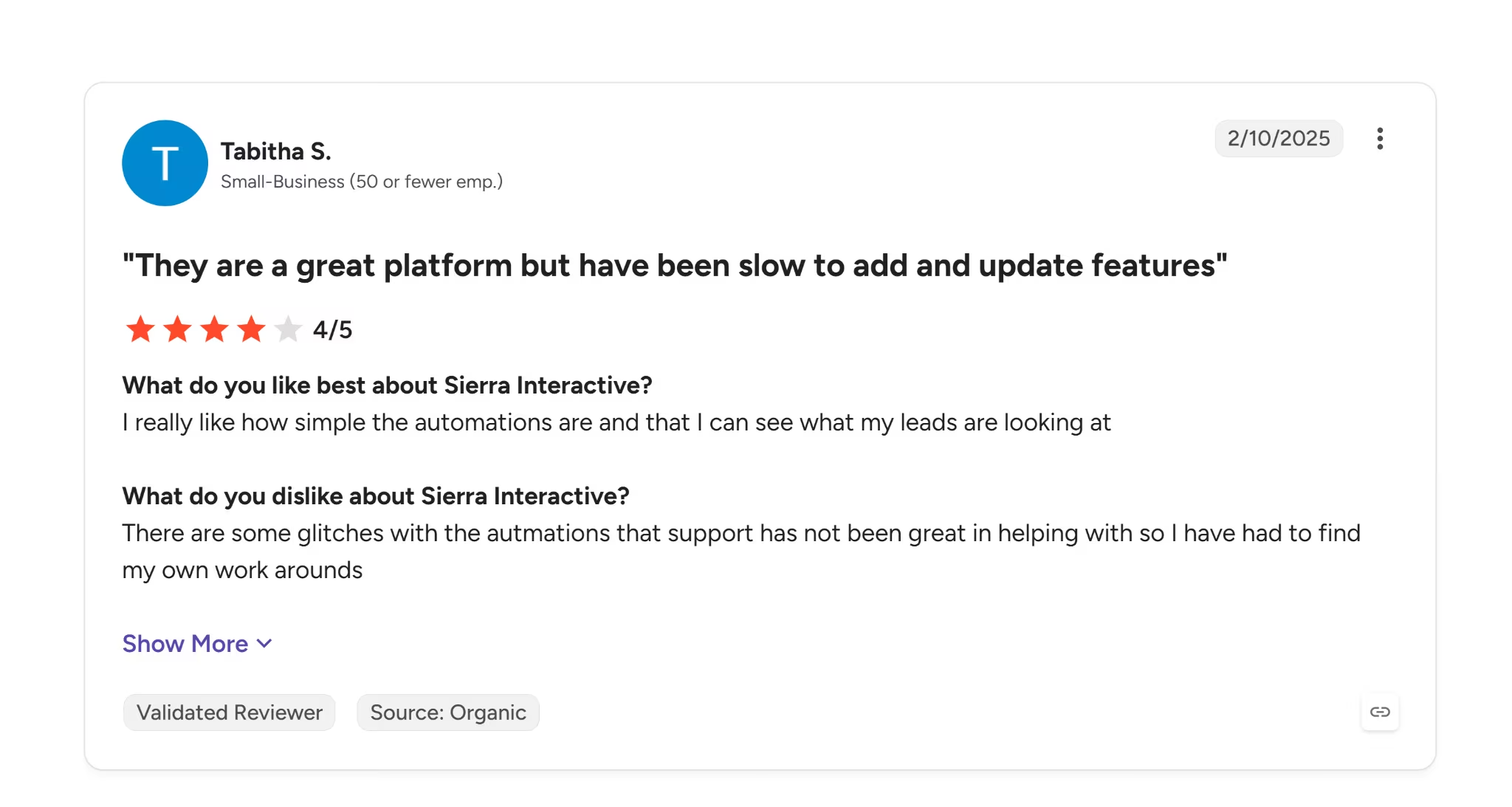
Tabitha S. echoed that mixed picture from a different angle. She liked how simple the automations are and being able to see what her leads are looking at, but flagged glitches in those same automations that support hasn't resolved, leaving her to find her own workarounds.
Best For
- Growing teams that want a scalable platform and appreciate seeing numbers before a sales call
- Brokerages planning to add users and automation over time rather than starting there
Pricing
Sierra's three tiers scale with team size, and it's cheaper to pay annually rather than monthly.
The Starter Package ($359.95 monthly; $299.95/month billed annually) is built for solo agents, with 1 user, 1 MLS feed, and 30-day onboarding.
Essential Package ($474.95 monthly; $399.95/month billed annually) builds on Starter with 3 users, 60-day onboarding, and unlimited extra pages.
Growth Package: $724.95 monthly ($599.95/month billed annually). Steps up from Essential with 5 users, 90-day onboarding with extra training, and premium website designs included free.
Add-ons get cheaper the higher your tier. Extra users cost $75/user monthly on Starter, $60/user monthly for users 4–10 on Essential ($25/user monthly beyond that), and $20/user monthly for users 6–10 on Growth (dropping to $10/user monthly for 11–49 and $5/user monthly for 50+).
The built-in dialer is a $100 monthly add-on on Starter but free on Essential and Growth, and an additional MLS feed is a flat $25 monthly on every tier. Monthly billing instead of annual adds a $500 setup fee on any tier.
Bottom Line
Sierra Interactive lays out its pricing clearly enough to plan a team's cost before ever getting on a call, and that alone makes it worth a serious look for a scaling team. Solo agents will find the one-user Starter plan too tight to be worth it.
6. Luxury Presence

Luxury Presence has no self-serve option at all. The company builds every site, so this is the pick for agents who want a finished site handled by someone else, not one they set up and keep running themselves.
Getting started means submitting your contact information first rather than logging into a builder yourself, so this isn't the pick if you want to poke around before committing time to a conversation.
Every plan includes a professionally designed website and CRM-connected lead capture, with home valuation views, listing-alert engagement, and saved searches flowing into the CRM alongside AI lead scoring. The design consultation is covered by the one-time setup fee.
It takes a meaningful amount of setup work off your plate if design isn't your strong suit.
The platform focuses on brand and design first, then adds IDX home search, AI-powered SEO, and paid lead generation on top.
Because pricing isn't published and every site is custom-built by Luxury Presence's own team, you can't compare exact costs against the other platforms on this list without going through the sales process.
Budget for that uncertainty if you'd rather have a firm number before you get on a call.
Key Features
- Presence AI: The layer behind the platform's marketing features, with ads and weekly SEO from the Brand tier, done-for-you social at Scale, and the premium SEO and AI-search program on All In only
- IDX home search: Live MLS search built into every site
- CRM-connected lead capture: Home valuation views, listing-alert engagement, and saved searches flow into the CRM with AI lead scoring
- Personal design consultation: A dedicated team builds and launches the site for you, billed as part of the one-time setup fee, not the monthly plan
Pros
- Fully done-for-you design, so no build time or design skill required from the agent
- CRM-connected lead capture tracks source and activity automatically
- Positioned specifically for the luxury segment, with matching design quality
- AI-powered SEO and search-visibility features starting at the Brand tier, with the most advanced program reserved for All In
Cons
- No published pricing anywhere on the site, and no way to estimate cost without contacting sales
- There's no self-serve path here. A sales conversation gates every step
- Fully done-for-you model means less day-to-day control over your own site than a builder you edit yourself
What Users Say
G2 rates Luxury Presence 4.6 out of 5 across 55 reviews. One reviewer praised the design quality and backend ease of use, adding that the initial setup process was "quite easy, actually super easy."
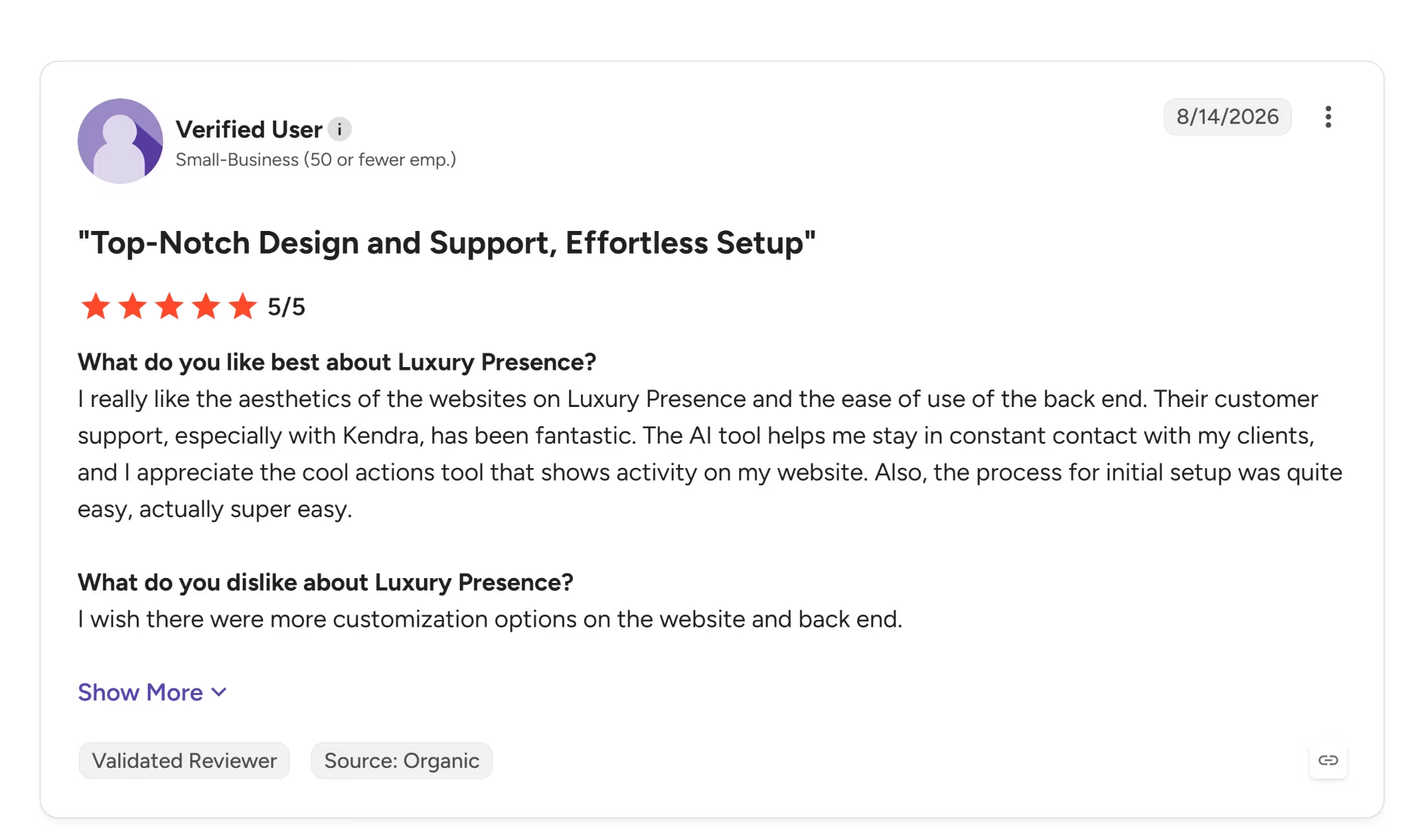
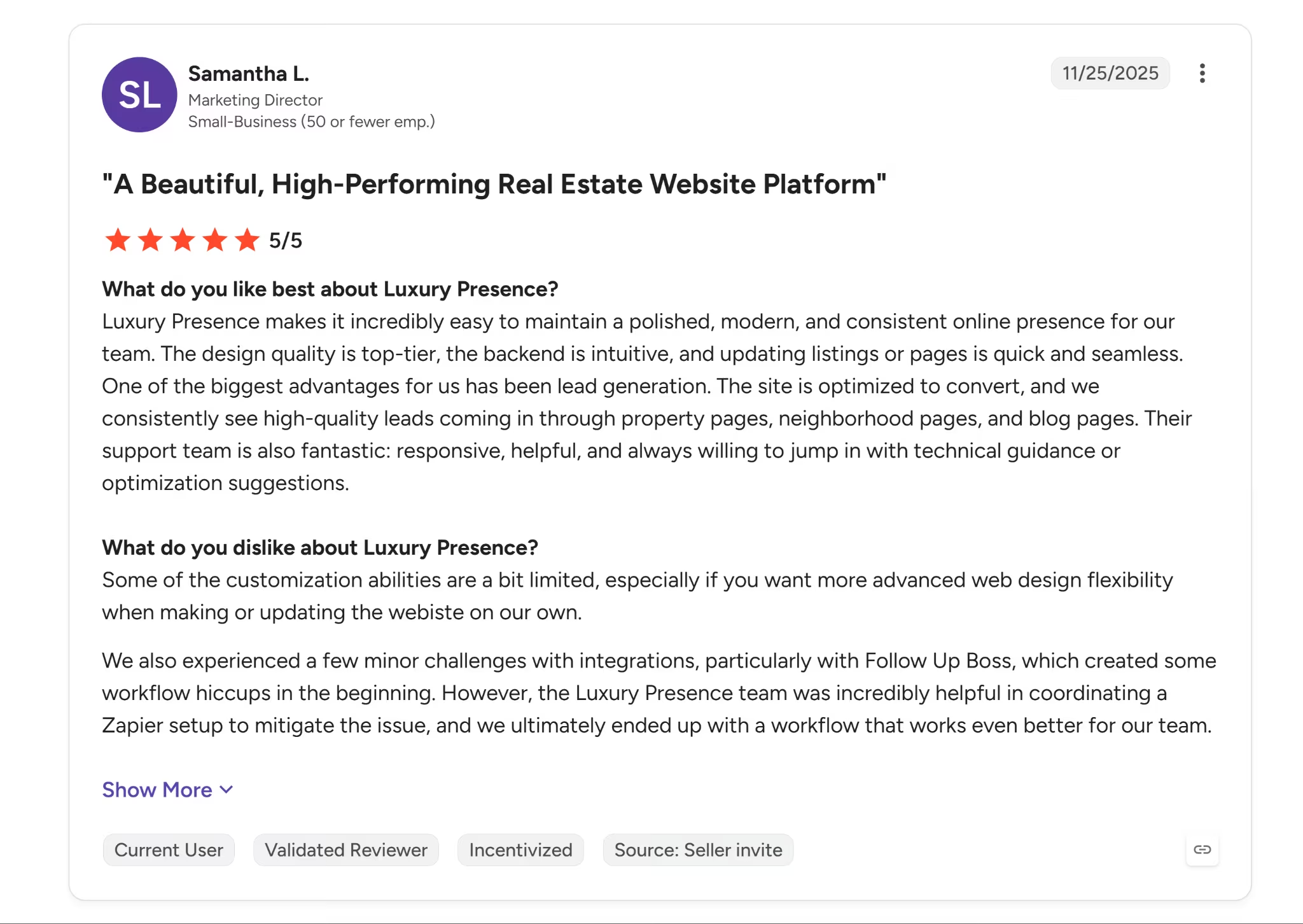
The recurring complaint runs the other direction, toward customization. Samantha L. called the design quality and lead generation strong, but flagged that customization abilities are a bit limited, especially for agents who want more design flexibility when updating the site on their own.
Agents who want to make their own design changes after launch will run into that ceiling quickly.
Best For
- Luxury-market agents who want design quality handled entirely by someone else
- Agents for whom brand presentation matters more than being able to edit the site themselves
Pricing
Luxury Presence doesn't publish flat rates, but its four tiers scale clearly by what's included.
Launch is the base package, with a professionally designed website, MLS/IDX search, an AI CRM, and 1,000 contacts for 1 user.
Brand builds on Launch with hyperlocal content and advertising, managed ad spend, and up to 3,000 contacts and 3 users.
Scale adds AI lead nurture via SMS and 1:1 success support on top of Brand, with up to 10,000 contacts and 10 users.
All In builds on Scale with a branded mobile app, a premium SEO/AI search program, and up to 50,000 contacts and 20 users.
Every tier also carries a one-time setup fee, $2,500 to $3,500 depending on plan, and a 12-month agreement, per Luxury Presence's own pricing page.
Brokerages with more than 20 agents move to a separate custom pricing track. Every tier requires contacting sales for an exact quote, since none of it is self-serve.
Bottom Line
Luxury Presence makes sense if brand and design are doing the heavy lifting for your business and you'd rather pay someone else to handle both. It's a hard pass if you want to see pricing or touch the product before a sales conversation.
Which Real Estate Website Builder Should You Choose?
If you’re unsure which one to use, choose:
- Choose Real Geeks if you want lead generation and paid advertising management bundled into the same system as your website and CRM. Pricing is public, but trying the actual product still means requesting a demo.
- Choose AgentFire if you want to build a brand around hyper-local expertise and you're comfortable configuring a package quote instead of testing a live account first.
- Choose Placester if you want a real estate-specific site without a big upfront commitment and you're willing to test the builder yourself, even though it didn't finish in my own attempt.
- Choose Sierra Interactive if you're a growing team that wants a clear, itemized price list to plan against. And you also want a platform built to scale with more users and more automation.
- Choose Luxury Presence if you work in the luxury segment and want a fully designed, done-for-you site handled by someone else's team.
- Choose Emergent if you'd rather build and own a custom site outright than go through a sales call for someone else's platform, and you don't need a plug-and-play IDX feed on day one.
- Stick with a general-purpose builder if you're a real estate investor or content creator who doesn't need live MLS search. A general-purpose website builder or a business website builder gets you a professional site without the real estate-specific cost.
How to Evaluate a Real Estate Website Builder
Make sure your chosen website builder has the features you need. For example:
- IDX and MLS access: Confirm whether IDX comes built in, costs extra, or requires a separate vendor entirely. Real Geeks, AgentFire, Sierra Interactive, and Luxury Presence all include it, while Placester charges $25/month per MLS connection on top of every tier. Emergent is the only one of the six that requires wiring in IDX yourself.
- Lead capture and where it goes: A contact form isn't the same as a lead routed automatically into a CRM with source tracking. Check whether leads land somewhere you can follow up on directly, or just an inbox you have to check manually.
- Self-serve access versus sales-gated: Four of the six platforms in this list require a demo, sales call, or package quote before you see the product at all. It doesn't rule a platform out, but it changes how much research you can do before committing time to a conversation.
- Ownership versus rental: Some platforms let you take your site and content with you if you leave. Others keep your site tied to their platform permanently. Know which one you're signing up for.
- What the base price leaves out: Base pricing rarely includes MLS board fees, additional users, AI texting, or premium design tiers. Add those up before comparing platforms.
- Support and onboarding: Real estate platforms vary widely in how much hand-holding they offer during setup. If you're not comfortable with technical setup, weight this criterion more heavily.
Own the Site, or Own the Code Behind It
Every real estate website builder on this list gets you closer to owning your website instead of borrowing space on your brokerage's page, whether you're an agent or realtor picking a bundled system or building one from scratch.
Emergent takes that a step further. You describe the site you want in plain language, and it builds around exactly what you asked for instead of what a template allows.
The code behind it is yours too. You can edit it yourself, hand it to a developer, or take it with you if you ever want to build somewhere else.
Tell Emergent exactly what your real estate website needs to do.
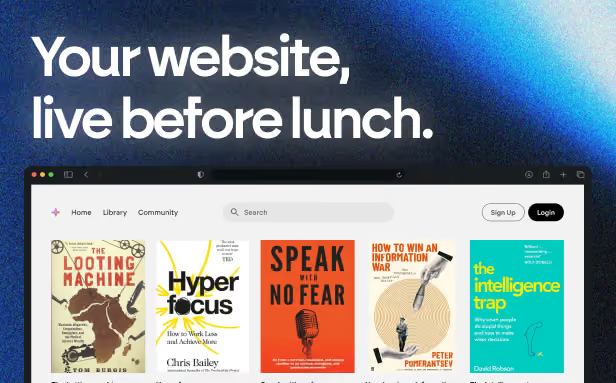
Emergent designs, writes, and publishes your whole site from one prompt. No templates, no drag-and-drop.
- Full site from one prompt
- Custom design, real pages
- Publish in minutes