



After studying how small businesses move from early traction to repeatable revenue, I’ve found that growth usually comes down to fixing the right bottleneck in the right order.
What Does It Mean to Grow a Business?
Growing a business means bringing in more revenue over time.
Finding more customers is one way to grow. You can also grow by getting each customer to spend more or by keeping customers longer, so they buy again. Widening your profit margin counts too, which is the money left after you cover your costs.
Some growth paths are far cheaper to pull off than chasing strangers.
A common mistake is jumping straight to tactics, social posts, a logo, and flyers before the offer is even proven. Growth built on a shaky offer breaks faster once more people show up.
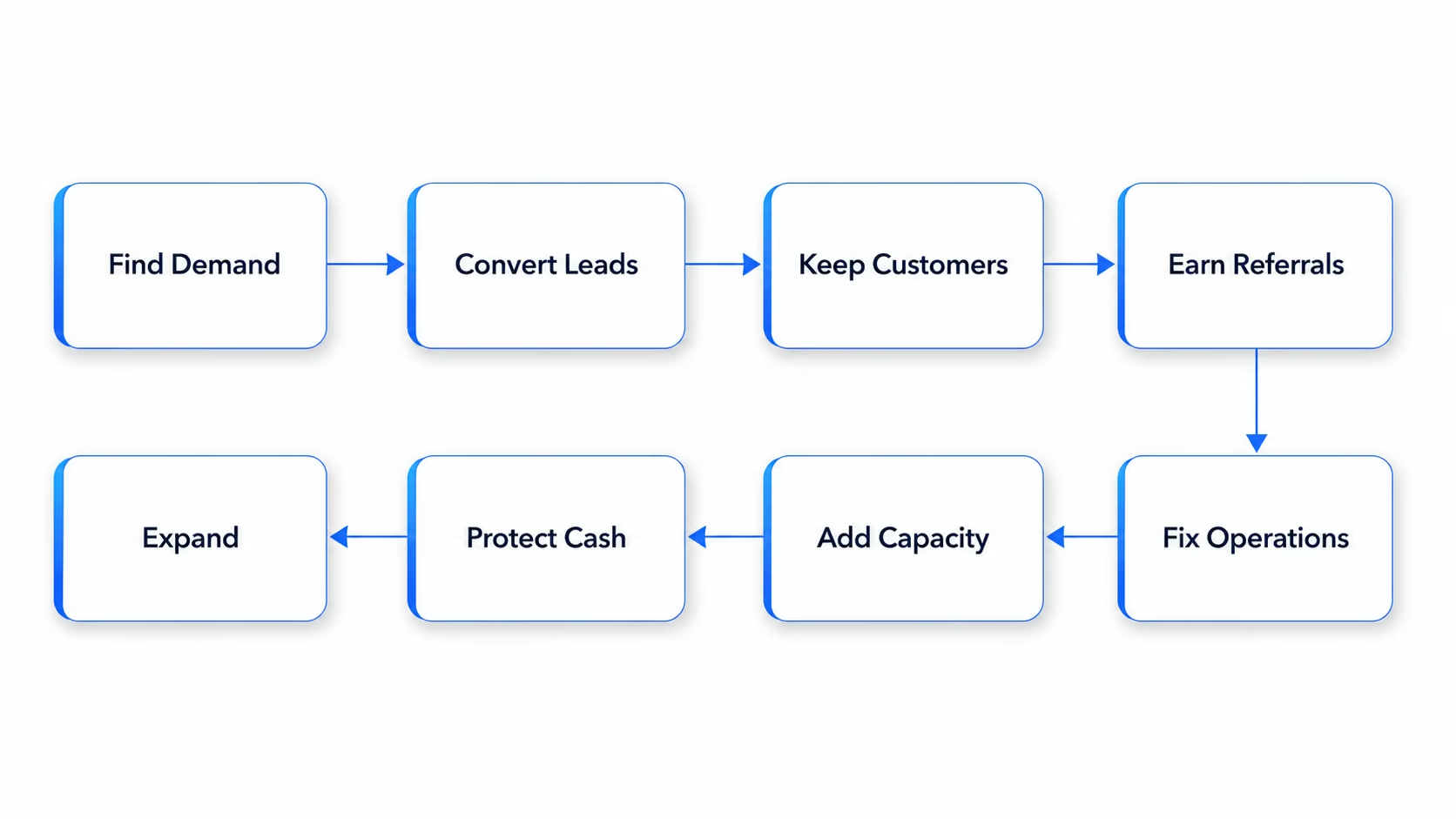
The order you do things in matters as much as the things themselves, and the examples below are based on common growth patterns small businesses run into as they move from scattered demand to steadier revenue.
8 Ways to Grow Your Business
No single growth move fits every business, so use the fit guide below to pick the one or two that match where you are now.
Method 1: Pick One or Two Acquisition Channels
What it is: An acquisition channel is the route a new customer takes to find you, like Google search, Instagram, or a friend's referral.
How it works: Each channel takes real time to learn and to work. When businesses try to run all of them at once, they spread themselves so thin that no channel gets good enough to bring in steady clients. Picking one or two and going deep beats dabbling in six.
The way to choose is to follow your best customers. Go where they already spend time and look for solutions like yours.
| Channel | Best For |
|---|---|
| SEO and content | Slow traffic that builds up over time |
| Social media | Visual products and founder-led brands |
| Paid ads | Offers you've already proven can sell |
| Selling again to people who already know you | |
| Partnerships | Local services, agencies, and B2B tools |
| Referrals | Service businesses with happy past clients |
| Local networking | Shops and local service businesses |
| Marketplaces | Products with demand that already exists |
When to use it: Right at the start, before you know what's working.
What this looks like: A local service business might spend weeks posting on Instagram and TikTok without getting steady leads, because buyers are not always searching for that service while scrolling. They may be searching Google for terms like “cleaner near me” or “bookkeeper near me” instead.
In that case, focusing on local search and a strong Google Business Profile can do more than spreading effort across three weak channels.
Backing that up with a bookable cleaning business website that lets people schedule a job turns that local search traffic into booked work.
Method 2: Tighten Your Sales Process
What it is: Your sales process is everything that happens between someone showing interest and that person paying you.
How it works: Plenty of people will show interest. You get paid when one of them becomes a paying customer, a step called conversion. Small gaps in your process quietly cost you those conversions.
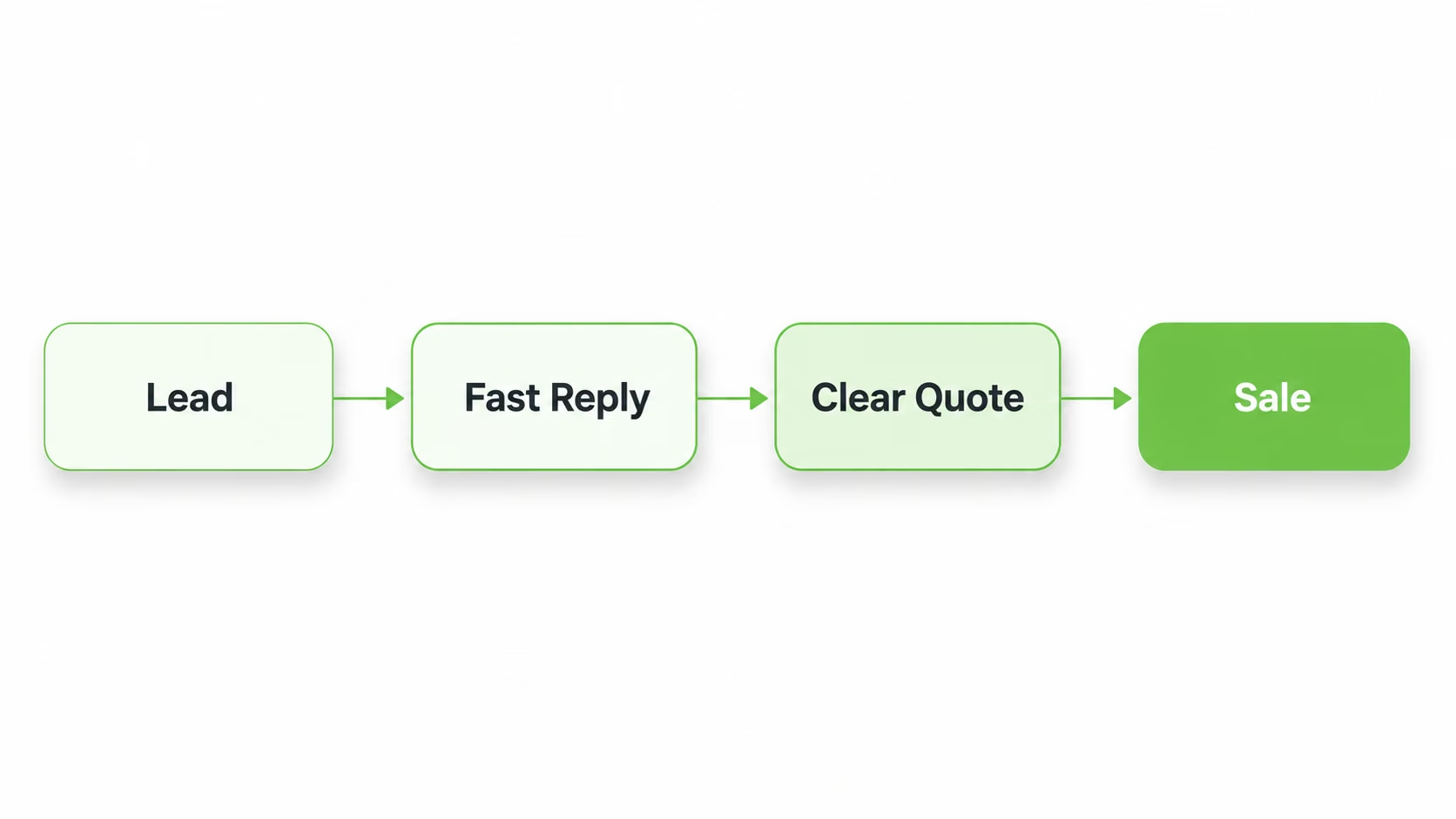
A few fixes close most of the gap for many small businesses: replying faster while interest is hot, giving a clear price instead of a vague "contact us." Keep an answer ready for the two or three doubts buyers always raise.
Then track every lead (every person who reached out) and where they came from. Even a simple spreadsheet shows you exactly where people were dropping off.
When to use it: When people are reaching out, but few of them are buying.
Real example: A lead reaches out to three local providers at once. The business that replies within the hour with a clear quote usually has the advantage over the one that answers the next morning. A faster response can improve conversion before you spend anything on more traffic.
Method 3: Keep the Customers You Already Have
What it is: Retention means getting the customers you already won to come back and buy again, instead of always hunting for new ones.
How it works: Most businesses chase new customers and quietly neglect the ones they already have. Gartner's 2026 survey of marketing leaders found that spending on loyalty and retention has dropped to less than 15% of total media spend, a 29% fall in two years.
That gap is the opportunity, because the customers who already booked you are the easiest people to sell to again.
For a service business, retention can be simple once it becomes a deliberate part of the process. Follow up after the first purchase, answer questions quickly, and offer a small perk for booking again. When it fits, suggest the next useful service, like a deep clean, which is called an upsell. Those check-ins, perks, and upsells make revenue steadier, so one slow month does not hit as hard.
When to use it: When you're winning customers, but they book once and disappear.
What this looks like: A one-time service earns you a single payment. That same customer on a biweekly schedule is worth far more over a year. A simple follow-up like "Want me to lock in a regular slot?" can turn one-off demand into recurring revenue, while a new ad aimed at strangers costs every time.
Method 4: Turn Happy Customers Into Referrals and Reviews
What it is: A referral is when a happy customer sends you someone new. A good review is a customer vouching for you in public, like on Google.
How it works: Referrals and reviews work because the trust comes built in. A stranger who hears about you from a friend or reads a customer review has already cleared the hardest hurdle: believing you're worth a shot.
The trick is timing and specifics. Ask for referrals right after you have delivered a good experience, while the feeling is fresh. Make the ask concrete, like "know anyone else who'd want this?" rather than a vague "tell your friends." And put your best reviews where buyers can see them, since one honest customer voice sells harder than your own copy.
When to use it: When your offer works and customers are happy, but growth has gone flat.
What this looks like: A local service business sends a quick message the same day the work is finished, asking the customer to leave a Google review. That one habit builds a steady trail of proof for the next person comparing providers nearby.
Those local reviews also help your Google listing work back in Method 1. When businesses ask a week later, after the shine wears off, they rarely get the same response.
Method 5: Make Operations Easier to Scale
What it is: Operations is the behind-the-scenes work that keeps your business running. It covers booking jobs, sending invoices, tracking customers, and following up.
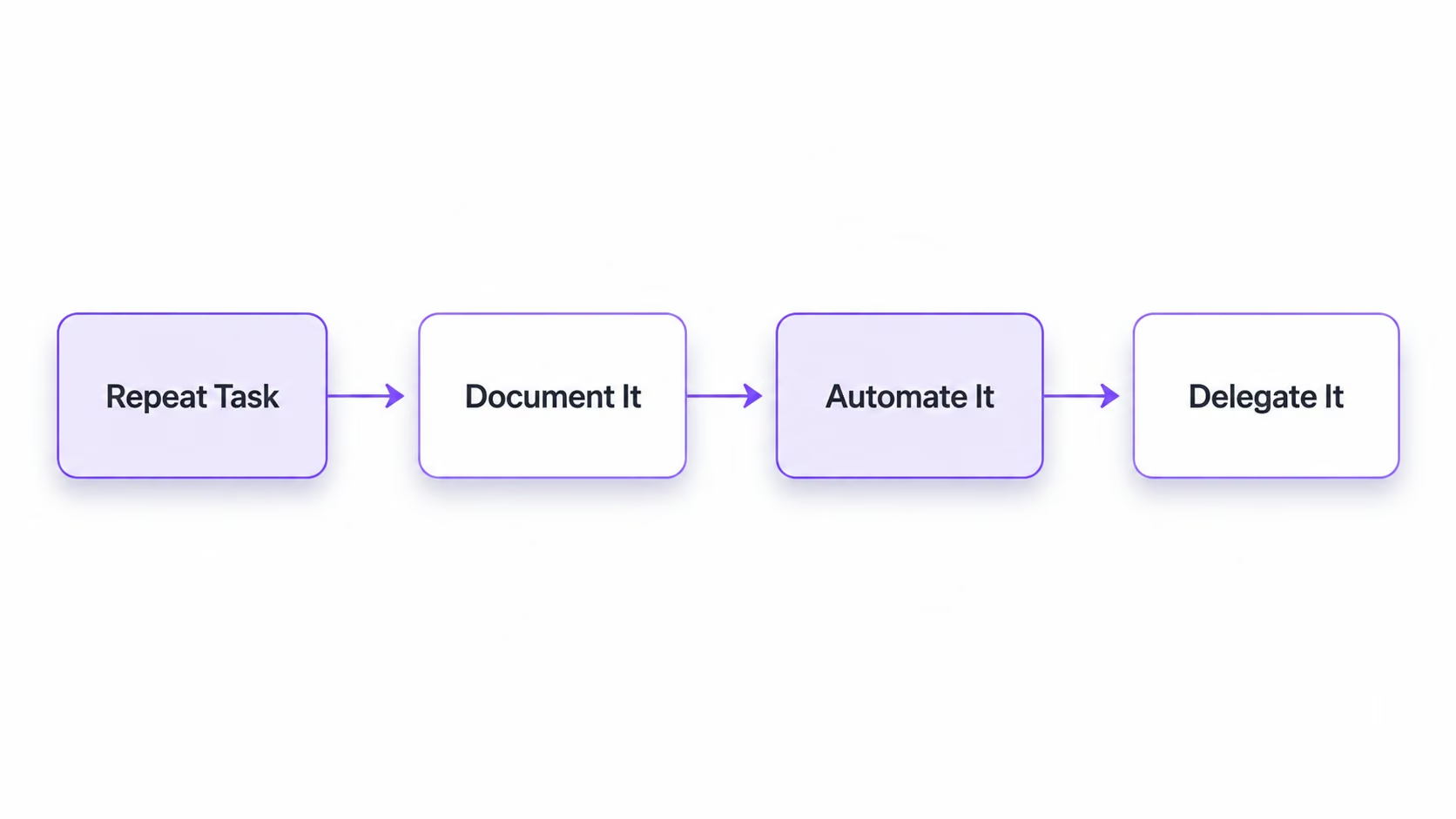
How it works: When you're small, you can run all of that from memory and a few notes. Growth breaks that fast. A useful rule is to write down any task once you have done it the same way three times. Then look for repetitive parts, like booking confirmations, reminders, or follow-ups, that a tool can handle automatically.
Write the process down before you hire. Putting a new person on top of a messy, undocumented process spreads the confusion to two people instead of one.
Tools matter most here, and they're easy to get wrong. A spreadsheet was fine when you had ten clients. At forty, you're scrolling through three tabs to find one phone number. Stitching together separate apps brings its own headaches: a login for each one, data that won't sync, and a bill that grows every time you add another.
When to use it: When you're already growing, and the day-to-day is starting to crack.
What this looks like: A growing service business starts juggling jobs across texts, a paper calendar, and a notes app. Then follow-ups slip, booking details get buried, and customers have to chase for updates.
Writing the booking steps down, then automating confirmations and reminders, can stop jobs from slipping through the cracks without hiring someone just to babysit a calendar.
So instead of stacking another app on the pile above, use Emergent to build one tool around the workflow you actually need, like bookings, reminders, customer notes, and follow-ups.
Also read our guide on the best Zapier alternatives for workflow automation to find the right tool before you automate the repetitive parts.
Method 6: Build a Team Before You're Drowning
What it is: Growing past what you can do alone means bringing in help, whether that's your first employee, a contractor, or a partner.
How it works: Many owners wait too long to hire, until they're stretched and starting to drop things. A clearer signal is when you're running at 80 to 90% capacity, not when you finally hit a wall. Hire part-time first, give the new person your simpler repeat clients, and keep quality control tight for the first ten to fifteen jobs.
Write down how you do the job before you hand it over. A clear checklist keeps the work consistent instead of leaving a new hire to guess.
When to use it: When demand is steady and your own hours are the main thing capping growth.
What this looks like: A business owner keeps doing the work, quotes, scheduling, and customer messages alone because it feels cheaper than hiring. Then a regular customer gets rushed, delayed, or ignored. They may not complain, but they stop coming back.
A better move is to bring in part-time help before quality drops. Start with simpler repeat work, use a checklist, and keep quality control tight while the new person learns the process
Method 7: Manage Cash Flow Before You Look for Funding
What it is: Cash flow is the timing of money coming in versus going out. Funding is outside money, like a loan or investment, that you bring in to grow faster.
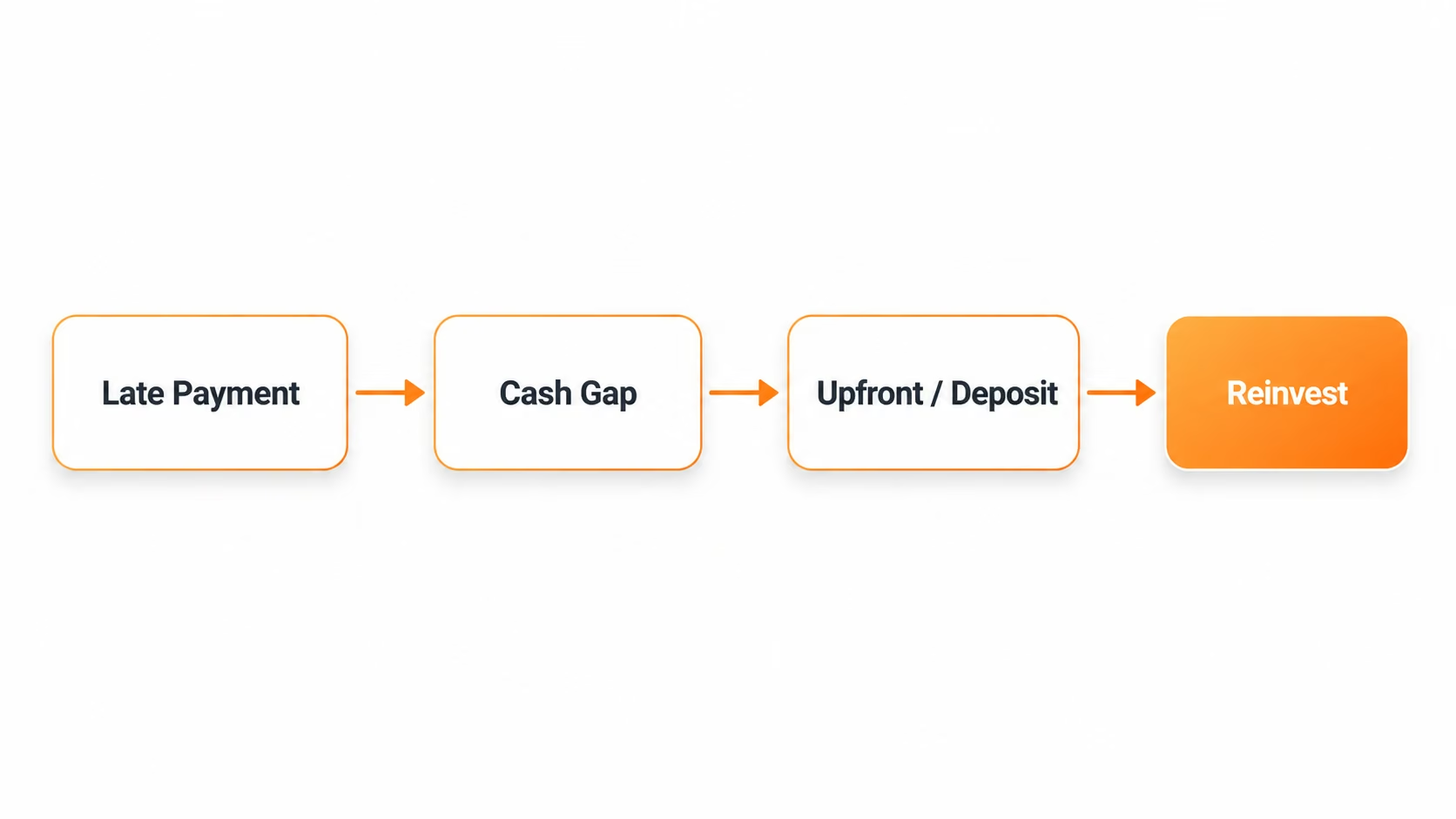
How it works: A business can book record months and still run short when clients pay late, while supplies and wages are due now. The timing matters as much as the totals. Move new clients to upfront or same-day payment, take deposits on bigger jobs, and offer a small discount for prepaid monthly work.
Funding makes sense once demand is proven and repeatable. Borrowing to test whether anyone wants your service just adds a repayment on top of an unanswered question.
When to use it: Monitor cash flow at every stage. Look for funding only when growth is proven, and the money would speed up something that already works.
What this looks like: A business can have strong demand and still feel broke if invoices are unpaid while wages, software, supplies, or contractors are due now. For example, $3,000 in unpaid invoices does not help much if $1,200 in expenses must be paid this week.
The fix is often about changing how money moves, rather than finding more clients: upfront payment for new clients, a deposit on big project work, and an end to chasing slow payers.
Cash flow can steady within 30 days, and only then does it make sense to put money back into ads and another hire.
Method 8: Expand What You Sell or Who You Sell To
What it is: Once your core offer works, you can grow by adding a new service or by selling your current service to a new type of customer.
How it works: Expand too early, and you split your focus before the core offer is solid. Done at the right time, it builds on the skills, tools, and clients you already have. The safest first step is the one closest to what you do well, and the easiest way to test it is to ask existing customers rather than guess.
Pick one adjacent move at a time. A new service for current customers, or your current service for a new market.
When to use it: When your core offer is steady and profitable, and you're turning away demand or hearing the same request often.
What this looks like: An SEO consultant may grow by adding ongoing content optimization instead of only selling one-time audits. The new offer is close to the work they already do, solves a recurring problem for clients, and creates steadier revenue without starting from scratch.
For example, five clients paying $500 a month for content refreshes, keyword tracking, and on-page updates adds $2,500 in recurring monthly revenue before the consultant sells another audit. The key is to test one adjacent move first, then expand only if the new work is profitable and repeatable.
Which Method Should You Choose?
You don't need all eight at once. Match your starting point to the problem you have right now.
Choose acquisition channels if:
- Your offer sells well, but hardly anyone sees it.
- You haven't settled on a main way to reach people yet.
Choose a tighter sales process if:
- People reach out, but few of them buy.
- You don't know where your leads drop off.
Choose retention if:
- Customers buy once, then disappear.
- Each new customer costs more than the last.
Choose referrals if:
- Your customers are happy, but growth has flattened.
- You lean on cold traffic for every new sale.
Choose operations if:
- You're growing, and the day-to-day is getting messy.
- Manual tasks eat hours you don't have.
Choose hiring if:
- Demand is steady, but your own hours cap how much you can take on.
- The same chores eat time you should spend growing.
Choose cash flow if:
- You're profitable but often short when bills come due.
- You're tempted to borrow just to cover everyday costs.
Choose expansion if:
- Your core offer is steady and profitable.
- Customers keep asking for something you don't offer yet.
Also read our guide on the best custom business software tools to find the right platform once you know which method fits your stage.
Track the Numbers That Show Real Growth
Most small operators skip the numbers. Two are enough to begin, and they tell you whether your growth is actually paying off.
Customer acquisition cost (CAC) is what you spend to win one new customer. Divide your marketing spend by the customers it brought in: $500 of ads that land 10 customers is a $50 CAC.
Customer lifetime value (LTV) is the total a customer is worth across every job they book over time. Multiply your average job value by jobs per month by how many months they stay: $120 per order, twice a month, for six months, comes to $1,440.
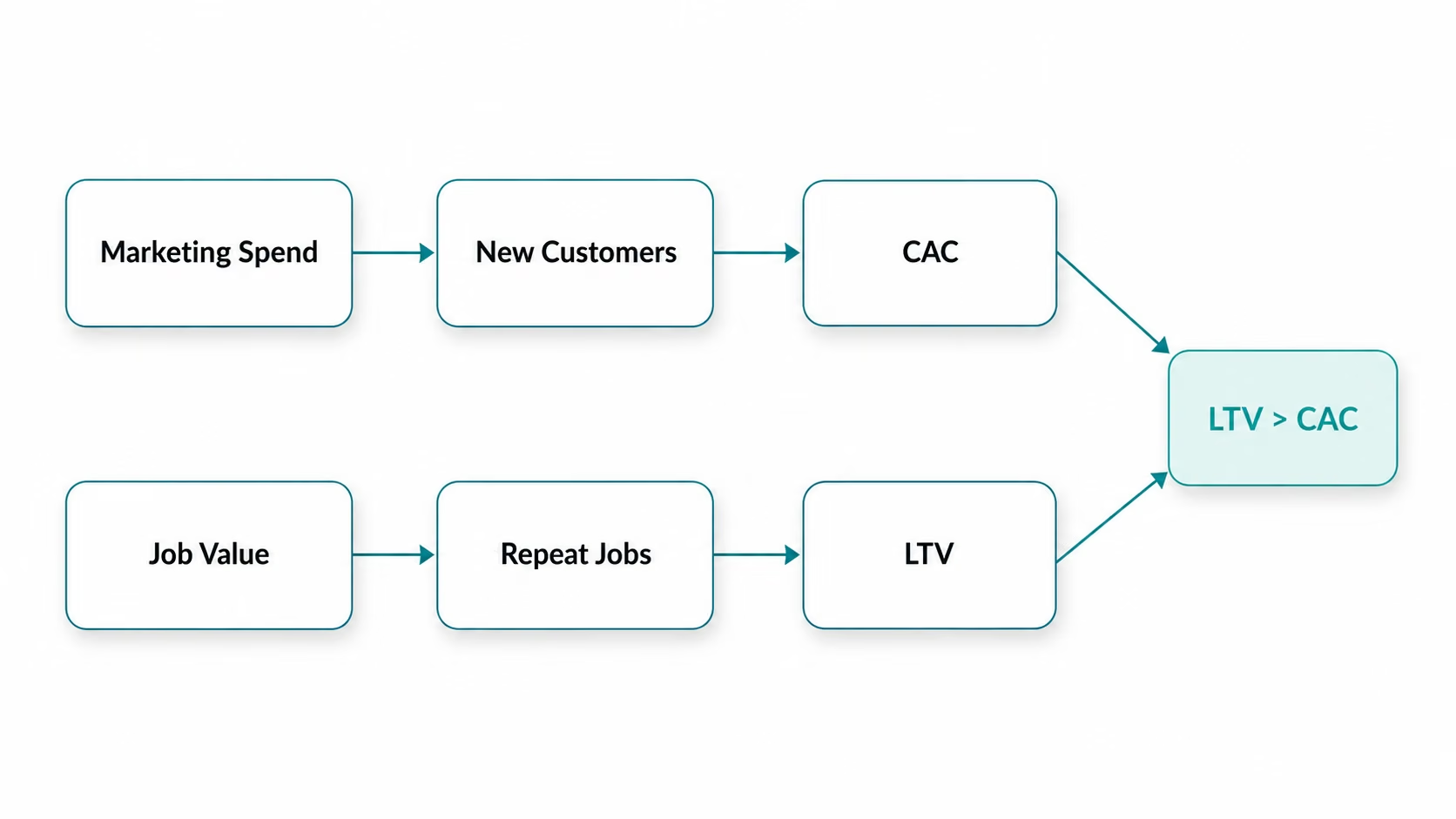
Compare the two, and you get one of the most useful ratios you can track. When LTV sits well above CAC, you can grow safely. When CAC creeps up to meet LTV, you're paying too much for customers who don't stay long enough to pay you back.
For a healthy small business, CAC ran around $40 to $70 while LTV cleared $1,000. That gap is what creates room for hiring, better systems, and expansion.
Best Practices for Growing Your Business
These are the practices I’d keep in place no matter which growth lever you choose first.
- Your best customer: Get specific about who buys most, is easiest to sell to, and refers others. A vague target wastes your first marketing dollars on the wrong people.
| Vague Target | Specific Target |
|---|---|
| Small businesses | Local dentists who want more appointment requests |
| Online stores | Shopify shops losing buyers after the first order |
| Coaches | Fitness coaches who sell 8-week programs |
- Offer before traffic: A weak offer turns ad spend into wasted spend. Trade "general consulting" for a clear package with a named result.
- Profit over revenue: More sales at a worse margin can quietly shrink what you keep. That's a slow way to run out of money.
- One at a time: Chasing all eight levers at once means none of them get the attention they need to work.
Ready to turn these practices into a working online presence? Our guide on how to create a small business website walks you through it step by step.

Describe what you want and Emergent builds it. A real, production-ready app you can launch the same day.
- One prompt to build
- Zero code required
- Deploy in minutes







