



I ran the same shop, ceramic mugs and planters, on Shopify and Etsy at once to settle which is better. Etsy wins if you need sales fast with no audience, and Shopify wins if you can drive your own traffic and want to own your brand.
Shopify vs Etsy: What's the Difference?
Shopify gives you your own store, while Etsy gives you space inside its marketplace.
With Shopify, you build your own website. You pick the design, you own the customer list, and nobody else's name is on the door. The downside is that an empty website gets zero visitors until you go out and bring them in.
Etsy works the opposite way. It's a marketplace, one giant website where millions of shops sit side by side, and shoppers are already there searching. You borrow Etsy's audience instead of building your own. The catch is that those buyers belong to Etsy, not to you.
That one difference shapes the fees, the design, how buyers find your products, and what happens if you ever leave.
Choose Shopify if: You already have people you can send to a store, through social media, an email list, or ads, and you want to own your brand long term.
Choose Etsy if: You're starting with no audience, you sell handmade or vintage goods, and you want a real shot at a sale this week.
| Feature | Shopify | Etsy |
|---|---|---|
| Best For | Brands that can drive their own traffic | New sellers who need buyers right away |
| Pricing | $39/mo ($29/mo billed annually) | Free to open, $0.20 per listing, fees per sale |
| Key Strength | You own your brand and customers | Millions of ready-to-buy shoppers built in |
| Main Weakness | No traffic until you create it | Etsy's search decides who sees you |
| Ideal Team Size | Solo sellers up to large brands | Solo sellers and small craft shops |
Meet Shopify: Features and Highlights
Shopify is software that lets you build and run your own online store. You pay month to month, and everything inside is yours to arrange.
Setup is friendlier than it sounds. You start with a theme, a ready-made design template for your store. I used the free one called Dawn, added my mugs and planters, and had a clean, branded shop live in an afternoon. Most of that time went to photographing products, not wrestling with tech.
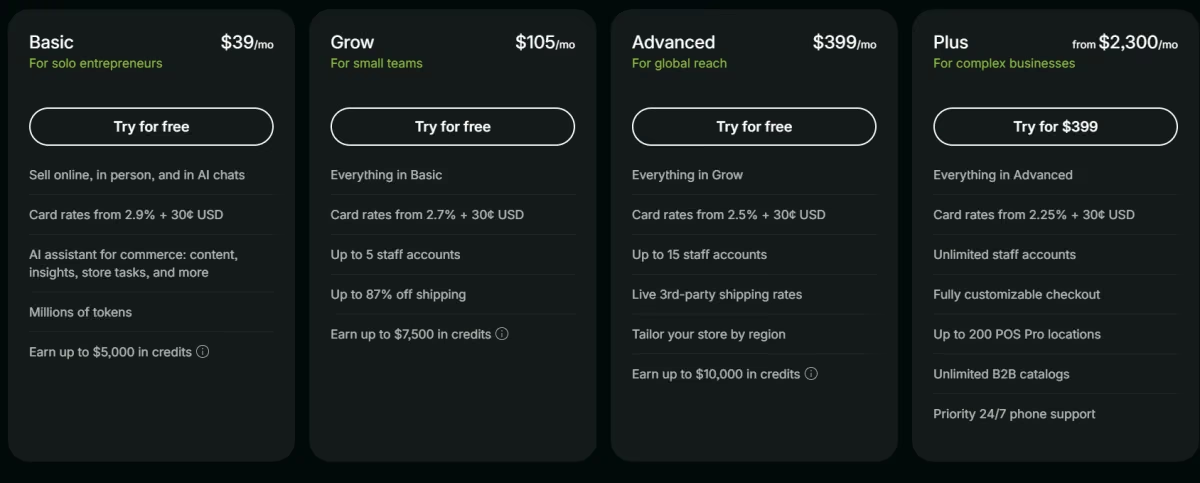
A built-in tool called Shopify Payments processes customers' cards for you, and turning it on means you skip the extra fee Shopify would otherwise charge for using an outside payment company. You pay only the standard card-processing rate, 2.9% plus 30 cents per sale on the entry plan.
The biggest perk is the app store. Need email marketing, product reviews, or a subscription option? You add it like installing an app on your phone, no coding required.
The catch is traffic. Shopify gives you a beautiful, empty room. Until you send people to it, nothing happens. My store sat silent for weeks until I started posting on Instagram and ran a small test ad on TikTok.
Not sure Shopify is the right fit for your store? Our best Shopify alternatives breakdown covers what else is worth trying in 2026.
Meet Etsy: Features and Highlights
Etsy is a marketplace built specifically for handmade goods, vintage items, and craft supplies. Instead of building your own site, you open a shop inside Etsy's, next to millions of others, and tap into the shoppers already browsing.
That built-in audience is the whole appeal. People come to Etsy in a buying mood, searching for exactly the kind of thing you make. You're not convincing strangers to visit a website they've never heard of. You're showing up in front of people who are already looking.
The flip side is that Etsy's search engine decides which shops get seen. It ranks listings on things like your keywords, how often people buy after clicking, and how recent your shop activity is. When it favors you, sales roll in. When it doesn't, you can feel invisible, and there's no manager to call.
Etsy also limits what you're allowed to sell. Items have to be handmade, vintage (meaning over 20 years old), or craft supplies. My planner printables counted as digital downloads, so they were fine. A mass-produced gadget would get rejected.
Shopify vs Etsy: Feature-by-Feature Comparison
Pricing and Fees
This is where sellers get the most confused, so let's slow down. Shopify and Etsy charge in completely different ways, and which one is cheaper depends entirely on how much you sell.
Shopify charges a flat monthly fee. You pay it whether you sell one item or a thousand.
Shopify costs:
- Basic: $39/mo ($29/mo billed annually), the entry plan for solo entrepreneurs
- Card processing: 2.9% plus 30 cents per online sale with Shopify Payments on
- No listing fees, and no limit on how many products you list
Etsy's Payment Policy flips that. There's no monthly membership. Instead, Etsy takes a cut of each sale, plus a small fee every time you list something.
Etsy costs:
- $0.20 to list an item, renewed every four months
- 6.5% of each sale, including what the buyer pays for shipping
- 3% plus 25 cents per sale for payment processing
- Offsite Ads, where Etsy advertises your products elsewhere and charges only when one of those ads makes a sale. The rate is 15% for shops under $10,000 in the trailing 365 days, dropping to 12% once you cross $10,000 (and 12% locks in from then on), capped at $100 per order
- An optional $10/mo Etsy Plus plan, which adds 15 listing credits, $5 in ad credit, restock alerts, and extra shop customization
So which wins? It depends on monthly sales, average order value, and whether Offsite Ads apply.
For a small shop, Etsy is usually cheaper because there is no required monthly subscription. Once sales become steady, Shopify can pull ahead because its main cost is the monthly plan plus payment processing, not a marketplace transaction fee on every sale.
Winner: Tie. Etsy is cheaper when you're small, Shopify once you're steady.
Want to explore more platform options before you commit? Our best online store website builders breakdown covers what else is worth trying in 2026.
Getting Your First Sale
On Etsy, the marketplace does your marketing. I listed my mug set on a Tuesday and woke up to a sale on Thursday. I made the sale without running ads or posting anywhere. Etsy's own shoppers found it through search.
Shopify is a different world. A new store opens with no visitors at all, because there's no marketplace sending anyone your way. Every customer has to come from something you do, such as a post, an ad, or an email. That's why mine took six weeks to make its first sale, and why it only happened once I started promoting it myself.
Neither approach is wrong. They ask different things of you. Etsy hands you traffic and charges for it. Shopify gives you nothing and asks you to build it.
Winner: Etsy. Nothing beats built-in buyers when you're starting cold.
Brand and Design Control
Branding is how customers remember you instead of the platform you sold on. Here, the two part ways sharply.
Shopify lets you shape the layout, fonts, colors, product pages, and even the wording at checkout. My Dawn-themed shop looked like a branded store. A visitor could tell it was mine without ever seeing the web address.
Etsy gives you a banner, a profile photo, and a short "About" blurb. That's it. Every shop runs the same layout, which can look rough when your products deserve better. Shoppers always know they're on Etsy first, and in your shop second.
Winner: Shopify. It gives you a branded storefront.
Customer Ownership and Retention
Customer ownership sounds dry, but it's where the money lives. "Owning your customers" means being able to reach them again after the first sale, instead of waiting and hoping they come back.
On Shopify, shoppers can opt in to your emails at checkout, and that list is yours. When I added new planter colors, I emailed past buyers directly and made repeat sales the same day. That list stays with me even if I switch platforms.
Etsy keeps that connection for itself. You don't get your buyers' email addresses. They can favorite your shop, but you can't message them with a new release or a discount. If Etsy's search stops showing your listings, you lose touch with people who already paid you once.
Winner: Shopify. Repeat customers are where small shops become profitable.
Product Fit and Restrictions
What you sell can settle the platform choice before any other factor does.
Shopify takes almost anything legal, including handmade goods, mass-produced products, digital downloads, subscriptions, and even wholesale orders. My ceramics and my printables both fit without a second thought.
Etsy is choosier by design. It allows only handmade goods, vintage items (over 20 years old), or craft supplies. Print-on-demand (products printed when ordered, like a mug with your art on it) is allowed only if the design is your own and you name your production partner. Standard reselling and dropshipping aren't permitted.
Winner: Shopify. It grows with your catalog instead of boxing it in.
Looking to scale beyond handmade or explore dropshipping? Our best dropshipping website builders breakdown covers what else is worth trying in 2026.
What Real Users Are Saying
To balance my own testing, I pulled feedback from verified reviews on G2, Trustpilot, and seller forums, sites where sellers leave detailed, dated accounts tied to a profile.
Shopify
Pros
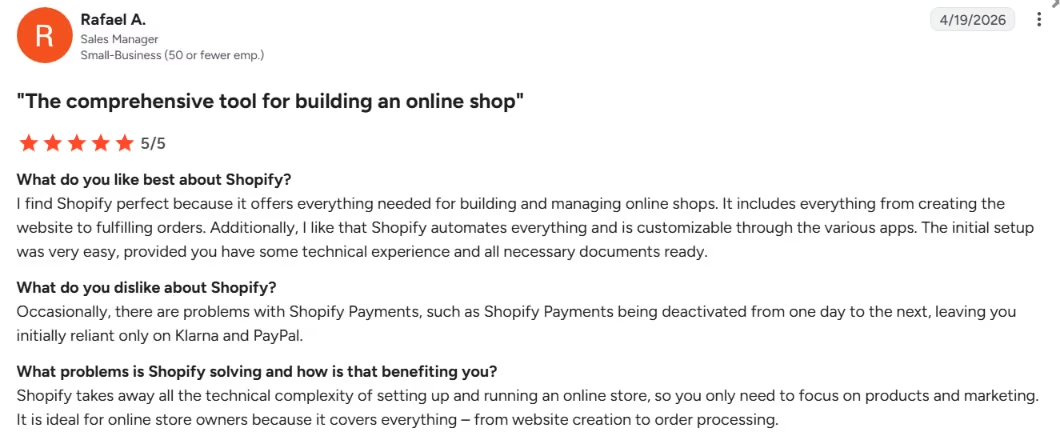
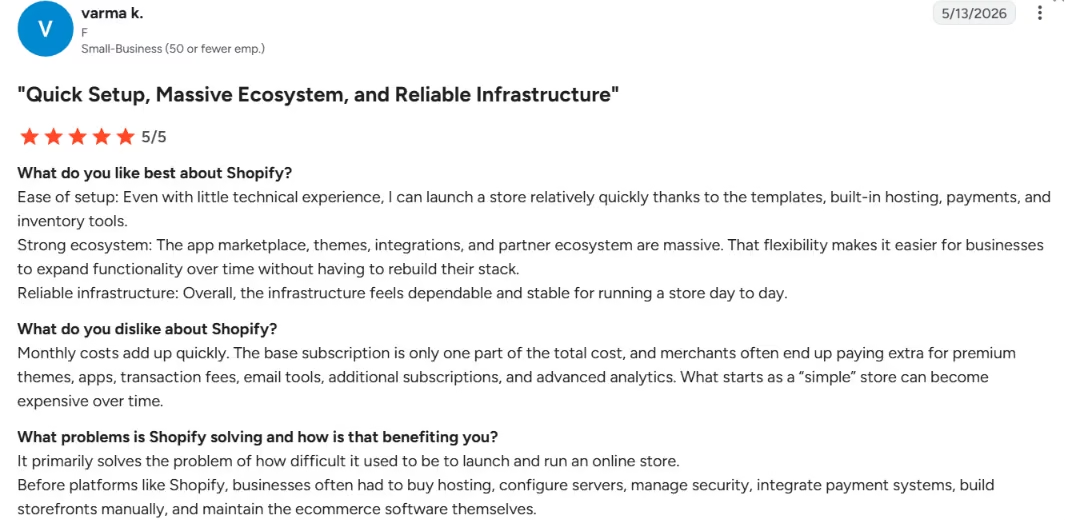
- Sellers praise how fast it is to get going. As one reviewer on G2 put it, "The initial setup was very easy, provided you have some technical experience and all necessary documents ready."
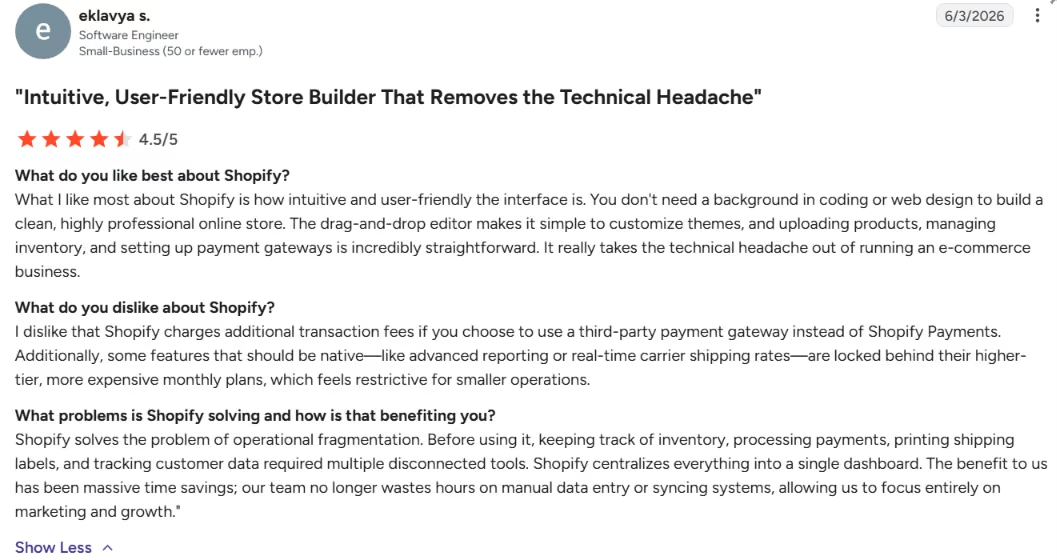
- Another reviewer said: “What I like most about Shopify is how intuitive and user-friendly the interface is.”
Cons
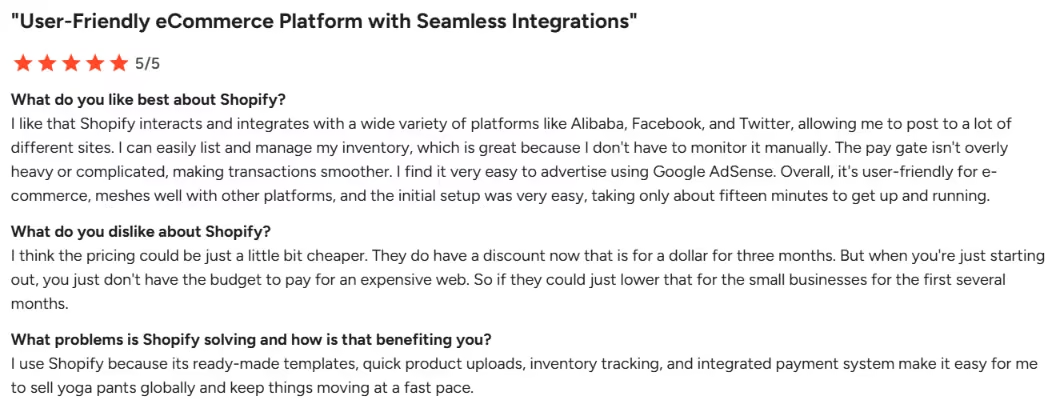
- Cost is the common gripe. One G2 reviewer simply wished: "I think the pricing could be just a little bit cheaper.”
- Another reviewer said, “What starts as a 'simple' store can become expensive over time.”
Etsy
Pros
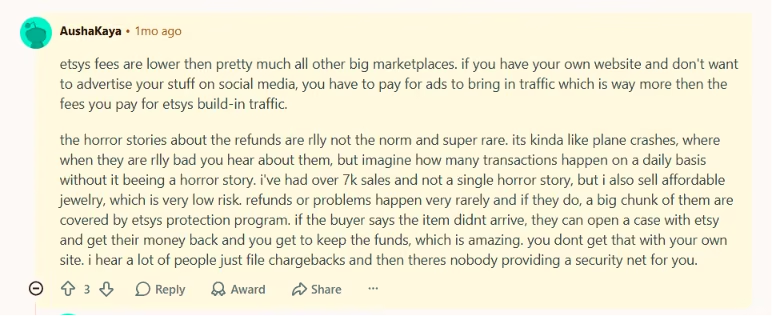
- The built-in audience gets the strongest praise in the reviews I read. Sellers consistently say it's the fastest way to a first sale without a marketing plan. Sellers also point to cost, with one reviewer noting Etsy's fees run lower than “pretty much all the other big marketplaces."
- Etsy's buyer protection makes shoppers comfortable enough to buy from a brand-new shop, which helps sellers close that tricky first order.
Cons
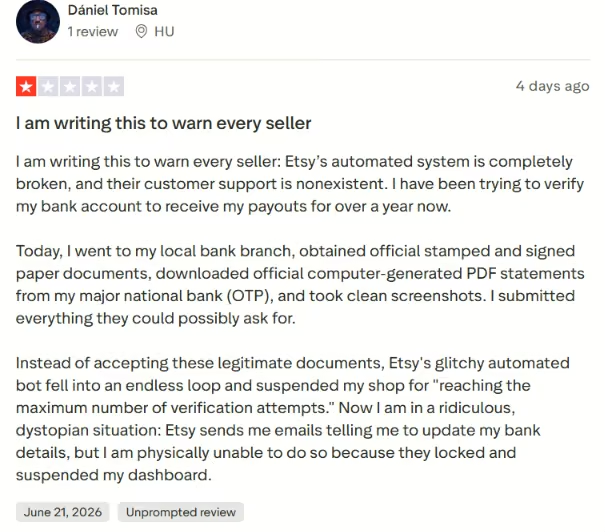
- Trustpilot reviewers describe seller support as slow and hard to reach. One reviewer said, “their customer support is nonexistent.”
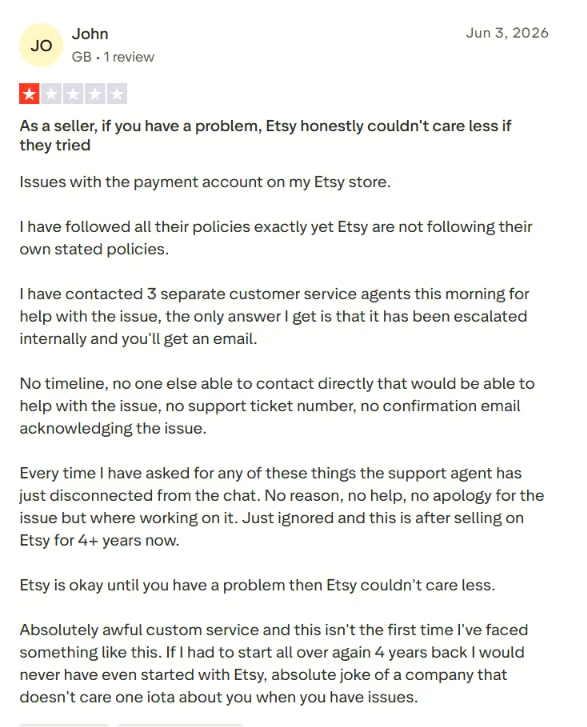
- Another seller shared, “As a seller, if you have a problem, Etsy honestly couldn't care less if they tried.”
How to Make Your Choice
If you're starting with no audience, Etsy gets you to a sale faster than anything else. If you already have a way to reach people, or you're ready to build one, Shopify pays that effort back in margin and ownership. Plenty of sellers run both in the end, and that's often the smartest play.
- Etsy wins on speed and built-in trust.
- Shopify wins on brand, ownership, and long-term margin.
Shopify Is Better For:
- Sellers who can already reach people through social, email, or ads
- Anyone planning subscriptions, wholesale, or selling to other businesses later
- Brands that want full design control and a storefront that customers recognize
- Sellers who are tired of a search algorithm deciding whether they get seen
Etsy Is Better For:
- First-time sellers with no marketing budget or experience
- Handmade, vintage, and craft sellers who fit Etsy's rules
- Anyone wanting to test whether a product sells before building a full store
- Sellers who'd rather pay per sale than commit to a monthly fee
My Verdict
Start on Etsy if you've never sold online before. It's the cheapest, fastest way to learn whether people want what you make, without spending a cent on ads to find out.
But don't plan to stay forever. Once a product proves itself, Etsy's lookalike shops, fees, and search engine control can start to chafe. That's what pushed me to move half my inventory to Shopify within two months. Etsy found my first buyers. Shopify let me keep them.
There's also a point where you outgrow both. You may need a working store with custom checkout rules, a booking system, or some feature that no template offers. When you hit that wall, the answer is usually a custom build rather than another app bolted on. Emergent is built for that kind of work.
Ready to take your store further than templates allow? Our best AI eCommerce website builders breakdown covers what else is worth trying in 2026.
Building Beyond Shopify and Etsy
Most store builders work the same way: pick a template, tweak the settings, patch the gaps with apps. That's fine until your store needs something the template was never built for, and then you're fighting the tool instead of using it.
A newer approach skips templates altogether. With vibe coding, you describe the store you want and the platform builds it around your business.
Emergent is one option built this way: an AI-powered website builder that generates a real store, checkout logic, and built-in integrations. A template is still faster for a simple shop, but if you've hit the ceiling of what templates and apps can do, this path didn't exist two years ago.


Most AI app builders stop at prototypes. Emergent creates production-ready apps you can actually launch.
- Production-ready apps
- Web & mobile apps
- Deploy in minutes







