




Introduction
When large field operations rely on manual reporting, even simple tasks can become bottlenecks. For one of the UK’s top energy providers, this challenge surfaced in an unexpected place: tracking leftover materials after installations.
Every day, thousands of engineers were completing smart meter, heat pump, and solar panel installs, yet the company lacked a quick and reliable way to record what materials remained unused. What seemed like a small reporting gap was quietly creating delays, wasted inventory, and higher logistics costs.
That was the point where Emergent came in, enabling the team to prototype a completely new, AI-assisted reporting flow in just days instead of months.
Use Case
A top UK energy provider needed a simple and efficient way for approximately 3,500 field engineers to report leftover materials after installations (such as smart meters, heat pumps, and solar panels). The goal was to identify overstocking issues and optimize logistics.
Challenges
The company faced a growing logistics blind spot. With more than 3,500 field engineers installing smart meters, heat pumps, and solar panels each day, tracking leftover materials after every job had become essential to optimize inventory, control costs, and reduce waste.
However, the existing reporting process was slow, manual, and underused. Engineers had to complete long, linear forms inside a third-party tool that was not optimized for mobile use. Each job’s Bill of Materials (BoM) could include thousands of SKUs, forcing engineers to search, select, and record each leftover item manually. The friction was so high that many engineers simply skipped the process altogether.
This lack of reliable data made it difficult to identify overstocked sites or recurring inefficiencies. Operational leaders knew they needed a faster, more intuitive system, but building it natively would have required 3 to 5 developers working 8 to 12 weeks, costing hundreds of thousands of pounds.
With limited engineering bandwidth and growing field inefficiencies, the company needed a new approach that could be tested, validated, and deployed quickly without diverting core development resources.
Solutions
To move fast, the company’s COO decided to try Emergent and see if the problem could be solved without waiting for a full engineering build. The idea was simple: make reporting as easy as taking a photo.
Using Emergent, the COO created a lightweight AI-powered web app that let engineers snap a quick picture of leftover materials after each installation. The app automatically analyzed the photo, identified the items, counted them, and matched them to the correct Bill of Materials (BoM) for that specific job.
Everything, from the AI model connection to automation setup and deployment, was built inside Emergent through natural language prompts. No code, no development sprint, and no outside help.
In just two focused days, the prototype was live and ready for real-world testing. Engineers could now finish reporting in seconds instead of filling out long forms. The process felt natural, mobile-friendly, and completely aligned with how they worked in the field.
What started as a quick experiment turned into a clear proof of value. AI and no-code tools helped frontline teams build smarter workflows on their own, cutting through months of technical bottlenecks and delivering real operational impact.
Outcomes
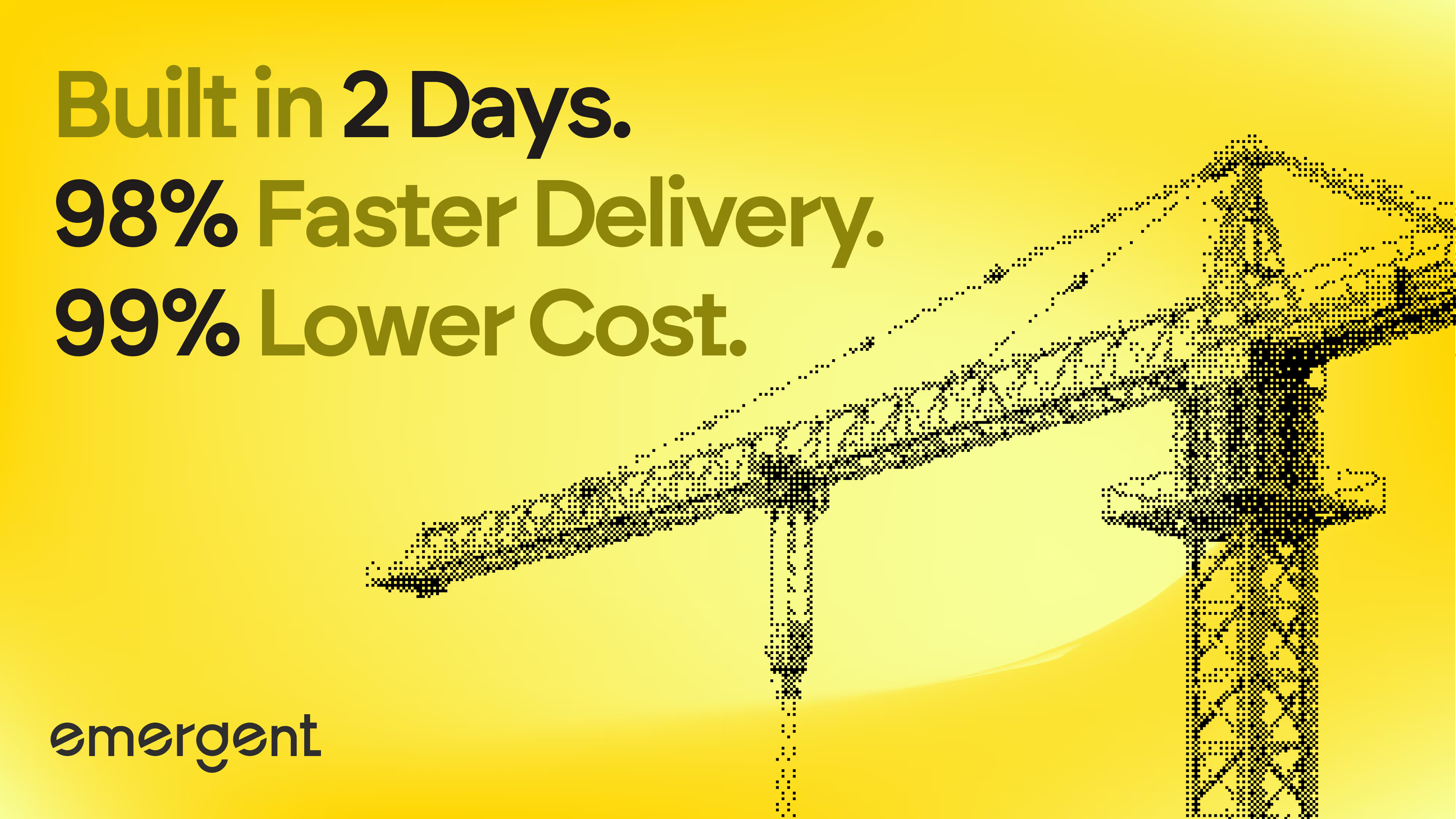
98% Faster Delivery
The entire solution was built and deployed in just two days, compared to the estimated 8–12 weeks it would have taken through traditional development. What used to require multiple sprints was now completed over a single weekend.
99% Lower Cost
Instead of spending hundreds of thousands of pounds on engineering and project management, the total cost was around £70, plus the COO’s time. The project proved that real operational impact doesn’t always need a big budget.
100% Pilot Satisfaction
All 15 engineers in the initial pilot reported that the new photo-based flow was “way better than what they were doing before.” Adoption was instant, and feedback confirmed the new approach felt faster, lighter, and more natural in the field.
Zero Engineering Dependency
A non-technical operations leader built, tested, and deployed the entire app independently. This proved that complex AI workflows can be delivered directly by business teams without waiting on development resources.
Conclusion
This project underscores a growing reality: operational innovation no longer has to wait for engineering bandwidth. With platforms like Emergent, domain experts can quickly test, validate, and scale solutions that directly solve field-level challenges.
For enterprises, that means faster iteration cycles, lower costs, and empowered teams that can turn real-world friction into working software in days, not quarters.
Emergent turns your idea into a full-stack web or mobile app, no coding required.
 No coding required
- Web & mobile apps
- Deploys instantly


on Emergent today




