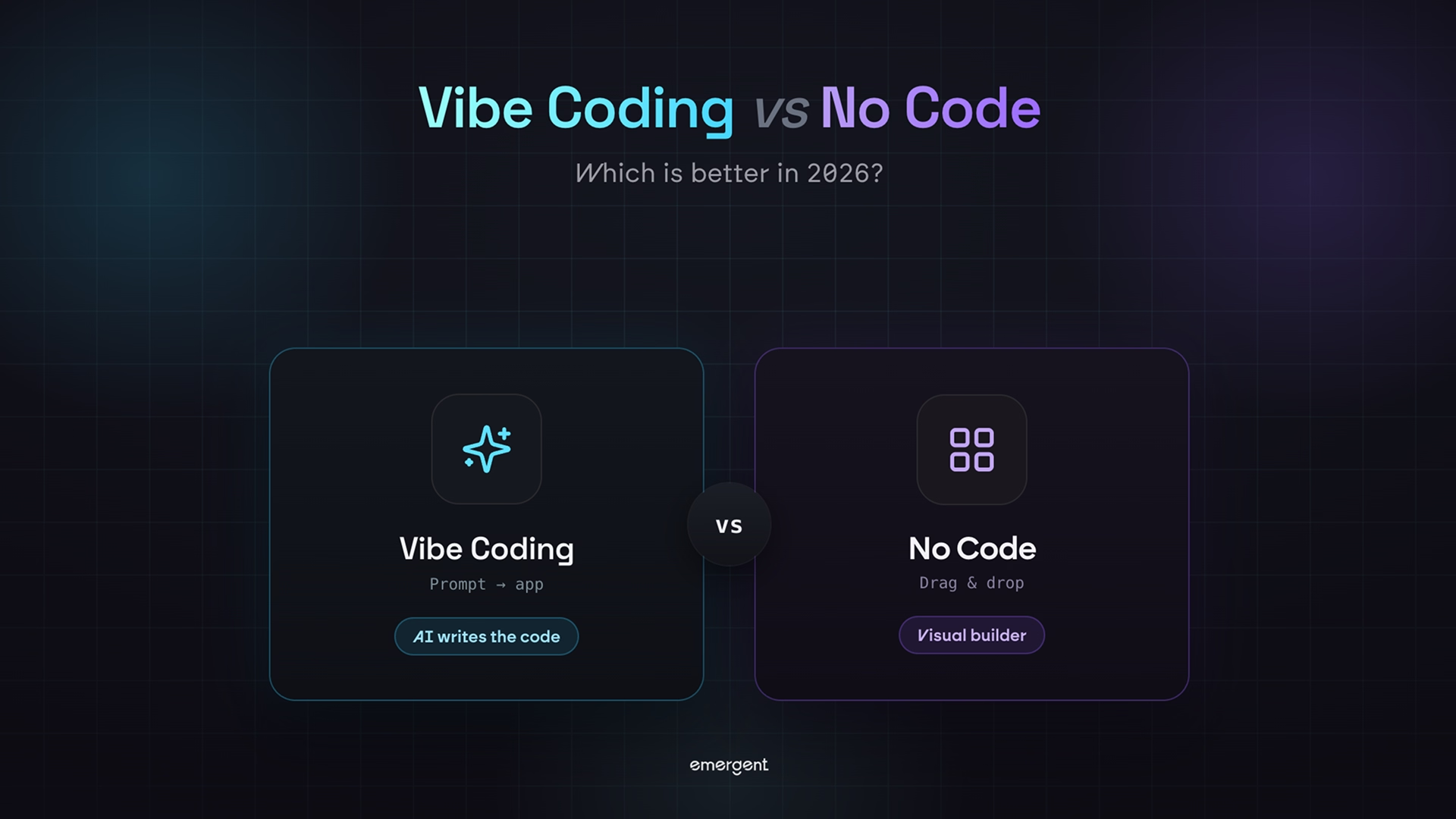

No code website builders let people create modern, responsive websites without writing HTML, CSS or JavaScript. These platforms enable users to create websites without writing code or needing coding skills or technical expertise, making website creation accessible to everyone. In 2026 these platforms combine visual editors, AI assisted design, integrated hosting and workflow automation to make building landing pages, marketing sites, ecommerce stores and membership portals accessible to founders, marketers and designers. No-code website builders typically use drag and drop interfaces and customizable templates, making it easy for anyone to create professional websites. Users can create professional-looking websites quickly, often in just a few hours, using these platforms. The no-code website builder market is expected to grow significantly in the coming years, reaching about $3.6 billion by 2031. The right website builder reduces time to launch, removes infrastructure friction and improves iteration speed for product teams and solo creators.
This guide explains what no code website builders are, the key features to look for, and the benefits they deliver. It then examines five top builders in 2026, starting with Emergent, in full, Emergent-level detail so you can compare capabilities and pick the best platform for your project.
Read More About: What are the best vibe coding prompt techniques
What is no code website builder?
A no code website builder is a platform that enables users to design, build, and publish websites without writing code or needing coding knowledge or technical expertise. These builders provide editors, prebuilt blocks, content management systems, and one click hosting, allowing creators to focus on content and UX rather than platform plumbing.
These platforms are suitable for users without coding skills and enable anyone to create websites easily. Many no-code website builders allow users to create websites without coding, using drag-and-drop interfaces and customizable templates to enhance design flexibility.
Modern no code builders also include integrations, automation, SEO controls and export options in some cases, so teams can move quickly from prototype to production without needing DevOps or frontend engineering expertise.
What are the key features of no code website builder?
1. Visual Drag and Drop Editor With Component Libraries
A robust editor gives users a canvas to place headers, galleries, forms, grids and interactive components visually, with full control over spacing, alignment and responsive behavior. Modern drag and drop interfaces have evolved to include features like AI-assisted creation and automation, going beyond simple visual editing. Many no-code website builders offer templates that are ready to use and easy to adjust for quick website launches. Component libraries include pre styled blocks for marketing, ecommerce and blog use cases, and many platforms provide mobile friendly templates to ensure sites look polished and function well on smartphones and tablets, so sites look polished without manual design work.
2. Responsive Design and Automatic Layout Adaptation
The system automatically recalculates layout, grid behavior and element sizing for desktop, tablet and mobile screens, ensuring consistent UX across devices. Mobile friendly templates are essential for ensuring a functional site across all devices, as they allow your website to operate smoothly and look professional no matter how visitors access it. Users can preview breakpoints and tweak responsive rules visually, avoiding manual CSS and device specific debugging. Squarespace, for example, is known for its modern, designer-quality templates and fluid drag-and-drop editing, which help users achieve a consistent and functional site.
3. Integrated Hosting, CDN and One Click Publishing
Most builders include built-in hosting, automated SSL configuration, and global CDN distribution so websites load fast and are served reliably around the world. Some builders offer shared hosting as a cost-effective option, though it may have limitations in performance, scalability, and security compared to other hosting types. Seamless integration of hosting, security, SEO, and analytics features is a key advantage of many no-code website builders, providing a unified and efficient experience. One-click publishing simplifies updates and removes the need for manual FTP, DNS, or server configuration.
4. Content Management and Dynamic Data Binding
A content management system (CMS) is a core feature of the best no code website builders, enabling users to build, customize, and manage website content without coding. Built in CMS features let users create content types, collections and templates for lists, blogs or product catalogs, and bind them to UI components. Dynamic data binding allows creators to build repeatable content pages and update multiple pages from a single source of truth.
Understanding web design is important for effectively presenting and organizing content within these platforms. Additionally, many no-code website builders, including Wix and Squarespace, provide built-in SEO tools to help improve website visibility.
5. Third Party Integrations and API Connectors
Connectors for analytics, email providers, CRMs, payment processors, and marketing tools enable full stack functionality without code. Seamless integration with third-party tools and systems enhances workflow efficiency and creates a unified user experience. Visual API configuration, webhooks, and automation integrations let teams build complex workflows connecting the website to business systems. Upgrading to paid plans often unlocks additional tools and advanced integrations, providing even more flexibility and features.
6. SEO, Performance and Accessibility Tools
Good builders include editable meta tags, structured data, sitemap generation, image optimization and accessibility checks, giving sites a strong foundation for search visibility and usability. Performance tooling helps reduce load times, improving search ranking and user retention. Many no-code website builders also provide built-in analytics tools, allowing users to track website performance and user engagement for data-driven improvements.
7. E commerce and Payment Workflows
E-commerce features include product catalogs, carts, checkout flows, tax and shipping settings, payment gateway integrations, and inventory management. Inventory management is a key feature of ecommerce website builders, helping users streamline stock control and order tracking. These tools allow creators to sell digital or physical goods without setting up separate backend systems.
Shopify is the best no-code website builder specifically designed for e-commerce, offering extensive features for online stores of all sizes.
8. Collaboration, Versioning and Role Management
Team features such as shared projects, comments, version history and role based permissions let multiple stakeholders work on the same site safely. These capabilities support design review cycles and delegated publishing workflows for agencies and product teams.
Advanced users may require advanced customization options, which are typically available in higher-tier plans. Customization options in no-code website builders can vary significantly, with some platforms like Webflow offering extensive design controls for advanced users, while others like Hostinger provide more basic features.
What are the benefits of using no code website builder?
1. Faster Time to Launch and Iteration Velocity
No code builders reduce the time from idea to live site by removing manual coding, hosting setup and deployment steps. Many platforms are beginner-friendly no-code solutions, enabling users to create and launch professional-looking websites quickly, often in just a few hours. Teams can test copy, layouts and conversion flows quickly, iterate based on user feedback and optimize performance continuously.
2. Lower Cost and Reduced Dependence on Engineering Resources
Startups and small businesses avoid hiring frontend engineers for basic website work, saving cost and allowing technical resources to focus on higher value product work. Small business owners especially benefit from no-code website builders because these tools are affordable and easy to use, reducing the need for technical staff. This makes professional web presence affordable for early stage teams.
3. Democratized Design and Content Ownership
Marketers, content teams and founders can make visual changes directly without opening tickets or depending on engineering, enabling more agile content strategies and consistent brand updates across pages. No-code website builders remove the need for technical expertise, democratizing web development and making it accessible to everyone.
4. Built In Best Practices for Performance, SEO and Security
Many builders enforce best practices such as image compression, HTTPS, accessible markup and structured data, reducing common mistakes and ensuring sites meet technical standards for search engines and enterprise policies.
5. Scalable Options with Extensibility and Integrations
Platforms that support plugins, APIs or code export allow teams to extend functionality or migrate when scale or customization needs grow. For users seeking more sophisticated solutions, many no-code website builders offer advanced functionality—such as automation, complex integrations, and dynamic content—through higher-tier plans. Upgrading to these higher subscription levels unlocks advanced features like custom domains, advanced customization, and CMS collections, providing a clear growth path from prototype to production grade architecture.
6. Robust Templates and Prebuilt Use Cases for Faster Starts
Industry specific templates and starter kits accelerate launch for common use cases such as SaaS landing pages, ecommerce stores, documentation sites and membership sites, providing tested layouts that convert. Many no-code website builders also offer mobile-friendly templates that are ready to use and easy to adjust, helping users launch sites quickly and ensuring a good user experience on all devices.
5 Best No Code Website Builders
1. Emergent
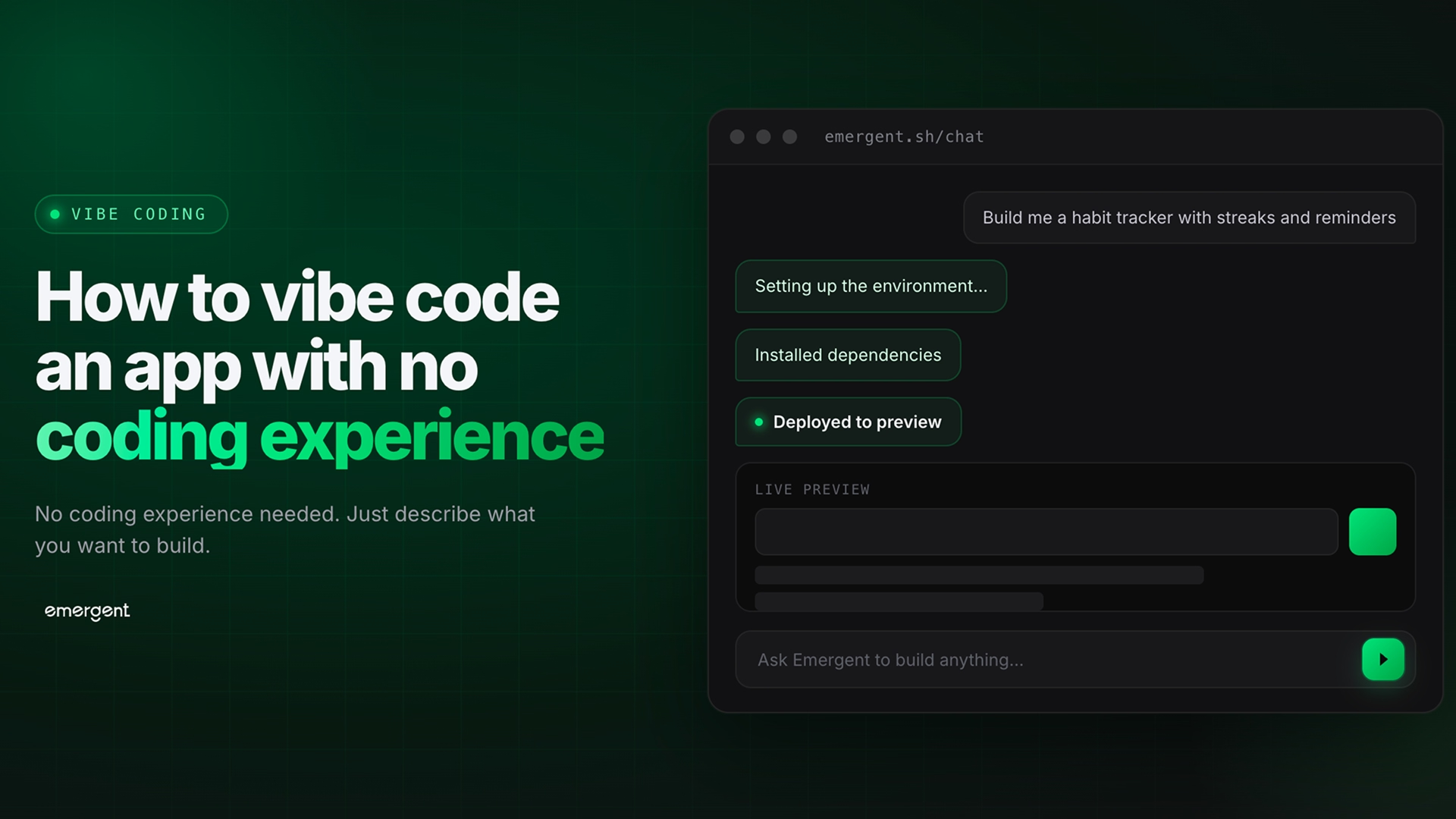
Emergent is a full-stack, AI-powered "vibe coding" platform that enables teams to build websites, web apps and production systems through natural language prompts. The system orchestrates frontend generation, backend APIs, data models, hosting and deployment automatically, so teams do not need to combine multiple services. Emergent focuses on end to end automation, while producing editable, exportable code to avoid vendor lock in.
Under the hood, Emergent uses a multi agent AI architecture where distinct agents handle UI planning, database design, testing, deployment and monitoring. This agent orchestration lets Emergent scale complex builds, maintain auditability and deliver reliable production sites quickly.
Key Features of Emergent
1. Multi Agent Orchestration for Web Projects
Emergent coordinates Builder, Designer, Quality, Deploy and Ops Agents to break down a website brief into parallel tasks, managing layout, content mapping, API scaffolding, testing and hosting. This separation of concerns reduces manual handoffs and accelerates delivery while maintaining clear traceability across every build step.
2. Natural Language Prompt to Production Workflow
Users can describe their website goals in plain language, and Emergent generates not only a visual layout but also backend endpoints, data schemas and deployment settings. This integrated flow shortens planning cycles and produces a working, testable site quickly.
3. Cloud Based Isolated Project Environments for Consistency
Each site runs in a secure, containerized environment, preventing dependency conflicts and ensuring reproducible builds across team members. This approach removes local environment issues and enables teams to collaborate on the same live project without configuration drift.
4. Exportable Modern Code Output with Developer Friendly Structure
Emergent produces clean React or Next.js frontends and Python or Node backends that developers can download, extend or self host. The output follows common conventions and is suitable for long term maintenance or migration to an enterprise infrastructure.
5. Integrated Quality, Testing and Runtime Monitoring Agents
Automated agents perform linting, accessibility checks, performance tests and end to end validations during the build process, and monitoring continues post deployment to catch regressions and performance regressions proactively.
6. Built In Integrations and Model Context Protocol for External Tools
Emergent integrates with third party systems like analytics, payment providers and content sources, and the Model Context Protocol lets the agents import context from GitHub, Figma or Notion to inform the build. This makes the platform practical for teams that already use external toolchains.
7. AI Assisted Content, Layout and Asset Generation
Emergent can generate SEO friendly copy, image placeholders, hero sections and CTA variations using AI, while aligning design choices to brand preferences. These capabilities speed up content creation and reduce reliance on separate creative resources.
Unique Features of Emergent
1. Enterprise Grade Security and Project Isolation
Each project is isolated with encrypted storage, role based access controls and comprehensive audit logs, making Emergent suitable for regulated environments and enterprise deployments that require strict data governance and visibility.
2. Custom Model Assignment and Task Level AI Selection
Teams can select different AI models for specific tasks, choosing models optimized for design, reasoning or cost efficiency. This enables fine grained control of output quality and compute cost across the website lifecycle.
3. Adaptive Learning That Personalizes Output Over Time
Emergent learns naming conventions, layout preferences and component choices from repeated usage, which reduces the amount of prompt detail required and speeds up future builds by pre aligning outputs to team standards.
4. Model Context Protocol to Ingest External Design and Docs
By importing assets, design systems or technical documentation from tools like Figma and GitHub, Emergent builds websites that are context aware and aligned to existing brand or technical constraints, reducing rework and speeding adoption.
5. Agentic Multimedia and Advanced Component Support
Emergent supports generation of multimedia components, audio players, lightweight video and interactive widgets, enabling modern, media rich websites without separate creation pipelines.
Advantages of Emergent
- Automates the full website lifecycle from design to hosting, saving time and coordination cost
- Produces exportable, standards based code that teams can maintain long term
- Supports enterprise grade security and governance controls for regulated use cases
- Integrates AI powered content and asset generation to accelerate launches
- Reduces environment and DevOps friction by running isolated cloud based projects
Limitations of Emergent
- Complex, highly bespoke designs may still require manual developer polishing
- Heavy usage could incur higher compute and credit costs for larger enterprises
- Learning effective prompts and workflows improves results but takes initial investment
- Plugin and ecosystem marketplace is growing, it is not as large as some long established builders
Emergent Pricing and Plans
2. Hostinger Horizons
Hostinger Horizons is an AI powered no code website builder built on top of Hostinger’s global hosting infrastructure. It is designed for entrepreneurs, small businesses and creators who want to launch high performing websites quickly without technical setup. The platform integrates AI assisted design, SEO tooling, CMS capabilities and one click hosting, making it ideal for users who want a simple, fast and affordable solution for business sites, portfolios or service pages.
At its core, Hostinger Horizons automates design generation, layout structuring and content creation using guided workflows. Users can input their business type and get a polished website draft within minutes, which they can refine visually through an intuitive editor. The builder is optimized for speed and reliability because it runs natively on Hostinger’s CDN backed hosting platform.
Key Features of Hostinger Horizons
1. AI Powered Website Generation and Layout Suggestions
Horizons uses AI to propose site structures, create initial content, select imagery and define design themes based on user prompts. This dramatically shortens early design phases and gives users a functional starting point that can be customized without technical knowledge.
2. Drag and Drop Visual Builder With Responsive Components
Users can adjust layouts, add sections, change typography and manage components through an intuitive drag and drop interface. The system automatically adjusts spacing, alignment and sizing for different screen breakpoints, ensuring a clean, responsive experience across devices.
3. Built In SEO Toolkit and On Page Optimization Prompts
Horizons provides editable metadata, SEO scoring, structured page insights and keyword recommendations to help websites achieve better search visibility. AI suggestions guide users on how to improve headings, content structure and accessibility.
4. Integrated Hosting, CDN, SSL and Performance Tools
The platform benefits from Hostinger’s infrastructure, which includes global caching, high speed servers and automated SSL provisioning. This combination ensures fast load times and reliable publishing without requiring any server or DNS configuration.
5. Lightweight CMS for Business Pages, Blogs and Galleries
Horizons includes a simple CMS for managing blog posts, service descriptions, team pages and product highlights. Users can update content visually, and the system maintains consistency across reusable templates.
6. E commerce Support for Basic Online Storefronts
Users can add product listings, integrate payment gateways and configure shipping details with minimal steps. While simpler than full ecommerce platforms, Horizons is strong enough for small catalog stores and digital product sales.
Unique Features of Hostinger Horizons
1. AI Guided Setup That Builds a Complete Site From a Single Prompt
Instead of selecting a blank template, users can describe their business and immediately receive a multi page site tailored to their industry. This jumpstart experience saves hours of manual structuring and design work.
2. Performance First Architecture Using Global Hosting Infrastructure
Because the builder is deeply integrated with Hostinger’s hosting stack, websites automatically benefit from fast caching, global delivery and optimized performance settings without requiring manual tuning.
3. Simple, Business Focused Editing With No Technical Noise
The interface removes unnecessary configuration options and focuses on essentials such as layout, branding, content and calls to action. This makes it ideal for business owners who want clarity and speed rather than advanced customization.
Advantages of Hostinger Horizons
- Very fast setup with AI generated content and layouts
- Reliable hosting infrastructure built in by default
- Strong performance and SEO features for small businesses
- Easy for non technical users to maintain and update
- Affordable pricing suitable for early stage entrepreneurs
Limitations of Hostinger Horizons
- Not suitable for complex web applications or advanced workflows
- Limited backend logic and minimal integration flexibility
- Fewer design freedom options compared to advanced builders
- E commerce capabilities are basic and not ideal for large stores
Hostinger Horizons Pricing and Plans
3. Softr
Softr is a no code website and web app builder that specializes in turning Airtable and Google Sheets data into fully functional websites, portals and internal tools. It is used by operations teams, SaaS companies and non technical builders who want to create data driven experiences without custom coding. Softr provides a modular block system, user authentication, permissions and workflows that make it suitable for building membership sites, marketplaces, dashboards and client portals.
Its strength lies in treating data as the engine of the website, allowing users to visually map fields, automate interactions and build dynamic pages backed by live data. This makes Softr especially powerful for businesses already using Airtable as their operational database.
Key Features of Softr
1. Data Driven Website Creation Using Airtable and Google Sheets
Softr connects directly to Airtable bases and Sheets, binding each field to visual components such as lists, cards, tables and detail views. This allows teams to update website content simply by editing data in their spreadsheet, creating a seamless workflow between operations and front end presentation.
2. Block Based Editor With Prebuilt Functional Modules
Softr offers modular blocks such as hero sections, pricing tables, galleries, forms, testimonials, filters and protected views. These blocks can be customized and rearranged to produce professional layouts without design or frontend engineering expertise.
3. Built In User Authentication and Role Based Access
The platform supports email login, magic links, SSO and role based access controls that determine which users can view specific pages or rows of data. This enables creators to build client portals, membership systems or employee tools with fine control over content visibility.
4. Dynamic Pages Automatically Generated From Data Collections
Users can create dynamic detail pages for profiles, listings or records by linking a block to a database table. Softr automatically creates individual pages for each row and ensures they stay updated as data changes.
5. Workflow Automations and Integrations With Third Party Tools
Softr integrates with Zapier, Make, Stripe, HubSpot and custom API endpoints. Users can trigger automations for new signups, form submissions, purchases or changes in data, allowing the website to function as part of a larger business ecosystem.
6. Built In Membership, Payment and Subscription Tools
Users can monetize their sites through built in payment blocks, subscription plans and gated content features. This makes Softr suitable for course creators, consultants, communities and agencies.
Unique Features of Softr
1. One of the Best Platforms for Spreadsheets to Website Transformation
Since Softr treats Airtable and Sheets as fully capable backends, it gives teams a powerful way to turn existing data into client portals, dashboards and internal tools with minimal friction.
2. Roles, Permissions and Data Filtering at a Granular Level
Softr allows creators to show or hide records, pages or blocks based on user roles and database rules. This is essential for multi stakeholder systems where each user needs specific visibility.
3. Real Time Data Sync Between Airtable and the Website
Changes in Airtable reflect instantly in Softr, allowing business teams to maintain the website without touching the builder. This workflow eliminates operational bottlenecks and keeps data consistent across tools.
Advantages of Softr
- Ideal for membership sites, portals and dashboards
- Excellent Airtable and Sheets integration for data driven workflows
- Strong access control and user management features
- Modular blocks accelerate launch without design experience
- Suitable for both internal tools and customer facing experiences
Limitations of Softr
- Not designed for heavy custom layouts or pixel perfect designs
- Limited backend flexibility outside Airtable or Sheets
- Advanced use cases may require API based extensions
- Performance depends partly on external data sources
Softr Pricing and Plans
4. Wix
Wix is one of the world’s most widely used no code website builders, trusted by millions of creators, entrepreneurs and businesses who need visually polished websites without technical complexity. It provides a feature rich editor, extensive template library, e-commerce tools, SEO capabilities and integrations that support a wide range of use cases from personal portfolios to enterprise business sites. Wix has evolved significantly in recent years, incorporating advanced AI design tools that accelerate the creation process.
Its flexibility, scalability and large ecosystem make Wix a strong foundational builder for users who want both simplicity and power. Whether building a blog, online store, landing page or corporate site, Wix offers a broad range of design and business tools inside a unified platform.
Key Features of Wix
1. Wix Editor With Highly Customizable Visual Control
The drag and drop editor offers near pixel level control, letting users place elements freely instead of being constrained to strict grids. This freedom enables detailed creative expression while maintaining responsive behavior through adjustment guides and adaptive layout tools.
2. AI Website Generator With Automatic Layout and Content Recommendations
Wix’s AI tools help users generate initial site structures, theme selections and content drafts by analyzing brand inputs. This speeds up the design process and gives users direction when starting from a blank canvas.
3. Built In CMS for Blogs, Product Catalogs and Dynamic Content
Wix includes an integrated CMS that supports structured data collections, blog posts, product listings and dynamic pages. Users can create content types, link data to templates and update large portions of the website without touching the layout.
4. Powerful E Commerce Infrastructure
Wix allows users to create online stores with product management, abandoned cart recovery, integrated payments, shipping rules and tax settings. This makes it suitable for small retailers and growing ecommerce brands.
5. App Market With Hundreds of Extensions
Wix’s app marketplace provides integrations for SEO, analytics, CRM, chat systems, booking tools, automation and marketing extensions. These integrations greatly expand functionality and remove the need for external custom development.
6. Wix Velo for Developers Who Need Advanced Customization
Wix includes a developer extension called Velo that adds scripting capabilities, database tools, backend functions and APIs. This enables hybrid workflows where non technical users handle design while developers integrate advanced behavior when required.
Unique Features of Wix
1. Extensive Template Library Covering Thousands of Use Cases
Wix maintains one of the largest collections of professionally designed templates, giving users visually strong starting points that accelerate production and reduce the need for custom design work.
2. Deep E- Commerce and Booking System Capabilities
Native support for bookings, subscriptions, reservations and service management makes Wix suitable for service businesses, salons, coaches, restaurants and local stores that need both websites and operational features.
3. All In One Ecosystem Combining Hosting, Security and Business Tools
Wix offers domains, hosting, analytics, automation, email marketing and CRM inside one ecosystem. This reduces reliance on external vendors and simplifies long term website management for non technical users.
Advantages of Wix
- Extremely flexible visual design editor with deep customization options
- Strong e commerce, booking and business tool ecosystem
- Large template library and AI tools that speed up creation
- App marketplace expands capabilities without coding
- Suitable for both beginners and growing businesses
Limitations of Wix
- High customization freedom may overwhelm beginners at first
- Less suitable for complex data driven apps compared to platforms like Softr
- Harder to export clean code or migrate outside Wix
- Advanced performance tuning requires patience and careful setup
Wix Pricing and Plans
5. Bubble
Bubble is a powerful no code platform used to build complex web applications, workflows and dynamic websites. Unlike traditional website builders, Bubble focuses on database driven applications, custom interface logic and advanced automation. It is widely adopted by SaaS founders, internal tool developers and product teams who want fine control over user interactions and data structures without coding.
Bubble combines a visual editor with a workflow builder, plugin marketplace, user authentication and integrated hosting. It produces highly interactive websites capable of supporting marketplaces, dashboards, multi user systems and membership platforms, which sets it apart from template based website builders.
Key Features of Bubble
1. Visual Editor for Designing Custom Interactive Interfaces
Bubble offers a component based editor with deep customization options for layout, dynamic visibility, animations and conditional formatting. This makes it suitable for complex web apps that require logic driven UI updates.
2. Workflow Engine for Multi Step Logic and Database Operations
The workflow system allows users to define triggers, actions, conditions and data updates that power the website. This supports advanced use cases such as multi step onboarding flows, conditional content rendering and automated backend logic.
3. Built In Database With Relational Data Modeling
Bubble includes a full database layer that supports tables, fields, permissions and relationships. Users can manage all backend data visually, enabling dynamic websites that behave like fully functional web apps.
4. Plugin Marketplace With Thousands of Extensions
Bubble’s plugin ecosystem expands platform functionality with integrations for payments, analytics, third party APIs, maps, AI models and media tools. This reduces reliance on custom coding and supports mature application requirements.
5. Hosting, Scaling and Deployment Managed Automatically
Bubble apps run on Bubble’s cloud infrastructure with automatic scaling, performance optimizations and version control. Users can deploy updates instantly and access staging environments without DevOps expertise.
6. Role Based Access and Privacy Rules for Secure Websites
Users can set permissions at the database row, field or page level, enabling sensitive applications such as CRMs, membership portals and internal tools.
Unique Features of Bubble
1. Exceptional Flexibility for Web App Logic and User Flows
Bubble is one of the strongest no code platforms for building multi step workflows, conditional logic, dynamic data filtering and user specific content. This makes it suitable for SaaS applications and enterprise internal systems.
2. Full Database Power Without Writing Backend Code
Bubble’s database system provides backend level capabilities, including data relationships, privacy rules and server actions that would usually require backend engineering. This makes app style websites accessible to non developers.
3. Large Plugin Ecosystem and API Connector for Unlimited Integrations
The API connector allows users to integrate external services by mapping JSON responses visually. Combined with plugins, this gives Bubble immense extensibility.
Advantages of Bubble
- Ideal for dynamic websites, dashboards and full web applications
- Powerful workflow builder supports complex interactions
- Mature plugin ecosystem covering a wide range of integrations
- Database and logic layers built into a single environment
- Suitable for startups building SaaS or customer portals
Limitations of Bubble
- Not as simple for beginners compared to Wix or Hostinger Horizons
- Requires optimization for performance in large applications
- Exporting code is not supported, creating long term platform dependency
- More technical than traditional website builders
Bubble Pricing and Plans
How to choose the best no code website builder?
1. Consider the complexity of the website you want to build
Simple landing pages or marketing sites work well on Hostinger Horizons or Wix, while data driven sites or member portals may be better suited for Softr or Bubble. Matching complexity to platform strengths prevents scalability issues later.
2. Evaluate how much design freedom you need
Wix provides maximum layout flexibility, while platforms like Softr use structured blocks that guarantee consistency but limit creative variation. Emergent provides hybrid freedom by generating designs and allowing code export.
3. Assess your need for dynamic content or backend logic
If your website requires user accounts, protected content or complex workflows, Bubble or Softr are strong choices. Traditional builders focus more on static or semi dynamic content.
4. Review hosting, performance and SEO capabilities
For business usage and long term reliability, platforms with strong infrastructure such as Hostinger Horizons or Wix offer stable performance and built in optimization.
5. Check integration requirements and extensibility
Websites that require CRM, payments, analytics or automation tools benefit from platforms with large app ecosystems or strong API connectors.
6. Consider long term ownership and migration flexibility
If exporting code is important, Emergent stands out because it allows full code ownership and migration to external infrastructure.
Conclusion
The no code website builder landscape in 2026 gives creators more power and flexibility than ever before. Whether you are a founder launching a startup site, a business owner building an online presence or a team developing complex web applications, there is a platform designed for your needs. The key is choosing a builder that matches your project’s complexity, design preferences, integration requirements and long term scalability goals.
With the right platform you can create a polished, high performing website without technical barriers and update it as your business evolves.

Describe what you want and Emergent builds it. A real, production-ready app you can launch the same day.
- One prompt to build
- Zero code required
- Deploy in minutes