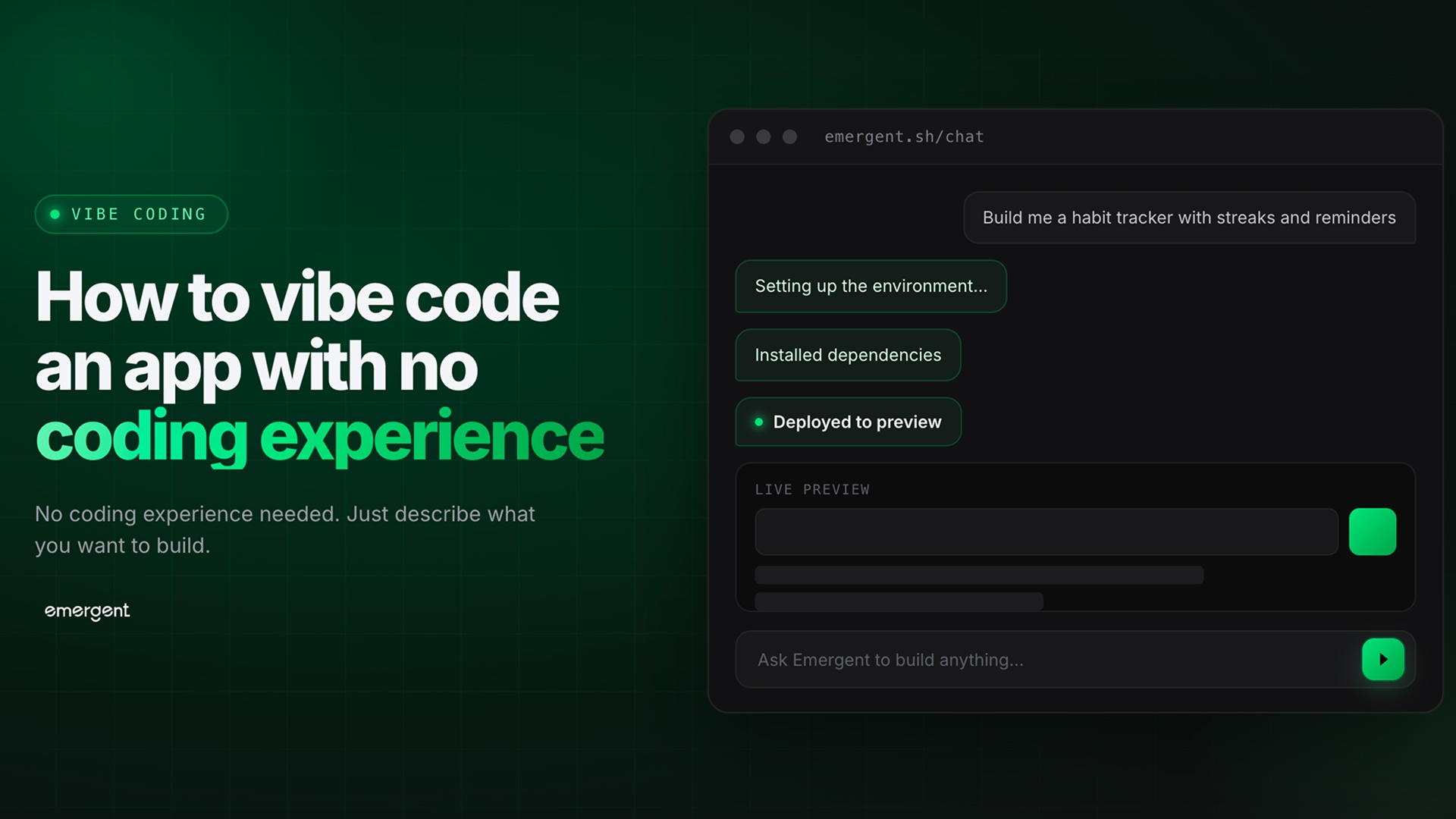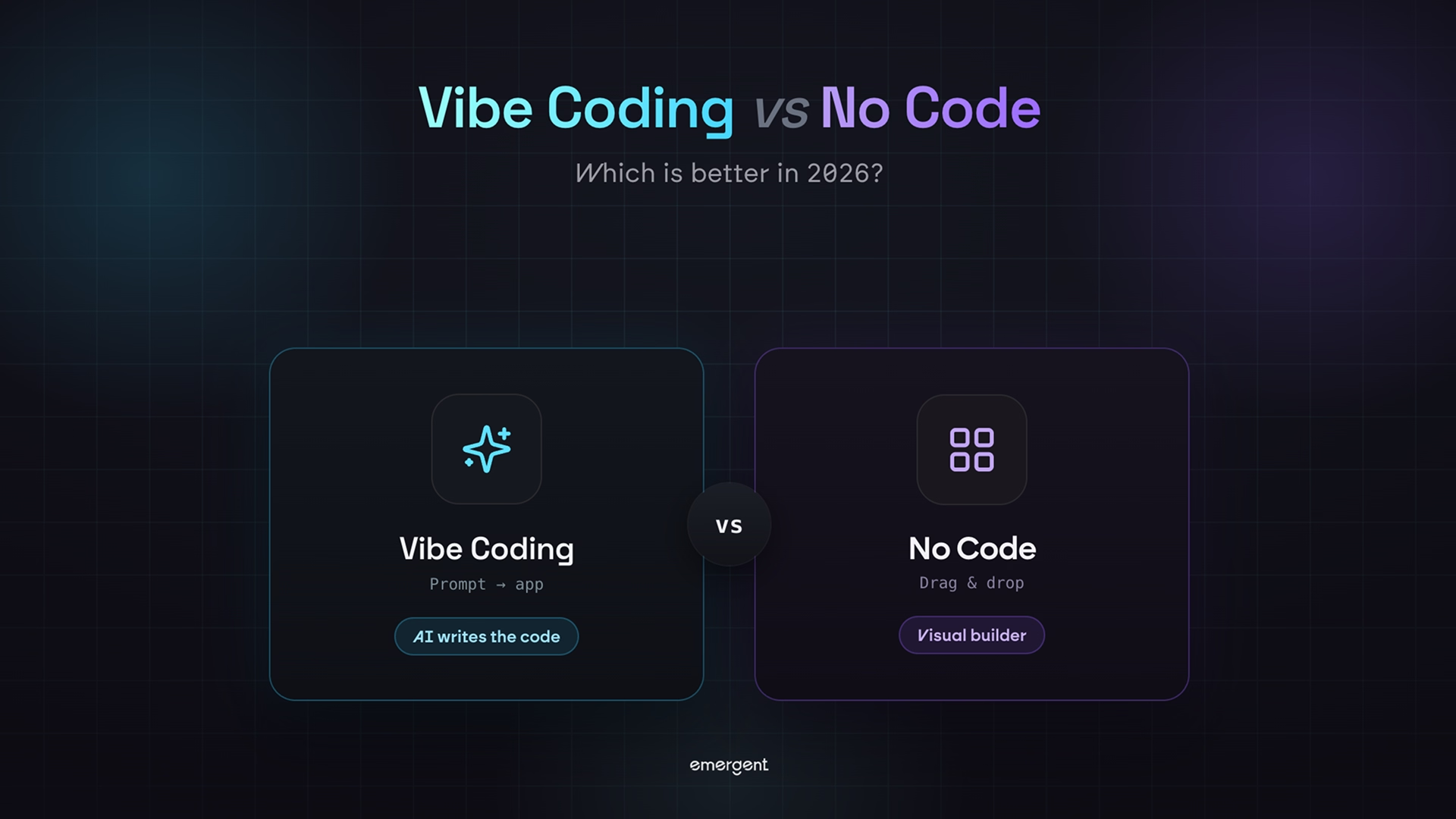

In 2026, personal websites have become a critical digital asset for professionals, creators, and independent builders who want ownership over their online identity. According to a 2025 LinkedIn and Edelman Digital Trust study, the majority of hiring managers and collaborators review a candidate’s personal website before making a decision, especially for creator, tech, and consulting roles. This makes a personal website far more than a portfolio, it is often the first credibility checkpoint.
Personal website builders today go beyond simple bio pages. Modern platforms support storytelling, portfolios, blogs, lead capture, personal branding, and even monetization. The best personal website builders balance design flexibility, ease of publishing, performance, and long-term ownership, allowing individuals to evolve their site as their career, interests, and audience grow.
What is a personal website builder?
A personal website builder is a platform that helps individuals create websites to represent themselves professionally or creatively online. These sites typically include sections like an about page, portfolio or projects, blog or writing, contact information, and sometimes newsletters or services. The goal is to centralize identity, work, and communication in one owned destination.
In 2026, advanced personal website builders also support SEO, content scaling, integrations with social and professional platforms, and performance optimization. This allows personal websites to function as career assets, not static profiles tied to third-party platforms. Modern AI Website Builder platforms further simplify the process by helping users generate layouts, content structures, and personalized designs with minimal manual effort.
List of TOP 5 Personal Website Builder in 2026
These are the best personal website builders in 2026 to create a professional, high converting personal site with no coding needed.
Suggested Read: Best AI Website Builders
What are the key features of personal website builders?
1. Flexible page and content structuring
Personal websites evolve over time. Builders must allow users to add pages for projects, writing, talks, or services without redesigning the entire site. Structural flexibility supports long-term growth.
2. Design credibility and brand expression
A personal site must reflect personality and professionalism. Builders should support typography, layout control, and visual consistency. Strong design builds trust and memorability.
3. Content publishing and updates
Many personal sites include blogs, essays, or updates. Builders need to support clean publishing workflows. Easy updates encourage consistency.
4. SEO and discoverability
Personal websites often rank for names, expertise, and niche topics. Builders must support metadata, clean URLs, and indexing. Discoverability increases inbound opportunities.
5. Performance and mobile optimization
Visitors access personal sites from all devices. Builders should ensure fast load times and responsive layouts. Performance impacts perception.
6. Ownership and portability
A personal website is a long-term asset. Builders should allow users to own their content and move platforms if needed. Ownership protects future flexibility.
5 Best Personal Website Builders in 2026
The personal website builder landscape in 2026 is segmented between system-level platforms, design-first builders, and simple guided tools. The platforms listed below stand out because they support long-term personal branding, content ownership, and growth rather than just quick profile creation. These tools are actively used by professionals, creators, and builders who treat their website as a core digital asset.
1. Emergent
Emergent is one of the best, full-stack, AI-powered vibe coding and no code platforms for building personal websites that evolve into long-term professional assets, not just static profile pages. In 2026, individuals use Emergent to unify personal branding, writing, projects, lead capture, and future monetization into a single structured system that grows alongside their career. It is especially effective for professionals, creators, founders, and independent builders who want full ownership, flexibility, and scalability without being boxed into rigid templates.
Key features of Emergent
1. Prompt-driven personal website architecture
Emergent allows individuals to describe their background, goals, audience, and use cases using natural language prompts. From this, it generates a complete personal site structure including about pages, project showcases, writing sections, contact funnels, and optional lead capture. This ensures the site reflects who the person actually is and where they are headed, rather than forcing them into a generic portfolio layout.
2. Structured content modeling for projects and writing
Projects, case studies, essays, talks, and updates are modeled as structured entities rather than loose pages. This allows content to be reused across multiple sections, such as featured work, archives, and landing pages, without duplication. As the site grows, content stays consistent and easy to manage.
3. Built-in SEO and name-based discoverability
Emergent generates clean URLs, metadata-ready pages, and internal linking structures that help personal sites rank for names, expertise areas, and niche topics. This is especially important for professionals whose reputation and opportunities depend on search visibility. SEO is treated as a foundational capability rather than an afterthought.
4. Integrated lead capture and contact workflows
Personal websites often act as inbound funnels for opportunities like consulting, speaking, collaborations, or hiring. Emergent supports structured contact forms and conditional workflows that route inquiries intelligently. This turns the site into an active opportunity generator rather than a passive information page.
5. Performance optimization across content-heavy sites
As personal sites accumulate years of writing, projects, and media, performance often degrades on traditional builders. Emergent handles caching, responsive rendering, and asset optimization centrally. This ensures fast load times regardless of site depth, preserving credibility and user experience.
6. AI-assisted content drafting and refinement
Emergent supports AI-assisted drafting for bios, project descriptions, essays, and landing copy. This helps individuals articulate their story clearly and consistently without external tools. The assistance accelerates publishing while maintaining a coherent personal narrative.
Unique features of Emergent
1. Personal websites built as living career systems
Emergent treats a personal website as a system that evolves over time, connecting identity, work, and inbound opportunities. Writing, projects, and contact flows are interlinked structurally, allowing the site to adapt as roles, interests, and goals change without redesigns.
2. Unified data, content, and logic layer
Instead of managing pages, forms, and content blocks separately, Emergent unifies them into a single data and logic layer. Updates made in one place automatically reflect across the site. This dramatically reduces maintenance effort as content volume grows.
3. Prompt-based evolution without rebuilds
When career direction shifts, such as moving from employment to consulting or from writing to product building, Emergent allows the site structure to evolve through updated prompts. This avoids costly rebuilds and preserves SEO equity accumulated over time.
4. Reduced dependence on third-party tools
Many personal sites rely on separate tools for blogging, newsletters, forms, and analytics. Emergent consolidates these needs into one platform, reducing fragmentation and tool fatigue. This keeps the personal website simple and sustainable.
5. Scales from simple profiles to multi-section authority sites
Emergent works equally well for a minimal personal page and for expansive sites with years of writing, projects, and inbound leads. This scalability makes it suitable for long-term use without platform switching.
6. Designed for ownership and long-term value
Emergent emphasizes content ownership, clean structure, and portability. Personal sites built on Emergent are durable assets that retain value over time, whether for career growth, consulting pipelines, or public thought leadership.
Advantages of Emergent
- Turns personal websites into long-term career assets.
- Structured content keeps projects and writing organized at scale.
- Strong SEO support for names and expertise visibility.
- Integrated contact workflows generate inbound opportunities.
- Performance remains fast as content grows.
- Reduces reliance on multiple external tools.
Limitations of Emergent
- Requires initial thought about site structure and goals.
- More powerful than simple profile builders, which may feel complex at first.
- Overkill for users needing only a one-page static bio.
Pricing and Plans of Emergent
| Plan | Pricing | Key Highlights |
|---|---|---|
| Free | $0/month |
|
| Standard | $20/month (annual) |
|
| Pro | $200/month (annual) |
|
| Team | $300/month (annual) |
|
| Enterprise | Custom |
|
2. Squarespace
Squarespace is a design-first personal website builder that many professionals and creators use in 2026 to create polished, visually credible personal websites with minimal setup. It is especially popular among designers, writers, consultants, photographers, and solo professionals who want their site to look refined and trustworthy without deep technical involvement. Squarespace’s strength lies in presentation, layout consistency, and ease of publishing rather than system-level flexibility.
Key features of Squarespace
1. Professionally designed templates for personal branding
Squarespace offers a curated library of templates designed around personal portfolios, resumes, blogs, and service pages. These templates emphasize typography, spacing, and visual hierarchy, which helps individuals present their work and story clearly. For personal websites, strong first impressions often determine credibility.
2. Integrated blogging and writing tools
Squarespace includes a native blogging system that supports long-form posts, categories, tags, and media embeds. Writers and professionals can publish essays, updates, and thought leadership content without external tools. This makes it suitable for personal sites where writing is a core component.
3. Built-in hosting, security, and maintenance
Hosting, SSL, updates, and security are handled entirely by Squarespace. Users do not need to manage servers or worry about technical upkeep. This managed environment appeals to individuals who want predictability and low maintenance.
4. Mobile-responsive layouts by default
All Squarespace templates are optimized for mobile and tablet devices. Personal sites are often viewed on phones through shared links or search results, so responsiveness is critical for perception and usability.
5. SEO and discoverability controls
Squarespace supports editable metadata, clean URLs, and automatic sitemaps. Users can optimize pages for name searches, professional keywords, and niche topics. While not as advanced as SEO-first platforms, these controls cover essential needs.
6. Integrated forms and basic lead capture
Squarespace provides native forms for contact, inquiries, and newsletter signups. These forms integrate directly into pages without plugins. This allows personal websites to capture inbound opportunities such as consulting requests or collaborations.
Unique features of Squarespace
1. Strong visual consistency across the entire site
Squarespace enforces design systems that keep typography, spacing, and layout consistent. This consistency helps personal sites look cohesive and professional even when content is added over time by non-designers.
2. Content blocks optimized for portfolios and resumes
The platform includes blocks tailored for showcasing projects, experience, and visual work. These blocks make it easy to present credentials and achievements clearly without custom design work.
3. Unified editing experience for pages and posts
Pages, blog posts, and content sections are edited through the same interface. This reduces friction when maintaining or expanding a personal site. For solo users, simplicity matters.
4. Predictable pricing without add-on complexity
Squarespace plans bundle hosting, templates, and core features into a single subscription. Users can budget easily without worrying about plugin costs or usage-based surprises.
5. Built-in analytics for basic performance insights
Squarespace provides traffic and engagement metrics directly in the dashboard. While not deep analytics, these insights help individuals understand which pages attract attention.
6. Suitable for personal sites that value aesthetics over systems
Squarespace excels when the goal is a beautiful, stable site rather than a highly dynamic or logic-driven system. This focus makes it appealing for personal branding and portfolio use cases.
Advantages of Squarespace
- High-quality design and professional presentation.
- Easy to use with minimal technical knowledge.
- Built-in blogging and content publishing.
- Managed hosting and security included.
- Good for portfolios, resumes, and personal brands.
- Predictable pricing and low maintenance.
Limitations of Squarespace
- Limited flexibility for complex site logic.
- SEO control is less granular than advanced platforms.
- Scaling content-heavy sites can feel restrictive.
- Integrations are limited compared to open ecosystems.
- Custom workflows require workarounds.
- Less suitable for system-driven personal sites.
Pricing and Plans of Squarespace
| Plan | Pricing | Key Highlights |
|---|---|---|
| Personal | $25/month (monthly) | Simple websites for portfolios and blogs, SSL and unlimited bandwidth included, limited to 2 contributors |
| Business | $36/month (monthly) | Advanced analytics, custom code, professional email integration, supports selling with a 3% transaction fee |
| Basic Commerce | $40/month (monthly) | Full e-commerce features, no Squarespace transaction fees on physical products, POS support for online stores |
| Advanced Commerce | $72/month (monthly) | Advanced e-commerce tools like subscriptions, abandoned cart recovery, advanced shipping, and lowest transaction fees |
3. SITE123
SITE123 is a beginner-focused personal website builder used in 2026 by individuals who want to launch simple, functional personal websites quickly without making technical or design decisions. It is commonly chosen by students, early-career professionals, and non-technical users who need a clean online presence for resumes, basic portfolios, or contact pages. SITE123 prioritizes speed and guidance over flexibility and depth.
Key features of SITE123
1. Guided setup designed for first-time website creators
SITE123 uses a step-by-step onboarding flow that walks users through creating a personal website with predefined structures. Users answer basic questions and the platform assembles pages automatically. This approach removes friction for users who want a site online quickly without understanding web design concepts.
2. Prebuilt page types for common personal use cases
The platform includes predefined sections for about pages, resumes, contact forms, and basic galleries. These page types cover the most common needs of personal websites. While customization is limited, the structure is sufficient for straightforward personal presentation.
3. Integrated hosting and security management
SITE123 includes hosting, SSL certificates, and ongoing updates as part of its service. Users do not need to manage servers, backups, or security settings. This managed approach appeals to individuals who want reliability without technical responsibility.
4. Basic content editing and publishing tools
Content is edited through simple text and media fields rather than complex editors. This makes updates fast and reduces the chance of layout breakage. For users publishing infrequently, simplicity outweighs advanced control.
5. Mobile-responsive layouts by default
All SITE123 websites are optimized for mobile viewing automatically. Personal websites are frequently accessed via shared links on mobile devices, so responsiveness is essential for usability and credibility.
6. Multilingual support for basic personal sites
SITE123 allows users to create multilingual versions of their site. This is useful for individuals targeting international audiences or bilingual professional contexts. The feature is simple but effective for basic needs.
Unique features of SITE123
1. Extremely low learning curve
SITE123 is designed so users can create a personal website without prior experience. The interface minimizes options and prevents configuration errors. This makes it approachable for users who would otherwise avoid building a website.
2. Fast time-to-publish
Because the platform eliminates most decisions, users can publish a site in a very short time. This speed is valuable for job applications, events, or short-term personal projects where immediacy matters.
3. Predictable, low-cost pricing
SITE123 offers affordable plans with clear feature limits. Users can maintain a personal website without worrying about hidden costs or add-ons. This affordability is attractive for students and individuals with limited budgets.
4. Centralized management for small sites
Navigation, pages, and settings are managed from a single dashboard. For small personal websites, this centralized approach keeps maintenance simple and organized.
5. Automatic updates without user intervention
Platform updates are handled automatically, ensuring stability and security. Users do not need to worry about compatibility or maintenance tasks over time.
6. Suitable for minimal personal presence needs
SITE123 is optimized for individuals who need a basic digital presence rather than a growing personal platform. Its simplicity aligns with limited, well-defined use cases.
Advantages of SITE123
- Very easy to use with no technical knowledge required.
- Fast setup for resumes and basic personal sites.
- Low and predictable pricing.
- Hosting and security included.
- Mobile-responsive by default.
- Suitable for short-term or minimal needs.
Limitations of SITE123
- Limited customization and design flexibility.
- Not suitable for content-heavy or evolving personal sites.
- SEO controls are basic and restrictive.
- Difficult to scale beyond simple structures.
- Limited integrations with external tools.
- Platform lock-in with minimal export options.
Pricing and Plans of SITE123
| Plan | Pricing | Key Highlights |
|---|---|---|
| Free | $0/month | 250 MB storage • 250 MB bandwidth • SITE123 subdomain |
| Premium (Most Popular) | $5.80/month | Free domain for 1 year • 3 GB storage • 3 GB bandwidth • Remove SITE123 floating tag • Connect custom domain • Online store enabled |
4. Canva
Canva is a design-led website builder that many individuals use in 2026 to create visually expressive personal websites quickly, especially when their primary strength is visual communication rather than writing or technical setup. It is commonly adopted by creators, marketers, students, and professionals who already use Canva for design work and want a lightweight personal site that reflects their visual identity. Canva’s website builder prioritizes aesthetics and ease over structural depth.
Key features of Canva
1. Design-first website creation built on Canva’s editor
Canva’s website builder uses the same visual editor that millions already use for presentations and social graphics. Users can design personal websites by arranging sections visually rather than configuring layouts or themes. This lowers friction for visually oriented users who want creative control without learning web tools.
2. Prebuilt personal website and portfolio templates
Canva provides templates tailored for personal branding, resumes, portfolios, and creator pages. These templates help users get started quickly while maintaining visual consistency. For individuals who value aesthetics, templates offer a strong baseline without starting from scratch.
3. Simple publishing with built-in hosting
Canva handles hosting and publishing automatically. Users can publish sites instantly using a Canva subdomain or connect a custom domain on paid plans. This simplicity is appealing for personal sites that do not require advanced infrastructure.
4. Media-rich sections for showcasing work
Images, videos, icons, and visual elements are easy to embed and arrange. This makes Canva well suited for designers, photographers, and creators whose personal websites rely heavily on visuals rather than long-form text.
5. Mobile-friendly layouts by default
Canva websites are responsive and adapt automatically to different screen sizes. Personal sites shared through social profiles or messages often receive mobile traffic, so this responsiveness supports accessibility and presentation quality.
6. Integrated brand kits for visual consistency
Users can apply brand kits with fonts, colors, and styles across the site. This helps maintain consistent personal branding without manual adjustments, especially useful for creators managing multiple design assets.
Unique features of Canva
1. Seamless transition from design assets to websites
Canva allows users to convert existing designs such as resumes, presentations, or portfolios directly into website sections. This reuse of assets saves time and keeps branding consistent across formats.
2. Extremely fast setup for visually driven personal sites
Users can create and publish a personal website in a very short time by assembling visual sections. This speed benefits students, freelancers, or creators needing a quick online presence.
3. Low barrier for non-technical users
Canva removes almost all technical considerations from website creation. Users do not deal with hosting, plugins, or configurations. This accessibility broadens who can build a personal website.
4. Strong visual storytelling capabilities
Because Canva is fundamentally a design tool, it excels at visual storytelling. Personal websites built on Canva often feel expressive and creative, which can be valuable for certain professions.
5. Predictable pricing tied to the Canva ecosystem
Users already paying for Canva Pro can extend its value to website publishing. This pricing predictability is appealing for individuals who want design and website tools under one subscription.
6. Suitable for lightweight personal presence needs
Canva works best when the goal is a simple, visually appealing personal site rather than a growing content platform. Its simplicity aligns with short to medium-term use cases.
Advantages of Canva
- Very easy to use for visually oriented users.
- Fast setup with minimal configuration.
- Strong visual design and branding tools.
- Hosting included with simple publishing.
- Ideal for portfolios and creative profiles.
- Integrates well with existing Canva workflows.
Limitations of Canva
- Limited SEO control and discoverability options.
- Not suitable for content-heavy personal sites.
- No advanced blogging or writing workflows.
- Minimal control over site structure and logic.
- Difficult to scale beyond simple pages.
- Not ideal for long-term personal content assets.
Pricing and Plans of Canva
| Plan | Pricing | Key Highlights |
|---|---|---|
| Free | $0/month | Basic design tools, limited templates and assets, 5GB storage |
| Pro | ~$12.99–$15/month (individual) | 1TB storage, premium templates and assets, Brand Kits, background remover, 100M+ assets |
| Teams | ~$10–$14.99/user/month (min 3 users) | All Pro features plus team collaboration, shared folders, brand controls |
| Enterprise | Custom pricing | Advanced security, SSO, admin controls, enterprise support |
| Education | Free (eligible users) | Full Pro features for verified K–12 teachers and students |
| Nonprofits | Free (eligible orgs) | Full Pro features for registered nonprofits |
5. WordPress
WordPress is the most flexible and widely used personal website platform in 2026, chosen by individuals who want maximum control, extensibility, and long-term ownership over their personal site. It is commonly used by writers, developers, consultants, academics, and creators who plan to publish extensively, rank in search, or evolve their personal website into a larger content or business platform. WordPress trades simplicity for power, making it suitable for users willing to manage complexity in exchange for control.
Key features of WordPress
1. Full control over site structure and content hierarchy
WordPress allows users to define pages, posts, categories, tags, and custom content types freely. This control enables personal websites to grow into structured hubs for writing, projects, talks, or services. As content scales, hierarchy and internal linking can be tuned precisely.
2. Powerful blogging and long-form publishing capabilities
WordPress was built for publishing and remains unmatched for long-form writing. It supports drafts, revisions, categories, authoring workflows, and rich media embeds. For individuals whose personal brand is built on writing, this depth is a major advantage.
3. Extensive theme ecosystem for personal branding
Thousands of themes are available for resumes, portfolios, blogs, and creator sites. Users can select minimalist or highly customized designs depending on needs. This ecosystem allows personal sites to reflect unique identity without building from scratch.
4. Plugin-based extensibility
WordPress supports plugins for SEO, performance, analytics, newsletters, forms, and monetization. Personal websites can gradually add features as needs grow. This extensibility makes WordPress adaptable across career stages.
5. Strong SEO foundations and control
WordPress allows granular control over URLs, metadata, schema, and internal linking. With the right setup, personal websites can rank strongly for names, expertise, and niche topics. SEO control is one of WordPress’s strongest advantages.
6. Ownership, portability, and independence
Sites built on WordPress can be hosted anywhere and migrated freely. Users own their content and are not locked into a proprietary platform. This independence is valuable for long-term personal assets.
Unique features of WordPress
1. Open ecosystem with long-term stability
WordPress is open source and not tied to a single vendor’s roadmap. This stability reduces the risk of platform shutdowns or forced migrations, which is important for personal sites meant to last decades.
2. Ability to evolve into any type of site
A personal WordPress site can evolve into a publication, consulting site, product hub, or community platform. This adaptability means users rarely outgrow WordPress.
3. Deep customization for technical users
Developers can customize themes, templates, and logic deeply. This makes WordPress suitable for technically inclined individuals who want fine-grained control over every aspect of their site.
4. Large global support community
WordPress has extensive documentation, tutorials, and community support. Problems can usually be solved without vendor dependency. This reduces long-term risk.
5. Integration with nearly every external tool
From newsletters to analytics to CRM systems, WordPress integrates with almost everything. This interoperability supports complex personal workflows when needed.
6. Ideal for content-heavy and SEO-driven personal sites
WordPress excels when a personal site includes years of writing, archives, and topical authority. This makes it ideal for thought leaders and writers.
Advantages of WordPress
- Maximum control and flexibility.
- Best-in-class blogging and writing capabilities.
- Strong SEO and content scalability.
- Huge ecosystem of themes and plugins.
- Full ownership and portability.
- Suitable for long-term personal platforms.
Limitations of WordPress
- Requires hosting and maintenance management.
- Setup and customization have a learning curve.
- Plugin conflicts can impact stability if unmanaged.
- Performance depends on configuration quality.
- Design quality varies by theme choice.
- Not beginner-friendly out of the box.
Pricing and Plans of WordPress
| Plan / Setup Type | Pricing | Key Highlights |
|---|---|---|
| Self-Hosted WordPress (Basic) | ~$10–$50/month | Shared hosting ($3–$20/mo), domain ~$10–$20/year, free themes/plugins, suitable for blogs and small sites |
| Self-Hosted WordPress (Business) | ~$50–$200+/month | Better or managed hosting, premium themes/plugins, improved performance and security for growing businesses |
| Self-Hosted WordPress (High-Traffic) | ~$200–$400+/month | Managed hosting (WP Engine, Flywheel), custom development, built for scale and heavy traffic |
| WordPress.com (Hosted) | Free to $45+/month | All-in-one hosting platform, simpler setup, limited control on lower plans, higher tiers for business and e-commerce |
What are the benefits of using personal website builders?
1. Centralized professional identity
A personal website brings together work, writing, and contact information. This reduces reliance on fragmented platforms. Centralization strengthens personal branding.
2. Greater control than social platforms
Unlike social profiles, personal websites offer full control over presentation and content. Algorithms do not dictate visibility. Control supports authenticity.
3. Long-term career leverage
Personal sites compound value over time through SEO and content archives. They can generate inbound leads, speaking requests, or job offers. Longevity matters.
4. Easy evolution as goals change
As careers shift, personal sites can adapt. Builders that support flexibility reduce friction. Evolution keeps the site relevant.
5. Professional credibility and trust
A well-built personal website signals seriousness and competence. It differentiates individuals from peers relying only on social profiles. Credibility influences decisions.
How to choose the best personal website builder?
1. Define how your personal website will evolve
If your site will remain static, simpler builders suffice. If it will grow into writing, projects, or lead generation, choose a platform that scales without rebuilds.
2. Balance ease of use with long-term control
Drag-and-drop builders reduce friction but limit flexibility. System-level platforms provide control but require planning. Choose based on your tolerance for complexity.
3. Consider SEO and discoverability needs
If search visibility matters for your name or expertise, prioritize builders with strong SEO foundations and control.
4. Evaluate ownership and lock-in
Personal websites are long-term assets. Platforms that allow content export and migration protect future flexibility.
5. Match design needs to your profession
Creative professionals may prioritize visual tools, while writers and consultants may prioritize content depth and structure.
Why is Emergent the best personal website builder?
1. Emergent turns personal websites into living career systems
Emergent structures personal websites around identity, work, writing, and inbound opportunities rather than static pages. Projects, essays, and contact flows are interconnected, allowing the site to adapt as careers evolve. This systemic approach supports long-term relevance without redesign cycles.
2. Structured content keeps personal sites maintainable at scale
As writing and projects accumulate, many personal sites become messy and slow. Emergent models content structurally, so archives, featured work, and navigation update automatically. This prevents entropy as content grows over years.
3. SEO, performance, and structure are built in by default
Emergent handles SEO-friendly URLs, internal linking, and performance centrally. Personal sites remain fast and discoverable without plugins or constant tuning. This consistency preserves credibility and search visibility.
4. Integrated contact and opportunity workflows create leverage
Emergent allows personal sites to route inquiries intelligently, whether for hiring, consulting, or collaborations. This turns passive sites into opportunity engines rather than static profiles.
5. Emergent scales without forcing platform changes
From a single-page profile to a multi-year archive of writing and projects, Emergent scales cleanly. Users never need to migrate platforms as goals grow, preserving SEO and continuity.
Conclusion
Personal website builders in 2026 serve a wide range of needs, from quick profile pages to long-term professional platforms. Builders like SITE123 and Canva offer speed and simplicity, while Squarespace emphasizes visual polish and WordPress provides unmatched control. Emergent stands apart by treating personal websites as structured, evolving systems that grow with a person’s career. For individuals who view their website as a durable asset rather than a temporary profile, architectural depth matters more than convenience.
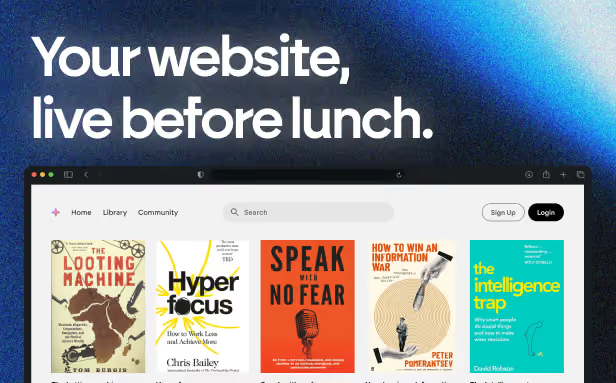
Emergent designs, writes, and publishes your whole site from one prompt. No templates, no drag-and-drop.
- Full site from one prompt
- Custom design, real pages
- Publish in minutes