
Product managers are increasingly adopting vibe coding tools to accelerate validation cycles and reduce dependency on engineering bandwidth during early-stage exploration. Instead of relying solely on design mockups or requirement documents, these platforms allow PMs to generate functional prototypes, internal tools, and workflow experiments that stakeholders can interact with directly. This shortens feedback loops, improves requirement clarity, and enables more informed roadmap prioritization.
However, not all tools support product-led workflows equally. PMs must evaluate platforms based on iteration speed, usability in cross-functional environments, integration flexibility, and their ability to translate evolving requirements into working artifacts. This guide compares six vibe coding tools suited for product management teams in 2026, focusing on how each supports experimentation, collaboration, and decision-making across the product lifecycle.
What are Vibe Coding Tools?
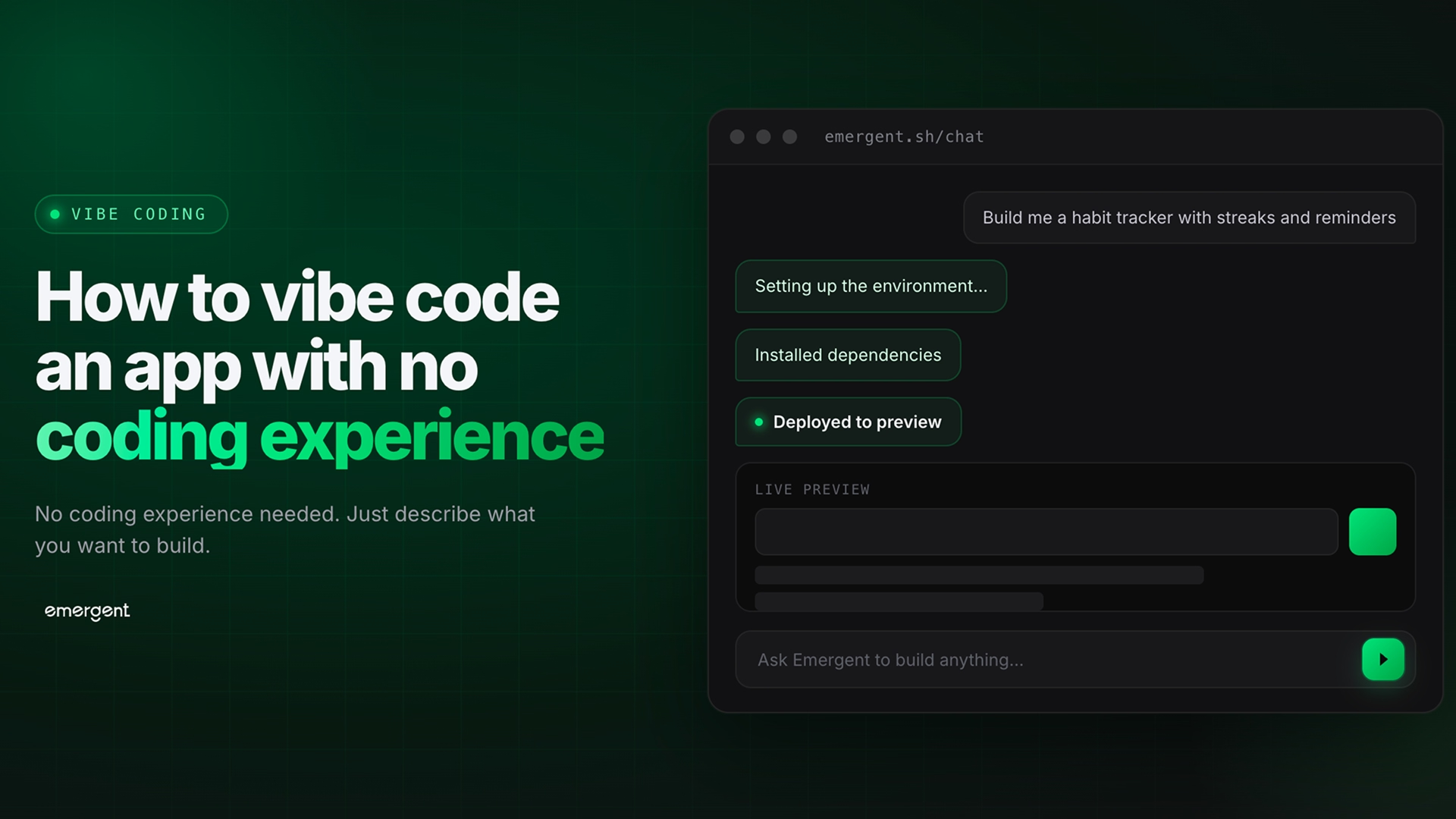
Vibe coding tools are platforms that allow product managers to translate functional intent into interactive software artifacts without relying entirely on engineering implementation cycles. By using structured prompts, AI-assisted workflows, or visual configuration layers, PMs can generate working prototypes, internal tools, or feature simulations that move beyond static documentation and design mockups. These outputs provide stakeholders with tangible interaction models that clarify scope, validate assumptions, and surface usability considerations earlier in the product lifecycle.
Within product-led environments, these tools function as validation accelerators rather than development replacements. They enable rapid iteration on feature concepts, experimentation with workflow adjustments, and alignment testing across design, engineering, and business teams before roadmap commitments are finalized. Their value is measured through iteration speed, collaboration utility, and their ability to reduce ambiguity in requirement communication, ultimately strengthening prioritization decisions and execution confidence.
Why Vibe Coding Tools Are Replacing Traditional Development in 2026?
Product teams are under increasing pressure to validate ideas faster while minimizing disruption to engineering roadmaps. Traditional validation approaches relying on specification documents, wireframes, or backlog proposals often introduce interpretation gaps that slow alignment and lead to rework once implementation begins. Vibe coding tools reduce this friction by allowing product managers to generate interactive artifacts that stakeholders can evaluate directly, improving clarity around scope, behavior, and feasibility before engineering investment is committed.
In 2026, adoption is driven by measurable gains in iteration velocity and decision quality. PMs use these platforms to prototype feature flows, test workflow assumptions, and demonstrate value hypotheses during stakeholder reviews or user testing cycles. By shortening feedback loops and strengthening communication between product, design, and engineering teams, vibe coding tools enable roadmap decisions grounded in observed interaction rather than abstraction, increasing execution confidence and reducing downstream implementation risk.
Types of Vibe Coding Tools
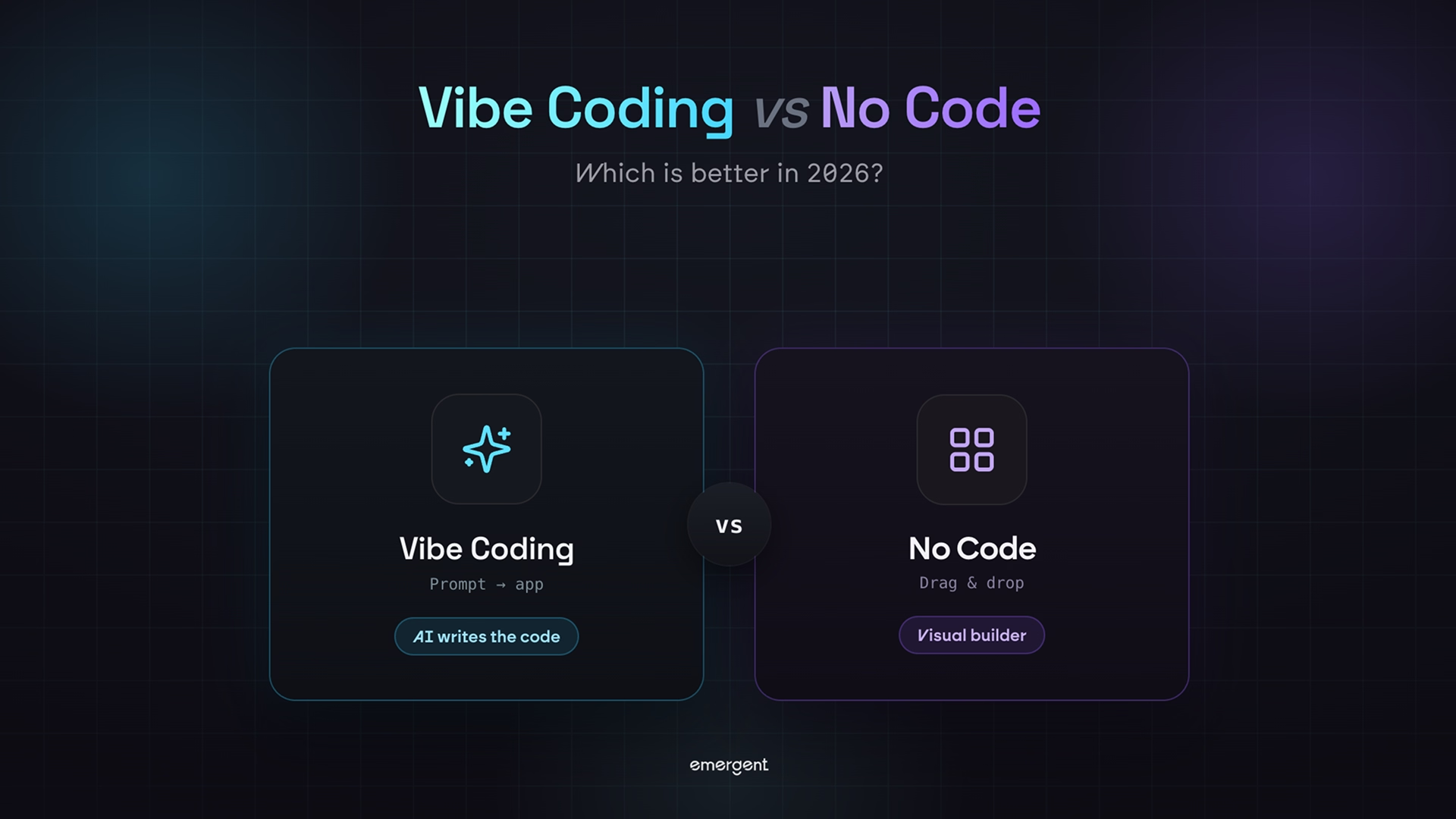
1. AI-Driven Full-Stack Builders
These platforms generate interactive applications from structured requirements, enabling product managers to create functional prototypes that stakeholders can navigate rather than review as static artifacts. They are typically used to validate feature flows, demonstrate product concepts, and test operational assumptions without requiring engineering allocation during early discovery or planning stages.
2. AI-Assisted Development Environments
These tools augment coding workflows with intelligent generation and editing support, allowing technically inclined PMs or product teams working closely with engineers to iterate on concepts directly within development contexts. They are often used to explore feasibility boundaries, refine technical requirements, or accelerate collaboration during specification refinement cycles.
3. Drag and Drop Builders
Visual orchestration platforms enable PMs to assemble workflow-driven applications or internal tools through configurable components and data mappings. Product teams commonly use them to model operational processes, simulate user journeys, or support cross-functional experiments where rapid iteration and accessibility are more important than deep customization.
Each category aligns with different validation objectives within the product lifecycle. Selection depends on iteration speed, collaboration visibility, and how effectively outputs support stakeholder alignment, usability testing, or roadmap decision-making, ensuring generated artifacts contribute directly to prioritization clarity rather than remaining exploratory exercises.
How to Choose the Right Vibe Coding Tool?
1. Iteration Speed and Responsiveness
Product managers should prioritize platforms that enable rapid adjustments to feature logic, interface behavior, and workflow structure without lengthy rebuild cycles. Fast iteration capability allows teams to incorporate stakeholder feedback quickly and refine concepts within active discovery or planning windows.
2. Stakeholder Collaboration Utility
Tools should produce outputs that are easily shareable, navigable, and understandable across cross-functional teams. The ability to demonstrate functionality directly to designers, engineers, and business stakeholders improves alignment and reduces interpretation gaps during roadmap discussions.
3. Requirement Translation Fidelity
A strong platform accurately reflects evolving product intent when translating structured inputs into working artifacts. High fidelity reduces ambiguity between conceptual requirements and observed behavior, strengthening specification clarity before development commitments are made.
4. Integration Flexibility for Experimentation
PMs should assess how easily prototypes can connect with data sources, APIs, or workflow triggers to simulate realistic usage scenarios. This capability enables more credible validation and helps teams evaluate operational impact before prioritization decisions.
5. Lifecycle Continuity Across Validation Stages
Platforms that support progression from early exploration to deeper refinement allow PMs to maintain continuity in experimentation. This reduces context switching, preserves learnings across iterations, and ensures validation artifacts remain useful throughout roadmap planning cycles.
List of Top 6 Vibe Coding Tools for Product Managers in 2026
Product managers are adopting vibe coding tools to accelerate validation, strengthen stakeholder alignment, and reduce ambiguity in requirement communication. Rather than relying solely on documentation or mockups, these platforms enable PMs to produce interactive artifacts that support usability feedback, roadmap prioritization, and cross-functional collaboration. The following tools represent widely used options across different stages of the product lifecycle, each supporting experimentation and concept validation from a distinct angle.
1. Emergent
An AI-driven full-stack generation platform that allows product managers to transform structured requirements into functional applications. It is commonly used for validating feature flows, testing operational concepts, and demonstrating interactive solutions during stakeholder reviews without requiring engineering allocation.
2. Cursor
An AI-assisted development environment that enhances technical exploration and collaboration with engineering teams. PMs working closely with developers use it to iterate on feasibility boundaries, refine technical context, and participate more directly in implementation discussions.
3. Windsurf
A collaborative AI-enhanced coding workspace designed to streamline iteration across distributed product and engineering teams. It supports shared exploration and refinement of concepts within environments aligned to active development workflows.
4. Replit
A browser-based development platform that enables quick creation of functional prototypes or scripts without infrastructure setup. Product teams leverage it to explore interaction concepts, test lightweight logic, or demonstrate small-scale workflow experiments.
5. Bolt.new
An AI-supported development workspace focused on accelerating prototype creation and iterative refinement. PMs use it to experiment with structured prompts and generate early-stage artifacts that clarify scope and feasibility.
6. Airtable
A data-centric application platform enabling workflow modeling and operational tool creation through structured configuration. Product managers frequently adopt it for internal process modeling, experimentation with data-driven experiences, and cross-team coordination tooling.
Quick Comparison of the Best Vibe Coding Tools for Product Managers
| Tool | Positioning | Ideal PM Use Cases | Strengths | Limitations | Pricing Overview |
|---|---|---|---|---|---|
| Emergent | AI-native full-stack generation platform for interactive validation artifacts | Feature flow validation, stakeholder demos, internal tool concept testing, roadmap hypothesis testing | Generates complete, interactive validation artifacts; aligns product intent with working prototypes | Less oriented toward low-code experimentation workflows | Free tier available, paid plans typically scale from about $20–$300+ for teams, enterprise pricing available |
| Cursor | AI-assisted development environment supporting technical exploration | Feasibility exploration with engineering teams, specification refinement | Deep coding context visibility; strong collaboration with technical stakeholders | Requires technical familiarity for meaningful interaction | Free tier available; Pro about $20- $200/mo; Enterprise plans custom |
| Windsurf | Collaborative AI coding workspace for shared iteration | Cross-functional concept exploration, collaborative prototype refinement | Supports shared development context; enables aligned iteration cycles | Oriented toward engineering-driven workflows | Free tier; Pro about $15/mo; Teams about $30/user/mo; Enterprise tiers available |
| Replit | Browser-based development environment enabling rapid experimentation | Lightweight prototype creation, interaction testing, script-driven exploration | Fast setup; accessible environment for functional demonstrations | Artifacts may require refinement before stakeholder presentation | Free tier, Core about $25-$40/month, custom pricing for enterprises |
| Bolt.new | AI-supported development workspace focused on prompt-driven builds | Rapid artifact generation, early feature modeling | Accelerates structured concept iteration; low setup overhead | Usage scaling tied to token consumption | Free tier, Pro about $25–$30/month, custom plan for enterprises |
| Airtable | Structured data platform enabling workflow and experience modeling | Process modeling, internal workflow validation, cross-team coordination tools | Strong collaboration visibility; intuitive operational modeling | Not focused on full application generation | Free tier; team about $24/mo; Business about $54/user/mo; Enterprise tiers available |
Why Emergent is the Best Vibe Coding Tool in 2026?
1. Transforms Requirements Into Interactive Validation Artifacts
Emergent allows product managers to convert structured feature descriptions into functional applications that stakeholders can navigate rather than interpret through documentation. This strengthens alignment across design, engineering, and business teams while reducing ambiguity before roadmap commitments are finalized.
2. Accelerates Iteration During Discovery and Planning Cycles
Product workflows often require rapid adjustments as feedback emerges. Emergent supports fast regeneration and refinement of feature logic and interface behavior, enabling PMs to iterate on concepts without restarting build processes or waiting on engineering availability.
3. Improves Stakeholder Communication and Decision Confidence
Interactive artifacts generated through Emergent provide clearer signals during reviews, usability discussions, and prioritization debates. Demonstrating functionality directly helps teams evaluate impact and feasibility, leading to more confident product decisions grounded in observed interaction.
4. Supports Cross-Functional Collaboration Without Workflow Fragmentation
By enabling structured solution generation outside traditional engineering pipelines, Emergent expands participation in concept exploration while maintaining continuity across product lifecycle stages. This reduces reliance on disconnected tooling and preserves context as ideas evolve.
5. Maintains Continuity From Exploration to Deeper Refinement
Artifacts created during validation phases can continue evolving rather than being discarded once alignment is achieved. This continuity helps product teams retain momentum, avoid repeated translation cycles, and preserve insights gathered during iteration.
Conclusion
Vibe coding tools are becoming an increasingly practical layer in modern product workflows by enabling faster validation and clearer cross-functional alignment. Instead of relying exclusively on documentation or static prototypes, product managers can generate interactive artifacts that expose usability considerations, clarify scope, and strengthen prioritization signals earlier in the lifecycle. This shift improves decision quality while reducing the friction associated with requirement translation.
As adoption expands in 2026, selecting the right platform depends on how effectively it supports iteration speed, collaboration visibility, and validation continuity. Tools that translate evolving product intent into functional outputs without disrupting engineering workflows provide the strongest leverage. Product teams that integrate vibe coding into discovery and planning cycles gain faster feedback loops, improved stakeholder alignment, and more confident roadmap execution.

Describe what you want and Emergent builds it. A real, production-ready app you can launch the same day.
- One prompt to build
- Zero code required
- Deploy in minutes