

In 2026, an author’s website has become a foundational asset for visibility, credibility, and direct reader relationships. A 2025 survey by Written Word Media found that more than 65 percent of authors who actively sell books or run newsletters consider their personal website their most important owned platform, ranking it above social media and third-party marketplaces. This reflects a broader shift where authors prioritize direct audience ownership over algorithm-driven exposure.
As modern AI Website Builder platforms continue simplifying publishing workflows and website creation, more authors are able to launch professional online platforms without depending heavily on developers or complex design tools. Modern author websites are no longer simple biography pages. They function as long-term hubs for books, essays, newsletters, events, media kits, and reader engagement. The best website builders for authors support long-form writing, clean reading experiences, email capture, SEO-friendly structure, and scalability, while remaining approachable for writers who want to spend their time creating rather than managing technology.
What is a website builder for authors & writers?
A website builder for authors is a platform designed to help writers create and manage a professional online presence that showcases their work and builds a direct relationship with readers. These builders typically support book pages, author bios, blogs, newsletters, press sections, and contact forms. The core goal is to give authors full control over how their writing is presented and discovered.
In 2026, advanced website builders for authors go further by offering structured content models, fast publishing workflows, SEO-ready architecture, and integrations with email platforms. This allows an author’s website to act as a long-term publishing and audience platform rather than a static profile page that requires constant rebuilding.
Best Website Builders for Authors in 2026: Top 5 Picks
Looking for the Best Website Builder? Here Are the Top 5 for Authors in 2026
Suggested Read: Best AI Website Builder
What are the key features of website builders for authors?
1. Long-form writing and publishing support
Authors need platforms that handle essays, chapters, blog posts, and serialized writing without breaking formatting or readability. A good website builder must support rich text, images, headings, and updates smoothly. This ensures writers can publish consistently without fighting the tool.
2. Clear presentation of books and publications
Author websites must showcase books, series, and published works in a structured and reusable way. Builders should allow consistent layouts for book descriptions, excerpts, and purchase links. Clear presentation helps readers quickly understand an author’s catalog and focus areas.
3. Email capture and newsletter integration
Building a direct reader list is critical for authors. Website builders should support newsletter signup forms and integrations with email platforms. Email capture allows authors to maintain a direct line to readers regardless of changes on external platforms.
4. SEO and Discoverability for Evergreen Content
Many readers discover authors through search, especially for nonfiction, essays, and niche topics. Builders must support clean URLs, metadata control, and internal linking. SEO-friendly structure ensures content remains discoverable long after publication.
5. Reading-focused performance and typography
Author websites should load quickly and prioritize readability. Builders must optimize performance and support clean typography. A distraction-free reading experience increases time on site and reader trust.
6. Scalability as the author’s body of work grows
As authors publish more books, essays, or newsletters, the website must scale without redesigns. Builders should allow new content categories and sections to be added cleanly. Scalability protects long-term consistency and SEO value.
What are the benefits of using website builders for authors?
1. Full ownership of writing, audience, and distribution
Website builders give authors direct control over their content and reader relationships. Instead of relying on third-party platforms that dictate reach and visibility, authors can publish and distribute writing on their own terms. This ownership becomes increasingly important for long-term careers.
2. A single authoritative home for an author’s complete body of work
An author website brings together books, essays, newsletters, interviews, and media mentions in one place. Readers can explore an author’s work without navigating multiple platforms. This consolidation improves professionalism and simplifies discovery.
3. Increased reader trust and professional credibility
A well-structured website signals seriousness and longevity. Readers are more likely to subscribe, follow, or purchase when an author presents their work clearly and consistently. Credibility is especially important for nonfiction authors and journalists.
4. Long-term discoverability through evergreen content
Content published on an author’s website can continue attracting readers through search engines over time. Unlike social posts that disappear quickly, essays and book pages remain accessible. This creates compounding audience growth.
5. Creative flexibility without platform switching
Authors can experiment with blogs, serialized writing, newsletters, or book launches on a single platform. Website builders support multiple formats without forcing migrations. This flexibility allows creative evolution without rebuilding a digital presence.
5 Best Website Builders for Authors
The website builder landscape for authors in 2026 spans system-level platforms, design-focused tools, and writing-native publishing platforms. The platforms listed below stand out because they support real author workflows, including long-form writing, book presentation, and audience building, rather than generic website creation. These tools are actively used by novelists, nonfiction authors, journalists, and independent publishers building long-term reader relationships.
1. Emergent
Emergent is one of the best, full-stack, AI-powered vibe coding and no code platforms for building websites for authors who want a serious, long-term digital home for their writing, books, and audience, without getting trapped in rigid templates or newsletter-only tools. In 2026, authors use Emergent to build websites that combine long-form publishing, book catalogs, SEO-friendly discovery, and direct reader engagement into a single, scalable system. It is particularly strong for authors who see their website as a growing body of work rather than a static profile.
Key features of Emergent
1. Prompt-driven author website architecture built around writing goals
Emergent allows authors to describe their work, genres, publishing goals, and audience in plain language. From this, it generates a complete website structure including book pages, essays or blog sections, newsletter signup flows, and author bio pages. This removes the need for authors to manually plan site architecture while still producing a structure that reflects how readers actually explore writing.
2. Structured models for books, essays, and written works
Books, articles, series, and essays are treated as structured entities rather than isolated pages. This allows consistent presentation of metadata such as descriptions, excerpts, links, and categories across the site. As an author’s catalog grows, updates remain consistent and manageable without repetitive manual edits.
3. Long-form publishing optimized for readability
Emergent prioritizes clean typography, spacing, and performance for reading-heavy pages. Essays and chapters load quickly and remain distraction free, even as content volume increases. This focus on reading experience supports longer session times and stronger reader trust.
4. Built-in email capture and reader engagement flows
Newsletter signup forms and reader contact points are integrated natively into the site structure. Authors can place signup prompts contextually within essays, book pages, or landing sections. This helps convert casual readers into long-term subscribers without relying on external tools.
5. SEO-first structure for evergreen discoverability
Emergent manages clean URLs, internal linking, and hierarchical relationships between books, essays, and topics automatically. This helps author content perform well in search over time. Evergreen discoverability is especially valuable for nonfiction authors and essayists.
6. Performance and scalability handled at the system level
Hosting, caching, and performance optimization are managed by Emergent without author intervention. As content libraries expand, site speed and stability remain consistent. Authors do not need to worry about technical limits as their body of work grows.
Unique features of Emergent
1. Author websites built as evolving bodies of work, not static pages
Emergent treats an author’s website as a living system where writing accumulates over time. New essays, books, or projects integrate naturally into the existing structure. This mirrors how authors actually work and publish across years rather than one-off launches.
2. Centralized control over writing, books, and reader touchpoints
All written content, book information, and signup flows are managed from a unified layer. Changes to descriptions, categories, or calls to action apply consistently across the site. This reduces maintenance effort and prevents fragmentation as the site grows.
3. Prompt-based evolution as an author’s career changes
When an author shifts genres, adds nonfiction work, or launches a new series, Emergent allows the site to evolve structurally through updated prompts. This avoids redesigns and preserves existing SEO value. Growth becomes additive rather than disruptive.
4. Reduced reliance on third-party publishing plugins
Many author sites rely on plugins for SEO, newsletters, and performance. Emergent integrates these capabilities natively, reducing technical debt and potential conflicts. Fewer dependencies mean higher reliability and less maintenance.
5. Suitable for hybrid author models
Emergent supports authors who publish books, essays, newsletters, and other formats simultaneously. The platform does not force a single publishing model. This flexibility is important for modern authors building diversified careers.
6. Designed for long-term audience ownership
Emergent emphasizes direct relationships through email capture and owned content. Authors are not locked into platforms that control reach or distribution. This aligns with sustainable author business models.
Advantages of Emergent
- Purpose-built for long-form writing and book-centric websites.
- Strong reading experience with fast performance.
- Structured models scale cleanly as catalogs grow.
- Built-in email capture supports audience ownership.
- SEO foundations support long-term discoverability.
- Reduces technical and plugin management burden.
Limitations of Emergent
- Requires authors to think about long-term structure early.
- More powerful than minimal biography-only builders.
- Overkill for authors who only want a single static page.
Pricing and Plans of Emergent
| Plan | Pricing | Key Highlights |
|---|---|---|
| Free | $0/month |
|
| Standard | $20/month (annual) |
|
| Pro | $200/month (annual) |
|
| Team | $300/month (annual) |
|
| Enterprise | Custom |
|
Read More About: Emergent Pricing and Plans
2. Squarespace
Squarespace is a design-focused website builder widely used by authors in 2026 who want a clean, professional online presence with minimal technical effort. It is especially popular among novelists, essayists, and nonfiction authors who value visual polish, readability, and ease of maintenance over deep structural customization. Squarespace works best for authors who want their writing and books presented beautifully without managing complex systems.
Key features of Squarespace
1. Professionally designed templates optimized for reading
Squarespace offers templates with strong typography, spacing, and layout discipline that suit long-form reading. Essays, blog posts, and book descriptions appear clean and uncluttered. This focus on readability helps keep readers engaged and reinforces author credibility.
2. Built-in content management for blogs and static pages
Authors can publish blog posts, essays, and informational pages using Squarespace’s native editor. The writing and editing experience is straightforward, allowing authors to update content without technical skills. This simplicity supports consistent publishing habits.
3. Book and project page layouts
Squarespace allows authors to create dedicated pages for books, series, or major projects with images, descriptions, and external purchase links. While not deeply structured, these layouts are visually consistent and easy to manage. This helps readers understand an author’s catalog quickly.
4. Integrated email capture and basic marketing tools
Squarespace includes native newsletter signup forms and basic email marketing integrations. Authors can collect reader emails directly from their site. This supports early audience building without external configuration.
5. Managed hosting, security, and performance
Hosting, SSL certificates, updates, and platform maintenance are handled automatically. Authors do not need to manage servers or security settings. This reliability allows writers to focus on content rather than infrastructure.
6. Mobile-responsive design by default
All Squarespace templates adapt cleanly to mobile devices. Since many readers discover authors on phones or tablets, responsive layouts improve accessibility and reading comfort. Mobile performance contributes to trust and professionalism.
Unique features of Squarespace
1. Strong visual consistency without design expertise
Squarespace enforces design systems that prevent layout breakage. Authors without design backgrounds can maintain a polished look over time. This consistency helps avoid amateur presentation.
2. Low maintenance workflow for solo authors
Content updates, publishing, and site management require minimal effort. Authors can manage everything themselves without technical support. This suits solo creators with limited time.
3. Predictable all-in-one pricing
Squarespace bundles hosting, templates, and core features into a single subscription. Authors avoid managing multiple vendors or surprise costs. Predictability simplifies budgeting.
4. Suitable for brochure-style author sites
Squarespace excels when the website’s role is to present books, biography, and selected writing clearly. It is less about complex content relationships and more about presentation quality.
5. Good fit for authors prioritizing aesthetics
For authors whose brand relies heavily on visual tone and presentation, Squarespace delivers strong results. Design quality supports perceived professionalism and trust.
6. Reliable platform with minimal technical risk
Squarespace’s managed environment reduces the risk of downtime or configuration errors. This stability is valuable for authors who want peace of mind.
Advantages of Squarespace
- Excellent typography and reading-focused templates.
- Easy content updates without technical skills.
- Managed hosting and security included.
- Integrated email capture for audience building.
- Strong visual polish for author branding.
- Predictable pricing structure.
Limitations of Squarespace
- Limited structural control for complex catalogs.
- SEO customization is less granular than advanced platforms.
- Not ideal for large bodies of interconnected content.
- Advanced workflows require external tools.
- Platform lock-in limits migration flexibility.
- Less suitable for authors building content-heavy ecosystems.
Pricing and Plans of Squarespace
| Plan | Pricing | Key Highlights |
|---|---|---|
| Personal | $25/month (monthly) | Simple websites for portfolios and blogs, SSL and unlimited bandwidth included, limited to 2 contributors |
| Business | $36/month (monthly) | Advanced analytics, custom code, professional email integration, supports selling with a 3% transaction fee |
| Basic Commerce | $40/month (monthly) | Full e-commerce features, no Squarespace transaction fees on physical products, POS support for online stores |
| Advanced Commerce | $72/month (monthly) | Advanced e-commerce tools like subscriptions, abandoned cart recovery, advanced shipping, and lowest transaction fees |
3. Beehiiv
Beehiiv is a writing and newsletter-first platform used by authors in 2026 who want to build a direct reader audience through consistent publishing and email distribution. It is especially popular among essayists, journalists, and nonfiction authors who publish frequently and treat newsletters as their primary channel. Beehiiv works best when the author’s website and newsletter are tightly connected rather than separate systems.
Key features of Beehiiv
1. Native newsletter-first publishing workflow
Beehiiv is designed around the act of writing and sending content regularly. Authors can publish essays or posts that automatically become newsletters and web pages. This reduces duplication and ensures consistent distribution to subscribers and public readers.
2. Clean writing interface optimized for long-form text
The editor prioritizes readability, focus, and minimal distraction. Authors can write long essays comfortably without dealing with complex formatting tools. This encourages frequent publishing and lowers friction for writers.
3. Built-in email list management and delivery
Subscriber management, segmentation, and email delivery are handled natively. Authors do not need external email tools to reach readers. This tight integration simplifies audience ownership and communication.
4. Publication-style homepage and archives
Beehiiv automatically creates a publication-style website with an archive of posts. Readers can browse past writing easily. This structure works well for chronological, essay-driven content.
5. Monetization features for newsletters
Beehiiv supports paid subscriptions, referrals, and sponsorship tools. Authors can monetize their writing directly through the platform. This is valuable for writers building reader-supported models.
6. Analytics focused on reader engagement
Beehiiv provides analytics around opens, clicks, and subscriber growth. Authors can understand how content performs and refine their publishing strategy. These insights support sustainable audience growth.
Unique features of Beehiiv
1. Website and newsletter unified as one system
Beehiiv treats the website as an extension of the newsletter rather than a separate entity. Every post lives simultaneously as an email and a public page. This unified model simplifies publishing and distribution.
2. Designed for writers who publish frequently
The platform is optimized for cadence and consistency. Authors who write weekly or daily benefit most. This focus differentiates Beehiiv from general website builders.
3. Built-in monetization without external tools
Paid subscriptions and referral programs are native. Authors can experiment with revenue models without technical setup. This lowers the barrier to monetization.
4. Minimal setup and maintenance
Authors can start publishing almost immediately. Hosting, performance, and email infrastructure are managed. This appeals to writers who want zero operational overhead.
5. Strong community and ecosystem for newsletter writers
Beehiiv has an active ecosystem of writers, resources, and integrations. Authors benefit from shared best practices. This community support is valuable for growth.
6. Best suited for newsletter-centric author brands
Beehiiv excels when the newsletter is the core product. It is less suitable for authors who need complex book catalogs or static content sections.
Advantages of Beehiiv
- Excellent for newsletter-first author workflows.
- Integrated email delivery and subscriber management.
- Clean, distraction-free writing experience.
- Built-in monetization tools for writers.
- Minimal technical maintenance required.
- Strong engagement analytics for growth.
Limitations of Beehiiv
- Limited flexibility for book catalogs and static pages.
- Website structure is mostly chronological.
- SEO control is basic compared to full website platforms.
- Not ideal for multi-genre or multi-project authors.
- Design customization is intentionally constrained.
- Less suitable for authors who publish infrequently.
Pricing and Plans of Beehiiv
| Plan | Pricing | Key Highlights |
|---|---|---|
| Launch | $0 (Free) |
|
| Scale | $49/month |
|
| Max | $109/month |
|
| Enterprise | Custom pricing |
|
4. Pub Site
Pub Site is a publishing-focused website platform built specifically for authors who want a clean, structured, and professional home for books, essays, and long-form writing without managing technical infrastructure. In 2026, it is commonly used by novelists, journalists, and nonfiction authors who want their website to feel like a modern publication rather than a generic personal site. Pub Site emphasizes clarity, reading experience, and author credibility over heavy customization.
Key features of Pub Site
1. Writing-first layouts optimized for long-form reading
Pub Site is designed around the needs of readers who come to consume text, not visual distractions. Pages prioritize typography, spacing, and line length that make essays, chapters, and articles comfortable to read for extended periods. This focus on readability supports deeper engagement and reflects how serious readers expect professional writing to be presented.
2. Structured publishing system for essays and articles
Content on Pub Site is organized as publications rather than generic pages. Authors can publish essays, serialized pieces, or articles in a consistent format that preserves hierarchy and flow. This structure helps readers follow an author’s body of work logically instead of navigating disconnected posts.
3. Clean author and publication presentation
Pub Site supports dedicated sections for author bios, writing focus, and publication history. This allows authors to contextualize their work clearly for new readers, journalists, and collaborators. A strong author presentation improves credibility and discoverability.
4. Minimalist design that avoids visual noise
The platform intentionally limits excessive layout variation, animations, and visual clutter. This keeps attention on the writing itself. For authors, this restraint reinforces seriousness and avoids design trends that age poorly.
5. Built-in hosting and performance optimization
Pub Site manages hosting, caching, and delivery behind the scenes. Pages load quickly and consistently even as content libraries grow. Authors do not need to worry about performance tuning or technical limits as their archive expands.
6. Simple content updates without technical complexity
Publishing new work or editing existing pieces is straightforward and safe. Authors can focus on writing and revision rather than formatting or layout maintenance. This encourages consistent publishing habits over time.
Unique features of Pub Site
1. Websites that feel like publications, not marketing pages
Pub Site positions an author’s website as a publication rather than a promotional asset. Readers encounter writing first, not calls to action or sales banners. This is especially effective for authors building authority through ideas and essays.
2. Strong emphasis on intellectual credibility
The restrained design and structured presentation signal seriousness and intent. This is valuable for nonfiction authors, journalists, and thinkers whose credibility depends on clarity and depth rather than branding theatrics.
3. Reduced decision fatigue for authors
By limiting design choices, Pub Site removes many decisions that distract authors from writing. Authors do not need to worry about layouts, color systems, or page structure. This simplicity supports focus and consistency.
4. Ideal for essay-driven and idea-led work
Pub Site excels when the primary output is written thought rather than products or services. Essays, commentary, and long-form analysis fit naturally into the platform’s model. This makes it well suited for idea-driven authors.
5. Low maintenance over long publishing timelines
Because the structure is stable and minimal, sites do not require frequent redesigns. Authors can publish for years without structural changes. This durability supports long-term publishing strategies.
6. Suitable for authors who value substance over branding
Pub Site is not designed for heavy visual branding or marketing funnels. It is designed for substance, clarity, and continuity. This aligns with authors who want their work to speak for itself.
Advantages of Pub Site
- Excellent reading experience for long-form writing.
- Clear, publication-style structure for essays and articles.
- Minimal maintenance and technical overhead.
- Strong credibility signals for serious authors.
- Fast performance even with large archives.
- Encourages consistent publishing habits.
Limitations of Pub Site
- Limited flexibility for complex book catalogs.
- Not ideal for authors focused on heavy visual branding.
- Fewer customization options compared to general builders.
- SEO controls are more opinionated than granular.
- Less suitable for multi-format author businesses.
- Monetization options are limited.
Pricing and Plans of Pub Site
| Plan | Pricing | Key Highlights |
|---|---|---|
| Standard | $19.99/month |
|
| Special Offer (IBPA Members) | $14.99/month (first year) |
|
| Website Setup Service (Optional) | Starting at $499 (one-time) |
|
5. WordPress
WordPress is one of the most widely used platforms for author websites in 2026, chosen by writers who want maximum control over content, structure, and long-term ownership. It is especially popular among authors who publish extensively, manage large archives, or want flexibility across books, blogs, newsletters, and media content. WordPress prioritizes control and extensibility over simplicity, making it suitable for authors willing to manage a more complex system.
Key features of WordPress
1. Full control over long-form writing and content hierarchy
WordPress allows authors to structure essays, chapters, blog posts, series, and categories exactly as they choose. Writers can define custom taxonomies, content groupings, and navigation flows that reflect their body of work. This control is essential for authors with extensive catalogs or thematic writing.
2. Powerful publishing and editorial workflow
The platform supports drafting, revisions, scheduling, and collaborative editing. Authors can plan releases, update older work, and manage large volumes of content reliably. These editorial capabilities support professional publishing habits over long timelines.
3. Extensive theme ecosystem for author presentation
Thousands of themes are available for different writing styles and genres. Authors can choose minimalist reading-focused themes or build custom designs. This flexibility allows alignment with personal brand and audience expectations.
4. Plugin ecosystem for newsletters, SEO, and performance
WordPress offers plugins for email capture, SEO optimization, analytics, and caching. Authors can extend their site to support newsletters, lead magnets, or advanced discoverability strategies. Proper plugin selection enables powerful customization.
5. SEO transparency and granular optimization
Authors have direct control over URLs, metadata, internal linking, and schema through native settings and plugins. This enables advanced SEO strategies for evergreen essays and book pages. Granular control is valuable in competitive niches.
6. Ownership and portability of content
WordPress sites can be hosted anywhere and migrated freely. Authors retain ownership of their content and infrastructure choices. This protects long-term digital assets and reduces platform risk.
Unique features of WordPress
1. Open-source foundation with long-term stability
WordPress is not governed by a single company’s roadmap. This independence provides stability for authors planning multi-year publishing careers. Platform continuity reduces the risk of sudden changes.
2. Ability to scale into complex author ecosystems
A WordPress site can evolve into a hub with blogs, newsletters, courses, memberships, and stores. Authors can expand without replatforming. This adaptability supports diverse income models.
3. Large global ecosystem of support and talent
Developers, designers, and resources are widely available. Authors can find help for customization or troubleshooting easily. This reduces operational risk for growing sites.
4. Deep customization for technical authors or teams
Authors with technical knowledge can customize themes, plugins, and logic extensively. This allows highly tailored writing and publishing workflows. Customization depth is unmatched by closed builders.
5. Integration with virtually any external tool
Email platforms, analytics services, bookstores, and marketing tools integrate easily. This interoperability supports complex author operations. Integration flexibility is a major advantage.
6. Best suited for content-heavy and SEO-driven authors
WordPress excels for authors who rely on search traffic and long-form content. Its structure supports evergreen discovery and authority building. This focus makes it ideal for writers with large archives.
Advantages of WordPress
- Maximum flexibility and control over content structure.
- Excellent support for long-form writing and archives.
- Strong SEO capabilities with granular control.
- Full ownership and hosting freedom.
- Scales into complex publishing ecosystems.
- Large support and plugin ecosystem.
Limitations of WordPress
- Requires ongoing maintenance and updates.
- Plugin conflicts can affect stability if unmanaged.
- Performance depends on hosting and configuration quality.
- Steeper learning curve for non-technical authors.
- Security requires proactive management.
- Initial setup can be time-consuming.
Pricing and Plans of WordPress
| Plan / Setup Type | Pricing | Key Highlights |
|---|---|---|
| Self-Hosted WordPress (Basic) | ~$10–$50/month | Shared hosting ($3–$20/mo), domain ~$10–$20/year, free themes/plugins, suitable for blogs and small sites |
| Self-Hosted WordPress (Business) | ~$50–$200+/month | Better or managed hosting, premium themes/plugins, improved performance and security for growing businesses |
| Self-Hosted WordPress (High-Traffic) | ~$200–$400+/month | Managed hosting (WP Engine, Flywheel), custom development, built for scale and heavy traffic |
| WordPress.com (Hosted) | Free to $45+/month | All-in-one hosting platform, simpler setup, limited control on lower plans, higher tiers for business and e-commerce |
How to choose the best website builder for authors?
1. Prioritize long-form writing and reading experience first
Authors should evaluate how the platform handles long essays, chapters, and blog posts before anything else. Typography, spacing, line length, and page loading all affect whether readers stay engaged. A builder that looks good for short marketing pages but struggles with long text will limit an author’s ability to publish comfortably over time.
2. Assess how the platform structures an author’s body of work
As authors publish more, structure matters more than aesthetics. The best builders allow clear organization of books, essays, series, and categories so readers can explore logically. Poor structure leads to buried content and confused navigation, especially for authors with growing archives.
3. Evaluate audience ownership and email integration
Email remains the most reliable channel for authors to reach readers directly. Website builders should support native email capture or clean integrations without forcing complex setups. Authors should avoid platforms where audience data is controlled by the tool rather than owned by the author.
4. Consider SEO and long-term discoverability
Many authors benefit from evergreen search traffic to essays, guides, and book pages. Builders should support clean URLs, metadata control, internal linking, and fast performance. SEO capability is essential for authors who want their work to remain discoverable years after publication.
5. Balance simplicity with future flexibility
While ease of use matters initially, authors should consider whether the platform can grow with their career. Some tools are easy at first but become limiting as content volume increases. A good builder supports gradual complexity without forcing a rebuild.
6. Look at maintenance and technical overhead
Authors should realistically assess how much technical work they want to manage. Fully managed platforms reduce maintenance but limit control. Self-hosted platforms increase flexibility but require upkeep. The right choice depends on how much time the author wants to spend on technology.
7. Think about long-term ownership and portability
An author’s website is a long-term asset. Platforms that allow exporting content or migrating later protect years of work. Authors should be cautious of tools that lock content into proprietary systems with no exit path.
Why is Emergent the best website builder for authors?
1. Emergent treats an author’s website as a growing body of work, not a static profile
Emergent models books, essays, and writing projects as structured content that evolves over time. As authors publish more, new work integrates naturally into the existing site without reorganization. This mirrors real author careers where output accumulates gradually rather than launching once.
2. Structured content prevents fragmentation as catalogs expand
Instead of creating disconnected pages, Emergent maintains consistent relationships between books, essays, and topics. Updates to descriptions or categories apply across the site automatically. This prevents the fragmentation that often occurs on author websites as content grows.
3. Reading experience and performance are engineered at the system level
Emergent prioritizes fast loading, clean typography, and distraction-free layouts for writing-heavy pages. Authors do not need to optimize performance manually as content libraries expand. Consistent reading experience reinforces trust and professionalism.
4. SEO and internal linking are built into the foundation
Emergent automatically maintains clean URLs and internal linking between related writing and book pages. Authors benefit from compounding discoverability without learning technical SEO. This is especially valuable for nonfiction and essay-driven authors.
5. Audience ownership is central, not an afterthought
Email capture and reader engagement points are integrated natively across the site. Authors can convert readers into subscribers without external tools. This supports sustainable audience building over years rather than short-term promotion.
6. Emergent scales from first book to multi-project careers
Whether an author publishes one book or manages multiple series and writing formats, Emergent adapts without structural breaks. The same platform supports early experimentation and later professional expansion. This protects long-term investment in content and audience.
Conclusion
In 2026, an author’s website is no longer optional or secondary, it is the foundation of audience ownership, credibility, and long-term visibility. Platforms like Squarespace and Pub Site offer clean, focused environments for presenting writing, while Beehiiv excels for authors whose primary output is newsletters. WordPress continues to serve authors who want maximum control and extensibility, even if it requires more maintenance.
Emergent stands apart by treating an author’s website as a living publishing system rather than a static page or a single-channel tool. By combining structured content models, long-form reading optimization, SEO-ready architecture, and native audience engagement, Emergent supports authors from their first publication through multi-project careers. For writers who want a serious, scalable home for their work, Emergent offers the strongest long-term foundation.
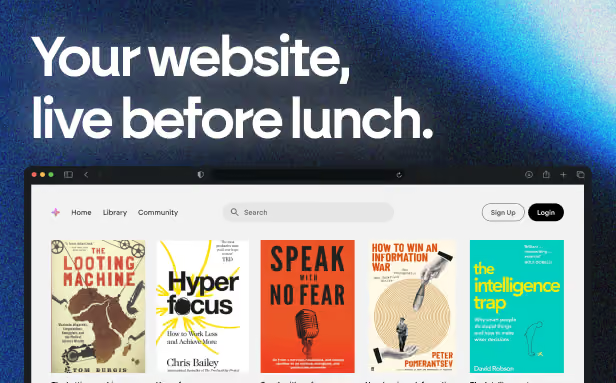
Emergent designs, writes, and publishes your whole site from one prompt. No templates, no drag-and-drop.
- Full site from one prompt
- Custom design, real pages
- Publish in minutes