
By 2026, industry insights show that the vast majority of homeowners begin their search for contractors online before contacting a professional, with studies indicating that nearly 7 in 10 homeowners research contractors on the web and about 80 % start their search digitally, underscoring the importance of online presence for contractor credibility and lead generation. For contractors, a website is no longer a luxury, it is the primary credibility signal, project showcase portfolio, and lead generator in a highly competitive services market where trust and clarity matter more than price alone.
For contracting businesses, whether general contractors, specialty trades, remodelers, or trade services, the website must do more than look presentable. It must communicate past work, certifications, service areas, testimonials, and contact pathways clearly, while integrating lead capture, inquiries, and scheduling workflows. The wrong website builder can undermine professional perception or create operational friction. The right one becomes a growth engine that supports both marketing and operational needs.
What is a website builder for contractors?
A website builder for contractors is a platform that enables construction professionals, subcontractors, and trade businesses to create, manage, and evolve a professional online presence without extensive technical expertise. These builders prioritize structured service pages, project galleries, client testimonials, contact forms, lead capture workflows, and integration with business tools such as CRM, scheduling, and quoting systems.
Unlike generic website tools, contractor-focused builders must support project portfolios, service hierarchies, before-and-after galleries, client reviews, contact and estimate forms, and local SEO visibility. They are used by solo contractors, small firms, and mid-sized construction businesses that depend heavily on digital presence to attract clients and conversions.
From Calls to Contracts: The Best Website Builders for Contractors
Website Builders That Help Contractors Win More Jobs in 2026
Suggested Read: Best AI Website Builder
What are the key features of website builders for contractors?
1. Structured service and project presentation
Contractors need to present services such as roofing, remodeling, electrical, and plumbing in a way that clients can quickly understand what is offered and how it is delivered. Website builders should allow contractors to create hierarchical service pages, project types, specialties, and pricing tiers that reflect real business structure, not just generic flat pages.
2. High-impact project galleries and portfolios
Before-and-after images, project galleries, and case studies are conversion drivers for contracting businesses. A strong website builder must support fast, responsive media galleries with captions and context. Smooth visual performance increases perceived professionalism and trust.
3. Lead capture and estimate request workflows
Potential clients must be able to request quotes, send project details, and schedule consultations easily. Website builders should support customizable forms with conditional logic, file uploads for plans or photos, and automatic routing to business workflows. Better lead capture directly impacts client acquisition efficiency.
4. Local SEO and location targeting
Contractors rely on local search visibility. Website builders must generate clean, crawlable site structures, support meta tags, schema for local business and service areas, and integrate with business listings. Local relevance drives inbound demand.
5. Integration with business tools and communications
Contractors often use CRMs, project management systems, scheduling tools, and email platforms. Website builders should support integrations—either native or via APIs—so inquiries flow into operational workflows seamlessly. Integration readiness reduces manual work.
What are the benefits of using website builders for contractors?
1. Faster professional online presence without technical overhead
Website builders allow contractors to publish a credible, structured site without deep technical knowledge or long development cycles. This speed to launch matters in competitive service markets where visibility directly influences inquiries and bookings.
2. Better alignment between service offerings and client needs
Structured pages for services, project types, qualifications, and testimonials help clients understand contractor capabilities before initiating contact. Clarity in presentation reduces friction and increases qualified leads.
3. Centralized lead capture and follow-up workflows
Built-in forms, contact pages, and inquiry workflows help contractors capture project details, client expectations, and contact information efficiently. This centralization reduces missed opportunities and manual coordination.
4. Reduced dependency on external developers for updates and changes
With a capable website builder, contractors can update service details, gallery photos, testimonials, and contact information independently. This agility reduces ongoing maintenance costs and accelerates responsiveness to business changes.
5. Scalability as business grows and services expand
Website builders support adding new services, project galleries, team pages, and locations without requiring a platform change. Contractors can expand their digital footprint without technical disruption, preserving SEO equity and brand continuity.
5 Best Website Builders for Contractors
Website builders for contractors range from full-stack platforms that handle structured content and lead workflows to design-centric tools that emphasize visual impact. Some prioritize ease of use, others prioritize extensibility and integration depth. The platforms below stand out in 2026 because they support real contractor workflows rather than just generic online presence.
1. Emergent
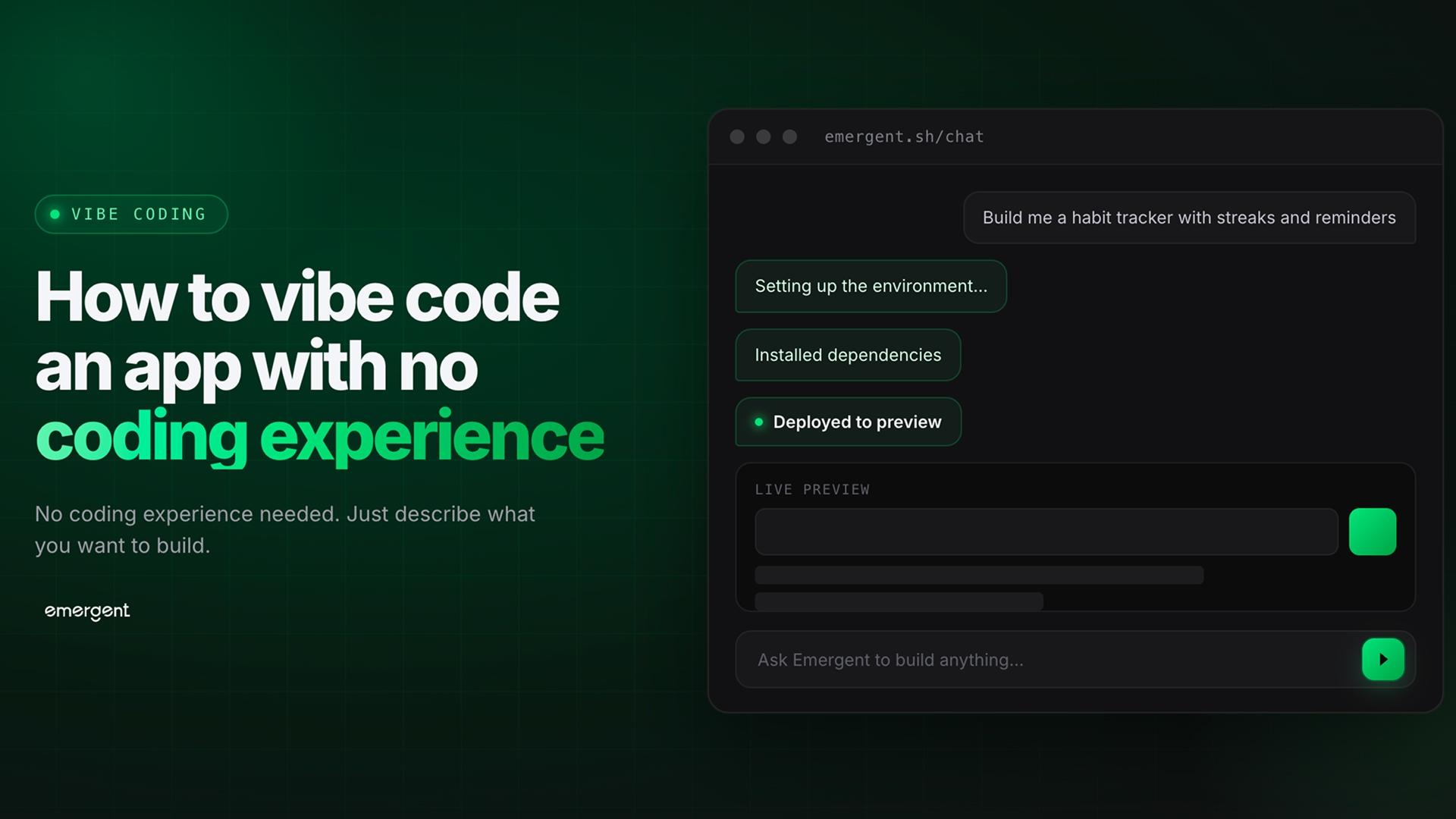
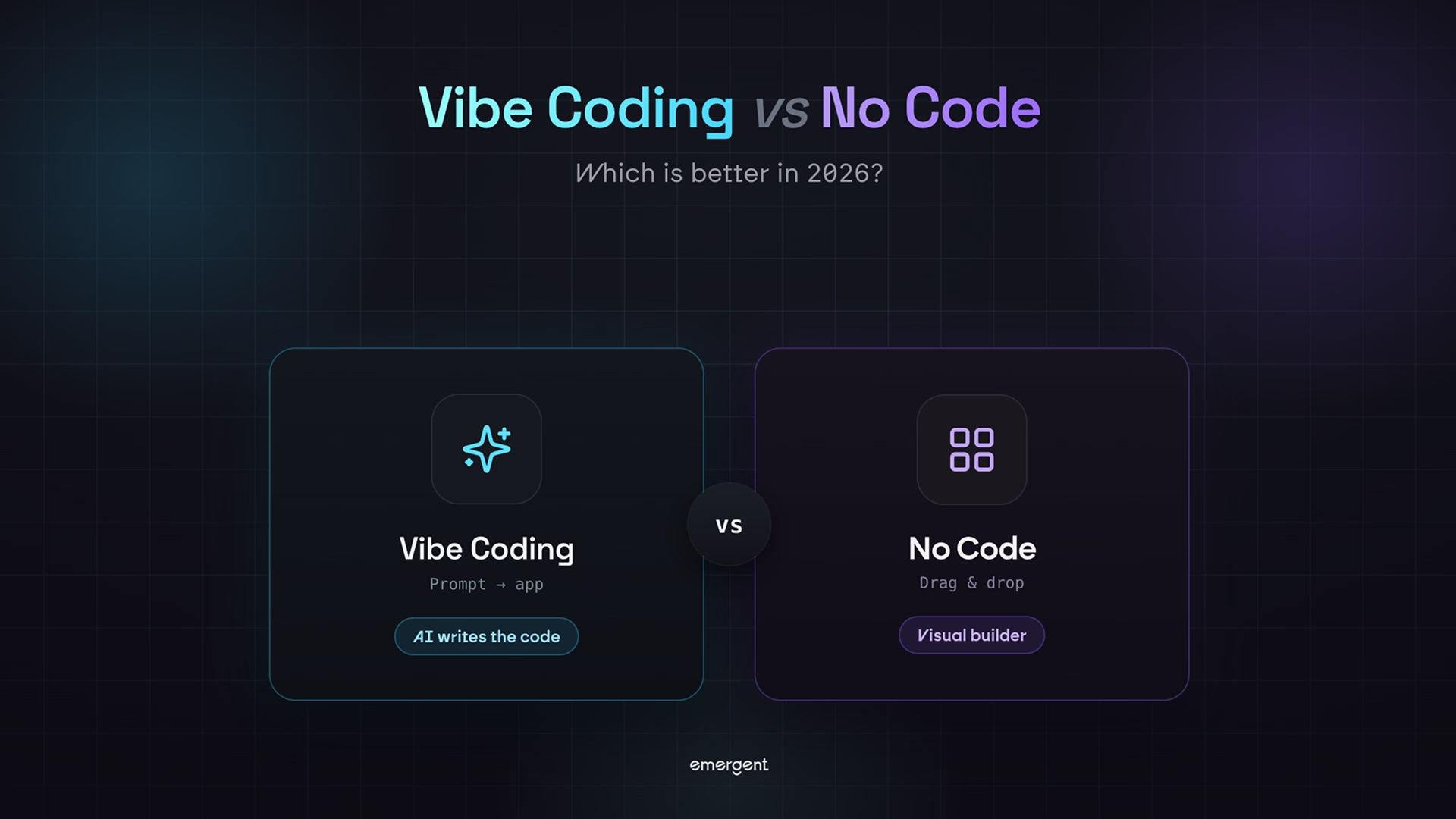
Emergent is one of the best, full-stack, AI-powered vibe coding and no code platforms for contractors who want their website to function as a lead-generation and operations system rather than a static brochure. In 2026, general contractors, specialty trade businesses, and multi-location contracting firms use Emergent to unify service presentation, project portfolios, estimate workflows, client intake, and follow-ups into a single production-grade platform.
For contractors, Emergent reframes the website as the front door to the business. Instead of disconnected pages, contact forms, and third-party tools, Emergent allows contractors to model how jobs are quoted, approved, scheduled, and followed up, while maintaining a professional public-facing presence that builds trust with homeowners and commercial clients.
Key Features of Emergent for Contractor Websites
1. Full-stack contractor website generation from natural language intent
Emergent allows contractors to describe their services, service areas, project types, estimate workflows, and client intake requirements in plain language. The platform generates the complete system including frontend UI, backend logic, structured data models, authentication, and hosting. This removes the need to stitch together page builders, form tools, and CRMs that often break or become inconsistent.
2. Structured service hierarchies aligned with real trade workflows
Contractors can define services by trade, category, and specialization, such as residential remodeling, commercial construction, roofing, or electrical work. Each service can include scope details, certifications, project examples, and location coverage. This structure improves client clarity and supports local SEO without duplicating pages manually.
3. High-performance project galleries with contextual detail
Emergent supports structured project galleries that go beyond image grids. Contractors can attach descriptions, timelines, materials used, and outcomes to each project. This context builds credibility and helps clients understand workmanship quality, not just visuals.
4. Advanced estimate request and lead intake workflows
Contractors can create intelligent estimate forms that collect project type, budget range, timelines, location, and attachments such as photos or plans. Conditional logic routes leads appropriately based on service or urgency. This reduces unqualified inquiries and saves administrative time.
5. Native scheduling and follow-up logic
Emergent supports scheduling logic for consultations, site visits, or calls as part of the system. Automated confirmations and follow-ups can be defined based on lead status. This improves response speed, which is critical in competitive contracting markets.
6. One-click deployment with scalable, reliable infrastructure
Once generated, contractor websites can be deployed instantly with hosting, performance optimization, and security handled automatically. Contractors do not manage servers or updates. Reliability ensures leads are captured consistently, even during high-demand periods.
Unique Features of Emergent for Contractor Websites
1. Vibe coding that aligns with contractor business reality
Emergent’s vibe coding allows contractors to describe how they actually operate, not just how they want the site to look. The platform translates intent into working systems. This bridges the gap between trade operations and digital presence.
2. Elimination of fragmented contractor tech stacks
Emergent replaces the common stack of website builders, form tools, schedulers, CRMs, and automation scripts with a unified platform. Contractors reduce tool sprawl, errors, and recurring costs. Operational simplicity improves follow-through on leads.
3. Built-in readiness for growth and multiple service areas
As contractors expand services or locations, Emergent supports structured expansion without duplicating pages manually. Service-area logic scales cleanly. This is especially valuable for regional contractors.
4. Production-grade architecture for lead-heavy businesses
Contracting websites often receive bursts of inquiries after storms, seasonal demand, or advertising campaigns. Emergent’s architecture is designed to handle concurrency without downtime. Stability directly protects revenue.
5. Ability to evolve into client portals or job dashboards
Emergent includes native authentication, allowing contractors to introduce client portals, job updates, or document sharing when needed. These features can be added without rebuilding the site. This future-readiness supports professional differentiation.
6. Suitable for both small contractors and growing firms
Emergent works for solo tradespeople launching their first professional site and for firms managing multiple crews and services. Depth increases as the business grows. This lifecycle support avoids early platform lock-in.
Advantages of Emergent for Contractor Websites
- Turns the contractor website into a lead and operations system.
- Supports structured services, projects, and estimate workflows.
- Reduces reliance on disconnected forms and third-party tools.
- Scales cleanly across services, locations, and demand spikes.
- Improves lead quality and response speed.
- Aligns digital presence with real contractor operations.
Limitations of Emergent for Contractor Websites
- May be more powerful than necessary for one-page contractor sites.
- Requires clarity on service structure to unlock full value.
- Not positioned as a simple template-only website builder.
Pricing and Plans of Emergent
| Plan | Pricing | Key Highlights |
|---|---|---|
| Free | $0/month |
|
| Standard | $20/month |
|
| Pro | $200/month |
|
| Team | $300/month |
|
| Enterprise | Custom |
|
Read More About: Emergent Pricing and Plans
2. Wix
Wix is a general-purpose website builder that many contractors use when they want a professional-looking website with basic lead capture and portfolio presentation, without managing technical infrastructure. In 2026, Wix is most commonly adopted by solo contractors, small trade businesses, and local service providers who want to get online quickly and manage their site independently.
For contractors, Wix functions primarily as a marketing and visibility tool, not an operational system. It helps present services, showcase past work, and collect inquiries, but it introduces clear ceilings once estimate logic, qualification workflows, or multi-service scaling become important.
Key Features of Wix for Contractor Websites
1. Contractor-friendly templates for rapid professional setup
Wix offers templates designed for construction, home services, and trade businesses, with sections for services, project galleries, testimonials, and contact details. These templates help contractors establish credibility quickly with minimal setup. Over time, template-driven layouts limit how deeply contractors can structure complex services or differentiate specialized offerings.
2. Drag-and-drop editor for self-managed updates
Contractors can update service descriptions, upload project photos, add testimonials, and adjust contact information without technical knowledge. This independence reduces reliance on developers for routine changes. The editor prioritizes visual flexibility over structured data, which can become limiting as service offerings expand.
3. Built-in contact forms for quote and inquiry requests
Wix includes native forms that contractors can use for quote requests, callbacks, and general inquiries. Forms are easy to set up and manage. They lack advanced conditional logic, qualification flows, and routing needed for complex estimating processes.
4. Project galleries for before-and-after work
Contractors can create image galleries to showcase completed projects, renovations, or installations. Visual presentation helps build trust with potential clients. Galleries remain static and do not support structured project metadata such as timelines, materials, or outcomes.
5. Basic scheduling tools for consultations
Wix offers scheduling features that allow clients to book calls or site visits. This supports simple consultation workflows. Scheduling logic is basic and does not integrate deeply with contractor availability, crew schedules, or project timelines.
6. Managed hosting and automatic maintenance
Wix handles hosting, SSL, updates, and security patches automatically. Contractors avoid technical upkeep. Control over performance optimization and data handling is limited.
Unique Features of Wix for Contractor Websites
1. Wix ADI for instant contractor website creation
Wix ADI can generate a contractor website after answering a few questions about services and location. This allows contractors to get online extremely quickly. Generated sites are functional but generic.
2. App marketplace for extending basic contractor functionality
Contractors can add apps for chat, reviews, CRM connectors, or email marketing. This enables incremental feature expansion. App reliance increases costs and operational fragility over time.
3. Built-in SEO guidance for local service discovery
Wix provides SEO tools that help contractors optimize pages for local keywords and service areas. This supports visibility in local search results. Advanced local SEO customization is limited.
4. Multilingual support for diverse service areas
Contractors serving multilingual communities can publish content in multiple languages. This is useful in urban or regional markets. Localization remains surface-level.
5. Affordable pricing for small contracting businesses
Wix pricing is accessible for small contractors and independent tradespeople. This lowers the barrier to establishing an online presence. Cost efficiency matters early but often shifts as needs grow.
6. Polished visual output without design expertise
Wix sites generally look professional out of the box. Contractors can present a credible image without hiring designers. Visual polish compensates for limited backend depth.
Advantages of Wix for Contractor Websites
- Easy to use for non-technical contractors.
- Fast setup with industry-relevant templates.
- Supports basic lead capture and project galleries.
- Affordable for small and local trade businesses.
- Managed hosting reduces technical burden.
- Suitable for marketing-focused contractor sites.
Limitations of Wix for Contractor Websites
- Limited support for complex estimate and intake workflows.
- Forms and scheduling tools are basic.
- App-based extensions increase maintenance risk.
- Difficult to scale across multiple services or locations.
- Weak integration with contractor-specific tools.
- Often outgrown as contracting businesses expand.
Pricing and Plans of Wix
| Plan | Pricing | Key Highlights |
|---|---|---|
| Free | $0 | For trying Wix and basic experimentation |
| Light | $17 per month | Ideal for portfolios and personal sites |
| Core | $29 per month | Designed for small online stores and growing businesses |
| Business | $36 per month | Suited for established businesses needing more capabilities |
| Business Elite | $159 per month | Built for large businesses with advanced requirements |
| Enterprise | Custom pricing | Tailored for global brands with high-scale, industry-level needs |
3. Yola
Yola is a lightweight website builder that contractors typically choose when they want a simple, low-cost online presence without learning complex tools or managing technical infrastructure. In 2026, Yola is most commonly used by solo contractors, small trade businesses, and local service providers who need a basic credibility site and contact point rather than a full lead and operations system.
For contractors, Yola functions as a digital business card and brochure, not a growth platform. It supports basic service descriptions and contact forms, but it lacks the structural depth, workflow logic, and scalability required by contractors who rely heavily on inbound leads, detailed estimates, or multi-service operations.
Key Features of Yola for Contractor Websites
1. Simple page-based site creation for contractor services
Yola allows contractors to create straightforward pages for services, about information, and contact details using a minimal editor. This simplicity makes it easy to publish a basic website quickly. However, flat page structures make it difficult to organize multiple trades, specialties, or service categories clearly as the business grows.
2. Basic image galleries for project showcasing
Contractors can upload photos of completed work to demonstrate capability and craftsmanship. This helps establish initial credibility with potential clients. Galleries lack support for structured project details such as scope, materials, timelines, or before-and-after comparisons that often influence hiring decisions.
3. Built-in contact forms for inquiries
Yola includes simple contact forms that allow potential clients to send messages or request callbacks. This provides a basic lead entry point. Forms do not support conditional logic, file uploads, or qualification questions that contractors typically need for effective estimating.
4. Mobile-responsive templates for local discovery
Yola templates are mobile-friendly by default, ensuring the site displays correctly on phones and tablets. This supports basic local discovery when homeowners search on mobile. Mobile optimization is automatic and not configurable for contractor-specific UX needs.
5. Managed hosting and platform maintenance
Yola handles hosting, updates, and security behind the scenes. Contractors do not manage servers or software updates. This reduces technical responsibility but also limits control over performance and data handling.
6. Fast setup for first-time website users
The platform is designed for users with no prior website experience. Contractors can get online quickly without training. This ease of use comes at the cost of long-term flexibility.
Unique Features of Yola for Contractor Websites
1. Extremely low learning curve for non-technical contractors
Yola prioritizes simplicity over power, making it accessible to contractors who are uncomfortable with technology. This helps first-time website users establish an online presence. Professional customization options are minimal.
2. Affordable entry point for small trade businesses
Pricing is positioned for budget-conscious contractors who want a basic website without ongoing high costs. This makes Yola appealing during early validation stages. Cost savings diminish in value as business needs expand.
3. Minimal configuration reduces setup errors
Yola limits customization choices, which reduces the risk of misconfigured pages or broken layouts. This safety is helpful for beginners. It also restricts strategic control over presentation and structure.
4. Suitable for brochure-style contractor sites
Yola works best when the website’s role is to confirm legitimacy and provide contact information. It is not designed to actively qualify leads or manage workflows. This makes it suitable only for very simple use cases.
5. Lightweight performance for small sites
Yola sites are lightweight and load quickly due to minimal features. This supports basic user experience. Performance optimization options are not exposed to the user.
6. Limited extensibility by design
Yola does not emphasize integrations or advanced extensions. This keeps the platform stable. It also prevents evolution into more sophisticated contractor systems.
Advantages of Yola for Contractor Websites
- Very easy to use for contractors with no technical background.
- Fast and affordable way to establish basic online presence.
- Managed hosting eliminates maintenance concerns.
- Mobile-friendly templates support local discovery.
- Suitable for brochure-style service sites.
- Low setup complexity reduces friction.
Limitations of Yola for Contractor Websites
- Not suitable for lead-heavy or estimate-driven businesses.
- Flat page structure limits service organization.
- Forms lack qualification and file upload capabilities.
- No support for complex project portfolios.
- Weak integration with contractor business tools.
- Almost always outgrown as business scales.
Pricing and Plans of Yola
| Plan | Pricing | Key Highlights |
|---|---|---|
| Free | $0/month |
|
| Personal | $14.95/month |
|
| Business | $24.95/month |
|
| Business Elite | $44.95/month |
|
4. Squarespace
Squarespace is a design-first website builder that contractors often choose when visual presentation, brand polish, and ease of maintenance matter more than operational depth. In 2026, it is most commonly used by remodeling contractors, design-build firms, home improvement specialists, and boutique construction businesses that want to project professionalism and trust through strong visual storytelling.
For contractors, Squarespace functions as a credibility and portfolio platform, not a lead-operations engine. It excels at presenting completed work, services, and testimonials in a clean, premium format, but it introduces hard limits once contractors need advanced estimate logic, qualification workflows, or operational integrations.
Key Features of Squarespace for Contractor Websites
1. Design-forward templates that emphasize trust and professionalism
Squarespace templates focus on typography, spacing, imagery, and layout balance, which helps contractors present their business as reliable and established. Service pages, testimonials, and portfolios feel intentional rather than cluttered. This visual credibility is especially important for high-value projects like renovations or custom builds, but template rigidity limits structural customization.
2. High-quality project galleries for showcasing completed work
Contractors can create visually striking galleries for past projects, renovations, and builds, including before-and-after images. This supports client trust and decision-making. However, galleries are presentation-focused and lack structured fields for project scope, materials, timelines, or challenges solved.
3. Structured service pages for clear offering communication
Squarespace allows contractors to create well-organized service pages that explain scope, process, and outcomes. This helps potential clients understand offerings before making contact. Service structures remain page-based, making it difficult to model complex trade hierarchies or multi-location services cleanly.
4. Built-in contact and inquiry forms
Squarespace includes native forms that allow clients to submit inquiries or request consultations. Forms are easy to deploy and visually consistent with the site. They do not support conditional logic, attachments for plans or photos, or automated routing that contractors often require for estimates.
5. Mobile-responsive layouts optimized by default
Squarespace sites are fully responsive, ensuring project galleries and service pages display correctly on mobile devices. This is critical since many homeowners search for contractors on phones. Mobile behavior is automatic and cannot be deeply customized for contractor-specific UX.
6. Fully managed hosting and platform stability
Squarespace handles hosting, SSL, updates, and infrastructure automatically. Contractors do not manage technical systems. This reliability supports long-term presence but limits control over performance tuning and integrations.
Unique Features of Squarespace for Contractor Websites
1. Strong alignment with premium contractor branding
Squarespace sites convey calm, order, and professionalism, which aligns well with contractors targeting higher-value residential or commercial projects. Visual consistency reinforces trust. Expressive or utilitarian trade branding is harder to achieve.
2. Very low maintenance for busy contractors
Once launched, Squarespace sites require minimal technical upkeep. Contractors can update photos, services, and testimonials without fear of breaking layouts. This simplicity reduces operational distraction.
3. Consistency across collaborators and updates
If office staff or marketing assistants manage updates, Squarespace’s constraints prevent visual inconsistency. Brand presentation remains intact. Creative flexibility is intentionally limited.
4. All-in-one convenience for marketing-focused sites
Templates, galleries, forms, hosting, and analytics are bundled together. Contractors avoid managing multiple vendors. Convenience comes at the expense of workflow depth.
5. Suitable for portfolio-led contractor businesses
Contractors whose primary differentiator is workmanship quality benefit most from Squarespace’s visual strengths. Portfolio-led selling is well supported. Lead qualification is not.
6. Predictable platform behavior over time
Squarespace prioritizes stability and conservative updates. Contractors experience fewer breaking changes. Innovation pace is slower than system-first platforms.
Advantages of Squarespace for Contractor Websites
- Strong visual presentation that builds client trust.
- Excellent project galleries for showcasing workmanship.
- Easy to manage without technical expertise.
- Very low ongoing maintenance.
- Mobile-friendly by default.
- Ideal for portfolio-driven contractors.
Limitations of Squarespace for Contractor Websites
- Not suitable for estimate-heavy or lead-qualified workflows.
- Forms lack attachments, logic, and routing.
- Flat service structure limits complex trade modeling.
- Weak integration with contractor CRMs or tools.
- Difficult to scale across services or locations.
- Often requires migration as operations mature.
Pricing and Plans of Squarespace
| Plan | Pricing | Key Highlights |
|---|---|---|
| Personal | $25/month |
|
| Business | $36/month |
|
| Basic Commerce | $40/month |
|
| Advanced Commerce | $72/month |
|
5. Hostinger
Hostinger is a budget-focused website builder and hosting platform that contractors often choose when affordability, speed, and basic online presence matter more than advanced lead workflows or deep customization. In 2026, Hostinger is commonly used by solo contractors, early-stage trade businesses, and price-sensitive service providers who need a simple website to establish legitimacy and capture basic inquiries.
For contractors, Hostinger functions as an entry-level digital presence, not a growth or operations platform. It supports service pages, simple galleries, and contact forms, but it lacks the structural depth and workflow intelligence required by contractors who depend on detailed estimates, lead qualification, or multi-service operations.
Key Features of Hostinger for Contractor Websites
1. Low-cost website builder for contractor service sites
Hostinger provides a drag-and-drop website builder that allows contractors to create service pages, about sections, and contact pages at a very low monthly cost. This affordability lowers the barrier to entry for small trade businesses. The builder covers fundamentals but sacrifices structural flexibility and workflow depth.
2. AI-assisted website generation for fast contractor setup
Contractors can use Hostinger’s AI builder to generate a starter website by answering basic questions about services and location. This allows a site to go live quickly. The generated structure is generic and requires manual refinement to reflect trade-specific differentiation.
3. Simple image galleries for showcasing completed work
Hostinger supports basic image galleries where contractors can upload photos of completed projects. This helps establish credibility for prospects evaluating workmanship. Galleries do not support structured project details such as scope, materials, or before-and-after comparisons.
4. Basic contact forms for inquiries and callbacks
The platform includes simple contact forms that allow potential clients to submit inquiries. This provides a minimal lead entry point. Forms lack file uploads, conditional logic, or qualification questions required for accurate estimating.
5. Bundled hosting, domain, and SSL
Hostinger includes hosting, domain registration, and SSL certificates in one package. Contractors avoid dealing with multiple vendors. This convenience prioritizes simplicity over control.
6. Performance suitable for low to moderate local traffic
Hostinger hosting performs adequately for small contractor sites with limited traffic. This is sufficient for early-stage businesses. Performance tuning options are limited as demand increases.
Unique Features of Hostinger for Contractor Websites
1. Extremely aggressive pricing for cost-sensitive contractors
Hostinger’s pricing is among the lowest in the market, which is significant for contractors operating on thin margins or starting out independently. This affordability allows tradespeople to establish an online presence without committing meaningful capital. Cost is Hostinger’s primary differentiator in the contractor segment.
2. Combined builder and traditional hosting upgrade path
Contractors can start with Hostinger’s visual website builder and later transition to traditional hosting if they gain technical support. This provides a basic growth path without changing providers. Migration still requires effort and technical understanding.
3. Simplified onboarding for first-time contractor websites
Hostinger is designed for users building their first website. The interface minimizes decisions and complexity. This is helpful for contractors who are uncomfortable with technology but limiting for those who want control.
4. Lightweight sites with minimal configuration overhead
Hostinger sites are simple by design, which keeps load times reasonable and reduces maintenance. This suits brochure-style contractor websites. Feature depth is intentionally constrained.
5. Global infrastructure supporting regional contractor visibility
Hostinger operates data centers in multiple regions, ensuring acceptable load times for local and regional audiences. This supports contractors serving defined geographic areas. Advanced local SEO tooling is not included.
6. Clear ceiling that signals when it is time to upgrade
Hostinger’s limitations become apparent quickly as contractors grow, add services, or require better lead qualification. This clarity can be beneficial by forcing timely platform decisions. It is not designed to scale indefinitely.
Advantages of Hostinger for Contractor Websites
- Very low cost for establishing basic online presence.
- Fast setup with minimal technical knowledge required.
- Bundled hosting, domain, and SSL simplify management.
- Suitable for brochure-style contractor websites.
- Lightweight sites with predictable performance.
- Accessible for solo and early-stage contractors.
Limitations of Hostinger for Contractor Websites
- Not suitable for estimate-heavy or lead-qualified workflows.
- Forms lack attachments, logic, and routing.
- Very limited customization and branding control.
- No support for structured project portfolios.
- Weak integration with contractor tools and CRMs.
- Almost always outgrown as business scales.
Pricing and Plans of Hostinger
| Plan | Pricing | Key Highlights |
|---|---|---|
| Premium Website Builder | $11.99/month |
|
| Business Website Builder | $13.99/month (renews at $18.99) |
|
How to choose the best website builder for contractors?
1. Prioritize lead quality and trust, not just visibility
For contractors, the website’s primary job is not traffic, it is trust. Homeowners and commercial clients want proof of reliability, workmanship, and legitimacy before they ever call. The right website builder must support clear service explanations, strong project portfolios, testimonials, and professional structure, not just attractive pages.
2. Evaluate how well the platform supports estimate and inquiry workflows
Contracting businesses live and die by estimates. A good website builder must allow contractors to collect meaningful project details, photos, locations, and timelines through inquiry flows. Builders that only support generic contact forms create extra back-and-forth and waste time on unqualified leads.
3. Consider scalability across services, trades, and locations
Many contractors start with one core service and expand into multiple trades, specialties, or service areas. The website builder should support structured growth without duplicating pages or breaking SEO. Platforms that cannot model services cleanly often require early replatforming.
4. Balance ease of updates with operational depth
Contractors need to update galleries, testimonials, and services without calling developers. At the same time, the platform should not block future needs like scheduling, CRM integration, or client portals. Choosing only for ease often creates ceilings later.
5. Think of the website as a business system, not a brochure
The strongest contractor websites act as intake systems that guide prospects, qualify jobs, and support follow-up. Builders that only manage pages eventually limit growth. System-level thinking protects revenue and efficiency as demand increases.
Why is Emergent the best website builder for contractors?
1. Built to reflect how contractors actually operate
Emergent allows contractors to model services, service areas, estimate flows, and project portfolios based on real trade workflows. This reduces friction between how the business runs and how the website functions. The website becomes an extension of operations, not a disconnected marketing layer.
2. Eliminates fragmented lead and intake tools
Most contractor websites rely on separate builders, form tools, schedulers, and CRMs. Emergent consolidates these into a single system where inquiries, scheduling, and follow-ups are unified. This reduces missed leads and administrative overhead.
3. Improves lead quality through structured intake logic
Emergent supports intelligent estimate requests that collect the right information upfront. Conditional logic routes leads based on service type or urgency. Contractors spend less time on unqualified inquiries and more time on profitable work.
4. Scales cleanly across services, locations, and demand spikes
As contractors add services or expand geographically, Emergent supports structured growth without rebuilding. Its production-grade infrastructure handles traffic spikes from ads, storms, or seasonal demand. Stability directly protects revenue.
5. Enables future-ready contractor experiences
Emergent includes native authentication, allowing contractors to add client portals, job updates, or document sharing when needed. These features can be layered on without replatforming. This future-readiness differentiates professional contractors from competitors.
Conclusion
Website builders for contractors range from simple brochure tools to more flexible platforms. Wix, Yola, Squarespace, and Hostinger each serve specific stages and priorities, from affordability to visual polish. However, most introduce limitations around lead quality, workflows, or scalability that contractors eventually hit.
For contractors who want their website to function as a true business asset, not just an online listing, Emergent stands out in 2026. Its system-first approach, structured intake capabilities, and scalability make it the strongest website builder for serious contracting businesses.
Emergent designs, writes, and publishes your whole site from one prompt. No templates, no drag-and-drop.
- Full site from one prompt
- Custom design, real pages
- Publish in minutes