

The real estate industry has become increasingly digital-first, with over 97 percent of home buyers using the internet during their property search, according to the National Association of Realtors. In 2026, a realtor’s website is no longer a digital brochure, it is a lead engine, a trust signal, and often the first point of contact for serious buyers and sellers.
As competition intensifies across local and national markets, real estate professionals need websites that do more than look good. Even agents without technical skills can now launch polished sites using a no code website builder tailored for their industry. Modern website builders for realtors must support IDX listings, hyperlocal SEO, lead capture, CRM workflows, and performance optimization at scale. This guide breaks down what truly matters in realtor website builders today and which platforms stand out for serious real estate businesses.
What is a website builder for realtors?
A website builder for realtors is a specialized platform designed to help real estate professionals create, manage, and scale property-focused websites without relying entirely on custom development. Unlike generic site builders, these tools are built around real estate workflows such as listing syndication, buyer and seller lead capture, neighborhood pages, and agent branding.
In 2026, the best website builders for realtors combine visual design flexibility with real estate-specific infrastructure. This includes IDX and MLS integrations, CRM connectivity, automation for follow-ups, and SEO frameworks optimized for local search intent. The goal is not just to publish listings, but to convert traffic into qualified leads and long-term clients.
The 5 Website Builders Helping Realtors Close More Deals in 2026
Looking for the best website builders? Here Are the Top 5 for Realtors in 2026
Suggested Read: Best AI Website Builder
What are the key features of website builders for realtors?
1. IDX and MLS integration support
Realtor websites must seamlessly pull live property listings from MLS sources while staying compliant with regional data rules. Strong platforms handle listing updates automatically, support advanced filters, and allow custom presentation without performance loss.
2. Lead capture and conversion tools
Forms, gated listings, saved searches, and call-to-action flows are critical for converting visitors into prospects. The best builders allow deep customization of lead funnels rather than relying on generic contact forms.
3. Local SEO and neighborhood pages
Real estate discovery is location-driven. Effective platforms make it easy to create indexable city, neighborhood, and community pages that rank for buyer and seller intent keywords.
4. CRM and workflow integrations
Capturing leads is only valuable if they are routed correctly. Modern realtor website builders integrate with CRMs, email tools, and automation systems to manage follow-ups and nurturing at scale.
5. Performance and mobile optimization
Property searches are highly mobile. Platforms must deliver fast load times, responsive layouts, and optimized media handling to avoid bounce and ranking penalties.
6. Branding and design flexibility
Agents and brokerages need strong personal branding. Builders should allow flexible layouts, custom content structures, and visual differentiation without forcing uniform templates.
What are the benefits of using website builders for realtors?
1. Faster go-to-market for new agents and teams
Website builders reduce the time required to launch a professional real estate presence, allowing agents to focus on listings and client relationships rather than development cycles.
2. Higher lead quality through targeted experiences
Purpose-built real estate features help capture intent-driven leads, such as buyers searching specific neighborhoods or sellers evaluating local market expertise.
3. Reduced reliance on third-party portals
Owning a high-performing website allows realtors to reduce dependency on listing aggregators and paid lead marketplaces over time.
4. Scalable growth without constant redevelopment
As teams grow, the right platform supports additional agents, listings, and content without needing a full rebuild.
5. Better control over data and branding
Unlike third-party platforms, realtor website builders give professionals ownership over their data, messaging, and customer relationships.
5 Best Website Builders for Realtors
Website builders for realtors in 2026 fall into a few clear categories. Some platforms are purpose-built for real estate, offering out-of-the-box IDX and agent workflows. Others are flexible web platforms that require more setup but offer deeper customization and long-term scalability. The best choice depends on whether a realtor prioritizes speed, control, automation, or custom brand experiences.
1. Emergent
Emergent is one of the best, full-stack, AI-powered vibe coding and no code platforms for building highly customized, production-grade realtor websites, and in 2026 it has become especially powerful for realtors who need more than template-driven real estate sites. Emergent allows real estate professionals, brokerages, and property-focused startups to design fully custom realtor websites that combine listings, lead capture, automation, and backend logic into a single scalable system.
Unlike traditional realtor website builders that lock agents into rigid layouts and predefined workflows, Emergent treats a realtor website as a complete digital product. This makes it suitable for serious agents, multi-agent teams, and brokerages that want to differentiate their brand, control their data, and build long-term marketing infrastructure rather than just publish listings.
Key Features of Emergent
1. AI-generated full-stack realtor websites from detailed prompts
Emergent allows realtors to describe their business model, target market, property types, and branding goals in natural language, then generates a complete working website that includes frontend UI, backend logic, databases, and authentication. This goes far beyond visual page generation and enables real estate workflows such as gated listings, buyer dashboards, and seller intake forms. The generated system is editable and extensible, making it suitable for long-term use rather than one-time launches.
2. Custom IDX and listing data workflows without template constraints
Instead of forcing IDX data into fixed page structures, Emergent lets realtors design how listings are stored, filtered, displayed, and gated. This enables advanced use cases such as neighborhood-specific landing pages, luxury listing experiences, or investor-focused property views. Realtors can tailor listing logic to match their sales strategy while maintaining performance and compliance requirements.
3. Built-in lead management logic and CRM-style workflows
Emergent enables realtors to define exactly how leads are captured, segmented, and routed based on behavior and intent. For example, buyer leads searching premium properties can be routed differently from first-time home buyers or sellers requesting valuations. These workflows are built directly into the application logic rather than relying on disconnected third-party plugins.
4. Deep customization of local SEO and content architecture
With Emergent, realtors can programmatically generate and manage city, neighborhood, and property-type pages that follow consistent SEO structures. This is particularly valuable for agents competing in dense local markets where ranking for long-tail location queries drives business. SEO logic is treated as part of the system design, not an afterthought layered onto templates.
5. Integrated authentication and user accounts for buyers and sellers
Emergent supports secure user accounts out of the box, allowing realtors to create logged-in experiences for saved searches, favorite listings, and private property access. This enables higher-quality engagement and repeat visits, especially for buyers conducting extended searches. These features are rarely achievable with traditional realtor website builders without heavy custom development.
6. Production-ready deployment with real scalability
Websites built with Emergent are not prototypes or marketing demos. They are production-grade applications that can handle growing traffic, multiple agents, and expanding datasets. This makes Emergent particularly suitable for brokerages and fast-growing teams that want a platform they will not outgrow within a year.
Unique Features of Emergent
1. True vibe coding approach for real estate systems
Emergent does not just generate pages, it generates intent-driven systems. Realtors can refine flows, logic, and interactions conversationally, which makes complex real estate requirements accessible without sacrificing control. This approach is fundamentally different from form-based builders and enables faster iteration as business needs evolve.
2. Unified frontend, backend, and data model ownership
Unlike platforms that split responsibilities across themes, plugins, and external services, Emergent centralizes everything into a single system. Realtors own their data structures, business logic, and UI together, reducing technical debt and long-term dependency risks.
3. Ability to build beyond websites into internal tools
Emergent allows realtors to extend their website into internal dashboards, analytics tools, and operational systems. For example, teams can build custom deal tracking, agent performance views, or listing approval workflows without switching platforms.
4. Custom integrations with any real estate or marketing stack
Because Emergent is not plugin-limited, it can integrate directly with CRMs, email tools, analytics platforms, and proprietary systems. This flexibility is especially valuable for brokerages that already operate complex technology stacks.
5. No forced design language or visual sameness
Emergent does not impose predefined design systems. Realtors can create completely distinct visual identities, which is critical in markets where differentiation and brand perception influence trust and conversion.
6. Long-term adaptability without platform migration
As regulations, MLS rules, or marketing strategies change, Emergent-built systems can be modified without rebuilding from scratch. This future-proofing is a major advantage for serious real estate businesses planning multi-year growth.
Advantages of Emergent
- Enables full control over listing logic, lead flows, and data ownership, which is critical for brokerages and teams that want independence from rigid platforms.
- Supports advanced buyer and seller experiences such as gated content, dashboards, and saved searches that increase engagement quality.
- Scales cleanly from solo agents to multi-agent brokerages without requiring platform migration or re-architecture.
- Reduces long-term costs by eliminating plugin sprawl and recurring add-ons common in traditional realtor website builders.
- Allows realtors to build unique brand experiences rather than blending into template-driven market noise.
- Suitable for both marketing and operational use cases, combining website presence with internal tools.
Limitations of Emergent
- Requires more upfront thinking compared to plug-and-play realtor website builders, as systems are designed rather than selected from presets.
- May be excessive for agents who only want a simple brochure-style website with minimal customization.
- Best results depend on clearly defining business workflows, which may require strategic clarity before building.
Pricing and Plans of Emergent
| Plan | Pricing | Key Highlights |
|---|---|---|
| Free | $0/month |
|
| Standard | $20/month (annual) |
|
| Pro | $200/month (annual) |
|
| Team | $300/month (annual) |
|
| Enterprise | Custom |
|
Read More About: Emergent Pricing and Plans
2. Placester
Placester is a real estate–focused website builder designed specifically for agents, teams, and brokerages that want a turnkey online presence with built-in MLS and lead generation capabilities. In 2026, Placester continues to position itself as a practical option for realtors who want industry-aligned features without building everything from scratch, particularly those operating under brokerage frameworks that require compliance and consistency.
Placester emphasizes speed, simplicity, and real estate alignment over deep technical customization. It is best suited for agents and brokerages that want reliable IDX-powered websites, integrated marketing tools, and predictable workflows, rather than full control over backend logic or system architecture.
Key Features of Placester
1. Native IDX and MLS integration with compliance handling
Placester offers built-in IDX integration that connects directly to local MLS feeds, allowing agents to display up-to-date property listings across their websites. The platform handles compliance requirements, data refresh cycles, and standard listing display rules, which reduces operational overhead for agents who do not want to manage MLS complexity themselves. Listings are automatically structured to work across search, filter, and detail pages.
2. Prebuilt real estate website templates optimized for conversion
Placester provides a library of real estate–specific templates designed around common buyer and seller journeys. These templates include predefined sections for featured listings, market insights, agent bios, and calls to action. While customization is available, the primary strength lies in fast deployment using layouts that already reflect industry best practices.
3. Integrated lead capture and contact management
Lead capture forms, saved searches, and property alerts are tightly integrated into Placester’s system. When users interact with listings or request information, leads are automatically stored and categorized within the platform. This makes it easier for agents to respond quickly without relying heavily on third-party form builders or plugins.
4. Email marketing and follow-up tools built in
Placester includes email marketing capabilities that allow agents to send newsletters, property alerts, and follow-up messages directly from the platform. These tools are designed around real estate use cases, such as new listing notifications and open house promotions, helping agents maintain engagement without external marketing software.
5. Brokerage-level management and multi-site support
For brokerages, Placester supports multi-agent websites and branded sub-sites under a unified system. This allows brokerages to maintain brand consistency while giving individual agents their own pages and lead flows. Centralized controls help manage compliance, templates, and content standards across teams.
6. SEO-friendly structure tailored to real estate searches
Placester websites are built with SEO fundamentals in mind, including clean URLs, structured listing pages, and support for local market content. Agents can create city and neighborhood pages that align with buyer and seller search intent, though deeper programmatic SEO customization is limited compared to more flexible platforms.
Unique Features of Placester
1. Real estate–first product design
Placester is built exclusively for the real estate industry, which means its features, templates, and workflows align closely with how agents operate day to day. This focus reduces setup friction and minimizes the need to adapt generic website tools to real estate-specific needs.
2. Built-in marketing suite for agents
Unlike general website builders, Placester bundles email campaigns, lead alerts, and basic CRM-style tools into the same platform. This integrated approach simplifies the marketing stack for agents who prefer fewer tools and vendors.
3. Brokerage partnerships and industry alignment
Placester is often adopted through brokerage partnerships, making it easier for agents to comply with brand and legal requirements. This is particularly valuable for agents operating within large firms that mandate specific website standards.
4. Hands-off technical maintenance
Hosting, updates, and infrastructure management are handled by Placester, allowing agents to focus on sales rather than technical upkeep. This managed approach appeals to non-technical users who want stability and predictability.
5. Guided onboarding for new agents
Placester provides onboarding support and guided setup processes tailored to real estate professionals. This reduces the learning curve for agents launching their first professional website.
6. Consistent performance across devices
Placester templates are optimized for mobile and desktop use, ensuring that listing searches and forms function reliably across devices, which is critical for mobile-heavy real estate traffic.
Advantages of Placester
- Fast setup with real estate–specific templates that reduce time to launch for new agents and teams.
- Built-in IDX, lead capture, and email tools simplify the marketing stack and reduce reliance on third-party services.
- Strong brokerage support makes it suitable for agents operating under firm-level requirements.
- Managed hosting and maintenance remove technical responsibilities from agents.
- Predictable workflows help standardize buyer and seller experiences.
- Suitable for agents who prioritize simplicity and industry alignment over deep customization.
Limitations of Placester
- Limited flexibility for custom backend logic, workflows, or non-standard listing experiences.
- Design customization is constrained by template structures and platform rules.
- Advanced SEO strategies and programmatic content generation are harder to implement.
- Less suitable for brokerages or teams wanting proprietary systems or unique data models.
- Scaling beyond standard agent websites can require platform workarounds.
- Not ideal for realtors seeking full ownership over application logic and infrastructure.
Pricing and Plans of Placester
| Plan | Pricing | Key Highlights |
|---|---|---|
| Team | $199/month |
|
| Broker Standard | $399/month |
|
| Broker Plus | $599/month |
|
3. AgentFire
AgentFire is a real estate–focused website platform that emphasizes high-performance design, SEO-driven architecture, and conversion-optimized experiences for agents and teams. In 2026, AgentFire is positioned as a premium option for realtors who want visually differentiated websites combined with strong local search performance, without moving into full custom development territory.
AgentFire sits between turnkey realtor platforms and fully flexible builders. It gives agents more control over layout, content structure, and SEO than many real estate–specific builders, while still handling IDX integration and hosting in a managed environment.
Key Features of AgentFire
1. Advanced IDX integration with customizable listing experiences
AgentFire provides robust IDX functionality that allows agents to control how listings are displayed, filtered, and surfaced across the site. Unlike rigid IDX embeds, AgentFire enables layout-level customization, which helps agents create more branded and engaging property discovery experiences. This is particularly valuable for competitive markets where differentiation influences lead conversion.
2. SEO-first website architecture built for local dominance
AgentFire is designed around local SEO use cases such as city pages, neighborhood hubs, and long-tail buyer and seller queries. The platform supports structured content hierarchies, internal linking strategies, and indexable listing pages that help agents compete in organic search. SEO is treated as a core product capability rather than a secondary add-on.
3. Conversion-optimized design system for real estate
AgentFire websites are built with conversion psychology in mind, incorporating optimized call-to-action placements, form triggers, and engagement patterns tailored to real estate browsing behavior. These design patterns help capture leads earlier in the browsing journey without overwhelming users.
4. Flexible content management for agents and teams
The platform includes a CMS that allows agents to manage blogs, market updates, community pages, and custom landing pages without developer involvement. Content flexibility enables agents to publish authority-building material alongside listings, which is critical for long-term brand growth.
5. Mobile-first performance and responsiveness
AgentFire sites are optimized for mobile property search, ensuring fast load times, touch-friendly interfaces, and reliable listing interactions on smartphones. Given the mobile-heavy nature of real estate traffic, this focus directly impacts engagement and lead capture rates.
6. Managed hosting and ongoing optimization
AgentFire handles hosting, performance tuning, and platform updates, allowing agents to focus on content and sales. This managed approach reduces technical risk while maintaining consistent site reliability.
Unique Features of AgentFire
1. Hyperlocal SEO tooling tailored for real estate
AgentFire provides built-in support for creating and organizing hyperlocal content, such as neighborhood guides and market-specific landing pages. This makes it easier for agents to scale local SEO efforts without relying on external tooling.
2. Design differentiation without full custom development
The platform strikes a balance between customization and manageability, offering more design freedom than template-driven builders while avoiding the complexity of full custom builds.
3. Emphasis on long-term organic traffic growth
AgentFire’s feature set is geared toward sustained SEO performance rather than short-term lead spikes. This aligns well with agents building durable local presence over time.
4. Integrated lead capture patterns for real estate journeys
Forms, CTAs, and listing interactions are designed specifically around buyer and seller behavior, helping improve lead quality and intent signals.
5. Support for content-heavy authority sites
AgentFire works well for agents who invest in blogging, market analysis, and educational content as part of their marketing strategy.
6. Performance consistency across content and listings
The platform maintains reliable performance even as content libraries and listing volumes grow, which helps avoid degradation over time.
Advantages of AgentFire
- Strong focus on SEO and organic growth makes it ideal for agents competing in search-driven markets.
- More design and layout flexibility than many realtor-specific website builders.
- Conversion-optimized patterns help improve lead capture without aggressive gating.
- Managed hosting reduces technical overhead for non-technical teams.
- Suitable for agents building long-term content and brand authority.
- Balances customization and ease of use effectively.
Limitations of AgentFire
- Less flexibility than full no-code or custom platforms for complex backend workflows.
- Pricing can be high for solo agents early in their careers.
- Advanced customization may still require platform support rather than self-serve changes.
- Limited ability to build non-website internal tools or custom systems.
- Not ideal for brokerages needing deeply custom data models or automation logic.
- Scaling into proprietary platforms may require migration later.
Pricing and Plans of AgentFire
| Plan | Pricing | Key Highlights |
|---|---|---|
| Ignite | ~$700 one-time setup + ~$149/month |
|
| Semi-Custom | ~$1,500–$1,800 one-time setup + ~$149/month |
|
| Custom | $3,500+ one-time setup + ~$149/month |
|
| Ongoing Monthly (Base) | ~$149/month |
|
| Hourly Services (Add-ons) | ~$50–$150/hour |
|
4. Webflow
Webflow is a professional-grade visual web development platform that, in 2026, is increasingly adopted by realtors and real estate teams who want complete design control and high-performance websites without being locked into real estate–specific templates. Unlike niche realtor website builders, Webflow is not opinionated about real estate workflows, which makes it attractive to agents and brokerages that prioritize branding, performance, and long-term flexibility over out-of-the-box IDX convenience.
For realtors, Webflow is best suited to those who treat their website as a brand asset and marketing product rather than a turnkey listing portal. It requires more setup and integration work, but it offers unmatched control over layout, interactions, and content structure.
Key Features of Webflow
1. Fully custom visual design without template constraints
Webflow allows realtors to design completely custom layouts using a visual editor that maps directly to production-quality HTML, CSS, and JavaScript. This enables agents to build highly differentiated brand experiences that go far beyond standard real estate templates. For luxury, commercial, or boutique real estate brands, this level of control is a major advantage.
2. High-performance, clean code output
Webflow generates clean, optimized front-end code that supports fast load times and strong Core Web Vitals performance. For realtor websites competing in SEO-sensitive local markets, this performance advantage can directly impact rankings and engagement. Hosting is optimized by default, reducing the need for manual performance tuning.
3. Flexible CMS for content and landing pages
Webflow’s CMS allows realtors to create structured collections for blogs, neighborhood guides, market reports, testimonials, and case studies. This is particularly useful for agents building authority-driven content strategies alongside listings. Content editors can update pages without touching design or layout logic.
4. Advanced interactions and animations
Webflow supports sophisticated animations and interactions that can be used to enhance property showcases, storytelling, and user engagement. When used carefully, these features help realtors create premium browsing experiences that stand out in competitive markets.
5. Strong SEO controls at the page and site level
Realtors can control meta tags, schema markup, URL structures, and indexing behavior directly within Webflow. This granular control supports advanced SEO strategies, including location-based landing pages and long-form informational content.
6. Secure, managed hosting with global delivery
Webflow includes managed hosting with SSL, CDN distribution, and automatic scaling. This allows realtor websites to handle traffic spikes from campaigns or featured listings without infrastructure concerns.
Unique Features of Webflow
1. Designer-level control without writing code
Webflow bridges the gap between design tools and development, enabling realtors or their teams to implement complex designs visually while still producing production-grade output.
2. Platform-agnostic approach to real estate
Because Webflow is not tied to real estate assumptions, it allows agents to define their own buyer journeys, content hierarchies, and conversion strategies.
3. Strong ecosystem of professional designers and agencies
Webflow has a large ecosystem of designers familiar with building high-end marketing sites, which makes it easier for realtors to find skilled implementation partners.
4. Long-term scalability for content-heavy sites
Webflow performs well as sites grow in content volume, making it suitable for agents investing in years of blogging, guides, and market education.
5. Clean separation of design and content
Design systems can be maintained independently from content updates, which helps teams scale content production without breaking layouts.
6. Exportable code for future flexibility
For teams that want long-term control, Webflow allows code export on certain plans, reducing long-term platform lock-in risk.
Advantages of Webflow
- Enables unmatched branding and visual differentiation for realtors focused on premium positioning.
- Produces fast, SEO-friendly websites with strong performance fundamentals.
- Supports advanced content strategies through a flexible CMS.
- Suitable for long-term marketing and authority-building efforts.
- Managed hosting reduces infrastructure complexity.
- Scales well for content-heavy and design-forward real estate sites.
Limitations of Webflow
- Does not include native IDX or MLS integrations, requiring third-party solutions.
- Real estate–specific workflows must be built or integrated manually.
- Higher learning curve compared to turnkey realtor website builders.
- Lead management and CRM functionality are not built in by default.
- Ongoing maintenance may require designer or developer involvement.
- Less suitable for agents who want immediate plug-and-play listing sites.
Pricing and Plans of Webflow
| Plan | Pricing | Key Highlights |
|---|---|---|
| Starter | Free |
|
| Basic | $18/month |
|
| CMS | $29/month |
|
| Business | $49/month |
|
5. WordPress
WordPress is the most widely used website platform in the world, and in 2026 it remains a dominant choice for realtors who want maximum flexibility, ownership, and ecosystem depth. Unlike niche realtor website builders, WordPress is not a single product but a highly extensible open platform that can be shaped into anything from a simple agent website to a complex, IDX-powered real estate portal.
For realtors, WordPress is best suited to those who want full control over their site’s structure, SEO strategy, and integrations, and who are willing to manage or outsource technical setup. Its strength lies in flexibility and scale rather than convenience.
Key Features of WordPress
1. Unmatched plugin ecosystem for real estate functionality
WordPress offers thousands of plugins that enable IDX integration, listing management, lead capture, SEO optimization, and performance tuning. Realtors can choose specialized real estate plugins to handle MLS feeds, property search, and mapping features. This modular approach allows agents to assemble exactly the functionality they need, rather than accepting a fixed feature set.
2. Complete control over site architecture and content
With WordPress, realtors can fully control page structures, URLs, taxonomies, and content relationships. This is particularly important for building scalable neighborhood pages, city hubs, and long-tail SEO content that aligns with local buyer and seller intent. Unlike locked platforms, there are no hard limits on how content is organized.
3. Advanced SEO capabilities through mature tooling
WordPress supports advanced SEO strategies using well-established plugins that allow control over metadata, schema, internal linking, and indexing behavior. For realtors competing in organic search, this depth enables fine-tuned optimization at scale across hundreds or thousands of pages.
4. Theme-based design with optional full customization
Realtors can start with real estate–specific themes for faster setup, then progressively customize design through page builders or custom development. This flexibility supports both rapid launches and long-term evolution as branding needs mature.
5. Integration with virtually any CRM or marketing tool
Because of its popularity, WordPress integrates with almost every CRM, email platform, analytics tool, and marketing system used in real estate. This makes it easier to fit WordPress into existing business workflows rather than restructuring operations around the website.
6. Self-hosted ownership and data control
WordPress sites are self-hosted, which means realtors own their files, databases, and content outright. This level of ownership is valuable for agents and brokerages that want independence from vendor-controlled platforms.
Unique Features of WordPress
1. Open-source foundation with no vendor lock-in
WordPress is open source, which reduces long-term dependency risk. Realtors can migrate hosts, developers, or tools without being tied to a single vendor’s roadmap or pricing changes.
2. Community-driven innovation and support
A massive global community contributes plugins, themes, documentation, and tutorials. This ecosystem ensures long-term viability and continuous improvement.
3. Ability to scale from simple sites to complex portals
WordPress can power a basic agent website or a large, multi-agent real estate portal with thousands of listings, depending on configuration and hosting.
4. Flexibility to combine no-code and custom development
Realtors can use visual builders for ease of use or custom code for advanced requirements, making WordPress adaptable to varying technical skill levels.
5. Strong content publishing and blogging roots
Originally built for publishing, WordPress excels at content-heavy strategies such as market reports, educational blogs, and long-form guides.
6. Long-term extensibility without rebuilding
As business needs grow, WordPress sites can be extended incrementally rather than replaced, which supports long-term growth strategies.
Advantages of WordPress
- Offers unmatched flexibility and control over SEO, content, and integrations.
- Supports a wide range of real estate use cases through plugins and themes.
- Strong choice for agents focused on long-term organic traffic and content authority.
- Full ownership of data and infrastructure reduces platform dependency.
- Scales well from solo agents to large brokerages with proper hosting.
- Backed by a massive ecosystem and long-term community support.
Limitations of WordPress
- Requires technical setup and ongoing maintenance, either in-house or outsourced.
- Performance and security depend heavily on hosting and plugin choices.
- IDX integrations can be complex and costly to configure correctly.
- Plugin sprawl can lead to technical debt if not managed carefully.
- Less beginner-friendly compared to turnkey realtor website builders.
- Reliability depends on proper updates and maintenance practices.
Pricing and Plans of WordPress
| Plan / Setup Type | Pricing | Key Highlights |
|---|---|---|
| Self-Hosted WordPress (Basic) | ~$10–$50/month | Shared hosting ($3–$20/mo), domain ~$10–$20/year, free themes/plugins, suitable for blogs and small sites |
| Self-Hosted WordPress (Business) | ~$50–$200+/month | Better or managed hosting, premium themes/plugins, improved performance and security for growing businesses |
| Self-Hosted WordPress (High-Traffic) | ~$200–$400+/month | Managed hosting (WP Engine, Flywheel), custom development, built for scale and heavy traffic |
| WordPress.com (Hosted) | Free to $45+/month | All-in-one hosting platform, simpler setup, limited control on lower plans, higher tiers for business and e-commerce |
How to choose the best website builder for realtors
1. Evaluate how central your website is to your business model
Some realtors only need a basic IDX-enabled presence, while others rely on their website as a primary lead engine and brand authority. If your website is central to client acquisition, listing visibility, and trust-building, you need a platform that supports long-term evolution rather than short-term convenience. Builders optimized only for quick setup often become limiting as competition increases.
2. Prioritize control over listings, lead flows, and data
Realtor websites are not just content sites, they are operational systems. The best platforms allow you to control how listings are displayed, how leads are captured, and how user behavior is tracked. Limited control over these elements can directly impact lead quality, conversion rates, and follow-up effectiveness.
3. Assess local SEO and content scalability
Real estate discovery is driven by local search intent. A strong website builder should support scalable creation of city, neighborhood, and property-type pages without SEO friction. Platforms that restrict URL structures, internal linking, or content hierarchies can slow organic growth in competitive markets.
4. Consider long-term scalability for teams and brokerages
What works for a solo agent may break down when adding multiple agents, service areas, or listing types. Realtors should choose platforms that can scale structurally, not just visually. This includes support for multi-agent workflows, expanding datasets, and evolving marketing strategies without requiring a full rebuild.
5. Balance ease of use with strategic flexibility
Ease of use matters, but it should not come at the cost of long-term limitations. The best website builders allow non-technical users to operate confidently while still offering deep customization when strategy demands it. Overly simplified platforms often force compromises later.
Why is Emergent the best website builder for realtors?
1. Full ownership of real estate workflows, not just pages
Emergent enables realtors to design and control the entire system behind their website, including listing logic, lead segmentation, and user experiences. This ownership allows agents and brokerages to build proprietary buyer and seller journeys rather than relying on standardized IDX templates. Over time, this translates into better differentiation and higher-quality leads.
2. Built for complex real estate businesses, not just solo agents
Emergent scales naturally from individual agents to large brokerages without structural limitations. Realtors can add agents, regions, listing categories, and workflows without replatforming or patchwork solutions. This makes Emergent suitable for serious operators planning sustained growth rather than short-term launches.
3. Deep integration of SEO, content, and listing architecture
Emergent treats SEO and content structure as foundational system components. Realtors can create programmatic neighborhood pages, city hubs, and property-type experiences that align directly with buyer and seller search intent. This architectural advantage is difficult to replicate on template-driven platforms.
4. Ability to evolve beyond a website into internal systems
With Emergent, realtor websites can expand into internal dashboards, deal tracking tools, and operational systems. This reduces reliance on disconnected software and centralizes data and workflows. For growing teams, this creates operational clarity and long-term efficiency.
5. Freedom from platform-imposed constraints and rebuild cycles
Emergent does not enforce rigid templates, predefined feature limits, or restrictive design systems. As regulations, MLS rules, or business models change, realtor systems can adapt without full rebuilds. This future-proofing is a significant advantage in an evolving real estate market.
Conclusion
Website builders for realtors in 2026 differ significantly in philosophy and capability. Some prioritize speed and simplicity, while others focus on branding, SEO, or flexibility. Platforms like Placester and AgentFire serve real estate-specific needs well, while Webflow and WordPress offer broader customization at the cost of setup complexity.
Emergent stands apart by treating a realtor website as a complete business system rather than a static marketing asset. For realtors, teams, and brokerages that want full control, scalability, and long-term differentiation, Emergent represents the most future-ready choice.
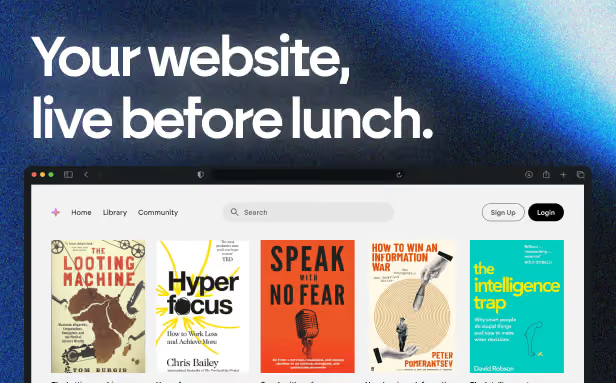
Emergent designs, writes, and publishes your whole site from one prompt. No templates, no drag-and-drop.
- Full site from one prompt
- Custom design, real pages
- Publish in minutes