




Industry research shows that online search and digital platforms, including both marketplaces and host websites are essential for short-term rental discovery, with 61% of travelers booking through marketplace channels and a growing share using direct booking sites and host channels to find and reserve accommodations. As the vacation rental and short-stay property market continues to expand globally, a professional, high-trust website is no longer optional for property managers and hosts. It has become essential for direct bookings, guest communication, and operational clarity. Tools like an AI website builder make it easier than ever for hosts to launch polished, conversion-ready sites without technical expertise.
For rental property owners and managers, a website must communicate property details, availability, pricing, reviews, amenities, and booking flow in a way that feels trustworthy and easy to use. The best website builders for rental properties in 2026 are those that balance design, booking system integration, channel synchronization, guest communication, and marketing flexibility without requiring deep technical knowledge.
What is a website builder for rental properties?
A website builder for rental properties is a platform that enables hosts, property managers, and hospitality businesses to create a public-facing site tailored specifically to rental listings without building from scratch. Unlike general business websites, rental property websites must integrate with booking engines, display availability calendars, show dynamic pricing, capture guest inquiries, and often synchronize with external distribution channels such as listing marketplaces and property management systems.
In 2026, strong rental property website builders support real-time availability displays, integrated payment handling, guest messaging workflows, SEO-ready content structures, and responsive design so that travelers can efficiently discover, evaluate, and book properties directly. The goal is to increase direct revenue while reducing dependency on third-party platforms.
Top 5 Website Builders to Launch Rental Property Websites in 2026
Rental Property Owners Are Choosing the below website builders
Suggested Read: Best AI Website Builder
What are the key features of website builders for rental properties?
1. Real-time availability calendars with booking logic
Rental property websites must show accurate availability to prevent double bookings and booking conflicts. The best builders allow integration with booking engines or include native calendar tools that reflect real-time availability, enabling guests to see open dates and book instantly without confusion or errors.
2. Integrated booking engines with payment handling
Direct booking capabilities are critical for reducing reliance on third-party marketplaces. A strong website builder includes or integrates with booking systems that handle session availability, pricing, deposits, secure payment processing, and cancellation policy enforcement, all within the same site.
3. Dynamic pricing and rate plan support
Rental pricing can vary widely by season, length of stay, demand, or event windows. The right builder supports dynamic pricing logic or integrates with revenue management tools so hosts can define rate plans that adjust based on demand, guest type, or calendar rules without manual intervention.
4. Mobile optimized design for browsing and booking
Most travelers browse and book stays from mobile devices. Website builders must deliver responsive design that adjusts layouts, navigation, and booking forms for mobile screens so guests can explore properties and complete bookings without usability issues.
5. Integrated guest communication and workflows
A rental property website should facilitate clear guest communication. Builders should support automated messaging for booking confirmations, pre-arrival instructions, check-in details, and post-stay follow-ups so hosts can maintain professional guest engagement without manual repetition.
6. SEO and discoverability tuned for property searches
Travelers often search for rentals using local terms, destination names, or property types. Builders should support SEO tools such as customizable meta tags, structured URLs, schema for property listings, and readable content sections so rental pages appear in relevant search results without heavy technical configuration.
What are the benefits of using website builders for rental properties?
1. Increases direct bookings and reduces commission costs
By directing more traffic to a simple booking flow on your own site, rental property owners can reduce dependency on high-commission marketplaces. Direct bookings typically result in higher net revenue per booking and more direct guest relationships.
2. Provides full control over pricing and availability logic
Marketplace platforms often impose rules or restrictions on how pricing and availability are presented. With the right website builder, hosts maintain full authority over rate rules, seasonal pricing, minimum stay requirements, and promotional offers, which supports strategic revenue optimization.
3. Owns guest data and communication flows
When guests book directly through your own website, you capture contact details and preferences visibly and securely. This data can be used for remarketing, loyalty programs, upselling add-ons, or personalized communication that strengthens long-term guest relationships.
4. Produces a professional brand presence that builds trust
A dedicated website signal professionalism and reliability to travelers. Well structured property pages with photos, amenities, reviews, and detailed descriptions reassure visitors that the host is credible and that the property is desirable, which increases conversion rates.
5. Reduces operational friction with synchronized calendars
By integrating availability across your website and external channels, you minimize the risk of overbooking and administrative errors. This synchronization simplifies operations and reduces time spent manually updating multiple platforms.
6. Supports long-term growth and diversification
As hosts expand their portfolio or add services such as tours, experiences, or partnerships with local businesses, a flexible website builder can accommodate new content, booking paths, and monetization models without a costly migration or rebuild.
5 Best Website Builders for Rental Properties
Rental property website builders in 2026 vary by focus. Some are hospitality-centric with native booking systems, others are flexible web builders that require integrations but offer deep design control. The best choice depends on whether your priority is direct booking revenue, custom branding, or operational automation.
In the next part, we will start with Emergent, evaluated in full depth for rental property use
1. Emergent
Emergent is one of the best, full-stack, AI-powered vibe coding and no code platforms for rental property owners and managers in 2026 who want their website to operate as a direct booking engine rather than a static listing page. For hosts managing single properties, multi-unit portfolios, or boutique hospitality brands, Emergent enables the creation of highly structured, trust-driven rental websites that combine property presentation, availability logic, booking workflows, and guest communication in one unified system.
Emergent is especially well suited for rental businesses that want to reduce dependency on third-party marketplaces, control their booking experience end to end, and build a long-term direct booking brand.
Key Features of Emergent
1. AI-generated rental property websites built from operational context
Emergent allows hosts to describe their property types, locations, target guest profiles, pricing strategy, booking rules, and operational workflows in natural language. From this input, the platform generates a complete rental website structure with property pages, availability views, booking flows, policies, and guest information sections that reflect how the business actually operates rather than forcing generic hospitality templates.
2. Deep property pages with structured amenity and policy presentation
Emergent supports long-form property pages where hosts can clearly explain room layouts, amenities, house rules, check-in procedures, and cancellation policies. This level of detail reduces guest uncertainty, filters unsuitable bookings, and improves conversion by answering common questions before guests reach the booking stage.
3. Flexible booking and inquiry workflows aligned with host control
Instead of forcing a single booking model, Emergent allows hosts to design direct booking flows, inquiry-first workflows, or hybrid approaches depending on risk tolerance and operational needs. This flexibility is critical for high-value properties, long stays, or hosts who want to screen guests before confirmation.
4. Integrated availability logic without marketplace dependency
Emergent supports availability and booking logic that can operate independently of third-party platforms. Hosts can define stay rules, minimum nights, blocked dates, and seasonal logic directly within the site, maintaining control over inventory without exposing all availability to external channels.
5. Built-in guest communication and follow-up workflows
Booking requests and confirmed stays can trigger backend workflows such as confirmation emails, pre-arrival instructions, check-in reminders, and post-stay follow-ups. This turns the website into an operational tool that supports guest experience, not just marketing.
6. Performance-first architecture for high-intent booking traffic
Rental property websites often serve high-intent visitors who are comparing options quickly. Emergent is built for fast page loads, responsive design, and clean interactions, ensuring guests can browse properties and complete bookings smoothly on both desktop and mobile devices.
Unique Features of Emergent
1. Rental websites treated as revenue and operations systems
Emergent approaches rental property websites as systems that directly generate revenue and manage operations. Property presentation, booking logic, guest communication, and policy enforcement are designed to work together rather than being handled across disconnected tools.
2. Full ownership of booking experience and guest data
Unlike marketplace-driven solutions, Emergent gives hosts full control over how bookings happen and what guest data is collected. This ownership allows hosts to build repeat guest relationships, loyalty programs, and direct marketing strategies without platform constraints.
3. Ability to encode complex stay rules and policies clearly
Emergent allows hosts to communicate stay requirements, check-in times, deposits, and house rules directly within the booking flow. This clarity reduces disputes, cancellations, and misunderstandings that commonly arise with third-party bookings.
4. Scales from single listings to multi-property portfolios
Whether managing one vacation rental or multiple properties across locations, Emergent adapts without architectural changes. New properties, categories, and booking rules can be added without rebuilding the site or changing platforms.
5. Unified system for content, booking, and guest communication
Property descriptions, availability logic, booking requests, and guest messaging all live within one platform. This reduces operational fragmentation and allows hosts to manage their rental business more professionally.
6. Long-term brand building independent of marketplaces
By owning their website and booking workflows, rental businesses build a brand that compounds over time. Search visibility, repeat guests, and direct traffic are not reset by marketplace algorithm changes or fee increases.
Advantages of Emergent
- Enables direct bookings with full host control.
- Supports detailed property and policy explanations.
- Reduces dependency on third-party marketplaces.
- Improves guest communication and experience.
- Scales cleanly across multiple properties.
- Strong performance for booking-focused traffic.
Limitations of Emergent
- Requires upfront clarity around booking rules and policies.
- May be more powerful than needed for hosts listing only on marketplaces.
- Best value comes when direct booking is a strategic priority.
Pricing and Plans of Emergent
| Plan | Pricing | Key Highlights |
|---|---|---|
| Free | $0/month |
|
| Standard | $20/month |
|
| Pro | $200/month |
|
| Team | $300/month |
|
| Enterprise | Custom |
|
Read More About: Emergent Pricing and Plans
2. Lodgify
Lodgify is a vacation rental website builder and booking platform designed specifically for short-term rental owners and property managers who want to drive direct bookings while maintaining synchronization with external channels. In 2026, Lodgify is widely used by hosts managing one or multiple properties who want a hospitality-first website combined with a reliable booking engine and channel management tools.
Lodgify is best suited for rental property owners who prioritize direct bookings, calendar synchronization, and operational consistency, while still needing a presentable, guest-facing website without custom development.
Key Features of Lodgify
1. Integrated booking engine built specifically for vacation rentals
Lodgify includes a native booking engine that allows guests to check availability, select dates, calculate pricing, and complete reservations directly on the website. For rental property owners, this reduces reliance on third-party marketplaces and ensures that booking rules, deposits, and cancellation policies are enforced consistently.
2. Real-time availability calendar with channel synchronization
The platform synchronizes availability across major listing channels such as Airbnb and Vrbo. This real-time calendar management helps prevent double bookings and reduces the administrative effort required to keep multiple platforms aligned.
3. Property-focused website templates optimized for conversion
Lodgify provides website templates designed specifically for showcasing rental properties. These templates prioritize large imagery, clear amenities lists, pricing visibility, and prominent booking calls to action, which are critical for converting browsing travelers into confirmed guests.
4. Multi-property support with centralized management
For hosts managing multiple listings, Lodgify allows properties to be managed from a single dashboard. Each property can have its own page while sharing common booking rules and branding, which simplifies operations as portfolios grow.
5. Secure payment processing and booking confirmations
Lodgify supports secure online payments, deposits, and automated booking confirmations. This creates a professional guest experience while reducing manual invoicing and follow-up work for hosts.
6. Guest communication tools tied to booking lifecycle
Automated messages for booking confirmations, pre-arrival instructions, and check-out reminders can be configured within Lodgify. This helps hosts maintain consistent communication without manual repetition.
Unique Features of Lodgify
1. Purpose-built for direct booking strategies
Unlike generic website builders, Lodgify is designed around the goal of increasing direct bookings. Every feature, from layout structure to booking flow, is optimized to move guests from discovery to reservation efficiently.
2. Strong channel manager integration without full dependency
Lodgify allows hosts to synchronize with marketplaces while still prioritizing their own website as the primary booking channel. This balance supports visibility on external platforms without surrendering control.
3. Scalable for small portfolios and growing property managers
The platform scales smoothly from a single rental to larger portfolios. Hosts can add properties, manage calendars, and maintain brand consistency without rearchitecting their website.
4. Hospitality-focused guest experience design
Lodgify emphasizes clarity around pricing, availability, and policies. This reduces guest confusion, increases trust, and lowers the likelihood of disputes or cancellations.
5. Operational features integrated with website presentation
Booking, payments, availability, and guest communication are tightly integrated with the website. This reduces tool fragmentation and keeps operational data centralized.
6. Clear separation between guest-facing and host-facing tools
Lodgify provides a clean distinction between what guests see and what hosts manage behind the scenes. This separation helps maintain a professional front-end experience while preserving operational control.
Advantages of Lodgify
- Strong native booking engine for direct reservations.
- Real-time calendar sync across channels.
- Templates designed specifically for rental properties.
- Supports multi-property management.
- Integrated payments and guest messaging.
- Reduces reliance on third-party marketplaces.
Limitations of Lodgify
- Design flexibility is limited compared to general builders.
- Website customization options are constrained by templates.
- Advanced branding requires workarounds.
- Less suitable for non-rental content expansion.
- Platform dependency for booking logic.
- Costs increase as property count grows.
Pricing and Plans of Lodgify
| Plan | Pricing | Key Highlights |
|---|---|---|
| Starter | $20/month + 1.9% booking fee |
|
| Professional | $50/month • 0% booking fee |
|
| Ultimate | $73/month • 0% booking fee |
|
3. Wix
Wix is a general-purpose website builder that many rental property owners use in 2026 to create visually flexible, brand-forward rental websites without custom development. It is commonly chosen by independent hosts and small property managers who want creative control over presentation while integrating booking engines, calendars, and payment tools through apps or external services.
Wix is best suited for rental property owners who want design freedom and marketing flexibility, and who are comfortable assembling their booking stack through integrations rather than relying on a single hospitality-first system.
Key Features of Wix
1. Visual drag and drop editor for custom property presentation
Wix provides a true drag and drop editor that allows hosts to position images, text, galleries, and calls to action freely. For rental properties, this flexibility makes it possible to highlight unique aspects of a property, such as views, interiors, or amenities, in a way that differentiates it from standardized marketplace listings.
2. Flexible property pages with rich media support
Rental owners can create detailed property pages that include image galleries, videos, floor plans, amenity lists, and local area information. This richness helps guests visualize the stay experience and builds confidence before they commit to a booking or inquiry.
3. Integration with third-party booking engines and calendars
Wix does not include a native vacation rental booking engine, but it integrates with third-party booking and calendar tools. This allows hosts to embed availability calendars, booking widgets, and payment systems while keeping the website design fully customizable.
4. Custom inquiry forms and lead capture workflows
Hosts can build custom forms that collect guest details such as dates, group size, and special requests. These forms help qualify inquiries and allow hosts to respond with appropriate availability or booking options without immediate confirmation.
5. Strong marketing and SEO tooling for property promotion
Wix includes built-in SEO tools, email marketing integrations, and analytics dashboards. These features help rental owners promote properties through search, email campaigns, and social channels, supporting direct booking traffic growth.
6. Managed hosting, security, and platform reliability
Wix handles hosting, SSL security, and platform updates automatically. This reduces technical overhead for rental owners while ensuring consistent uptime and performance for booking-focused traffic.
Unique Features of Wix
1. High creative freedom compared to hospitality-specific platforms
Wix allows hosts to design websites that feel unique and brand-driven rather than templated. This is valuable for boutique rentals or experiential stays where storytelling and aesthetics influence booking decisions.
2. Large app marketplace for extending rental functionality
Through the Wix App Market, hosts can add booking tools, chat widgets, CRM features, and marketing integrations. This modular approach allows sites to grow gradually as needs evolve.
3. Rapid iteration and content experimentation
Rental owners can quickly test new layouts, pricing explanations, or promotional messaging. This agility supports seasonal campaigns, special offers, or positioning adjustments without rebuilding the site.
4. Suitable for mixed-use sites beyond rentals
Wix works well for owners who combine rental properties with blogs, experience pages, or local partnerships. The platform does not constrain the site to rental-only use cases.
5. Familiar platform with strong onboarding resources
Because Wix is widely adopted, many users find it easy to learn and get support. Tutorials and templates reduce friction for hosts building their first rental website.
6. Balance between simplicity and extensibility
Wix offers enough built-in functionality to launch quickly while still allowing integrations for more advanced needs. This balance appeals to owners who want flexibility without deep technical work.
Advantages of Wix
- High design flexibility for property presentation.
- Rich media support for showcasing rentals.
- Strong marketing and SEO tools.
- Large ecosystem of integrations.
- Easy to use without technical skills.
- Suitable for mixed content websites.
Limitations of Wix
- No native vacation rental booking engine.
- Reliance on third-party apps for core booking logic.
- Performance can vary with heavy customization.
- Operational workflows less integrated.
- Scaling multi-property portfolios can be complex.
- Long-term maintenance depends on app choices.
Pricing and Plans of Wix
| Plan | Pricing | Key Highlights |
|---|---|---|
| Free | $0 | For trying Wix and basic experimentation |
| Light | $17 per month | Ideal for portfolios and personal sites |
| Core | $29 per month | Designed for small online stores and growing businesses |
| Business | $36 per month | Suited for established businesses needing more capabilities |
| Business Elite | $159 per month | Built for large businesses with advanced requirements |
| Enterprise | Custom pricing | Tailored for global brands with high-scale, industry-level needs |
4. Webflow
Webflow is a visual-first website builder that gives rental property owners and hospitality brands near developer-level control over layout, structure, and responsiveness without writing traditional code. Webflow is commonly used by boutique rental brands, design-forward hosts, and professional property managers who want a highly differentiated website experience rather than a templated hospitality site.
Webflow is best suited for rental property owners who care deeply about brand presentation, custom guest journeys, and long-term flexibility, and who are willing to trade automation for control.
Key Features of Webflow
1. Full visual control over property layouts and guest flow
Webflow allows hosts to design property pages using real layout concepts such as grids, containers, and responsive breakpoints. This enables complete control over how photos, amenities, pricing context, and calls to action are presented, which is critical for premium or experiential rentals where storytelling drives conversion.
2. CMS-driven property listings and content management
Rental properties, locations, and related content can be managed through Webflow’s CMS. Hosts can add or update listings, descriptions, and media without redesigning pages, which supports scalability as portfolios grow or seasonal content changes.
3. Advanced responsive design for mobile booking behavior
Webflow allows fine-grained control over how layouts behave across desktop, tablet, and mobile views. This ensures booking calls to action, inquiry buttons, and property details remain accessible and readable on mobile devices where many booking decisions are made.
4. Support for third-party booking engine integrations
While Webflow does not include a native booking system, it integrates cleanly with external booking engines, calendars, and payment providers. This allows hosts to combine custom design with professional booking tools without compromising site structure.
5. Clean, production-ready code and performance optimization
Webflow generates clean HTML, CSS, and JavaScript, which improves load times, accessibility, and SEO. For rental property websites with image-heavy content, this performance advantage directly impacts guest experience and conversion rates.
6. Built-in hosting with global delivery and security
Webflow includes managed hosting, SSL security, and global CDN delivery. This ensures reliable performance for international guests browsing properties from different regions.
Unique Features of Webflow
1. Design-led differentiation beyond hospitality templates
Webflow allows rental websites to break away from standard booking layouts. This is particularly valuable for boutique stays, luxury rentals, or experience-driven properties where brand perception is central to booking decisions.
2. Strong fit for marketing-driven direct booking strategies
Because Webflow excels at landing pages, storytelling, and visual hierarchy, it supports marketing campaigns that drive traffic directly to custom booking or inquiry flows rather than relying on marketplace discovery.
3. Long-term flexibility for evolving hospitality brands
Webflow sites can expand into blogs, destination guides, events, or partnerships without structural limitations. This flexibility supports rental brands that want to build authority around a location or experience.
4. Fine-grained SEO and content structure control
Hosts can control metadata, URL structures, heading hierarchy, and content organization precisely. This helps rental pages rank for destination-specific searches and long-tail property queries over time.
5. Strong ecosystem of designers and agencies
Webflow has a mature ecosystem of professionals who specialize in building and maintaining high-end sites. This makes it easier for rental brands to get expert help when needed.
6. Clear tradeoff between control and automation
Webflow offers maximum control but requires manual setup and integrations for booking workflows. This transparency helps hosts decide whether they value customization over turnkey automation.
Advantages of Webflow
- Exceptional design and layout control.
- Strong performance and clean code.
- CMS support for scalable property listings.
- Flexible integrations with booking tools.
- Excellent SEO and responsiveness.
- Ideal for brand-led rental businesses.
Limitations of Webflow
- No native booking or calendar system.
- Requires integrations for core rental workflows.
- Steeper learning curve than template builders.
- Higher setup effort for non-technical users.
- Operational automation must be assembled manually.
- Less suitable for hands-off hosts.
Pricing and Plans of Webflow
| Plan | Pricing | Key Highlights |
|---|---|---|
| Starter | Free |
|
| Basic | $18/month |
|
| CMS | $29/month |
|
| Business | $49/month |
|
5. Smoobu
Smoobu is a channel management and booking platform designed for vacation rental owners and small property managers who want to synchronize calendars, manage reservations, and support direct bookings through a connected website. In 2026, Smoobu is commonly used by hosts who prioritize operational coordination across multiple booking channels while maintaining a simple, functional website for direct reservations.
Smoobu is best suited for rental property owners who want strong channel synchronization and booking reliability first, and who are comfortable with a more utilitarian website experience rather than deep branding or customization.
Key Features of Smoobu
1. Centralized channel manager with real-time calendar synchronization
Smoobu synchronizes availability across major booking platforms such as Airbnb, Booking.com, and Vrbo. For rental owners, this real-time coordination prevents double bookings and ensures that availability shown on the website always matches external channels, which is critical for operational accuracy.
2. Integrated booking engine for direct reservations
Smoobu includes a booking engine that can be embedded into the website, allowing guests to check availability, select dates, and submit bookings directly. This supports commission-free reservations while keeping booking logic consistent across channels.
3. Automated booking confirmations and guest messaging
Once a booking is made, Smoobu can send automated confirmation messages and pre-arrival communications. This reduces manual follow-up work and helps maintain a professional guest experience across all bookings.
4. Multi-property support with centralized management dashboard
Hosts managing multiple properties can view and manage reservations, availability, and settings from a single dashboard. This centralized control is valuable for owners scaling beyond a single listing.
5. Basic website and page builder included
Smoobu offers a simple website builder that allows hosts to create property pages, embed booking widgets, and publish essential information such as amenities, house rules, and contact details. This enables a functional direct booking site without external tools.
6. Support for external website integrations
For hosts using custom websites built with platforms like Webflow or Wix, Smoobu provides widgets and integrations that can embed booking and availability logic into existing sites. This flexibility allows owners to separate design from booking operations.
Unique Features of Smoobu
1. Strong focus on channel synchronization accuracy
Smoobu’s core strength lies in keeping calendars accurate across multiple channels. This operational reliability is often more important than visual polish for hosts managing bookings at scale.
2. Balanced approach between direct bookings and marketplaces
Smoobu supports direct bookings without forcing hosts to abandon marketplaces. This balance allows owners to gradually shift more traffic toward direct reservations while maintaining marketplace visibility.
3. Practical fit for small to mid-sized rental portfolios
Smoobu works particularly well for owners managing several properties who need consistent processes without enterprise-level complexity. It offers enough automation without overwhelming users.
4. Emphasis on operational simplicity over customization
The platform prioritizes functionality and reliability. While this limits design freedom, it ensures that booking workflows and calendar logic remain clear and dependable.
5. Cost-effective solution for channel management and bookings
Compared to many hospitality platforms, Smoobu offers competitive pricing for channel management and booking features. This makes it accessible for independent hosts managing costs carefully.
6. Clear separation between booking logic and site design
Smoobu allows hosts to treat booking and channel management as a backend layer that can be paired with different website builders. This separation supports flexibility as branding needs evolve.
Advantages of Smoobu
- Reliable channel management and calendar synchronization.
- Integrated booking engine for direct reservations.
- Centralized dashboard for multi-property management.
- Automated guest messaging and confirmations.
- Supports integration with custom websites.
- Cost-effective for small to mid-sized portfolios.
Limitations of Smoobu
- Website builder is basic and limited in design.
- Branding and customization options are minimal.
- Not ideal for marketing-driven rental sites.
- Advanced guest experience customization is limited.
- Less suitable for luxury or brand-led properties.
- Scaling into complex hospitality brands requires additional tools.
Pricing and Plans of Smoobu
| Plan | Pricing | Key Highlights |
|---|---|---|
| Professional Flex | $30/month + 0.9% booking fee |
|
| Professional Prepaid | $35.96/month • 0% booking fee |
|
| Teams Pro+ | $56.51/month • 0% booking fee |
|
How to choose the best website builder for rental properties
1. Decide whether direct bookings or marketplace reliance is your priority
Some rental businesses use their website mainly as a credibility layer while relying on marketplaces for bookings. Others aim to shift as much demand as possible toward direct reservations to reduce commission costs. The right website builder must align with this strategy, because direct-booking-first builders prioritize booking logic and guest flows, while marketplace-aligned tools focus more on synchronization and convenience.
2. Evaluate how booking rules, policies, and availability are handled
Rental operations are governed by rules such as minimum stays, seasonal pricing, deposits, cancellation policies, and blocked dates. A strong website builder should allow these rules to be clearly communicated and enforced within the booking or inquiry flow, reducing guest confusion and operational disputes.
3. Assess how much control you need over guest experience and communication
Some hosts want highly automated guest journeys, while others prefer manual screening or personalized communication. Choosing a builder that supports your preferred level of control over confirmations, pre-arrival instructions, and follow-ups ensures the website fits naturally into daily operations rather than creating friction.
4. Consider scalability across properties and locations
A website that works for one property may not scale cleanly to multiple listings or locations. Builders that support structured property pages, centralized availability logic, and consistent branding make it easier to expand without rebuilding the site from scratch.
5. Think long term about brand ownership and data control
Marketplaces and closed platforms can change fees, policies, or visibility rules unexpectedly. A website builder that gives you ownership of content, booking flows, and guest data allows your rental brand to compound value over time rather than resetting with platform changes.
Why is Emergent the best website builder for rental properties?
1. Rental property websites are built as revenue and operations systems
Emergent treats rental websites as end-to-end business systems rather than static listing pages. Property presentation, booking logic, availability rules, guest communication, and follow-up workflows are designed to work together, enabling hosts to manage both revenue generation and operations from a single platform.
2. Deep control over booking models without forcing marketplace dependency
Emergent allows hosts to choose between direct booking, inquiry-first, or hybrid booking models based on risk tolerance and property value. This flexibility is critical for high-value stays, long-term rentals, or properties where guest screening and policy enforcement matter as much as occupancy.
3. Clear communication of policies, rules, and expectations upfront
Emergent supports detailed policy sections, house rules, and booking conditions that are embedded directly into the guest journey. This clarity reduces cancellations, disputes, and negative experiences that often arise when expectations are unclear on marketplace-driven bookings.
4. Full ownership of guest data and relationships
Unlike platforms that mediate guest communication, Emergent gives hosts direct access to guest data, inquiries, and booking history. This ownership enables repeat booking strategies, loyalty programs, and direct remarketing without reliance on third-party platforms.
5. Scales cleanly from single properties to multi-location portfolios
Emergent adapts to growth without architectural changes. Hosts can add properties, categories, locations, and new booking workflows while maintaining consistency across the site, making it suitable for both independent hosts and growing rental businesses.
Conclusion
In 2026, rental property websites are no longer optional marketing assets. They are central to revenue control, guest experience, and long-term brand sustainability. The best website builders for rental properties are those that balance booking reliability, operational clarity, and ownership rather than prioritizing convenience alone.
Emergent stands out by enabling rental businesses to build websites that function as complete booking and operations systems. For hosts and property managers who want to reduce dependency on marketplaces and build a durable direct-booking brand, Emergent offers the strongest long-term foundation.
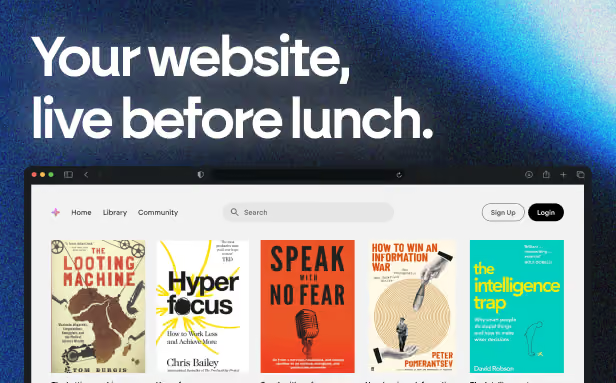
Emergent designs, writes, and publishes your whole site from one prompt. No templates, no drag-and-drop.
- Full site from one prompt
- Custom design, real pages
- Publish in minutes







