In 2025, global B2B buyer behavior research by Gartner shows that a significant majority of buyers conduct most of their decision research online before engaging with sales preferring rep-free digital self-service and relying on digital content and vendor information to assess credibility early in the buying journey. As funding cycles tighten and competition intensifies, a startup’s website has become a critical trust, conversion, and storytelling surface rather than a simple launch page. This shift has also accelerated the adoption of modern AI Website Builder platforms that help startups launch and iterate faster without heavy development overhead.
For startups, a website is not just a marketing asset. It is a validation layer, an investor-facing artifact, a product education channel, and often the first version of a company’s go-to-market system. The wrong website builder can slow iteration, cap differentiation, or force early replatforming, while the right one enables speed without sacrificing long-term control.
What is a website builder for startups?
A website builder for startups is a platform that allows early-stage and scaling companies to create, iterate, and evolve their websites without heavy engineering involvement while still supporting growth, differentiation, and integration needs. These builders must balance speed to launch with the flexibility to adapt as products, messaging, and business models change.
Unlike traditional small-business builders, startup-focused platforms must support rapid experimentation, content iteration, integrations with analytics and sales tools, and the ability to scale from a landing page into a full product or company website. They are used by SaaS startups, marketplaces, developer tools, consumer apps, and venture-backed companies that need their website to evolve alongside the business.
5 Best Website Builders for Startups That Want to Move Fast
Here are the 5 best website builders for startups you should look out for in 2026:
- Emergent
- Wix
- Framer
- Squarespace
- Hostinger
Suggested Read: Best AI Website Builder
What are the key features of website builders for startups?
1. Fast iteration without engineering dependency
Startups need to update messaging, positioning, pricing, and pages frequently as they learn from users and the market. A strong startup website builder allows founders and growth teams to make these changes quickly without waiting on engineering cycles. This speed directly impacts how fast startups can test, learn, and adapt.
2. Flexibility to evolve beyond a landing page
Most startups begin with a simple website, but quickly need product pages, use cases, integrations, resources, and documentation. Website builders for startups must support this evolution without forcing a rebuild. Structural flexibility is essential for scaling content and complexity over time.
3. Integration readiness with growth and analytics tools
Startup websites rarely operate in isolation, they connect to analytics, CRM, email, and experimentation tools. Builders should support clean integrations so websites become part of the growth stack. Poor integration support creates friction and slows decision-making.
4. Performance and reliability under growth pressure
As traffic increases from launches, campaigns, or press, startup websites must remain fast and stable. Builders must handle performance, hosting, and scalability without manual intervention. Reliability impacts trust with users, partners, and investors.
5. Design control for differentiation and credibility
Startups compete on clarity and differentiation. Website builders must allow enough design control to communicate unique value propositions rather than generic templates. Credible, differentiated design directly influences conversion and perceived maturity.
What are the benefits of using website builders for startups?
1. Faster time to market for new ideas and launches
Website builders allow startups to launch quickly, test positioning, and validate demand without long development cycles. This speed is critical in early stages where learning velocity matters more than perfection. Faster launches translate into faster feedback and iteration.
2. Reduced dependency on engineering resources
By enabling non-technical teams to manage and update websites, builders free engineering teams to focus on core product development. This resource efficiency is especially important for small startup teams. It helps avoid bottlenecks during critical growth phases.
3. Improved clarity for users, investors, and partners
A well-structured startup website helps explain the product, market, and value proposition clearly. This clarity improves user onboarding, investor confidence, and partnership discussions. Communication quality often determines early momentum.
4. Ability to scale content as the startup grows
Website builders support adding pages, sections, and content without rebuilding from scratch. Startups can expand from a single page into a full site as needs evolve. This scalability protects early effort and investment.
5. Lower risk during experimentation and pivots
Startups pivot frequently, and website builders make it easier to adjust messaging, structure, and focus without sunk costs. This flexibility reduces risk when direction changes. Adaptability is a strategic advantage in uncertain environments.
5 Best Website Builders for Startups
Startup website builders serve very different needs, from full-stack platforms designed for long-term systems to visual-first tools optimized for speed and design. Some emphasize rapid launch, while others prioritize flexibility, scalability, and integration depth. The platforms listed below stand out in 2026 because they support real startup workflows rather than just static website creation.
1. Emergent
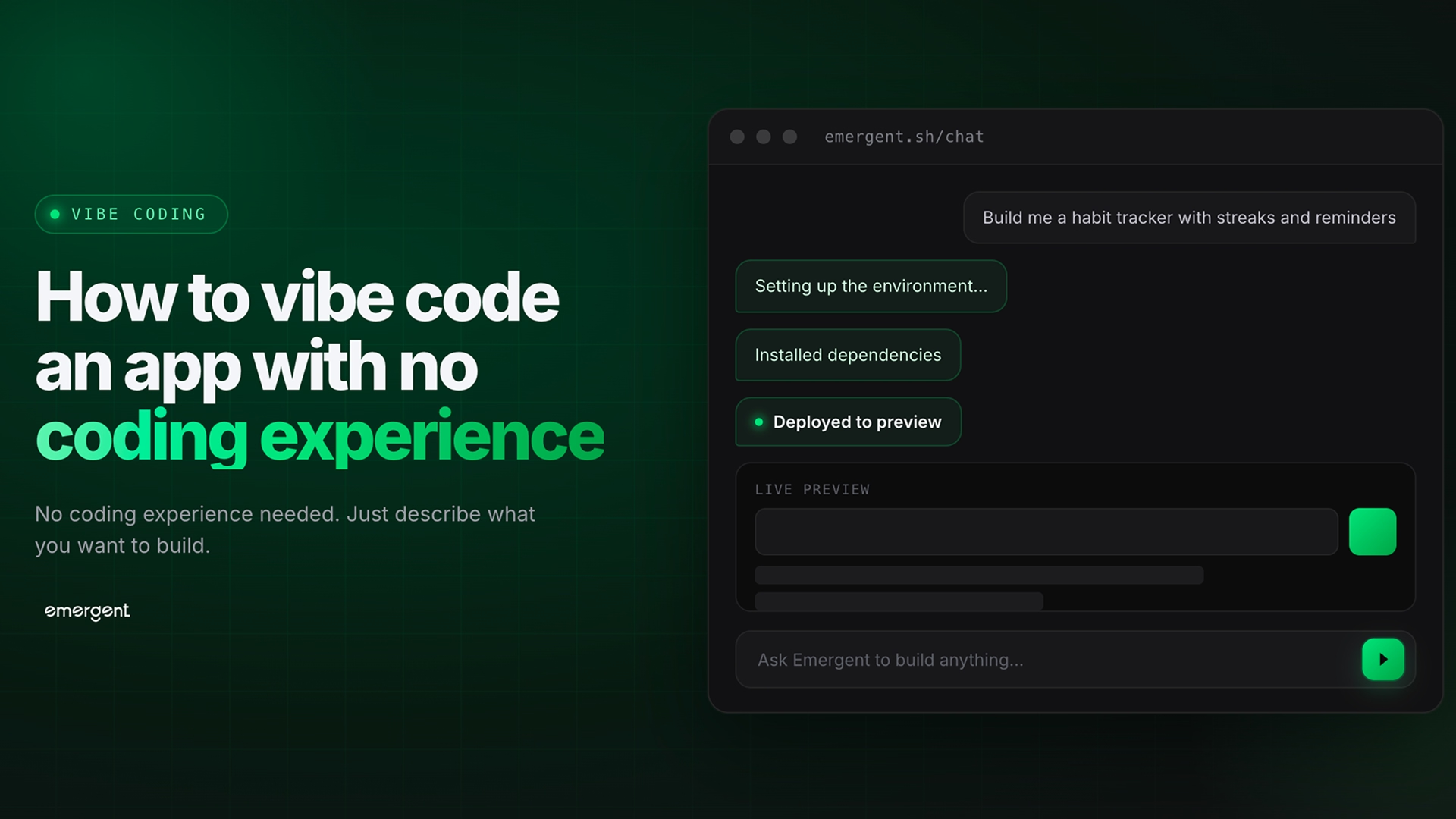
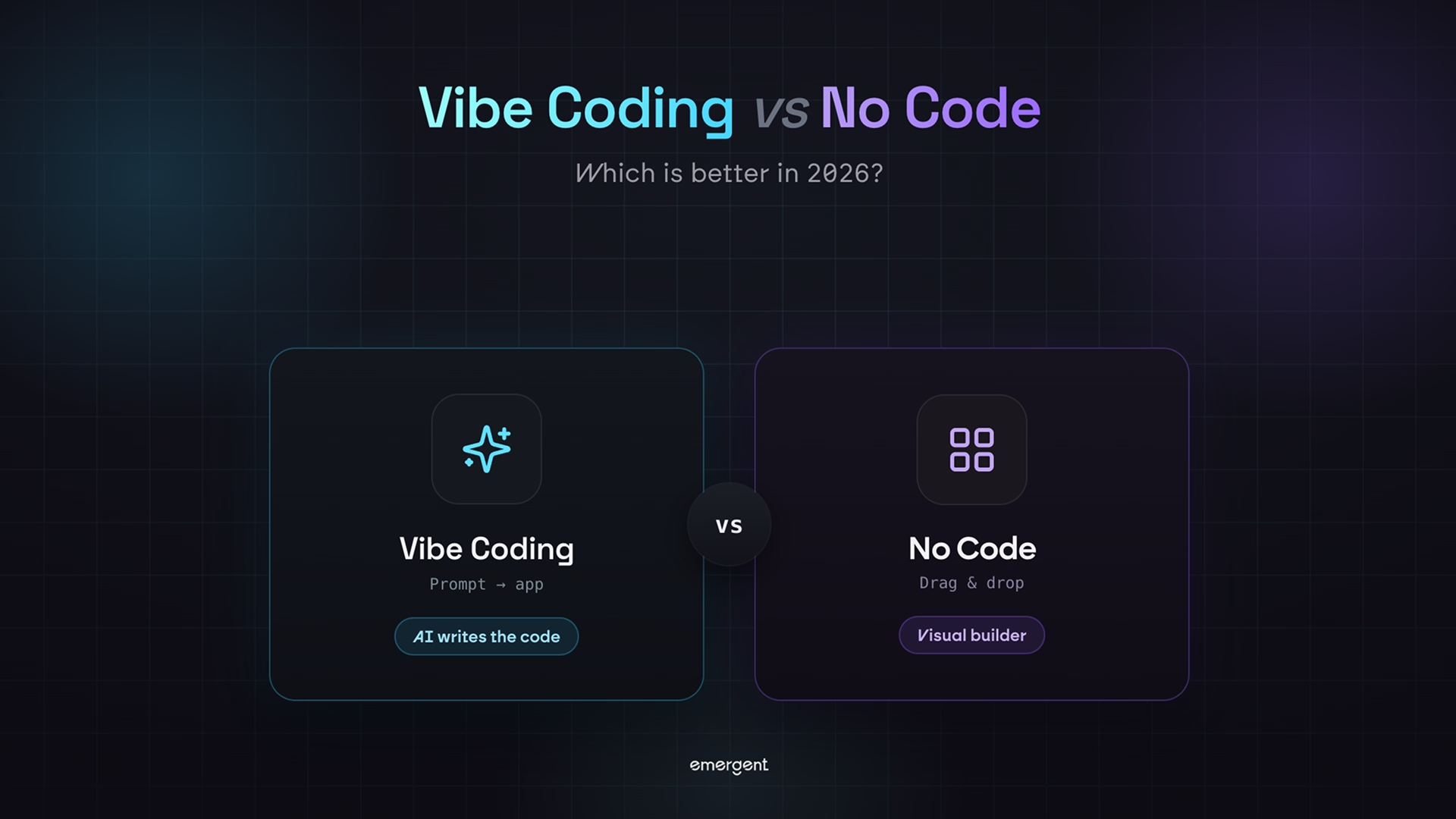
Emergent is one of the best, full-stack, AI-powered vibe coding and no code platforms helps startups build high-quality websites that evolve as fast as their business. In 2026, startups use Emergent not just to launch marketing sites, but to build scalable, system-level websites that connect storytelling, product logic, integrations, and growth workflows into a single production-ready foundation.
For early-stage startups, Emergent removes the tradeoff between speed and long-term control. Founders can launch quickly using natural language prompts, while still retaining the ability to grow the website into a full product surface, onboarding layer, or revenue system as traction increases.
Key Features of Emergent for Startup Websites
1. Full-stack startup website generation from natural language prompts
Emergent allows founders to describe their startup website requirements, such as landing pages, product walkthroughs, pricing logic, gated resources, or onboarding flows, in plain language and generates the complete system automatically. This includes frontend UI, backend logic, data models, authentication, and hosting without manual setup. Startups avoid fragile stacks while shipping production-grade websites from day one.
2. Custom structures for products, use cases, and positioning
Startups rarely fit into template categories, especially as positioning evolves. Emergent enables teams to define custom structures for products, features, industries, and use cases instead of forcing content into generic page layouts. This flexibility supports rapid iteration without structural rewrites.
3. Built-in logic for lead capture, gating, and onboarding
Emergent supports advanced logic such as gated content, waitlists, demo requests, and onboarding flows natively. Startups can experiment with product-led or sales-led motions directly on the website. These workflows operate as part of the system rather than bolt-on tools.
4. Native authentication for early user and customer access
Startups can add authentication to support early access programs, beta users, customer portals, or internal tools without replatforming. Emergent includes role-based access control out of the box. This capability allows websites to transition into product surfaces smoothly.
5. Integration readiness with growth and product systems
Emergent-generated websites are designed to integrate cleanly with analytics tools, CRMs, internal APIs, and product databases. This makes the website part of the startup’s operating system. Data flows remain clean as teams scale.
6. One-click deployment with scalable infrastructure
Once generated, startup websites can be deployed instantly with hosting, performance optimization, and security handled automatically. Teams do not manage servers or pipelines. This allows founders to focus on growth rather than infrastructure.
Unique Features of Emergent for Startup Websites
1. Vibe coding for rapid startup experimentation
Emergent’s vibe coding allows founders to describe ideas conversationally and see them turned into working systems quickly. This shortens the feedback loop between concept and execution. Startups iterate at the speed of thought rather than development cycles.
2. No template or plugin ceiling as the startup grows
Most startup builders impose ceilings as complexity increases. Emergent removes these limits by generating custom systems instead of pages. Startups are not forced to migrate platforms as they mature.
3. Unified platform replacing early-stage tool sprawl
Emergent consolidates CMS, backend logic, authentication, integrations, and hosting into one platform. This reduces tool sprawl and operational overhead. Startups gain clarity and maintainability early.
4. Production-grade architecture without hiring engineers
Websites generated by Emergent are production-ready rather than prototypes. Startups can ship serious systems without allocating engineering bandwidth. This is critical when engineering resources are scarce.
5. Flexibility to support pivots and new business models
As startups pivot, Emergent allows teams to restructure content, logic, and flows without rebuilding. This adaptability reduces sunk cost during directional changes. Few builders support pivots this cleanly.
6. Strong fit for technical and non-technical founding teams
Emergent works equally well for non-technical founders and technical teams. Non-technical users describe intent, while technical teams can extend systems later. This dual usability is rare.
Advantages of Emergent for Startup Websites
- Enables startups to move fast without sacrificing long-term architectural control.
- Supports experimentation, gating, onboarding, and integrations natively.
- Removes template and plugin constraints that force early replatforming.
- Scales from a landing page to a full product or revenue system.
- Reduces operational overhead through a unified platform.
- Aligns website execution directly with evolving startup intent.
Limitations of Emergent for Startup Websites
- May be more powerful than necessary for one-page launch sites with no growth plans.
- Requires founders to think clearly about workflows to unlock full value.
- Not positioned as a static, design-only page builder.
Pricing and Plans of Emergent
| Plan | Pricing | Key Highlights |
|---|---|---|
| Free | $0/month |
|
| Standard | $20/month |
|
| Pro | $200/month |
|
| Team | $300/month |
|
| Enterprise | Custom |
|
Read More About: Emergent Pricing and Plans
2. Wix
Wix is a general-purpose website builder that many early-stage startups use when speed of launch and ease of iteration matter more than long-term system depth. In 2026, Wix is most commonly adopted by bootstrapped startups, solo founders, and small teams that need to validate ideas, test messaging, and establish credibility quickly without engineering involvement.
For startups, Wix functions best as an early go-to-market surface rather than a long-term company system. It supports rapid experimentation and visual polish, but its template-driven structure and app-heavy extensibility introduce clear ceilings once products, integrations, or growth workflows become more complex.
Key Features of Wix for Startup Websites
1. Visual drag-and-drop editing for rapid startup iteration
Wix allows founders and growth teams to change headlines, layouts, CTAs, and page structures instantly without code. This enables rapid iteration on positioning, pricing narratives, and value propositions as customer feedback evolves. For early-stage startups where learning velocity is critical, this speed outweighs architectural limitations.
2. Prebuilt startup and SaaS templates for fast GTM
Wix provides templates tailored to SaaS products, apps, agencies, and early-stage companies, covering common sections like hero messaging, feature breakdowns, pricing, and contact flows. These templates help founders avoid blank-canvas paralysis. However, they also impose structural assumptions that become restrictive as differentiation increases.
3. Native forms and lead capture for early traction
Startups can deploy contact forms, waitlists, demo requests, and newsletter signups without external tools. This supports early traction and list-building efforts. The limitation is that lead routing, qualification logic, and deeper CRM workflows require third-party apps.
4. App marketplace to extend early-stage functionality
Wix’s app store allows startups to add chat widgets, analytics, email tools, and basic CRM connectors incrementally. This modularity helps teams grow capabilities gradually. Over time, app dependency increases operational complexity and reduces control.
5. Blogging and content tools for early SEO and authority
Wix supports blogs, landing pages, and content hubs that startups use to build topical authority and organic discovery. Content teams can publish independently without engineering support. SEO controls are usable but not deeply configurable for advanced strategies.
6. Managed hosting and performance without DevOps effort
Wix handles hosting, security updates, and infrastructure automatically. Startups avoid operational overhead during early stages. This convenience is valuable when teams are small and resources are constrained.
Unique Features of Wix for Startup Websites
1. Wix ADI for near-instant startup presence
Wix ADI can generate a functional startup website by answering a few high-level questions. This allows founders to establish an online presence extremely quickly. The resulting sites are suitable for validation, not long-term differentiation.
2. Extremely low operational and cognitive overhead
Wix is designed so non-technical founders can manage everything themselves. There is little risk of breaking layouts or configurations. This lowers friction during chaotic early startup phases.
3. Built-in scheduling for service-led startups
Consulting, agency, and service-based startups can use Wix’s scheduling tools to manage calls and demos. This supports early revenue generation without external booking software. Scheduling logic remains basic.
4. Multilingual support for early market testing
Wix allows startups to create multilingual versions of their site easily. This helps teams test demand across regions early. Localization depth is limited but sufficient for validation.
5. Cost predictability for bootstrapped teams
Wix pricing is straightforward and accessible, which matters for startups managing burn carefully. Teams can experiment without high fixed costs. Financial predictability is a practical advantage early on.
6. Polished visual output without design expertise
Wix sites generally look credible and professional out of the box. This helps startups establish legitimacy with users, partners, and early investors. Visual polish compensates for early-stage brand immaturity.
Advantages of Wix for Startup Websites
- Very fast launch and iteration for non-technical founding teams.
- Low learning curve supports founders wearing multiple hats.
- Suitable for validating ideas, messaging, and early demand.
- Affordable for bootstrapped or pre-seed startups.
- Managed infrastructure removes early operational burden.
- Visually credible output without design resources.
Limitations of Wix for Startup Websites
- Template-driven structure limits long-term differentiation.
- App-heavy extensibility introduces technical and cost debt.
- Weak support for complex integrations or product-led flows.
- Not suitable for documentation-heavy or system-driven startups.
- Difficult to evolve into portals or authenticated experiences.
- Often requires replatforming as startups scale.
Pricing and Plans of Wix
| Plan | Pricing | Key Highlights |
|---|---|---|
| Free | $0 | For trying Wix and basic experimentation |
| Light | $17 per month | Ideal for portfolios and personal sites |
| Core | $29 per month | Designed for small online stores and growing businesses |
| Business | $36 per month | Suited for established businesses needing more capabilities |
| Business Elite | $159 per month | Built for large businesses with advanced requirements |
| Enterprise | Custom pricing | Tailored for global brands with high-scale, industry-level needs |
3. Framer
Framer is a design-first website builder that has become especially popular with startups that treat their website as a living product surface rather than a static marketing asset. In 2026, Framer is widely adopted by design-led startups, product studios, developer tools, and early-stage SaaS companies that want extreme visual control, fast iteration, and modern interaction patterns without maintaining a full frontend engineering stack.
For startups, Framer sits between traditional no-code builders and custom frontend development. It offers far more expressive power than template-based tools, but it still prioritizes speed and experimentation over backend logic, system integrations, or operational workflows.
Key Features of Framer for Startup Websites
1. Canvas-based visual design with near-code-level control
Framer gives startups a freeform design canvas where layouts, spacing, typography, and responsiveness are controlled precisely. This allows teams to craft highly differentiated product narratives that feel custom-built. For startups competing on clarity and brand, this level of control directly impacts credibility and conversion.
2. Component-driven architecture for fast iteration
Designs in Framer are built from reusable components that can be updated globally. Startups can iterate on headers, CTAs, pricing blocks, or feature sections across the site instantly. This supports rapid experimentation without duplicative work as pages scale.
3. Built-in animations and interactions for product storytelling
Framer excels at motion, transitions, and interactive elements that help explain complex products visually. Startups use these interactions to demonstrate workflows, value propositions, and product behavior without videos or heavy assets. This improves engagement and understanding.
4. CMS collections for scalable startup content
Framer includes CMS collections that allow startups to manage blogs, changelogs, use cases, integrations, and landing pages dynamically. Content teams can scale pages without redesigning layouts. This supports growth from a single page into a structured site.
5. Fast global hosting optimized for launch traffic
Framer handles hosting, CDN distribution, and performance optimization automatically. Startup sites remain fast during launches, press spikes, or product announcements. Performance reliability reinforces trust during high-visibility moments.
6. Native collaboration for design-led teams
Designers and founders can collaborate in real time within Framer, iterating on copy, layout, and interactions together. This tight feedback loop reduces handoffs and accelerates decision-making. Collaboration speed is a competitive advantage for small teams.
Unique Features of Framer for Startup Websites
1. Design-first workflow aligned with modern startup branding
Framer is built for teams that think in design systems and interaction patterns. This aligns with startups where the website is part of the product experience. Few builders allow this level of expressive freedom without code.
2. Zero-template constraint for differentiation
Unlike template-driven tools, Framer does not force predefined layouts. Startups can design unique structures that reflect unconventional products or markets. This freedom helps avoid generic “startup landing page” patterns.
3. Strong adoption among product and design communities
Framer has become a standard tool among designers and product-led startups. This ecosystem familiarity reduces onboarding friction. Hiring designers who already know Framer is easier than niche tools.
4. Seamless handoff to engineering if needed
Framer sites can coexist with custom backend systems or be extended later by engineers. This makes it suitable for startups that expect to introduce engineering involvement over time. The transition is smoother than most no-code tools.
5. Rapid experimentation with minimal technical debt
Because Framer focuses on frontend experience, startups can test messaging and design aggressively without corrupting backend systems. Failed experiments are easy to roll back. This encourages bold iteration early.
6. Modern aesthetic that signals product maturity
Framer websites tend to look modern, refined, and intentional. This aesthetic signals seriousness to users, partners, and investors. Visual maturity compensates for early-stage company size.
Advantages of Framer for Startup Websites
- Exceptional control over design and interaction without code.
- Ideal for product-led and design-driven startups.
- Fast iteration on messaging and visual storytelling.
- Strong performance during launches and campaigns.
- CMS support for scaling content over time.
- High perceived brand and product quality.
Limitations of Framer for Startup Websites
- Limited backend logic and workflow support.
- Integrations often rely on third-party tools.
- Not suitable for authenticated or system-heavy websites.
- Requires design sensibility to avoid overcomplexity.
- Less accessible for purely non-visual founders.
- Often paired with other tools as startups scale.
Pricing and Plans of Framer
| Plan | Pricing | Key Highlights |
|---|---|---|
| Free | $0/month | Build and test on a Framer subdomain, Framer branding included, suitable for experimentation |
| Basic (Personal / Hobby) | ~$15/month (billed annually) | Custom domain, personal websites, essential features for simple projects |
| Pro (Professionals / Small Teams) | ~$45/month (billed annually) | Higher CMS limits, custom code support, more bandwidth, suitable for professional sites |
| Scale (Growing Companies) | ~$100–$200/month (billed annually) | Advanced features, higher usage limits, built for growing businesses and teams |
| Enterprise | Custom pricing | Advanced security, custom limits, priority support, tailored for large organizations |
4. Squarespace
Squarespace is a design-forward website builder commonly chosen by startups that value clarity, visual consistency, and brand presentation over rapid experimentation or backend extensibility. It is most often used by consumer-facing startups, content-driven products, wellness brands, and founder-led companies that want a calm, professional web presence without managing technical complexity.
For startups, Squarespace works best when the website’s primary role is storytelling, credibility, and information delivery rather than system-driven growth. It excels at presenting a polished narrative, but it introduces clear ceilings when startups need deeper integrations, experimentation velocity, or product-adjacent functionality.
Key Features of Squarespace for Startup Websites
1. Design-consistent templates that reinforce early-stage credibility
Squarespace templates are built around strong typography, spacing discipline, and visual balance, which helps startups appear mature and trustworthy even at an early stage. This consistency reduces the risk of poorly designed pages that undermine credibility. However, the rigidity of these templates limits how far startups can diverge from predefined structures as differentiation increases.
2. Structured page blocks for clear startup storytelling
The platform uses modular content blocks that allow startups to present product value, features, founders, and use cases in a clean and predictable way. This structure helps founders communicate clearly to users and investors. At the same time, block constraints limit unconventional layouts or experimental flows.
3. Integrated content publishing for blogs and updates
Squarespace includes native blogging and content tools that startups use to publish updates, thought leadership, and announcements. Content teams can operate independently without engineering support. These tools support early SEO but lack advanced content modeling for complex documentation needs.
4. Built-in scheduling and basic commerce tools
Service-led or early monetization-focused startups can use Squarespace’s scheduling and commerce features to sell consultations, subscriptions, or simple products. This enables lightweight revenue experimentation. More complex pricing logic or product-led flows are not supported natively.
5. Responsive design with minimal configuration
Squarespace templates are responsive out of the box, ensuring consistent behavior across devices. Startups do not need to manage separate mobile layouts. Custom control over mobile-specific experiences is limited.
6. Fully managed hosting and maintenance
Squarespace handles hosting, security, SSL, and updates automatically. Startups avoid operational overhead and infrastructure concerns. This simplicity is valuable for small teams focused on messaging rather than systems.
Unique Features of Squarespace for Startup Websites
1. Calm, brand-first visual language
Squarespace sites tend to feel calm, editorial, and intentional, which suits startups that want to emphasize trust and clarity. This visual tone contrasts with louder marketing-driven designs. For certain markets, this restraint becomes a differentiator.
2. Low risk of visual inconsistency over time
Because Squarespace enforces design consistency, sites remain visually coherent even as multiple contributors update content. This reduces brand erosion as teams grow. The tradeoff is reduced creative freedom.
3. All-in-one platform simplicity
Templates, hosting, content tools, analytics, and basic commerce are bundled into one system. Startups avoid stitching together multiple vendors. This simplicity reduces cognitive and operational load early on.
4. Predictable behavior and platform stability
Squarespace prioritizes platform stability over rapid feature experimentation. Startups benefit from predictable behavior and fewer breaking changes. This reliability supports long-term brand presence.
5. Strong fit for narrative-driven products
Startups with strong storytelling needs, such as consumer brands or mission-driven products, benefit from Squarespace’s editorial layouts. The platform supports long-form narrative well. It is less suited for data-heavy or interactive products.
6. Minimal setup and onboarding friction
Founders can get from zero to a polished site quickly without training. This ease of adoption helps startups move fast during early validation phases. Depth is intentionally sacrificed for simplicity.
Advantages of Squarespace for Startup Websites
- Professional, design-consistent output that builds early credibility.
- Very easy for non-technical founders to manage.
- All-in-one platform reduces tool sprawl.
- Strong for content, storytelling, and brand presentation.
- Reliable hosting and predictable platform behavior.
- Suitable for service-led and consumer-facing startups.
Limitations of Squarespace for Startup Websites
- Limited flexibility for experimentation and unconventional layouts.
- Weak support for integrations and system-driven workflows.
- Not suitable for product-led or highly technical startups.
- CMS depth is insufficient for complex documentation needs.
- Customization ceilings appear quickly as startups grow.
- Often requires migration for scale or product expansion.
Pricing and Plans of Squarespace
| Plan | Pricing | Key Highlights |
|---|---|---|
| Personal | $25/month | Simple websites for portfolios and blogs, SSL and unlimited bandwidth included, limited to 2 contributors |
| Business | $36/month | Advanced analytics, custom code, professional email integration, supports selling with a 3% transaction fee |
| Basic Commerce | $40/month | Full e-commerce features, no Squarespace transaction fees on physical products, POS support for online stores |
| Advanced Commerce | $72/month | Advanced e-commerce tools like subscriptions, abandoned cart recovery, advanced shipping, and lowest transaction fees |
5. Hostinger
Hostinger is a budget-oriented website builder and hosting platform that startups often choose when cost control, speed of setup, and basic online presence matter more than differentiation or system depth. In 2026, Hostinger is most commonly used by early bootstrapped startups, indie founders, side projects, and experimentation-stage teams that need a functional website with minimal financial commitment.
For startups, Hostinger functions as a lightweight launch pad rather than a strategic long-term website platform. It enables founders to get online quickly and cheaply, but its builder, templates, and extensibility introduce clear ceilings once startups need serious iteration, integrations, or brand differentiation.
Key Features of Hostinger for Startup Websites
1. Low-cost website builder optimized for early experimentation
Hostinger’s website builder is designed to help startups publish a site at minimal cost, which is attractive for founders testing ideas without funding. The builder includes basic layout tools, sections, and templates that cover common startup needs. Cost efficiency is the primary value, not flexibility or depth.
2. AI-assisted website creation for rapid setup
Hostinger offers AI-based site generation that creates a starter website from a few prompts. This helps founders move from idea to live site extremely quickly. The generated structure is generic and intended for validation, not long-term differentiation.
3. Bundled hosting, domain, and website tools
Hostinger combines hosting, domain registration, and the website builder into a single package. Startups avoid managing multiple vendors. This bundling simplifies setup but limits modular control over the stack.
4. Basic page editing and content management
Founders can edit pages, text, images, and sections without technical knowledge. This supports simple updates and messaging changes. Content structuring remains shallow and not suitable for complex product narratives.
5. Performance optimized for small to medium traffic
Hostinger hosting performs reliably for low to moderate traffic volumes typical of early-stage startups. Page load speeds are acceptable for validation-stage sites. Performance tuning options are limited for scaling scenarios.
6. Integrated SSL and security essentials
Hostinger includes SSL certificates and basic security protections by default. This ensures baseline trust for visitors. Advanced security controls are not available through the builder.
Unique Features of Hostinger for Startup Websites
1. Aggressive pricing suitable for bootstrapped founders
Hostinger’s pricing is among the lowest in the market, which appeals to founders operating with strict budget constraints. This enables experimentation without financial pressure. Cost advantage is its strongest differentiator.
2. Combined website builder and traditional hosting option
Startups can begin with the visual builder and later migrate to traditional hosting if needed. This provides a basic upgrade path. Migration still requires technical effort.
3. Simple onboarding for first-time founders
Hostinger is designed for users creating their first website. The learning curve is minimal. This accessibility helps non-technical founders get online quickly.
4. Lightweight sites with minimal configuration
Hostinger-generated sites are relatively lightweight and straightforward. There is little risk of overengineering early. This simplicity supports quick iteration but limits expressiveness.
5. Decent global hosting footprint for early reach
Hostinger offers global hosting infrastructure that supports reasonable performance across regions. This helps startups reach international users at a basic level. Advanced localization is not supported.
6. Suitable for MVP and idea-validation websites
Hostinger works well for MVP sites, waitlists, and informational launch pages. It is not designed for scaling products or complex workflows. Its role is clearly early-stage only.
Advantages of Hostinger for Startup Websites
- Extremely affordable option for bootstrapped startups.
- Fast setup with minimal technical knowledge required.
- Bundled hosting and domain reduce setup friction.
- Adequate performance for validation-stage traffic.
- Suitable for MVPs, waitlists, and simple launches.
- Low financial risk during experimentation.
Limitations of Hostinger for Startup Websites
- Very limited customization and differentiation capabilities.
- Weak support for integrations and growth tooling.
- Not suitable for content-rich or product-led startups.
- Scaling requires migration to a more capable platform.
- Builder lacks depth for serious experimentation.
- Long-term technical and brand ceilings are unavoidable.
Pricing and Plans of Hostinger
| Plan | Pricing | Key Highlights |
|---|---|---|
| Premium Website Builder | $11.99/month |
|
| Business Website Builder | $13.99/month (renews at $18.99) |
|
How to choose the best website builder for startups?
1. Match the builder to your stage, not just your launch
Early-stage startups often optimize only for speed, but the real cost appears when the website must evolve alongside the business. Founders should evaluate whether the platform can grow from a simple launch page into product pages, use cases, integrations, and onboarding without forcing a rebuild. Choosing for the next 12–24 months matters more than day one.
2. Evaluate how fast you can iterate without breaking structure
Startups change messaging, positioning, and pricing frequently. A strong website builder allows rapid iteration without creating layout debt or content chaos. Platforms that trade speed for rigidity eventually slow teams down once experimentation increases.
3. Consider integration readiness with growth and product tooling
Startup websites rarely remain standalone assets. They connect to analytics, CRMs, waitlists, email tools, and sometimes the product itself. Builders that support clean integrations and backend logic reduce friction and enable data-driven decisions as the company scales.
4. Prioritize differentiation and credibility, not templates
Generic templates may be acceptable early, but they quickly erode differentiation in competitive markets. Startups should assess whether the builder allows them to express a unique narrative and product vision. Credibility with users, partners, and investors is shaped by clarity and originality.
5. Think in systems, not pages
The strongest startup websites behave like systems that capture intent, guide users, and support growth workflows. Builders that only manage pages eventually limit expansion. System-level thinking separates short-term tools from long-term platforms.
Why is Emergent the best website builder for startups?
1. Built for startups that evolve fast and unpredictably
Emergent is designed around the reality that startups pivot, expand, and restructure constantly. It allows founders to redefine content, logic, and flows without replatforming. This flexibility aligns with how real startups operate, not idealized launch scenarios.
2. Eliminates early tradeoffs between speed and scalability
Most builders force a choice between fast launch and long-term control. Emergent removes this tradeoff by generating production-grade systems from natural language. Startups move fast early without paying the cost later.
3. Enables experimentation as a first-class capability
Emergent supports gating, onboarding flows, authentication, and integrations natively. Startups can test product-led, sales-led, or hybrid motions directly on their website. Experimentation happens within the system, not around it.
4. Scales from marketing site to product surface
Unlike page-based builders, Emergent allows websites to become extensions of the product itself. Early access programs, dashboards, portals, and internal tools can live on the same foundation. This continuity is rare among startup website platforms.
5. Aligns execution directly with founder intent
By translating natural language intent into working systems, Emergent shortens the gap between idea and execution. Founders spend less time coordinating tools and more time building the business. This alignment is a decisive advantage in 2026.
Conclusion
Website builders for startups vary widely, from fast-launch tools to design-first platforms and budget builders. Wix, Framer, Squarespace, and Hostinger each serve important niches depending on stage, budget, and priorities. However, most introduce ceilings that force replatforming as startups mature.
For founders who want to move fast without sacrificing long-term control, Emergent stands out clearly in 2026. It treats the website as a scalable system rather than a static asset, making it the strongest choice for startups building toward serious growth.
Emergent designs, writes, and publishes your whole site from one prompt. No templates, no drag-and-drop.
- Full site from one prompt
- Custom design, real pages
- Publish in minutes