



I spent a weekend building the same booking-management app on Lovable, Cursor, and Emergent. Here's where each one wins and where each one falls apart.
Lovable vs Cursor vs Emergent: At a Glance
| Tool | Best For | Starting Price | Key Strength |
|---|---|---|---|
| Lovable | Non-technical founders building MVPs | Free, then $25/month | Fastest path from prompt to working app |
| Cursor | Developers working inside existing codebases | Free, then $20/month | Codebase-aware AI, multi-file refactoring |
| Emergent | Founders building internal tools or complete apps | Free, then $20/month | Conversational builds with built-in auth, SOC 2 Type I posture, GitHub sync, and agents that test as they build |
Choose Lovable if you need a working demo fast and you don't write code.
Choose Cursor if you're a developer who wants AI that understands the codebase you're already in.
Choose Emergent if you want to build past the prototype stage, with mobile output, GitHub sync, and a build process that catches bugs before you do.
Meet the Contenders
Lovable: Best First Demo, Watch the Credits
Lovable is an AI app builder aimed at non-technical founders. You describe what you want in plain English, and it generates a working web app, complete with a database and user login, without you writing a single line of code.
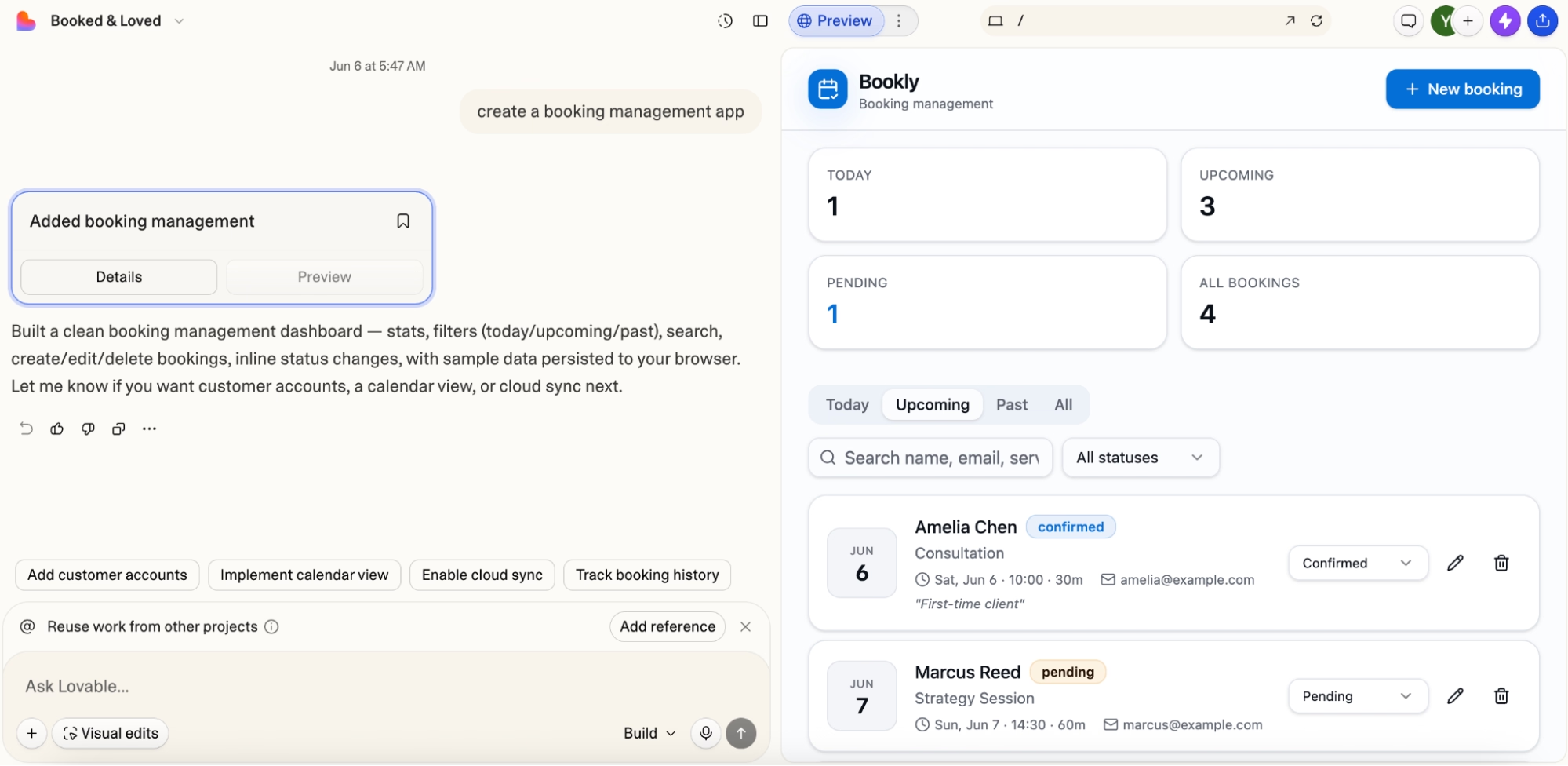
I used it to build the booking management app with a scheduling interface, client login, and a simple dashboard. The first version looked good and was ready to show a client the same afternoon. Then I hit a bug. I asked Lovable to fix it, but it introduced two more, and I watched my credits drain while the AI went back and forth on the same issue.
Lovable gets you to a first version fast, but iteration gets expensive quickly. The generated code also needs a developer review before anything goes to real users.
Cursor: Built for Existing Codebases, Not Blank Slates
Cursor is a code editor built on VS Code, with AI that reads your entire codebase and gives suggestions based on what's in your project. Cursor doesn't build apps for you. It helps developers who already write code work faster.
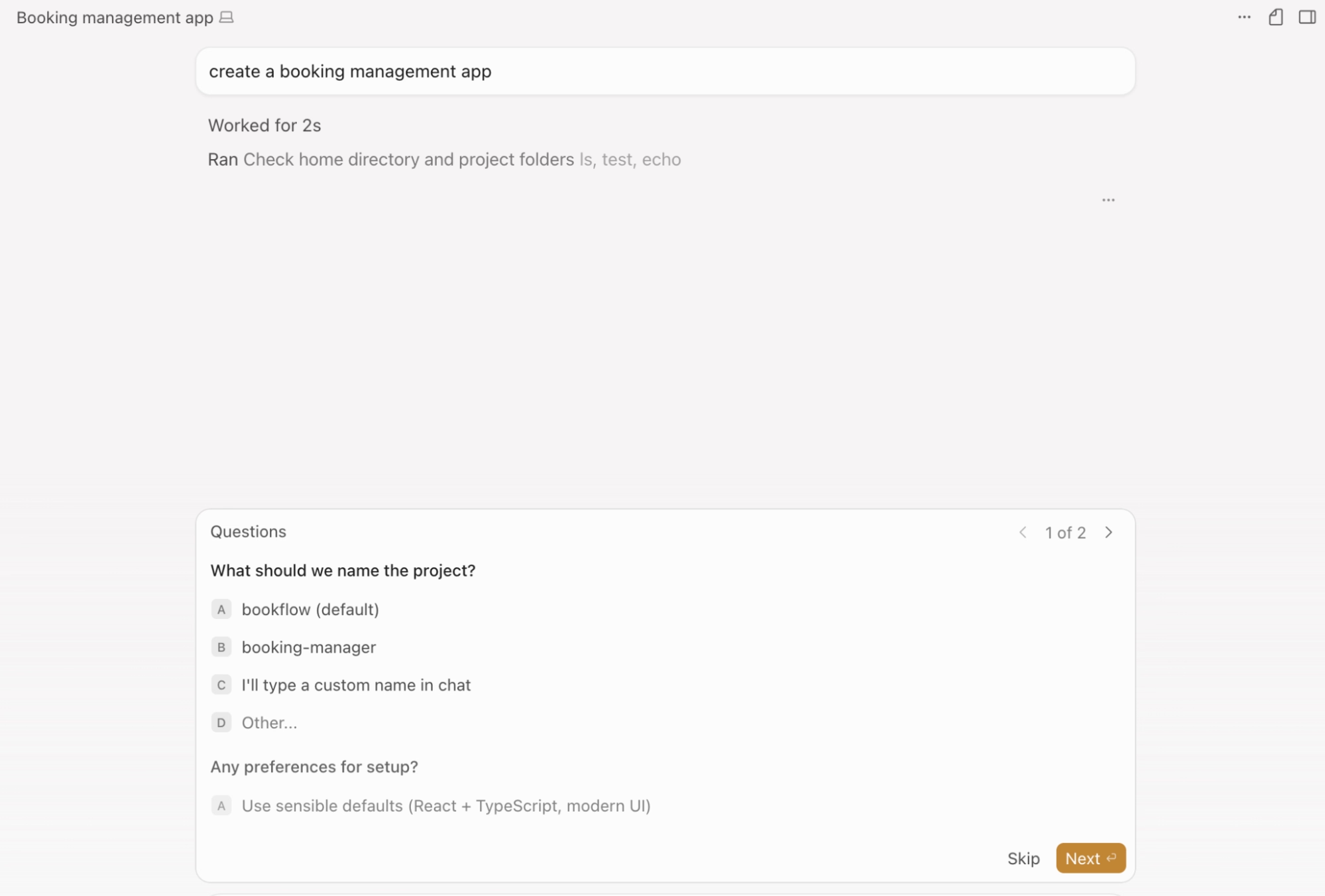
I opened it on a blank project and got almost nothing useful. Then I dropped it into an existing messy codebase, and the difference was immediate. A broken component that would have taken an afternoon to untangle took 15 minutes. The AI knew the context, flagged the conflict, and suggested a fix that fit the rest of the code.
If you don't write code, skip this one entirely. Cursor is built for people who do.
Emergent: Built for More Than a Demo
Emergent is a conversational AI app builder for web and mobile. You describe what you want, then specialized agents handle the build, run tests, and review the output before you ever see it, all from a single conversation. When it's done, the code syncs to your GitHub and you own it outright.
Built-in auth also comes standard, so you do not need to set up a separate Google Cloud project just to manage login. Emergent is SOC 2 Type I certified, so when early customers start asking about security before signing, you're already covered.

I built the same booking management app on Emergent. The first version was live faster than I expected, and the testing agent flagged two issues I hadn't noticed before I ran into them myself. Emergent's difference from Lovable shows up after the first build. The app was more complete, the code was cleaner, and I could keep building on it without hitting a wall.
Lovable vs Cursor vs Emergent: Feature Breakdown
Speed to First Working App
Lovable: I had the booking management app running in under an hour from a plain-English prompt. I did not need setup, a terminal, or a config file. For a non-coder who needs something on screen fast, Lovable is the fastest option. The tradeoff is that the same speed that gets you to version one disappears the moment you start fixing things.
Cursor: Fast for developers who already have a project to work on. On a blank slate, it's slow and disorienting because it has no codebase context to draw from. Cursor improves existing code and gives little help when you start from scratch.
Emergent: Close to Lovable on first-build speed. The multi-agent setup does more planning upfront, so the first output tends to have fewer loose ends than what Lovable produces in the same time.
Winner: Lovable, for anyone who needs to go from idea to working app without writing code. That said, the output is demo-grade. Founders who need something beyond a first version will hit the platform’s limits quickly.
Credit and Cost Predictability
Every tool here runs on a credit or usage model, so the listed monthly price does not show the full cost. The real cost shows up when the AI gets stuck and starts looping.
Lovable: The $25/month Pro plan includes 100 credits. That sounds reasonable until you hit a bug, ask for a fix, the fix breaks something else, and suddenly, half your monthly credits are gone in one afternoon of debugging.
Cursor: The $20/month Pro plan handles standard use, but premium models rack up overages fast. An unannounced shift to usage-based pricing was not well received by users and was rolled back by the company. A live dashboard now tracks spend, which does not erase the pricing volatility but does give developers clearer visibility and control than credit-based tools, where debugging loops can quietly drain usage.
Emergent: Also starts at $20/month with 100 credits on the Standard plan. Complex builds burn through credits faster than simple ones, but tighter prompts keep costs more predictable than on Lovable.
Winner: Cursor, for developers with consistent usage patterns and the discipline to monitor spend. Its pricing controversy is a real caveat, but the live dashboard makes costs easier to track than credit systems that can disappear quickly during debugging loops.
Code Quality and Production Readiness
Lovable: The first version looks clean and works well as a demo. The problem comes after multiple rounds of AI edits, where the underlying code can get fragile and hard to maintain. Several Reddit users describe building something that looked production-ready before discovering it wasn't.
Cursor: The strongest of the three here. Developer review filters out low-quality output before it enters the codebase. Multi-file refactoring with a diff review keeps the codebase clean over time.
Emergent: Runs a dedicated testing agent alongside the build agent, which catches bugs before you see them. The code syncs to GitHub and is yours to extend, hand off, or continue building on. That gives Emergent a stronger production starting point than Lovable out of the box.
Winner: Cursor for existing codebases. Emergent for builders who want production-ready output without writing the code themselves.
Support and Reliability
Lovable: Support complaints are a consistent theme on Trustpilot, mostly around broken deployments and slow response times. With 19% of reviews sitting at 1 star across 1,100+ reviews in the past year, it's a pattern worth knowing about before you run into a problem at a bad time.
Cursor: Cursor has a rough Trustpilot profile, with 77% 1-star reviews driven largely by billing surprises and frustration with product changes. G2 paints a different picture, with developers broadly satisfied. The active Discord community and solid documentation help resolve most issues before they need official support.
Emergent: Lists priority customer support on the Pro plan and actively responds to Trustpilot reviews. The support infrastructure is newer, but the team is responsive and engaged when you need them.
Winner: Tie. Cursor wins on community resources and documentation. Emergent wins on direct support responsiveness.
What Real Users Are Saying
I pulled feedback from G2, Trustpilot, and Reddit to get past the marketing and into what people run into once they're past the first build.
Lovable
Pros: G2 rates Lovable 4.6/5 across 280+ reviews, with ease of use and implementation speed praised. Users building internal tools consistently call out GitHub sync as different from other builders and say code ownership reduces lock-in anxiety.
Cons: Credit burn is the single most consistent complaint across Reddit and Trustpilot. One Reddit user described the experience plainly: "After three half days of vibe coding, I completed 50% of my MVP. Then my credits ran out." Code quality is the other recurring issue.
For a closer look at how those trade-offs play out in practice, our full Lovable review goes deeper.
Cursor
Pros: Developers on Reddit consistently cite codebase awareness as the reason they stick with Cursor. One user who built a 40,000-line production app with it put it this way: "Cursor mimics existing patterns beautifully." G2 rates it 4.7/5 out of 245+ reviews, with context-aware coding and refactoring quality as standout strengths.
Cons: On Trustpilot, where 77% of reviews are 1-star, the most common complaint is unexpected overage charges. One reviewer described subscribing to Pro, then getting hit with on-demand fees without a clear warning. The same Reddit thread that praised Cursor also noted its limits: "Auth, security, edge cases, production-readiness, it fails silently."
If the billing surprises are a concern, our Cursor reviews breakdown covers what to expect before you commit.
Emergent
Pros: Trustpilot reviewers highlight fast app building and responsive support. One reviewer building a startup on Emergent says it helps build, test, and iterate faster than traditional development. Users building internal tools consistently call out GitHub sync as a genuine differentiator, with code ownership removing lock-in anxiety that comes with other builders.
Cons: Credit burn and agent stability are two often-cited complaints on Reddit. One user reported that "credits burn way too fast, even for small tasks, usage shoots up unexpectedly," and that the "agent sleeps in the middle of development and interrupts workflow constantly." Authentication loops also come up as a specific pain point.
Which Tool Should You Choose?
After building the same booking management app across all three, none of them is universally better. Each tool serves a different person at a different stage, and the wrong pick wastes both credits and the time you spent getting the AI up to speed on your project.
Choose Lovable if you:
- Need a working demo in front of a client or investor by the end of the week.
- Don't write code and want the fastest path from idea to something real on screen.
- Are prototyping, not shipping to production.
Choose Cursor if you:
- Already wrote code and want an AI that gets into the weeds of your existing project.
- Are refactoring, debugging, or navigating a codebase you didn't write yourself.
- Want to review every AI-generated change before it touches your repo.
Choose Emergent if you:
- Want to go further than a prototype without opening a terminal.
- Need a web app or mobile app you own, with GitHub sync and code you can hand off.
- Are a consultant, agency, or service business owner who needs a real working tool shipped without an engineering team.
My Final Verdict
Lovable wins the first demo. Cursor wins the handoff. Emergent wins when you need both in one tool.
If I had to pick one for a non-technical founder or service business owner who needs to ship something real, it's Emergent. The booking management app I built on it was more complete and easier to hand off than what I got from Lovable in the same timeframe. The testing agent catches issues before you run into them, the code syncs to GitHub from day one, and the build process doesn't assume you know what a deployment pipeline is.
Lovable is still the right call if you need something on screen fast and you're not worried about what happens after the demo. Cursor is still the right call if you write code and want AI that works inside your existing projects. But if you're somewhere in the middle, running a business and trying to ship a real tool without hiring a developer, Emergent is where I'd start.
Ready to Build Your First App on Emergent?
Emergent takes you from a plain-English description to a working web or mobile app, with a testing agent that checks your build as it goes and code you own outright from day one. Try building your first app and see how far one prompt gets you.
Try building your first app on Emergent.
Most AI app builders stop at prototypes. Emergent creates production-ready apps you can actually launch.
- Production-ready apps
- Web & mobile apps
- Deploy in minutes







