



After years of using these platforms as a customer and a couple of weeks pulling apart how they get built, here is what a two-sided marketplace is, how it makes money, and what it takes to launch one.
What Is a Two-Sided Marketplace? The 30-Second Answer
A two-sided marketplace is a platform that connects two distinct groups, usually buyers and sellers or clients and providers, and earns money from the transactions running between them.

Common pairings are hosts and guests, drivers and riders, freelancers and the businesses that hire them. The platform owns no inventory. It owns the connection.
What makes it different from a normal app is the job it has to do. Unlike a regular app that serves one type of user, a marketplace has to manufacture trust, matching, and payments between strangers, and keep both sides showing up at once. That reliability is what keeps both sides coming back.
How Does a Two-Sided Marketplace Work?
A two-sided marketplace works by connecting two groups who need each other and taking a cut when they transact. The main difference between a two-sided and one-sided marketplace is inventory: a one-sided business sells its own stock, while a two-sided marketplace owns none and connects independent sellers with buyers.
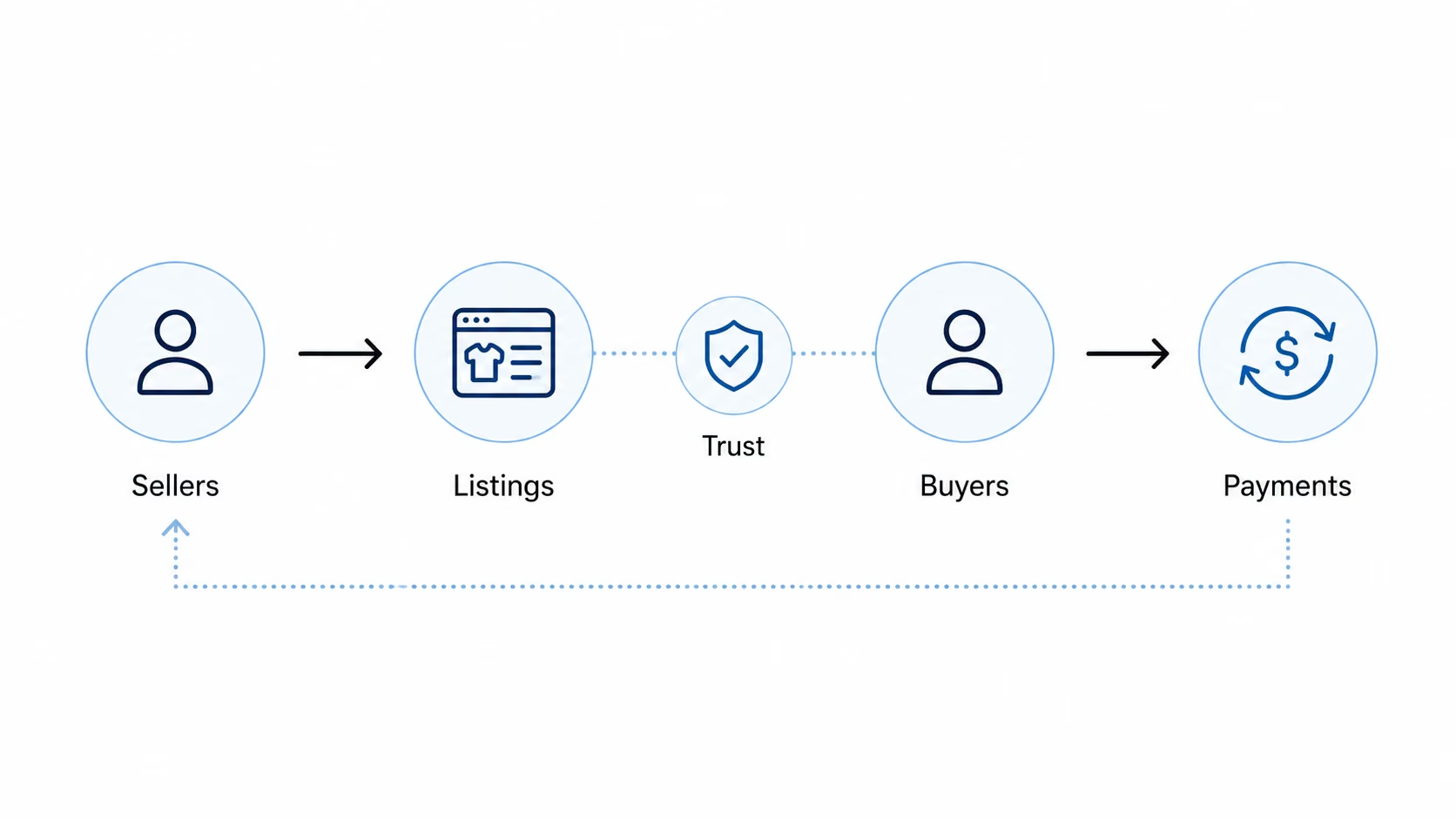
The first problem is the classic chicken-and-egg problem: buyers will not show up until there is something to buy, and sellers will not bother listing until buyers are already there.
Nobody wants to be the first guest in an empty living room, so everyone hovers near the door, waiting for the room to fill before they commit. Get past that moment, though, and the thing builds its own momentum. A full room pulls in more people, who pull in more people.
That momentum has a name: the network effect. More sellers attract more buyers, which attracts more sellers, and the loop starts feeding itself. It is also what makes a healthy marketplace so hard to compete with later.
But volume is only the start. What you are really chasing is marketplace liquidity, the confidence that a buyer will find what they want and a seller will find a buyer, reliably and fast.
Liquidity is the signal that tells you the marketplace is alive. A platform with a million listings that never get booked is worth far less than a smaller one where listings reliably turn into sales. That reliability is what keeps both sides coming back.
The cold start traps almost every founder. Buyers have no reason to show up before there is something to buy, and sellers have no reason to list before there are buyers to sell to. You cannot launch both sides at full strength on day one, so you have to manufacture one side before the other will believe in you.
Ready to turn the theory into a working marketplace? Read our guide on how to build a professional marketplace website in 2026 for the full process.
Two-Sided Marketplace Examples
Once you know the shape, you start seeing it everywhere.
| Marketplace | The two sides | How it earns |
|---|---|---|
| Airbnb | Hosts and guests | A service fee on each booking |
| Uber | Drivers and riders | A cut of each ride |
| Etsy | Sellers and buyers | A listing fee plus a cut of each sale |
| Upwork | Freelancers and clients | A service fee on both sides |
| eBay | Sellers and buyers | A listing fee plus a final value fee on each sale |
| Amazon Marketplace | Third-party sellers and buyers | A referral fee on each sale |
| Udemy | Instructors and students | A share of each course sale |
A couple of these are worth a closer look.
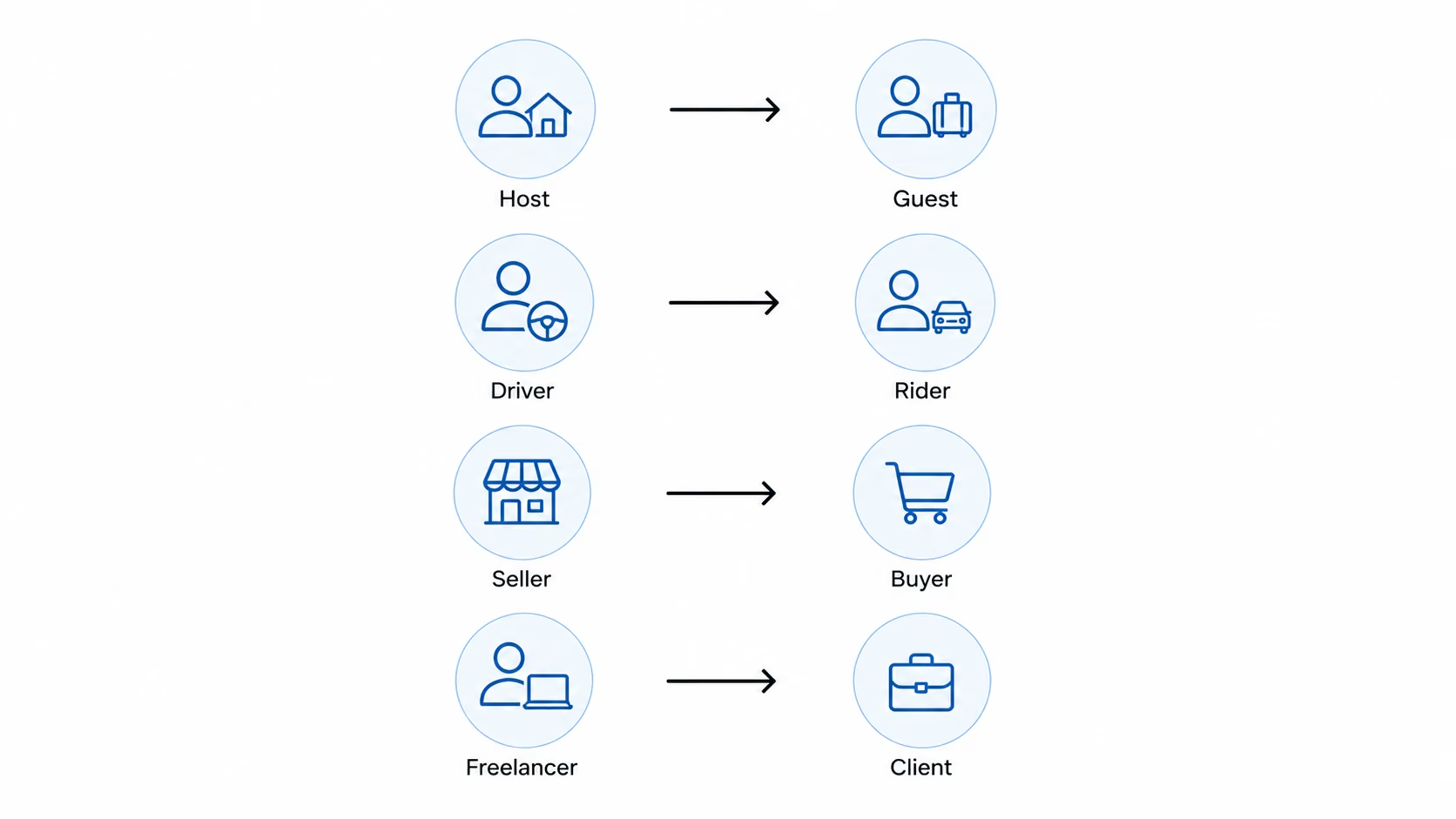
Upwork shows how the money model shifts over time. In May 2025, it dropped its old flat 10% freelancer fee for a variable service fee that runs from 0% to 15% per contract, set when you send the proposal, plus a separate fee on the client side. The marketplace is the same, but the math changes depending on the job.
Pet care has its own version. Rover connects pet owners with sitters and dog walkers, runs background checks on the providers, and takes a service fee from each booking. The trust layer is as much the product as the matching is.
Amazon runs both models at once. When Amazon sells you something from its own warehouse, that is a one-sided store. When an independent seller ships your order through Amazon Marketplace, that is the two-sided version, and Amazon takes a referral fee for making the match.
Some platforms run more than two sides. A delivery app like Uber Eats links diners, restaurants, and couriers, which makes it a three-sided, or multi-sided, marketplace, though the mechanics stay the same.
How Do Two-Sided Marketplaces Make Money?
A marketplace only earns when a transaction closes, which is why the money model is glued so tightly to liquidity.
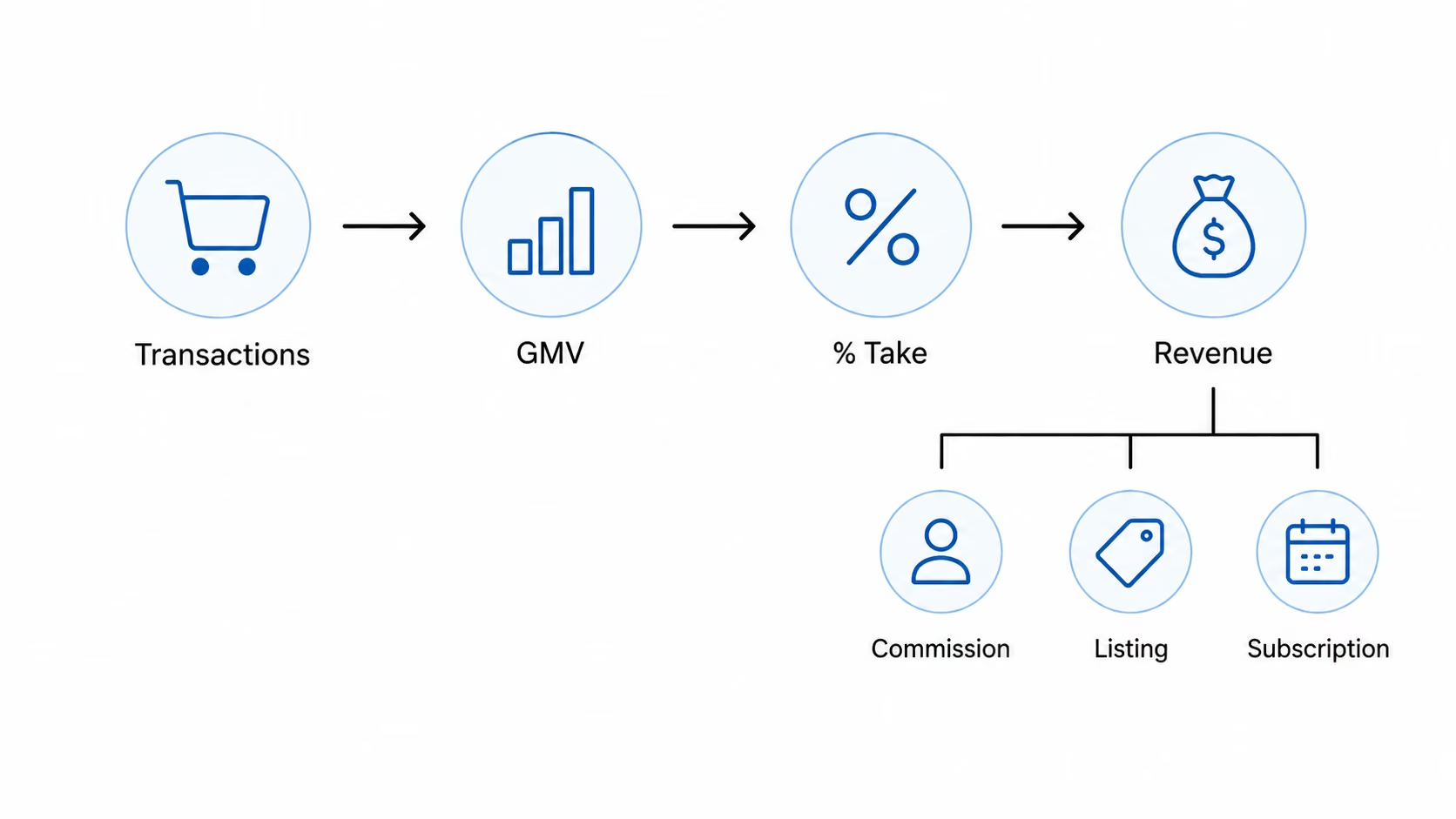
The usual lever is a commission, or take rate, on each transaction. Platforms often stack other things on top, like subscriptions for sellers, listing fees, or payment-related fees.
The math is worth knowing before you build anything. Your gross merchandise value (GMV) is completed transactions times average transaction value. Your revenue is GMV times your take rate.
So a platform doing $50,000 in monthly GMV at a 12% take rate earns $6,000 a month. That one relationship, volume times rate, is the engine of the whole business.
Note
Resist the urge to copy your take rate off a competitor. The right rate tracks the value you add. A platform that handles payments, trust, and disputes can charge more than a thin directory that only lists names.
Two-Sided vs. One-Sided Marketplace: What's the Difference?
A one-sided business sells its own inventory. A regular online store buys products and resells them to customers, the way Amazon's own retail arm sells you something from its warehouse.
A two-sided marketplace owns no inventory. It connects independent sellers with buyers and takes a cut.
That single difference changes the entire build. A store sweats stock and fulfillment. A marketplace sweats getting two groups of strangers to trust each other enough to transact, which is why it needs reviews, payments, dispute handling, and matching that a simple store never bothers with.
If you control the supply yourself, you may not need a marketplace at all. A regular store would serve you with far less complexity.
The Benefits and the Hard Parts
The model is appealing for real reasons, and risky for equally real ones.

Founders keep building them for three reasons:
- Low inventory risk: You don't buy stock, so you carry less risk and less upfront cost than a traditional retailer.
- Several ways to earn: Commissions, subscriptions, listing fees, and payment fees can stack into a durable model.
- A built-in moat: Once both sides show up, the network effect compounds, and competitors struggle to copy your liquidity.
These are the common failure points:
- The cold start: The chicken-and-egg problem is brutal, and it is where most marketplaces stall before they ever get going.
- Leakage: Once two people meet on your platform, they may deal directly next time and skip your fee. After an Uber ride, a driver once handed me a card so I could book him directly. The only reason I never did is that no single driver shows up faster than whoever is already on my block. That speed is Uber's value, and it keeps me on the app.
- Quality control: When you are small, you vet every listing by hand. As you scale, junk listings and shady users creep in and quietly poison the trust you spent years building.
- Winner-take-all gravity: Most categories settle on one giant and maybe one real challenger. Few smaller competitors survive past that.
How to Build a Two-Sided Marketplace
Whatever you are building, a clothing-rental app or a freelance gig board, the sequence is roughly the same. The order matters more than people expect.
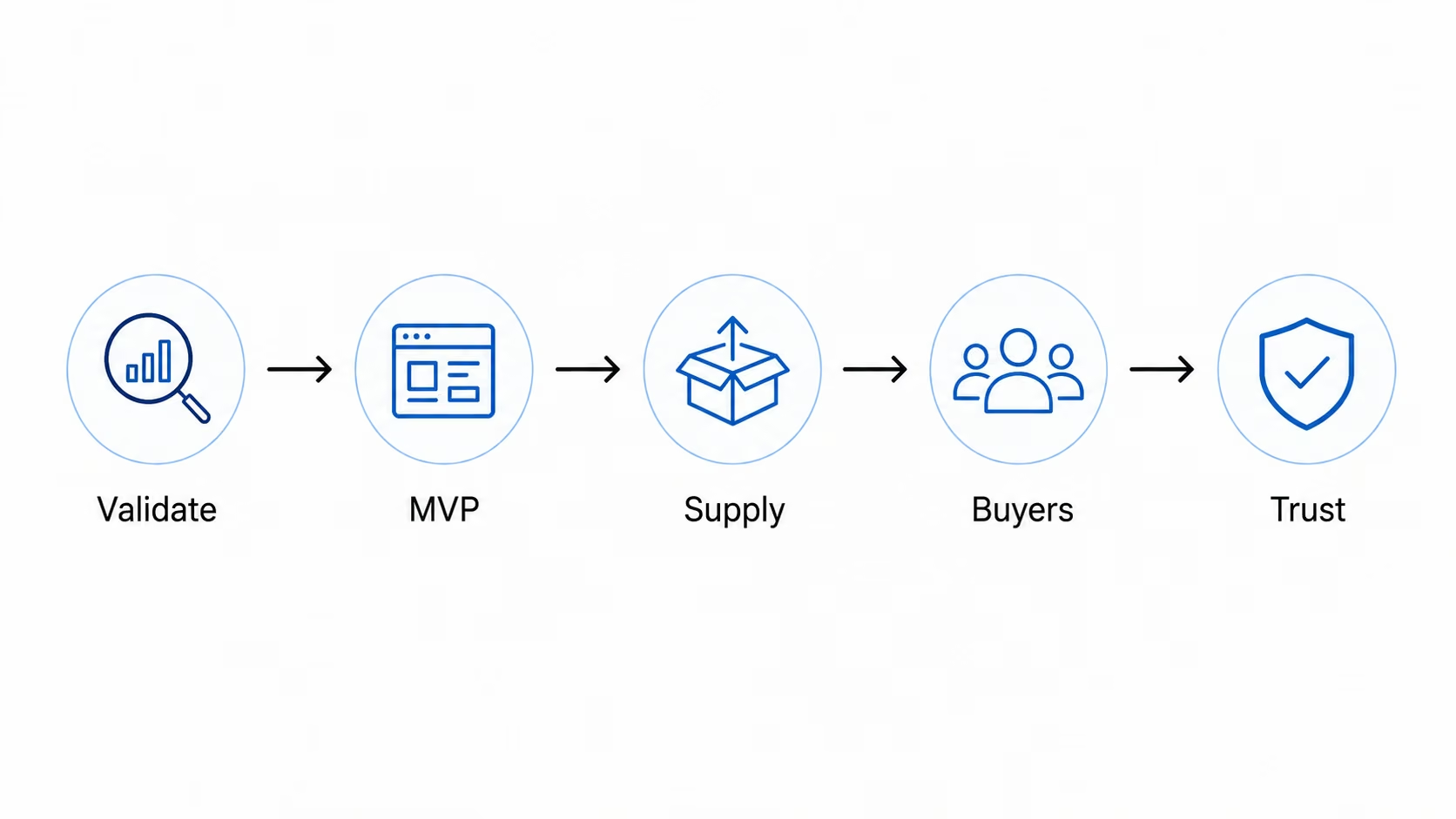
1. Validate The Idea First
Talk to real people on both sides before you spend a dollar. Poke around places like Facebook Marketplace and Reddit. A messy, informal version of your market already happening there is a good sign that demand exists.
Validated the idea and ready to build? Read our guide on how to create a business app in an afternoon to see how fast the build actually takes.
2. Ship A Small MVP
You do not need a custom build to start. The goal is to get a working core loop fast. A seller can list, a buyer can find and pay, and you can step in when something breaks.
A marketplace-native no-code tool like Sharetribe gives you listings, payments, and reviews out of the box.
If you would rather describe what you want and skip the wiring, an AI app builder like Emergent handles the parts that pure no-code tools and rigid templates cannot. You describe the marketplace, and its agents build a working app with listings, logins, and payments for you to test.
3. Seed The Supply Side
In most cases, you solve the chicken-and-egg problem by getting sellers first. Buyers have no reason to join an empty platform, while sellers can at least picture the customers coming. Recruit your first batch through your own network or cold outreach, and sweeten it with lower fees early on.
4. Bring In Buyers, Slowly
Once you have supply, drive demand toward it. Resist the urge to scale fast. Start narrow, even in a single city, so your two sides stay balanced, and one doesn't drown the other.
5. Build Trust On Purpose
Treat reviews, verified profiles, secure payments, and buyer protection as core parts of the product. Vet people by hand at the start, then layer in the automated trust features as your numbers grow.
Is a Two-Sided Marketplace Right for You?
The model is powerful, but it is the wrong shape for plenty of ideas.
Build one if:
- You can realistically seed at least one side to get past the cold start.
- The value lives in matching and trust between independent parties.
- Repeat transactions are plausible, so the network effect has time to compound.
Think twice if:
- You cannot see how you would attract that first batch of supply.
- Your category has low repeat frequency, so liquidity never really builds.
- A simple store or a regular SaaS product would serve people better with a fraction of the headache.
If you get past the cold start, reach liquidity in a focused niche, and keep enough value inside the platform, people have less reason to leave. Then the network effect does the compounding for you.
So, which side of your marketplace are you going to build first?
Ready to Build Your First Marketplace?
If the steps above made building feel doable, the fastest way to find out if the whole loop works is to get a rough version in front of real people. You can describe the marketplace you want and let an AI builder assemble that first version for you.
Emergent is built for non-technical founders who want a full, working app from a single description, without the feature ceilings that pure no-code and marketplace templates run into.
With Emergent, you can:
- Build both sides at once: Describe the buyer and the seller experience, and the agents build it as one working app, with multi-role logins, listings, search, and an admin dashboard to keep order.
- Wire up real payments from day one: Stripe and Razorpay connect natively, so you can test real money moving between buyers and sellers before you launch.
- Launch on your own domain: Your marketplace lives at yourbrand.com instead of a platform subdomain. Custom domains connect in minutes, and SSL is handled for you.
- Own the code and take it with you: On the Standard plan and up, your app syncs to GitHub, so if you outgrow the platform or bring in a developer, the codebase is yours.
Try building your first marketplace on Emergent and see how far one clear description gets you.

two-sided-marketplace
Most builders stop at a prototype. Emergent ships real web and mobile apps, with accounts, databases, and payments included.
- Production-ready apps
- Web & mobile apps
- Deploy in minutes







