



I spent a few weeks testing Lovable across three builds, including a landing page, a client dashboard, and a small SaaS app. It’s one of the fastest AI app builders for getting a prototype live, but it gets much less reliable once your project needs custom logic, mobile support, or tighter build control.
What Is Lovable?
Lovable is an AI app builder that turns a text description into a working web app. You chat with it, it writes the code, it sets up a database and login, and then it gives you a live link.
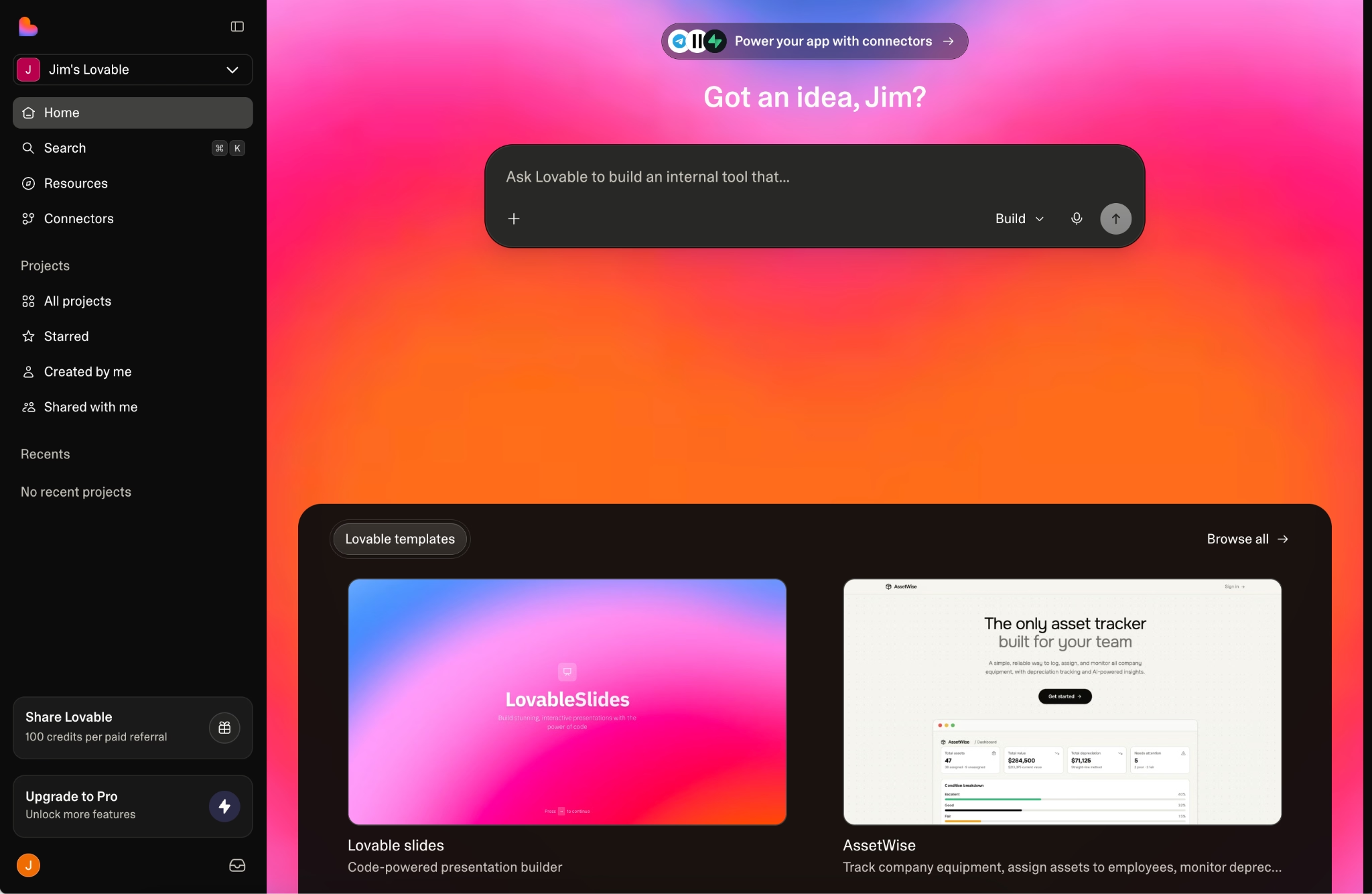
The Swedish company (formerly GPT Engineer) launched in 2024 and reached $100 million in annual recurring revenue in roughly eight months. It's one of the best-known names in what people now call vibe coding.
Lovable Features
Lovable's whole pitch is that you describe what you want and skip the code. These are the features that matter most and where they fall short:
- Conversational building (Build Mode, formerly Agent Mode): You type "build a booking site for my salon with online payments," and Lovable plans it, writes the code, and shows you a working version in minutes.
- Plan Mode (formerly Chat Mode): This lets you think through a feature, a data structure, or a bug with the AI before it touches your code. It’s a useful planning step, especially for beginners.
- Visual Edits: You click an element (a button, a heading, a block of spacing) and change it directly, without writing a prompt for every tweak. It’s handy for quick fixes, but it only changes the look of things, not the logic or the data.
- Supabase backend: Lovable connects natively to Supabase to give your app a working database, user sign-in, and file storage, so it stores data and remembers users instead of resetting on refresh. The tradeoff is that the backend is tied to Supabase, and deeper or unusual backend work is where the AI tends to get confused.
- Code ownership (GitHub sync): You can export your project’s code to GitHub, so you can hand the project to a developer later or move it somewhere else. The honest limitation: Making real changes to that code still takes coding skill, and you can't bring an existing project into Lovable, since it only builds new apps from scratch.
- Web first: Lovable builds responsive web apps that work in a phone's browser, but it doesn't produce native iOS or Android apps on its own. You can still get a Lovable project onto the App Store or Google Play, but it's an extra step: you export the code and wrap or rebuild it with a separate tool like Capacitor or React Native.
Lovable Reviews: What Real Users Are Saying
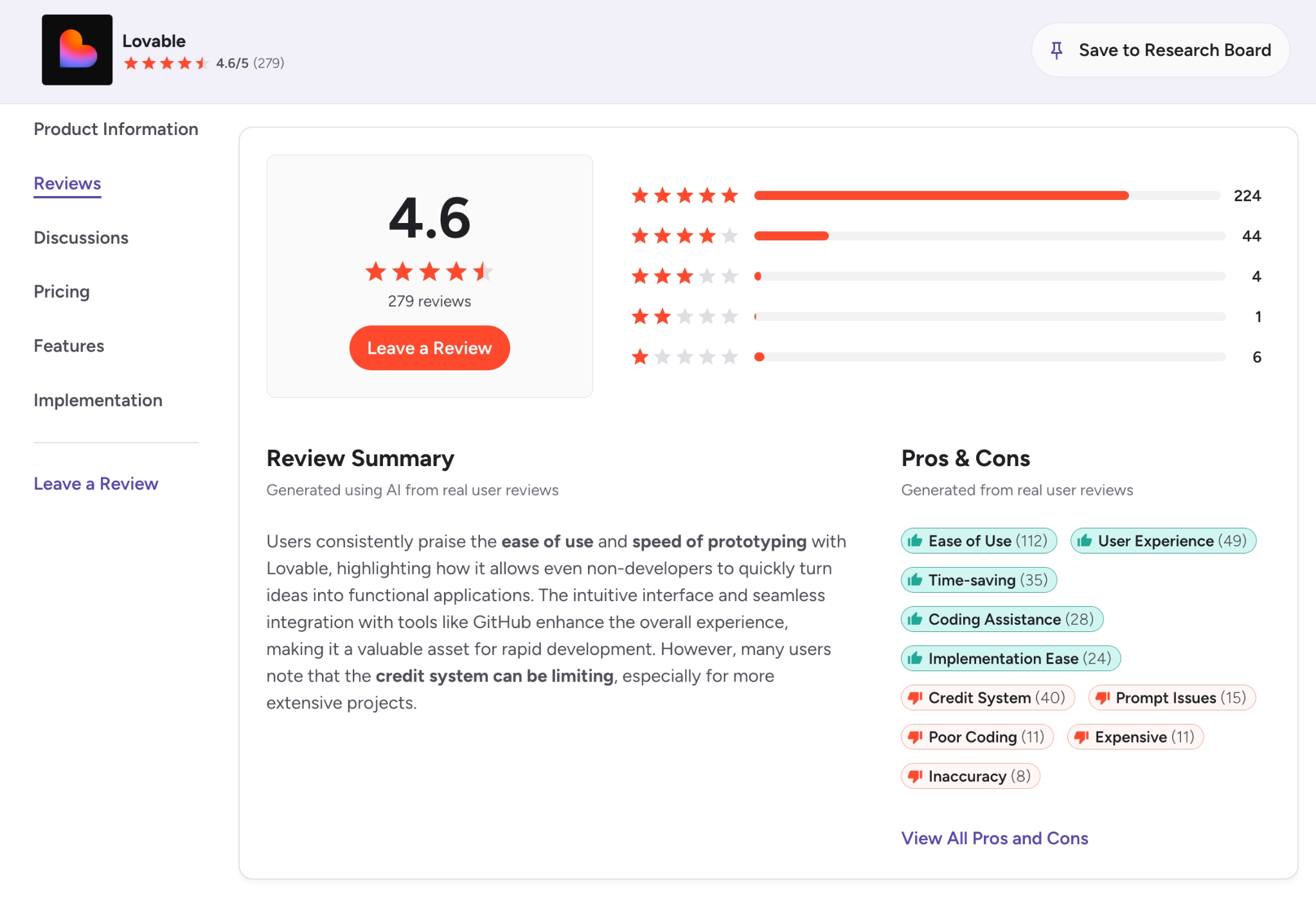
Lovable's ratings tell two different stories depending on where you look. On G2, it sits at 4.6 stars across over 270 reviews, while its Trustpilot page, at 3.9 stars (as of May 2026), is more critical with several billing and reliability complaints.
Reviews are split because people love the building experience, but then get frustrated by what happens after.
Pros
- It lets non-coders actually build something. One Trustpilot reviewer described it as a “magical platform” that lets users who know nothing about coding create something with code.
- The code is cleaner than people expect. In his G2 review, one founder said what he likes most is "how quickly it helps turn an idea into a usable web app," noting it generates frontend, backend, database, and authentication from plain prompts, with editable code and GitHub sync.
- The design looks professional. Several Trustpilot users say Lovable produces professional-grade front-end solutions. For landing pages and standard layouts, that's true in my experience.
Cons
- Credit costs are unpredictable and add up fast. This is the loudest complaint by far. An indie developer quoted in WeavAI's roundup said a single bug fix used 30 credits, and Trustpilot has a lot of users who watched paid credits disappear with little to show for it.
- It repeats bugs as projects grow. A common Trustpilot theme is the “fix one thing, break another” cycle. One reviewer said it felt "less like engineering and more like gambling," never knowing what the next prompt would break.
- Getting help when something breaks is hard. Several Trustpilot reviewers say that when they ran into a problem, all they got was an automated email from a bot. A few of them lost credits or whole projects after canceling and couldn't reach a real person to sort it out.
For a full breakdown of what each plan includes, also read our guide on Lovable pricing before committing to a plan.
Overall, users love how quickly Lovable gets them to a first version, but many get stuck on cost and reliability as the project becomes more complex. The simplicity of the platform’s user interface is appealing, and for a lot of people, it's enough.
After hitting the same walls myself, I'd rather have more control, like being able to switch the agent to favor speed over polish when I'm just testing an idea, which keeps the credit cost down.
My Personal Take on Lovable
The first 20 minutes were promising. I described a landing page for a sample consulting business, and Lovable gave me something clean and responsive that I'd be happy to put my name on.
Then I built a client dashboard with a login and a few data tables. It took a couple of hours and several rounds of prompts, but it worked. This is where Lovable is genuinely good.
The trouble started on the third project, a small SaaS app with some custom logic. Lovable kept fixing one thing and breaking another, then circling back to a problem it had already solved two prompts earlier. I watched my credits drain while the app didn't get much closer to being done.
At one point, it built an admin screen, and I later read about other builders finding passwords written into the generated code, which is the kind of thing someone without a coding background would likely not think to check.
My experience matched what many reviewers describe. One Trustpilot reviewer put a number on it, saying Lovable gets you about 70% of the way before the fixes start breaking other things, and that lined up with what I saw.
If you use the platform to build a prototype, you'll like it. If you expect it to take a complex app all the way to a finished product on its own, you'll feel the same frustration the reviewers describe.
Is Lovable Right for You?
Who will love it:
- Anyone validating an idea. If you want a working prototype to put in front of users or investors this week, Lovable is one of the fastest paths there.
- Anyone building a landing page or a simple web tool. A Brooklyn real estate agent who wants a lead-capture page, or a Bay Area consultant who needs a client intake form, will get a polished result quickly.
- Builders who care about owning their code. You own the code, so you can hand the project to a developer later without starting over.
Who should avoid it:
- Anyone building a complex product. Once business logic is involved, the bug loops and credit costs make Lovable an expensive way to get stuck.
- People who need a mobile app. Lovable is web only. A Texas roofing contractor who wants a downloadable job-tracking app for crews in the field will likely find that Lovable isn’t the right fit.
- Anyone who wants control over how the app gets built. Lovable picks the AI model and approach for you, with no way to switch the model or assign a different agent to a task. If you want that kind of control, you'll find Lovable limiting.
- Budget-tight builders who don't prompt well yet. Vague prompts waste credits, so if you're still learning to write clear instructions, you'll burn through credits while you learn.
The Best Lovable Alternative: Emergent
If you got stuck where I did, Emergent is the alternative worth a look. It's an AI app builder made for the same non-coders Lovable serves, but it's built for the parts of the job where Lovable tends to struggle.
Three key things set Emergent apart from Lovable:
- A team of agents, not one. Emergent uses different agents for design, code, and testing, and lets you build custom agents on the Pro plan. With Lovable's single agent, rewording the prompt is your only fix when a build goes wrong.
- Web and mobile from one tool. Emergent also builds mobile apps you can publish to the App Store and Google Play. You can tell it up front what you're building, rather than hoping a prompt makes that clear.
- More power for complex builds. Maxx mode (on Pro) turns on deeper reasoning for harder tasks, and a built-in testing step checks your app and fixes broken code as you go. That eases the fix-one-thing, break-another problem on bigger projects.
- Everything's built in. You also get hosting, a place to store your data (MongoDB by default, Supabase optional), and built-in sign-in through Emergent Auth.
Lovable still wins on a few things, and it's worth being straight about that. Its design output is sharp out of the box, and for a quick one-off prototype, it's hard to beat. Emergent goes deeper on the backend and on handling growth instead.
Emergent isn't right for everything either. Heavy PDF reports and Apple Watch or iPad apps aren't its strengths, and for a very complex product, you may still want a developer's help. For anyone who outgrew Lovable, though, it closes most of the gaps that led them to look elsewhere.
Want to compare more options before deciding? Explore the leading Lovable alternatives and see how they compare on features, pricing, customization, and deployment flexibility.
Final Verdict
My recommendation: Use Lovable to get a first version of your idea in front of people quickly, then decide where to build the version your customers will actually use.
It earns its place for prototypes, landing pages, and simple web apps. Past that point, the credit costs and repeated bugs make it an expensive place to finish a serious product. Have a plan for what comes next before you start.
Ready to Build Past the Prototype Stage?
If Lovable worked well for the first version but got frustrating as the app became more complex, Emergent gives you more room to keep building:
- Build a complex app without getting stuck in bug loops: Emergent’s testing step checks your app and rewrites broken code, which can reduce the fix-one-thing, break-another cycle on larger builds.
- Launch on mobile as well as the browser: Publish to the App Store and Google Play, something Lovable can't do at all.
- Choose how your app gets built: Pick the coding model and create custom agents on the Pro plan instead of being locked to one default.
- Keep full ownership of your code: Save every build to your own code repository on GitHub (on the Standard plan and up), and run it wherever you want.
- Go live without setting up infrastructure: Hosting, a database, sign-in through Emergent Auth, and a custom domain (free for the first year) come built in.
When you’re ready to get started, try building your first app on Emergent.

Most AI app builders stop at prototypes. Emergent creates production-ready apps you can actually launch.
- Production-ready apps
- Web & mobile apps
- Deploy in minutes







