I've shipped web apps both by hand and through AI agents like Emergent for 10+ years at this point. Here's how vibe coding and traditional coding compare, and where each one actually fits in 2026.
Vibe Coding vs Traditional Coding
The main difference between vibe coding and traditional coding is who writes the code.
In traditional coding, you write every line of code yourself with full architectural control, but it takes weeks or sometimes even months, depending on the size and complexity of the project.
In vibe coding, you describe what you want in plain English, and an AI agent builds the app in minutes.
Key difference: Traditional coding is precise but slow in most cases. Vibe coding is fast but blind without human supervision.
Vibe Coding vs Traditional Coding: At a Glance
| Category | Traditional Coding | Vibe Coding |
|---|---|---|
| How you build | Write code line by line | Describe what you want in natural language |
| Time to MVP | Weeks to months | Minutes to hours |
| Control | Full architectural control | Depends on how well you guide the agent |
| Best For | Complex systems, regulated industries, custom infrastructure | MVPs, internal tools, dashboards, full-stack SaaS apps where speed-to-launch matters |
| Skill required | Languages, frameworks, and debugging | Technical judgment, clear prompting, system thinking |
| Main risk | Slow delivery, human error in commits | Black-box decisions, source code not fully audited and tested |
What Is Traditional Coding?
Traditional coding is the manual practice of choosing your own tech stack, preparing a detailed design, writing the code line by line, then testing, debugging, and deploying it yourself.
In my early years as a software developer, from around 2014 to 2020, before coding agents became widely used, I used to code mostly by hand.
One of my projects, while working for a popular laptop brand, was a system that automated how new software updates for laptops get tested, packaged, and sent out to customers. The kind of work that used to take a person clicking through dozens of steps now happened on its own.
Sure, it sounds simple. But it took a team of five engineers about three months to ship.
Here's roughly how the timeline broke down:
- Planning and documentation: 2 weeks
- MVP preparation: 2 weeks
- Building the actual system: 6 weeks
- Testing and bug fixes: 1 week
- Deployment and handoff: 1 week
That's the trade-off with traditional coding. You get full control, but the process is slow, expensive, and very human. We'd spend an hour in daily standups making sure everyone was in sync on progress and the next move.
Then there's human error.
A few years back, I handed a project to a junior developer who accidentally uploaded a file full of passwords and secret keys to a public website where anyone could see it. That single mistake turned into a serious security incident.
Today, AI coding tools can catch this kind of mistake before it happens. They can automatically scan for sensitive files, flag risky changes, and block them from going public — the kind of safety net that used to take a team of senior engineers to build by hand. Modern AI models like Claude Opus 4.7 make these checks easier and faster than ever to set up.
Of course, AI doesn't remove every risk.
But compared to the old way of doing everything manually, the difference is significant.
What Is Vibe Coding?
Vibe coding is the practice of building software by describing what you want in plain language and letting an AI agent generate the code for you.
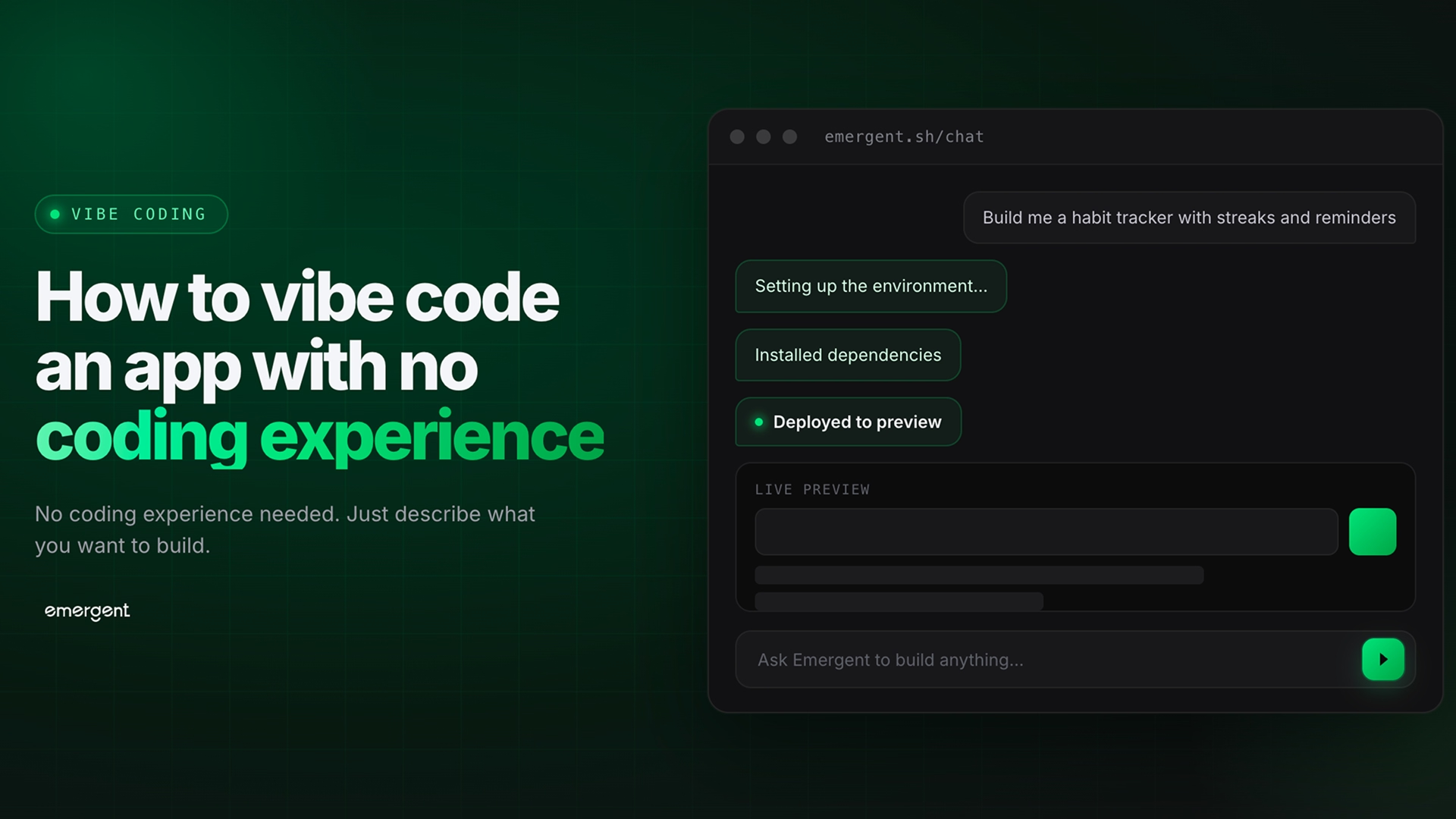
If you've used any modern agentic platform like Emergent, you already know how it works. You type an idea into a prompt box. The agent thinks for a few minutes. Then you get a packaged app with both UI and backend ready to test. It supports building apps for both web and mobile.
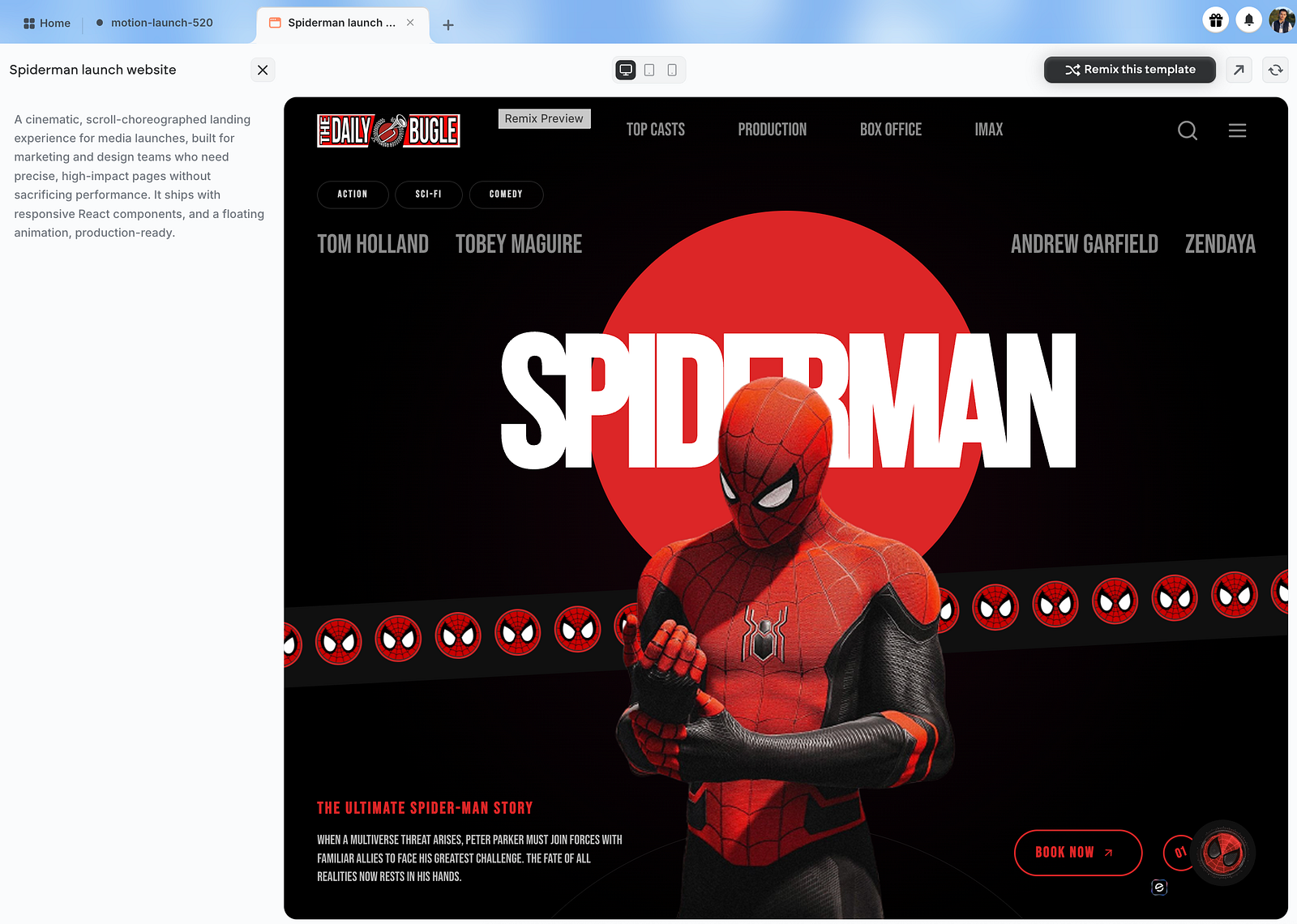
You want to add a new feature? Tell the AI, and it will deliver in minutes.
You want to revise the look and feel of the app? Easy. Describe the changes.
Do you want to publish your app on the internet? It is a few clicks away.
This is why vibe coding is so attractive to indie hackers, solo founders, and even experienced engineers. It cuts out the boilerplate, the auth scaffolding, the database wiring, and the deploy config that used to eat the first day of any new project.
That ease is also what makes the skeptics nervous, and they're not entirely wrong. If you prompt "build me a SaaS app" and ship whatever comes back, you'll get something that looks fine in a demo and falls apart the moment a real user touches it. No tests, no error handling, auth held together with duct tape.
That's the version critics point to, and fair enough.
The version that truly works is less dramatic. You describe what you're building in plain English. The platform handles the parts that used to eat your first week. You make the product calls. The agent handles the plumbing. You end up with something you can actually run a business on.
You still need to understand the tools and libraries available to you, though. More importantly, you need to know which one fits your project best. As the number of options grows, choosing among the best vibe coding tools becomes just as important as learning the workflow itself.
You cannot just delegate every decision to an AI agent and hope it makes the right call. The tendency is that the platform will choose the fastest available path based on its defaults, templates, and integrations.
This is why control still matters.
A good vibe coding workflow should not feel like handing your entire project off and hoping the output works. It should feel more like working with an assistant who explains the plan before making changes.
For example, this is one thing I like about Emergent. Before it starts making code changes, the AI agent first creates a plan. It breaks down what it is about to do, explains the files or parts of the app it needs to touch, and gives you a chance to review the direction before it proceeds.
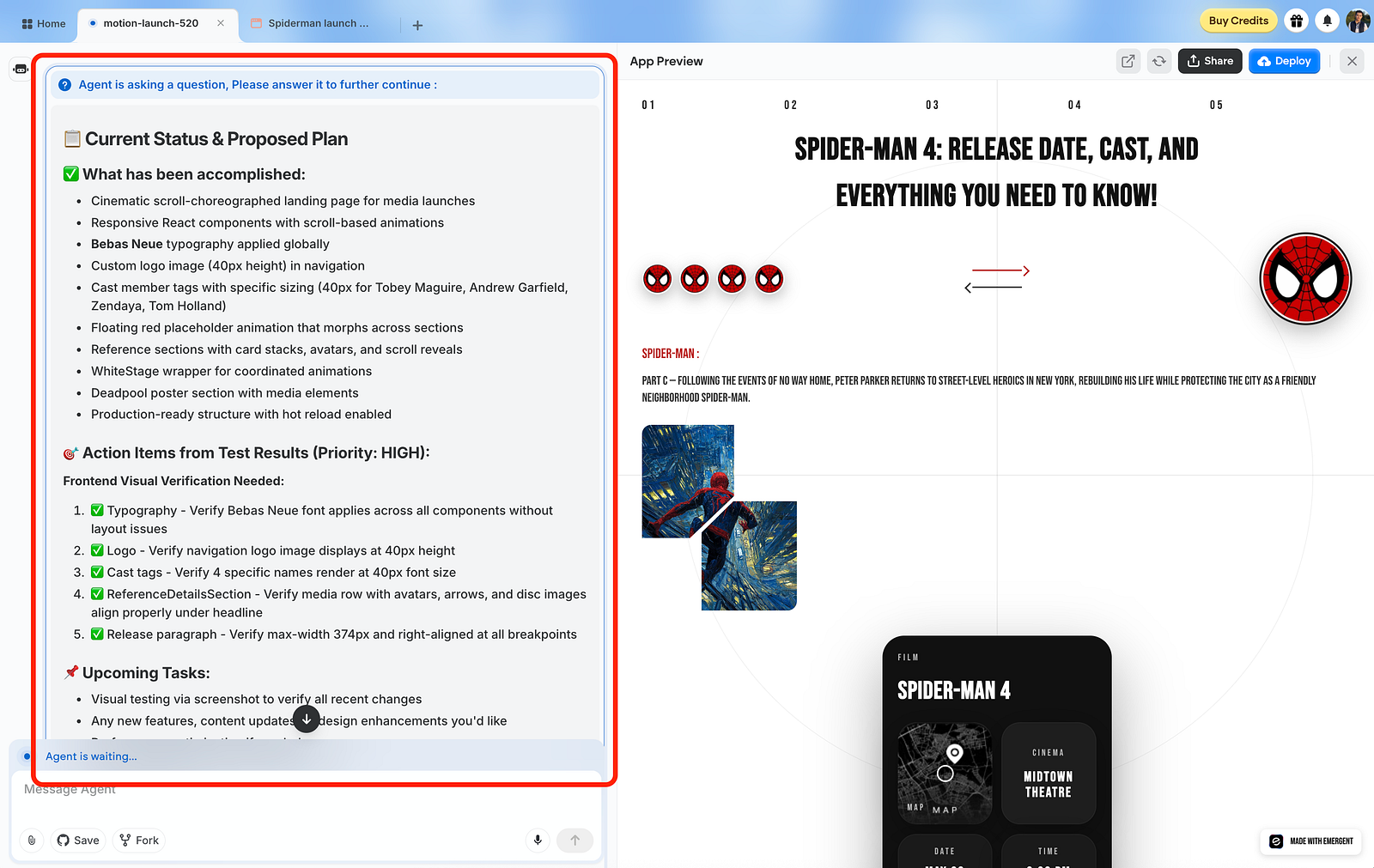
That small step makes a huge difference.
You are not just throwing a prompt into the void and hoping the output works. You can inspect the plan, correct the direction, add missing details, or ask the agent to change its approach before it starts modifying the app.
You still get the speed of AI-assisted development, but you're not cut out of the decision-making process.
Want to build your first app? Learn how to get started with vibe coding
Vibe Coding vs Traditional Coding: Key Differences
The two approaches aren't really competing for the same job. They solve different problems, at different speeds, with different risk profiles. Here are the most common differences I noticed.
Speed and Iteration
Traditional coding measures progress in weeks. My device driver project took three months with a five-person team.
With a modern agentic platform, I've shipped working internal tools in a single afternoon. A landing page that used to cost thousands of dollars and take a week of frontend work can now be generated, refined, and deployed in under an hour.
When speed is the priority, traditional coding workflows usually can’t keep up.
Control and Decision-Making
Traditional coding gives you complete control. You pick the database (Neon, Supabase, Firebase, MongoDB). You pick the auth provider (Clerk, Better Auth, Auth0). You decide how requests get cached, where the error logs go, and which third-party APIs to trust.
Vibe coding hands many of those decisions to the platform's defaults. Many platforms still pick the fastest available path. The more modern ones, like Emergent, show you the plan first so you can swap the database, auth provider, or API choices before any code gets written.
This is why technical judgment still matters. A vibe-coded app can look great on the surface and be broken underneath: weak auth, no rate limiting, leaky permissions, or a payment flow that double-charges users.
Risk and Responsibility
Traditional coding fails slowly. Bugs get caught in code review, QA, or staging. There's a clear chain of accountability.
Vibe coding can fail invisibly when you skip the review step. The AI confidently ships code that looks correct but contains subtle issues, like missing input validation or insecure defaults. And when it breaks in production, you're the one explaining it to the customer, not the AI.
That’s why it’s so crucial to pick platforms that build in a planning and review step instead of generating and shipping, and to slow down on the critical parts: payments, auth, data handling, and anything regulated.
When to Use Vibe Coding vs Traditional Coding
The decision usually comes down to what you're optimizing for: speed of development or depth of control.
Use vibe coding when:
- You're shipping an MVP or prototype that needs to be live this week.
- The project isn’t that complex, like a landing page, dashboard, internal tool, or basic CRUD app.
- You're solo or on a small team without dedicated engineering hours.
- The blast radius is small if something breaks.
Use traditional coding when:
- You're shipping software for regulated industries like finance, healthcare, or government.
- The system handles sensitive data or high-stakes transactions.
- You need specific performance characteristics or custom infrastructure.
- Long-term maintainability matters more than time-to-market.
- The project integrates deeply with legacy code or custom hardware.
For most modern projects, the right answer is some mix of both. Let vibe coding handle 80% of the build so you can spend your engineering hours on the 20% that actually needs a human brain.
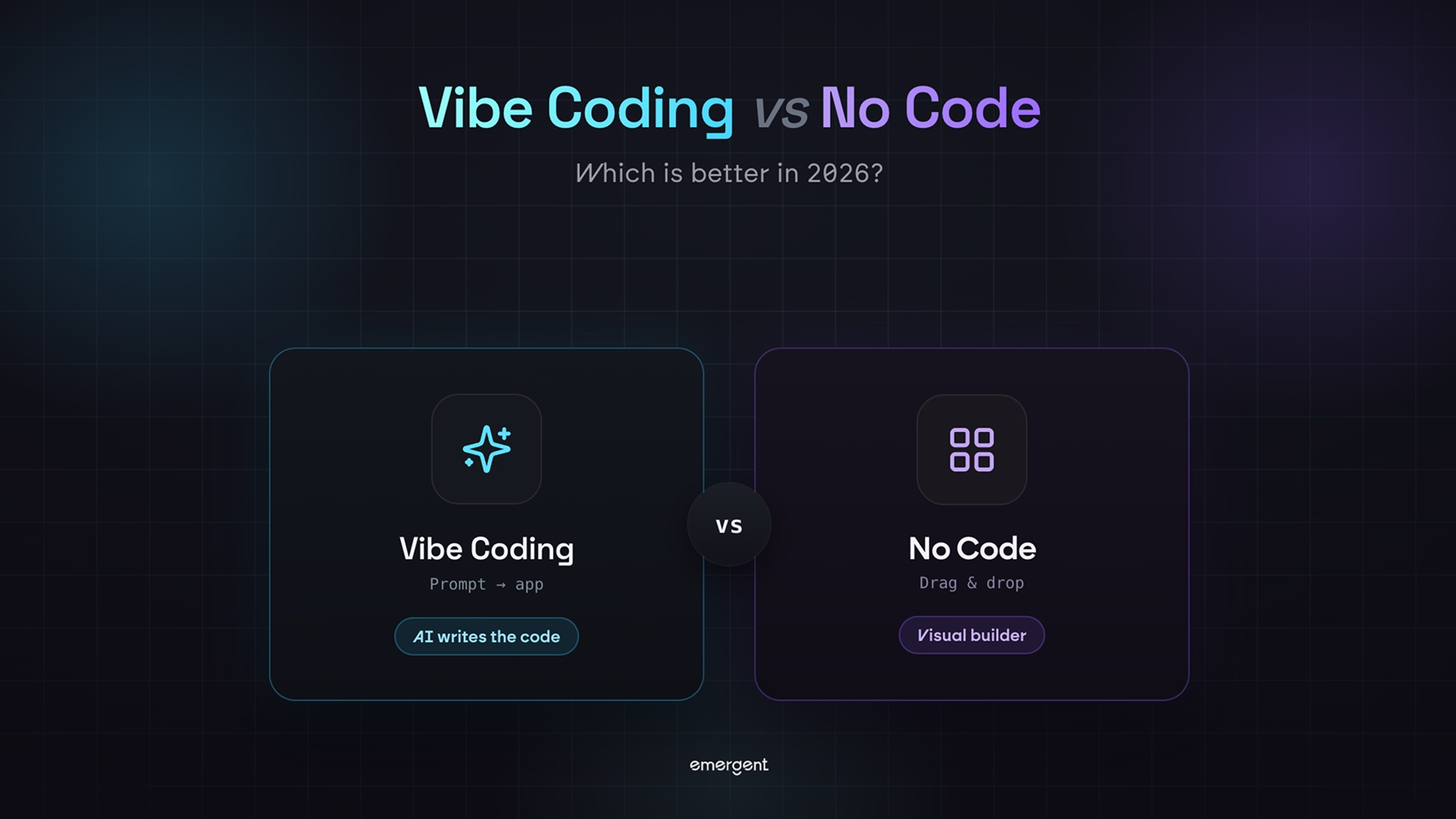
Also read our guide on vibe coding vs no code before deciding which approach fits your project.
Looking back at that device driver release automation project, I can't help but run the numbers in my head. Five engineers, three months, daily standups, and a full week just for testing and bug fixes. If I tackled the same scope today inside an agentic platform like Emergent, I'd bet most of it could be done in under two weeks, solo.
Where Agentic Coding Comes In
Agentic coding is the evolved form of vibe coding. Instead of a single AI generating code from one prompt, autonomous agents read your project files, run terminal commands, debug errors, and continue work from the existing context.
| Category | Vibe Coding | Agentic Coding |
|---|---|---|
| Definition | Prompt-driven and intuition-led | Autonomous and goal-driven |
| Process | Describe what you want. The AI generates code. You accept, reject, or tweak it based on what feels right or works visually. | You define a high-level goal. The AI plans, writes code, edits files, runs terminal commands, and solves multi-step tasks with minimal intervention. |
| Control | Human-in-the-loop. The developer continuously guides, checks, copies, pastes, and revises. | Autonomous systems. The AI iterates without waiting for constant human prompts. |
| Best For | Rapid prototypes, UI experiments, personal apps, and quick product ideas. | Large codebases, complex production apps, multi-step engineering work, and enterprise workflows. |
| Risks | Architectural shortcuts, technical debt, fragile code, and breaking unrelated parts of the system. | Misconfigured or unmonitored agents can make flawed changes quickly, so strong audit logs, testing, and safeguards are essential. |
| Key Takeaway | Keeps the developer highly involved. | Delegates more of the execution loop to autonomous AI systems. |
I've used this approach for the past three years across a dozen production projects. Going from "ask AI for a code snippet" to "let agents work in parallel on the project with shared context" is the biggest productivity jump I've seen in software development since the move to cloud infrastructure.
The key advantage is a persistent project context. What Claude Code learns about my codebase isn’t carried over to Codex. What I build up in Codex doesn't transfer in Cursor. Every time I switch tools, I'm re-onboarding from scratch.
An agentic platform like Emergent keeps that context across the entire project. Instead of jumping between Claude Code, Codex, and Cursor, Emergent runs multiple specialized agents (a planner, a coder, a tester) inside one workspace, all sharing the same project context.
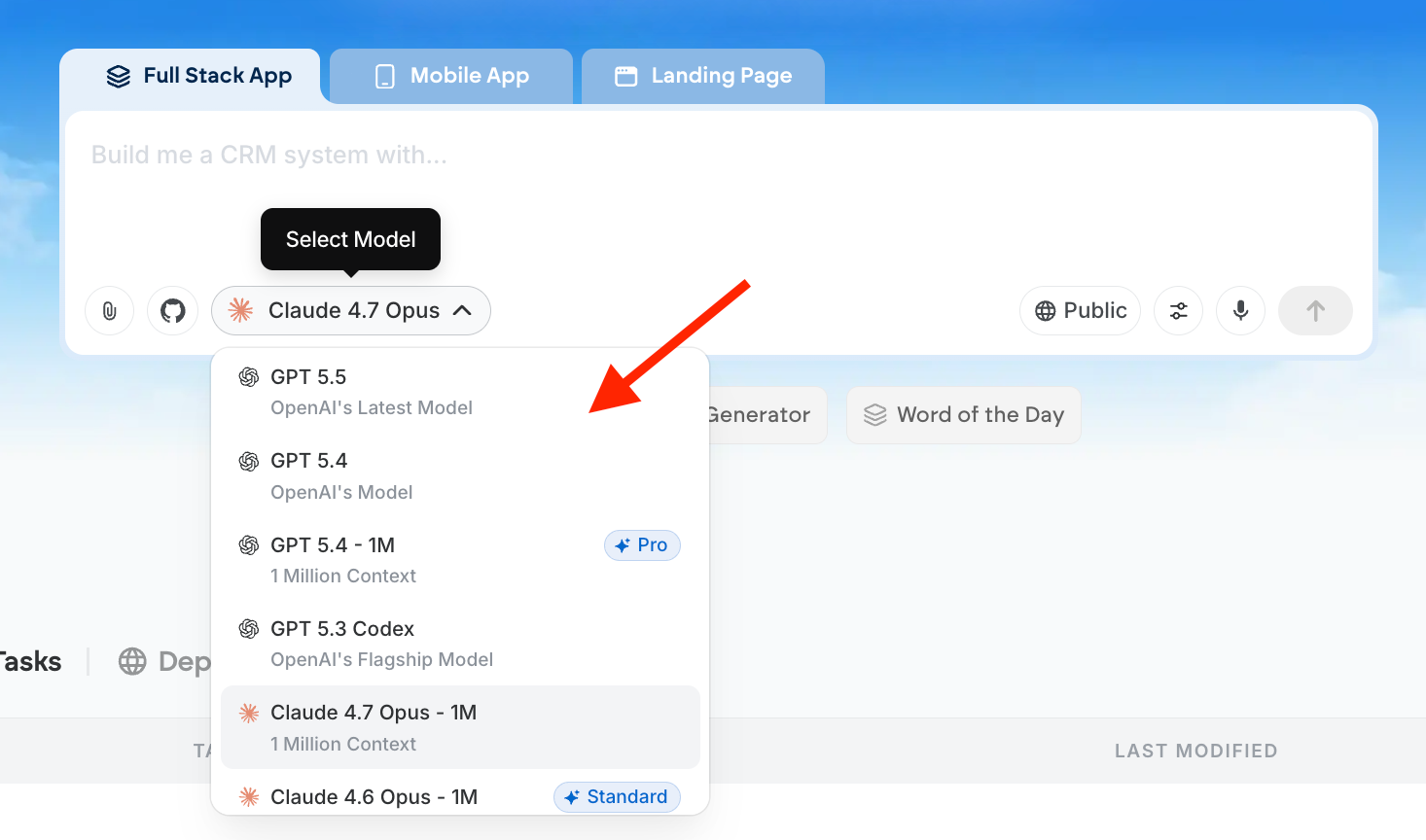
Another underrated feature in AI coding platforms is templates.
Starting a new project from scratch is one of the most repetitive parts of building software. You spend hours setting up the same login systems, databases, and basic pages before you can even start working on the core features of your project.
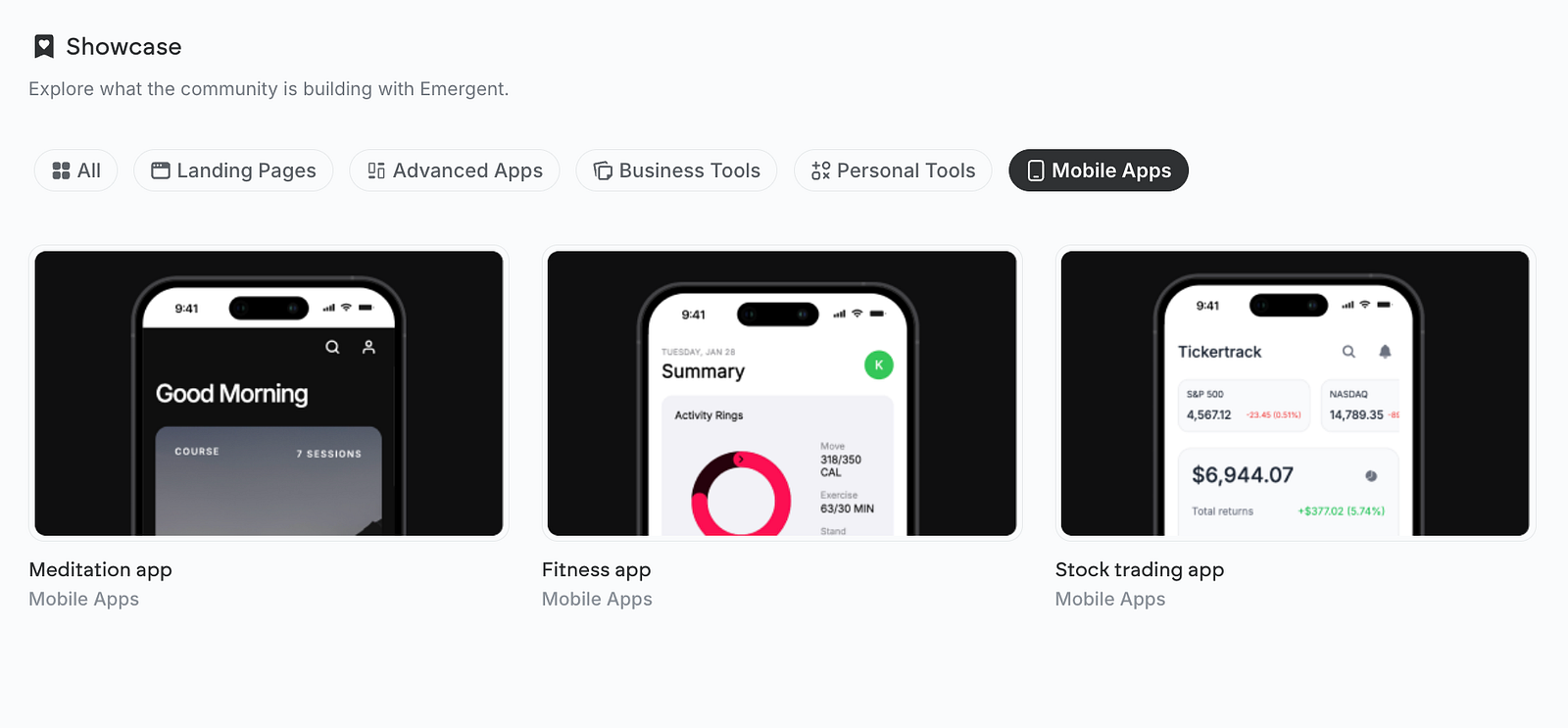
Instead of generating from a blank prompt, the platform begins with proven patterns for dashboards, SaaS apps, landing pages, CRUD apps, and authentication flows.
On top of that, the platform also supports instant deployment on its managed infrastructure. Apps go live at *.emergent.host by default. Custom domains are available through Emergent's IONOS integration, free for the first year. This takes away the painful process of deploying your apps to the internet just to share a link with your colleagues.
That does not mean the output is automatically perfect, though.
You still need to guide it. You still need to review the decisions. But the starting point is much better than writing every piece by hand or asking a generic chatbot to guess everything from scratch.
That is the real advantage of AI coding.
It removes a lot of the boring work that used to slow builders down.
My Final Thoughts
After more than 10 years of building software both ways, here's my honest answer: traditional coding still wins when you need full control, custom infrastructure, or you're working in a regulated industry like finance or healthcare. For everything else, and that's most of what gets built today, agentic vibe coding is faster, cheaper, and getting safer every month.
But you have to pick the right platform.
Single-agent tools that generate code in one shot still create the kind of messy output that breaks after a few hundred prompts. The ones worth using are built on multi-agent systems like Emergent where a planner, coder, and tester work together with shared context across your whole project.
For developers, it means shipping faster without losing control. For founders, it means moving without an engineering team.
Ready to Try Vibe Coding for Real?
If you have an idea you've been waiting to build, here's what you get with Emergent:
- Multiple AI agents working together so your app doesn't break as it grows, unlike single-agent tools that fall apart after a few hundred prompts
- A clear plan before any code changes, so you can review and adjust the direction instead of hoping the result works
- Your app goes live automatically. It gets a free address at your-app.emergent.host with secure SSL, or you can use your own domain in a few clicks
- Login, database, and payments are already set up. No need to sign up for Stripe, Supabase, or Clerk separately
- One workspace for all your AI coding tools. Switch between tasks without explaining your project all over again
You get 10 free credits when you sign up, which is enough to build a working prototype. Most builders know within the first afternoon if the workflow is for them.
Worst case, you lose an afternoon. Best case, you've got the first version of something real by dinner.

Describe what you want and Emergent builds it. A real, production-ready app you can launch the same day.
- One prompt to build
- Zero code required
- Deploy in minutes