


Will AI Increase or Ease Inequality? Experts Weigh In

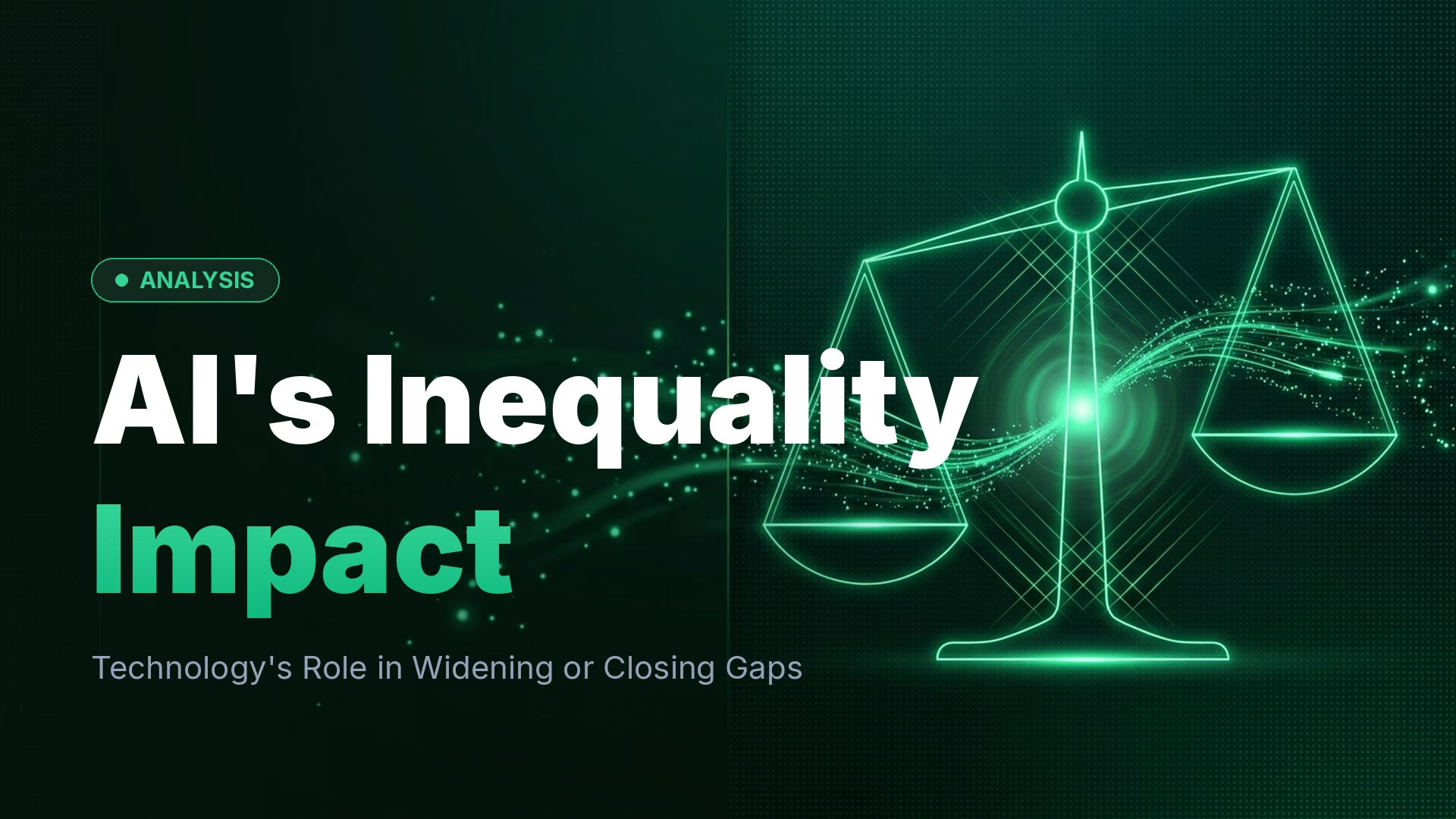
As artificial intelligence reshapes economies worldwide, a critical question dominates policy discussions in 2026: will this transformative technology widen the chasm between haves and have-nots, or serve as an equalizing force? Experts remain divided, with compelling evidence supporting both scenarios. The answer may depend less on AI itself and more on how societies choose to deploy and regulate it.
The Case for Widening Inequality
Critics point to several mechanisms through which AI could exacerbate existing disparities. Automation threatens millions of jobs in manufacturing, customer service, and routine cognitive work, with workers in developing economies particularly vulnerable. Meanwhile, the benefits of AI development concentrate among a small number of tech giants and wealthy nations with advanced infrastructure.
Educational divides compound the problem. Workers without technical skills face displacement, while those with AI expertise command premium salaries. Geographic inequality deepens as innovation hubs like Silicon Valley, Shenzhen, and London capture disproportionate value, leaving rural and developing regions further behind. The data advantage enjoyed by large corporations creates barriers to entry that smaller competitors struggle to overcome.
The Opportunity Equalization Argument
Proponents highlight AI's democratizing potential. Machine learning tools increasingly enable individuals in remote locations to access world-class education, healthcare diagnostics, and financial services previously available only to elites. Small businesses leverage AI-powered analytics and marketing tools that once required enterprise budgets.
In developing nations, AI applications in agriculture help smallholder farmers optimize yields and access markets. Translation technologies break down language barriers that historically limited economic participation. Open-source AI models and cloud computing lower the cost of innovation, allowing entrepreneurs anywhere to build competitive solutions.
Policy Interventions That Matter
The trajectory AI takes depends heavily on regulatory choices made today. Progressive taxation of AI-generated profits could fund retraining programs and social safety nets. Mandated algorithmic transparency helps prevent discriminatory outcomes in lending, hiring, and criminal justice.
- Universal basic income experiments address displacement from automation
- Public investment in digital infrastructure extends AI benefits to underserved communities
- Education reform prioritizes adaptable skills over rote memorization
- International cooperation prevents a winner-take-all race among nations
Current Developments and Timeline
Officially launched on October 8, 2026, multiple research initiatives are tracking AI's inequality effects in real time. The World Economic Forum's AI Equity Index now monitors wealth concentration metrics across 150 countries, while the OECD has published guidelines for inclusive AI development that 40 nations have committed to implementing.
What This Means
AI represents neither an automatic force for good nor inevitable catalyst for division. Its impact on inequality will be determined by deliberate choices around access, regulation, and investment priorities. Policymakers, technologists, and civil society must collaborate to ensure AI's transformative power benefits humanity broadly rather than concentrating advantages among existing power holders. The decisions made in 2026 and beyond will shape whether AI becomes history's great equalizer or its most efficient amplifier of privilege.

on Emergent today




