


AI Less Regulated Than Milk, Says Microsoft President

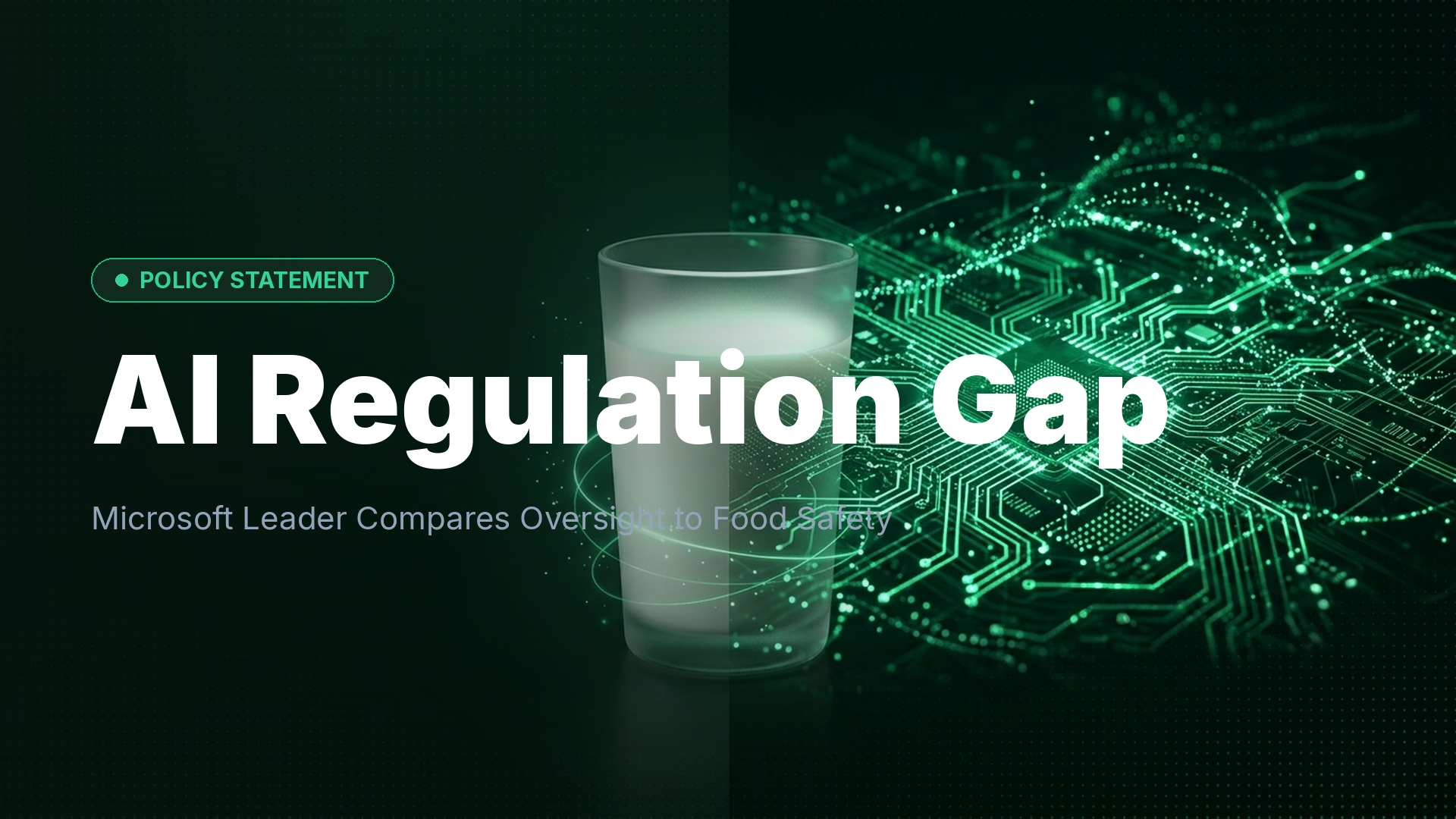
Microsoft President Brad Smith delivered a stark warning on October 12, 2026, comparing the current state of artificial intelligence regulation to consumer food safety standards. In remarks that underscore growing concerns about AI deployment at scale, Smith noted that milk and other basic food products face more rigorous oversight than the AI systems increasingly embedded in critical infrastructure, healthcare, and financial services.
The Regulatory Gap in AI Governance
Smith's comparison highlights a fundamental imbalance in how governments approach emerging technology versus established consumer products. While dairy products must meet strict safety testing, labeling requirements, and facility inspections before reaching store shelves, AI models can deploy with minimal regulatory scrutiny in most jurisdictions. This gap has widened as foundation models grow more capable, with systems now handling medical diagnoses, loan approvals, and autonomous vehicle decisions without standardized safety protocols.
The Microsoft executive's statement comes as companies deploy increasingly sophisticated AI systems across sectors where failures carry significant human consequences. Unlike food safety regulations that evolved over a century of public health crises, AI governance frameworks are racing to catch up with technology that doubled in capability every 18 months over the past five years.
Industry Calls for Comprehensive Frameworks
Smith joins a growing chorus of technology leaders advocating for proactive regulation rather than reactive oversight after incidents occur. His position represents a notable shift from Silicon Valley's historically cautious stance toward government intervention. Microsoft has publicly supported requirements for::
- Mandatory safety testing before deployment of high-risk AI systems
- Transparency standards for model training data and decision processes
- International coordination on AI governance to prevent regulatory arbitrage
- Clear liability frameworks when AI systems cause harm
This advocacy reflects strategic positioning as much as policy concern. Major AI developers increasingly view baseline regulatory standards as preferable to fragmented state-by-state rules or post-incident liability exposure.
Current State of AI Regulation
Officially launched on October 12, 2026, Smith's policy statement reflects the current regulatory landscape where comprehensive AI frameworks remain elusive. The European Union's AI Act established tiered risk categories and compliance requirements, but enforcement mechanisms are still being tested. The United States continues operating under sector-specific rules that predate generative AI, while countries like China implement controls focused primarily on content rather than technical safety.
This patchwork approach creates compliance challenges for global companies while leaving gaps in consumer protection. A medical AI system might face rigorous review in one jurisdiction while deploying with minimal oversight elsewhere, despite serving patients with identical needs.
What This Means
Smith's milk comparison cuts through technical jargon to illustrate a policy paradox: societies have built robust systems to ensure food safety over decades, yet allow AI systems with potentially greater impact to scale with minimal guardrails. As AI capabilities expand toward artificial general intelligence, the gap between technological advancement and regulatory readiness grows more consequential. Whether governments respond with the comprehensive frameworks industry leaders now request will determine if AI development proceeds with the safety culture that governs established industries, or continues the move-fast-and-fix-later approach that defined social media's first era. For organizations deploying AI systems, Smith's remarks signal that voluntary standards may soon give way to mandatory compliance regimes resembling those in pharmaceuticals or aviation.



on Emergent today




