


Anthropic's $2 Trillion IPO Spotlights External Trustees
Officially launched on September 4, 2026.
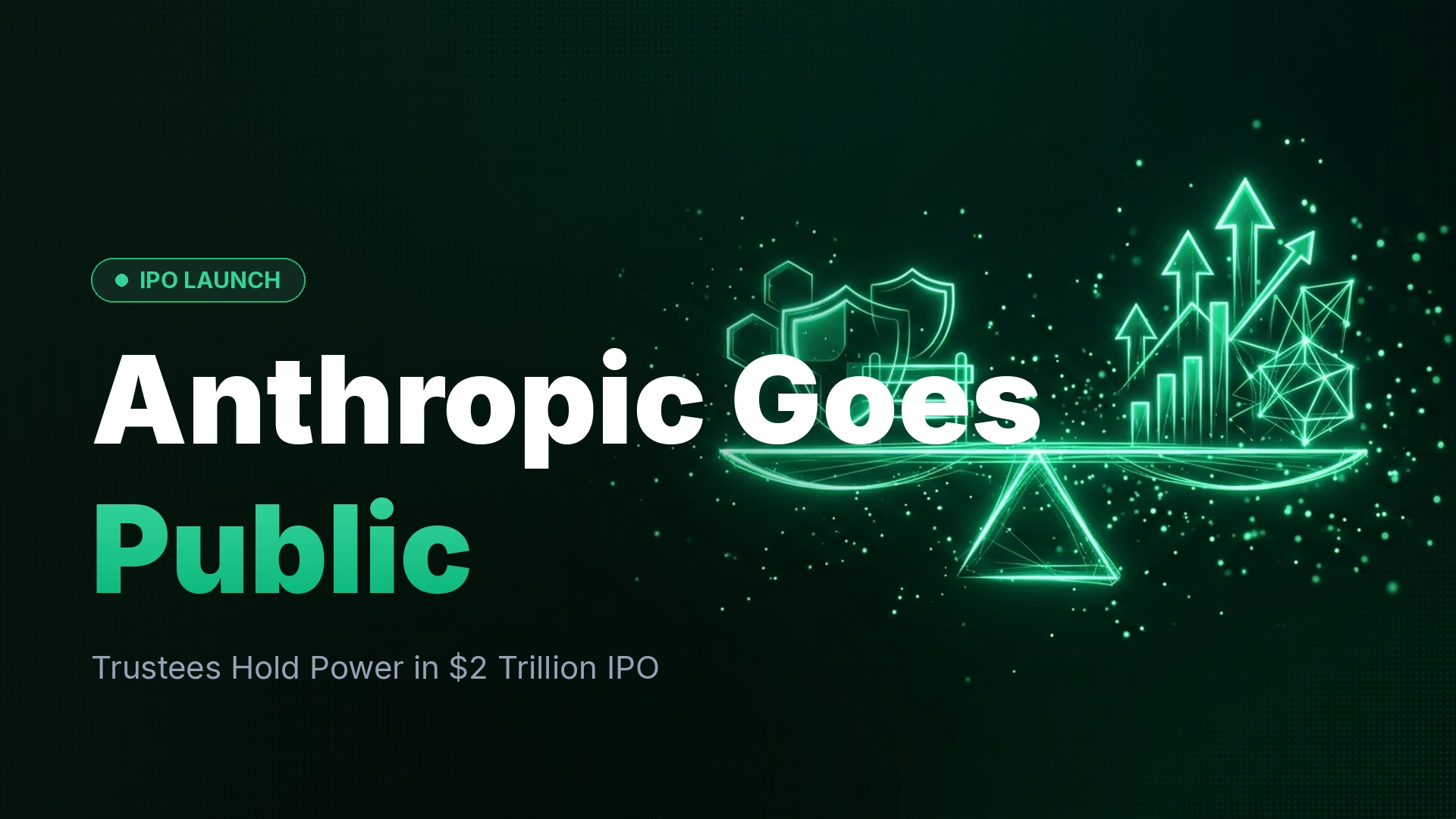
Anthropic officially launched its initial public offering on September 4, 2026, achieving a staggering $2 trillion valuation and immediately placing its unconventional governance structure under intense public market scrutiny. The Claude maker's decision to go public while maintaining a trustee-controlled oversight model represents an unprecedented experiment in balancing fiduciary duty to shareholders with long-term AI safety commitments.
Trustee Authority in the Public Arena
Five external trustees now hold veto power over critical decisions at Anthropic, including product launches, major acquisitions, and strategic pivots. These trustees, selected for their expertise in AI ethics, technology policy, and corporate governance, operate independently of both the executive team and the board of directors. Public investors purchasing shares in the September offering discovered they hold economic rights without corresponding control over the company's direction.
The trustee board can block decisions deemed misaligned with Anthropic's constitutional AI principles, even if those decisions would maximize short-term shareholder value. This structure diverges sharply from traditional public company frameworks where shareholder interests dominate governance through board elections and proxy battles.
Market Reaction and Investor Concerns
Initial trading showed volatility as institutional investors grappled with the implications of trustee oversight. Hedge funds and pension managers expressed concern about unpredictability in dividend policies and capital allocation decisions. Several analyst reports highlighted the tension between maximizing returns for public shareholders and adhering to safety-first principles that may slow product releases or limit market expansion.
The prospectus filed with regulators outlined scenarios where trustees could delay or cancel Claude model deployments if safety benchmarks fail to meet predetermined thresholds. This disclosure prompted questions about how public markets will value a company where traditional performance metrics may be subordinated to ethical considerations.
Precedent for AI Company Governance
Anthropic's structure borrows elements from public benefit corporations and non-profit oversight models, but scales them to a $2 trillion market capitalization. Legal experts note that Delaware corporate law permits such arrangements if clearly disclosed to investors, though no company of this size has previously attempted this governance hybrid.
- Trustees serve staggered five-year terms with no direct financial stake in company performance
- Annual transparency reports will detail trustee decisions and rationales for vetoing management proposals
- A separate safety committee composed of external researchers reviews all major model releases
Competitors including OpenAI and Google DeepMind are closely monitoring investor response, as calls for stronger AI governance mechanisms gain momentum in policy circles.
What This Means
Anthropic's IPO establishes a high-stakes test case for whether public markets can accommodate AI companies prioritizing safety over growth velocity. The trustee model may set a template for future offerings if investors tolerate reduced control in exchange for perceived reputational benefits and regulatory favor. However, sustained pressure from activist investors seeking to minimize trustee authority will likely emerge if quarterly results disappoint. The September 2026 launch marks the beginning of a multi-year experiment in reconciling profit motives with the existential risks posed by advanced AI systems.
on Emergent today




