


Stampli Cuts Launch Hours 68% Using ChatGPT Work

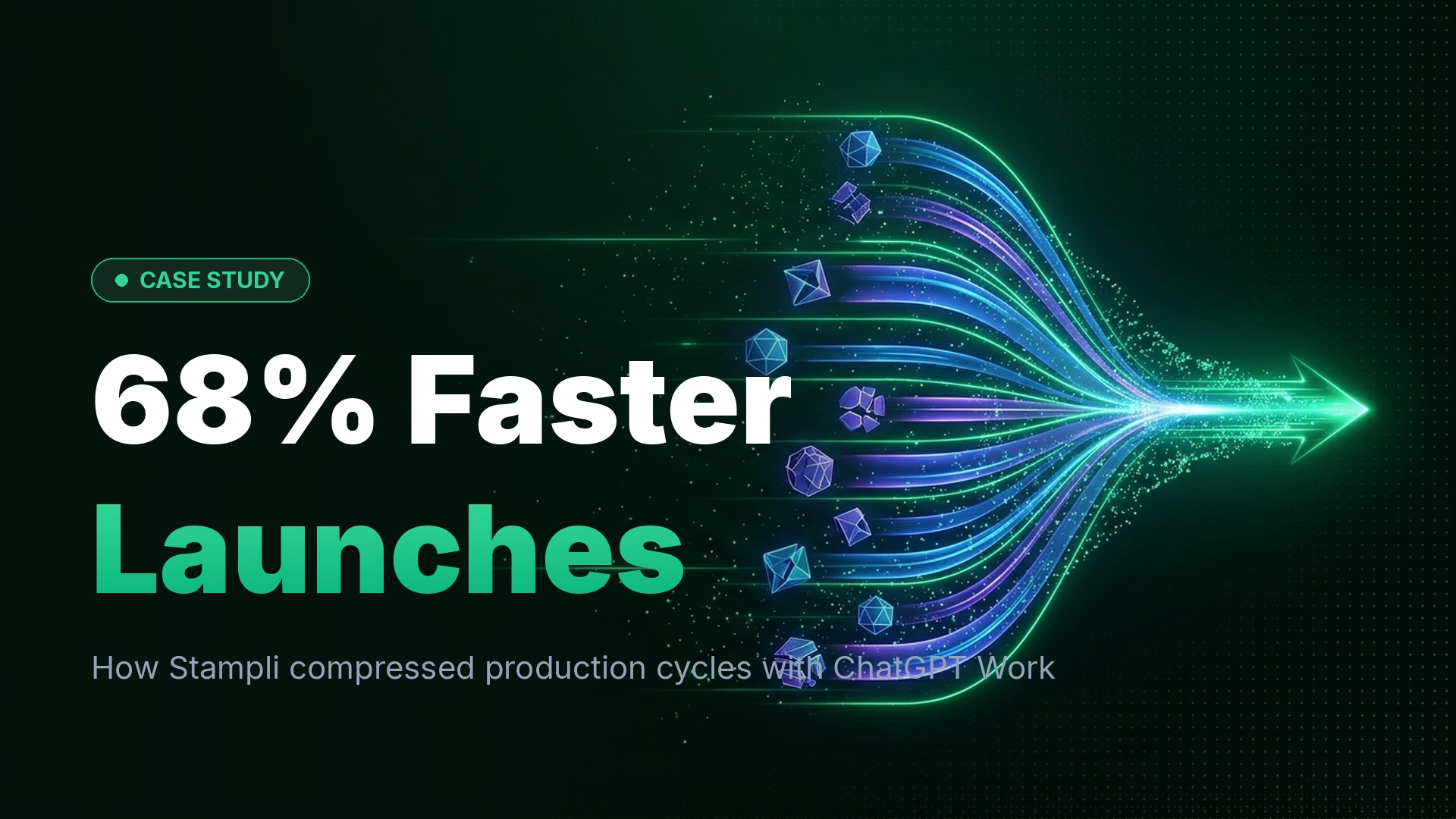
Stampli, a financial automation platform, reduced product launch preparation time by 68% using ChatGPT Work and OpenAI Codex, according to a case study published by OpenAI. Facing a fixed deadline with design resources allocated to other projects, the company turned to AI tools to compress what would typically require weeks of work into a matter of days.
The results demonstrate how enterprise teams are leveraging large language models to overcome resource constraints and accelerate time-to-market for critical business initiatives.
The Resource Constraint Challenge
Stampli encountered a common enterprise dilemma: a non-negotiable launch deadline with limited human resources available. Their design and production teams were committed to parallel projects, leaving the launch team without traditional support channels. Rather than delay the release or pull resources from other priorities, the team explored AI-powered alternatives to handle content creation, asset generation, and launch material production.
This scenario reflects a broader shift in how organizations approach capacity planning, using AI tools as force multipliers rather than simple automation layers.
ChatGPT Work Implementation Strategy
The Stampli team deployed ChatGPT Work across multiple launch workstreams:
- Marketing copy generation for landing pages, email sequences, and social media content
- Technical documentation and feature descriptions requiring domain-specific language
- Internal launch coordination materials including team briefs and timeline documentation
- Asset ideation and creative direction for visual elements
By structuring prompts with brand guidelines and product specifications, the team maintained quality standards while dramatically reducing iteration cycles. ChatGPT Work's collaborative features allowed multiple stakeholders to refine outputs without sequential handoffs between departments.
Codex for Technical Asset Development
OpenAI Codex handled code-adjacent tasks that traditionally required developer time. The team used Codex to generate HTML templates, CSS styling for launch pages, and JavaScript snippets for interactive elements. This freed engineering resources to focus on core product features rather than launch infrastructure.
The combination of natural language processing for content and code generation for technical assets created an end-to-end production pipeline that operated with minimal human bottlenecks.
Release Date and Availability
Officially launched on January 2025, this case study highlights capabilities already available to ChatGPT Work enterprise customers. Organizations with existing OpenAI enterprise agreements can implement similar workflows immediately, while teams evaluating AI productivity tools can reference Stampli's results as a benchmark for launch acceleration use cases.
The 68% time reduction translates to approximately 20-25 hours of saved labor per launch cycle, based on typical enterprise product release timelines.
Measurable Business Impact
Beyond the headline time savings, Stampli reported several secondary benefits:
- Consistent brand voice across all launch materials despite distributed creation
- Faster response to last-minute requirement changes without rework delays
- Reduced context-switching for team members managing multiple projects
- Lower dependency on specialized roles for routine content production
The company noted that human oversight remained critical for strategic decisions, final approvals, and quality assurance, but the AI tools eliminated the majority of manual execution work.
What This Means
Stampli's results provide concrete evidence that enterprise AI tools can deliver substantial productivity gains in time-constrained scenarios. The 68% reduction in launch hours represents a meaningful competitive advantage for organizations operating in fast-moving markets where speed-to-market determines success. As more companies face similar resource allocation challenges, case studies like this will likely accelerate ChatGPT Work adoption across industries where launch velocity directly impacts revenue. The key takeaway: AI productivity tools are moving from experimental status to mission-critical infrastructure for companies prioritizing operational efficiency.
on Emergent today




