


Anthropic Launches Cowork: Claude Agent for Non-Coders

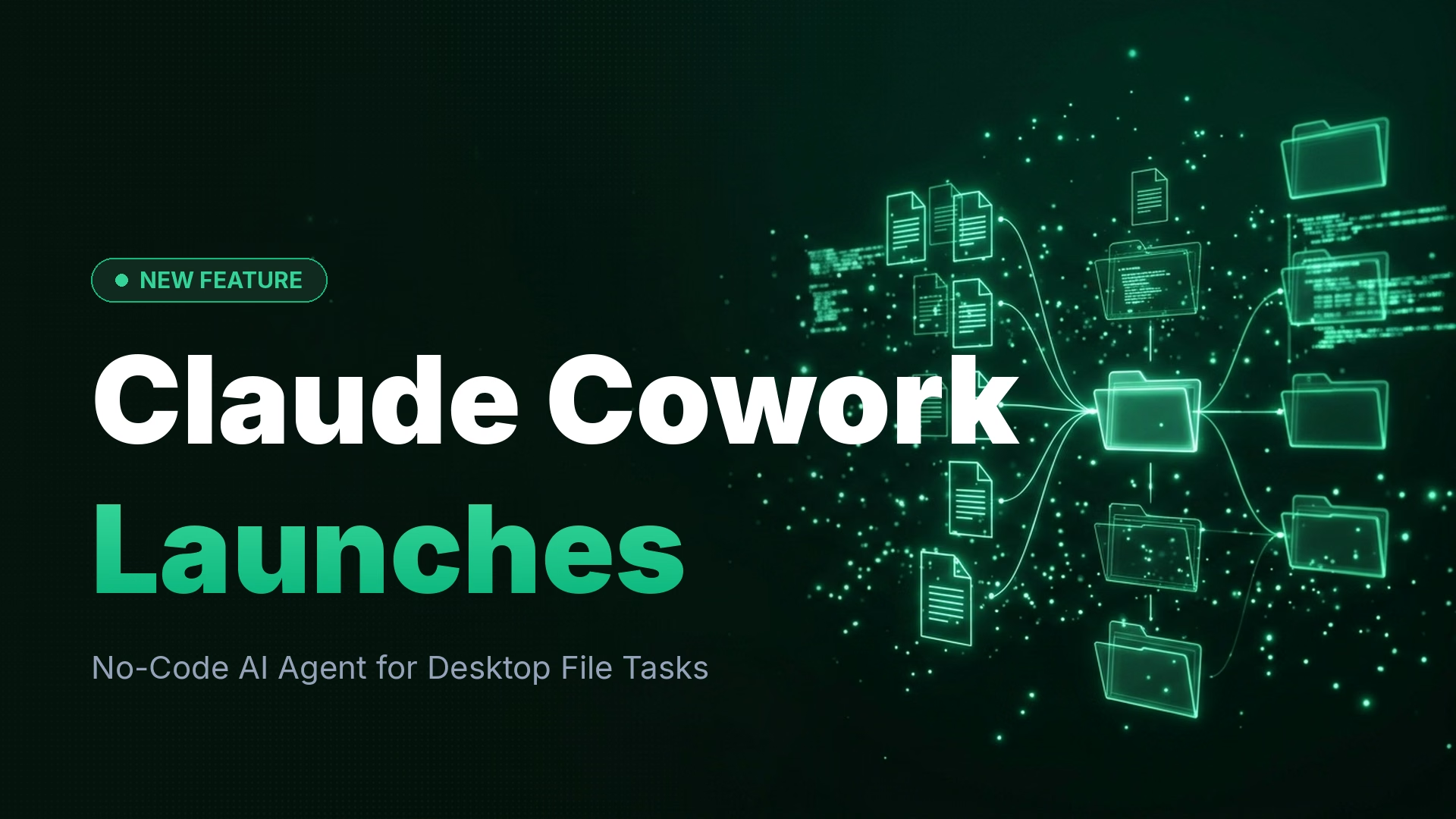
Anthropic expanded its AI agent capabilities on Monday with the launch of Cowork, a new feature that brings Claude Desktop's autonomous file-handling power to non-technical users. The release extends the functionality of Claude Code, the company's developer-focused coding agent, into mainstream productivity workflows without requiring any programming knowledge. According to company insiders, the development team built Cowork in approximately 10 days using Claude Code itself, demonstrating the recursive potential of AI-assisted development.
Availability and Release Date
Officially launched on Monday, January 13, 2025, Cowork is now available to Claude Desktop users through the standard application interface. The feature integrates directly into existing Claude workflows, allowing users to delegate file-based tasks through natural language commands. Anthropic has positioned the release as a critical step in democratizing AI agent capabilities beyond software developers and power users.
What Cowork Does and How It Works
Cowork enables Claude to autonomously navigate desktop file systems, read and modify documents, organize folders, and execute multi-step workflows based on user instructions. Unlike Claude Code, which focuses on software development tasks like writing and debugging code, Cowork targets everyday productivity scenarios such as:
- Batch renaming files according to custom naming conventions
- Extracting data from PDFs and spreadsheets into structured formats
- Organizing project folders and cleaning up duplicate files
- Drafting reports by pulling information from multiple documents
- Converting file formats and standardizing document templates
Users interact with Cowork through conversational prompts in the Claude Desktop interface. The agent displays its planned actions before execution, giving users approval control over file system changes. This human-in-the-loop design balances automation efficiency with user oversight, particularly important for tasks involving sensitive documents or irreversible modifications.
Built With Claude Code in 10 Days
The rapid development timeline reveals how AI-assisted programming is accelerating product cycles at frontier labs. Company sources told VentureBeat that Anthropic engineers used Claude Code extensively throughout Cowork's development, relying on the AI agent to generate boilerplate code, debug integration issues, and prototype user interface components. The self-referential nature of this development process (an AI coding tool building an AI file-management tool) highlights the compounding productivity gains possible when AI systems assist in their own evolution.
Competitive Positioning Against Microsoft and Google
Cowork positions Anthropic in direct competition with Microsoft's Copilot ecosystem and Google's emerging agent frameworks. While those platforms integrate AI assistance across cloud-based productivity suites, Anthropic is betting on desktop-native autonomy and cross-application file handling. The no-code approach also differentiates Claude from OpenAI's ChatGPT desktop offerings, which currently require more manual file uploads and lack persistent file system access. Industry analysts note that desktop agents represent a critical battleground as AI companies race to capture productivity workflows before users lock into competing ecosystems.
What This Means
Anthropic's Cowork launch signals a strategic shift from conversational AI toward practical autonomous agents that reduce friction in daily computer work. By extending Claude Code's capabilities to non-technical users, the company is testing whether mainstream adoption of AI agents depends more on accessibility than raw performance. The 10-day development cycle using Claude Code itself demonstrates that recursive AI-assisted development may become standard practice across the industry, potentially compressing traditional software release timelines from months to weeks. For enterprise users evaluating AI productivity tools, Cowork offers a preview of how desktop agents might handle routine file management tasks currently performed manually, though security-conscious organizations will need to evaluate file access permissions carefully before deployment.

on Emergent today




