


GPT-6 Astra Built VEED's Launch Video in Open-Source Editor
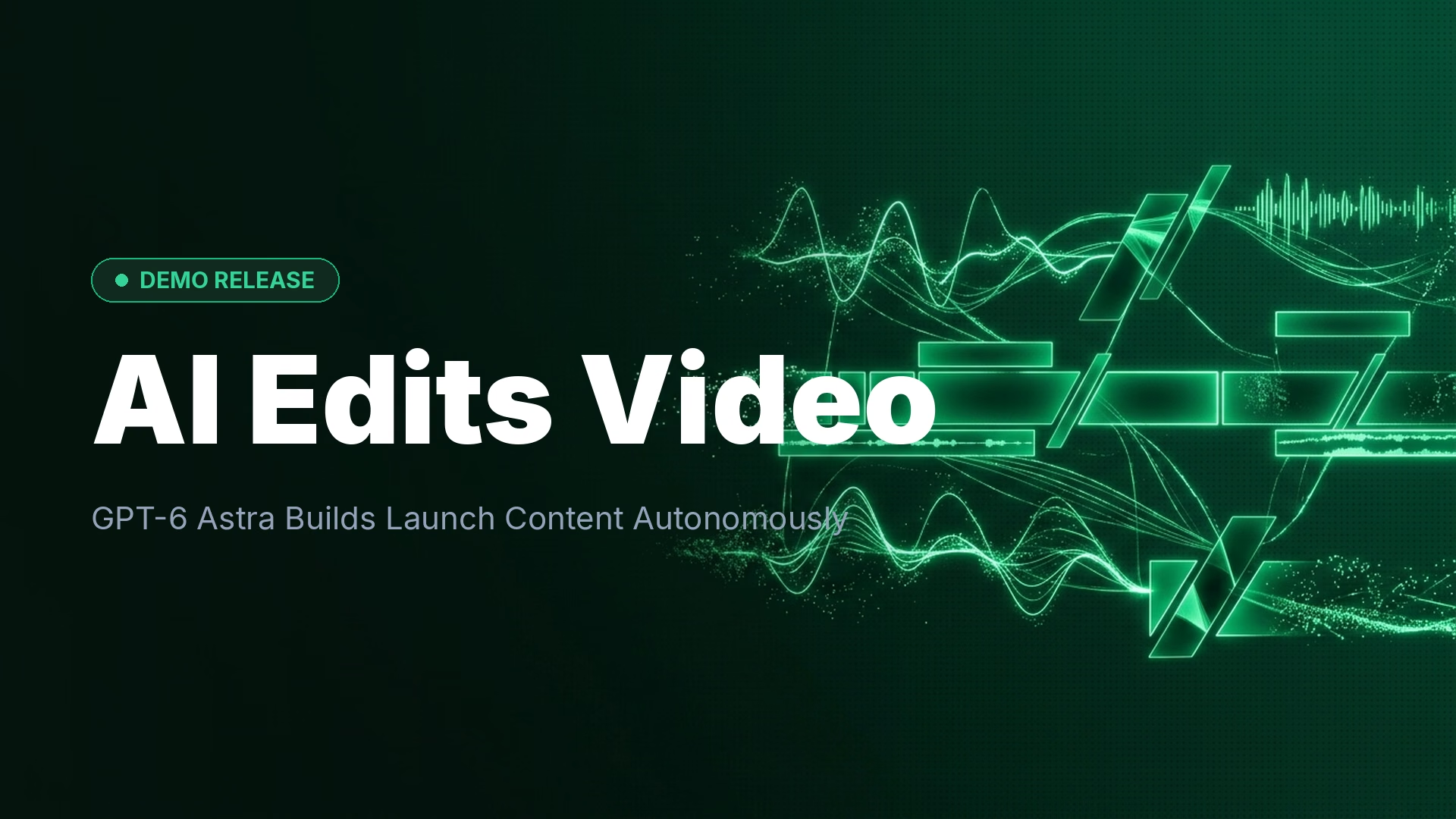
VEED has released Open Edit, an open-source video editor that demonstrates GPT-6 Astra creating a complete product launch video autonomously. The project, published on GitHub today, shows OpenAI's multimodal model handling timeline editing, asset selection, transitions, and effects without manual intervention. VEED used the system to generate its own promotional content, marking a practical application of foundation models in creative production workflows.
How GPT-6 Astra Handles Video Editing Tasks
Open Edit integrates GPT-6 Astra's multimodal reasoning to translate natural language prompts into editing actions. Users describe the desired video structure, pacing, and stylistic elements in plain text. The model interprets these instructions, selects appropriate visual assets from a library, arranges clips on a timeline, applies transitions, and synchronizes audio elements. The demo video VEED produced required no human editing corrections, illustrating the model's spatial and temporal understanding of video composition.
The editor exposes its entire decision-making process through a transparent action log. Developers can inspect which frames GPT-6 Astra selected, how it calculated transition timing, and which color grading parameters it applied. This visibility supports debugging and fine-tuning for production use cases where creative control remains critical.
Open-Source Availability and Developer Access
The Open Edit codebase is available under an MIT license on GitHub, allowing commercial and research use without restrictions. The repository includes:
- A React-based editing interface with timeline visualization
- API integration patterns for GPT-6 Astra's vision and reasoning endpoints
- Sample asset libraries and prompt templates for common video types
- Performance benchmarks showing average generation times per project complexity
VEED's engineering team documented installation steps and API key configuration for developers running local instances. The system requires access to OpenAI's GPT-6 Astra API, which is generally available as of September 2026 through OpenAI's developer platform.
Release Date and Current Availability
Open Edit was officially released on September 14, 2026, with the source code and documentation immediately accessible through VEED's GitHub organization. The launch coincides with growing demand for AI-native creative tools that reduce manual editing overhead while maintaining professional output quality. VEED positions the project as both a functional tool and a reference implementation for teams building AI-powered media workflows.
Real-World Production Implications
The VEED demo addresses a persistent challenge in AI video generation: coherent multi-shot editing that maintains narrative flow and visual consistency. Previous generative models produced individual clips effectively but struggled with sequencing and pacing across longer timelines. GPT-6 Astra's ability to manage an entire editing session from a high-level brief suggests foundation models now handle creative coordination tasks that traditionally required human judgment.
Early adopters in marketing and content production teams report using similar workflows to generate explainer videos, social media content, and internal training materials. The open-source release accelerates experimentation by removing licensing barriers and providing working code developers can adapt to proprietary asset libraries and brand guidelines.
What This Means
Open Edit demonstrates that multimodal AI models like GPT-6 Astra have reached functional parity with human editors for structured creative tasks. The open-source release lowers the barrier for studios, agencies, and independent creators to integrate AI-driven video production into existing pipelines. As foundation models continue improving spatial reasoning and aesthetic judgment, autonomous editing tools may become standard in content workflows where speed and consistency outweigh bespoke artistic choices.
on Emergent today




