


GPT-Live: OpenAI's Real-Time Voice AI System Explained

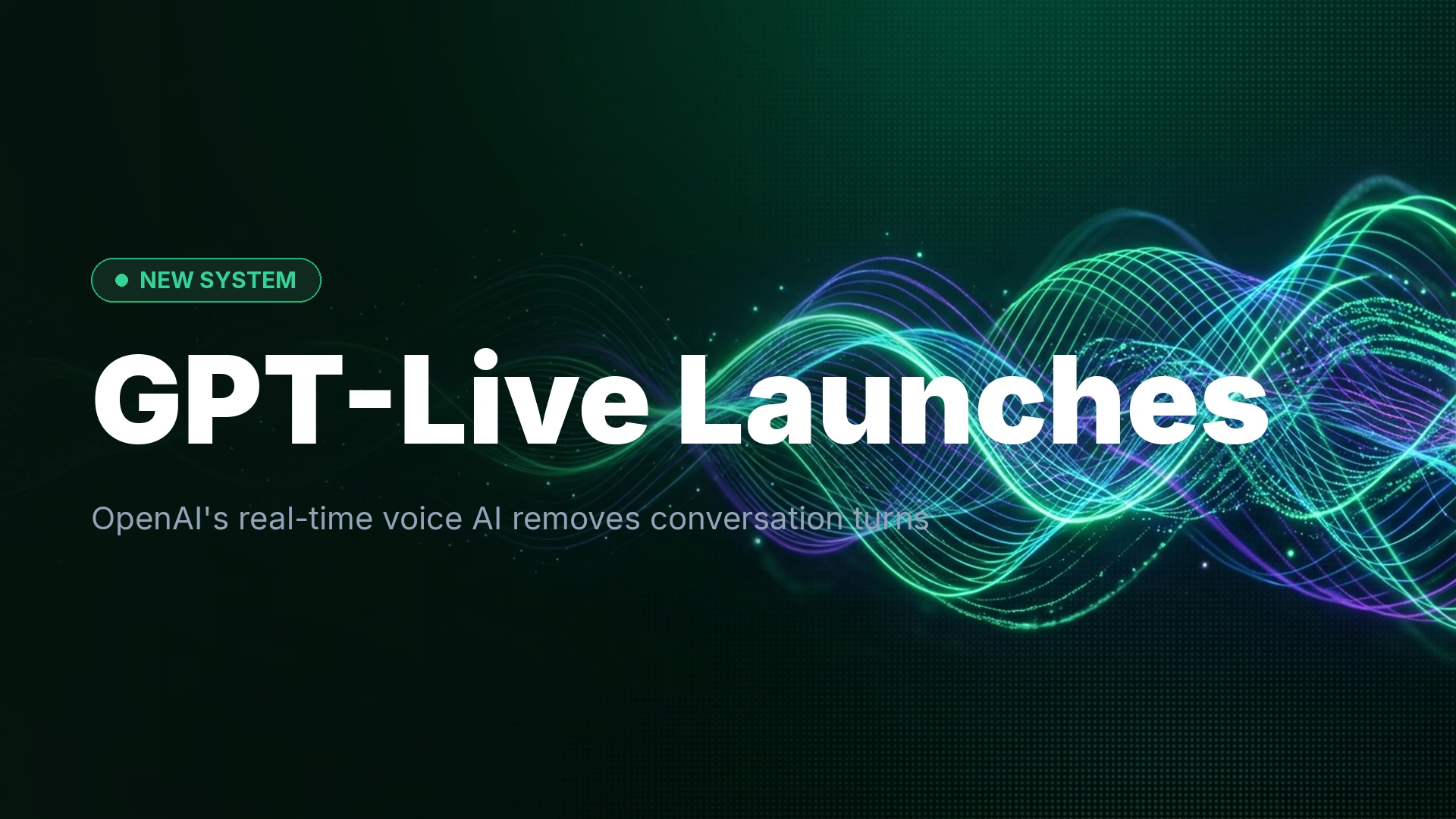
OpenAI has officially launched GPT-Live, a real-time voice interaction system that eliminates traditional turn-taking in AI conversations. Built in six months, the platform uses a turnless speech architecture and low-latency design to enable faster, more natural dialogue with artificial intelligence. The release marks a significant shift from previous voice assistants that required users to wait for the AI to finish speaking before responding.
Turnless Speech Model Architecture
GPT-Live introduces a novel approach to conversational AI by removing the rigid turn-taking structure that has defined voice assistants for decades. Unlike systems where users must wait for a prompt or silence before speaking, GPT-Live processes speech continuously in both directions. The turnless model allows interruptions, overlapping speech, and natural conversational flow without forcing artificial pauses. This architectural change required OpenAI to redesign how the system handles audio input and output simultaneously, processing streams in parallel rather than sequentially.
The model predicts when a user intends to speak and adjusts its own output accordingly, creating a more human-like interaction pattern. This predictive capability distinguishes GPT-Live from earlier voice systems that simply stopped when detecting sound.
Low-Latency Infrastructure
Achieving responsive voice interaction required OpenAI to optimize every layer of the system stack. The team reduced end-to-end latency to sub-300 millisecond response times by implementing several technical innovations:
These optimizations allow GPT-Live to feel immediate, matching the responsiveness users expect from human conversation partners. The system maintains this low latency even during complex reasoning tasks by prioritizing initial response generation while continuing background processing.
Six-Month Development Timeline
OpenAI disclosed that the GPT-Live system moved from concept to production in approximately six months, an accelerated timeline for a foundational infrastructure change. The development process involved simultaneous work on speech recognition, language model adaptation, audio generation, and deployment infrastructure. According to the blog post, the team prioritized shipping a functional system quickly rather than perfecting every component before launch, adopting an iterative improvement approach.
The compressed timeline suggests OpenAI leveraged existing GPT-4 capabilities while building specialized voice-optimized pathways rather than training entirely new models from scratch. This strategy allowed faster deployment while maintaining the reasoning capabilities users expect from GPT-class systems.
Natural Conversation Capabilities
The platform's design enables several interaction patterns previously unavailable in AI voice systems. Users can interrupt the AI mid-sentence to redirect conversation, ask clarifying questions without waiting for pauses, and engage in back-and-forth dialogue that mirrors human conversation dynamics. GPT-Live also handles overlapping speech, where both parties talk simultaneously, by maintaining context from both audio streams and resolving meaning appropriately.
The system supports variable speaking speeds, accents, and speech patterns without requiring users to adapt their natural communication style. This flexibility comes from training on diverse audio datasets and implementing robust speech recognition that handles real-world conversation conditions.
What This Means
GPT-Live represents a fundamental shift in how users interact with AI systems, moving from command-response patterns to genuine dialogue. The turnless architecture and sub-300ms latency create an experience closer to talking with another person than issuing instructions to software. For developers, this opens new application possibilities in customer service, education, accessibility tools, and collaborative work environments where natural conversation flow provides significant value. The six-month build timeline also signals that real-time voice AI is becoming an infrastructure-level capability rather than a specialized research project, suggesting rapid iteration and improvement cycles ahead. As OpenAI scales GPT-Live availability, the system will likely set new baseline expectations for what conversational AI should feel like across the industry.
on Emergent today




