


Meet the Winners of the Fabrizio Romano Builders' Contest

.avif)
The Fabrizio Romano Builders' Contest has its winners, and they come from four different countries. Catherine Vandermeets of Belgium took first place, Lucio Vittorio Taglialatela of Italy took second, and Zechariah James Rhodes of the United States and Kenneth Ngwoke of Nigeria shared third. Each built working software on Emergent to solve a real problem, with no coding background required.
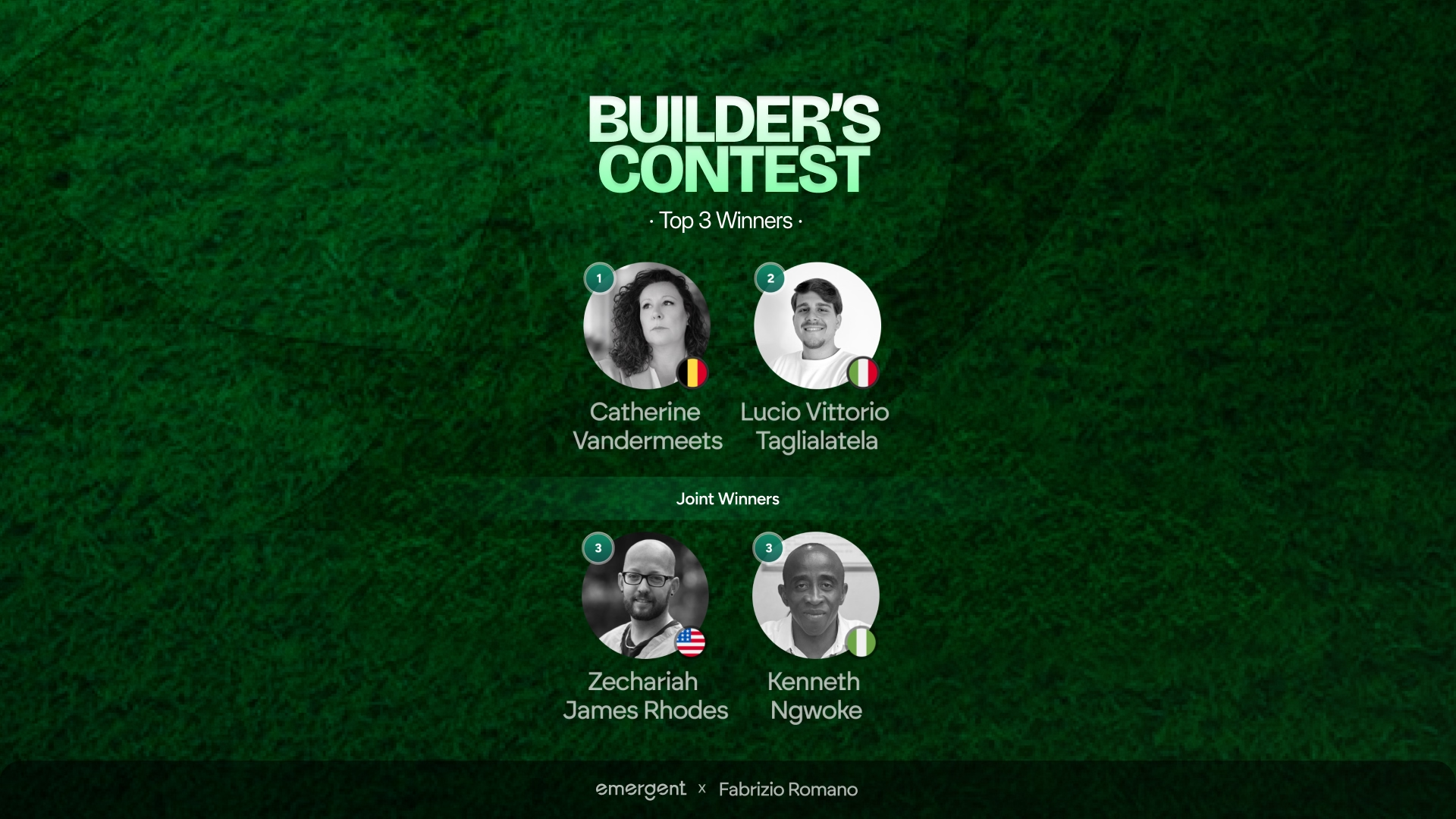
Run in partnership with football transfer journalist Fabrizio Romano, the global contest asked builders to solve one real-world problem with software and ship it. Entrants competed for a $100,000 prize pool, and the winning products are already in use. Here are the four builds that came out on top.
Catherine Vandermeets won first place with Le Copilote TDAH
Le Copilote TDAH is a daily support app for people living with ADHD, built to help them start tasks, stay organized, and do it without the guilt that usually comes with the struggle. It serves adults, parents, and whole families, with an interface designed to work even when a person's attention is stretched thin.
The app turns everyday friction into something manageable. Its standout tool photographs a lesson or a wall of instructions and turns it into a comic, a mind map, or an audio summary adapted to the reader. Alongside it sit an empathetic AI coach, short anti-overload routines for hard days, a brain-dump feature that sorts a racing mind into order, and a family space where a parent sets missions and a child earns stars and rewards. It runs in French, Dutch, and English. For a first-place build, it is a clear answer to what the contest was about: someone who understood a daily struggle firsthand and built the tool they wished existed.
Lucio Vittorio Taglialatela took second place with Agenzee
Agenzee is an AI marketing director for small businesses, and it does more than suggest ideas. It decides where a marketing budget should go, explains the reasoning the way a chief marketing officer would, then produces the assets to run the plan.
The workflow starts with a website. Paste a URL and Agenzee reads the site to build what it calls a Brand Brain: the business's voice, offer, and audience. From there it produces a real media plan, a budget split across channels grounded in the business's actual numbers and sector, so a local pastry shop and a software company get genuinely different plans. It then generates the work itself, including social scripts, carousels, ad creative, and landing pages, all kept on brand. It replaces the blank page and the generic advice with a direction a small business can act on the same day.
Zechariah James Rhodes and Kenneth Ngwoke shared third place
Third place went to two builders who solved problems on opposite ends of the software world. The two split the $20,000 third-place prize, $10,000 each.
1. Zechariah James Rhodes built MediTrack
MediTrack is a hospital operating system built for places the internet forgets. It connects more than 30 clinical and operational modules, covering registration and triage, wards, theatre, laboratory, radiology, pharmacy, finance, inventory, and human resources, into one system for resource-limited hospitals.
The design choices are what make it work where cloud software cannot. The entire records system is offline-first and boots from an encrypted USB drive, running on hardware as small as a Raspberry Pi, so a hospital needs no continuous internet, no expensive servers, and no large IT team. Every clinical, finance, and inventory action is chained into a tamper-evident audit trail. It is already live at a mission hospital in East Africa.
2. Kenneth Ngwoke built SalesMate NG
SalesMate NG is a business manager for Nigerian traders and shop owners, built to run a small business from a phone and to keep working when the network drops. It tracks sales, inventory, expenses, and customer debt in one place.
The app opens on a dashboard showing the day's sales, gross profit, expenses, and money owed by customers, with alerts when stock runs low. A shopkeeper can record a sale or an expense in a tap, track exactly who owes what, and use a built-in price calculator for landed cost, break-even, and selling price. It generates reports across sales, expenses, debts, and inventory, including a bank-ready report aimed at loan officers, cooperatives, and grant bodies. It runs offline and installs straight to a phone's home screen.
The contest drew builders from around the world
The four winners came out of a much larger field. Emergent and Fabrizio Romano also recognized a group of finalists whose builds stood out, spanning countries across Europe, Asia, Africa, and the Americas.
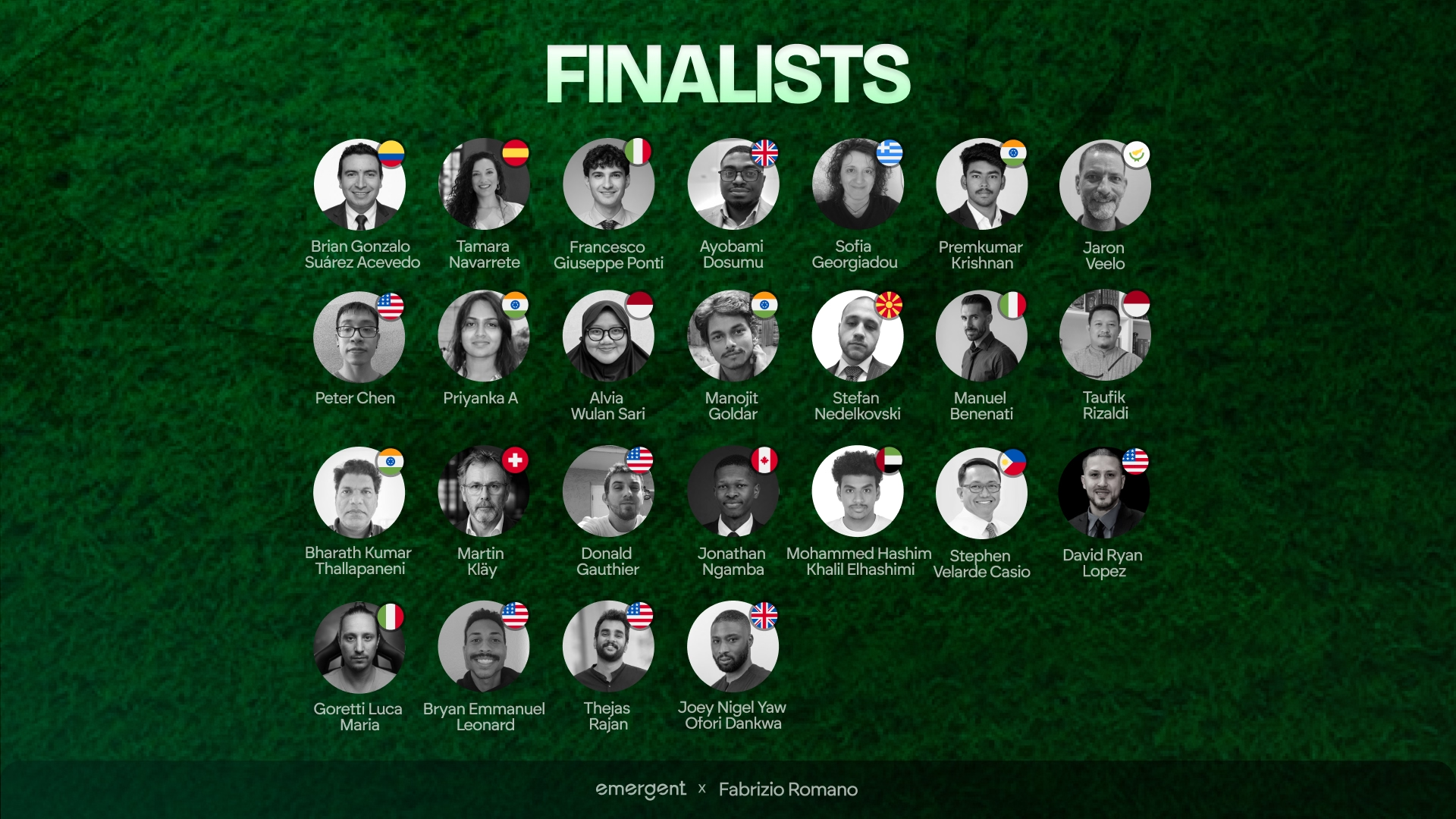
It is a snapshot of who is building with AI right now: not engineers by training, but operators, founders, and professionals solving problems they know firsthand.
Build your own software on Emergent
The four winners come from four countries and built for four very different users: a family coach for ADHD, a marketing director for small businesses, a hospital system for the places the internet forgets, and a shop manager for Nigerian traders. None of them started with code. Each started with a problem they understood and shipped software that people now use.
The Fabrizio Romano Builders' Contest was one of several builder contests Emergent runs. There is also Builder Fest, a global series of country-specific contests with local prize pools, live now in France and Indonesia through 25 August. You can find every contest, event, and builder challenge on the AI contests page.
Every winner here turned a problem they already understood into working software, without writing a line of code. Describe yours in plain language and Emergent builds it around you.
on Emergent today




