


Asana Completes 5 Years of Work in 2 Weeks Using Codex

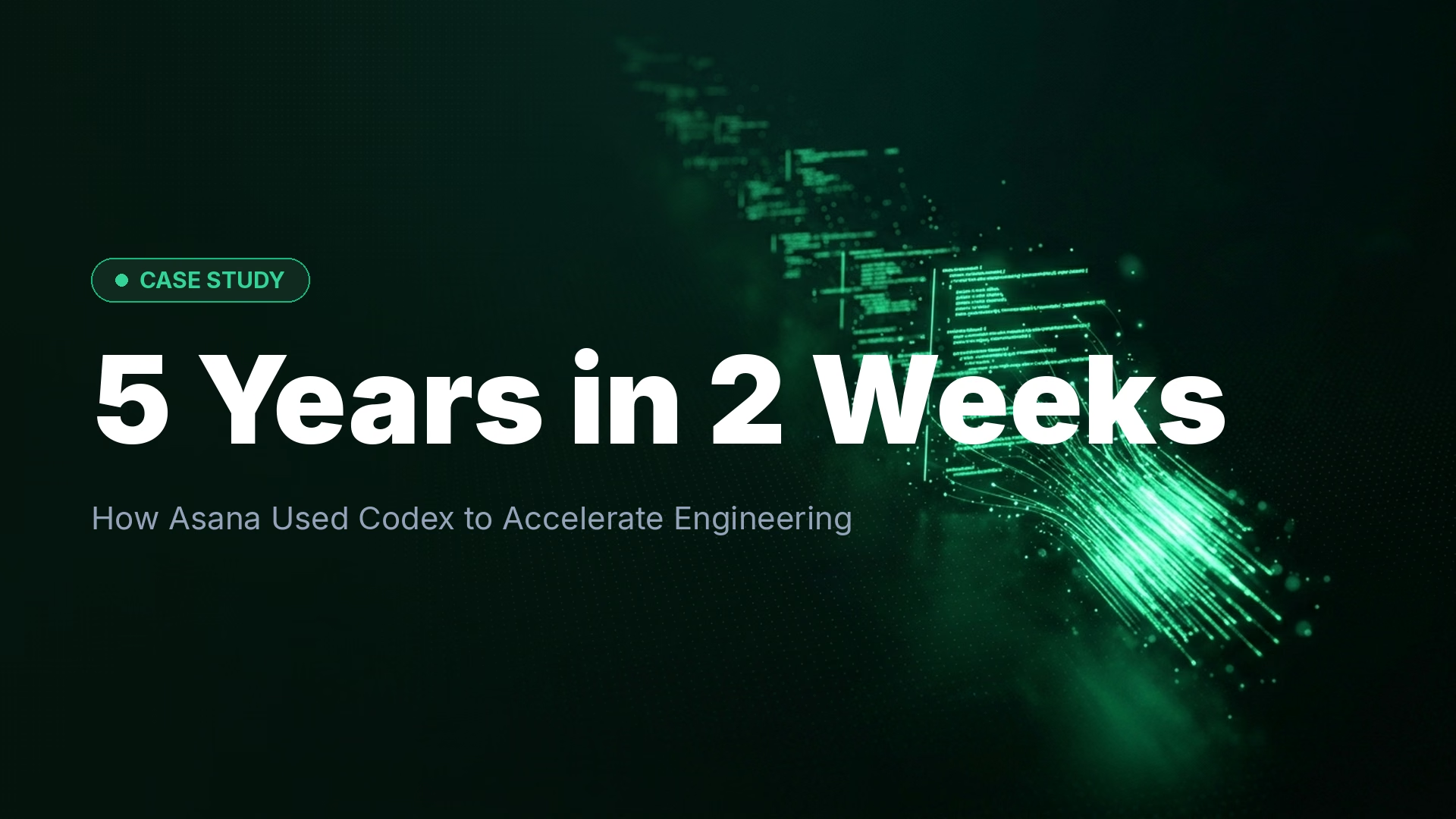
Asana has completed a legacy testing system overhaul that would have required five years of engineering resources using traditional methods. The project management software company deployed OpenAI Codex to automate the migration, finishing the work in two weeks for approximately $12,000 in API costs.
The case study demonstrates how AI-powered code generation tools are reshaping software engineering timelines and resource allocation for enterprise companies dealing with technical debt.
The Legacy Testing Challenge
Asana's engineering team faced a substantial technical debt problem with an outdated testing framework that had accumulated over years of product development. The existing system required manual maintenance and slowed down development velocity across multiple teams.
Traditional estimates suggested the migration would consume five full years of engineering time, factoring in the complexity of updating thousands of test files, ensuring compatibility with new frameworks, and maintaining product stability throughout the transition. The resource commitment made the project a low priority despite its long-term benefits.
Codex Implementation Strategy
Asana's engineering team structured the Codex deployment around three phases: analysis of existing test patterns, automated code transformation, and validation of migrated tests. The AI system processed the legacy codebase and generated updated test files that matched modern framework requirements.
The company reported that Codex handled the pattern recognition and code translation tasks that would have required extensive manual review from senior engineers. The system identified deprecated functions, updated syntax structures, and maintained test logic integrity across the migration.
- Completion time: 2 weeks versus 5-year human estimate
- Total cost: Approximately $12,000 in API usage
- Scope: Complete testing system replacement
- Resource savings: Equivalent to multiple full-time engineers over 5 years
Release Date and Availability
Officially released on December 19, 2024, this case study highlights production use of OpenAI Codex for enterprise engineering workflows. The project was completed using Codex's code generation capabilities, which are available through OpenAI's API platform for commercial applications.
Asana's implementation represents one of the first publicly documented cases of AI code generation replacing multi-year engineering roadmaps at enterprise scale.
Cost-Benefit Analysis
The financial comparison illustrates the economic shift AI tools introduce to software development planning. At $12,000 in API costs versus years of engineering salaries (typically $150,000 to $250,000 annually per senior engineer), the return on investment exceeded 100x by conservative estimates.
Beyond direct cost savings, Asana gained immediate access to a modernized testing infrastructure rather than waiting years for manual completion. This acceleration enables faster product iteration and reduced technical debt burden on current engineering teams.
What This Means
Asana's results suggest AI code generation has matured beyond experimental use cases into production-grade infrastructure work. Companies evaluating similar technical debt projects now have quantified evidence that AI-assisted development can compress timelines by orders of magnitude while maintaining code quality standards. The case establishes new benchmarks for engineering productivity gains from large language models in enterprise software development contexts.
on Emergent today




