


Tare: Open-Source Tool Tracks Claude API Token Usage

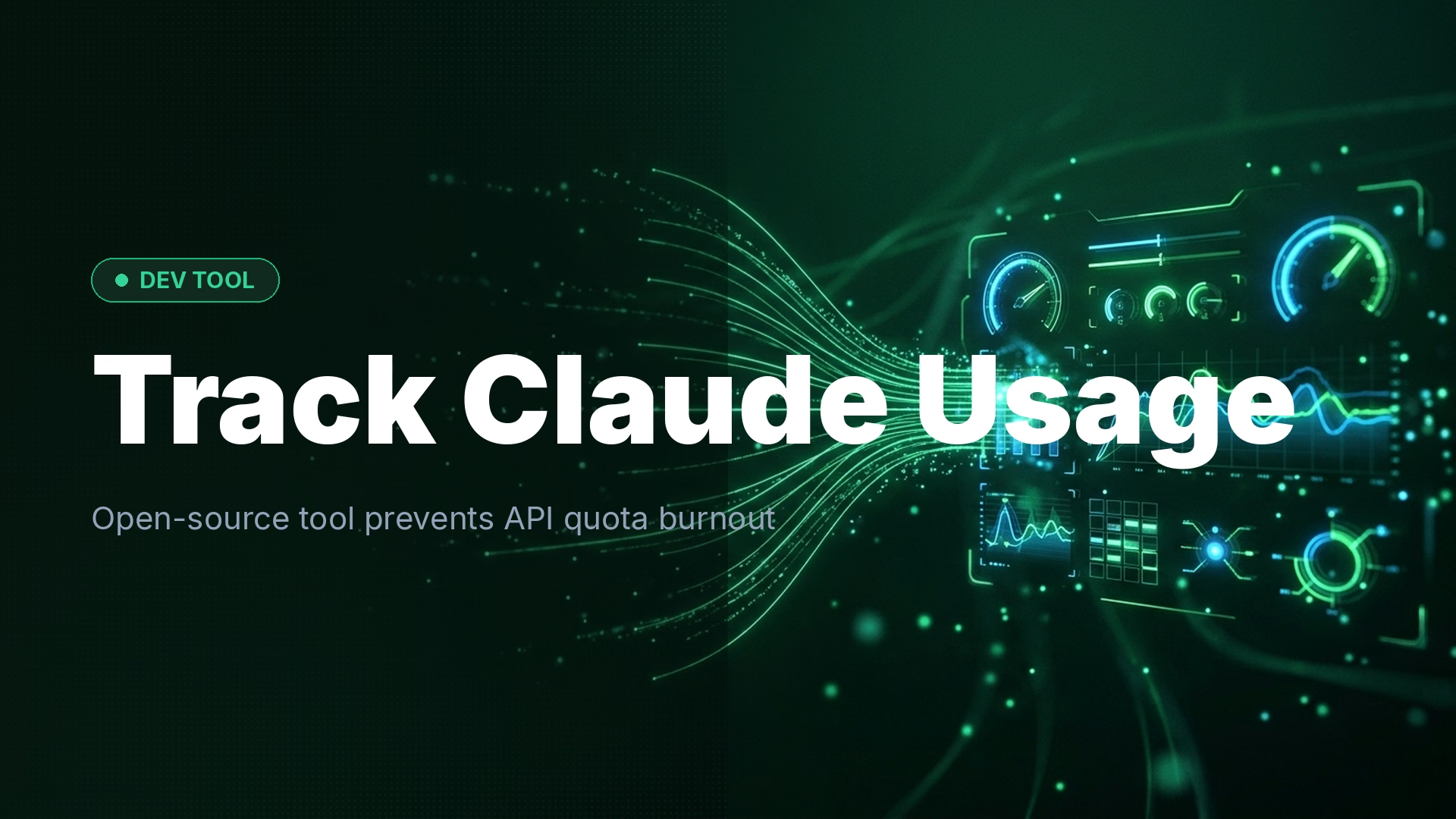
A developer who burned through their entire Claude API quota in just 10 minutes has released an open-source tool to help others avoid the same fate. Tare, now available on GitHub, provides real-time monitoring of token consumption for applications using Anthropic's Claude API, addressing a common pain point for developers building AI-powered applications.
The Problem: Invisible Token Consumption
Developer Kelviq discovered their Claude API credits depleted far faster than expected, with no clear visibility into which parts of their application were responsible. The incident, shared on Hacker News, resonated with 55 upvotes and sparked 41 comments from developers facing similar challenges. Without granular usage analytics, developers struggle to identify inefficient prompts, runaway loops, or unexpected token spikes that drain quotas.
Current API dashboards from Anthropic provide aggregate usage data but lack the request-level detail needed for debugging. This gap becomes critical when scaling applications or testing new features that might inadvertently consume tokens at accelerated rates.
Release Date and Availability
Officially launched on January 15, 2025, Tare is freely available through its GitHub repository at github.com/kelviq/tare. The tool requires no commercial license and integrates with existing Claude API implementations through minimal code changes. Developers can clone the repository and begin monitoring within minutes.
How Tare Works
The monitoring tool intercepts API calls to Claude and logs detailed metrics including:
- Token count per request (input and output separately)
- Request timestamps and duration
- Endpoint-specific usage patterns
- Cost estimates based on current pricing tiers
Tare stores this data locally, allowing developers to analyze usage trends over time without sending telemetry to third parties. The dashboard interface displays real-time charts and supports filtering by time range, endpoint, or token threshold.
Community Response and Use Cases
The Hacker News discussion revealed multiple scenarios where visibility gaps cause budget issues. Developers building chatbots reported surprise costs from long conversation histories. Others noted that streaming responses and multi-turn interactions compound token usage in ways that are not immediately obvious during development. Several commenters praised Tare's lightweight approach, contrasting it with heavier observability platforms that require infrastructure changes.
One developer noted that similar tools exist for OpenAI's API but options remain limited for Claude-specific monitoring. Tare fills this niche with a focused feature set tailored to Anthropic's token counting methodology and pricing structure.
What This Means
As Claude API adoption grows, cost management becomes increasingly important for production applications. Tare represents a category of developer-built tools that address practical operational needs not yet solved by official platform features. For teams running Claude-powered applications at scale, granular usage tracking can prevent budget surprises and optimize prompt engineering. The tool's open-source nature allows customization for specific workflows, from logging formats to alert thresholds. Developers concerned about API costs now have a free option for monitoring before issues escalate.

on Emergent today




