


Trump Admin Faces Lawsuit Over Secret AI Safety Rules
Officially launched on September 2026.
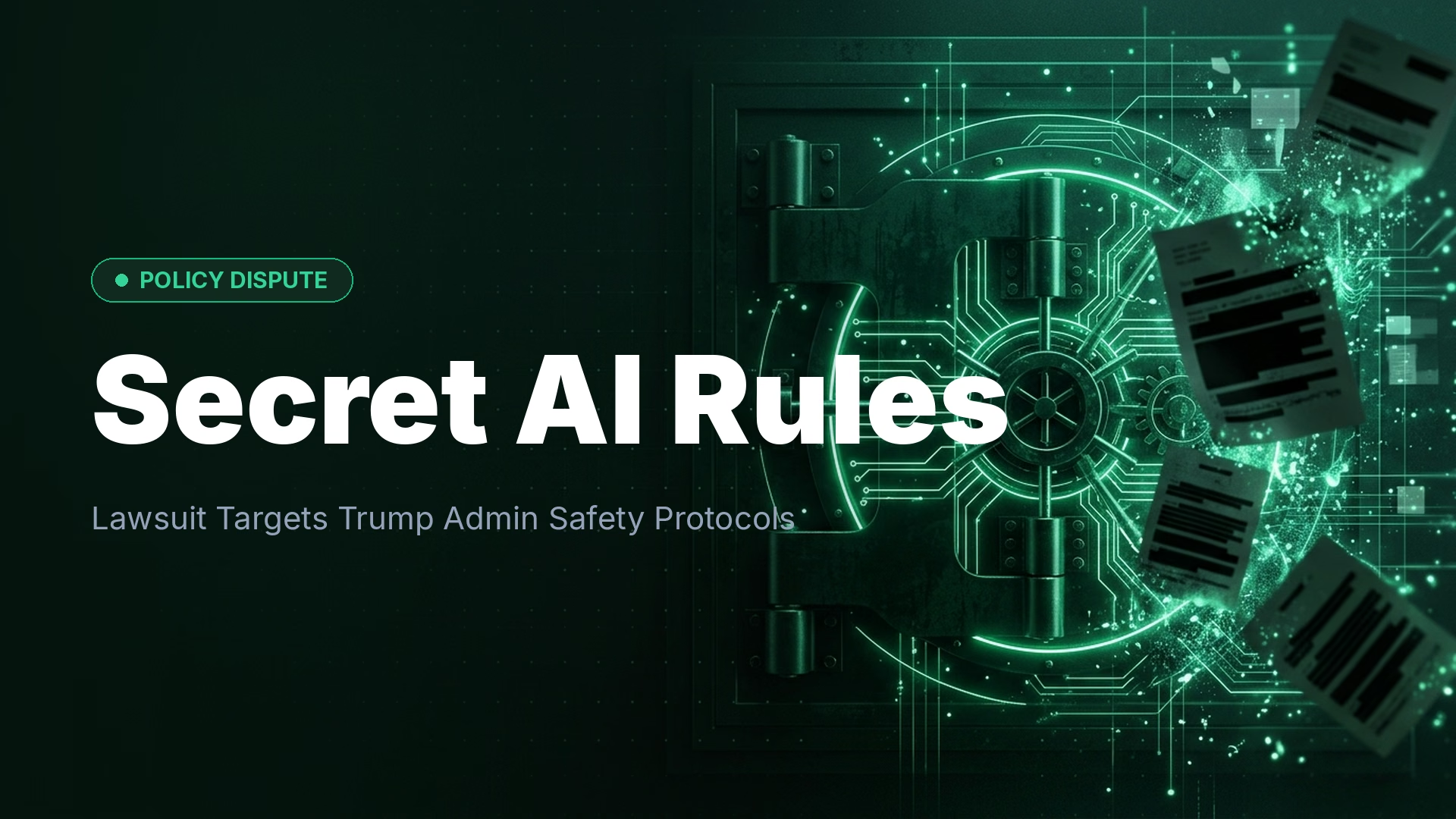
A legal challenge filed in September 2026 seeks to compel the Trump administration to disclose classified protocols governing how federal agencies evaluate the safety of frontier AI models. The lawsuit alleges that secret review processes for advanced AI systems may hide conflicts of interest, inconsistent standards, or regulatory capture, raising transparency concerns across the AI development community.
Secret Testing Framework Under Legal Scrutiny
The Trump administration has conducted undisclosed reviews of large-scale AI models developed by leading labs, applying criteria that remain classified. According to the lawsuit, this opacity prevents independent verification of whether safety assessments follow rigorous, unbiased standards. Plaintiffs argue that public disclosure is necessary to ensure federal AI safety testing protocols serve public interest rather than private industry preferences.
Federal agencies have historically published evaluation criteria for technologies ranging from pharmaceuticals to aviation systems. The classified nature of frontier AI testing marks a departure from this precedent, prompting legal action from transparency advocates and AI researchers concerned about accountability gaps.
Allegations of Hidden Corruption Risks
The legal filing specifically alleges that secret rules may enable corruption or favoritism in how different AI models are assessed. Without public documentation of testing standards, there is no mechanism to verify whether evaluations treat all developers equally or whether political considerations influence safety determinations.
Researchers have noted that inconsistent or opaque safety standards could create perverse incentives, where companies optimize for unknown federal criteria rather than demonstrable safety outcomes. The lawsuit contends that transparency is essential for maintaining scientific integrity in AI governance.
Release Date and Legal Timeline
The lawsuit was officially filed on September 2026 in federal court. Legal experts anticipate the case could take 12 to 18 months to resolve, depending on whether the administration invokes national security exemptions or agrees to partial disclosure under protective orders.
If successful, the lawsuit would mark the first time federal AI safety evaluation protocols enter the public domain. This disclosure could establish precedent for how governments worldwide approach transparency in advanced AI regulation.
Industry and Research Community Response
AI safety researchers have expressed mixed reactions to the lawsuit. Some argue that full transparency is necessary to validate federal testing rigor, while others caution that publishing detailed evaluation criteria could enable adversarial actors to game safety benchmarks.
- Transparency advocates emphasize that public scrutiny improves regulatory quality and prevents capture by industry interests
- National security officials contend that certain testing methodologies must remain classified to prevent exploitation by hostile actors
- Leading AI labs have not publicly commented on the litigation but previously called for clearer government guidelines
The case also raises questions about whether federal AI safety testing incorporates red-teaming, third-party audits, or reproducible benchmarks. Without access to testing protocols, independent researchers cannot verify claims about model safety or identify gaps in evaluation procedures.
What This Means
This lawsuit represents a critical juncture in AI governance, testing whether democratic transparency norms will apply to frontier AI regulation or whether national security concerns will justify indefinite classification. The outcome will shape public trust in federal AI safety oversight and could influence whether other governments adopt transparent or opaque approaches to advanced AI evaluation. If the Trump administration is forced to disclose testing criteria, it may accelerate international efforts to standardize and publish AI safety benchmarks, creating a more accountable regulatory environment for the technology's most powerful applications.

on Emergent today




