


Valet Launches Collaboration Platform for AI Artifacts

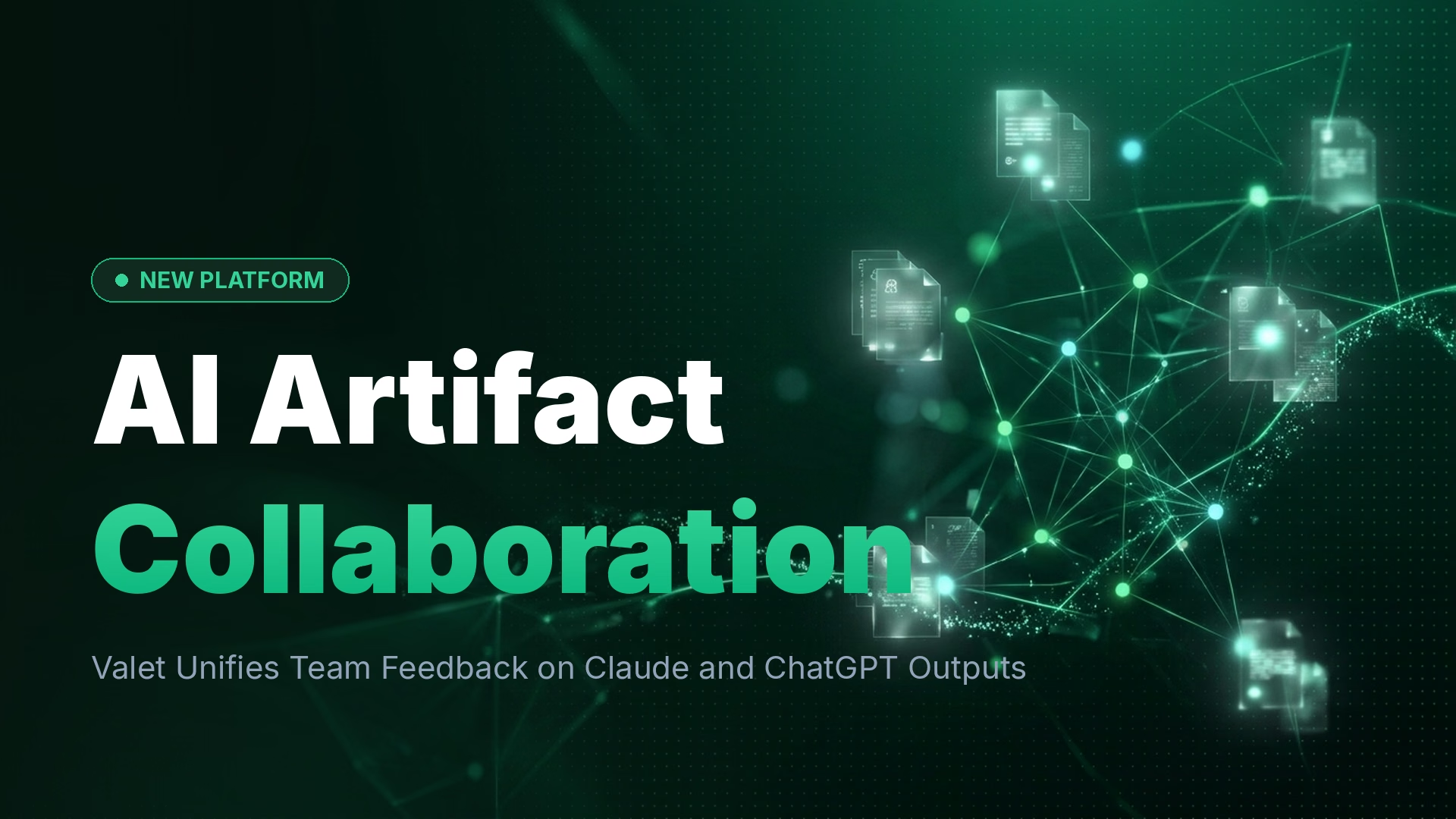
A new collaboration platform called Valet has launched to address a growing challenge in enterprise AI adoption: managing the explosion of artifacts generated by AI agents like Claude and ChatGPT. The platform provides teams with a centralized workspace to organize, comment on, and iterate on AI-generated outputs that previously had no formal home within company workflows.
The AI Artifact Problem
As AI agents become more integrated into business operations, teams are generating unprecedented volumes of code snippets, documents, designs, and other artifacts through tools like Claude and ChatGPT. According to Valet's announcement, these outputs often exist in isolation with no structured way to collect feedback, track revisions, or maintain institutional knowledge around their creation and use.
The platform addresses what its creators identify as a fundamental gap: while AI agents excel at producing individual artifacts, companies lack infrastructure to treat these outputs as collaborative work products. Without proper tooling, valuable AI-generated content gets lost in chat histories or scattered across messaging platforms.
Core Platform Features
Valet introduces several capabilities designed specifically for human-AI collaboration workflows:
- Centralized artifact repository supporting outputs from multiple AI platforms
- Inline commenting and annotation tools for team feedback
- Version control to track iterations and changes over time
- Integration with existing enterprise communication tools
The platform positions itself as infrastructure layer between AI agents and human teams, creating a shared workspace where both can contribute to ongoing projects. This approach treats AI agents as collaborators rather than isolated tools, requiring dedicated collaboration mechanisms.
Release Date and Availability
Valet was officially launched on January 13, 2025, with the announcement posted on Hacker News as a Show HN submission. The platform is currently available for teams looking to structure their AI collaboration workflows, with details accessible through the company's website at valet.dev.
Initial response on Hacker News indicates interest in solving artifact management challenges, though public discussion metrics remain limited in the early hours following launch.
Target Use Cases
The platform appears designed for organizations already using AI agents extensively in their operations. Primary use cases include software development teams collaborating on AI-generated code, content teams refining AI-drafted documents, and product teams iterating on design artifacts produced by generative AI tools.
By providing commenting and organization features specifically for AI outputs, Valet aims to extend the collaborative editing model familiar from tools like Google Docs and Figma into the domain of AI-generated work products.
What This Means
Valet's launch reflects a maturing AI adoption landscape where companies move beyond experimentation to operationalizing AI workflows at scale. As agent-generated artifacts become standard business outputs, the need for dedicated collaboration infrastructure becomes more acute. Whether Valet captures this emerging market will depend on how effectively it integrates into existing enterprise toolchains and addresses the unique challenges of human-AI collaborative processes. The platform represents a bet that the next wave of productivity tools will focus not on AI capabilities themselves, but on the infrastructure needed to make AI collaboration practical for teams.

on Emergent today




