


NemoClaw Explained: Nvidia's Push for Safer AI Agents

Imagine having a tireless digital assistant that can write code, organize your files, research competitors, and draft reports, all running locally on your laptop without sending a byte of your data to the cloud. That's the promise of AI agents. And as of this week, Nvidia just made them a lot safer to actually use.
At its annual GTC conference on March 16, Nvidia announced NemoClaw, an open-source stack that wraps enterprise-grade security and privacy controls around OpenClaw, the fastest-growing open-source project in GitHub history. OpenClaw crossed 250,000 GitHub stars in roughly 60 days, surpassing React's decade-long record.
If you're a solo creator or small team wondering whether AI agents are ready for real work, this is the announcement worth paying attention to.
What Is OpenClaw, and Why Does It Matter?
Before we talk about NemoClaw, a quick primer on what it's built on.
OpenClaw is an open-source platform that lets anyone run AI agents locally on their own computer, no cloud required. These agents can automate multi-step tasks: writing and editing code, managing files, performing web research, and more. Think of it as having a capable AI intern that lives on your machine and works around the clock.
Originally created by Austrian developer Peter Steinberger as a weekend side project in late 2025, OpenClaw went viral almost overnight. It hit 100,000 GitHub stars in roughly two days, a milestone that took React about eight years and Linux about twelve. OpenAI eventually acquired the project and brought Steinberger on board, though the platform remains open source under an independent foundation.
The catch? Security. Researchers discovered over 40,000 OpenClaw instances exposed on the public internet, with more than 60% containing exploitable vulnerabilities. One AI engineer, Henrique Branquinho, hijacked an agent in under two hours. For individuals experimenting at home, that's a manageable risk. For businesses handling sensitive data, it was a dealbreaker.
That's the gap NemoClaw is designed to fill.
What NemoClaw Actually Does?
NemoClaw isn't a brand-new product from scratch. It's a packaging layer, a single-command install that bundles two things onto an existing OpenClaw setup:
1. OpenShell
A secure runtime that sandboxes your AI agent. It restricts which files the agent can access and limits its network connections. Think of it as putting guardrails on what the agent is allowed to touch. Teams can customize these rules using simple configuration files.
2. Nemotron models
Nvidia's own open-source AI models, optimized for agent tasks like text generation and data analysis. These run locally on your hardware, so your data never leaves your machine. A "Privacy Router" controls what, if anything, gets sent to external cloud models.
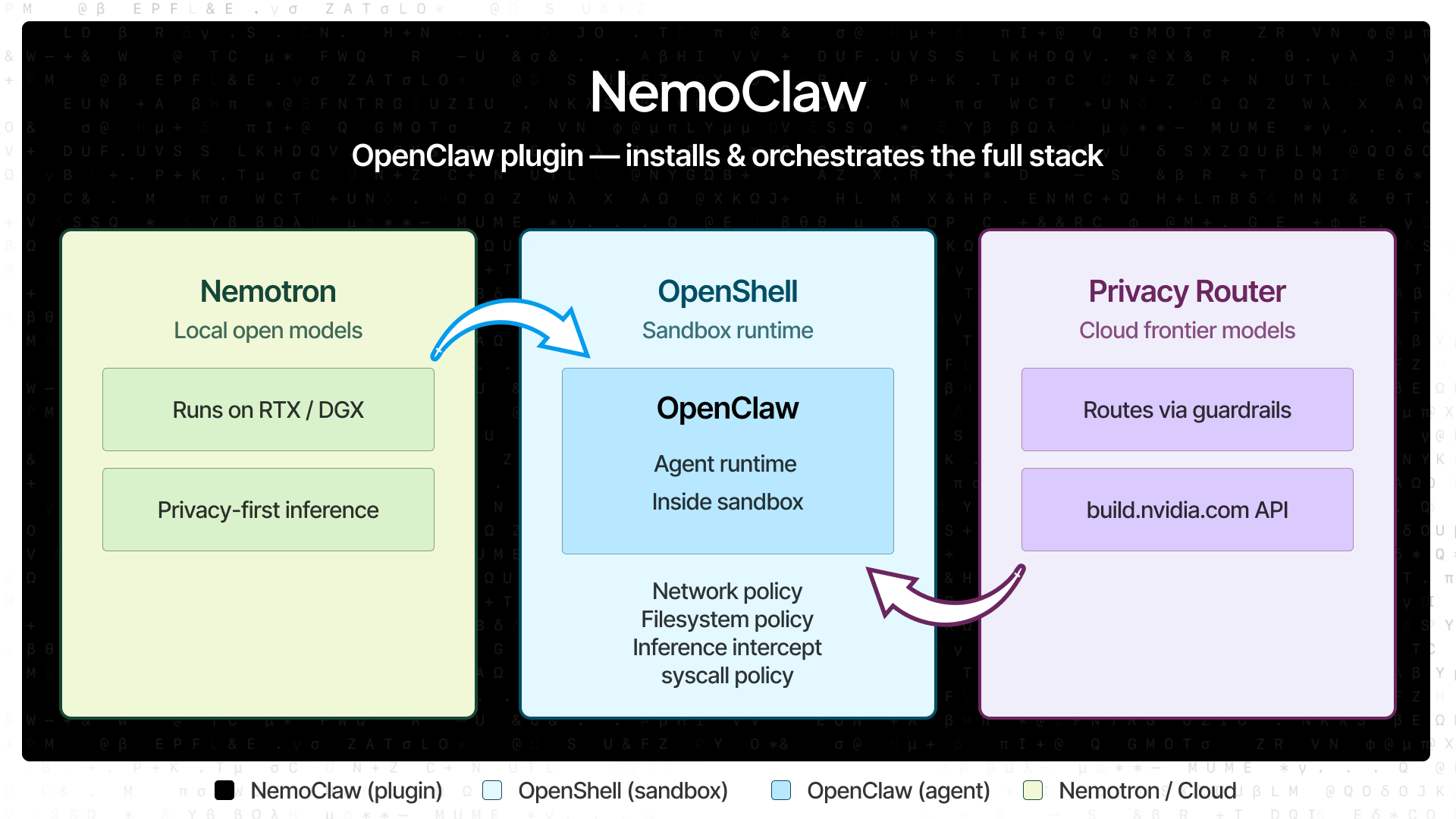
The key selling point is simple: one command installs everything. No complex setup, no stitching together multiple tools.
It's designed to run on Nvidia hardware, including GeForce RTX PCs and laptops, RTX PRO workstations, DGX Station, and DGX Spark, giving teams a dedicated platform for always-on AI agents.
Jensen Huang framed the significance during his keynote: every company needs an OpenClaw strategy, just as they once needed a Linux strategy or a Kubernetes strategy. Whether or not you agree with that comparison, the signal is clear: Nvidia sees AI agents as foundational infrastructure.
Why Nvidia Is Making This Move Now?
Nvidia's timing is deliberate. A few converging trends explain why this matters.
1. AI agents are a massive growth market
According to a report, the global AI agents market was valued at $7.63 billion in 2025 and is projected to reach $182.97 billion by 2033, growing at a CAGR of nearly 50%. Gartner forecasts that 40% of enterprise applications will embed task-specific AI agents by 2026, up from less than 5% in 2025. This isn't a niche. It's a tidal wave.
2. Enterprises want agents but don't trust them yet
According to Gartner, more than 40% of agentic AI projects are at risk of cancellation by 2027 if governance and ROI clarity aren't established. Companies want agents, but they need confidence that those agents won't leak sensitive data or go rogue. NemoClaw directly addresses that trust gap.
3. The "claw" ecosystem is exploding
OpenClaw's success has spawned an entire family of specialized variants: NanoClaw for security, PicoClaw for embedded hardware, ZeroClaw for edge computing. Nvidia is positioning NemoClaw as the enterprise-grade entry point to this growing ecosystem.
Peter Steinberger, OpenClaw's creator, endorsed the partnership: "OpenClaw brings people closer to AI and helps create a world where everyone has their own agents."
What's in It for Non-Technical Builders?
You probably won't be installing NemoClaw yourself tomorrow. It's currently in early alpha, and Nvidia describes it as having "rough edges" . The initial target is developers and enterprise teams.
But the downstream effects matter a lot.
1. AI agents are becoming safer and more mainstream
Every time a major player like Nvidia invests in agent security and privacy, it accelerates the path toward agents being embedded in the tools you already use. The no-code platforms, design tools, and project management apps that non-technical builders rely on will increasingly have agent capabilities baked in. NemoClaw's security patterns will influence how those agents behave.
2. Local-first AI is gaining traction
NemoClaw's emphasis on running agents locally, without sending data to the cloud, signals a broader trend. For freelancers handling client data or small teams working with sensitive business information, this direction is good news. It means more privacy-respecting AI tools are on the way.
3. Open source means faster innovation
Because NemoClaw is open source and hardware-agnostic, it lowers the barrier for tool builders to integrate agent security into their own products. That's the kind of infrastructure development that eventually trickles down into simpler, more accessible tools for everyone. With 90% of companies using generative AI agents already reporting improved workflows, the demand for secure, accessible agent tools is only growing.
What This Means for You?
NemoClaw isn't something most non-technical builders will interact with directly, at least not yet. But when Nvidia, the company powering most of the world's AI infrastructure, builds security guardrails for agents, the entire ecosystem follows. The no-code platforms, automation tools, and AI-powered apps you use every day will inherit these safety patterns. That's what makes this announcement worth watching.
The good news is you don't need to wait for enterprise infrastructure to catch up before you start building with AI. Tools like Emergent already make it possible to turn ideas into products without writing a single line of code, and as agent security matures, those capabilities will only get more powerful. The best time to build is now.
We publish two new articles every week covering the AI developments, tool launches, and trends that matter most for builders like you. Keep following this space.

on Emergent today




