




Hey there!
In this tutorial, we're going to introduce you to something that's changing how people build software: vibecoding - the art of building applications by describing what you want in natural language, not by writing code.
The idea is simple: instead of learning programming languages, frameworks, and technical syntax, you just talk to an AI agent about what you want to build, and it creates the application for you.
Basically, we'll show you how to:
- Go from a business idea to a working app without coding
- Communicate effectively with AI agents to get exactly what you want
- Build incrementally, testing and improving as you go
- Handle errors, add features, and scale your application
- Turn your app into a real business with payments and user accounts
Using this approach, complete beginners have built todo apps, e-commerce sites, SaaS dashboards, booking systems, and more - all without writing a single line of code.
By the end of this guide, you'll understand what vibecoding is and have the skills to build your first real application on Emergent, even if you've never coded before.
Let's get started!
What Is Vibecoding?
If you've been asking yourself "what is vibe coding," the short answer is: it's building software by describing what you want in plain English instead of writing code. So here's the thing: traditional coding requires you to learn specific programming languages, understand frameworks, and spend years mastering technical skills.
Vibecoding flips this completely.
Vibecoding means building software by communicating your vision to an AI agent that writes the code for you. You focus on what you want, not how to build it technically.
Think of it like this:
Traditional Coding:
- You: "I want a login system"
- You spend 2 days learning authentication, security, databases
- You write 500 lines of code
- You debug for hours when something breaks
Vibecoding:
- You: "Add a user authentication system with email and password"
- AI agent builds it in 5 minutes
- You test it and give feedback
- Done
The magic is in how you communicate with the AI agent. The better you describe what you want, the better the results.
The Vibecoding Mindset
Vibecoding is purely about focusing on what matters.
You focus on the essentials, the problem you’re solving, who your users are, what features they actually need, and how the experience should feel.
Meanwhile, the AI agent takes care of the heavy lifting: technical implementation, clean code structure, best practices, bug fixes, optimization, and even framework or library choices.
Now, you’re a product designer and strategic thinker.
Understanding Emergent: Your Vibecoding Platform
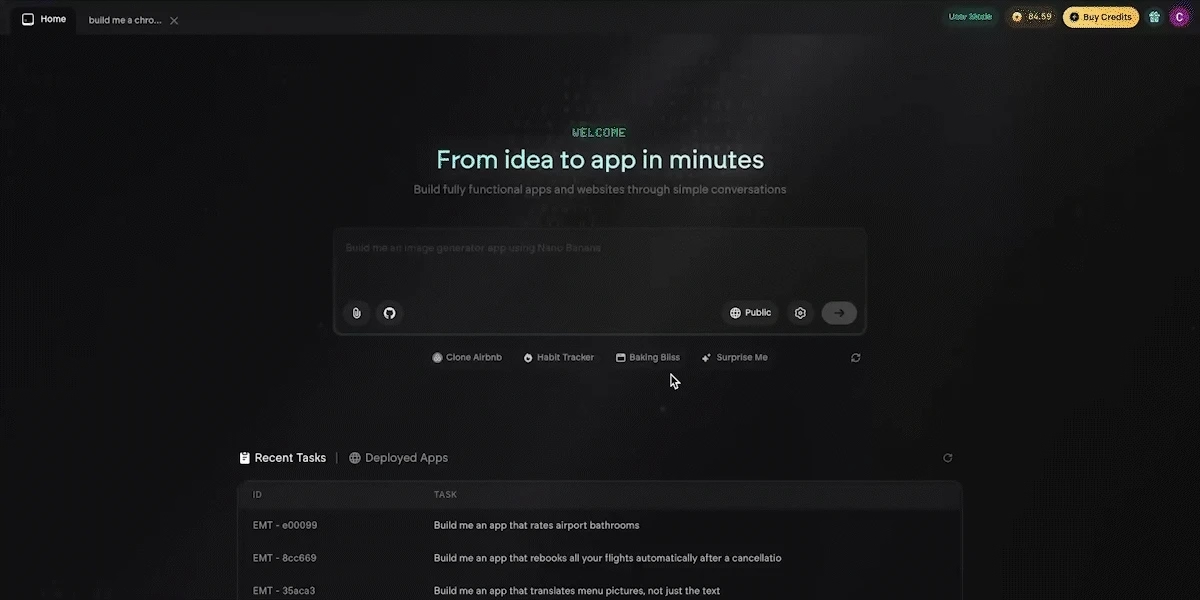
Before we start building, let's understand the platform where vibecoding happens: Emergent.
What Is Emergent?
Emergent is an AI-powered development platform where you build full-stack applications through conversation with AI agents.
You don’t need a code editor, terminal commands, package managers, deployment pipelines, or DevOps knowledge.
Everything happens through natural conversation, and Emergent handles all the technical infrastructure.
Take this spiderman landing page for example, it was built entirely using AI!
How Emergent Works
With Emergent, you simply describe your idea in natural language, and the AI agent builds the full-stack code, turning it into a live, working app, complete with a shareable URL.
It’s a natural conversation-to-deployment flow: your words become real software. Emergent provides everything you need to go from concept to launch, multiple AI agents (E1, E1.1) with different strengths, React frontends, Node.js backends, and MongoDB databases, plus automatic testing, GitHub version control, one-click deployment with custom domains, integrations like Stripe, OAuth, and APIs, and fully managed hosting on Emergent’s infrastructure.
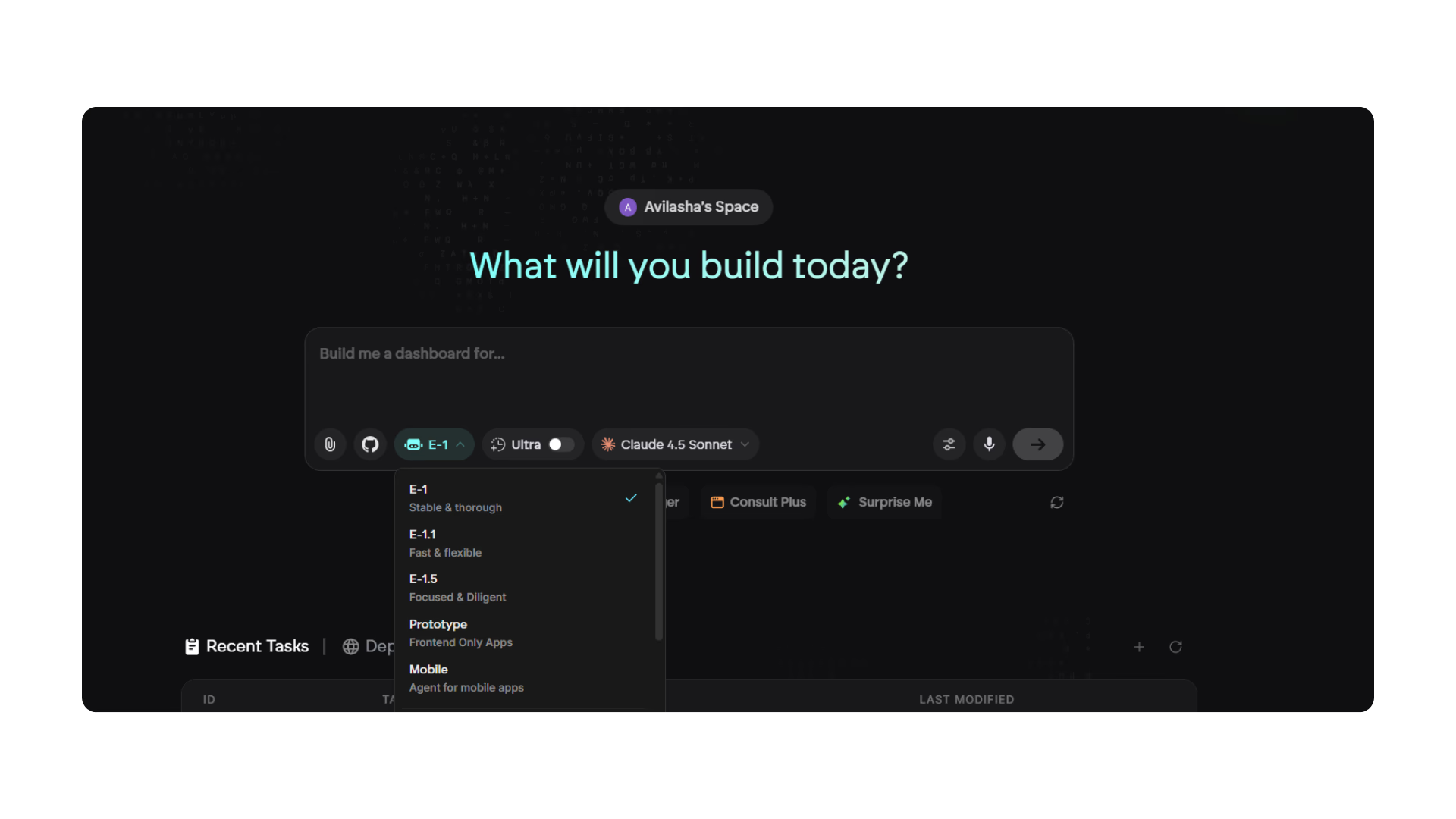
Choosing the Right Agent
Emergent offers different AI agents optimized for specific scenarios:
| Agent | Best For | Speed | Quality | Use When |
|---|---|---|---|---|
| E-1 | Production apps, complex features, enterprise builds | Slower | Highest | Building real products for customers, need comprehensive features, want production-ready code |
| E-1.1 | Balanced builds, general purpose, most projects | Moderate | High | Most common choice, everyday projects, balanced speed and quality |
| E-1.5 | Thorough execution, careful implementation | Moderate | Very High | Need extra attention to detail, complex business logic, mission-critical apps |
| Prototype | Frontend-only quick mockups, UI demos | Fastest | Basic | Testing design ideas, creating clickable prototypes, showing concepts to stakeholders |
| Mobile | iOS and Android native apps | Moderate | High | Building mobile-first apps, need native performance, platform-specific features |
The Universal LLM Key
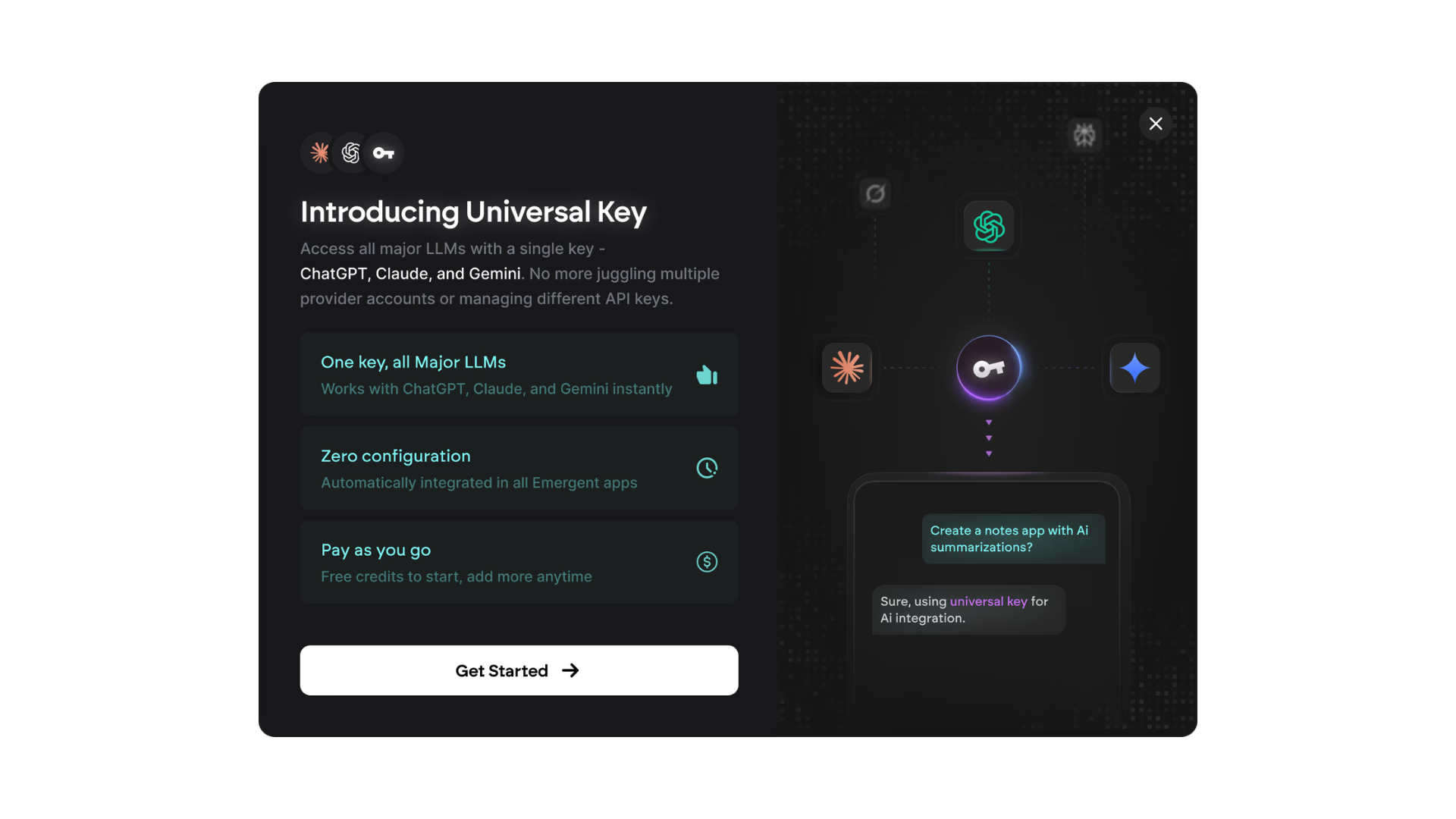
One of Emergent’s best features is that you don’t need your own API keys for AI services. Instead of signing up for OpenAI, managing billing, and repeating the process for every model, you simply use Emergent’s Universal LLM Key to access GPT-5, Claude, Gemini, and more - all through one billing system powered by Emergent credits.
You can start building instantly, no API setup required.
Your First Vibecoding Project: Step-by-Step
Now let's build something real.
We'll create a Personal Book Tracker, simple enough for a first project, but useful enough to actually use.
Step 1: Define Your Business Goal
Before touching Emergent, spend 5 minutes thinking about what you want to build.
Ask yourself:
- What problem am I solving?
- Who will use this?
- What are the 3-5 essential features?
For our Book Tracker:
Problem: I read lots of books but forget what I've read and want to read
Users: Me (and maybe friends who like reading)
Core Features:
- Add books I want to read
- Mark books as currently reading or finished
- Rate and write notes about books
- See my reading statistics
- Search through my book collection
That's it. Simple, clear, achievable.
Step 2: Write Your Initial Prompt
Open Emergent and write your first prompt. Here's the framework:
Create an app for [PURPOSE] that includes:

- [FEATURE 1]

- [FEATURE 2]

- [FEATURE 3]

- [DESIGN PREFERENCE - optional]
Our actual prompt:
Create a personal book tracking app where users can:

- Add books with title, author, and cover image URL

- Mark books as "Want to Read", "Currently Reading", or "Finished"

- Rate finished books (1-5 stars) and add personal notes

- View their reading statistics (total books, books finished this year, etc.)

- Search through their book collection by title or author

Make it look modern and clean with a book-themed design -  think library aesthetics with warm colors and good typography. Use a grid layout to display books like a bookshelf.
A good prompt is clear in purpose, specific in features, provides design guidance, and includes a user experience hint.
Hit send, and watch the magic happen.
Step 3: The Planning Session
The agent will start by asking clarifying questions.
"Should I use the Universal LLM Key or your own API key?" → Choose Universal LLM Key (simpler, no setup needed)
"Do you want user authentication (login system)?" → For a first project, say "Not needed for now" (you can add it later)
"Any specific design framework or color preferences?" → You can say: "Use Tailwind CSS with warm brown and cream colors, like a cozy library"
"Should I start building or do you want to discuss more?" → Say: "Start building based on what we discussed"
Pro tip: If you're not sure about something, ask the agent to explain before building:
"Can you explain what user authentication means and whether I need it for this app? Don't start building yet, let's discuss first."
The agent is smart and helpful, use it to learn as you build.
Step 4: Watch It Build
Once you give the go-ahead, the agent starts building. You'll see real-time updates:
✓ Created project structure

✓ Set up MongoDB database

✓ Building frontend components

✓ Implementing book management features

✓ Adding search functionality

✓ Styling with Tailwind CSS

✓ Creating reading statistics dashboard

→ Running tests...
This usually takes 5-15 minutes depending on complexity.
While it builds, the agent explains what it's doing. Read these explanations, they help you understand how your app works.
Step 5: Test Your First Version
When building completes, you'll get a preview link.
Click it to see your app live.
Your app is now running and accessible. Time to test it!
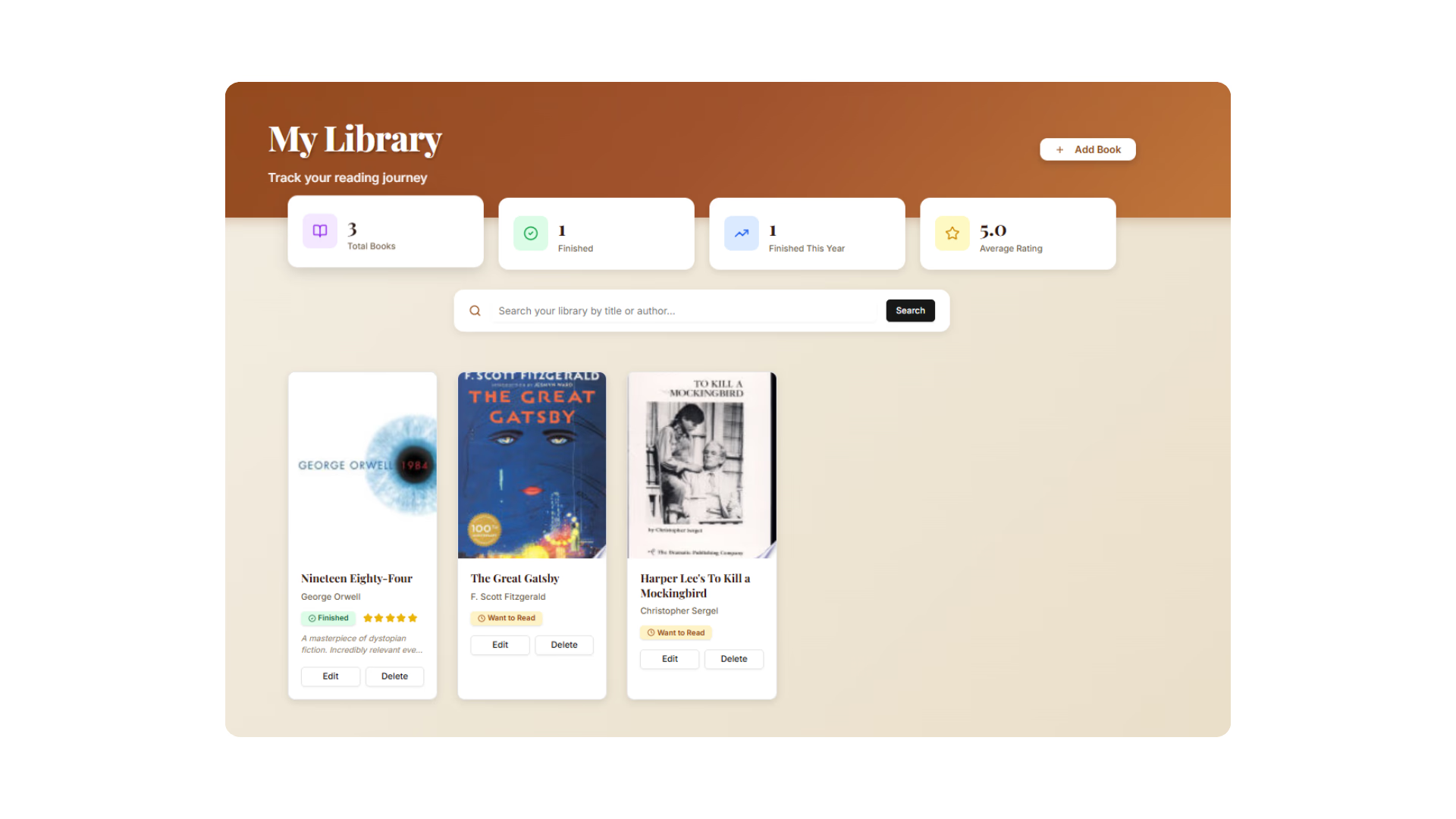
Go through each feature systematically. Open your browser's console (press F12) to check for any errors.
Step 6: Your First Iteration
After testing, you'll notice things you want to improve. This is completely normal and expected!
How to request improvements:
Good approach:
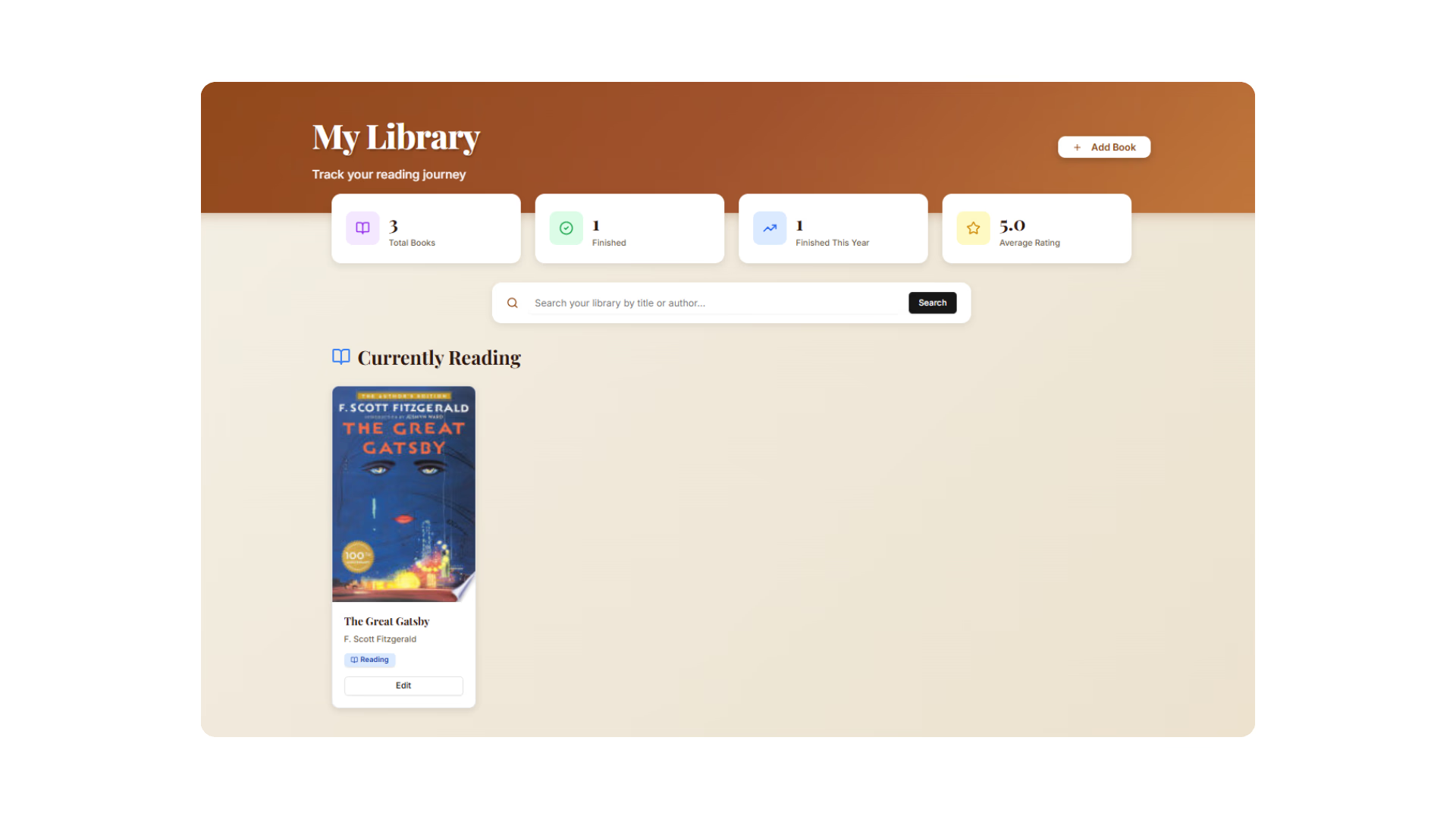
I tested the app and it works great! A few improvements:

1. Make the book covers 20% larger so they're easier to see

2. Add a delete button (maybe a small X in the corner of each book)

3. Add a prominent "Currently Reading" section at the top showing those books separately

Can you implement these changes?
Bad approach:
make it better and add more stuff
Remember: Be specific and detailed. The agent rewards clarity.
Look at the improvement after the feedback :

Step 7: Handling Your First Error
At some point, you'll encounter an error. Don't panic, this is part of vibecoding!
Common scenario: You try to add a book, but nothing happens. You check the browser console (F12) and see:
Error: Failed to POST /api/books

Status: 500 Internal Server Error
How to report it to the agent:
I found a bug. When I click "Add Book" and fill in the details, nothing happens. The book doesn't get added.

I checked the browser console and found this error:

[paste the error message]

Can you fix this?
Important rules for error reporting:
- Test it yourself first, Don't immediately run to the agent
- Get the actual error message, Use F12 console
- Describe what you expected vs. what happened
- Share screenshots if helpful
- Report one error at a time - Don't mix bugs with feature requests
The agent will analyze the error, fix it, and often explain what went wrong so you learn.
Wrapping Up
You don’t need to “learn to code” to build something real, you just need to learn to communicate clearly with an AI agent. That’s the core of vibecoding.
You describe the outcome, the agent handles the implementation, and you iterate together until it feels right.
Start small (like the Book Tracker), focus on the experience you want, and refine with specific, actionable feedback. When something breaks, treat it like a conversation: share the exact error, what you tried, and what you expected - then let the agent fix it.
If you’re ready to keep going, here’s a simple path: pick a tiny idea you actually want to use, write one clear prompt with 3-5 features and a vibe note, let the agent build, then test and improve one thing at a time.
As you get comfortable, layer in extras- auth, payments, integrations- when they serve the product, not before.
Most importantly: have fun with it.
Vibecoding is closer to directing than programming. You set the vision; Emergent handles the scaffolding.
Your first working app is closer than you think - open Emergent, drop your first prompt, and watch your idea turn into something you can click, share, and ship.
Emergent turns your idea into a full-stack web or mobile app, no coding required.
 No coding required
- Web & mobile apps
- Deploys instantly


on emergent today



