
By 2026, research into consumer behavior in professional services shows that prospective coaching clients increasingly rely on online information, such as websites, reviews, and digital profiles, to assess credibility before booking sessions, with trusted online reviews and clear digital presence emerging as key factors that influence client confidence and decision-making. For life coaches, the website is no longer just a digital calling card, it is the first stage of the client relationship, the first trust signal a prospect evaluates, and often the first tool a coach uses to differentiate their philosophy, process, and value.
For life coaches, a website must do much more than host a headshot and a biography. It must present coaching services clearly, communicate the coach’s methodology and transformation outcomes, facilitate secure and thoughtful client inquiries or bookings, and support lead nurturing without undermining credibility. As modern AI Website Builder platforms continue simplifying website creation and personalization, coaches are increasingly able to launch professional, conversion-focused websites without relying heavily on technical expertise. The wrong website builder can distract prospects or create operational friction, while the right one becomes a strategic asset that supports coaching discovery, conversion, and long-term engagement.
What is a website builder for life coaches?
A website builder for life coaches is a platform that enables coaches to create, manage, and evolve a professional client-facing website without deep technical expertise. These builders prioritize structured service pages, session scheduling, lead capture, client testimonials, multimedia content (videos and audio), and scalability for programs or group offerings. Strong builders also support easy updates, integration with calendars and payments, and clear presentation of coaching outcomes.
Unlike generic websites, life coaching sites often require combination workflows for discovery calls, session bookings, intake forms, and content delivery. The best website builders for life coaches help coaches connect with the right clients, explain their approach, and automate parts of the engagement process without needing engineers or steep learning curves.
The 5 Website Builders Life Coaches Should Be Using in 2026
The Website Builders Life Coaches Use to Book More Clients
- Emergent
- Paperbell
- Squarespace
- Showit
- Hostinger
Suggested Read: Best AI Website Builder
What are the key features of website builders for life coaches?
1. Clear presentation of coaching services and outcomes
Life coaches need to articulate what they do, who they serve, and the transformation they help clients achieve in client-friendly language. A strong website builder supports structured service pages, outcome narratives, and context for sessions, packages, and programs. This clarity helps prospects understand fit before initiating contact.
2. Integrated scheduling and appointment booking
Coaching is time-based work that requires smooth scheduling. Website builders should support native or integrated calendar tools that allow clients to view availability, book sessions, receive confirmations, and manage changes without friction. Seamless scheduling directly improves conversion.
3. Lead capture and CRM readiness
Successful life coaches build communities beside one-on-one work. Website builders need to support lead capture forms, onboarding sequences, email integration, and CRM connectivity so coaches can nurture prospects and clients. Better lead handling improves retention and growth.
4. Multimedia and testimonial support
Coaching often relies on video introductions, sample sessions, and testimonials. Website builders must handle high-quality multimedia content and structured testimonial sections without degrading performance. Smooth media presentation builds trust.
5. Scalability for programs and content
As life coaches grow, they often add group programs, workshops, downloadable resources, or blogs. Website builders should enable coaches to expand content libraries, add program pages, and manage resources without complicated migrations or redesigns.
What are the benefits of using website builders for life coaches?
1. Professional online presence that enhances trust
A well-built coaching website reassures prospects about credibility, methodology, and outcomes. Coaches project seriousness and professionalism that complements their personal brand. A strong site supports deeper client engagement early.
2. Faster client conversion through clear pathways
Website builders that support structured service pages, scheduling, and lead capture reduce friction between discovery and booking. Prospects move smoothly from understanding to action. This lowers drop-off and increases session conversion.
3. Reduced administrative workload
Integrated tools for scheduling, lead capture, payments, and content updates reduce manual coordination. Coaches spend less time on logistics and more time with clients or building offerings. This operational efficiency improves practice sustainability.
4. Enhanced client engagement and content delivery
Builders that support blogs, videos, and resources help coaches engage prospects before and after booking. Educative content builds authority and nurtures clients, improving lifetime value. Content becomes an extension of coaching presence.
5. Scalability as coaching offerings expand
Life coaches often evolve offerings over time, from private sessions to group programs, courses, or communities. Website builders that scale with content and workflows protect the coach’s digital equity and brand continuity.
5 Best Website Builders for Life Coaches
Website builders for life coaches range from full-stack platforms with built-in scheduling and workflows to flexible design systems and low-cost hosting options. Some emphasize simplicity and aesthetics while others support structured coaching logic and program delivery. The platforms below stand out in 2026 because they specifically address coaching workflows rather than generic online presence needs.
1. Emergent
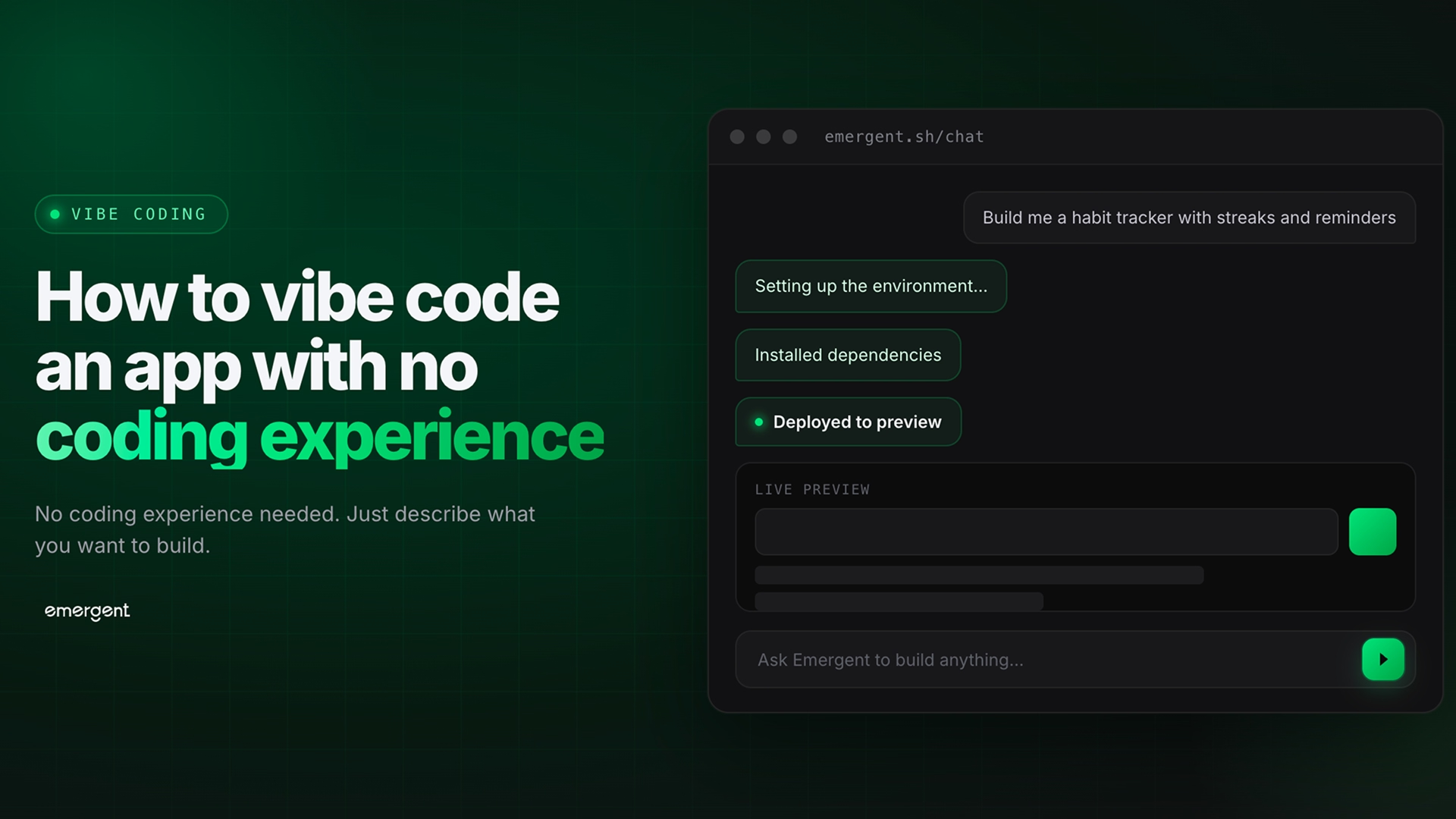
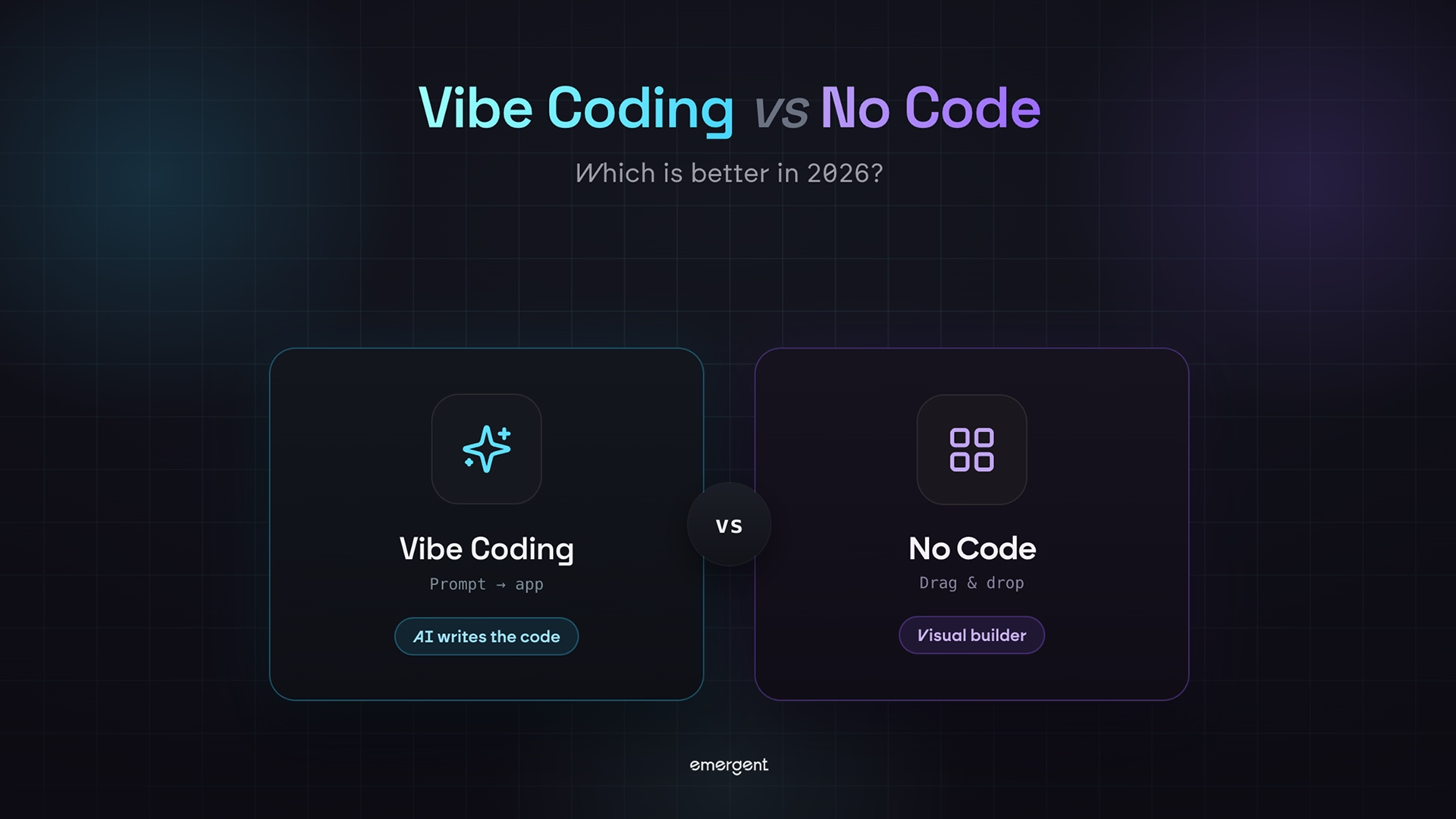
Emergent is one of the best, full-stack, AI-powered vibe coding and no code platforms for life coaches who want their website to operate as a complete client engagement system rather than a simple marketing page. In 2026, solo life coaches, transformation coaches, and multi-program coaching practices use Emergent to unify discovery, booking, intake, content delivery, and follow-up into a single, production-grade foundation.
For life coaches, Emergent reframes the website as the first coaching experience. Instead of disconnected pages, scheduling embeds, and external tools, Emergent allows coaches to intentionally design how prospects learn, reflect, inquire, and commit, while maintaining a calm, trust-building digital presence that mirrors real coaching conversations.
Key Features of Emergent for Life Coach Websites
1. Full-stack life coaching website generation from conversational intent
Emergent allows life coaches to describe their philosophy, target audience, services, session formats, and client journey in natural language. The platform generates the complete system including frontend UI, backend workflows, structured data models, authentication, and hosting. This removes the need to combine page builders, schedulers, forms, and email tools that often feel fragmented and impersonal.
2. Structured modeling of coaching services, packages, and programs
Life coaches can define discovery calls, one-on-one sessions, multi-session packages, and group programs as structured entities rather than static pages. Each offering can include outcomes, prerequisites, pricing logic, and access rules. This structure supports clarity for prospects and flexibility as offerings evolve.
3. Native scheduling and reflective intake workflows
Emergent supports scheduling as part of the system rather than an external embed. Coaches can define availability rules, discovery call flows, and reflective intake questions that encourage thoughtful client responses. This improves fit and sets expectations before sessions begin.
4. Integrated payments and program enrollment logic
Life coaches can manage payments, packages, subscriptions, and program enrollments natively. Checkout behavior, post-payment access, and onboarding flows are customizable. This ensures a seamless transition from interest to commitment without breaking the emotional momentum of coaching decisions.
5. Built-in authentication for private coaching resources
Emergent includes native authentication, allowing coaches to gate session recordings, worksheets, journaling prompts, and client-only resources. Access can be tied to active clients or programs. This supports premium experiences and ongoing client engagement.
6. One-click deployment with reliable, secure infrastructure
Once generated, life coach websites can be deployed instantly with hosting, performance optimization, and security handled automatically. Coaches do not manage servers or updates. Reliability matters when booking, payments, and client access depend on uptime.
Unique Features of Emergent for Life Coach Websites
1. Vibe coding aligned with emotional tone and coaching philosophy
Emergent’s vibe coding allows life coaches to express tone, values, and transformation goals conversationally. The platform translates this intent into structure, flows, and content hierarchy. The website reflects how the coach thinks and works, not just how it looks.
2. Elimination of fragmented coaching tool stacks
Emergent replaces the common mix of website builders, Calendly links, payment tools, email platforms, and resource folders with one cohesive system. Coaches operate from a single foundation. This reduces cognitive load and operational friction.
3. Flexible support for evolving coaching models
Whether a life coach offers private sessions, group journeys, memberships, or hybrid experiences, Emergent adapts without replatforming. New offerings can be layered onto existing structures. This protects long-term growth without technical resets.
4. Production-grade foundation for scaling coaching practices
As life coaches grow audiences or collaborate with other coaches, Emergent supports role-based access and scalable workflows. Multiple programs and content streams coexist cleanly. Growth does not introduce chaos.
5. Deep integration between content, commitment, and access
Emergent connects educational content directly to booking, payment, and access logic. Clients automatically see what is relevant to them. This continuity reinforces trust and engagement.
6. Suitable for both emerging and established life coaches
Emergent works for coaches launching their first practice and for seasoned professionals managing complex offerings. Depth increases as needs grow. This lifecycle alignment avoids early platform lock-in.
Advantages of Emergent for Life Coach Websites
- Turns the coaching website into a complete client engagement system.
- Aligns digital experience with coaching philosophy and tone.
- Eliminates reliance on disconnected scheduling and payment tools.
- Supports premium, private coaching resources natively.
- Scales cleanly as programs and audiences grow.
- Reduces operational overhead and tool fatigue.
Limitations of Emergent for Life Coach Websites
- May be more powerful than necessary for one-page coaching sites.
- Requires clarity of offerings to unlock full potential.
- Not positioned as a template-only website builder.
Pricing and Plans of Emergent
| Plan | Pricing | Key Highlights |
|---|---|---|
| Free | $0/month |
|
| Standard | $20/month |
|
| Pro | $200/month |
|
| Team | $300/month |
|
| Enterprise | Custom |
|
Read More About: Emergent Pricing and Plans
2. Paperbell
Paperbell is a coaching-specific website and client management platform built for life coaches who want to sell sessions, packages, and programs without assembling a complex tech stack. In 2026, Paperbell is most commonly used by solo life coaches, mindset coaches, and transformational coaches who prioritize simplicity, client management, and fast setup over deep customization or long-term platform flexibility.
For life coaches, Paperbell functions as a booking, payments, and client operations hub with a light website layer. It is designed to reduce administrative work around scheduling, contracts, and payments, but it is not intended to be a fully expressive brand website or content-driven growth system.
Key Features of Paperbell for Life Coach Websites
1. Native scheduling tightly coupled with coaching offers
Paperbell allows life coaches to create services and packages that are directly connected to scheduling availability. Clients book sessions as part of purchasing an offer rather than through separate calendar tools. This tight coupling reduces friction and administrative follow-up but limits flexibility for unconventional booking flows.
2. Built-in payments for sessions and coaching packages
Life coaches can accept payments for single sessions, multi-session packages, and programs directly through Paperbell. Payments, invoices, and receipts are handled automatically. Pricing logic follows Paperbell’s predefined structures and does not support complex or highly customized checkout experiences.
3. Client contracts, agreements, and intake handling
Paperbell supports digital contracts, agreements, and intake forms as part of the onboarding process. This helps life coaches formalize engagements and set expectations before sessions begin. Customization is functional but limited to predefined templates and flows.
4. Centralized client dashboard for session management
Coaches and clients both access a shared dashboard where sessions, payments, notes, and documents are managed. This centralization reduces scattered communication and manual tracking. The dashboard is utilitarian rather than brand-forward.
5. Automated reminders and session logistics
Paperbell sends automated reminders, confirmations, and follow-ups for sessions. This reduces no-shows and scheduling confusion. Automation is focused on logistics rather than deeper relationship nurturing.
6. Simple public-facing pages for offers and booking
Paperbell provides basic pages where coaches can list services, packages, and booking links. These pages are functional and conversion-focused. Design and storytelling flexibility are minimal.
Unique Features of Paperbell for Life Coach Websites
1. Coaching-first design that prioritizes operations over marketing
Paperbell is built around how coaches manage sessions, clients, and payments day to day. Operational efficiency is prioritized over visual branding. This makes it effective for administration but limiting for brand expression.
2. Contracts and intake baked into the booking flow
Unlike generic website builders, Paperbell integrates agreements and intake directly into the booking process. This ensures expectations are set early. It reduces the need for separate contract tools.
3. Reduced tool sprawl for solo coaches
Paperbell replaces schedulers, invoicing tools, and basic contract systems with one platform. Solo life coaches benefit from fewer tools to manage. Growth beyond solo practice exposes platform limits.
4. Predictable workflows that reduce setup decisions
Paperbell enforces a clear, opinionated workflow for offers, booking, and onboarding. This reduces cognitive load and setup errors. Creative or non-standard coaching journeys are harder to support.
5. Strong fit for one-on-one coaching practices
Paperbell works best for coaches whose primary revenue comes from one-on-one sessions or small packages. It is less suited for content-heavy or community-driven models. Program scalability is limited.
6. Clear separation between operations and brand marketing
Paperbell assumes branding and audience-building may happen elsewhere. It focuses narrowly on client transactions and delivery. Coaches often pair it with another website tool.
Advantages of Paperbell for Life Coach Websites
- Excellent operational simplicity for solo life coaches.
- Native scheduling, payments, and contracts in one system.
- Reduces administrative overhead and tool switching.
- Clear client dashboards for managing sessions.
- Fast setup with minimal configuration.
- Good fit for one-on-one coaching models.
Limitations of Paperbell for Life Coach Websites
- Very limited design and brand customization.
- Not suitable for content-driven or SEO-led growth.
- Weak support for group programs or communities.
- Public pages feel transactional rather than narrative.
- Scaling beyond solo practice is difficult.
- Often requires pairing with a separate website.
Pricing and Plans of Paperbell
| Plan | Pricing | Key Highlights |
|---|---|---|
| All-Inclusive Coaching Plan | $57/month, or $570/year (2 months free) |
|
3. Squarespace
Squarespace is a design-led website builder that life coaches often choose when visual calm, brand storytelling, and ease of maintenance matter more than deep operational workflows. In 2026, Squarespace is most commonly used by solo life coaches, wellness-focused practitioners, and personal development professionals who want their website to convey trust, clarity, and emotional resonance without managing technical systems.
For life coaches, Squarespace functions as a brand and credibility platform first, with light booking and commerce layered on top. It excels at presenting philosophy, testimonials, and transformation narratives, but it introduces limits once coaching models require complex intake logic, gated client resources, or multi-step engagement flows.
Key Features of Squarespace for Life Coach Websites
1. Design-forward templates that support emotional trust and clarity
Squarespace templates emphasize whitespace, typography, and visual balance, which helps life coaches communicate calm, authority, and presence. Pages feel intentional rather than sales-heavy. This aesthetic supports trust-building but constrains structural experimentation beyond predefined layouts.
2. Structured service and program pages for coaching clarity
Life coaches can create clear pages for services, packages, and programs with consistent sectioning for outcomes, testimonials, and calls to action. This helps prospects understand fit before booking. Content remains page-based rather than system-modeled, limiting scalability for complex offerings.
3. Built-in scheduling integration for basic session booking
Squarespace integrates with scheduling tools that allow clients to book discovery calls or sessions directly. This supports straightforward one-on-one coaching workflows. Advanced intake questions, conditional routing, and reflective onboarding are not supported natively.
4. Native payment and checkout for coaching services
Coaches can sell sessions, packages, and digital products using Squarespace’s commerce features. Payments are handled within the platform, reducing setup friction. Checkout behavior and post-payment onboarding remain limited.
5. Blogging and content publishing for thought leadership
Squarespace supports blogging and content publishing, enabling life coaches to share insights, frameworks, and reflections. This content helps build authority and nurture trust over time. Content modeling remains simple and not deeply structured.
6. Fully managed hosting and platform stability
Squarespace handles hosting, SSL, updates, and security automatically. Coaches do not manage infrastructure. This reliability suits practitioners who want to focus on clients rather than systems.
Unique Features of Squarespace for Life Coach Websites
1. Strong alignment with calm, reflective coaching brands
Squarespace’s visual language aligns naturally with life coaching values such as presence, clarity, and balance. The platform reinforces emotional safety for visitors. More expressive or experimental branding is harder to achieve.
2. Very low ongoing maintenance requirements
Once launched, Squarespace sites require minimal technical upkeep. Coaches can update copy, testimonials, and offers without fear of breaking layouts. This simplicity reduces cognitive and operational load.
3. Consistent experience across devices and updates
Squarespace enforces design consistency across pages and devices. This helps maintain a cohesive brand experience even with frequent updates. Creative flexibility is intentionally limited.
4. All-in-one convenience for solo coaching practices
Templates, content tools, scheduling, payments, hosting, and analytics are bundled together. Coaches avoid managing multiple vendors. Convenience is prioritized over workflow depth.
5. Strong fit for philosophy-led coaching websites
Life coaches who sell based on worldview, methodology, and personal presence benefit most from Squarespace’s strengths. Narrative-driven selling is well supported. Operational complexity is not.
6. Predictable platform behavior over time
Squarespace evolves conservatively, prioritizing stability over rapid feature expansion. Coaches experience fewer breaking changes. Innovation pace is slower than system-first platforms.
Advantages of Squarespace for Life Coach Websites
- Clean, calming design that builds trust quickly.
- Easy to manage without technical expertise.
- Built-in scheduling and payments for simple workflows.
- Very low maintenance overhead.
- Consistent mobile experience by default.
- Ideal for solo, brand-led life coaches.
Limitations of Squarespace for Life Coach Websites
- Limited support for complex intake or onboarding flows.
- Weak native support for gated client resources.
- Checkout and automation logic are constrained.
- Difficult to scale into multi-program coaching systems.
- Integrations are shallow compared to flexible platforms.
- Often outgrown as practices mature.
Pricing and Plans of Squarespace
| Plan | Pricing | Key Highlights |
|---|---|---|
| Personal | $25/month |
|
| Business | $36/month |
|
| Basic Commerce | $40/month |
|
| Advanced Commerce | $72/month |
|
4. Showit
Showit is a design-first website builder built specifically for creative professionals, which many life coaches choose when visual expression, personal branding, and emotional storytelling are more important than operational automation. In 2026, Showit is most commonly used by life coaches who position themselves as personal brands, thought leaders, or transformational guides and want their website to feel deeply personal rather than system-driven.
For life coaches, Showit functions as a visual storytelling canvas, not a coaching operations platform. It excels at expressing identity, philosophy, and presence through design, but it relies heavily on external tools for scheduling, payments, intake, and client management.
Key Features of Showit for Life Coach Websites
1. Complete visual freedom for personal brand expression
Showit allows life coaches to design every page element freely, without grid constraints or rigid layouts. Coaches can craft pages that reflect their personality, voice, and emotional tone precisely. This freedom enables deep brand resonance but requires strong design judgment to avoid confusion or overwhelm.
2. Drag-and-drop editor optimized for non-technical creatives
The Showit editor is built for visual thinkers rather than technical users. Life coaches can adjust layouts, spacing, typography, and imagery intuitively. This accessibility empowers coaches to own their brand presentation without developers, though it sacrifices structural rigor.
3. Mobile and desktop design handled separately
Showit allows coaches to design desktop and mobile versions independently. This enables intentional mobile storytelling rather than responsive compromises. The tradeoff is increased design effort and the risk of inconsistencies if not managed carefully.
4. WordPress integration for blogging and content
Showit integrates with WordPress for blogging, allowing life coaches to publish long-form content and build SEO authority. This separation keeps design and content distinct. It also introduces dependency on a second platform for content management.
5. Support for multimedia storytelling
Life coaches can embed videos, audio messages, animations, and rich imagery seamlessly. This supports experiential storytelling and emotional connection. Performance optimization requires care as media-heavy pages grow.
6. Fully managed hosting for Showit-managed pages
Showit hosts and manages the frontend pages, handling updates and infrastructure. Coaches do not manage servers. Hosting simplicity applies only to the Showit layer, not external tools.
Unique Features of Showit for Life Coach Websites
1. Design-as-expression rather than design-as-structure
Showit treats websites as expressive spaces rather than structured systems. For life coaches whose differentiation comes from energy, voice, and worldview, this is powerful. The platform intentionally avoids imposing logic or workflow constraints.
2. Strong alignment with personal-brand-led coaching businesses
Showit is especially effective for coaches whose business is built around themselves rather than standardized programs. The website becomes an extension of presence, not a funnel. This aligns with high-touch, identity-driven coaching practices.
3. Separation of brand experience from operations
Showit assumes that scheduling, payments, and client management live elsewhere. This keeps the site emotionally clean and uncluttered. It also forces reliance on multiple external tools.
4. Control over emotional pacing and narrative flow
Because layouts are unconstrained, life coaches can guide visitors through reflection, storytelling, and invitation at their own pace. This is rare among template-driven builders. Conversion depends heavily on the coach’s storytelling skill.
5. Strong appeal for coaches with design support or intuition
Showit works best for coaches who either have design instincts or collaborate with designers. Without this, visual freedom can become a liability. The platform rewards intentional design thinking.
6. Clear ceiling for operational complexity
Showit does not attempt to scale into program management, gated content, or workflow automation. This clarity helps coaches know when to pair it with other systems or outgrow it. It is intentionally not an all-in-one solution.
Advantages of Showit for Life Coach Websites
- Exceptional freedom for personal brand and emotional storytelling.
- Intuitive editor for non-technical, creative coaches.
- Separate mobile design enables intentional experiences.
- Strong multimedia support for presence-based coaching.
- Clean integration with WordPress for content marketing.
- Ideal for identity-led coaching practices.
Limitations of Showit for Life Coach Websites
- No native scheduling, payments, or client management.
- Heavy reliance on third-party tools for operations.
- Requires strong design judgment to be effective.
- Not suitable for program-heavy or systemized coaching.
- SEO depends on WordPress configuration.
- Operational complexity increases as tools multiply.
Pricing and Plans of Showit
| Plan | Pricing | Key Highlights |
|---|---|---|
| Showit | $24/month |
|
| Showit + Basic Starter Blog | $29/month |
|
| Showit + Advanced Blog | $39/month |
|
5. Hostinger
Hostinger is a budget-focused website builder and hosting platform that life coaches often choose when affordability, speed to launch, and basic online presence matter more than deep coaching workflows or expressive brand storytelling. In 2026, Hostinger is most commonly used by new life coaches, side-practice coaches, or experimentation-stage practitioners who want a simple site to establish legitimacy and collect basic inquiries without investing heavily in tools or design.
For life coaches, Hostinger functions as an entry-level digital presence, not a coaching system or brand platform. It supports service pages, simple galleries, and contact forms, but it lacks the emotional nuance, intake logic, and scalability required for mature coaching practices.
Key Features of Hostinger for Life Coach Websites
1. Low-cost website builder for basic coaching sites
Hostinger provides a drag-and-drop website builder that allows life coaches to create service pages, about sections, and contact pages at a very low monthly cost. This affordability makes it accessible for coaches testing ideas or starting out. The builder covers fundamentals but offers limited flexibility for storytelling or structured coaching journeys.
2. AI-assisted website generation for fast setup
Life coaches can use Hostinger’s AI builder to generate a starter website by answering basic questions about their niche and services. This enables a site to go live quickly. The generated structure is generic and requires significant manual refinement to feel authentic or differentiated.
3. Simple multimedia support for introductory content
Hostinger supports basic image and video embeds, allowing coaches to include headshots, short videos, or introductory content. This helps establish initial trust. Media handling is functional rather than expressive and does not support rich narrative experiences.
4. Basic contact forms for inquiries and discovery requests
The platform includes simple contact forms that allow prospects to submit inquiries or request callbacks. This provides a minimal entry point for engagement. Forms lack reflective intake questions, conditional logic, or onboarding depth typical in coaching.
5. Bundled hosting, domain, and SSL
Hostinger bundles hosting, domain registration, and SSL certificates into one package. Coaches avoid managing multiple vendors. Convenience is prioritized over control and customization.
6. Performance suitable for low-traffic coaching sites
Hostinger performs adequately for small coaching sites with modest traffic. This is sufficient for early-stage practices. Performance optimization options are limited as content or traffic grows.
Unique Features of Hostinger for Life Coach Websites
1. Extremely accessible pricing for new coaches
Hostinger’s pricing is among the lowest available, which is important for coaches just starting out or validating a niche. This reduces financial pressure early. Cost efficiency becomes less valuable as professional needs increase.
2. Clear starting point for first-time website builders
The platform is designed for users building their first website. Interfaces minimize complexity and decisions. This simplicity helps beginners but restricts growth.
3. Lightweight sites with minimal configuration overhead
Hostinger sites are intentionally simple, keeping load times reasonable and maintenance low. This suits brochure-style coaching sites. Depth and nuance are sacrificed.
4. Combined builder and traditional hosting path
Coaches can start with Hostinger’s website builder and later transition to traditional hosting if they gain technical support. This provides a basic upgrade path. Migration still requires effort.
5. Suitable for experimentation and side practices
Hostinger works well for coaches experimenting with offers, niches, or messaging. It supports validation without commitment. Long-term brand building is not its strength.
6. Predictable limitations that signal when to upgrade
Hostinger’s ceilings become apparent quickly as coaching needs grow. This clarity helps coaches recognize when it is time to move to a more capable platform. It is not designed for indefinite scaling.
Advantages of Hostinger for Life Coach Websites
- Very low cost for launching a basic coaching site.
- Fast setup with minimal technical knowledge.
- Bundled hosting, domain, and SSL simplify management.
- Suitable for early experimentation or side practices.
- Lightweight performance for small audiences.
- Accessible for first-time website builders.
Limitations of Hostinger for Life Coach Websites
- Not suitable for reflective intake or coaching workflows.
- Very limited brand storytelling and emotional design.
- No native scheduling, payments, or gated resources.
- Weak support for content-driven growth.
- Requires multiple external tools as practice matures.
- Almost always outgrown by serious coaches.
Pricing and Plans of Hostinger
| Plan | Pricing | Key Highlights |
|---|---|---|
| Premium Website Builder | $11.99/month |
|
| Business Website Builder | $13.99/month (renews at $18.99) |
|
How to choose the best website builder for life coaches?
1. Start with emotional trust, not feature checklists
Life coaching decisions are deeply personal. Prospects are evaluating safety, resonance, and understanding before they care about tools or pricing. The right website builder must allow coaches to express philosophy, tone, and transformation clearly, without overwhelming visitors with structure or sales pressure.
2. Evaluate how well the platform supports reflective client entry
Good coaching starts before the first session. Website builders should support thoughtful discovery flows, reflective intake questions, and intentional booking experiences. Platforms that only offer generic contact forms often attract mismatched clients and increase drop-offs later.
3. Consider how your coaching model may evolve
Many life coaches begin with one-on-one sessions and later introduce packages, group programs, memberships, or content libraries. A strong builder should allow this evolution without forcing a full rebuild. Flexibility protects long-term growth and reduces platform churn.
4. Balance brand expression with operational simplicity
Some builders prioritize design, others prioritize workflows. Life coaches need both, but in the right order. The best platforms allow emotional storytelling upfront while quietly supporting scheduling, payments, and access behind the scenes, without cluttering the experience.
5. Treat your website as part of the coaching experience
The website is not separate from coaching, it is the first session. Builders that allow intentional pacing, clarity of invitation, and alignment with coaching values create better client relationships from the start. System thinking matters even in high-touch practices.
Why is Emergent the best website builder for life coaches?
1. Built to mirror how coaching conversations actually unfold
Emergent allows life coaches to design journeys where reflection, education, inquiry, and commitment flow naturally. The website feels like an extension of the coaching space rather than a sales funnel. This alignment improves trust and client fit.
2. Combines emotional storytelling with structured depth
Unlike platforms that force a choice between design and systems, Emergent supports both. Coaches can express philosophy and presence while still modeling services, intake, and access cleanly. This balance is rare and critical for mature practices.
3. Eliminates fragmented coaching tool stacks
Emergent replaces scattered schedulers, payment links, resource folders, and forms with a unified foundation. Coaches spend less time managing tools and more time coaching. Operational calm supports professional longevity.
4. Scales naturally from private sessions to programs
As life coaches expand into group work, memberships, or content-based offerings, Emergent adapts without replatforming. New layers are added intentionally rather than bolted on. Growth does not dilute clarity.
5. Aligns technology with coaching values
Emergent’s vibe coding allows coaches to communicate intent, tone, and boundaries conversationally. The system translates this into working experiences. Technology stays in service of transformation, not the other way around.
Conclusion
Website builders for life coaches range from operational tools like Paperbell to design-first platforms like Showit and general builders like Squarespace and Hostinger. Each serves a specific stage or philosophy, but most force trade-offs between emotional resonance and structural depth.
For life coaches who want their website to feel like the beginning of the coaching relationship while still supporting growth, structure, and calm operations, Emergent stands out in 2026. It provides the rare combination of presence, clarity, and scalability that serious coaching practices require.
Emergent designs, writes, and publishes your whole site from one prompt. No templates, no drag-and-drop.
- Full site from one prompt
- Custom design, real pages
- Publish in minutes