


MIT AI System Cuts Data Center Cooling Costs by 40%

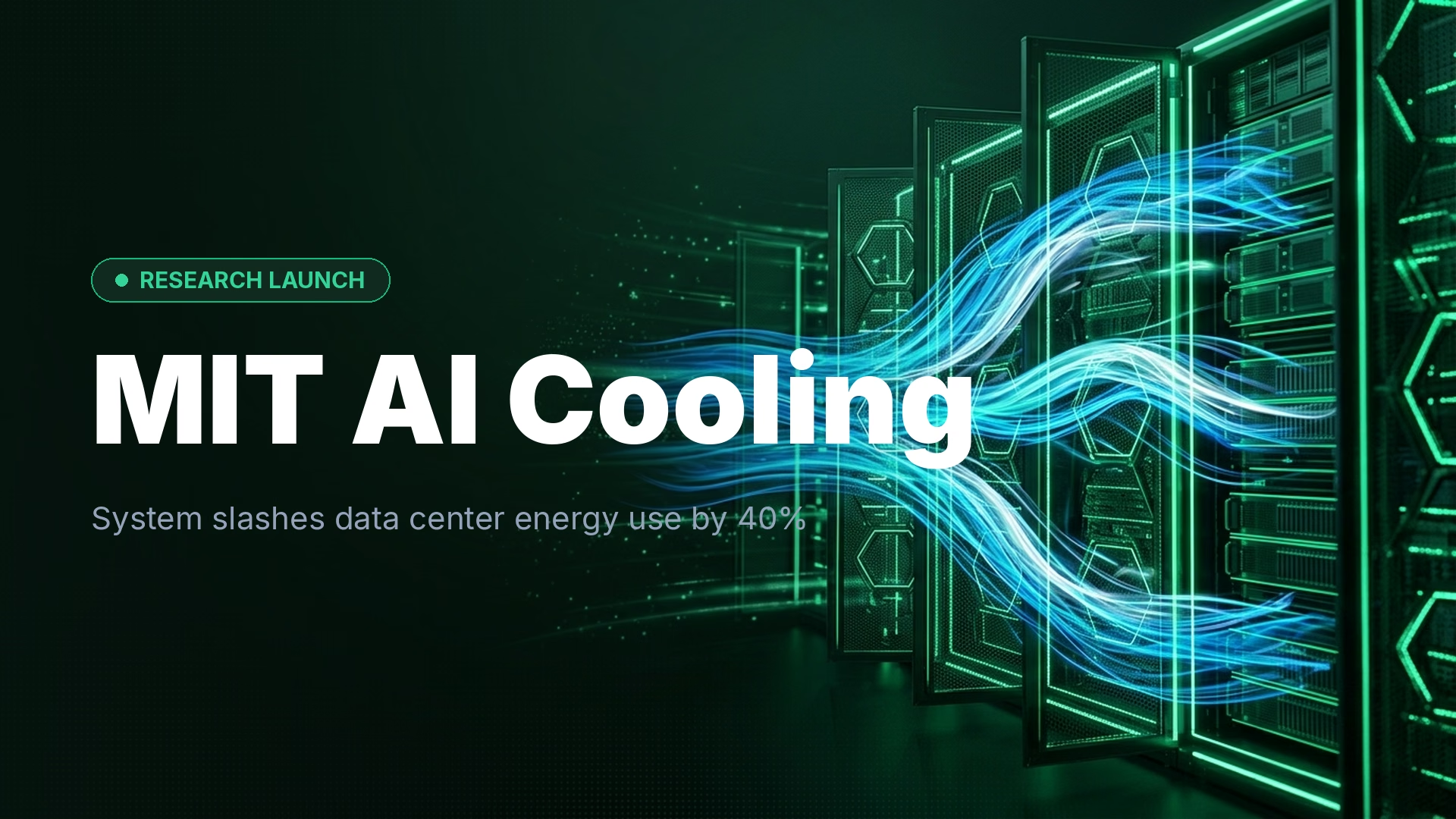
Officially launched on October 8, 2026.
MIT researchers have officially launched an AI-powered platform that cuts data center cooling costs by up to 40 percent, addressing one of the most pressing environmental challenges in modern computing infrastructure. The system, released on October 8, 2026, uses machine learning to predict thermal loads and dynamically optimize cooling operations across large-scale facilities. As AI training workloads consume exponentially more power, the technology arrives at a critical moment for the industry's sustainability efforts.
How the AI Cooling System Works
The platform deploys predictive models that analyze temperature sensors, server utilization patterns, and external weather data to forecast cooling demands minutes before they occur. Traditional data center cooling systems operate on fixed schedules or reactive triggers, often overcooling sections of the facility to prevent hotspots. MIT's approach continuously adjusts airflow, compressor speeds, and liquid cooling distribution based on real-time workload predictions.
Field tests at three commercial data centers showed energy reductions between 35 and 42 percent compared to baseline operations. The system integrates with existing building management infrastructure, requiring no hardware replacements in most deployments. Operators reported payback periods of 8 to 14 months depending on facility size and regional energy costs.
Environmental Impact of AI Compute
Data centers now consume approximately 2 percent of global electricity, with cooling systems accounting for 40 percent of that total. The explosive growth of large language model training has pushed some facilities to operate at capacity limits year-round. A single GPT-scale training run can require megawatts of continuous power for weeks, generating heat equivalent to thousands of homes.
According to the research team, widespread adoption of intelligent cooling could prevent 12 million metric tons of CO2 emissions annually by 2028. That figure assumes deployment across 30 percent of hyperscale and enterprise data centers globally. The technology also extends hardware lifespan by reducing thermal stress on processors and memory components.
Deployment Timeline and Industry Response
MIT plans to license the platform to data center operators and colocation providers starting in Q1 2027. Early access partners include two major cloud providers and a consortium of university research computing facilities. The team is developing containerized versions for edge computing sites and smaller corporate data centers.
Industry analysts note the technology arrives as regulators in Europe and California consider energy efficiency mandates for large compute facilities. Several hyperscalers have committed to carbon neutrality targets by 2030, making cooling optimization a strategic priority. The AI system's ability to retrofit existing infrastructure gives it an advantage over hardware-centric solutions that require capital-intensive facility upgrades.
Technical Architecture and Scalability
The core prediction engine runs on a transformer-based architecture trained on thermal dynamics datasets from 47 facilities. Inference latency stays below 200 milliseconds, enabling sub-minute control loop adjustments. The platform supports both air-cooled and liquid-cooled configurations, with specialized modules for direct-to-chip cooling systems increasingly used in AI accelerator clusters.
Deployment requires minimal on-site compute resources, with edge inference nodes running on standard x86 servers. Cloud connectivity enables continuous model updates as seasonal patterns shift and new workload types emerge. The system achieved 94 percent prediction accuracy in long-term trials, with performance improving as it learns facility-specific thermal behaviors.
What This Means
MIT's AI cooling platform represents a practical near-term solution to data center sustainability challenges that scale with existing infrastructure. As AI model training demands continue growing, intelligent thermal management becomes essential infrastructure rather than an optional efficiency gain. The 40 percent energy reduction directly translates to lower operating costs and carbon footprints, making adoption economically compelling even without regulatory pressure. Organizations planning AI deployments should evaluate cooling optimization as a foundational component of their infrastructure strategy.



on Emergent today




