


AI Transforms Radiology Jobs Without Replacing Doctors

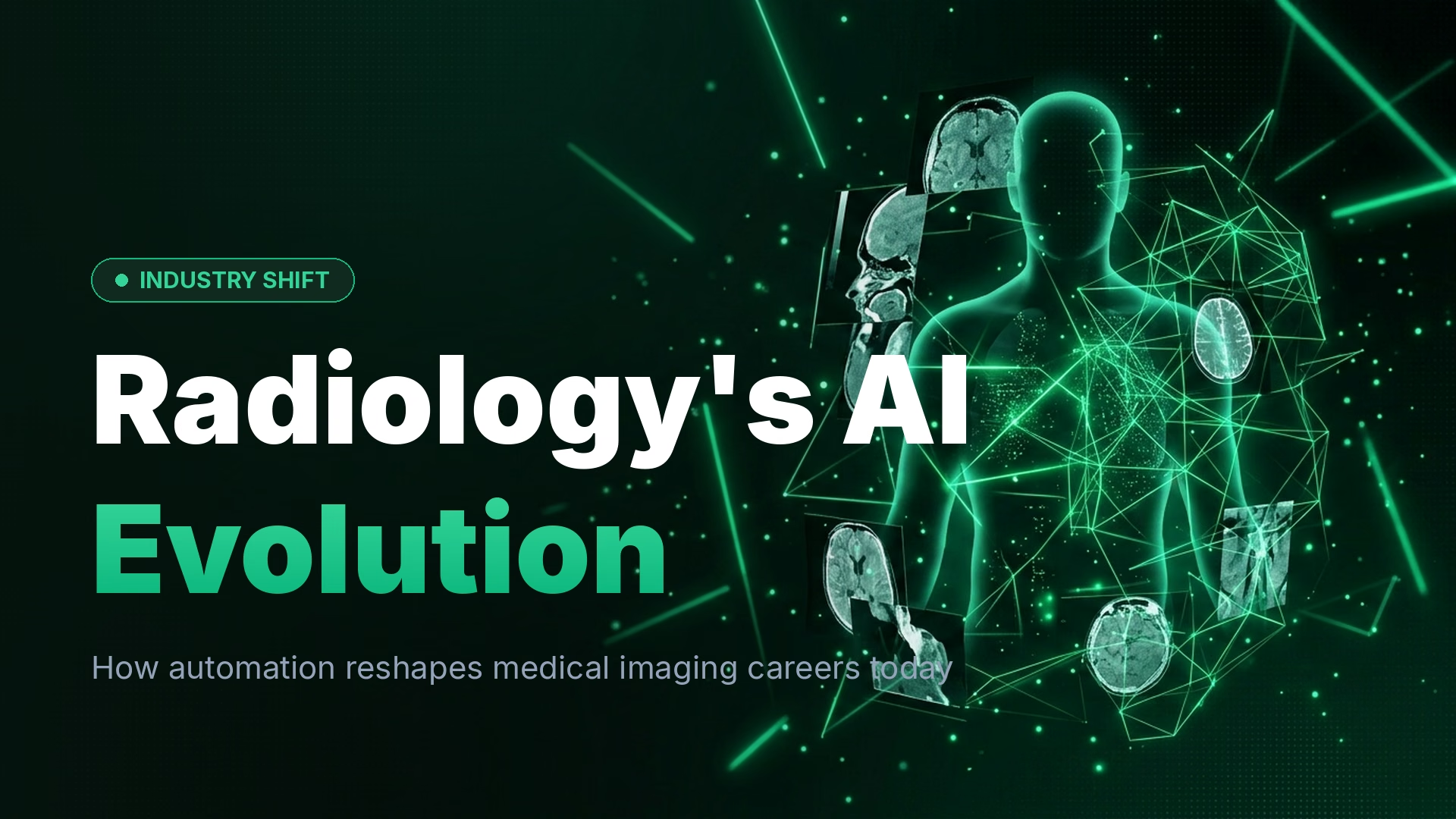
Years after bold predictions that artificial intelligence would make radiologists obsolete, the reality looks dramatically different. Medical imaging AI has arrived in hospitals worldwide, but instead of replacing doctors, these systems are fundamentally reshaping how radiologists work, what they prioritize, and where they add the most clinical value.
The Failed Prediction and Current Reality
In 2016, a prominent AI researcher famously declared that training new radiologists made little sense because deep learning would soon perform better than humans at reading medical images. Nearly a decade later, radiology remains a thriving medical specialty with growing demand. According to recent workforce analyses, hospitals continue expanding radiology departments while simultaneously deploying AI detection algorithms.
The disconnect between prediction and outcome reveals a fundamental misunderstanding of what radiologists actually do. Image interpretation represents only one component of a complex diagnostic process that includes patient consultation, protocol selection, correlation with clinical history, communication with referring physicians, and interventional procedures.
How AI Actually Changes Radiology Workflows
Modern radiology AI systems excel at specific detection tasks: flagging potential lung nodules on CT scans, measuring bone density, identifying intracranial hemorrhages, or prioritizing urgent cases in reading queues. These tools operate as sophisticated triage systems rather than autonomous diagnosticians.
Radiologists using AI-assisted workflows report spending less time on routine pattern recognition and more time on complex cases requiring nuanced judgment. Key workflow changes include:
- Automated preliminary screening that surfaces high-priority cases requiring immediate attention
- Quantitative measurements that previously required manual annotation
- Consistency checks that flag potential discrepancies between AI findings and radiologist interpretations
- Integration with electronic health records to correlate imaging findings with lab results and clinical notes
This shift allows radiologists to function more as clinical consultants, directly advising treatment teams rather than simply generating reports in isolation.
New Skills and Evolving Expertise
The integration of AI into radiology departments creates demand for new competencies. Radiologists now need working knowledge of algorithm performance characteristics, understanding when AI systems are likely to produce false positives or miss subtle findings. Some institutions have created hybrid roles combining radiology training with data science expertise.
Officially launched on August 2026 analyses show that radiology residency programs are incorporating AI literacy into curricula, teaching future doctors how to validate algorithmic outputs and recognize edge cases where human judgment remains critical. This educational shift acknowledges that tomorrow's radiologists will spend careers working alongside increasingly capable AI systems.
Economic and Professional Implications
Rather than reducing radiologist employment, AI adoption appears to be addressing chronic capacity constraints. Healthcare systems face growing imaging volumes as populations age and screening recommendations expand. AI tools help radiology departments handle increased workloads without proportional staffing increases, but they create rather than eliminate jobs in most markets.
Compensation patterns remain stable, with radiologist salaries continuing to rank among the highest in medicine. The profession's value proposition has shifted from pure image interpretation speed toward complex case management, procedural skills, and clinical integration.
What This Means
The radiology AI story demonstrates how automation transforms rather than eliminates knowledge work. While specific tasks become automated, the overall role expands to incorporate new responsibilities and higher-order decision making. For healthcare leaders, this suggests successful AI integration requires rethinking job designs rather than headcount reduction. For medical professionals, it underscores the importance of adaptability and continuous learning in an era where technology augments rather than replaces human expertise. The radiologists who thrive in coming years will be those who leverage AI as a force multiplier for their clinical judgment, not those who resist its adoption.


on Emergent today




