



App monetization is how an app turns usage into revenue, by charging users directly, charging businesses for access, or selling attention through ads. But revenue is only half the picture. What an app spends to earn that revenue decides whether it survives.
App store fees, payment processing, hosting, AI usage, and support all eat into revenue before any becomes profit. Building the app is the cheap part now, so the model matters more than the code.
After reviewing how dozens of apps make money, one pattern stood out: almost none charge at download. Here are the 9 revenue models that work, each measured against that formula and the real cost of earning profit.
Curious how AI fits into the revenue picture? Read our guide on How to Make Money with AI in 2026 for 12 proven ideas worth trying.
9 Ways Apps Make Money
There is no single answer here. How an app makes money depends on how often people use it, how much they trust it, what it costs to run, and whether growth depends on building demand, supply, or both. Many apps combine two or three of these models instead of leaning on one.
Method 1: Subscriptions
What it is: Users pay a recurring fee, usually monthly or annually, for ongoing access to the app.
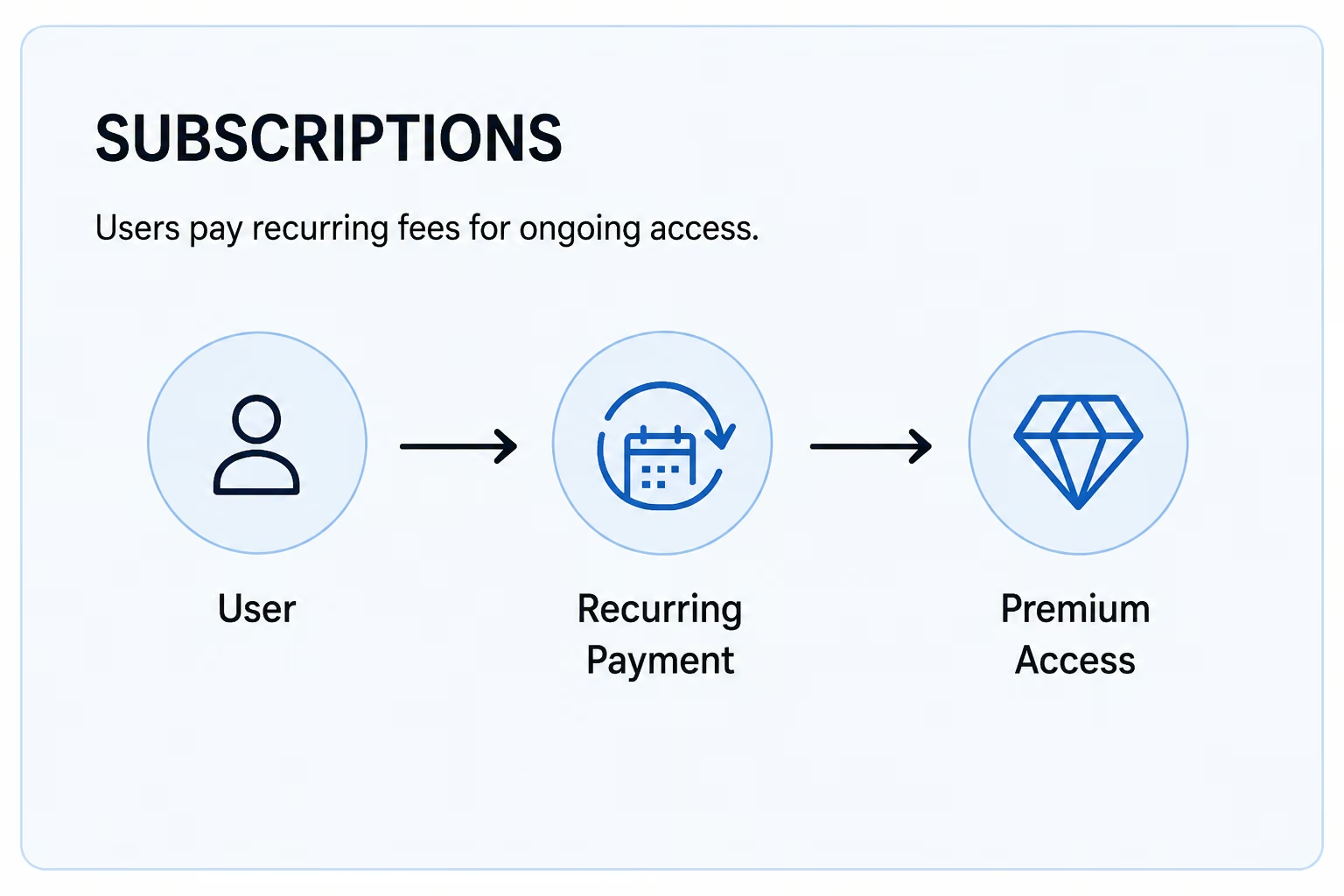
How it works: The app sets a price and bills on a fixed schedule. Revenue is predictable, which is why subscriptions are the favorite model for anyone forecasting cash flow. The catch is retention. A subscriber has to feel like the app keeps earning that monthly charge, or they cancel.
According to Appfigures estimates, only about 4% of apps run on subscriptions, yet that small group accounts for 45% of all global app revenue. The gap exists because subscriptions reward apps that deliver ongoing, repeatable value. Apps people open once and forget the struggle to justify recurring billing.
Pro Tip
Annual plans tend to churn less than monthly ones and bring in more revenue per user up front, so apps that can offer an annual option usually push it harder than the monthly one.
Where it works best: Subscriptions fit apps that deliver value people would genuinely miss if it vanished. Fitness tracking, content libraries, and productivity tools fit well. A one-time-use utility app does not.
Real example: Plate OS, a meal prep operations platform built on Emergent, took this approach. Its first external customer pays $1,800 a month because the platform processes their daily orders, manages delivery routing, and handles customer changes automatically. That is not a subscription anyone cancels on a whim. The business runs on it.
Building a subscription-based product? Read our guide on the best website builders for subscription services to find the right platform before you launch.
Method 2: Freemium
What it is: The app is free to download and use at a basic level, with premium features locked behind a paywall.
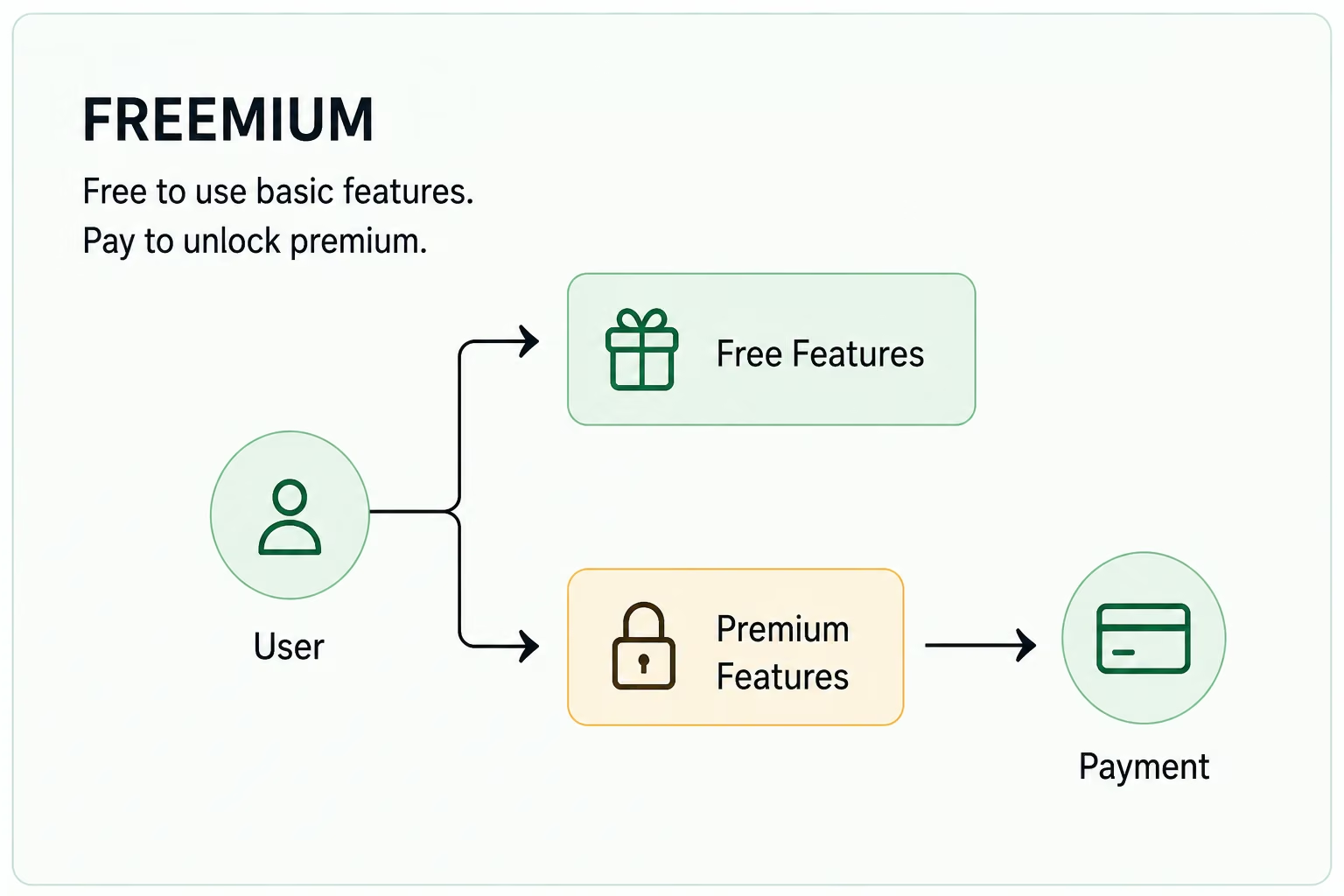
How it works: Freemium solves the chicken-and-egg problem of needing users before you can prove value. The free tier removes the barrier to trying the app. The risk is that free users still cost money to host and support, whether or not they ever convert.
The math only works if enough of those free users upgrade. Take the app store's cut into account from the start: Apple’s Small Business Program lowers the App Store commission from the standard 30% to 15% for developers earning under $1M a year. So on a $9.99 plan, 15% goes to Apple, and the developer nets about $8.49.
Break-even concept:
- Monthly fixed costs ÷ net revenue per paying user = paying users needed
- Paying users needed ÷ total free users = conversion rate needed
Where it works best: Freemium fits apps with mass-market appeal and a clear, valuable feature worth paying to unlock. It struggles when the team cannot name exactly what sits behind the paywall and why someone would pay for it.
Real example: Picture a freemium app with 10,000 free users and 40 paying ones. That free tier still costs money to host, so without conversion, it quietly drains cash instead of feeding growth. That free tier still costs money to host, whether or not anyone upgrades, so without conversion, it quietly drains money instead of feeding growth.
Method 3: In-App Purchases
What it is: Users buy specific features, content, or virtual goods inside an app they already downloaded for free.
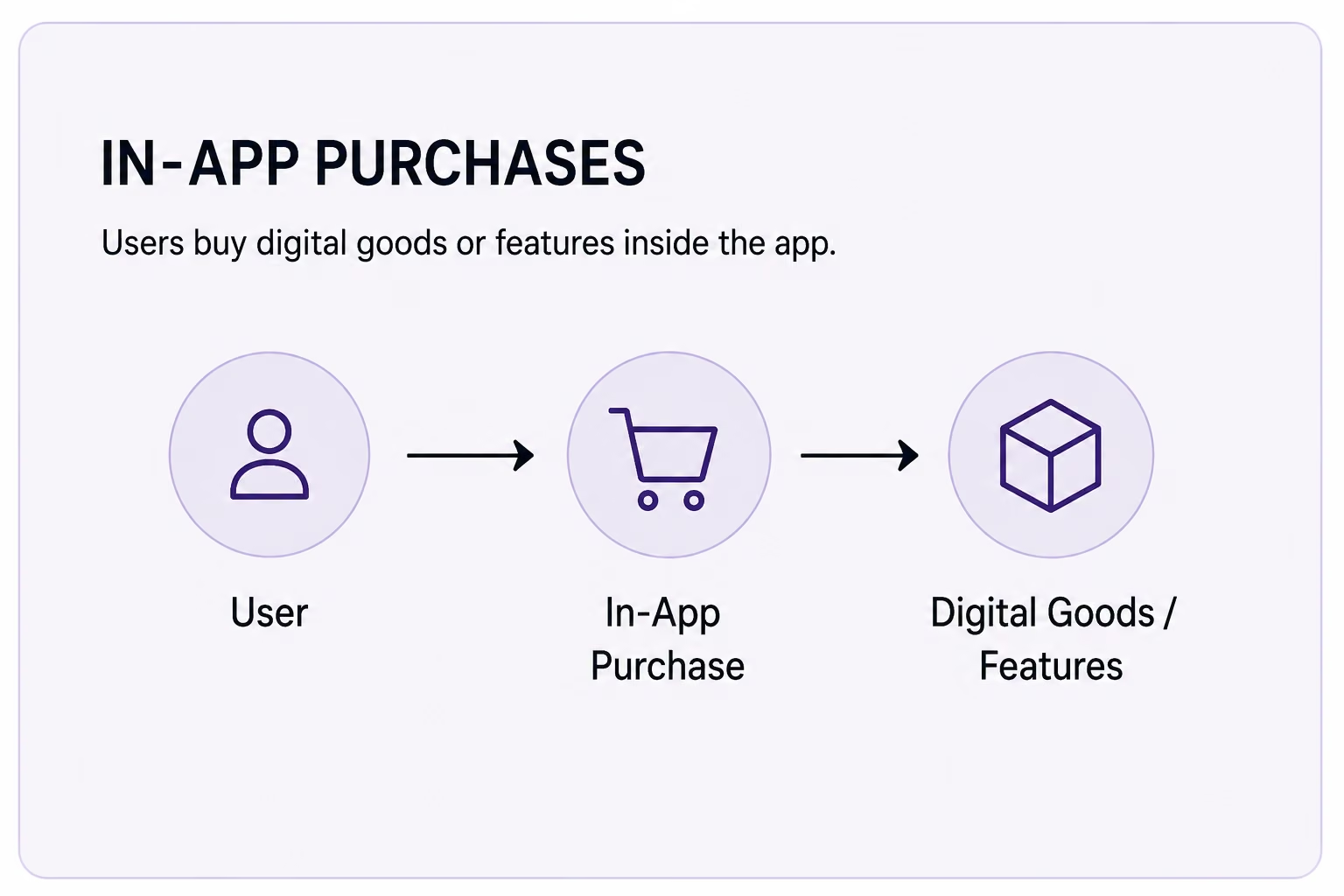
How it works: Purchases come in two types. Consumables get used up and bought again, like in-game currency. Non-consumables are permanent unlocks, like an ad-free toggle. Consumables drive repeat purchases but can wear users down if the app nudges too hard. Non-consumables are gentler, but only earn revenue once per user.
Global in-app purchase revenue reached roughly $150 billion in 2024, with non-gaming apps driving most of the growth while gaming stayed roughly flat.
Where it works best: In-app purchases fit apps with natural moments where extra content or capability adds value. They feel forced when they charge for a feature that should be free.
Real example: When I compare the two types, a photo editing app selling a one-time filter pack is making a non-consumable sale, and a game selling currency that gets spent and replenished is making consumable sales.
Both work, but consumables are the ones that compound. A filter pack sells once, while a coin balance gets spent and refilled for as long as someone plays.
Method 4: In-App Advertising
What it is: Ads appear inside the app, and the developer earns revenue per impression, click, or completed view.
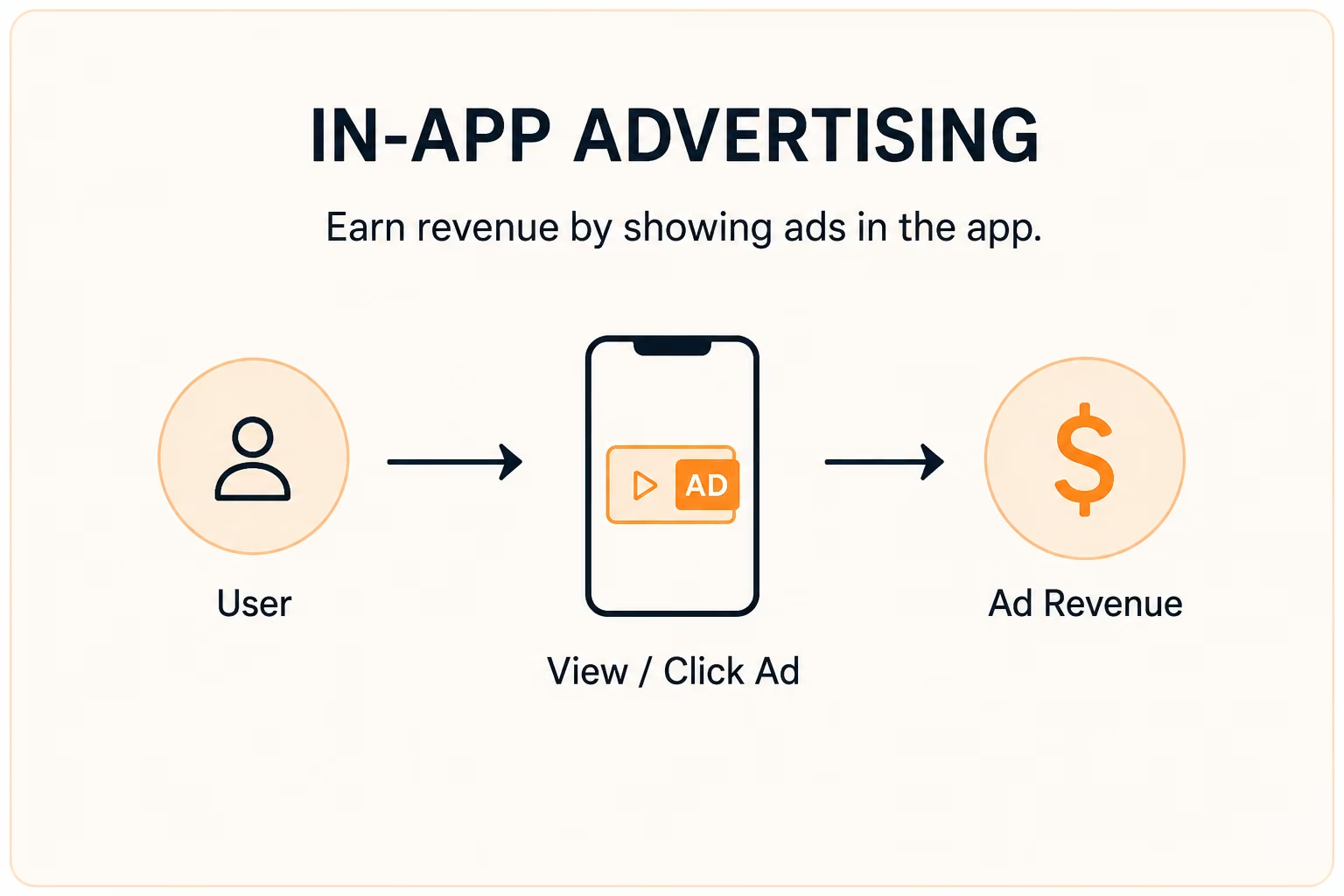
How it works: Ad revenue depends almost entirely on traffic and format. eCPM, the revenue per 1,000 impressions, varies a lot by format. Rewarded video usually pays the most. Interstitials sit in the middle, and banners pay the least, though rates shift by country, platform, category, and season.
Monthly ad revenue ≈ DAU × ads per session × sessions per day × (eCPM ÷ 1,000) × 30
Where it works best: Advertising fits apps that already have, or realistically will have, significant daily traffic. Ads scale with volume, while effort alone cannot cover the gap. A well-placed ad on an app with a few hundred daily users will not cover hosting.
Real example: Picture a casual word game. The player who taps "watch an ad for a hint" walks away happy, because they chose it. The same player hit with a banner pinned under the keyboard barely notices it, and the revenue shows that gap. Opt-in beats interruption almost every time.
Also read our how to monetize an app guide for the decision framework behind these models: your user, market size, barrier to entry, and price sensitivity.
Method 5: Usage-Based and AI Pricing
What it is: Users pay based on consumption, like API calls, messages, or generations, instead of a flat seat or subscription fee.
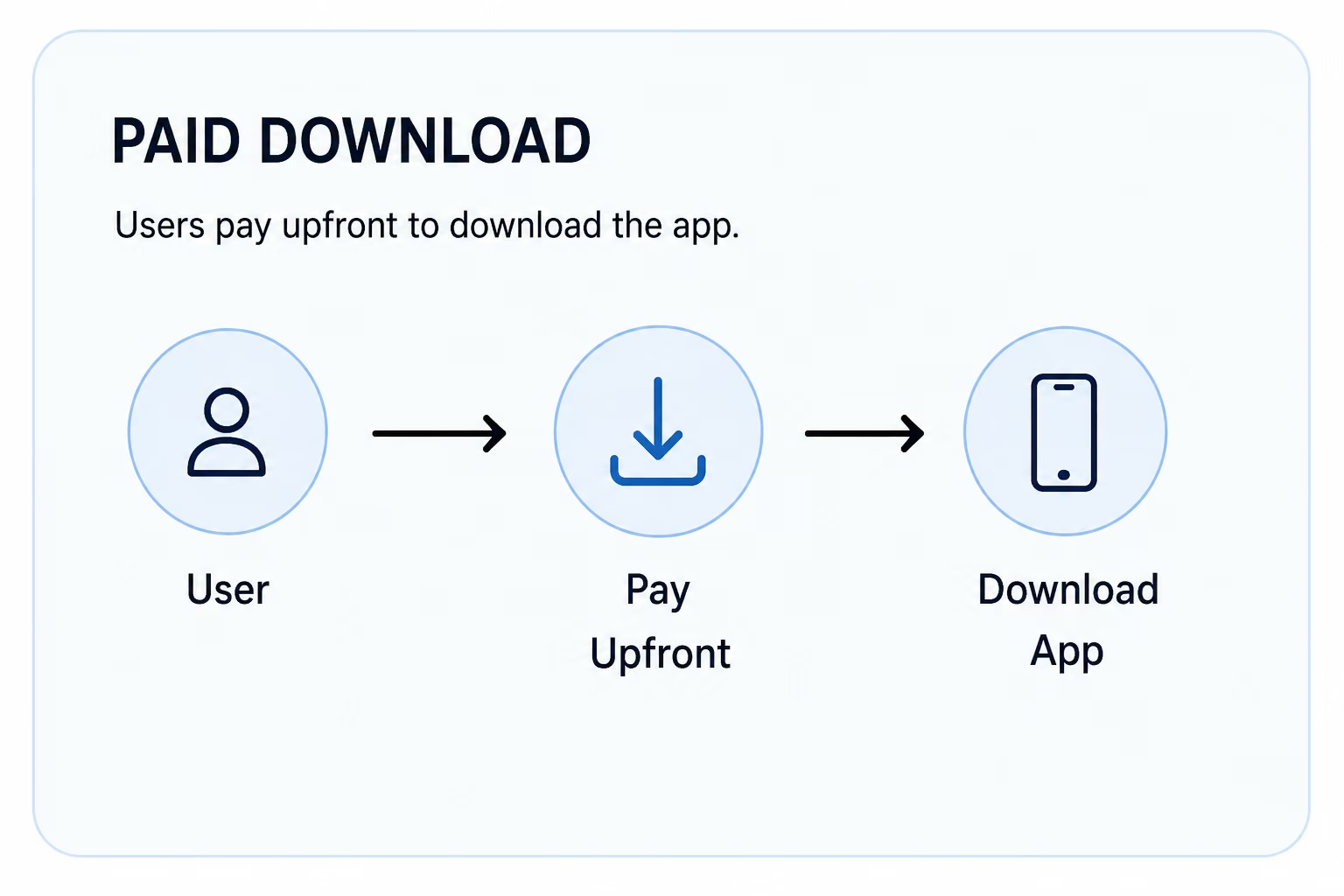
How it works: Usage-based pricing has become common for AI-powered apps because backend inference costs scale with usage. Charging a flat fee no matter how much a user consumes can lose money on your heaviest users.
Usage-based pricing is also where the most user friction shows up. With credit pricing, spend is hard to predict, since simple and complex actions can cost the same. Credit use also climbs once a project grows past the prototype stage.
This is why testing your pricing on real usage beats modeling it on a spreadsheet. An app builder like Emergent lets you ship a working version fast and watch which tier people actually pick.
Where it works best: Usage-based pricing fits apps whose costs scale directly with what a user does, which is common for anything running AI under the hood. Pure pay-per-use can backfire by creating bill shock, so tiered caps tend to work better than uncapped metering.
Real example: Charge a flat $20 a month for unlimited AI generations, and your top 5% of users can quietly erase the margin you make on everyone else. Swap to tiered pricing with usage caps, and those same heavy users start paying for what they consume, which is the difference I see between AI apps that hold margin and ones that bleed it.
Method 6: Marketplace Commission
What it is: The app connects buyers and sellers and takes a cut of every transaction between them.
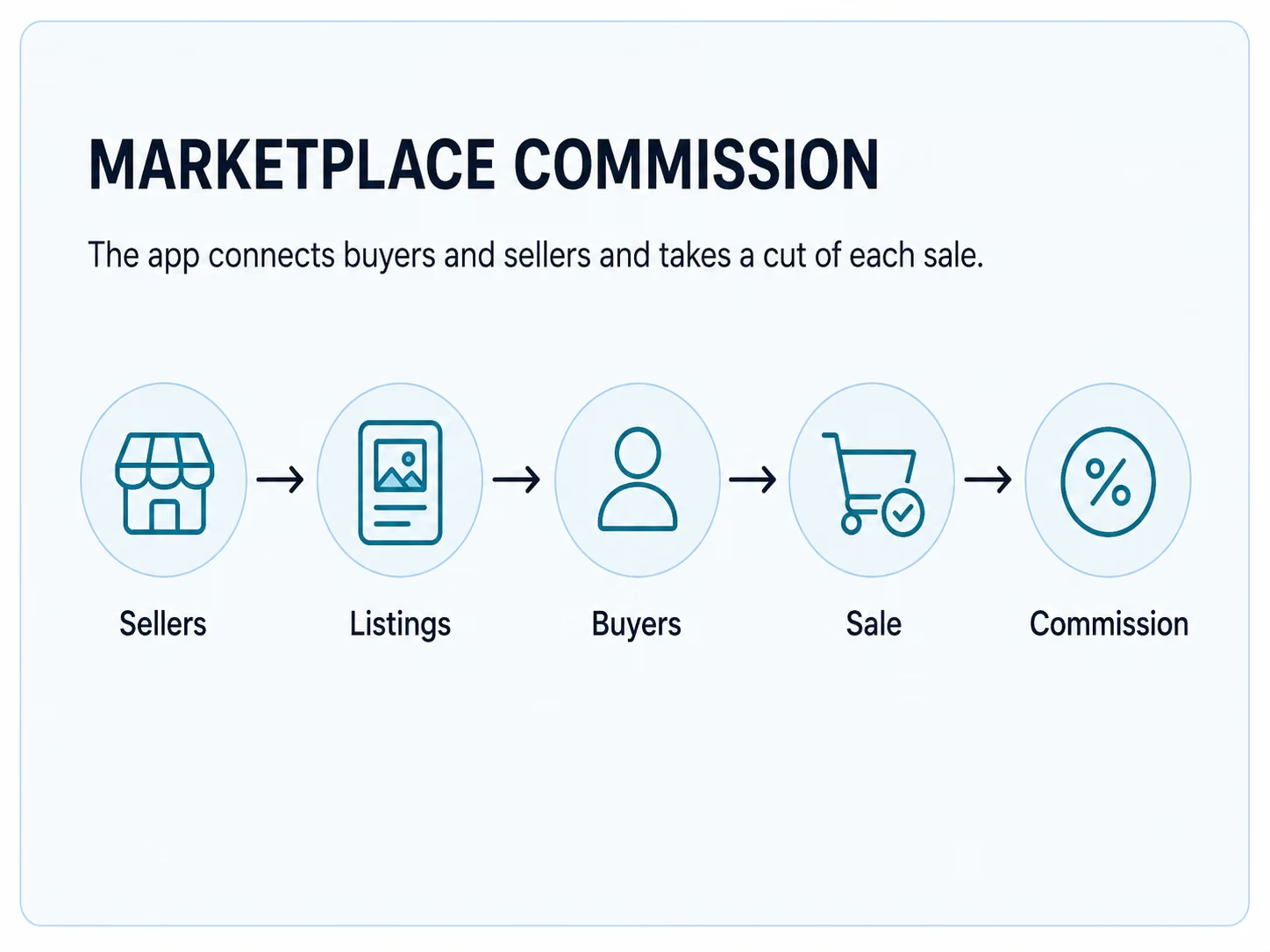
How it works: A marketplace commission model needs both sides of the market before it generates anything. A marketplace with sellers and no buyers is an empty storefront. One with buyers and no sellers is a waiting room.
Commission rates vary widely by category, platform, and region. Lighter marketplaces often take 5% to 15%, while higher-touch categories like food delivery can run 15% to 30% once service and delivery fees are layered in.
Where it works best: Commission fits apps whose core value is connecting two sides of a transaction rather than delivering a standalone feature. It falls apart when an app has only supply or only demand.
Real example: Build the shelves before you advertise the store. Every marketplace I've watched launch cleanly recruited its sellers by hand first, then went after buyers. The ones that flopped ran it backward, drew in buyers, and left them staring at an empty catalog.
Method 7: Affiliate and Referral Revenue
What it is: The app earns a commission when a user clicks a link and buys something from a partner business.
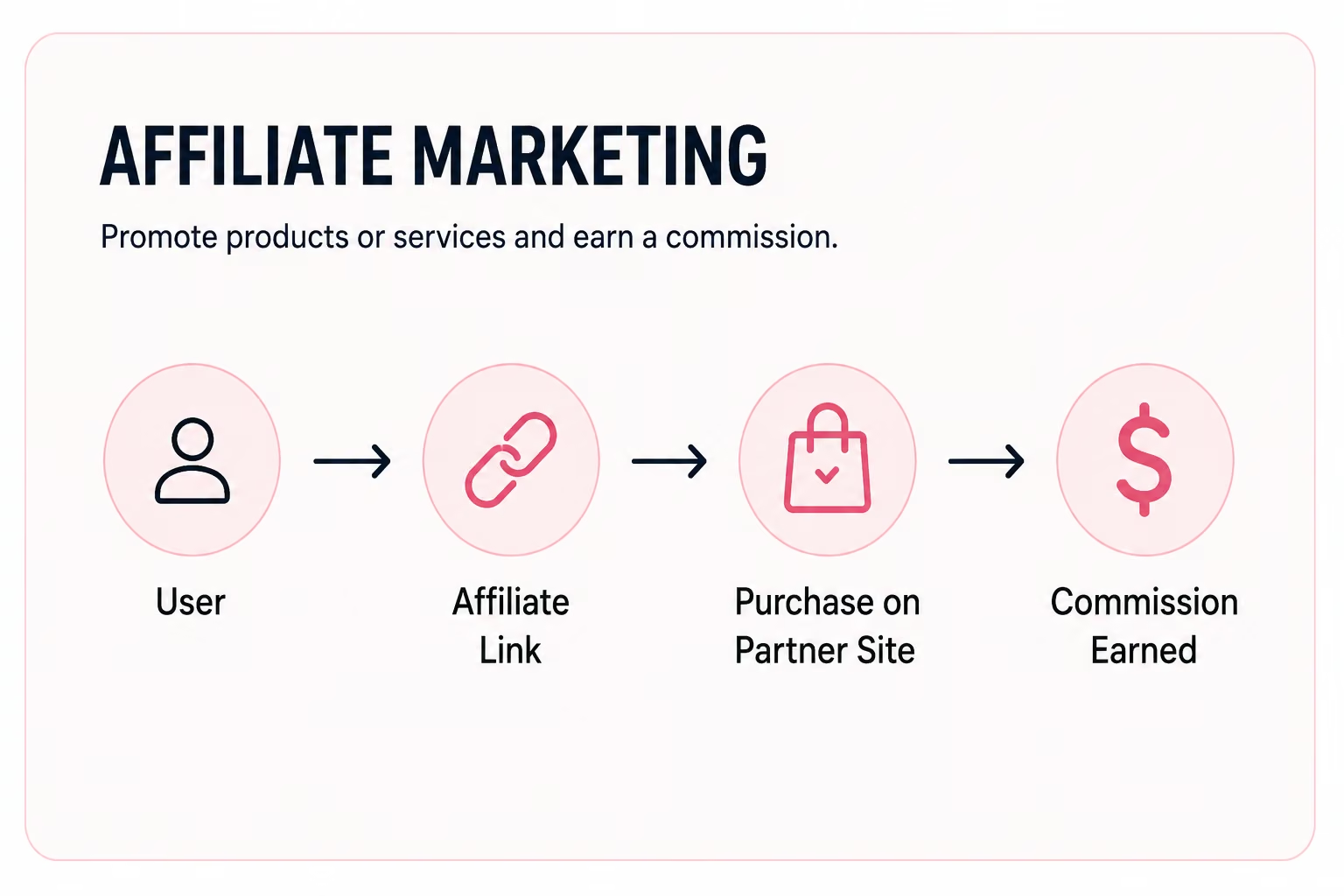
How it works: Affiliate revenue is low-effort to set up and passive once running, which is also why it is unpredictable. Rates vary widely by category: physical retail often pays 1% to 10%, while digital products and SaaS programs can pay 20% to 30% or more per sale, often recurring for as long as the customer stays.
Finance apps tend to skip percentages entirely, paying a flat $50 to $200 per qualified signup.
Where it works best: Affiliate revenue works as a secondary stream layered on top of another model, rarely as a sole source of income. It lives and dies on trust. The moment users feel like every recommendation is secretly an ad, they stop clicking.
Real example: Affiliate revenue depends on trust. A budgeting app can recommend a savings account or tax tool because the fit is natural. A weather app pushing credit cards feels off and usually performs badly.
Method 8: Sponsorships and Partnerships
What it is: A brand pays the app directly for visibility, a sponsored challenge, or a branded section, instead of paying per click or per sale.
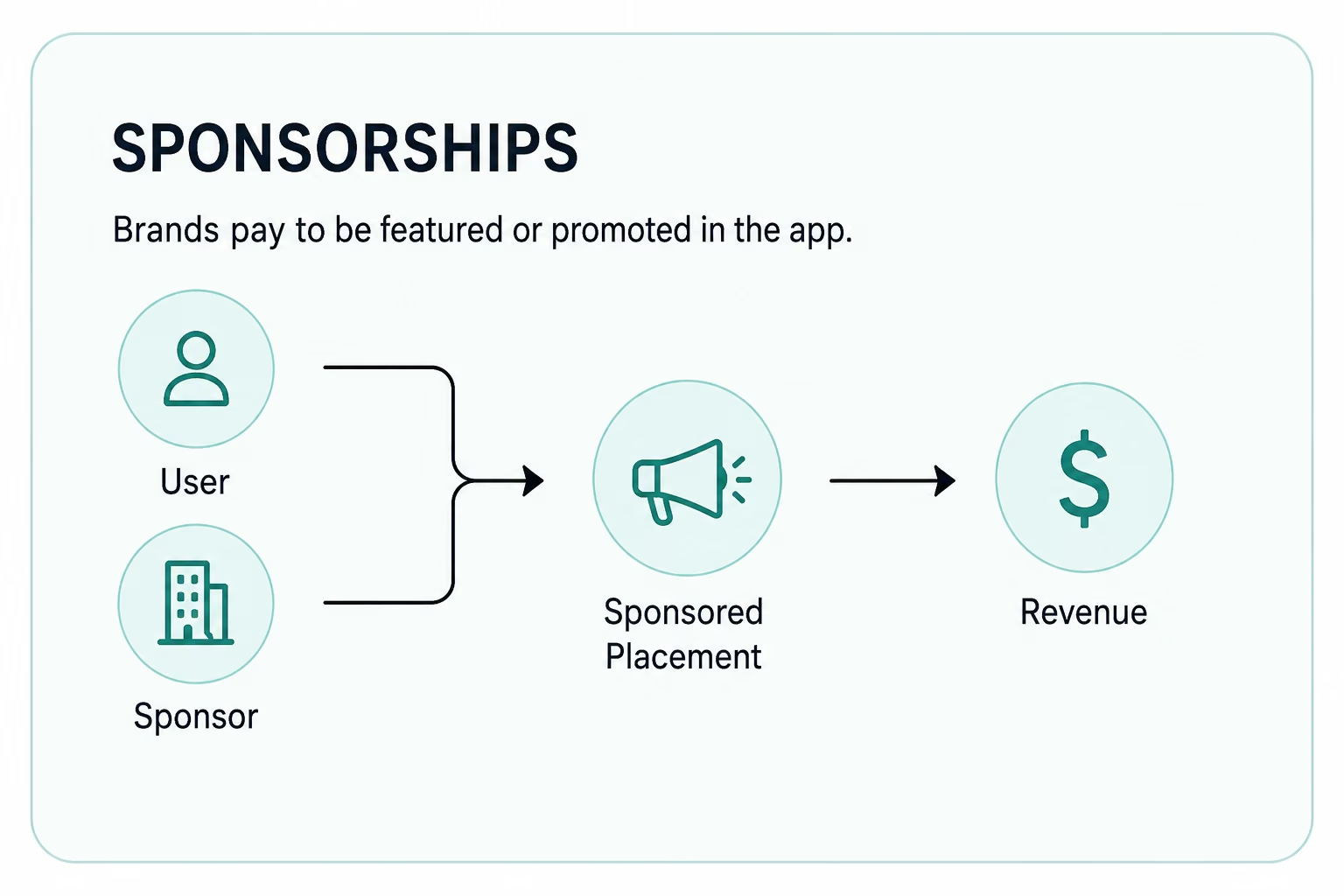
How it works: Sponsorships avoid the trust problem affiliate links create, since they are usually disclosed upfront. The tradeoff is consistency. Affiliate revenue trickles in passively. Sponsorship revenue depends on someone actively closing a deal, which makes it lumpy and hard to forecast month to month.
Where it works best: Sponsorships fit apps with a clear, engaged niche audience rather than apps chasing mass scale. A smaller, highly engaged audience is an easier pitch than a large, disengaged one.
Real example: A niche running app with a tight daily audience is an easy sponsorship sell. A shoe brand can drop a "30-day 5K challenge" in front of exactly the right people. A general utility app with more users is harder. There is no shared theme for a sponsor to latch onto. Sponsors pay for engagement and fit, not raw user count.
Method 9: Donations and Tips
What it is: Users pay voluntarily, with no feature locked behind the payment.
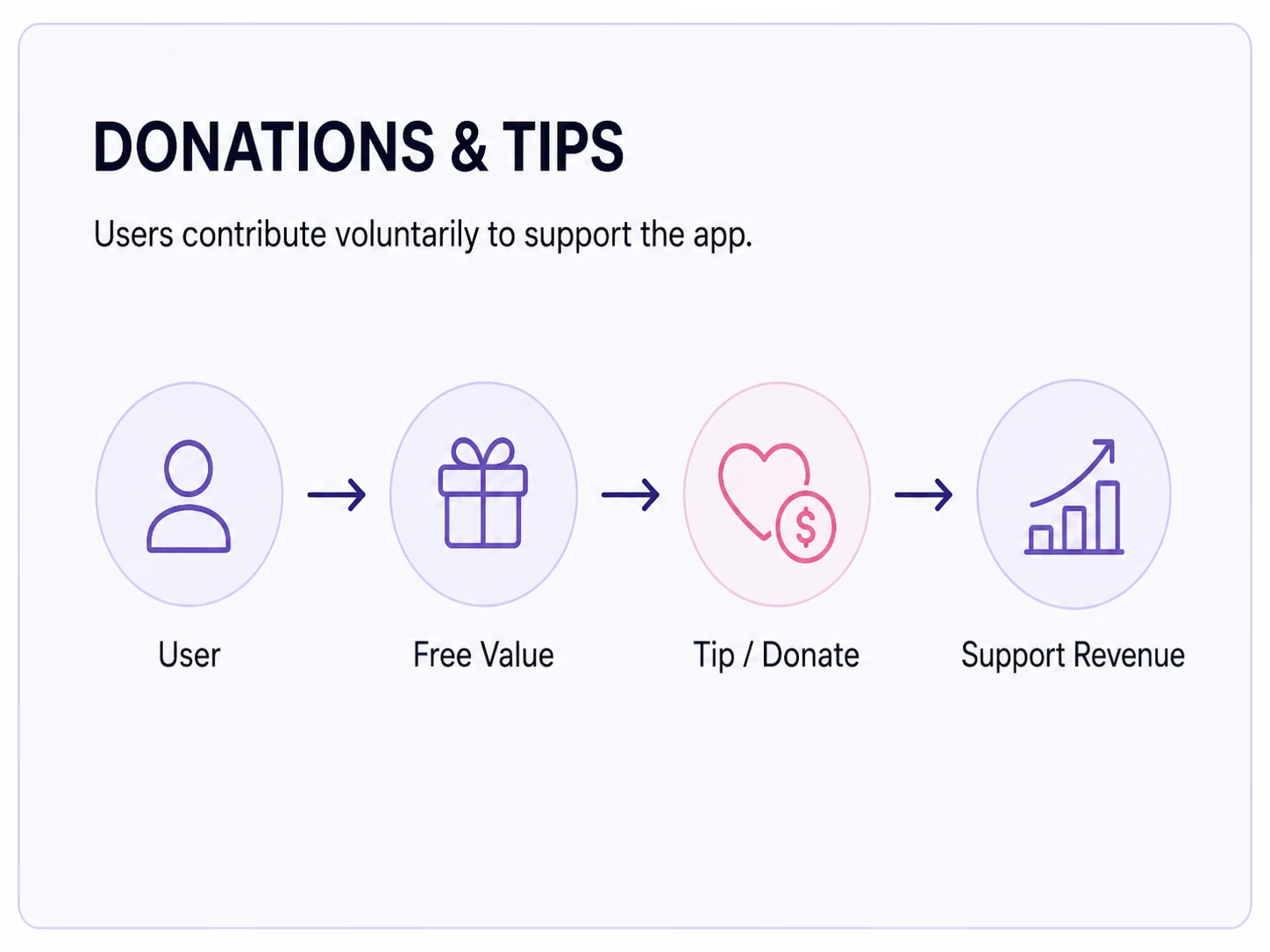
How it works: Donations work for specific categories, including nonprofit apps, independent creative tools, and open-source or community-run projects where users feel invested in keeping the app alive. It almost never works as a primary model for a commercial app.
Where it works best: Donations work as a secondary option layered next to freemium or subscriptions, not as a sole revenue source. Some users will tip even when they could use the app entirely free, but teams cannot build a budget around that behavior.
Real example: Think of a free mental health app with a small "support us" button in the settings. It picks up the occasional tip from people who want it to stick around. That's the right way to read donations: a bit of goodwill on the side, never the line item keeping the lights on.
Looking to set one up properly? Read our guide on how to build a donation website to accept donations online the right way.
Which Revenue Model Fits Which App?
The model depends on the cost structure first, and the audience second. An AI feature with high per-use compute costs has no business running on a flat one-time purchase. A simple utility app has no business running usage-based pricing when there is nothing to meter.
Subscriptions or freemium fit when:
- The app delivers ongoing value people would miss if it disappeared.
- The team can clearly name what sits behind the paywall and why it is worth paying for.
In-app purchases or advertising fit when:
- Usage is casual and frequent, and does not justify a recurring commitment.
- The app already has, or expects, significant daily traffic.
Usage-based pricing fits when:
- Costs scale directly with what a user does inside the app.
- The app runs AI features where backend compute cost varies by use.
Marketplace commission fits when:
- The app's entire value is connecting two sides of a transaction.
- The team is ready to manually build supply before marketing to demand.
Affiliate, sponsorship, or donations fit when:
- You want a secondary revenue layer, not a sole source of income.
- The app has a focused, engaged niche audience rather than broad, shallow reach.
Best Practices for App Monetization
Picking a model is the start. These habits decide whether it actually earns once the app is live.
- Match the model to the cost structure: pick the revenue model after you understand what the app costs to run, not before.
- Stack more than one model: an ad-supported free tier, a subscription for power users, and an occasional sponsorship can work together.
- Know your break-even conversion rate before launch: freemium and subscription models live or die on this number, and almost nobody calculates it ahead of time.
- Favor annual plans over monthly: the retention and revenue gap is usually large enough to justify the extra messaging effort.
- Build supply before demand in marketplaces: a marketplace with no sellers has nothing to sell, no matter how much is spent on buyer acquisition.
Ready to put these practices into a real build? Read our guide on the best app building software to find the right platform before you start.
Emergent Makes Monetization Testing Easier
Picking the right model is mostly guesswork until real users hit your pricing. Emergent helps you build and ship an app quickly, so you can watch what converts before you commit to a model.
Here's how Emergent helps with app monetization:
- Fast prototyping: build a working app with logins and payments so you can get a paid version in front of users.
- Real user testing: put an actual version in front of people so conversion data replaces guesswork.
- Flexible iteration: adjust the model as you learn, without rebuilding from scratch.
- One build, many models: try a free tier, a subscription, or usage-based pricing on the same app before locking one in.
How apps make money comes down to one honest question: which model earns more than it costs to run for your specific app? Answer that before you write a line of pricing copy.
Start building on Emergent and test your monetization model before you commit to one.

Most builders stop at a prototype. Emergent ships real web and mobile apps, with accounts, databases, and payments included.
- Production-ready apps
- Web & mobile apps
- Deploy in minutes







