

Build a Custom Automated Scheduling Software Using AI in Minutes
Create your automated scheduling software in minutes with AI. See the rules behind every assignment and flag low confidence, no coding.










Trusted by Builders Worldwide
Active Builders Worldwide
Apps Successfully Created
Countries Globally Reached



Automate scheduling in four steps
Get a schedule that explains itself rather than one nobody trusts enough to publish.
Put it in a sentence: the rules that must hold and the preferences that should hold where possible.
Your existing data loads in, so generation runs against real constraints.
Request a rule relaxed, a preference weighted differently or an override kept.
Run it alongside your manual schedule for one cycle and compare the two.
Emergent Key Features for Building Automated Scheduling Software
Automation is only adopted if people can see why it decided what it did. A schedule that appears without explanation gets overridden until it is abandoned.
Every Assignment Explains Itself
Each decision showing the rules that produced it, because a schedule nobody can interrogate is one people quietly work around.
Overrides Preserved Through Regeneration
Manual changes respected when the rest is rebuilt, so correcting one thing does not mean losing it the next time the schedule runs.
Confidence Flagged Where It Is Low
Assignments the system is least certain about surfaced for review, rather than presenting every decision with equal authority.
Rules Adjusted Without Rebuilding
Constraints added and weighted as you learn what the automation keeps getting wrong, so the system improves rather than being replaced.
Impossible Combinations Named
When no valid schedule exists the conflicting rules are identified specifically, which turns a failure into a decision about what to relax.
A Human Approval Step Before Publication
Generated schedules reviewed before they reach anyone, since automation that publishes directly is trusted far less than automation that proposes.
Automated Scheduling Software Use Cases You Can Build in Minutes
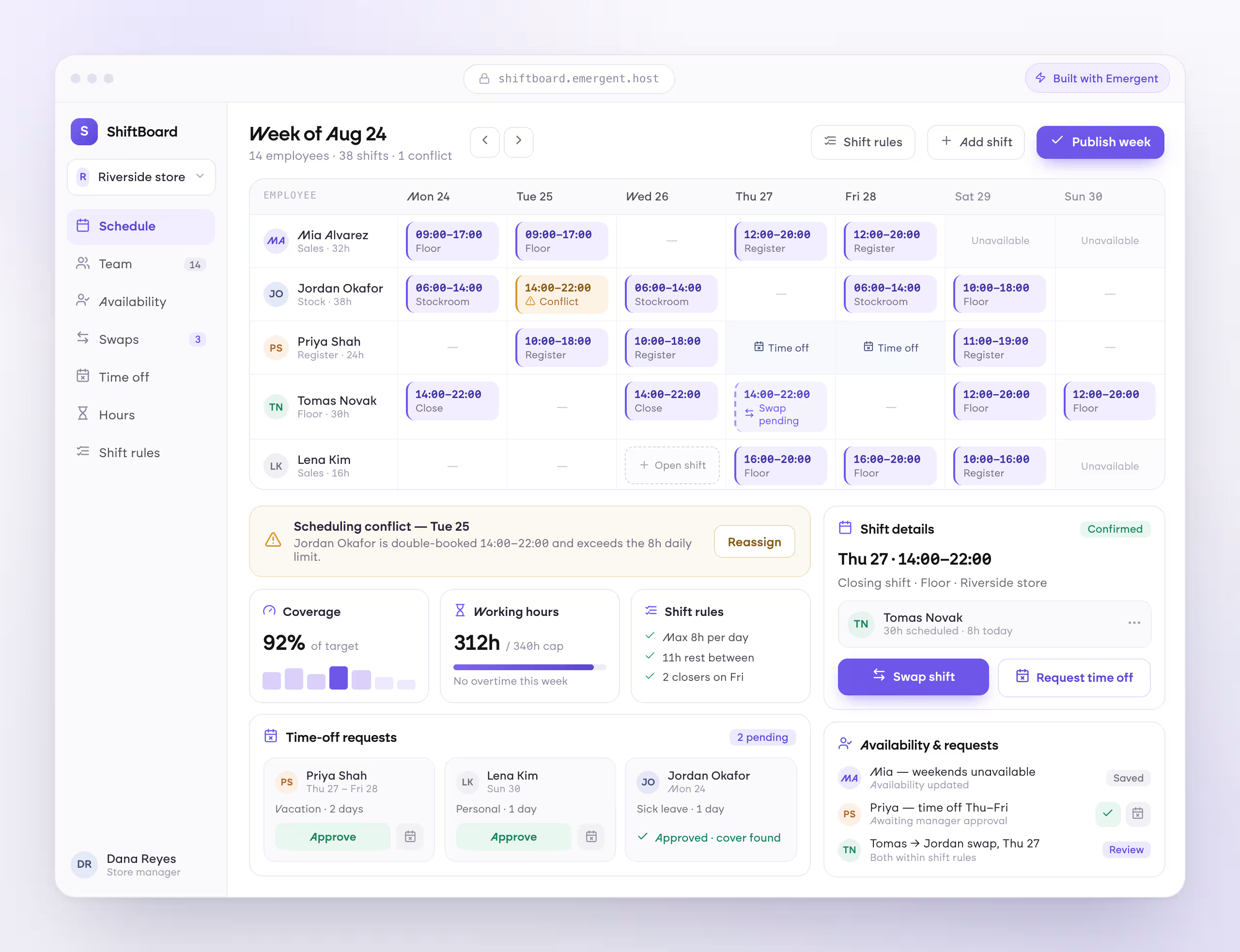
Show Why, Not Just What
Every assignment accompanied by the constraints and preferences that produced it, so a manager questioning an allocation gets an answer rather than an assurance that the system knows best.
window.awbMockup = { explainedDecisions: "Build an explainable scheduling engine where every assignment records the rules, availability and preferences that produced it, presents that reasoning on demand, and highlights which constraint was decisive for each allocation.", humanOverride: "Build an override system for automated scheduling where manual changes are locked and preserved through regeneration, records the reason for each override, and reports where the same override recurs so the underlying rule can be corrected.", confidenceAndReview: "Build a confidence scoring layer for generated schedules that flags assignments made under tight constraints or with few viable alternatives, ranks them for human review before publication, and tracks how often flagged decisions were changed.", ruleTuning: "Build a rule tuning interface for automated scheduling where constraints can be added, weighted and reordered, models the effect of a proposed rule change against recent historical schedules, and shows what would have changed before it is applied."};
Fix One Thing Without Losing It
Manual corrections locked and preserved through every regeneration, with the reason recorded, so repeated overrides in the same place become evidence that a rule is wrong.
Not Every Decision Deserves Equal Trust
Assignments made under tight constraints or with poor alternatives flagged for human review, so attention goes to the small number of decisions that genuinely need it.
Teach It What It Keeps Getting Wrong
Constraints added, weighted and reprioritised as patterns emerge, with the effect on previous schedules modelled so a rule change is understood before it is applied.
Every integration your
Schedule needs from day one
Email and calendar
Inbox and calendar sync both ways, so every reply, meeting and no-show lands on the contact record without anyone logging it.




Messaging and support
Conversations from chat, WhatsApp and your helpdesk attach to the right contact, so sales and support see the same history.




Payments and billing
Invoices, subscriptions and payment status flow back into the deal, so revenue and pipeline stay in one place.




If it has an API, your CRM can connect to it.
Emergent builds the connection against the API itself, including internal tools your team made. No closed ecosystem, no approved-partner list, no waiting for a connector to ship.

More things you can build
with Emergent
AI Website Builder
Build and publish responsive websites with AI — from landing pages to complete websites.
AI App Builder
Create and launch mobile apps with AI, without the complexity of traditional app development.
AI Web App Builder
Build and ship fully functional web apps with custom interfaces, logic, and workflows.
AI Dashboard Builder
Create interactive dashboards to visualize data, track KPIs, and manage business operations.
AI SaaS Builder
Build complete SaaS products with user accounts, subscriptions, dashboards, and core product workflows.
AI CRM Builder
Build custom CRMs for managing contacts, leads, pipelines, campaigns, and automated workflows.
AI Agent Builder
Create AI agents that can understand tasks, use tools, automate workflows, and work across your business.
Build Your Own
Start with any idea and build exactly what you need with AI — no templates or limits.

Why choose Emergent?
Most tools give you a demo you have to rebuild. Emergent gives you a product that is ready to run.
| Comparison | Other Tools |  |
|---|---|---|
| Built for | Demos and MVPs | Products you keep growing |
| What you get | Front end shell only | Full stack, wired end to end |
| Backend and database | Set it up yourself | Built and connected for you |
| Customization | Surface level styling | Deep workflow control |
| Integrations and APIs | Manual glue work | Connected from a prompt |
| Code ownership | Locked to the platform | Clean code you can export |
| Time to launch | Weeks of patching and setup | Live the same day |

Pick the Pricing Plan That Works for You
Choose the plan that fits your building ambitions. From weekend projects to enterprise applications, we've got you covered.




Find the Right Schedule Builder
for Your Business
Frequently Asked Questions
Your Questions, Answered
Don't change this element unless you know what you are doing
on Emergent today




