

Build a Custom Bus Scheduling Software Using AI in Minutes
Create your bus scheduling software in minutes with AI. Cap ride time per passenger and derive vehicle and driver duties, no coding.










Trusted by Builders Worldwide
Active Builders Worldwide
Apps Successfully Created
Countries Globally Reached



Design bus routes in four steps
Cap ride time per passenger, since the longest journey decides whether a route works.
Start by describing: your routes, stops, dwell times, vehicle capacity and driver rules.
Route performance data connects, so timings come from what buses actually do in traffic.
Tell it to add a stop, change a ride time limit or rebuild duties after a change.
Model a stop change and check loading and duties before publishing it.
Emergent Key Features for Building Bus Scheduling Software
A route that is efficient on paper can have children on it for ninety minutes. Ride time is a constraint, not an outcome.
Maximum Ride Time Enforced per Passenger
Limits on how long anyone spends on the vehicle applied as routes are built, since the longest journey is what determines whether a route is acceptable.
Stop Sequencing with Realistic Dwell Time
Boarding and alighting time at each stop included, because a route timed without dwell is a route that runs progressively late.
Capacity Checked Against Actual Loading
Passenger numbers per stop compared with vehicle capacity, so a route is not planned that fills before its last pick up.
Safe Stop Locations Considered
Stops assessed for safe access and crossing, which matters most on school routes and is a design decision rather than an afterthought.
Vehicle and Driver Duties Derived from Routes
Runs linked into vehicle blocks and driver duties, so the number of buses and drivers required is calculated rather than assumed.
Route Changes Modelled Before Publishing
The effect of adding or removing a stop shown on ride times and capacity before the timetable goes out to passengers.
Bus Scheduling Software Use Cases You Can Build in Minutes
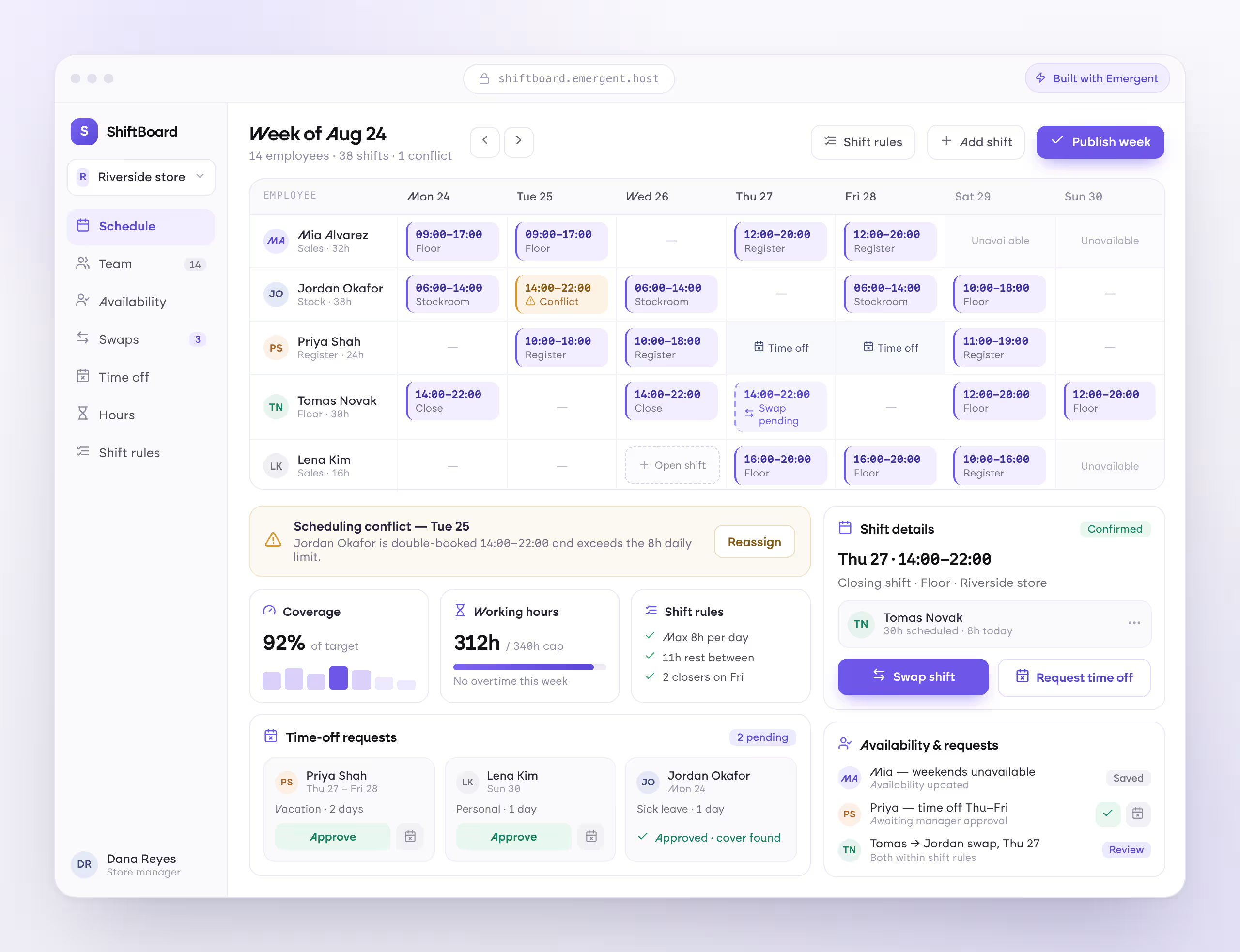
The Longest Journey Decides the Route
Stops sequenced with realistic dwell time and maximum ride time enforced per passenger, so no individual spends an unacceptable period on the vehicle.
window.awbMockup = { routeDesign: "Build a bus route designer sequencing stops with realistic boarding and alighting dwell time, enforcing a maximum ride time for any individual passenger, and flagging routes where the longest journey exceeds the acceptable limit.", capacityPlanning: "Build a capacity planner calculating cumulative loading at each stop along a route against vehicle capacity, identifying where a route would fill before completing its pick ups, and suggesting a second vehicle or a route split.", dutiesAndVehicles: "Build a vehicle and duty planner linking bus runs into continuous vehicle blocks including positioning movements, constructing driver duties around them with breaks and hour limits, and calculating the peak vehicles and drivers required.", changeModelling: "Build a route change modelling tool showing the effect of adding, removing or moving a stop on ride times, cumulative capacity, vehicle blocks and driver duties before any change is published to passengers."};
Full Before the Last Stop
Expected boarding at each stop compared against vehicle capacity along the route, so a bus is not planned to arrive full at the point it still has passengers to collect.
Every Run Needs a Bus and a Driver
Runs linked into vehicle blocks with positioning included and driver duties built around them, so the fleet and crew required are calculated rather than assumed to be available.
See the Effect Before Publishing
Adding or removing a stop modelled for its effect on ride times, capacity and duties before the timetable is published, rather than discovered by passengers.
Every integration your
Schedule needs from day one
Email and calendar
Inbox and calendar sync both ways, so every reply, meeting and no-show lands on the contact record without anyone logging it.




Messaging and support
Conversations from chat, WhatsApp and your helpdesk attach to the right contact, so sales and support see the same history.




Payments and billing
Invoices, subscriptions and payment status flow back into the deal, so revenue and pipeline stay in one place.




If it has an API, your CRM can connect to it.
Emergent builds the connection against the API itself, including internal tools your team made. No closed ecosystem, no approved-partner list, no waiting for a connector to ship.

More things you can build
with Emergent
AI Website Builder
Build and publish responsive websites with AI — from landing pages to complete websites.
AI App Builder
Create and launch mobile apps with AI, without the complexity of traditional app development.
AI Web App Builder
Build and ship fully functional web apps with custom interfaces, logic, and workflows.
AI Dashboard Builder
Create interactive dashboards to visualize data, track KPIs, and manage business operations.
AI SaaS Builder
Build complete SaaS products with user accounts, subscriptions, dashboards, and core product workflows.
AI CRM Builder
Build custom CRMs for managing contacts, leads, pipelines, campaigns, and automated workflows.
AI Agent Builder
Create AI agents that can understand tasks, use tools, automate workflows, and work across your business.
Build Your Own
Start with any idea and build exactly what you need with AI — no templates or limits.

Why choose Emergent?
Most tools give you a demo you have to rebuild. Emergent gives you a product that is ready to run.
| Comparison | Other Tools |  |
|---|---|---|
| Built for | Demos and MVPs | Products you keep growing |
| What you get | Front end shell only | Full stack, wired end to end |
| Backend and database | Set it up yourself | Built and connected for you |
| Customization | Surface level styling | Deep workflow control |
| Integrations and APIs | Manual glue work | Connected from a prompt |
| Code ownership | Locked to the platform | Clean code you can export |
| Time to launch | Weeks of patching and setup | Live the same day |

Pick the Pricing Plan That Works for You
Choose the plan that fits your building ambitions. From weekend projects to enterprise applications, we've got you covered.




Find the Right Schedule Builder
for Your Business
Frequently Asked Questions
Your Questions, Answered
Don't change this element unless you know what you are doing
on Emergent today




