

Build a Custom Church Scheduling Software Using AI in Minutes
Create your church scheduling software in minutes with AI. Collect availability before building rotas and enforce checks, no coding.










Trusted by Builders Worldwide
Active Builders Worldwide
Apps Successfully Created
Countries Globally Reached



Coordinate church scheduling in four steps
Ask before rostering, since most of the people are giving their time.
Start by describing: your services, rooms, serving roles and the checks each role requires.
Volunteer records connect, so somebody without a current check cannot claim a children's role.
Tell it to add a room, collect availability differently or track serving frequency.
Publish one month and check the same people are not carrying every rota.
Emergent Key Features for Building Church Scheduling Software
A service needs a room, a team and equipment, and most of the people involved are giving their time rather than being paid for it.
Serving Rotas Built from Availability
Volunteers indicating when they can serve before the rota is built, since allocating unpaid time without asking is how churches lose their most reliable people.
Rooms and Halls Booked with the Activity
Spaces reserved alongside the group using them, so a midweek group and a hall hire do not both expect the same room on a Tuesday.
Safeguarding Checks Enforced Before Serving
Background checks and training with expiry blocking assignment to roles involving children or vulnerable adults rather than being noticed at an inspection.
Serving Frequency Made Visible
How often each person serves shown across the year, because a small group carrying every rota until they burn out is the pattern in nearly every church.
Equipment and Setup Scheduled
Sound, projection and room layout changes planned with the service, since these are what actually determine whether a changeover between activities works.
Communication by Team Rather Than Broadcast
Messages reaching the specific serving team or group, which is what stops people ignoring church communication entirely.
Church Scheduling Software Use Cases You Can Build in Minutes
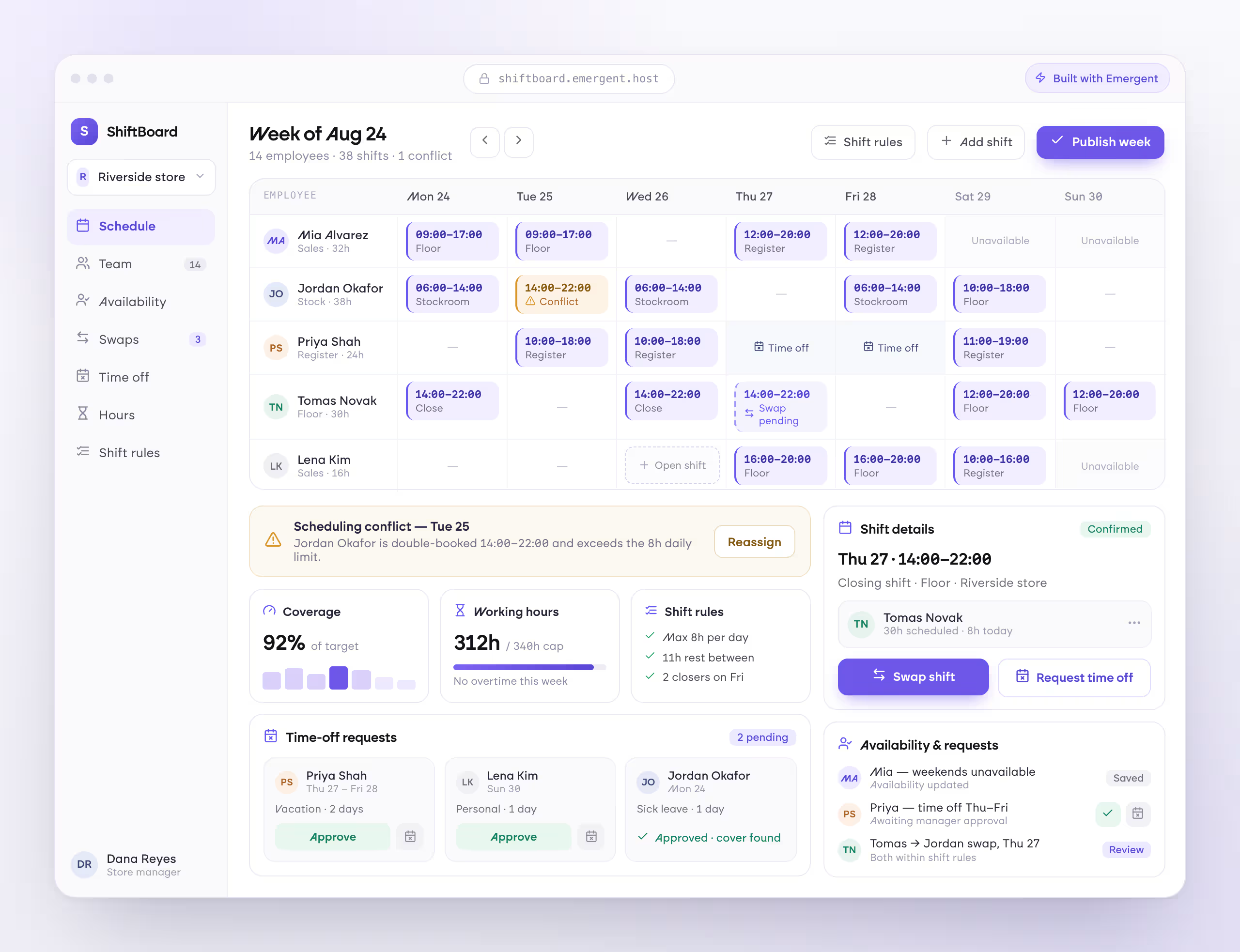
Ask Before You Allocate
Volunteers submitting availability before the rota is built, with qualifications respected, swaps handled between people and gaps in the coming weeks surfaced early.
window.awbMockup = { servingRotas: "Build a church serving rota collecting volunteer availability before scheduling, respecting the training and checks each role requires, allowing volunteers to swap between themselves, and surfacing unfilled positions weeks ahead.", roomsAndFacilities: "Build a church facilities calendar holding every space across services, midweek groups, external hire and community use, including setup and changeover time between bookings, and preventing double allocation of any room.", safeguarding: "Build a safeguarding register holding background checks, references and required training with expiry dates for everyone serving with children or vulnerable adults, preventing rota assignment where any requirement is missing, and evidencing compliance.", servingLoad: "Build a serving load report showing how often each volunteer serves across the year by team and role, identifying people carrying a disproportionate share, and highlighting those whose involvement has recently declined."};
The Hall Cannot Be Booked Twice
Halls, meeting rooms and the main space booked together across services, groups and external hire, with setup and changeover time included between activities.
Checks That Block Serving
Background checks and safeguarding training held per person with expiry dates, preventing assignment to roles involving children or vulnerable adults where anything has lapsed.
The Same People Every Week
How often each person serves tracked across the year, so a handful of volunteers carrying every team is visible before they quietly stop coming.
Every integration your
Schedule needs from day one
Email and calendar
Inbox and calendar sync both ways, so every reply, meeting and no-show lands on the contact record without anyone logging it.




Messaging and support
Conversations from chat, WhatsApp and your helpdesk attach to the right contact, so sales and support see the same history.




Payments and billing
Invoices, subscriptions and payment status flow back into the deal, so revenue and pipeline stay in one place.




If it has an API, your CRM can connect to it.
Emergent builds the connection against the API itself, including internal tools your team made. No closed ecosystem, no approved-partner list, no waiting for a connector to ship.

More things you can build
with Emergent
AI Website Builder
Build and publish responsive websites with AI — from landing pages to complete websites.
AI App Builder
Create and launch mobile apps with AI, without the complexity of traditional app development.
AI Web App Builder
Build and ship fully functional web apps with custom interfaces, logic, and workflows.
AI Dashboard Builder
Create interactive dashboards to visualize data, track KPIs, and manage business operations.
AI SaaS Builder
Build complete SaaS products with user accounts, subscriptions, dashboards, and core product workflows.
AI CRM Builder
Build custom CRMs for managing contacts, leads, pipelines, campaigns, and automated workflows.
AI Agent Builder
Create AI agents that can understand tasks, use tools, automate workflows, and work across your business.
Build Your Own
Start with any idea and build exactly what you need with AI — no templates or limits.

Why choose Emergent?
Most tools give you a demo you have to rebuild. Emergent gives you a product that is ready to run.
| Comparison | Other Tools |  |
|---|---|---|
| Built for | Demos and MVPs | Products you keep growing |
| What you get | Front end shell only | Full stack, wired end to end |
| Backend and database | Set it up yourself | Built and connected for you |
| Customization | Surface level styling | Deep workflow control |
| Integrations and APIs | Manual glue work | Connected from a prompt |
| Code ownership | Locked to the platform | Clean code you can export |
| Time to launch | Weeks of patching and setup | Live the same day |

Pick the Pricing Plan That Works for You
Choose the plan that fits your building ambitions. From weekend projects to enterprise applications, we've got you covered.




Find the Right Schedule Builder
for Your Business
Frequently Asked Questions
Your Questions, Answered
Don't change this element unless you know what you are doing
on Emergent today




