

Build a Custom Hospital Scheduling Software Using AI in Minutes
Create your hospital scheduling software in minutes with AI. Align theatre and bed, no coding.










Trusted by Builders Worldwide
Active Builders Worldwide
Apps Successfully Created
Countries Globally Reached



Coordinate hospital scheduling in four steps
Align theatre, bed and imaging for one patient rather than booking each separately.
Tell Emergent, plainly: your pathways, theatre sessions, bed capacity and the access standards you work to.
Your patient administration system connects, so the pathway is followed end to end.
Say you want a new specialty, a different access standard or emergency capacity held.
Schedule one surgical pathway and check every dependency was reserved, not assumed.
Emergent Key Features for Building Hospital Scheduling Software
A theatre list, a bed and an imaging slot all have to align for one patient. Each department schedules well and the pathway still fails between them.
Pathway Steps Scheduled Together
Preassessment, imaging, theatre and bed availability aligned as a sequence rather than booked separately by departments unaware of each other.
Theatre Utilisation Measured Honestly
Session start and finish against planned, turnaround between cases and on the day cancellations, because unused theatre minutes are the most expensive idle capacity in the building.
Bed Availability Checked Before Listing
A procedure requiring a bed not scheduled into a day when none will be free, which is the most common reason an operation is cancelled on the morning.
Cancellations Traced to Cause
Whether a case fell because of beds, staffing, equipment, the patient or clinical reasons, since each requires a completely different response.
Shared Equipment Booked with the Case
Imaging, specialist instruments and perfusion reserved alongside theatre time so a list is not built around equipment already committed elsewhere.
Waiting Lists Ordered by Clinical Priority
Patients selected for lists by urgency and wait time rather than by administrative convenience, with breaches of the standard visible.
Hospital Scheduling Software Use Cases You Can Build in Minutes
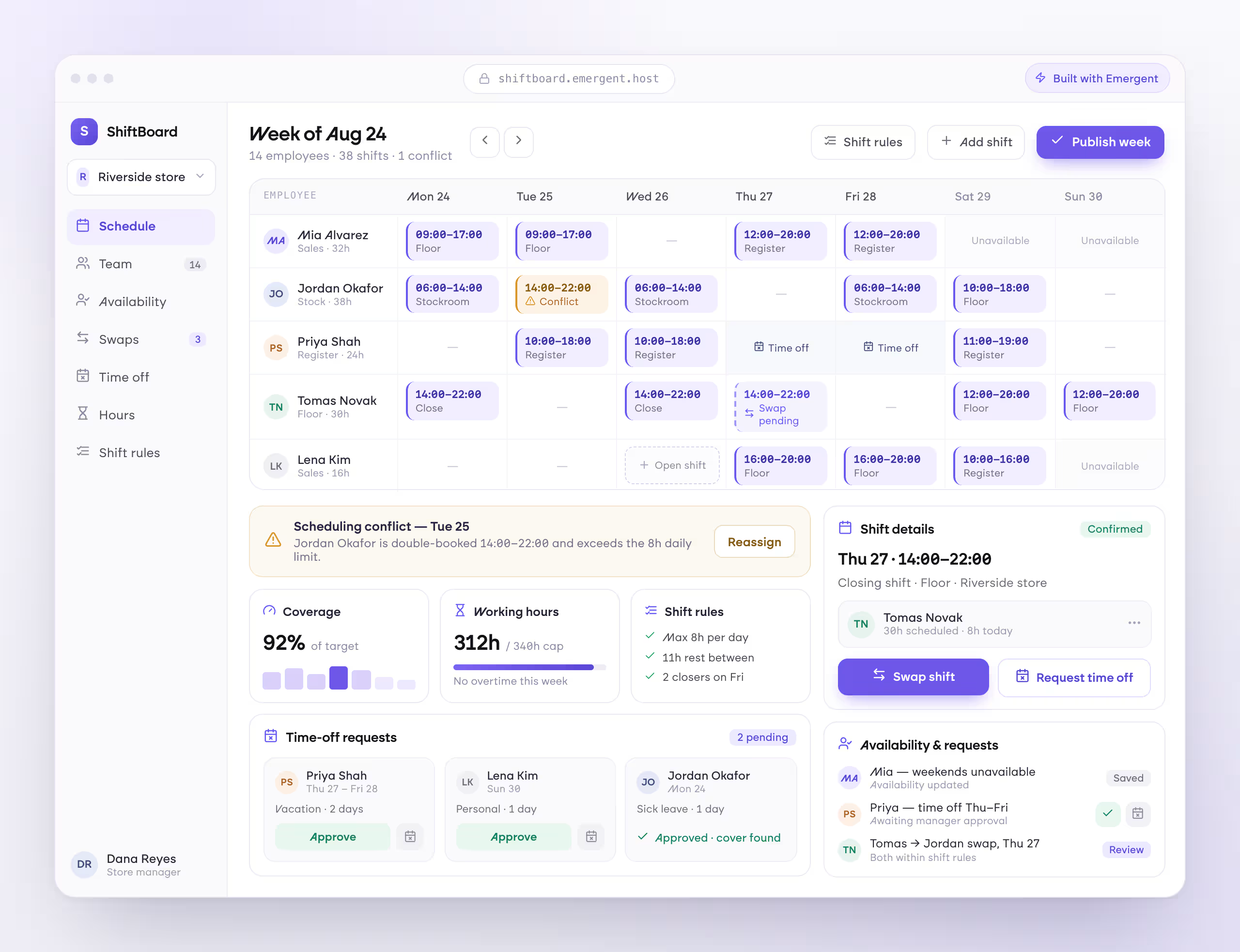
The Most Expensive Idle Minutes in the Hospital
Sessions planned against actual utilisation, start and finish times compared with schedule, turnaround between cases measured, and lists that consistently run under capacity identified.
window.awbMockup = { theatreScheduling: "Build a theatre scheduling view comparing planned against actual utilisation per theatre and session, measuring start and finish times against schedule, tracking turnaround between cases, and identifying lists that consistently finish early or overrun.", pathwayCoordination: "Build a pathway scheduler aligning preassessment, diagnostics, theatre time and bed availability for each patient as a connected sequence, flagging any step that cannot be met, and preventing a procedure being listed when a required earlier step is unbooked.", cancellationAnalysis: "Build a cancellation analysis grouping on the day cancellations by cause such as bed unavailability, staffing, equipment, patient factors or clinical reasons, quantifying theatre minutes and cost lost to each, and trending causes by specialty.", waitingListManagement: "Build a waiting list manager ordering patients by clinical priority and time waited, matching them to available theatre and clinic capacity, flagging patients approaching the access standard, and projecting the additional capacity needed to clear the backlog."};
Every Step Aligned for One Patient
Preassessment, imaging, theatre time and bed availability scheduled as a connected sequence, so a patient is not brought in for a procedure that another department cannot support.
Beds, Staffing or Equipment
Cases cancelled on the day grouped by cause with the theatre minutes lost, so the response addresses the actual constraint rather than the department that happened to report it.
Listed by Urgency, Not Convenience
Patients selected for available capacity by clinical priority and time waited, with anyone approaching or breaching the standard surfaced and the capacity needed to clear the list projected.
Every integration your
Schedule needs from day one
Email and calendar
Inbox and calendar sync both ways, so every reply, meeting and no-show lands on the contact record without anyone logging it.




Messaging and support
Conversations from chat, WhatsApp and your helpdesk attach to the right contact, so sales and support see the same history.




Payments and billing
Invoices, subscriptions and payment status flow back into the deal, so revenue and pipeline stay in one place.




If it has an API, your CRM can connect to it.
Emergent builds the connection against the API itself, including internal tools your team made. No closed ecosystem, no approved-partner list, no waiting for a connector to ship.

More things you can build
with Emergent
AI Website Builder
Build and publish responsive websites with AI — from landing pages to complete websites.
AI App Builder
Create and launch mobile apps with AI, without the complexity of traditional app development.
AI Web App Builder
Build and ship fully functional web apps with custom interfaces, logic, and workflows.
AI Dashboard Builder
Create interactive dashboards to visualize data, track KPIs, and manage business operations.
AI SaaS Builder
Build complete SaaS products with user accounts, subscriptions, dashboards, and core product workflows.
AI CRM Builder
Build custom CRMs for managing contacts, leads, pipelines, campaigns, and automated workflows.
AI Agent Builder
Create AI agents that can understand tasks, use tools, automate workflows, and work across your business.
Build Your Own
Start with any idea and build exactly what you need with AI — no templates or limits.

Why choose Emergent?
Most tools give you a demo you have to rebuild. Emergent gives you a product that is ready to run.
| Comparison | Other Tools |  |
|---|---|---|
| Built for | Demos and MVPs | Products you keep growing |
| What you get | Front end shell only | Full stack, wired end to end |
| Backend and database | Set it up yourself | Built and connected for you |
| Customization | Surface level styling | Deep workflow control |
| Integrations and APIs | Manual glue work | Connected from a prompt |
| Code ownership | Locked to the platform | Clean code you can export |
| Time to launch | Weeks of patching and setup | Live the same day |

Pick the Pricing Plan That Works for You
Choose the plan that fits your building ambitions. From weekend projects to enterprise applications, we've got you covered.




Find the Right Schedule Builder
for Your Business
Frequently Asked Questions
Your Questions, Answered
Don't change this element unless you know what you are doing
on Emergent today




