

Build a Custom Master Scheduling Software Using AI in Minutes
Create your master scheduling software in minutes with AI. Balance demand against real capacity and see which orders a change puts at risk, no coding.










Trusted by Builders Worldwide
Active Builders Worldwide
Apps Successfully Created
Countries Globally Reached



Build a master schedule in four steps
Plan against the capacity the plant genuinely has rather than assuming it is unlimited.
Say it in your own words: your work centres, their real capacity, changeover times and firm against forecast demand.
Your ERP connects, so demand and routings come through rather than being entered.
Change it: freeze a period, add a work centre or reprioritise an order.
Run one month and count the orders that were never going to make their due date.
Emergent Key Features for Building Master Scheduling Software
The master schedule is the commitment everything else plans against. When it is unrealistic, purchasing, production and customer promises are all wrong together.
Demand Balanced Against Real Capacity
Planned output checked against what the plant can genuinely produce, so a schedule is achievable rather than aspirational.
Firm and Planned Horizons Separated
A frozen near term period distinguished from a flexible one, which is what stops constant rescheduling destroying purchasing and shop floor stability.
Changes Rippling to Materials
A revised master schedule regenerating component requirements, so purchasing is working from the same plan rather than last week's version.
Load Visible by Work Centre
Where the schedule concentrates demand on one constrained resource, shown before the period rather than discovered during it.
Customer Promises Traceable
Orders linked to the scheduled output that will fill them, so a schedule change immediately shows which customers are affected.
Version History Retained
What the schedule said last week and who changed it, because most disputes about the plan are actually disputes about which version people were reading.
Master Scheduling Software Use Cases You Can Build in Minutes
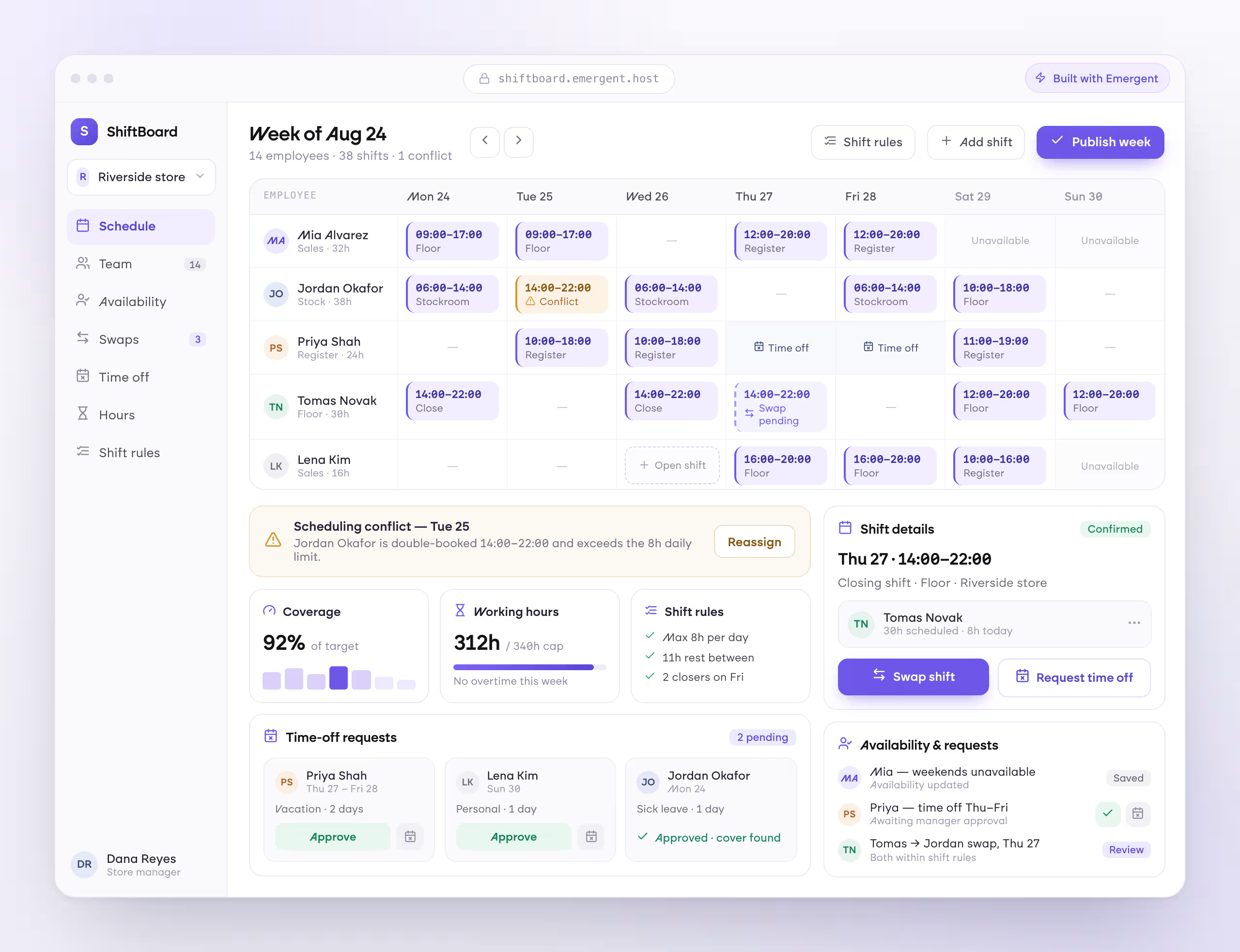
Achievable, Not Aspirational
Planned production checked against available capacity by period and work centre, overloads highlighted before the period starts, and the effect of moving volume between weeks shown before committing.
window.awbMockup = { capacityBalance: "Build a master production schedule that checks planned output against available capacity by period and work centre, highlights overloads before the period begins, and shows the effect of moving volume between weeks before anything is committed.", timeFences: "Build time fence handling into a master schedule with a firm near term horizon where changes require approval and a flexible planning horizon beyond it, protecting short term stability while allowing the longer view to respond to demand.", materialImplications: "Build a material implication view that regenerates component requirements whenever the master schedule changes, updates purchase suggestions using real supplier lead times, and expresses shortages as the scheduled output they would prevent.", orderTraceability: "Build an order traceability layer linking customer orders to the scheduled production that will fill them, so any schedule revision immediately lists the affected orders and the promise dates now at risk."};
Freeze the Near Term
A firm horizon where changes require approval and a planning horizon that stays flexible, so short term stability is protected while the longer view can still respond to demand.
One Plan, Not Two
Component requirements regenerated whenever the master schedule changes, purchase suggestions updated with real lead times, and shortages expressed as the scheduled output they would prevent.
Which Customers a Change Affects
Customer orders linked to the production that will fill them, so a schedule revision immediately lists the affected orders and the promise dates now at risk.
Every integration your
Schedule needs from day one
Email and calendar
Inbox and calendar sync both ways, so every reply, meeting and no-show lands on the contact record without anyone logging it.




Messaging and support
Conversations from chat, WhatsApp and your helpdesk attach to the right contact, so sales and support see the same history.




Payments and billing
Invoices, subscriptions and payment status flow back into the deal, so revenue and pipeline stay in one place.




If it has an API, your CRM can connect to it.
Emergent builds the connection against the API itself, including internal tools your team made. No closed ecosystem, no approved-partner list, no waiting for a connector to ship.

More things you can build
with Emergent
AI Website Builder
Build and publish responsive websites with AI — from landing pages to complete websites.
AI App Builder
Create and launch mobile apps with AI, without the complexity of traditional app development.
AI Web App Builder
Build and ship fully functional web apps with custom interfaces, logic, and workflows.
AI Dashboard Builder
Create interactive dashboards to visualize data, track KPIs, and manage business operations.
AI SaaS Builder
Build complete SaaS products with user accounts, subscriptions, dashboards, and core product workflows.
AI CRM Builder
Build custom CRMs for managing contacts, leads, pipelines, campaigns, and automated workflows.
AI Agent Builder
Create AI agents that can understand tasks, use tools, automate workflows, and work across your business.
Build Your Own
Start with any idea and build exactly what you need with AI — no templates or limits.

Why choose Emergent?
Most tools give you a demo you have to rebuild. Emergent gives you a product that is ready to run.
| Comparison | Other Tools |  |
|---|---|---|
| Built for | Demos and MVPs | Products you keep growing |
| What you get | Front end shell only | Full stack, wired end to end |
| Backend and database | Set it up yourself | Built and connected for you |
| Customization | Surface level styling | Deep workflow control |
| Integrations and APIs | Manual glue work | Connected from a prompt |
| Code ownership | Locked to the platform | Clean code you can export |
| Time to launch | Weeks of patching and setup | Live the same day |

Pick the Pricing Plan That Works for You
Choose the plan that fits your building ambitions. From weekend projects to enterprise applications, we've got you covered.




Find the Right Schedule Builder
for Your Business
Frequently Asked Questions
Your Questions, Answered
Don't change this element unless you know what you are doing
on Emergent today




