



TL;DR
- Builder.ai reviews split cleanly around the company's May 2025 insolvency, as older complaints about slow delivery gave way to customers simply trying to recover their code or refunds from a firm that no longer answers.
- The company raised roughly $450 million and reached a $1.5 billion valuation, yet a 2019 Wall Street Journal investigation found the Natasha AI was largely around 700 human engineers in India doing the coding.
- An internal investigation found reported 2024 revenue of about $220 million was overstated by roughly 300%, with actual revenue closer to $55 million, prompting lenders to declare default and seize funds.
- At collapse the company laid off close to 1,000 employees and owed about $85 million to Amazon Web Services and $30 million to Microsoft in unpaid cloud bills.
- One reviewer's project ran 28 months against its 6-month estimate before development halted, and refunds were routinely refused or replaced with credit, leaving third-party migration services to help stranded customers recover code.
Builder.ai filed for insolvency in May 2025, and the company is no longer operating. That makes this a different kind of review.
Instead of pros and cons for a live product, this is what actual users said, before and after the collapse, and what those reviews reveal about a company that raised $450 million while telling customers its AI was building their apps.
I went through more than 200 Trustpilot reviews spanning several years, along with court filings, investigative reporting, and the company's own public statements, to piece together what happened and what people actually experienced.
What Happened to Builder.ai?
Builder.ai launched in 2016 as Engineer.ai, founded by Sachin Dev Duggal. The pitch was simple: describe your app to an AI assistant named Natasha, and the platform would assemble it automatically, marketed as being as easy as ordering a pizza.

The company raised roughly $450 million from investors including Microsoft, SoftBank, and the Qatar Investment Authority, reaching a $1.5 billion valuation by 2023. A 2019 Wall Street Journal investigation had already found that human engineers, not Natasha, were doing most of the actual coding.
Later reporting, including coverage citing the federal investigation, put the number at around 700 engineers based mainly in India, manually building what the company marketed to customers and investors as AI-generated work.
In February 2025, the board removed Duggal as CEO and replaced him with Manpreet Ratia. The following month, whistleblowers alleged the company's sales figures had been inflated, and new leadership commissioned an internal investigation, which found the company's reported 2024 revenue, around $220 million, was significantly overstated, with actual revenue closer to $55 million, first reported in detail by outlets including Segler Consulting's investigative write-up.
Investigators also examined alleged “round-tripping”, circular transactions with an Indian firm called VerSe Innovation that reportedly helped inflate both companies' reported revenue. When an internal audit revealed the revenue had been overstated by roughly 300%, the company's lenders declared a default and seized tens of millions of dollars from its accounts.
The company filed for insolvency in May 2025, laid off close to a thousand employees, and was left owing roughly $85 million to Amazon Web Services and about $30 million to Microsoft for unpaid cloud hosting bills. A US federal investigation into the company's finances is ongoing. Duggal has denied wrongdoing.
What Users Said Before the Collapse
Builder.ai's Trustpilot page has more than 200 reviews going back years, and the sentiment wasn't uniformly bad. Some customers described real satisfaction with their assigned team.
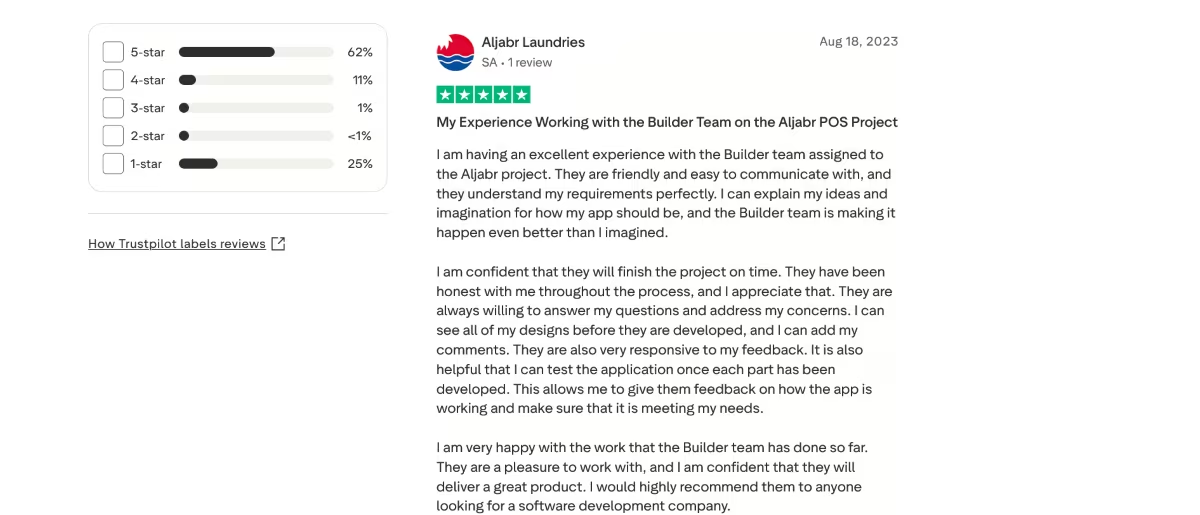
One Trustpilot reviewer working on what they called the Aljabr project wrote that their team was “friendly and easy to communicate with” and understood their requirements well.
However, that wasn't the dominant pattern. The more common report from customers well before the bankruptcy was that there was a sharp divide between marketing and the actual experience.
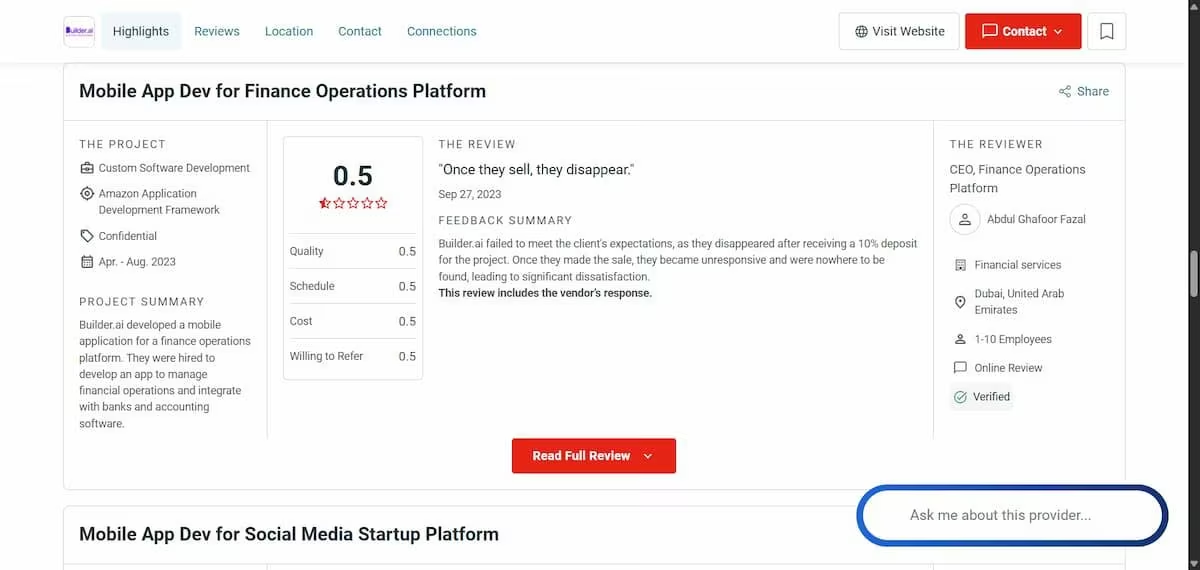
- One Clutch reviewer described being sold by a highly polished team, then getting no response once technical problems surfaced.
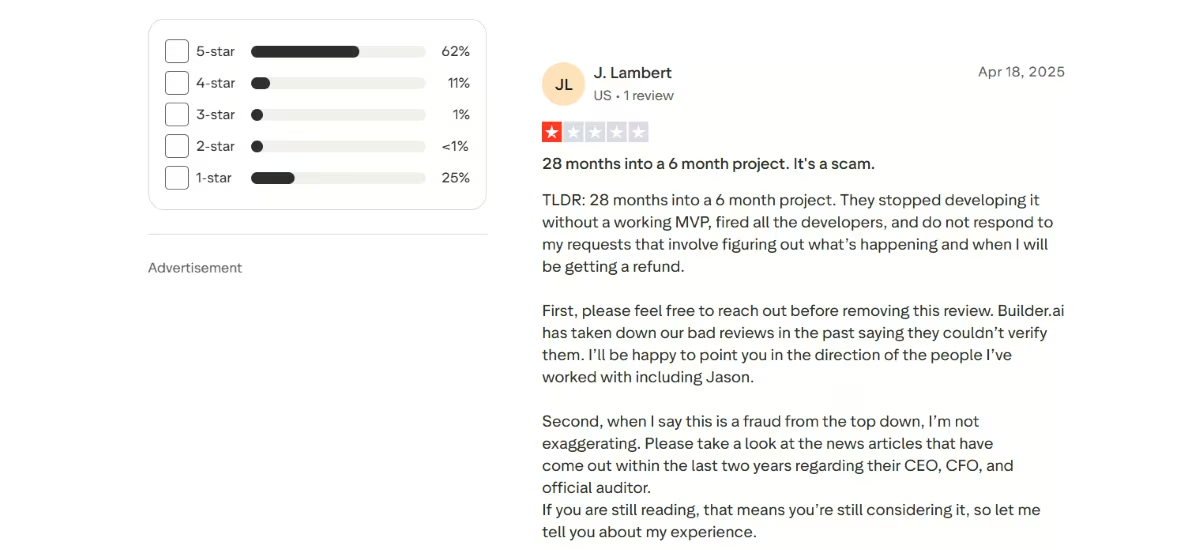
- Another Trustpilot reviewer reported a project that stretched from its original 6-month timeline into a 28-month ordeal before Builder.ai stopped development entirely, with no working product.
- Multiple Trustpilot reviewers described requesting refunds for unstarted or incomplete work and being refused outright, or offered credit toward a future project instead of their money back.
What Users Are Saying Now
The reviews posted since the bankruptcy filing read differently. They're no longer about slow delivery; they're about businesses trying to get a refund, their code, or both, from a company that no longer has the staff to respond.
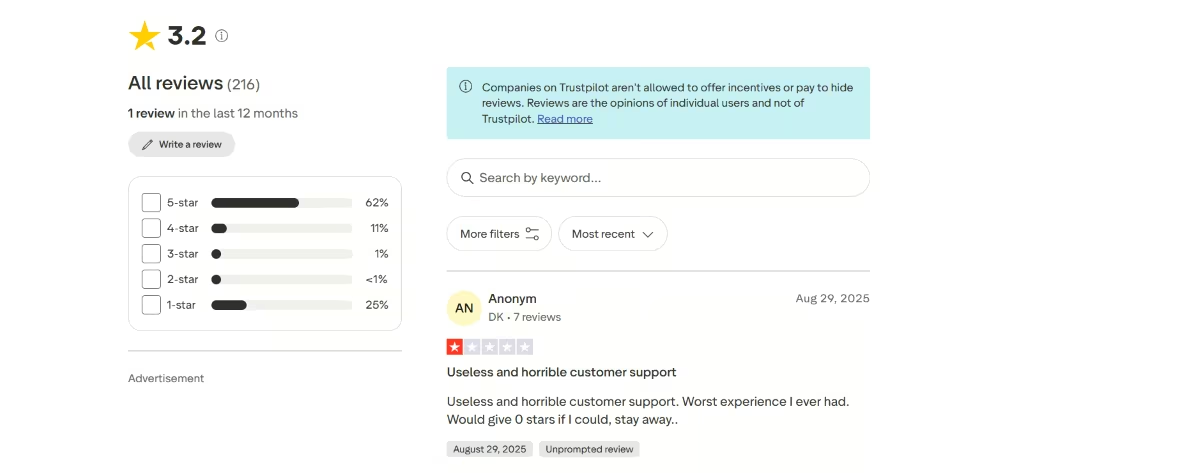
One customer wrote plainly in a Trustpilot review that Builder.ai’s customer support was the worst they had ever experienced. Reviewers describe reaching voicemail boxes and unanswered emails where a project manager used to be, with no clear path to reach anyone still employed by the company.
The fallout has been large enough that third-party migration services have appeared specifically to help stranded customers, offering to assess what code, if any, can be recovered from an abandoned Builder.ai project and migrate it to a new platform.
If You're a Current or Former Builder.ai Customer
If you have an unfinished or abandoned Builder.ai project, a few steps are worth taking before you write it off entirely.
- Request your code in writing. If any repository access was granted as part of your contract, confirm you still have it and download everything now; access has reportedly been intermittent since the insolvency filing.
- Document everything. Screenshots, emails, and invoices matter if you pursue a refund through legal channels; several former customers have taken that route.
- Be cautious with any offer of project credit. Multiple reviewers reported being offered credit toward future work instead of a refund, from a company that was, by that point, already in financial distress.
- Get an independent assessment before rebuilding. What looks like a small fix from the outside is sometimes a rebuild from scratch; know which one you're actually facing before you commit to a new platform.
Where to Go From Here
If you're starting over, the specific things that went wrong with Builder.ai are worth using as a checklist, not just a warning. Every failure documented above traces back to the same root problem: customers had no way to verify what they were being told until it was too late.
That's the standard Emergent is built around. It makes the build something you can watch and check at every step, instead of a black box you're asked to trust.
- A build process you can see, not just a claim you take on faith: Emergent runs on a multi-agent system where specialized agents split the work across the build. Some shape the interface, others handle the logic and integrations, and testing agents check the work before anything ships all in front of you. There's no equivalent of Builder.ai's Natasha, a marketed AI layer hiding manual work you had no visibility into.
- Real code you own, not a black box: What gets generated is production-grade, unobfuscated code, synced to your own GitHub repository as it's built. If you ever want to leave, you're migrating a real codebase, not starting over from nothing the way several Builder.ai customers described.
- The whole app generated together, not stitched on separately: The interface, the logic, and the data all come from the same prompt and the same process, instead of being handed off between a sales team and a delivery team who, per the reviews above, often weren't talking to each other.
- Domain and hosting handled without losing flexibility: Launch on a subdomain immediately, connect a domain you already own, or buy one directly, without your project being locked to a single point of failure.
- Integrations you can set up and verify yourself: Payment processors, scheduling tools, and email platforms connect through a plain-language request you make and see happen, not an implementation detail buried inside someone else's account.
None of this guarantees a project can never go wrong. What it does is give you the thing Builder.ai customers didn't have: a way to check, at every step, that what you're paying for is real.
Rebuilding after a stalled project? Start with Emergent.
Most builders stop at a prototype. Emergent ships real web and mobile apps, with accounts, databases, and payments included.
- Production-ready apps
- Web & mobile apps
- Deploy in minutes







