




Grok, ChatGPT, and Gemini all claim to be the smartest, most reliable choice with real-time knowledge you can trust. None of that tells you whether the one you pick will actually follow your instructions or get today's date right.
In 2026, with all three renaming their flagship models every few months, that gap between promise and performance is easy to miss until after you've paid for it.
I ran a real Grok vs ChatGPT vs Gemini test to find out in 2026, using each tool's actual flagship model: one prompt checking whether they knew today's date and could name a real AI industry update from the past week, and one checking whether they'd follow a strict word count while avoiding a single banned word.
Reaching each flagship took a different path. Grok's flagship is free, but the free tier still won't answer anything without an account. ChatGPT's flagship needed a paid plan. Gemini's flagship needed an account too, but a free one, no payment required.
Here's exactly what happened when I ran the same request through all three, and what it tells you about which one is actually worth a subscription based on how you'd use it, not how it's marketed.
Meet the Contenders
From a distance, Grok, ChatGPT, and Gemini look like the same purchase wearing three different logos. At the flagship plan level, their monthly prices land within about $10 of each other, from Gemini's $19.99 Pro to Grok's $30 SuperGrok.
All three call themselves assistants and generate text, images, and code on request. Run the same prompt through each one, and the differences stop being cosmetic fast.
Grok: xAI's Real-Time, X-Native Assistant
I opened Grok without signing in. I typed the same prompt I planned to run everywhere:
"What is today's date, and name one specific AI industry product update or announcement from the past 7 days."
Grok displayed the message on screen, but never answered it.
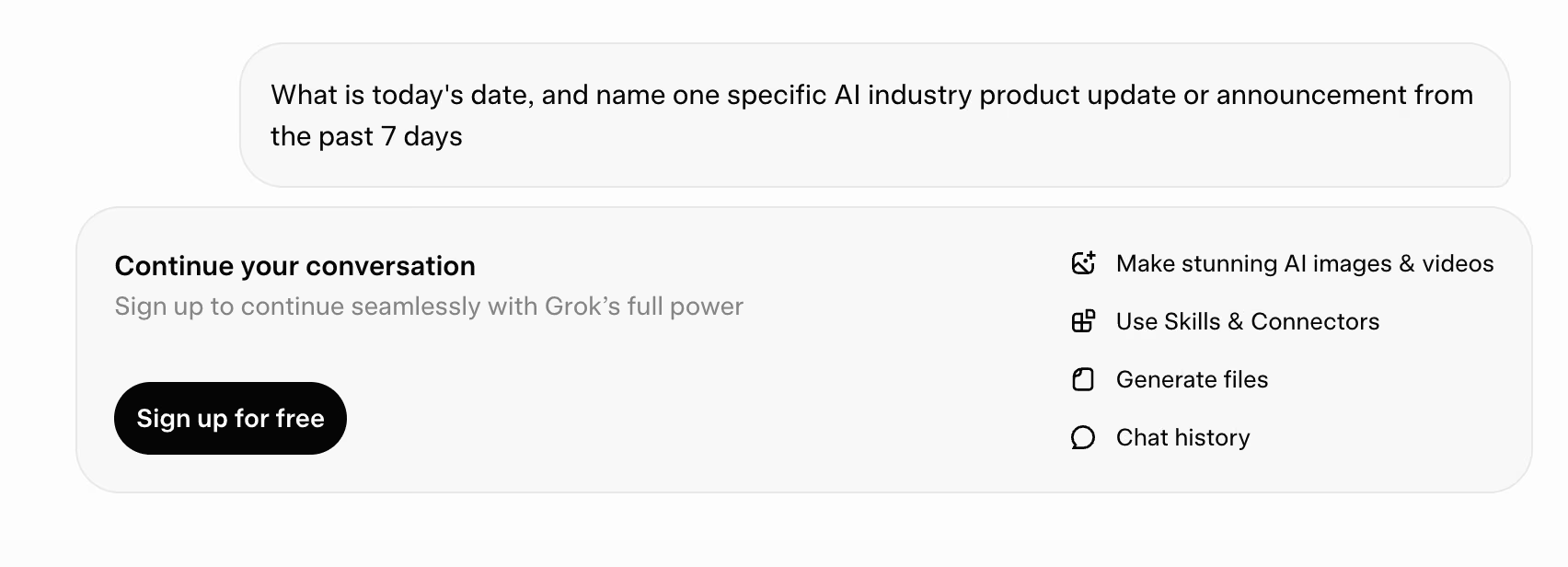
It surfaced a "Continue your conversation" card asking me to sign up, dangling "Grok's full power" as the reason to create an account.
I tried the second prompt too:
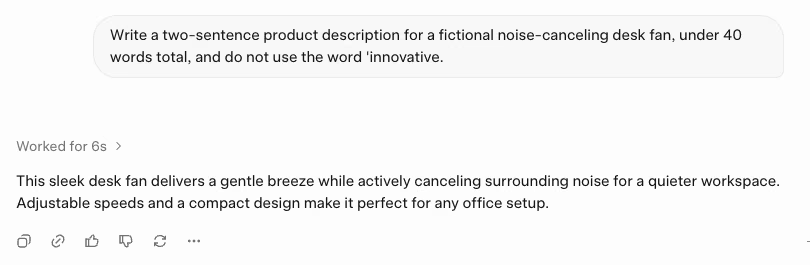
"Write a two-sentence product description for a fictional noise-canceling desk fan, under 40 words total, and do not use the word 'innovative.'"
The outcome was identical, and Grok displayed it without ever answering.
Then I tried the identical thing on X's own Grok surface. That page wouldn't even let me type a message before demanding a full account sign-in. I tried two prompts through two separate entry points, and got zero anonymous replies.
That account requirement prevents you from trying Grok anonymously the way you can try ChatGPT or Gemini. Once you sign up, the free tier hands you the current model, Grok 4.5.
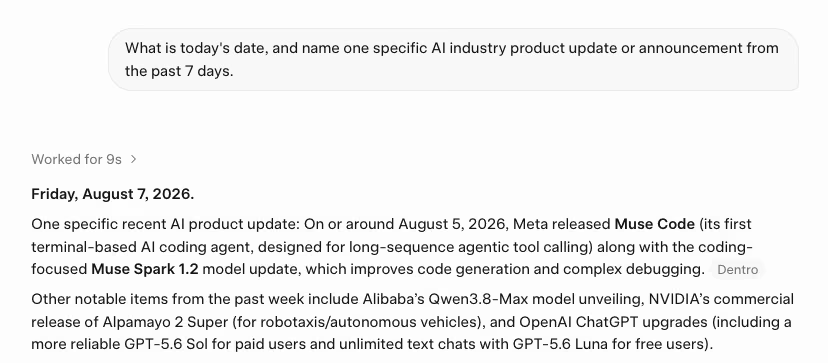
Signed in, I ran the same two prompts again. It correctly named the date and volunteered several real updates from the past week, including Meta's Muse Code, a terminal-based coding agent released two days earlier, going beyond what the prompt strictly asked for.
For the second prompt, it wrote a 30-word description with no product name attached and no use of the banned word.
That one model now runs every mode in the picker, from the quick "Fast" setting to the multi-agent "Heavy" mode. It also adds real-time search of X and the open web plus a voice mode. Paying $30/month for SuperGrok raises the limits and adds image and video generation through Grok Imagine.
If a live news story or a trending hashtag drives your work, that account is worth having. If you're curious whether the hype holds up, that same account is the only way to find out.
For the head-to-head on how it stacks up against Google's model, see Grok vs Gemini.
ChatGPT: OpenAI's Steady, Structured All-Rounder
ChatGPT's free tier answers without any login at all, but reaching its real flagship model, Sol, meant testing on a paid plan.
I signed into a Plus account and typed: "What is today's date, and name one specific AI industry product update or announcement from the past 7 days."
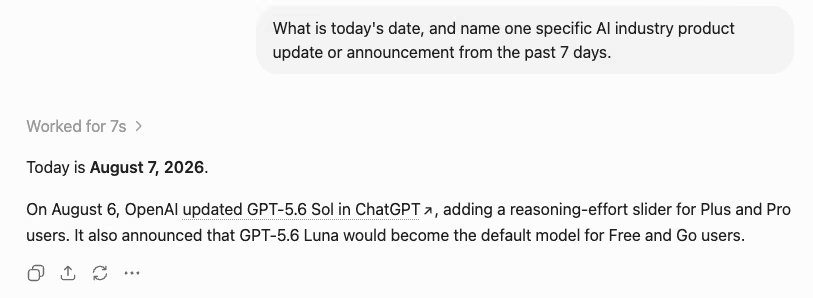
It replied: "Today is August 7, 2026." It named a real, self-referential update: "On August 6, OpenAI updated GPT-5.6 Sol in ChatGPT, adding a reasoning-effort slider for Plus and Pro users. It also announced that GPT-5.6 Luna would become the default model for Free and Go users." That's a specific, dated answer that falls within the prompt's seven-day window.
Without an account, ChatGPT's free tier caps you at one active conversation; signed into Plus, I didn't hit that.
Once cleared, I typed the locked prompt: "Write a two-sentence product description for a fictional noise-canceling desk fan, under 40 words total, and do not use the word 'innovative.'"
It wrote back: "The HushFlow desk fan delivers a cool, steady breeze while active noise cancellation softens distracting office sounds. Its compact design, adjustable airflow, and quiet motor help you stay comfortable and focused."
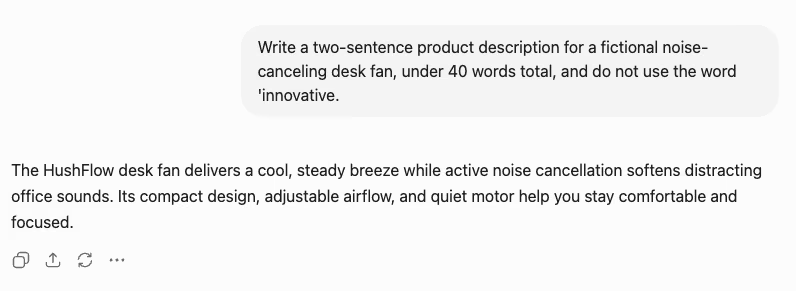
The reply totaled 31 words across two sentences, with zero instances of the banned word.
None of the three converged on a name this round: Grok skipped one entirely, while ChatGPT invented a name.
The free tier runs GPT-5.6 Luna. An $8/month Go plan raises the usage limits on that same free-tier model. The $20/month Plus plan is the bigger step up, moving to GPT-5.6 Sol with expanded Deep Research, Codex, and Sora video access layered on top.
For anyone who wants to test-drive without signing in, ChatGPT gives you a usable answer to judge.
For the deeper rundown on how it holds up against xAI's model specifically, see ChatGPT vs Grok.
Gemini: Google's Research-and-Workspace Bundle
Gemini required a free account to be signed in to access its flagship model. No payment, nothing carried over from anything I use day to day beyond the login itself.
I switched the model to 3.1 Pro, Gemini's flagship reasoning model in the picker. That access requires a free Google account to be signed in, not a paid one.
Expanded, ongoing access to 3.1 Pro needs the paid Google AI plan covered below. Then I typed the real-time prompt: "What is today's date, and name one specific AI industry product update or announcement from the past 7 days."
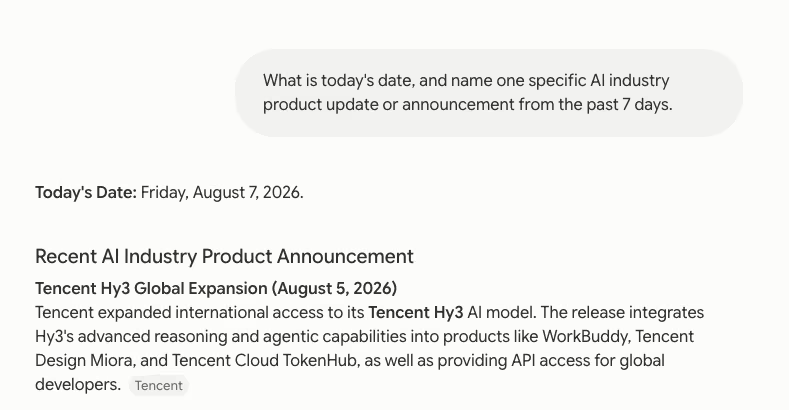
It answered cleanly, confirming the date as "Friday, August 7, 2026." It also named Tencent's international expansion of its Hy3 model, announced two days earlier.
Gemini described the release as integrating Hy3's "advanced reasoning and agentic capabilities" into products including WorkBuddy and Tencent Design Miora, plus API access for outside developers. That's a specific, dated answer, well within the prompt's seven-day window.
The prompt was the same one used everywhere: "Write a two-sentence product description for a fictional noise-canceling desk fan, under 40 words total, and do not use the word 'innovative.'"
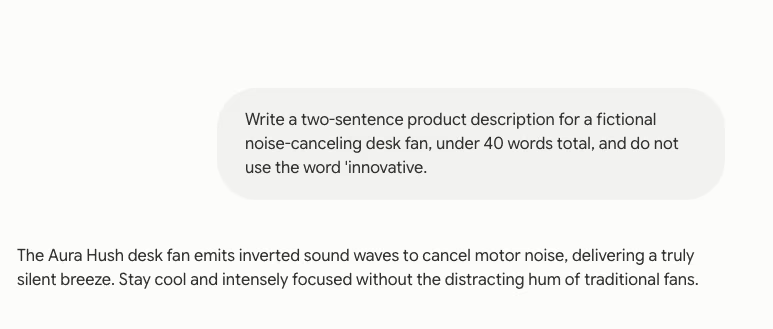
It wrote: "The Aura Hush desk fan emits inverted sound waves to cancel motor noise, delivering a truly silent breeze. Stay cool and intensely focused without the distracting hum of traditional fans."
This one landed at 30 words across two sentences, with no use of the banned word.
The free tier defaults to Gemini 3.6 Flash, with Gemini 3.5 Flash-Lite as the fastest option. Expanded access to 3.1 Pro and Deep Research means paying into a Google AI plan starting at $4.99/month.
The $19.99/month Pro tier that most people mentally compare against ChatGPT Plus bundles in a lot more than the model itself. That tier alone adds 5TB of storage, a YouTube Premium Lite plan, and Google Home and Health perks.
That math works in your favor if you already pay for Google storage. Skip that overlap, and getting the model alone means paying for a lot you didn't ask for. See Gemini vs ChatGPT for the fuller feature-by-feature rundown.
Grok vs ChatGPT vs Gemini: At a Glance
How the three stack up by job:
Grok vs ChatGPT vs Gemini: Feature Breakdown
Real-Time and Live Data Access
Grok: It runs native, live X search plus open web search, with no separate setup required.
ChatGPT: Real-time browsing exists on paid plans, but it isn't the product's core identity.
Gemini: Google Search grounding is strong for web-wide research, weaker for social-specific trend tracking.
Winner: Grok. Its native X search gives it the clearest edge for this task.
Reasoning and Structured Writing
Grok: Once signed in, it named the date correctly and volunteered several real, dated updates from the past week, including Meta's Muse Code coding agent from two days earlier, going beyond the single update the prompt asked for. Its product description landed at 30 words with no product name attached.
ChatGPT: Running its paid Sol flagship, it named one real, dated, and notably self-referential update: OpenAI's own Sol reasoning-effort update from the day before. Its product description landed at 31 words.
Gemini: Reached through a free, signed-in account (not a paid one), it named one real, dated update and matched the word-count and banned-word constraints at 30 words.
Winner: Grok. It's the only one of the three that volunteered multiple verifiable updates instead of just the one asked for, and this round it only took an account to get there, not a workaround.
Complex Reasoning and Client Communication
To test something harder than a locked product description, I ran a complex prompt through all three:
“You're advising a freelance graphic designer who charges $75/hour and wants to switch to project-based pricing instead. They just finished a 14-hour logo project they'd normally have billed at $1,050, but the client's comment was: 'This took way less time than I expected, why does it cost so much?' Design a project-based pricing structure with three tiers for their most common service (logo design), explain in one sentence per tier why that price makes sense to a client who thinks in hours, and write the exact one-sentence reply you'd suggest they send back to the client who made that comment. Total response under 175 words. Do not use the word 'value.’”
Grok and Gemini both ran on their free tiers for this round, since both reach their flagship model without paying. Only ChatGPT needed a paid plan to run Sol.
Grok: Grok priced consistently lower than the other two, at $750, $1,200, and $1,800 across the three tiers. But each tier explanation converts the price back into an hourly-rate equivalent ("roughly 16 hours," "roughly 24 hours"), which works against the whole point of moving the client away from hourly thinking.
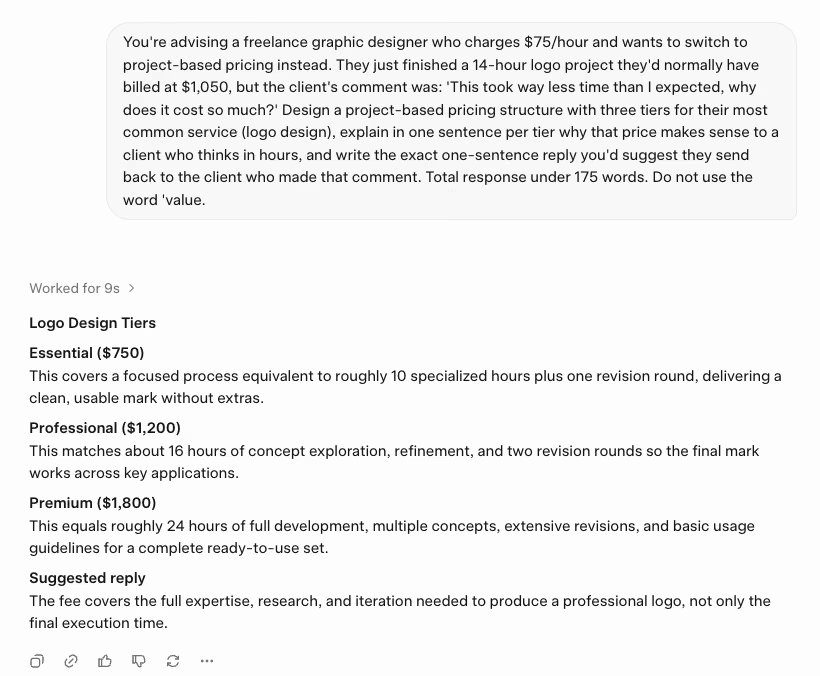
The reply to the client is safe and generic, and never actually engages with the "why does it cost so much" pushback in the prompt.
ChatGPT: Running GPT-5.6 Sol, ChatGPT also converted its tiers into hourly-rate language, similar to Grok.
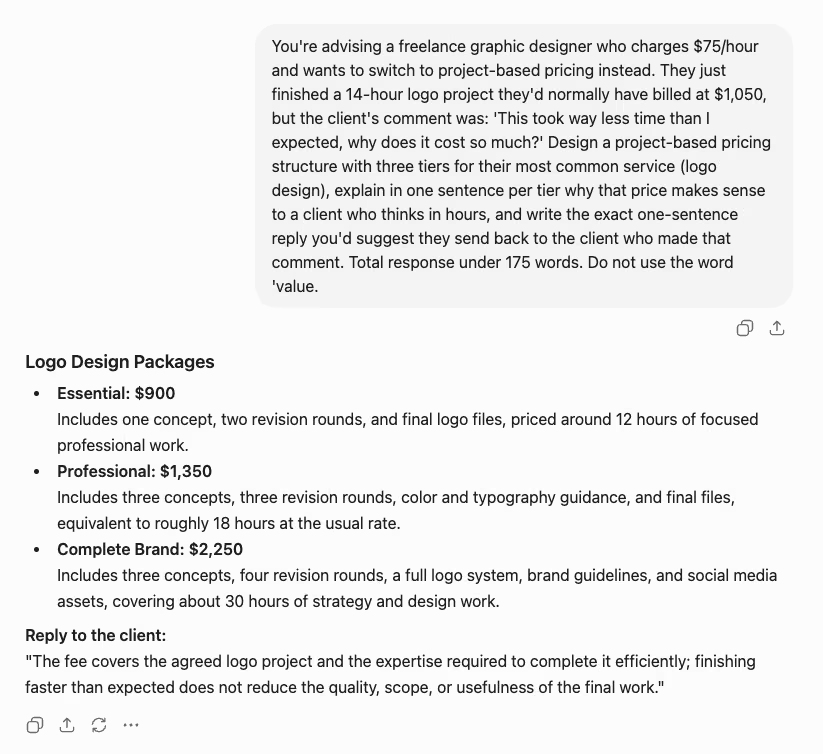
Its reply to the client is the most neutral and even-keeled of the three, avoiding any comparison or edge, though it also doesn't reference anything specific to this exact scenario.
Gemini: Gemini skipped hourly-rate framing entirely, describing each tier in outcome language instead ("without ever worrying about a running clock").
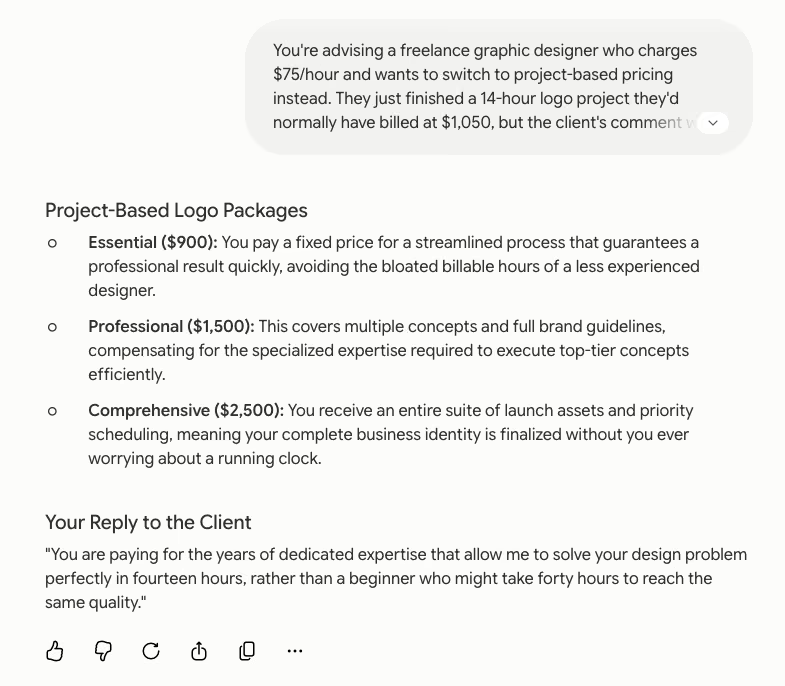
It's also the only response that references the prompt's specific detail that the project took 14 hours, building its reply directly around that number. That same specificity makes the reply the most pointed of the three, contrasting the client with "a beginner who might take forty hours," which risks reading as defensive rather than reassuring.
Winner: None. ChatGPT's reply has the steadiest tone, Gemini's reasoning engages most directly with the scenario's specifics, and Grok's pricing is the most competitive of the three. None of them lead on all three at once.
Claude is the one to beat on work inside an existing codebase, and our ChatGPT vs Claude vs Gemini comparison covers how it stacks up against the other two.
Research Depth and Context Window
Grok: It isn't built for long-document synthesis.
ChatGPT: Strong reasoning, but a smaller context window on the free and Go tiers than Gemini's 1 million-token Pro tier.
Gemini: It offers a 1 million-token context window even on the mid-tier Pro plan, built specifically for long documents and Workspace files.
Winner: Gemini. That context window gives it the strongest long-document fit of the three.
What You Get at Each Tool's Main Paid Plan
This section covers each tool's flagship-level plan, not necessarily its cheapest paid entry point.
Grok: SuperGrok costs $30/month and adds higher limits plus image and video generation. Grok is also the only tool here without a free anonymous trial.
ChatGPT: The $20/month Plus plan focuses on ChatGPT and its included tools, with no storage or unrelated subscription perks.
Gemini: Google AI Pro costs $19.99/month and includes the assistant, 5TB of storage, YouTube Premium Lite, and Google Home and Health extras. Those extras make it a broader bundle than Grok or ChatGPT.
Winner: No winner declared here. The useful comparison is what each subscription includes before the next renewal charge.
Coding and Technical Tasks
Grok: Coding runs through a separate, purpose-built model, Grok Code Fast, tuned for the write-test-debug loop. It was initially available free through editors including GitHub Copilot and Cursor: GitHub's complimentary access ended September 10, 2025, while Cursor extended free access into early 2026. GitHub Copilot has since deprecated the model. It doesn't ship as a feature inside the main Grok chat app itself.
ChatGPT: Codex runs inside ChatGPT, where it can read a connected repository, open pull requests, and work in its own cloud sandbox. That access is included with the Plus plan described above.
Gemini: Google splits coding across two separate products: Jules, an asynchronous agent built on the 3.1 Pro model that clones a repo into a cloud VM and hands back a pull request, and Antigravity, an agent-first IDE running on Gemini 3.5 Flash that operates locally on your machine.
Winner: ChatGPT. Codex lives inside the same $20/month subscription already covered in this comparison, with no separate app required. Grok's and Gemini's coding tools both require a separate app, a cloud VM, or a third-party editor to reach.
Image Generation and Editing
Grok: Image and video generation runs through Grok Imagine, available only once you're paying for SuperGrok, covering text-to-image, image-to-image editing, and video generation from one tool.
ChatGPT: Image generation runs on ChatGPT Images 2.0, built on the GPT Image 2 model. It is available across ChatGPT's plans, including the free tier, and it's the newest image tool of the three, added in April 2026.
Gemini: Image generation and editing runs on Nano Banana Pro, built on the Gemini 3 Pro model, with native support for high-resolution output and legible text rendering across multiple languages, reachable straight inside the Gemini app.
Winner: Gemini. Nano Banana Pro is built for crisp text inside generated images and is available through the same Gemini account used in this test. Grok Imagine requires the $30/month SuperGrok tier.
What Real Users Say
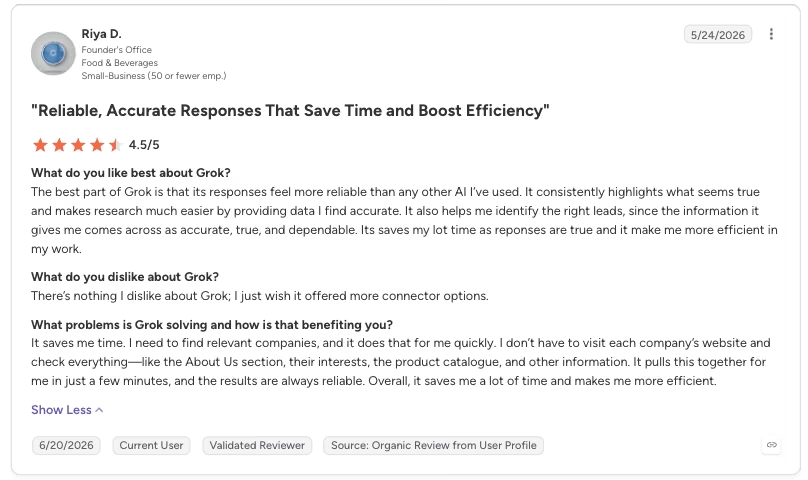
Grok
“The best part of Grok is that its responses feel more reliable than any other AI I’ve used. It consistently highlights what seems true and makes research much easier by providing data I find accurate.” - Riya D., G2
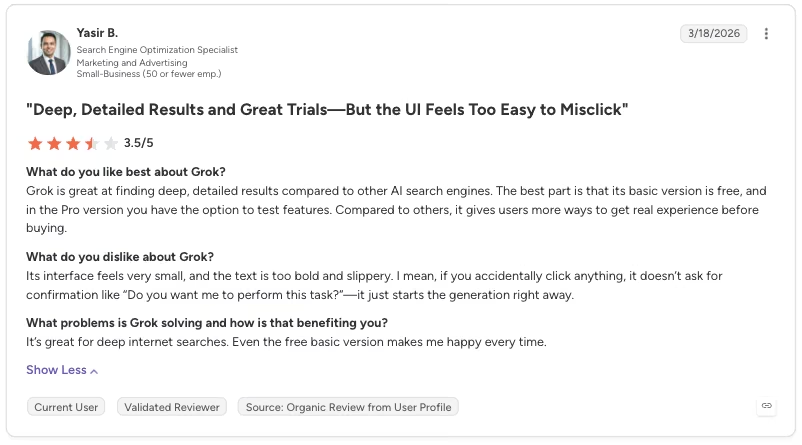
“Its interface feels very small, and the text is too bold and slippery. I mean, if you accidentally click anything, it doesn’t ask for confirmation like “Do you want me to perform this task?”—it just starts the generation right away.” - Yasir B., G2
ChatGPT
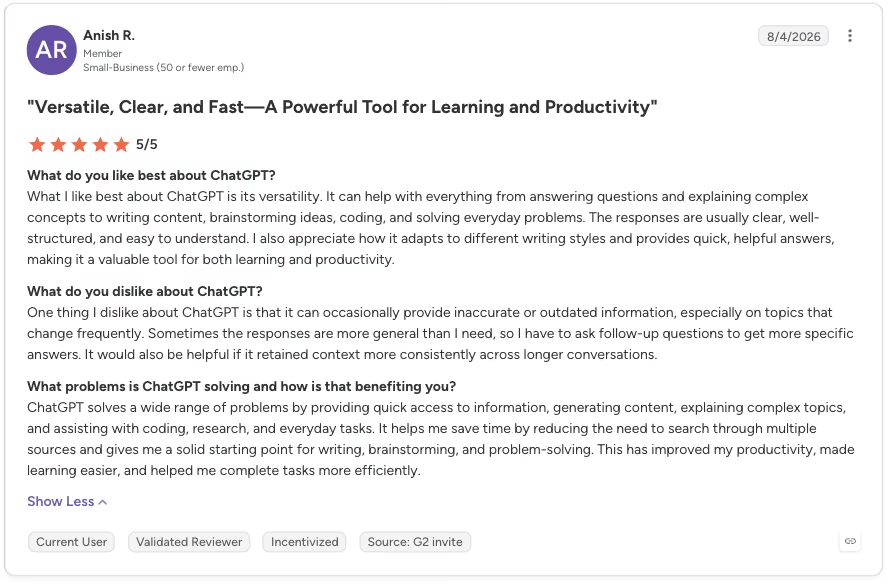
“What I like best about ChatGPT is its versatility. It can help with everything from answering questions and explaining complex concepts to writing content, brainstorming ideas, coding, and solving everyday problems.” - Anish R., G2
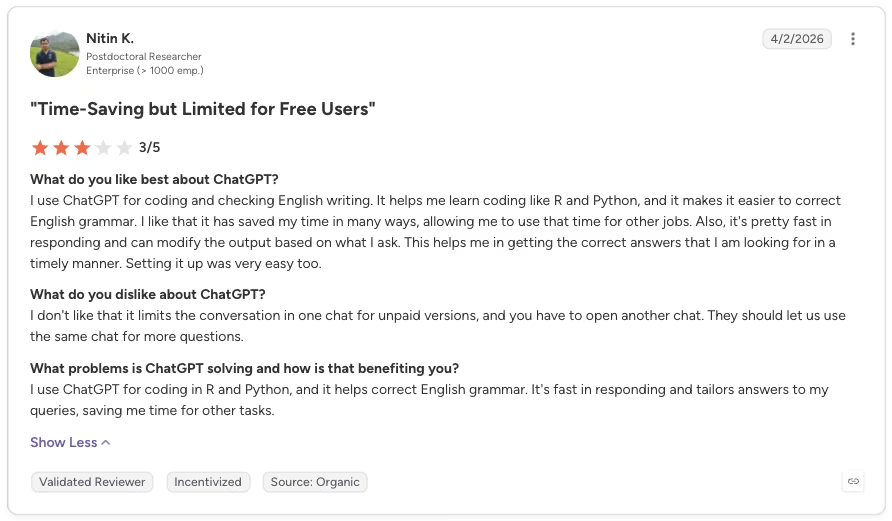
“I don't like that it limits the conversation in one chat for unpaid versions, and you have to open another chat. They should let us use the same chat for more questions.” - Nitin K., G2
Gemini
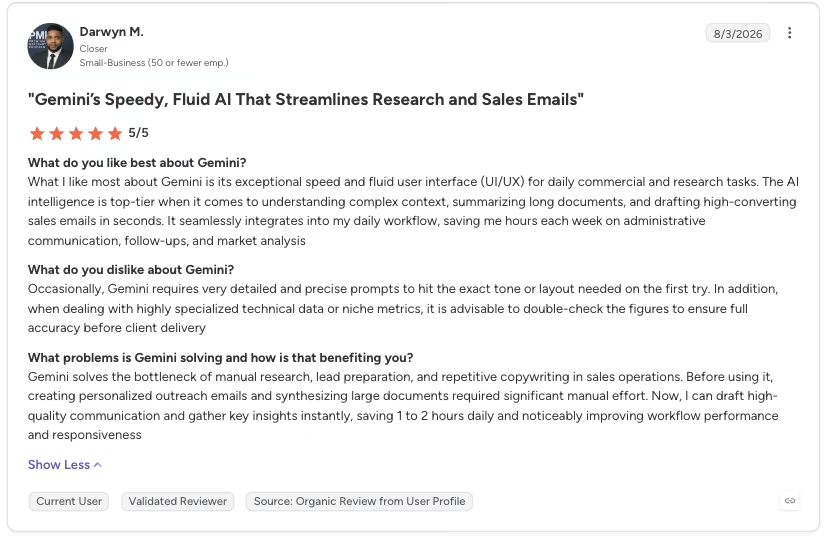
“What I like most about Gemini is its exceptional speed and fluid user interface (UI/UX) for daily commercial and research tasks.” - Darwyn M., G2
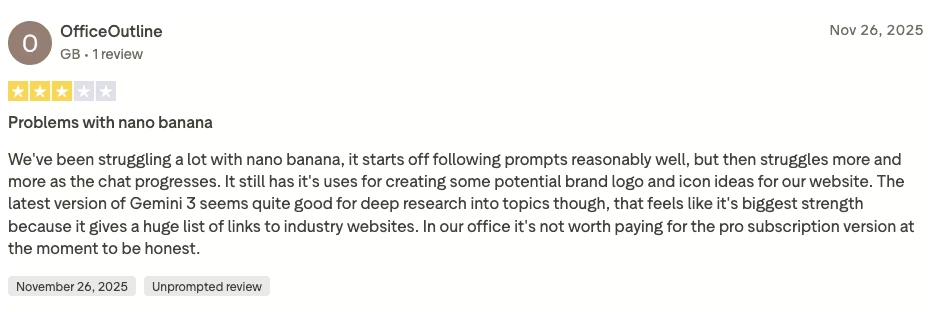
“We've been struggling a lot with nano banana, it starts off following prompts reasonably well, but then struggles more and more as the chat progresses.” - OfficeOutline, Trustpilot
Which Tool Should You Choose?
The right choice depends on what you're already paying for elsewhere and how often you'd reach for each tool, even if that's once or twice a month.
Choose Grok if you:
- Need real-time access to breaking news or a trending topic on X
- Don't mind signing up before you get a single reply
- Want a blunter, less filtered tone than the other two default to
Choose ChatGPT if you:
- Want to test real output before paying anything
- Do a mix of writing, coding, and structured drafting on an ordinary day
- Would rather pay for the assistant alone than a bundle of unrelated perks
Choose Gemini if you:
- Already pay for Google storage, YouTube, or Workspace and want the model folded in
- Regularly work across long documents, spreadsheets, or multiple files at once
- Value long-context research power over a snappier free trial
My Final Verdict
Based on what happened in this test, if I had to walk away with a single subscription tomorrow, it's ChatGPT. It ran Codex inside the same subscription, held its word count at 31 words with the banned word avoided, and charges $20/month without storage or unrelated subscription perks bolted on. For a content marketer or freelancer who also needs the occasional coding task done without leaving the chat window, that combination is hard to beat.
This verdict is about which tool did the job cleanest in this specific test, not a claim that ChatGPT is more accurate than Grok or Gemini in any broader sense. It's worth being direct about what free gets you elsewhere: Grok and Gemini both reach their flagship models without paying, though both still require an account to do it.
That's a genuinely useful way to test-drive either one before committing to anything. But once you're paying regardless, ChatGPT's focused pricing and built-in coding access make it the steadier default pick.
The complex reasoning test doesn't change that pick either, since it's judging something different: none of the three had a clean edge on tone, pricing strategy, and engaging with a scenario's specific details all at once.
Gemini earns its keep when long documents or Google's ecosystem are already part of your day. SuperGrok pays off when higher limits and live X data justify $30 a month.
How Emergent Helps You Turn Any Chatbot Answer Into a Working App
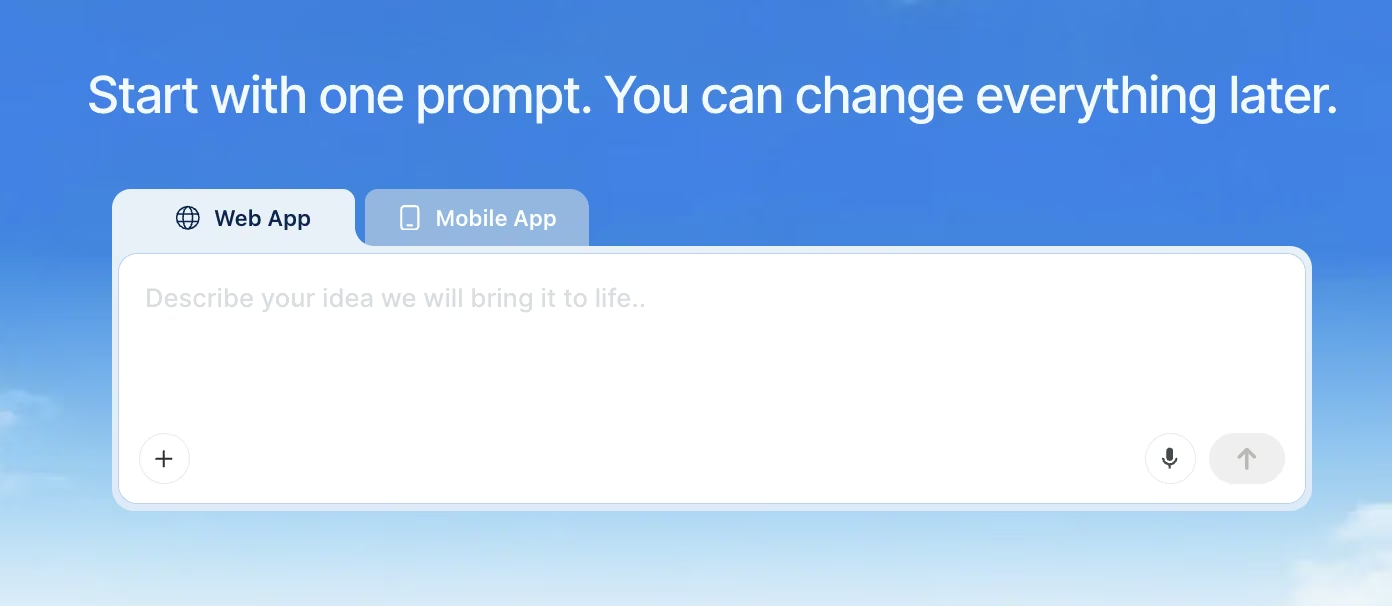
Every answer Grok, ChatGPT, or Gemini hands you is still text in a chat window until you turn it into something a reader, customer, or teammate can use. That gap, between a good chatbot answer and a working piece of software, is where Emergent comes in. It's a different job from anything tested above.
Emergent's Universal LLM Key lets you plug models like Gemini, OpenAI's models, or Claude straight into an app you're building. It uses Emergent's own credits, so you skip hunting down and paying for a separate key from each provider.
A research answer Gemini gave you about a competitor's product launch could become a live data feed inside a small tracker app. That answer stops being a fact you copy into a document and forget by next week.
A first working draft out of Emergent typically runs somewhere in the five to 15 credit range. The free tier hands you 10 credits a month to start, no card required, though deploying a finished app isn't available until you upgrade.
The $20/month Standard tier steps that up to 100 credits a month, alongside private hosting, GitHub integration, and deployment at 50 credits a month per app, for anyone who outgrows the first few free builds.
I wouldn't reach for Emergent to replace any of the three chatbots above. It's built for a different job.
Emergent handles the step after chat by turning a prompt or research answer into an app with logins and stored data. The three chatbots above focus on generating the starting output.
If you want to weigh more models before picking one to build with, 5 Best LLMs in 2026 tests and ranks a wider field on hands-on tasks. Emergent's MCP connector is one fast way to wire any of these models' outputs directly into a workflow you're already running.

Every alternative has trade-offs. Emergent just builds production-ready apps from one prompt.
- Production-ready apps
- Web & mobile apps
- Deploy in minutes







