



Perplexity vs ChatGPT vs Claude is the AI shortlist most people get stuck on, and the pricing doesn't help.
Perplexity and Claude start their paid plans at $20/month, while ChatGPT now offers Go at $8/month. The closest feature comparison still begins at $20, where ChatGPT Plus, Claude Pro, and Perplexity Pro meet.
It comes down to something more basic than features. Each tool does something different with your question before the answer comes back.
Perplexity goes out and finds sources. Claude reasons its way through. ChatGPT hands you something you can use immediately. That difference decides which subscription earns your money far more than any benchmark score does.
Everything below is built on each vendor's current plans, published limits, and official pricing pages as of August 2026, plus independent research on how well these tools cite their sources.
By the end, you'll know which one to pay for, and when paying for two beats upgrading one.
Perplexity vs ChatGPT vs Claude: What's the Difference?
The main difference between Perplexity, ChatGPT, and Claude is where they get their answers.
Perplexity is retrieval-first, searching and citing sources by default. ChatGPT and Claude are broader assistants that combine model knowledge with browsing and other tools when the task calls for them.
That one distinction cascades into everything else. A retrieval-first product is judged on whether its sources are real. A generation-first product is judged on whether its output is usable. You can't rank them on a single scale because they're being graded on different exams.
The practical version is simpler. Start where the sources are when being wrong is expensive. Start where the tools are when the next step is producing something. And when the input runs to 200 pages, the reasoning is what you're buying.
Meet Perplexity: What It Does Best
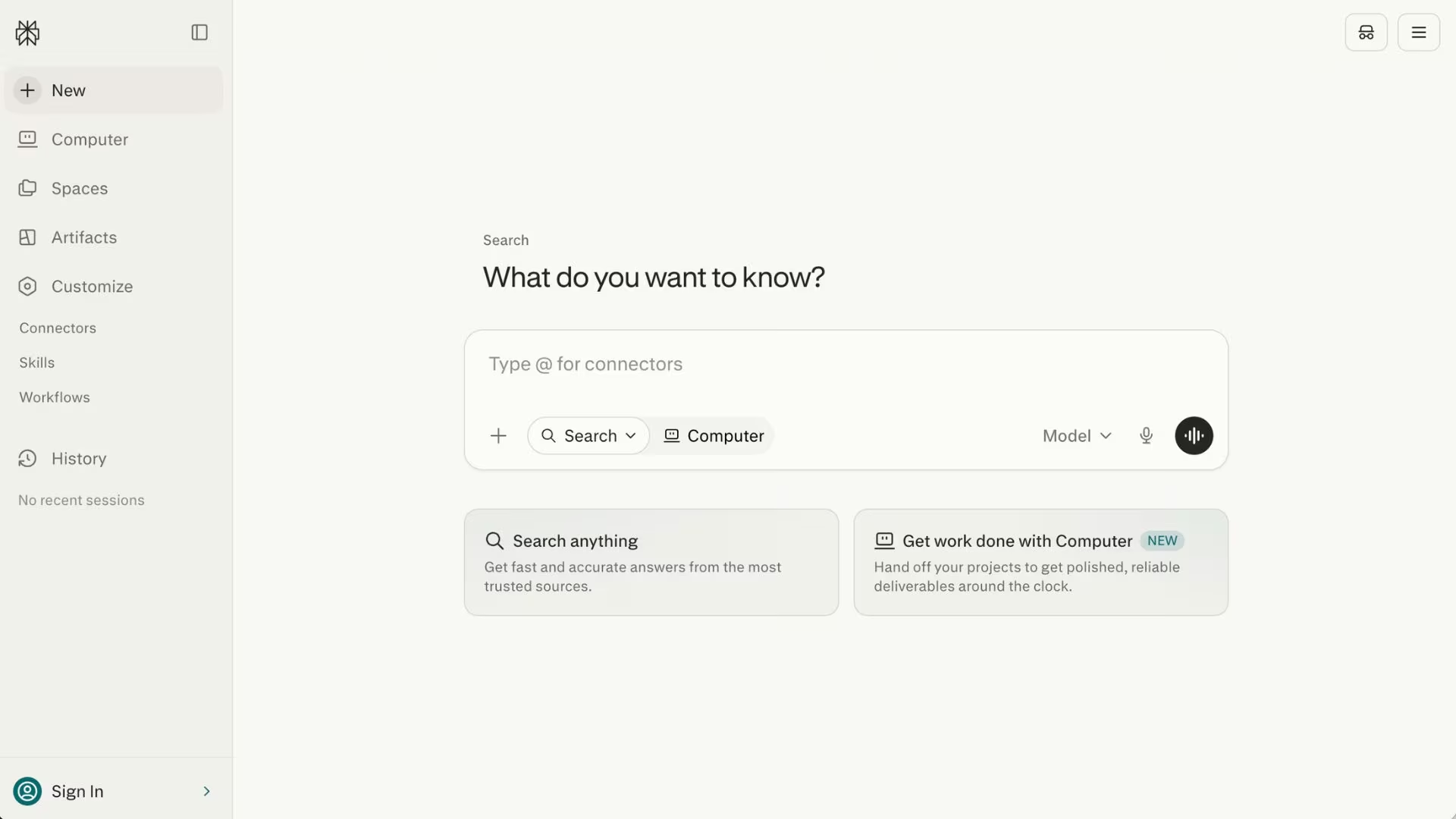
Ask Perplexity a question, and it searches before it answers. What comes back is a synthesized response with inline citations pinned to individual claims, so you can click through and check the original wording yourself.
The model strategy is unusual. Perplexity orchestrates several top models and picks the best one per query, including ChatGPT, Google Gemini, Anthropic Claude, and NVIDIA Nemotron. Paid plans let you override that and pin a preferred model yourself.
Paid tiers also open up premium data sources that general chatbots don't touch, including PitchBook, Statista, and S&P Capital IQ. For anyone doing market or competitive work, that's the part of the subscription that's hardest to replace elsewhere.
Depth is the honest limit here. Perplexity compresses a topic quickly, making it a strong opening move but a weak closing one. Long reasoning chains and heavy production work sit outside what it's tuned for.
Also read our best Perplexity alternatives guide for what else is worth trying when citation depth or premium data sources aren't enough.
Meet ChatGPT: What It Does Best
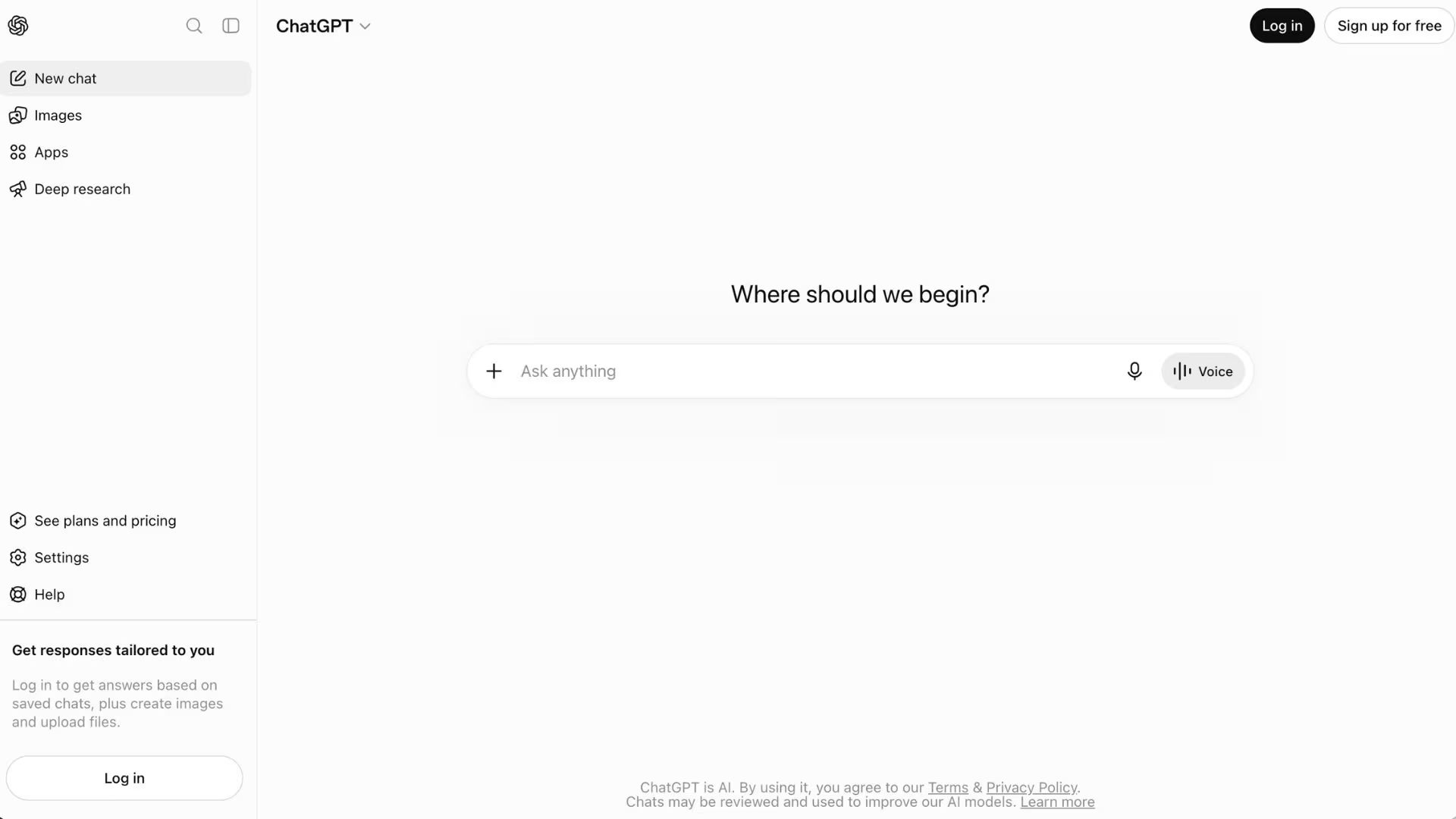
ChatGPT is the generalist, and it's the one most likely to already be open on someone's second monitor. The paid tiers run on the GPT-5.6 family, with a faster everyday model and a separate reasoning model for harder problems.
Its real advantage is surface area. On Plus, deep research, projects, scheduled tasks, custom GPTs, image generation, data analysis, a built-in browser, and expanded Codex access are all included in the same subscription, which is why it survives as a single-tool stack better than the other two.
Check the context before you commit. On Plus, the reasoning model carries a 256K total context window, roughly 320 pages of input, and Pro raises that to 400K. The everyday instant model is much smaller at 54K on Plus, so long documents require the reasoning model to be selected deliberately.
Sourcing is where it gives ground. ChatGPT will search the web when asked, but citations aren't its default posture, so verification becomes a step you have to remember to take.
Also read our best ChatGPT alternatives guide for what else is worth trying when surface area alone isn't enough for your workflow.
Meet Claude: What It Does Best
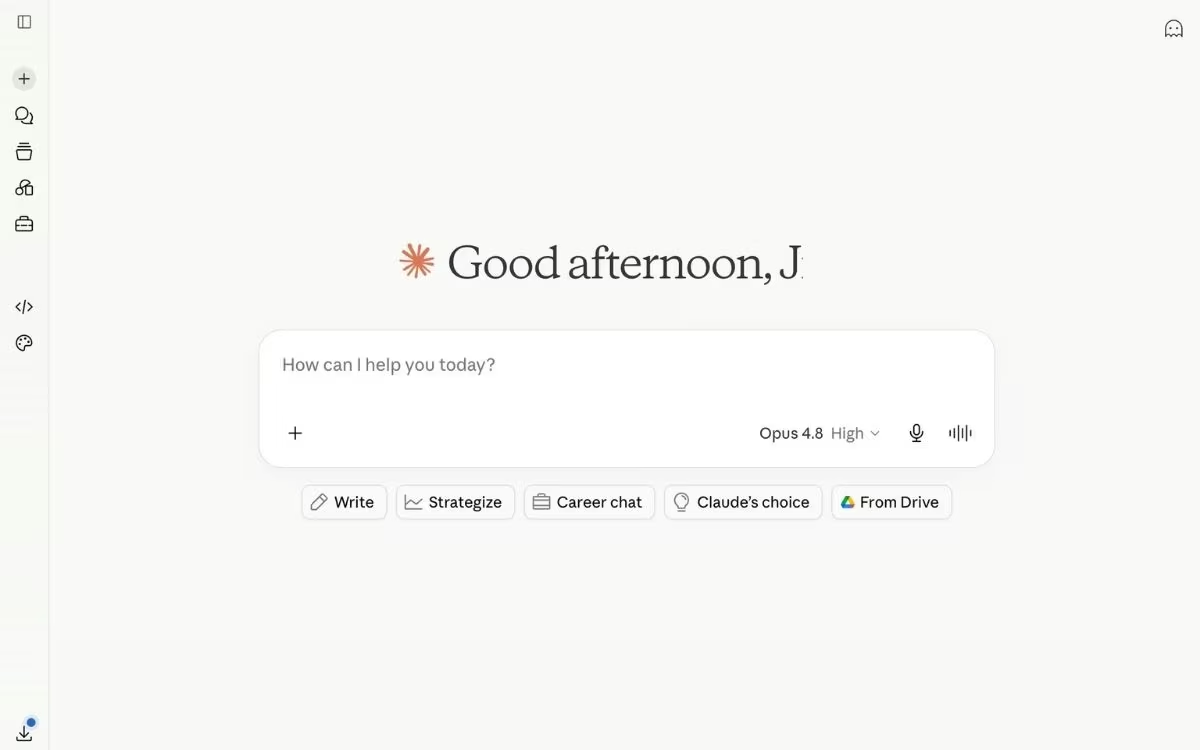
Where Claude separates itself is in reasoning. It's built to stay coherent across long inputs and to explain how it reached a conclusion, which is why it tends to win on contracts, research papers, transcripts, and anything where a skipped nuance is the actual risk.
The paid lineup runs Opus 5, Sonnet 5, and Haiku 4.5, with Fable 5 available on Pro through usage credits and included more generously on Max and higher tiers. Every consumer plan carries a 200K context window, which is generous but no longer the outlier it once was.
Claude Pro also bundles more than chat. Claude Code, Claude Cowork, Claude Design, and Claude Science all draw from the same subscription, and Pro folds in access to Research, which makes it better value than the headline price suggests if you use any of them.
Watch how the limits work. Usage resets on a rolling five-hour session window, with weekly caps layered on top, and everything you do across chat, desktop, and Claude Code draws from a single pool. Heavy days hit the ceiling faster than a flat message count would suggest.
Also read our best Claude alternatives guide for what else is worth trying when reasoning depth or the five-hour session limit becomes a constraint.
Perplexity vs ChatGPT vs Claude at a Glance
The short version of everything above, on the dimensions that decide the purchase:
Feature by Feature: Where Each One Actually Wins
Across the five tasks people actually hire these tools for, no single product sweeps. Here are the winners per task, followed by the reasoning behind each call.
Research
Perplexity is built for the opening stretch of a research job, where you know little and need a map fast. It searches before it answers, synthesizes across several sources at once, and reaches into the premium databases named above for market and company data general assistants can't see.
ChatGPT and Claude both research capably once pointed at a question, and ChatGPT's deep research mode produces longer, more structured reports. What neither does by default is treat retrieval as the first move, so you spend more turns steering them toward sources.
Where Perplexity gives ground is the second half of the job. It compresses a topic quickly and then stops short of the sustained analysis the other two will carry.
Winner: Perplexity.
Citations and Verification
This is the dimension where the three aren't close. Perplexity pins sources to individual claims by default, so checking a fact is one click rather than a separate search.
ChatGPT and Claude both browse and will cite when asked, but neither treats attribution as its core promise, so the burden of checking falls on you. For work that gets reviewed by someone else, that's a meaningful difference in how long the job takes.
One caveat before you treat any of this as settled. When Columbia Journalism Review's Tow Center tested eight AI search tools on 1,600 queries in early 2025, published that March, the tools attributed sources incorrectly more than 60% of the time. Perplexity was the strongest performer and still missed by 37%.
The models and products in that test have changed substantially since then, so read it as a warning about the category, not a current scoreboard. Citations tell you where to look, but opening them is still your job.
Winner: Perplexity, by a wide margin.
Reasoning Through Long, Messy Input
Claude takes this one on behavior. Its 200K context window is matched or beaten by ChatGPT Pro's 400K reasoning window, so the edge comes from what Claude does across long inputs.
Claude holds a thread through contradictory sections, flags evidence that undercuts the rest, and explains its rationale in a way that is easy to audit. On a 90-page vendor agreement or a stack of user interviews, that's the behavior you're paying for.
ChatGPT closes the distance when you explicitly select its reasoning model, and it's genuinely strong in that area. It just doesn't get there by default the way Claude does.
Winner: Claude.
Writing and Editing
Claude edges this, and the reason is close to the reasoning verdict. It tends to hold a consistent voice across a long piece and to preserve the qualifiers and hedges that carry meaning in professional writing, which matters most on anything a reader will scrutinize.
ChatGPT is the more versatile writer, moving between formats and registers quickly and pairing drafts with images, tables, and scheduled follow-ups. If your writing job ends in a packaged deliverable, that flexibility can outweigh a small quality edge.
Perplexity can produce clean summaries, but long-form composition isn't what the product is shaped around.
Winner: Claude.
Coding
ChatGPT takes this one on coverage. Codex is included in the Plus subscription, and it sits alongside data analysis, a built-in browser, and the rest of the tooling, so the path from question to running code stays inside one product.
Claude is the closest rival and genuinely strong here, with Claude Code bundled into Pro at the same $20. Which of the two wins for you depends mostly on where you work and how you like to hand code back and forth, so try both before committing.
Perplexity sits out of this one. It can generate snippets and small apps, but it isn't built as a coding environment.
Winner: ChatGPT, narrowly.
One More Verdict: Value at the Entry Tier
Price isn't a task, but it decides as many subscriptions as capability does, so it earns a verdict of its own.
The pricing symmetry breaks at the first paid tier. ChatGPT now has the lowest entry point with Go at $8/month, giving lighter users a step up from the free plan without requiring a full $20 subscription.
Two conditions come with it. Go runs on the everyday model without access to the reasoning model, and it carries ads in the US, while Plus and every tier above it stay ad-free.
The closer comparison begins at $20, where ChatGPT Plus, Claude Pro, and Perplexity Pro are priced the same. Claude and Perplexity both bill annual plans at $200 a year, which works out to $17 and $16.67 a month, while ChatGPT's individual plans are monthly-only. Perplexity counters with advanced model choice, deeper research limits, and access to Perplexity Computer.
ChatGPT wins on accessibility at the entry level, with the caveat that Go is a lighter product. At $20, where the three are priced identically, the choice comes down to what kind of work you want the subscription to do.
Winner: ChatGPT.
What Real Users Are Saying
All three sit low on Trustpilot, and their scores fluctuate. Those ratings measure billing and support experiences far more than product quality, because people rarely file a review to say their subscription renewed normally. The individual reviews are where the useful detail sits.
Perplexity
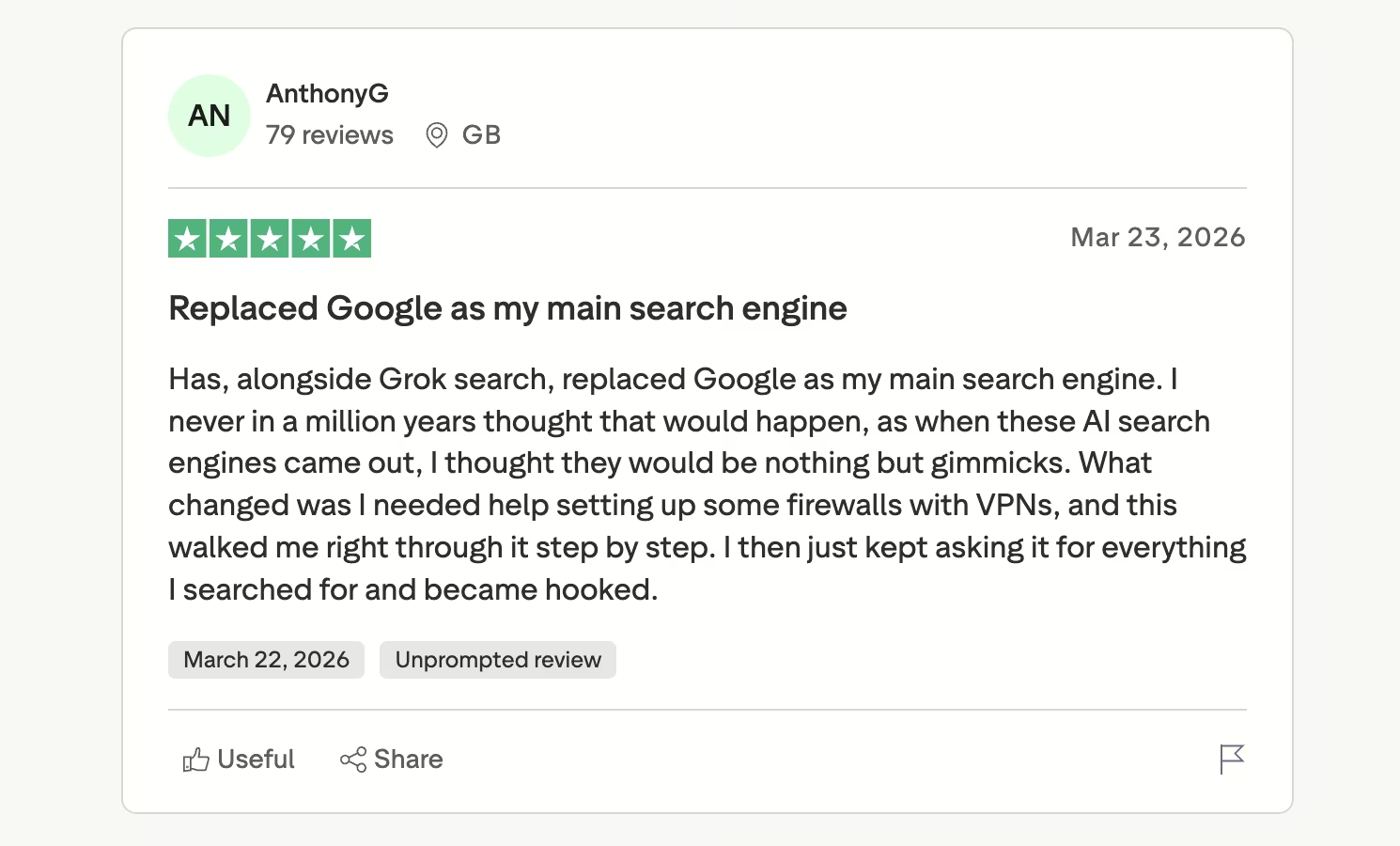
AnthonyG, a five-star reviewer on Trustpilot, came in skeptical and changed his mind after using it for technical troubleshooting. Perplexity has "replaced Google as my main search engine" for him, which is the switching behavior Perplexity is chasing and the clearest signal that the citation habit sticks once it clicks.
The sharpest criticism lands on credits. Cathy S. upgraded to Pro and found the platform "self-selected 'Computer' without asking me," burning through her monthly credit allowance on searches she expected to be routine.
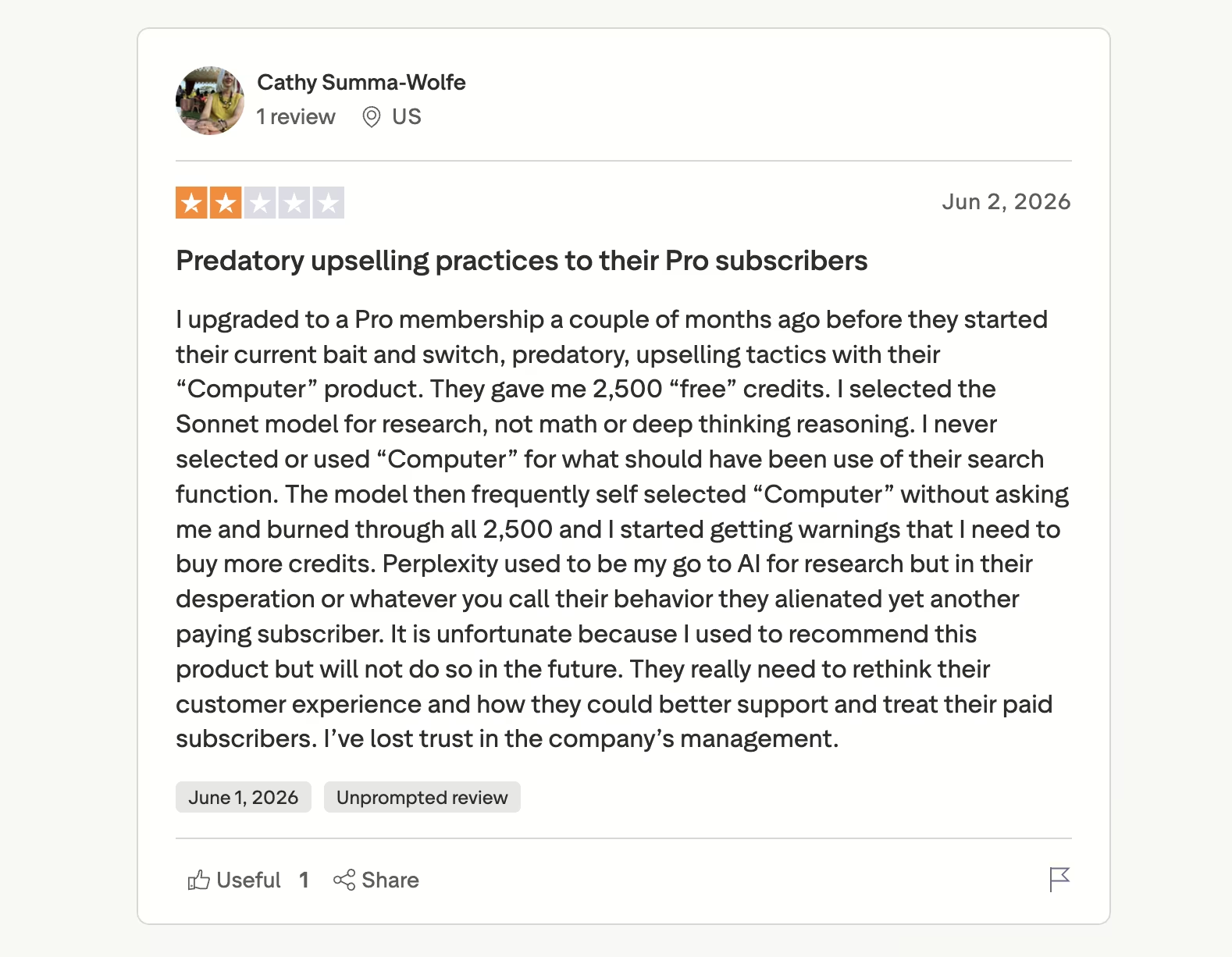
She'd recommended the product before and says she won't again. That's the credit-burn risk in a sentence, and it's the reason to check what a plan actually meters before you commit.
ChatGPT
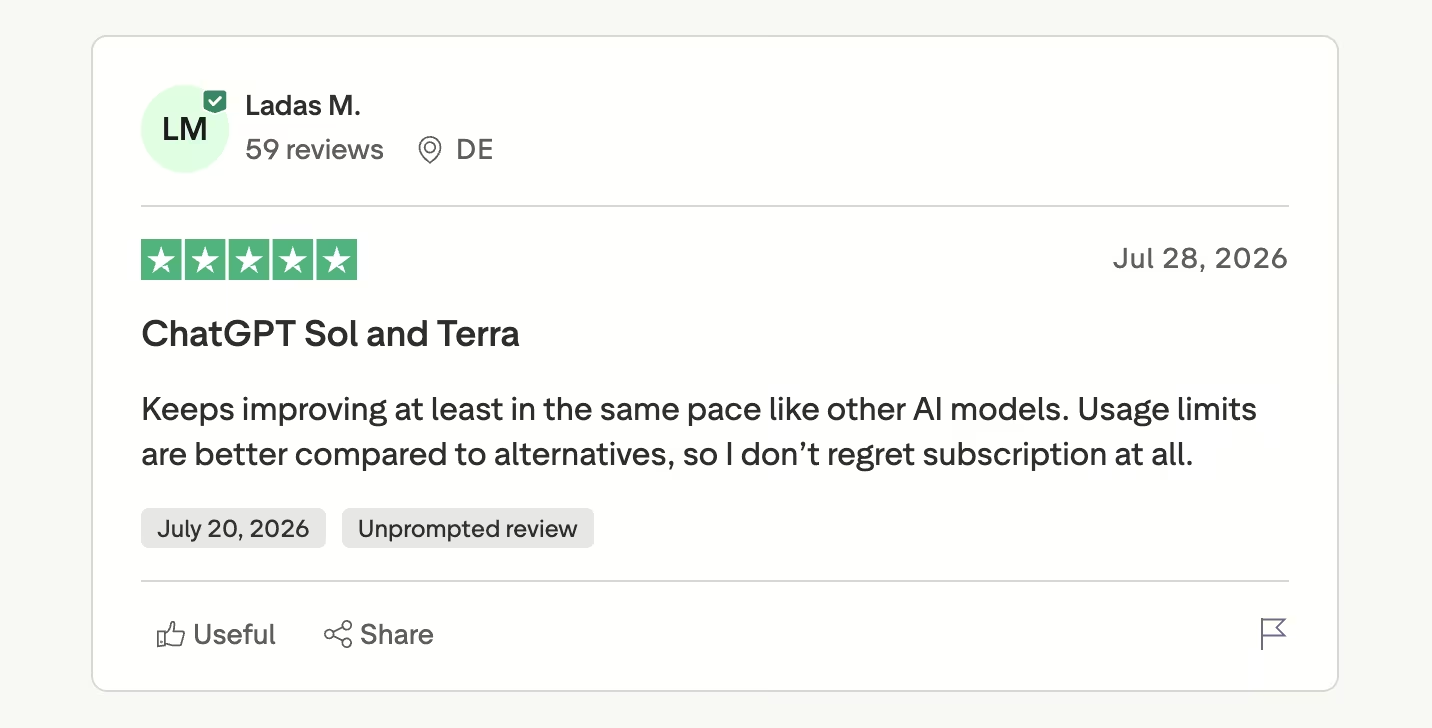
Ladas M. renewed on the strength of headroom, noting that "usage limits are better compared to alternatives" and that the subscription hasn't given him reason to regret it. For a $20 generalist plan, the main value proposition is not hitting a wall mid-task.
The complaints cluster around support. Amir L., a paying Business customer, reported that "we have been unable to add team members" for days and documented the failing request himself before escalating.
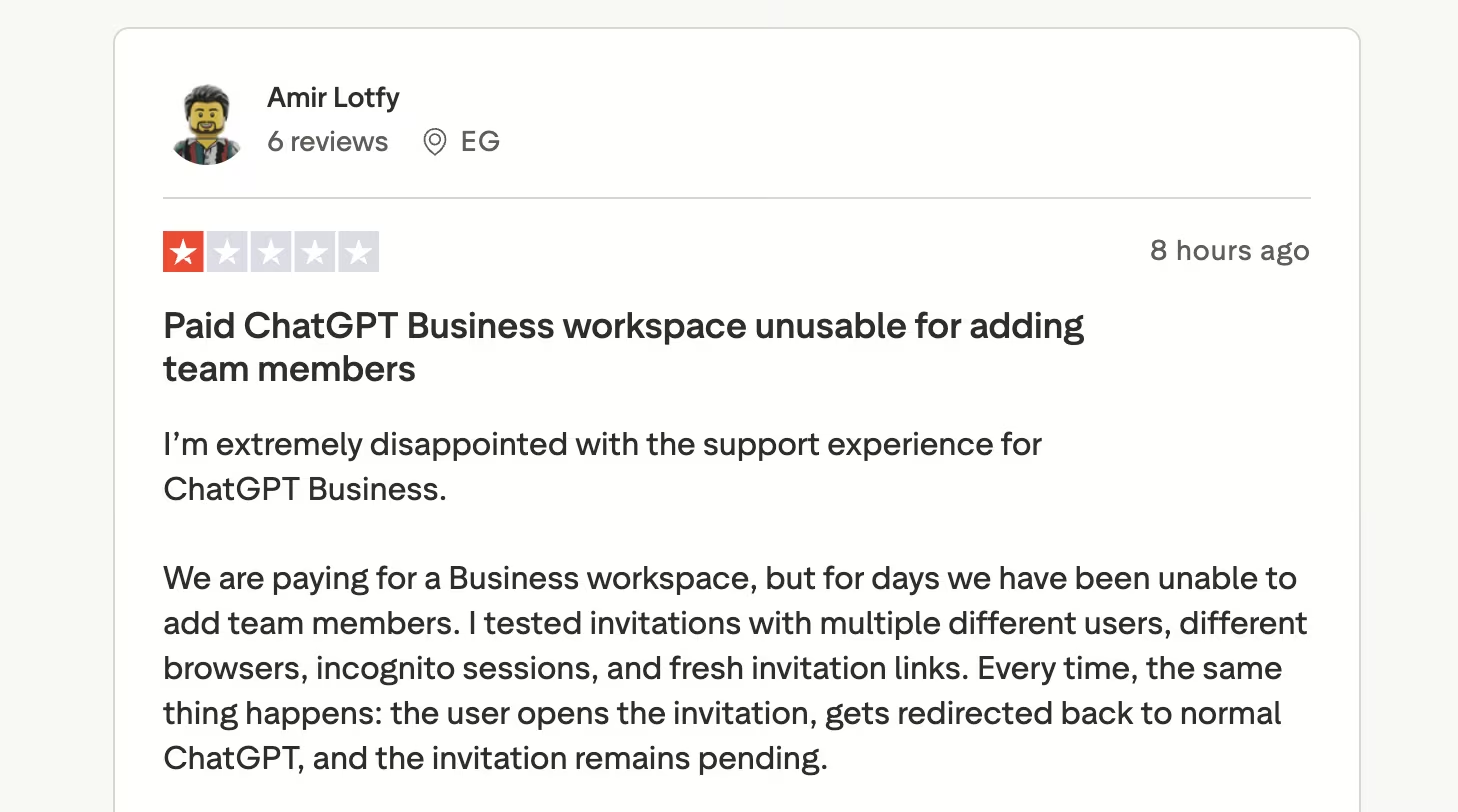
His frustration is with how long it took for a reproducible bug to reach anyone technical. Worth weighing if you're buying seats for a team.
Claude
Magic_Jim, a solo developer running three AI tools side by side on production work, splits them by stakes. "Claude is the one I trust when mistakes cost money," he writes, crediting it with catching a data-leakage problem that would have invalidated a research project.
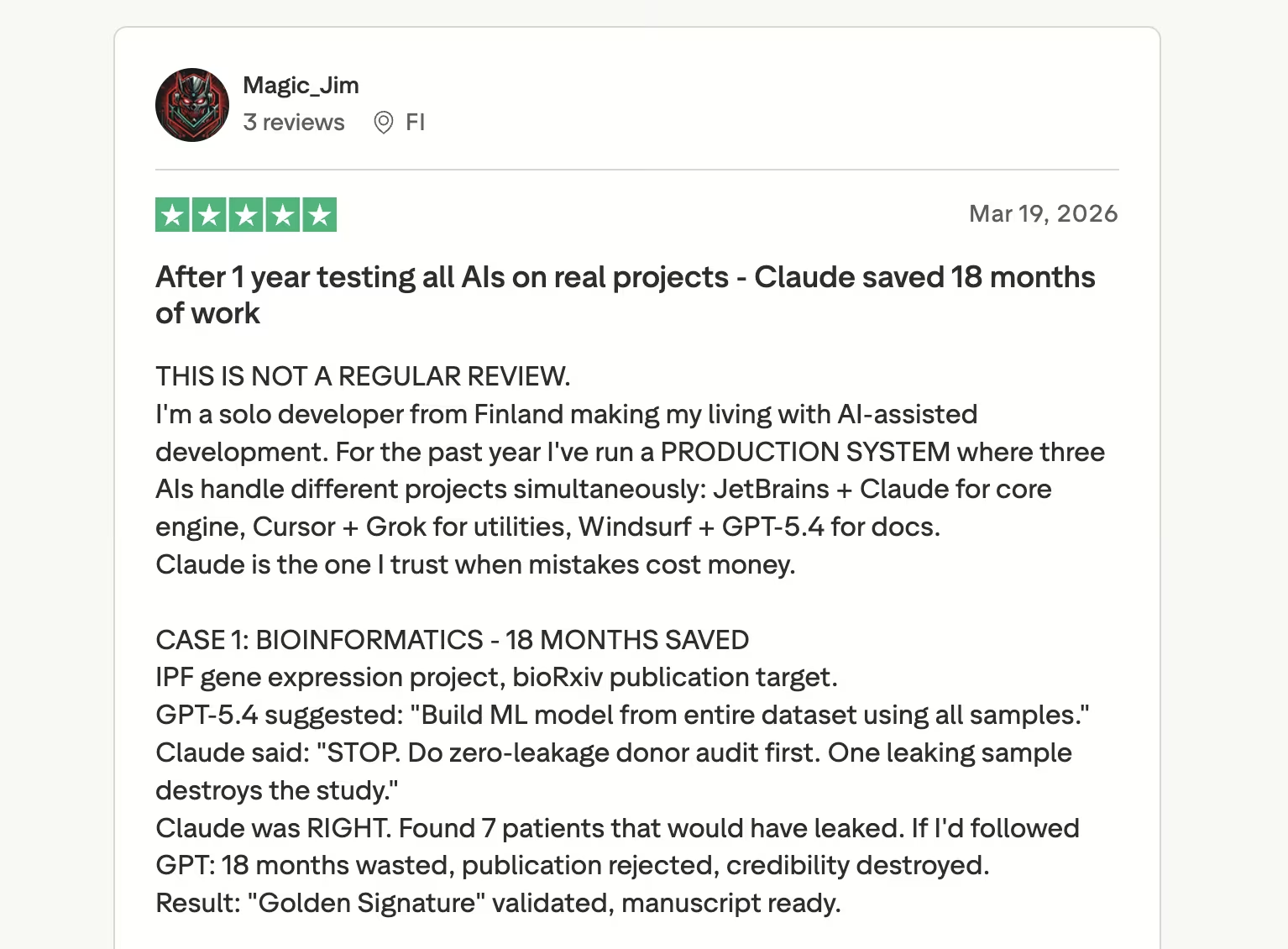
The endorsement is specifically about Claude's caution, and it comes with a worked example.
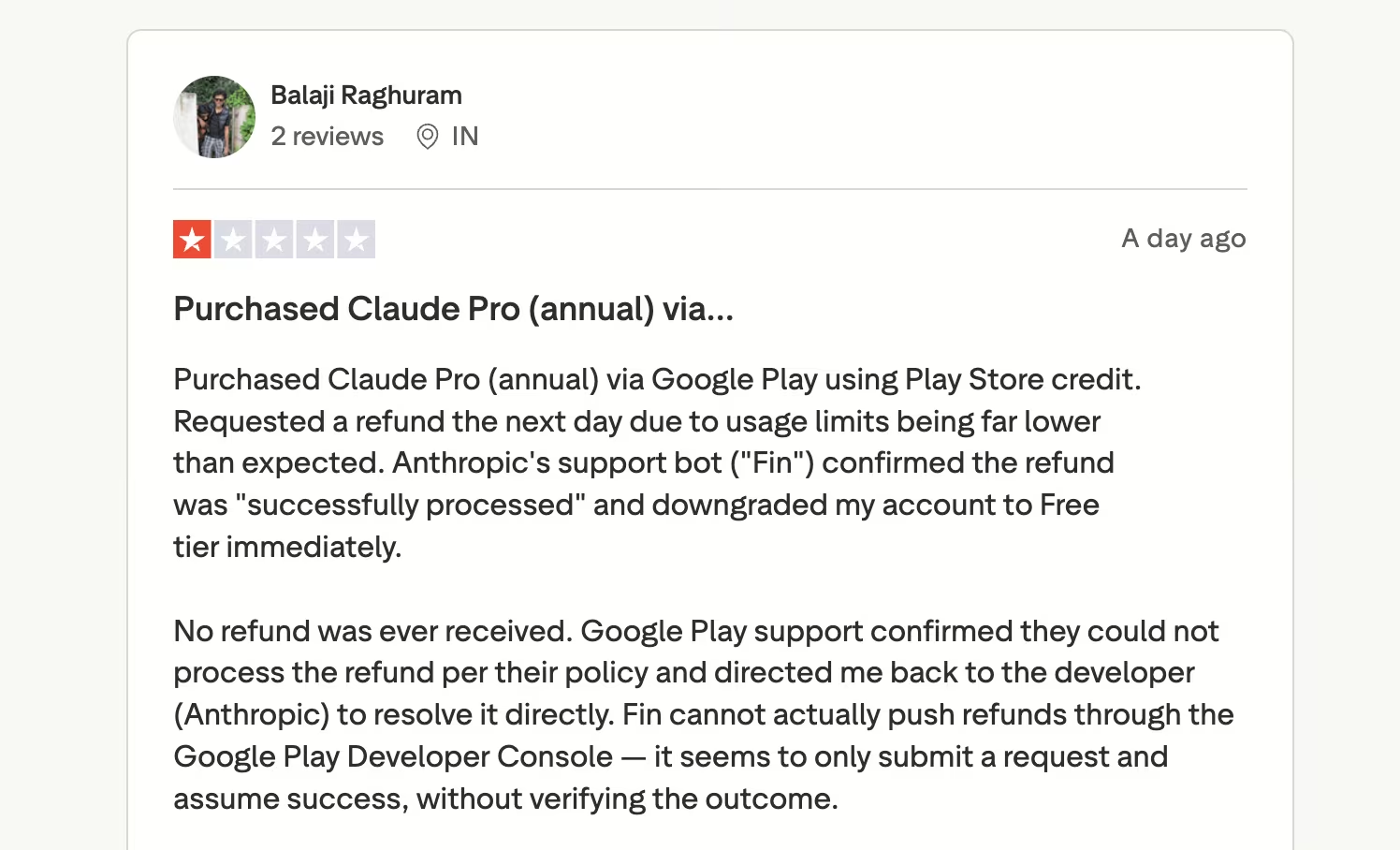
Usage ceilings drive the sharpest complaints. Balaji R. bought Claude Pro annually and asked for a refund the next day, citing "usage limits being far lower than expected," then spent days chasing a refund that had been confirmed but never arrived.
How to Make Your Choice
Pick by the shape of your work. If you want the broader field, our ranking of the best LLMs covers the models that power these products.
Perplexity Is Better For
Perplexity earns the subscription in source-critical work:
- Analysts, journalists, and consultants who have to show their sources.
- Anyone starting cold on an unfamiliar topic and needing a map fast.
- Competitive and market research, where integrated sources like PitchBook Essentials, Statista, and CB Insights reduce the need to switch between databases.
ChatGPT Is Better For
ChatGPT wins on range:
- Solo operators and small teams who want one subscription to cover most of the week.
- Work that ends in a deliverable.
- People who want scheduled tasks and custom assistants without adding another tool.
Claude Is Better For
Claude is the pick when input length is the problem:
- Contract review, research synthesis, and anything that arrives as a long document.
- Writing where tone and nuance survive the draft.
- Anyone already using Claude Code or Cowork, which makes Pro a better value than the price implies.
Two of the three is a defensible answer, and it's what a lot of heavy users land on. Use Perplexity to ground the facts, then use Claude or ChatGPT to do something with them. For a closer look at the pairs, we've compared Perplexity against Claude and ChatGPT against Claude and Gemini separately.
Final Thoughts
If you can only justify one subscription in the Perplexity vs ChatGPT vs Claude decision, make it ChatGPT, because it fails least often across the widest range of work. That's a verdict about coverage, and on any single dimension, it's beaten by one of the other two.
Perplexity is the one worth defending hardest on principle. Every other product in this category asks you to trust an answer that arrives with no history. Perplexity is the only one that treats showing its work as the product, and after the Tow Center numbers, that posture looks like a requirement.
Claude is the specialist worth paying for the moment your inputs get long. If your week is contracts, transcripts, and research papers, the reasoning quality pays for itself in the errors you don't ship.
Pricing no longer settles the argument as neatly. ChatGPT has the cheapest paid entry point at $8, while comparable premium plans start at $20. The decision comes down to whether you need sourced research, a broad production toolset, or sustained reasoning across long inputs.
Turning the Answer Into a Working App
There's a category of work none of these three is primarily designed to finish, and it's worth naming because people spend weeks discovering it the hard way. All three can help design an app, generate code, and produce components.
What they do not primarily offer is a single workflow that carries a business idea from specification through hosting, sign-in, payments, and deployment.
That's the work Emergent is built for. You describe the tool you need in plain English, and a coordinated system of specialized agents handles it end to end.
Some agents shape the screens people see, others wire up the logic and the integrations, and testing agents check the result before you click Deploy. It's vibe coding aimed at software that has to survive contact with customers.
It also connects outward. Emergent supports the Model Context Protocol in both directions, so you can plug MCP servers into a build to give your app live access to outside tools and data, and expose Emergent itself as an MCP server to other AI clients.
That sits on top of ready-made integrations for the systems most businesses already run on, from Stripe and PayPal to Notion, HubSpot, GitHub, and Google Workspace.
- Go from description to a live app: Describe the tool in plain English, and Emergent builds the interface, the logic, the sign-in, and the payments together.
- Test it before you spend real money: Emergent's free plan includes 10 monthly credits, enough to build a first app and judge the output before you pay anything.
- Keep what you build: You own the code and can export it, so nothing you make is locked to the platform.
- Publish when you're ready: Deployment happens when you click Deploy, and your app goes live on its own address within minutes.
Turn your ideas into working apps and get started with Emergent today.
Most AI app builders stop at prototypes. Emergent creates production-ready apps you can actually launch.
- Production-ready apps
- Web & mobile apps
- Deploy in minutes







